
Custom Safety Labels That Meet ANSI and Stay Readable


Signal words, safety colors, the six GHS elements, and the materials that keep a warning legible after two summers on a machine guard.
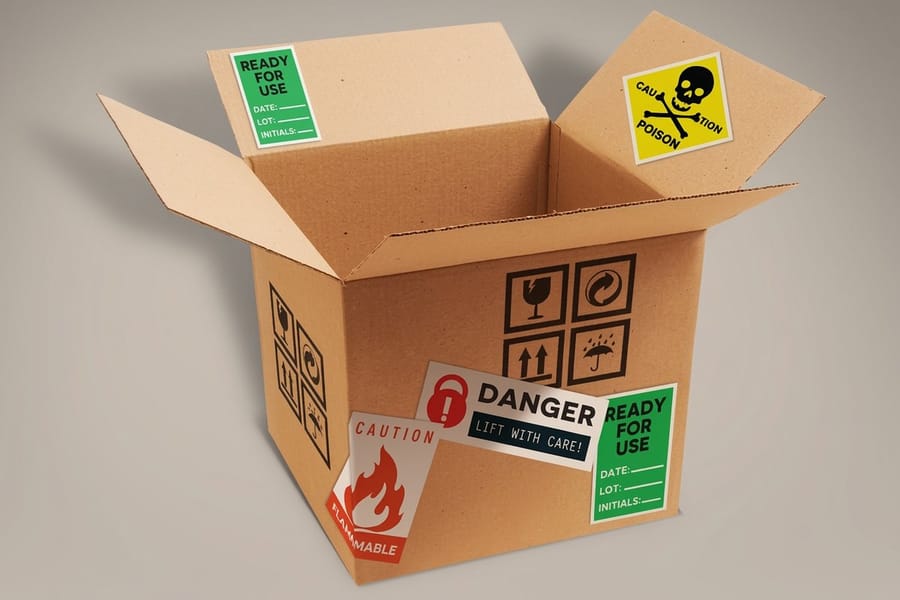
A custom safety label follows ANSI Z535.4 for equipment and facilities, which fixes the signal word, its color and the safety alert triangle, or GHS under OSHA HazCom for chemical containers, which requires six specific label elements. DANGER is red and reserved for a hazard that will kill or maim, WARNING is orange for one that could, CAUTION is yellow for minor injury, and NOTICE is blue for property damage with no triangle. Print it on a film and laminate that match where it lives, because a faded label is a non-compliant one.
Quick answer
Pick the word by consequence, then pick the material by environment
Two standards cover almost every safety label. ANSI Z535.4 governs labels on equipment, machinery and facilities: the signal word sets the color, DANGER and WARNING and CAUTION carry the safety alert triangle, and NOTICE never does. GHS under the OSHA Hazard Communication Standard governs hazardous chemical containers, with six required elements and only two signal words. Compliance then depends on durability, because a warning that has faded off a guard protects nobody.
Signal Words and Colors, and How to Pick the Right One
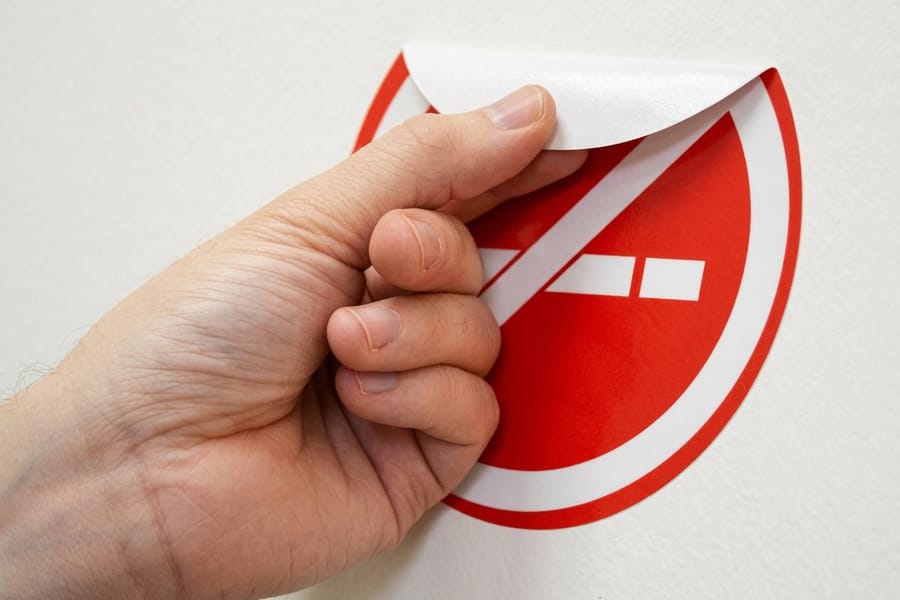
The signal word is a severity rating. ANSI Z535.4 assigns each word to a specific outcome, and the color, the letter color and the presence of the safety alert triangle all follow from that choice. Once you know how badly the hazard hurts somebody, the panel is designed.
| Signal word | Panel color | Reserved for | Alert triangle |
|---|---|---|---|
| DANGER | Safety red, white letters | A hazard that will cause death or serious injury if it is not avoided. Live conductors, unguarded crush points. | Yes |
| WARNING | Safety orange, black letters | A hazard that could cause death or serious injury. Most machine, vehicle and equipment labels sit here. | Yes |
| CAUTION | Safety yellow, black letters | A hazard that could cause minor or moderate injury. Hot surfaces, pinch points, sharp edges. | Yes |
| NOTICE | Safety blue, white letters | Property or equipment damage with no injury risk. Do not pressure wash, use only rated fluid. | No |
| SAFETY INSTRUCTIONS | Safety green, white letters | General safety practice rather than a hazard. First aid station, required protective equipment. | No |
Two mistakes account for most non-compliant labels we see come in for print. The first is putting the safety alert triangle on a NOTICE panel, which turns a property message into a personal injury message. The second is running DANGER on everything. If a machine carries six red panels, the operator stops reading all six, and the one real DANGER loses the attention it was supposed to command.
Write the message in the order people process it: what the hazard is, what it does to you, then what to do instead. "Moving parts can crush and cut. Lock out power before you open this guard." Our guide to designing compliant warning labels takes the panel layout apart line by line if you are building the artwork yourself.
GHS Chemical Labels Follow a Different Rulebook

If the label goes on a container of hazardous chemical that leaves your site, ANSI does not apply. OSHA aligned the Hazard Communication Standard with the Globally Harmonized System, and a shipped container label carries six required elements.
- Product identifier. The chemical name or code that matches the safety data sheet exactly.
- Signal word. Only two exist here, Danger and Warning, and the hazard classification decides which one. There is no Caution and no Notice in GHS.
- Hazard statements. Standardized phrases assigned by classification, such as causes severe skin burns and eye damage.
- Precautionary statements. Prevention, response, storage and disposal instructions.
- Pictograms. Black symbols on white inside a red square set on its point. Print them at a size that stays legible, and never place an empty red diamond on the label as decoration.
- Supplier identification. Name, address and telephone number of the manufacturer, importer or responsible party.
Two production details bite people at the printer. The red diamond frame has to print as a real solid red, so a design supplied in RGB will shift, and CMYK artwork with the pictograms placed as vector rather than a low-resolution screenshot is the difference between crisp and questionable. The second is chemical resistance: a GHS label on a solvent drum gets splashed with the contents, and a paper face stock turns to pulp. Print it on premium waterproof labels, which start at $84.68, or on a vinyl film with a laminate over the ink.
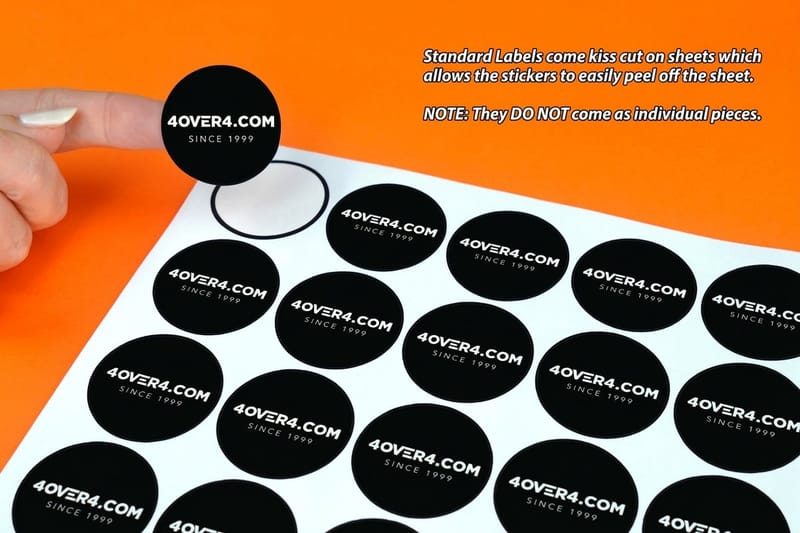
Workplace containers that never leave the building can use an alternative in-house system if employees are trained on it, but the simplest path in a small operation is to print the same GHS format for both. One label design, one order, no argument with an inspector. For containers that also need lot codes or dates, our industrial labels guide covers the variable-data side.
Substrates and Adhesives That Outlive the Hazard

A safety label is only compliant while it is legible. Fade the ink, curl the corner or lose the adhesive and the machine is running without a warning on it. The face stock and the laminate do most of that work.
| Material | Water and chemicals | Sun and outdoors | Where it belongs |
|---|---|---|---|
| Coated paper | None. Ink lifts and the stock softens. | Weeks at best. | Dry indoor cartons, shelf stock, temporary instructions. |
| White BOPP | Good. Shrugs off condensation and wash-down. | Around a year unlaminated. | Bottles, buckets, food and beverage containers, indoor equipment. |
| Vinyl | Good, with a laminate over the ink. | Several years laminated, and it conforms to curves and rivets. | Machine guards, vehicles, outdoor tanks, painted metal. |
| Polyester | Best. Handles solvents, cleaners and heat. | Excellent, and it stays dimensionally stable. | Nameplates, asset tags, control panels, anything wiped with chemicals. |
The laminate matters more than most buyers expect. Ink is what fades, not the film, so an unlaminated outdoor label usually goes pale long before the vinyl fails. Adding a gloss or matte UV laminate is the cheapest durability upgrade on the order form, and on a warning label it also protects the print from being scrubbed off during cleaning.
Adhesive gets less attention and causes more failures. Permanent acrylic is the default and it holds on steel, glass, painted metal and most rigid plastics. It struggles on low surface energy plastics such as untreated polyethylene drums and powder-coated frames, where the label peels back from the edges after a few weeks. Two habits fix most of it: apply above roughly 50 degrees Fahrenheit on a clean dry surface, and give the bond a full day before the equipment goes back into service. On a tight curve, use a narrower label rather than a bigger one, because a large label wrapped around a small radius flags at the corners no matter what adhesive is under it. The outdoor material guide and our paper versus vinyl versus clear comparison go deeper on the stocks themselves.
Placement, Size and What to Order
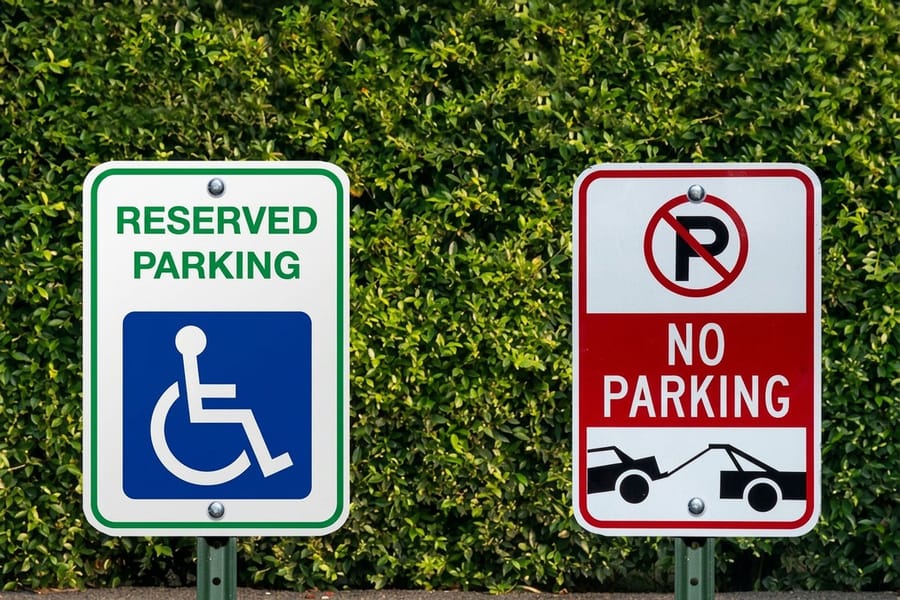
Placement is the part that decides whether a compliant label does any good. Put it where the worker looks before the exposure happens, not after. A label on the inside of an access panel is useless if the hazard is met when the panel comes off, and a warning on the back of a machine gets read by nobody.
Three rules cover almost every job. Keep the label on the same component as the hazard, so it cannot be removed with a cover and reinstalled somewhere else. Avoid seams, rivets and grease-prone panels, since a label bridging a gap lifts at the edge within a season. Size it for the viewing distance rather than the artwork: print a proof at 100 percent, tape it in the real position, and read it from where a person actually stands. If the hazard statement is not readable from there, either the type or the label is too small. Our label size guide lists the standard cut sizes if you would rather work from a known dimension, and the blank template library has correctly sized layouts to start from.
For ordering, most facilities need three things. Standard warning labels at $23.88 handle indoor equipment, storage areas and short-run instructions. Premium warning labels at $29.16 add the durable face stock for wet, outdoor and high-touch positions. Roll warning labels at $322.98 make sense only when thousands of identical labels go onto product on a line, and roll versus sheet labels explains where that crossover really sits.
Where a label is the wrong format, switch to rigid. Area messages, post-mounted rules and anything that gets hosed or knocked belong on aluminum signs from $36.00 or parking signs from $30.00. Hard hats, tools and personal gear are their own case, covered in our hard hat sticker guide. Everything else starts in label printing, where you can set the material and the laminate before you check out.
Wally explains safety labels
The word is a severity rating, not a volume knob
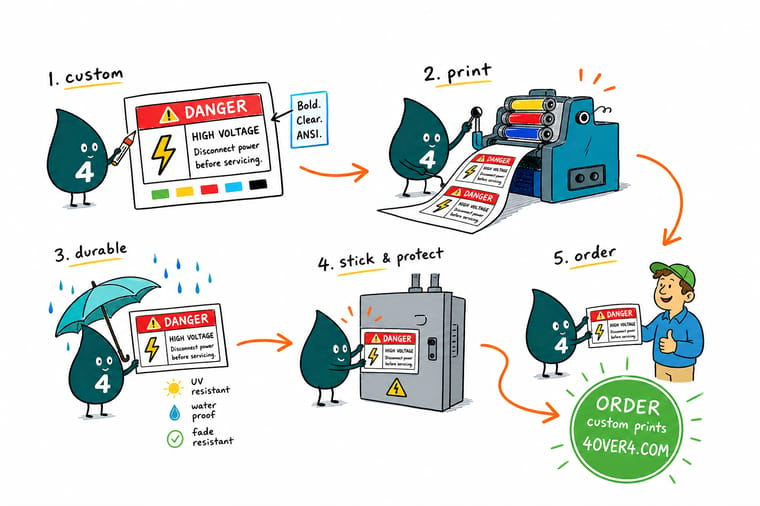
Wally asks one question before he prints anything: what happens to the person who ignores this. Will it kill them, and the panel is red DANGER. Could it, and it is orange WARNING. A bruise or a burn, and it is yellow CAUTION. Only the equipment at risk, and it is blue NOTICE with no triangle. Then he checks where the label lives, because sun, solvent and wash-down decide the film and the laminate. A warning that faded off the guard is not a warning.
Order premium warning labels →Specs and pricing
Safety label materials, sizes and starting prices
Compare the label options side by side, with live material and size choices and starting prices straight from the 4OVER4.COM configurator.

Print it
Order safety labels that stay legible

Explore more
Where to go next




By the numbers
Label printing you can count on at 4OVER4
Common Questions
Your safety label questions, answered
What is a custom safety label?
A custom safety label is a printed warning built to a recognized format instead of a designer preference. For equipment, machinery and facilities the format is ANSI Z535.4, which fixes the signal word panel, the safety alert triangle, the color, and the order of the message. For chemical containers the format is GHS as adopted by OSHA in the Hazard Communication Standard, which fixes six required label elements. Custom only means the wording, size, artwork and material are yours. The structure is not negotiable if the label has to hold up when somebody gets hurt.
What is the difference between DANGER, WARNING and CAUTION?
Severity of the outcome, and nothing else. DANGER covers a hazardous situation that will result in death or serious injury if it is not avoided, so it is reserved for exposed live conductors, unguarded crush points and similar immediate hazards. WARNING covers a situation that could result in death or serious injury, which is where most machine and vehicle labels belong. CAUTION covers minor or moderate injury, such as a hot surface or a pinch point. NOTICE is not an injury word at all. It flags practices that damage property or equipment, and it never carries the safety alert triangle.
Do I need ANSI labels or GHS labels?
Look at what the label is stuck to. A machine, a guard, a panel, a ladder, a tank exterior or a wall gets an ANSI Z535.4 label. A container holding a hazardous chemical that leaves your site gets a GHS label under 29 CFR 1910.1200, with the product identifier, signal word, hazard statements, precautionary statements, pictograms and supplier identification. Plenty of workplaces need both, on the same drum: the GHS label from the manufacturer and an ANSI label on the equipment that dispenses it.
What material should a safety label be printed on?
Match the material to where it lives. Dry indoor cartons and shelf stock are fine on coated paper. Bottles, buckets and anything that gets wet want a white BOPP or vinyl film with a permanent acrylic adhesive. Outdoor equipment, painted machine guards and vehicle panels want vinyl or polyester with a UV laminate, because the laminate is what stops the ink fading long before the film fails. Polyester is the choice where solvents, cleaners or heat are part of the job, since it stays dimensionally stable when a vinyl label would shrink and lift.
How big should the text on a safety label be?
Big enough to read at the distance where the hazard is met, which is a test rather than a formula you can guess at. ANSI Z535.4 sets minimum letter heights against safe viewing distance, and the practical method is simple: print the artwork at 100 percent on plain paper, tape it in the real position, then stand where a worker actually stands. If the hazard statement is not readable from there, the type is too small or the label is too small. Signal words are set larger than the message text, and the message reads hazard first, consequence second, avoidance third.
Are printed labels enough, or do I need a rigid sign?
A label works when the surface it sticks to is the thing being labeled and stays put: a machine guard, a control panel, a chemical container, a door. Choose a rigid sign when the message applies to an area rather than an object, when it has to stand off a wall or a post, or when it will be scrubbed, hosed or hit. Standard warning labels start at $23.88 and premium warning labels at $29.16 at 4OVER4.COM, while aluminum signs start at $36.00 and parking signs at $30.00, so the cost gap is small enough that durability, not price, should decide it.
Is it cheaper to order safety labels on rolls or on sheets?
Only past a real volume. Sheet and cut-to-size warning labels start at $23.88, so a facility labeling a few dozen machines has no reason to look further. Roll warning labels start at $322.98 because rolls are a production format built for an applicator or a fast hand-apply line, and they only pay off when thousands of identical labels go onto product every week. If you are applying by hand and the artwork changes between machines, sheets are both cheaper and easier to sort.
Get Started
Ready to print a warning people can still read next year?
Pick the signal word, choose a film and laminate that match the environment, and we print safety labels sized for the distance they get read from.
Legal Disclaimer
Gold Standard guarantees apply to all standard orders placed through 4over4.com. Price match requires verifiable proof of a competitor's published price for an equivalent product with matching specifications and turnaround time. Satisfaction guarantee covers manufacturing defects and print quality issues. Contact support with order number and documentation. On-time delivery rate based on tracked orders 1999 to 2026. Individual results may vary based on shipping carrier performance.
