
Pop Up Banner Sizes and the Booth Footprint Each One Fits


Pop up banner sizes are short and specific: two widths, two profiles, and a hard stop where the booth kits take over. Here is which one your floor space needs, and what the show will let you stand up.
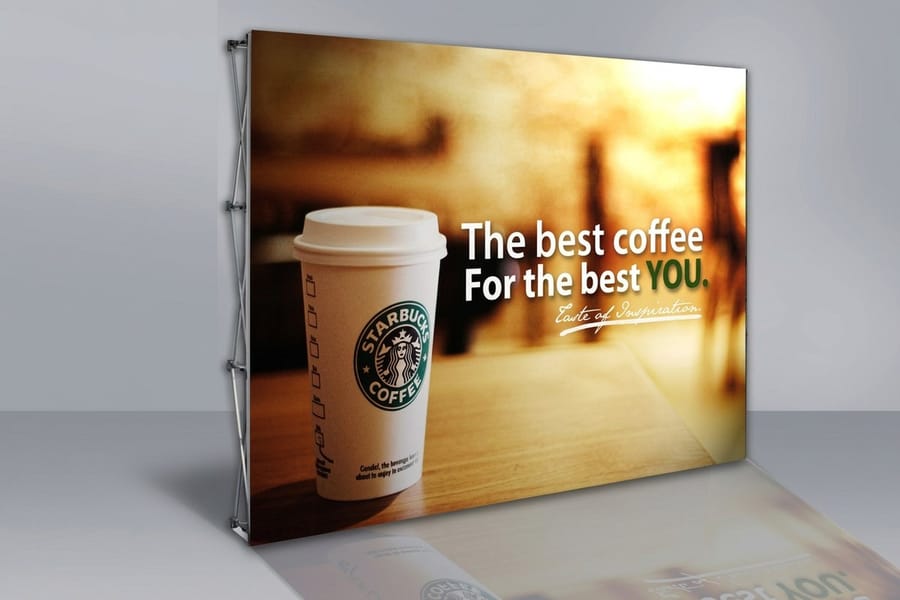
A pop up banner comes 8 ft or 10 ft wide, in a curved or a straight profile, and the 10 ft straight is what fills the back wall of a standard 10 by 10 booth. The 8 ft leaves about a foot of clearance each side for a table or a demo unit. Anything wider is a different frame: a 20 ft straight tube display for a double inline space, or a booth kit for a 20 by 20 island. Height is set by the show rather than the product, and most inline booths cap the back wall at 8 ft with only 4 ft allowed across the front five feet.
Quick answer
Two widths, two profiles, and a height the show decides
Pop up displays are 8 ft or 10 ft wide, curved or straight, and they start at $752.39. Ten feet fills the back wall of a 10 by 10 inline booth. Eight feet leaves a foot of clearance on each side for a table or a demo unit. Past 10 ft the frame changes: a 20 ft straight tube display spans a double inline space, and a booth kit handles a 20 by 20 island. The number nobody checks until it is too late is the height rule in the exhibitor kit, which usually allows 8 ft along the back and 4 ft across the front five feet nearest the aisle.
The Pop Up Banner Sizes We Actually Print
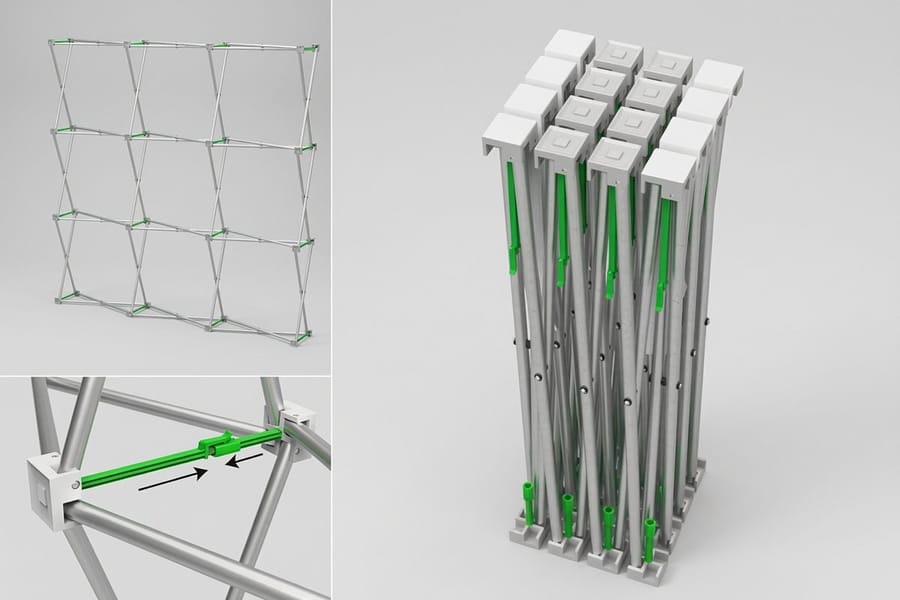
Pop up is a frame type, not a size chart, so the widths on offer are short and specific. At 4OVER4.COM a pop up display comes in four configurations: 8 ft or 10 ft wide, each available with a curved or a straight profile. The graphic is 8.8oz tension fabric printed edge to edge, and it slips over the frame like a fitted sheet.
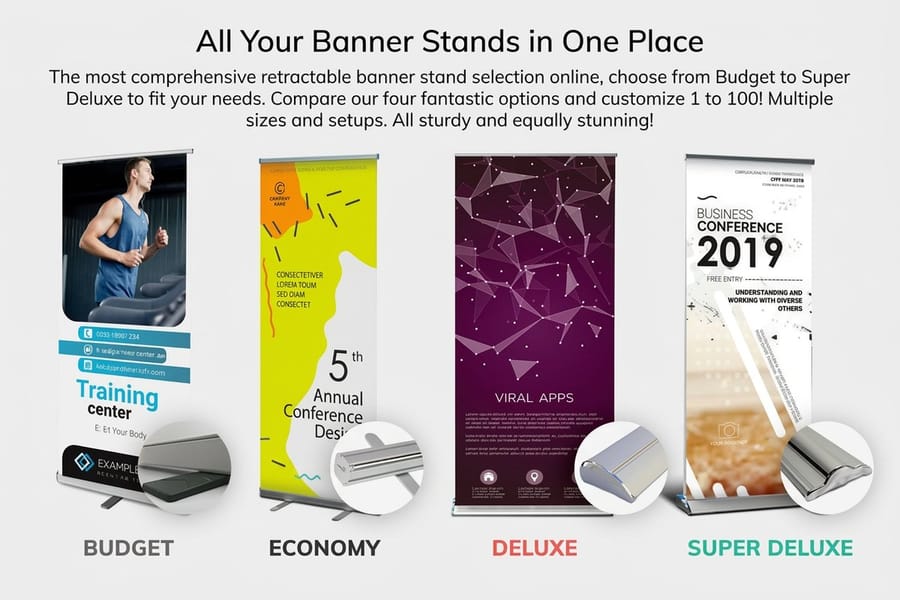
Anything wider than 10 ft is a different frame. The straight tube display covers 8 ft, 10 ft and 20 ft, and the 20 ft version spans up to about 236 inches, which is what a double inline space needs. Below the pop up range sit table top displays, printed on 10 mil vinyl from 8.25 by 12 inches up to 15.75 by 32 inches for a counter or a shared table.
| Width | Product | What it covers | Starts at |
|---|---|---|---|
| 8.25 x 12 to 15.75 x 32 in | Table top displays | A counter, a reception desk, a shared table at a small event. | $49.41 |
| 24 x 79 to 59 x 92 in | Retractable banner stands | A doorway, an aisle edge, a flank beside a table. | $139 |
| 3 ft, 10 ft, 20 ft | SEG displays | Frameless fabric walls, from a small feature panel to a stage backdrop. | $229 |
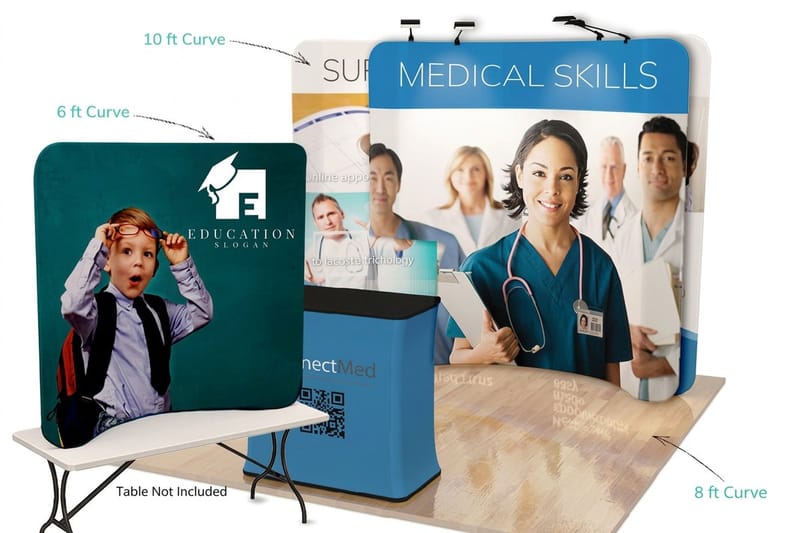
| 6 ft, 8 ft, 10 ft | Curve tube displays | A bowed wall that wraps toward the aisle. | $548.09 |
| 8 ft, 10 ft | Pop up displays | The back wall of a standard inline booth, curved or straight. | $752.39 |
| 10 x 10, 10 x 20, 20 x 20 ft | Trade show booth kits | The whole footprint as one system, with 20 ready-made layouts. | $2,599 |
Read the last column with the first. The jump from a pair of retractables to a real pop up wall is roughly five times the money, and it buys a continuous graphic with no seam down the middle. Whether that is worth it depends entirely on whether anyone photographs your booth.
Match the Size to the Floor Space You Booked
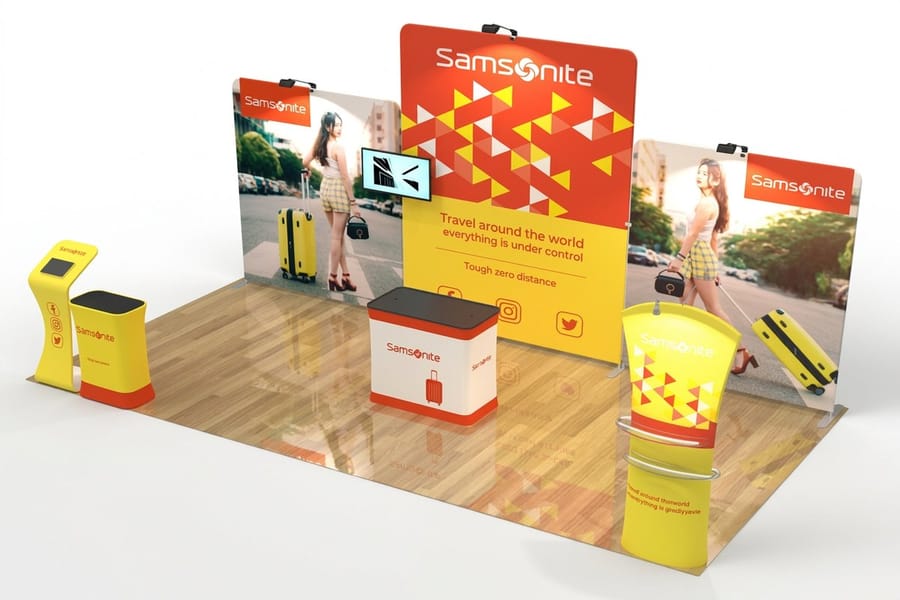
Show floors are sold in 10 ft increments, so the sizing question answers itself once you know which square you paid for. Take the booth number off your contract first, then pick the frame.
- 10 by 10 inline. A 10 ft pop up fills the back wall. Choose the 8 ft version instead when a table, a demo unit or a literature stand has to live in a back corner, since it leaves about a foot of clearance either side.
- 10 by 20 double. Out of pop up range. Either a 20 ft straight tube display across the whole back, or two 10 ft walls set side by side with a gap for a doorway.
- 20 by 20 island. People approach from four sides, so a single back wall does not work. A trade show booth kit in the 20 by 20 footprint handles the whole build.
- Tabletop or a shared exhibitor table. No floor space at all. A table top display or a tabletop retractable is the honest answer, and the tabletop display guide walks through the sizes.
Then check the exhibitor kit for the height rules, because they bite. Most inline booths allow 8 ft along the back wall and drop the limit to 4 ft across the front five feet nearest the aisle, so a tall display shoved forward to catch attention is exactly what a floor manager will make you move. Corner booths and peninsulas have their own rules. The booth signage guide covers what else is allowed in that front strip.
One measurement people forget: the usable back wall of a pipe-and-drape booth is slightly narrower than the nominal 10 ft, because the uprights and the drape sit inside the line. A 10 ft display fits, but it fits exactly. If your show uses hard walls, measure the opening before you order.
Why a 10 ft Curve Is Not 10 ft of Floor
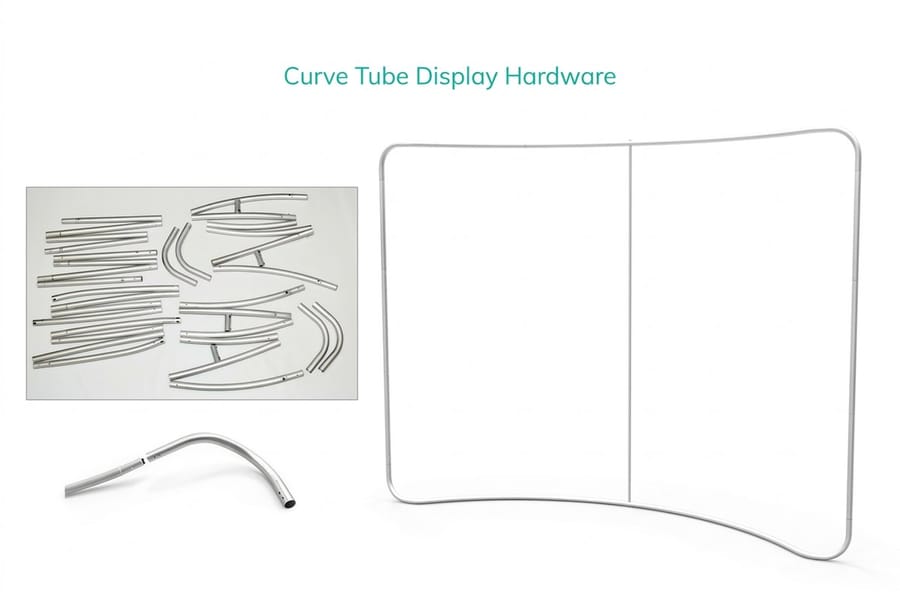
The width printed on a curved display is the width of the fabric, measured along the arc. The span it takes up on the floor is the chord, the straight line between its two ends, and a chord is always shorter than the arc it belongs to. So a 10 ft curve does not need 10 ft of clear back wall, and it eats into the depth of the booth instead.
That is useful and it is a trap. Useful, because a gentle bow lets you put a wide graphic into a slightly tight opening. A trap, because the depth it steals comes out of the space where your table and your staff stand, and a 10 by 10 booth does not have depth to spare once you have a table, two people and a case in it.
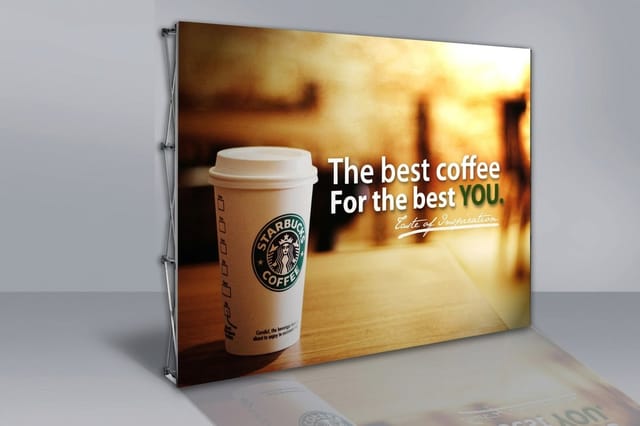
The other difference is what the shape does to artwork. A curve turns the face of the graphic toward anyone approaching from either side, which is why bowed walls read wider from down the aisle than they measure. It also bends straight lines. A repeating logo grid, a sponsor lockup or a photo with a hard horizon will visibly distort on a curve, which is the whole reason step and repeat banners are printed flat. If your backdrop exists to be photographed, order the straight profile and stop there. The tension fabric frame guide explains what the frame does to the fabric in either shape.
Setting Up Artwork at the Right Size

Do not build the file at the nominal size. An 8 ft display is not 96 inches of visible artwork, because the fabric wraps around the frame edge and a strip of the print curls out of sight on each side. The configurator gives a finished graphic size for the exact width and profile you chose, and that number, not the marketing width, is what the document should be.
Three rules cover the rest. Keep every logo, headline and web address inside the safe margin, because a tension fabric graphic is pulled tight and a few millimetres of stretch will move type that sits near the edge. Design at full scale rather than at a fraction, since a booth wall is viewed from across a hall and small scaling errors compound into soft type. And treat the bottom band as decoration: a show table is 30 inches tall, staff stand in front of it, and everything on the graphic below roughly waist height is hidden for the whole run of the show.
Start from a press-ready blank rather than a blank canvas. Our blank template library carries layouts built at the real graphic size with the bleed and safe area already drawn, and the pop up banner design guide covers the layout choices that survive being read from twenty feet away.
When a Pop Up Is the Wrong Answer
A pop up display is the most expensive way to cover a given square footage of wall, and there are three cases where the money goes further somewhere else.
If you travel to a lot of small events and never get more than a table, buy the table format. If you need presence rather than a continuous wall, two retractable banner stands at $139 each will flank a table and pack into two tubes. And if you rebrand often, a pop up is the wrong shape of purchase: the fabric graphic is cut to that frame, so a new campaign means a new graphic every time. A SEG display is built for exactly that case, since the silicone edge graphic pulls out of the aluminum frame and a replacement print costs a fraction of a whole new display.
The case where a pop up earns it is the repeat exhibitor with a standard inline booth who wants one wall, no seams, and a setup that one person can do in minutes before the hall opens. Browse the full range on displays printing, or read how to choose trade show banners if you are still weighing formats. When the show is close, next day trade show displays covers what can still be printed in time.
Wally sizes the booth first
Measure the wall you booked, then pick the frame
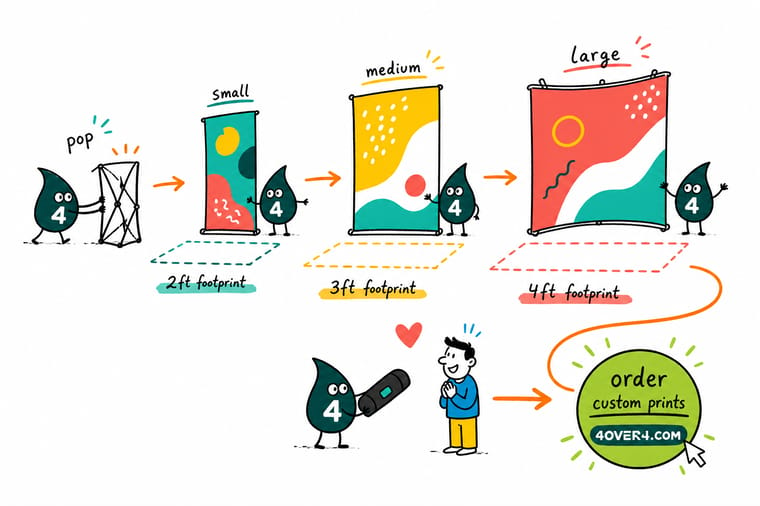
Wally does not start with the display, he starts with the tape measure. Ten feet of back wall takes the 10 ft pop up. Want a table in the corner too? The 8 ft leaves him about a foot of room on each side. Twenty feet of inline space is a different frame entirely, and an island booth is a whole kit. Then he checks the exhibitor rules, because the show caps the back wall at 8 ft and the front five feet at 4 ft, and he keeps the logo above the table line so it is not hiding behind a stack of brochures all weekend.
Configure a pop up display →Specs and pricing
Sizes, profiles, and starting prices side by side
Compare the three booth wall frames with their live size options and starting prices straight from the 4OVER4.COM configurator.


Print it
Order the display that fits your footprint
Explore more
Where to go next

By the numbers
Trade show printing you can count on at 4OVER4
Common Questions
Your pop up banner size questions, answered
What size pop up banner fits a 10 by 10 booth?
A 10 ft wide display fills the back wall of a standard 10 by 10 inline booth, and that is the size most exhibitors buy. Order the 8 ft instead when you want a table, a literature stand or a demo unit tucked into a back corner, because it leaves roughly a foot of clearance on each side. Pop up displays at 4OVER4.COM come in both widths, in curved and straight profiles, and start at $752.39.
How tall is a pop up banner display?
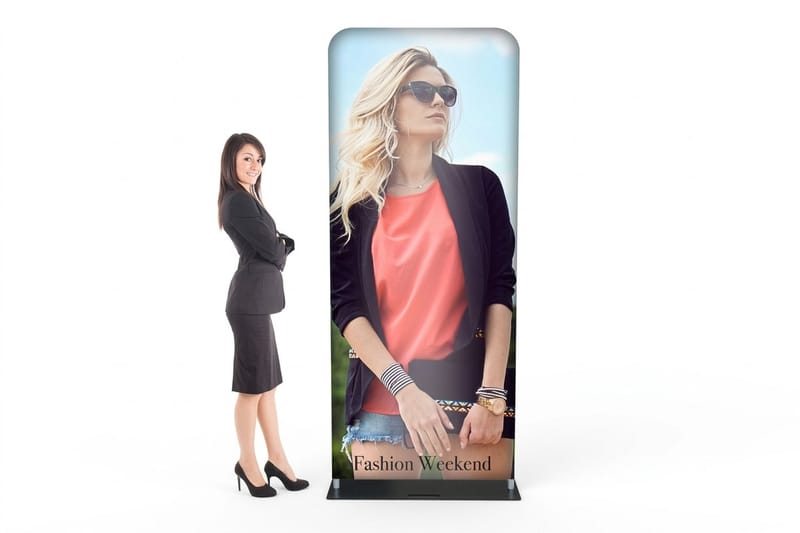
Frame heights sit in the 7 to 8 ft range, which is deliberate: most US shows follow the same inline booth rule and cap the back wall at 8 ft. The number that actually matters is not the total height but where your message sits inside it. A show table is 30 in tall and staff stand in front of it, so the readable band on a booth backdrop runs from roughly waist height up to the top of the frame.
Should I order a curved or a straight pop up banner?
Straight if the graphic will be photographed, curved if you want the wall to read wider from the aisle. A logo grid, a sponsor lockup or any repeating pattern skews visibly on a bow, which is why step and repeat work is always flat. A curve wraps slightly toward the aisle so people approaching from either side see the face of the graphic rather than its edge, and it hides the booth corners. The trade-off is depth: a curve pushes back into floor space you may want for a table.
Can I get a 20 ft pop up banner?
Not as a pop up frame, no. Our pop up displays stop at 10 ft, and for a 20 ft inline wall the right product is the straight tube display, whose 20 ft size spans up to about 236 inches and starts at $635.96 for a single unit. If you want the whole double space handled as one order rather than a wall on its own, trade show booth kits ship in 10 by 10, 10 by 20 and 20 by 20 footprints.
What size should my artwork be for a pop up banner?
Build the file at the finished graphic size the configurator gives you for the width and profile you picked, at full scale, with bleed and a generous safe margin. Do not design to the nominal marketing width: an 8 ft display is not exactly 96 inches of visible artwork once the fabric wraps the frame edge. Start from a blank template so the bleed and the safe area are already drawn, then keep logos and headlines well inside the safe box.
What is the size difference between a pop up display and a retractable banner stand?
A pop up covers a wall, a retractable covers a doorway. Retractable banner stands run from 24 by 79 inches up to 59 by 92 inches and start at $139 with the aluminum base included, so even the widest one is about half the face of an 8 ft pop up. Two retractables flanking a table is a common budget substitute for a backdrop, and it works, but the seam between them shows and the graphic cannot run continuously across both.
Get Started
Ready to fill your back wall?
Pick the width that matches your booth, choose curved or straight, and we print the graphic edge to edge on 8.8oz tension fabric with the carrying case included.
Legal Disclaimer
Gold Standard guarantees apply to all standard orders placed through 4over4.com. Price match requires verifiable proof of a competitor's published price for an equivalent product with matching specifications and turnaround time. Satisfaction guarantee covers manufacturing defects and print quality issues. Contact support with order number and documentation. On-time delivery rate based on tracked orders 1999 to 2026. Individual results may vary based on shipping carrier performance.
