
Booth Signs That Get a Vendor Booth Seen From Across the Aisle


Tobias is our voice for cutting, binding and large format, built from the knowledge of our production team, with over 20 years in printing.
Every booth sign has one job at one height. Each piece belongs somewhere specific, the type has to be sized for the aisle, and a working set has a known cost.
A standard vendor booth needs four signs: a back wall graphic above eight feet carrying your name, an eye level banner between five and eight feet carrying what you sell, a table throw, and one small counter sign. Size the type at one inch of capital height per ten feet of viewing distance, and put nothing below two and a half feet because standing attendees block it. Retractable banner stands start at $139.00, table throws at $225.00 and foam core signs at $49.99.
Quick answer
Height decides which sign does which job
Booth signage is a height problem before it is a design problem. The band above eight feet is the only part of your booth visible over other people from down the aisle, so it carries the company name alone. Five to eight feet is eye level from the aisle, where what you sell belongs. The table front works only once someone has stopped walking. Below two and a half feet, your own staff and the chairs block everything, so no message goes there at any price.
The Four Surfaces a Booth Gives You, and What Each One Is For
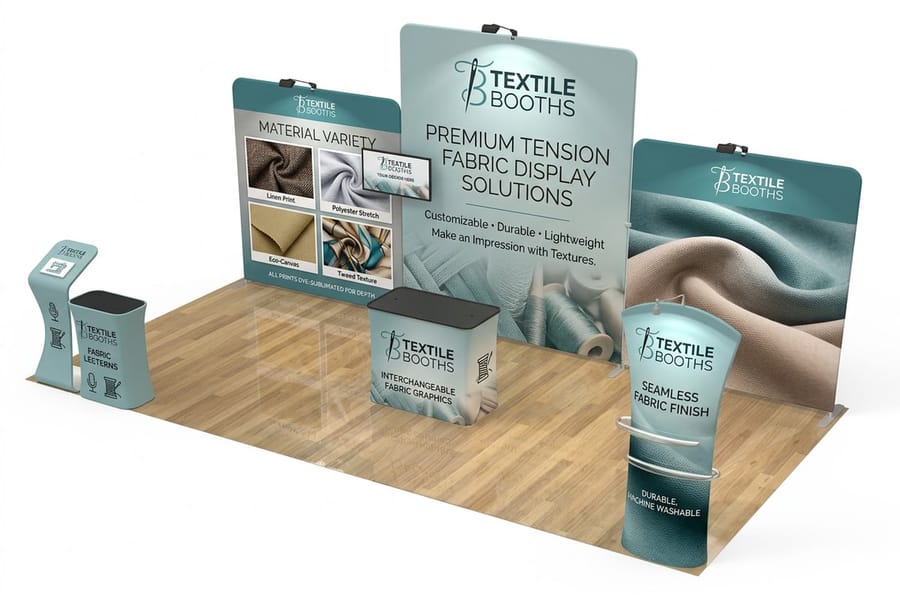
A vendor booth is not a wall to fill. It is four separate surfaces at four different heights, and each one is read from a different distance by a person moving at walking speed.
The top band, above eight feet. This is the only part of your booth visible over other people's heads from down the row. It carries the company name and nothing else. No tagline, no phone number, no list of services. If your name does not sit in the top two feet of the backdrop, you do not have a booth sign, you have decoration.
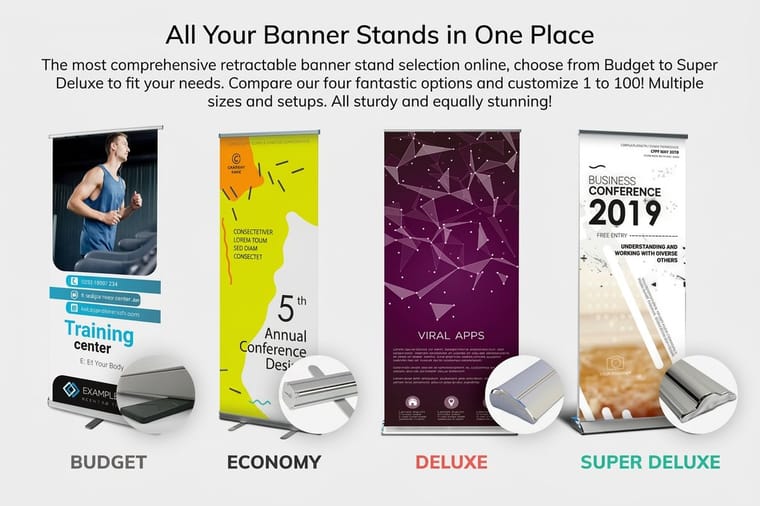
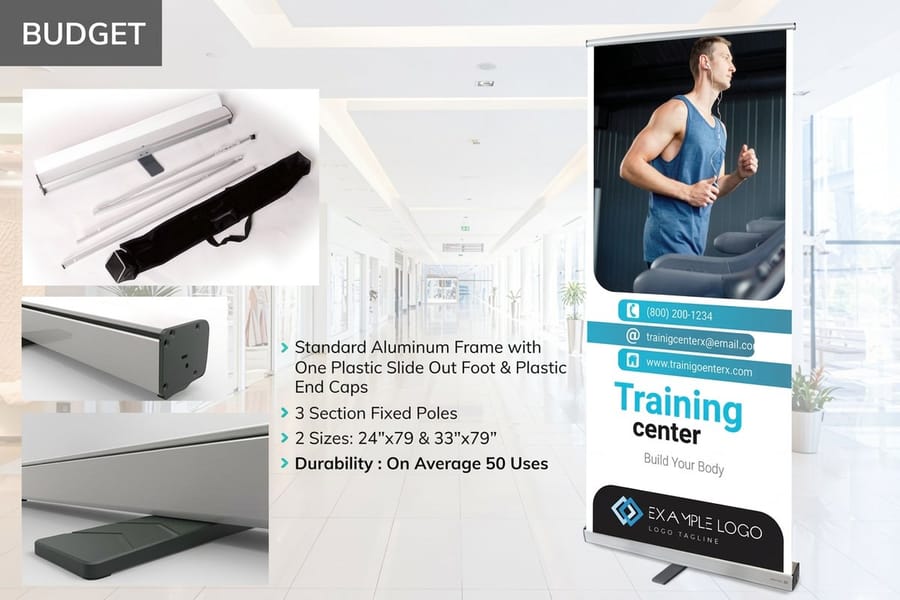
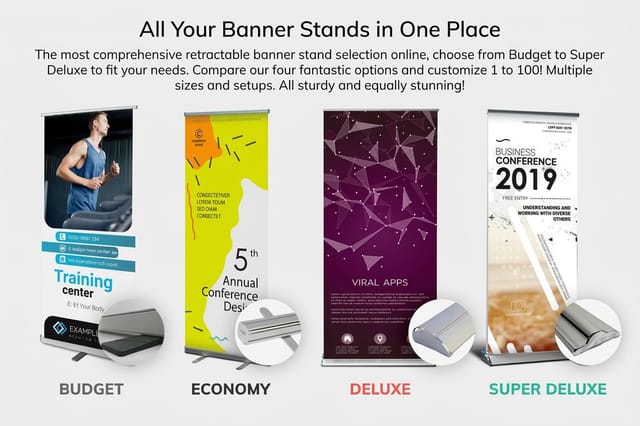
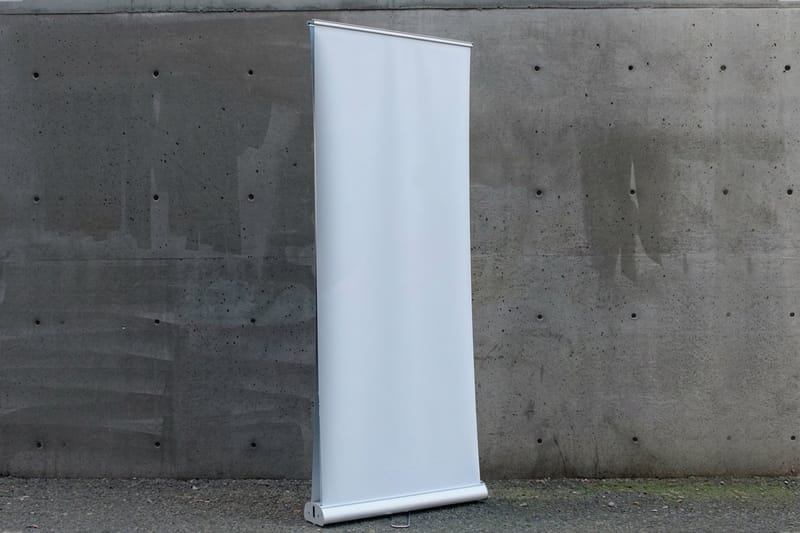
The mid wall, five to eight feet. Eye level for someone standing in the aisle. This is where what you actually sell goes, in one line if you can manage it. Retractable banner stands live here because the useful part of a 33 by 81 inch graphic sits right in that band.
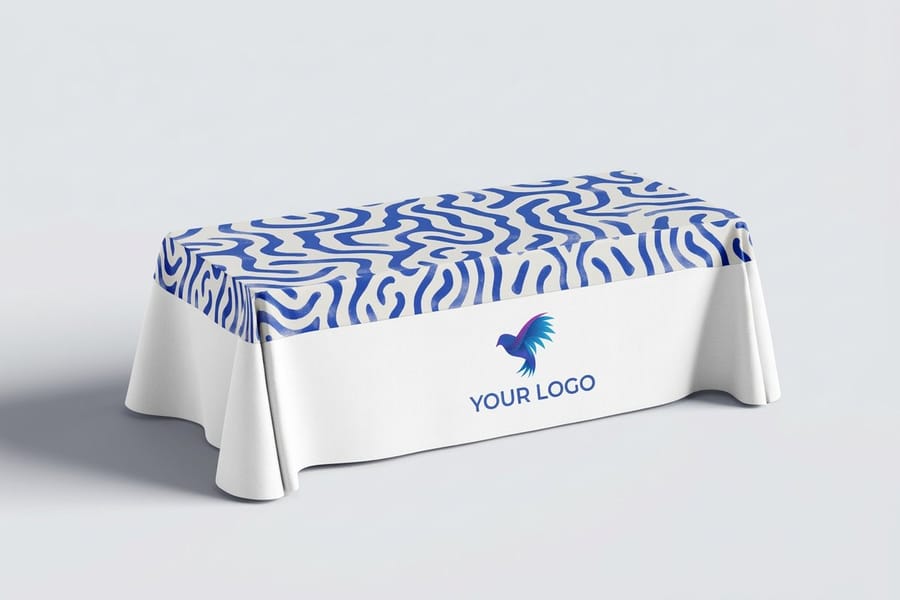
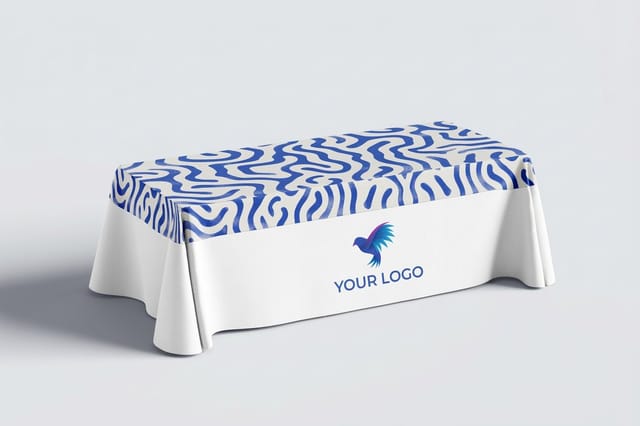
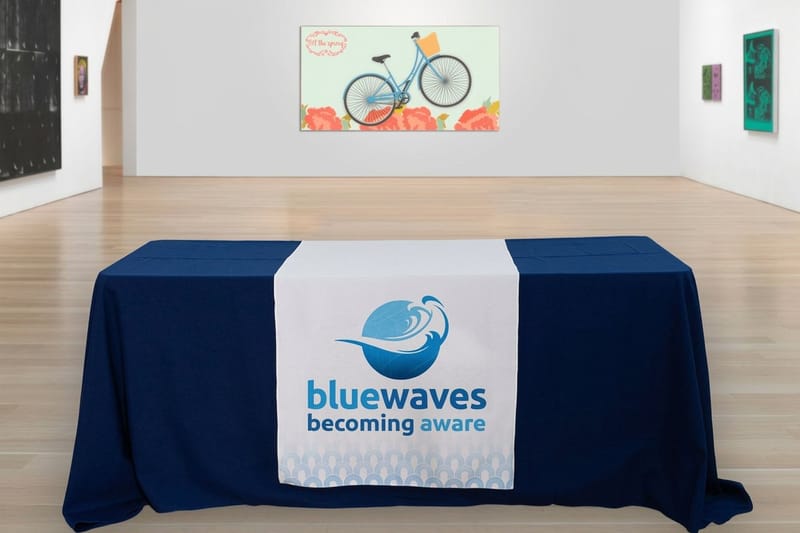
The table front, two and a half to five feet. Read by someone who has already stopped. A table throw is a branding surface, not a poster, so it takes the logo and at most a short line. Anything longer gets read by nobody.
Below two and a half feet. Blocked. Your own staff stand there, chairs go under the table, and by hour two there are boxes on the floor. Print nothing there you need anyone to see.
Rules matter as much as heights. Most US shows base their exhibitor rules on the IAEE display guidelines: an inline booth gets eight feet of height against the back wall, and anything in the front strip near the aisle has to stay under four feet. Your exhibitor kit is the authority, and it is worth reading before you order a tall stand you cannot legally set up. The full range of what fits an inline booth is in our trade show printing collection.
Header, Backdrop, Table and Floor Signs Compared
Five pieces of signage cover almost every vendor booth. They differ less in looks than in where they sit, how far they read, and how much of your budget they eat.
| Sign | Where it sits | Reads from | Starting price | Best for |
|---|---|---|---|---|
| Fabric backdrop or booth kit | The full back wall, 8 ft tall | 30 ft down the aisle | $2,599.00 | Exhibitors doing several shows a year who want one seamless wall |
| Retractable banner stand | Beside or in front of the back wall | 15 ft, across the aisle | $139.00 | The cheapest way to own eye level, and it travels in a shoulder case |
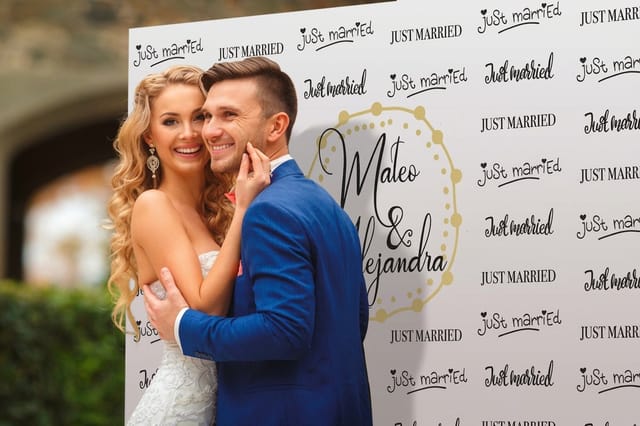
| Step and repeat banner | Back wall, photo backdrop | 15 ft, and every photo taken against it | $217.50 | Booths where people pose, and any launch you want shared |
| Table throw | Over the show table, front panel | 5 ft, once someone has stopped | $225.00 | Covering the contractor's bare table and branding the one surface everyone touches |
| Foam core sign | On the table or an easel | Arm's length | $49.99 | Prices, the show special, and anything you will change between shows |
Read the fourth column against the third. The cheap sign that reads from five feet cannot do the job of the one that reads from thirty, so a booth built entirely from foam core is invisible until someone is already standing in it. If the budget only stretches one way, spend it upward: two retractable banner stands at the back wall out-earn a table full of small signs. An X frame banner stand from $91.00 does the same job for less if you can live with a lighter frame that needs a wall behind it.
Outdoor markets change the answer. There the wind decides, and a feather flag from $108.75 pulls people from further away than any flat sign because it moves. Indoors a feather flag is usually against the show rules and always in someone's way.
Sizing Booth Signs So They Read From the Aisle
The most common booth sign mistake is not ugly artwork. It is type set at a size that works on a laptop and disappears at fifteen feet.
Use one inch of capital letter height for every ten feet of viewing distance. Aisles at most shows run around ten feet wide, so someone walking the far side is about fifteen feet from your back wall and needs one and a half inch capitals to read you without stopping. Someone scanning your row from thirty feet needs three inch caps. Set the name at the top to that size, and let everything else fall away in a clear step down. Three sizes is plenty: name, offer, detail.
Then account for the hardware, because every fixture eats part of the graphic. A retractable banner is 33 by 81 inches, but the bottom couple of inches roll into the base cassette and the lowest foot sits behind whoever is standing there, so the working area is the top four feet. A table throw front panel is thirty inches deep and half of it is behind chairs and legs, so the logo belongs in the top twelve inches. On a step and repeat, keep the logo tile small enough that a whole tile lands in a portrait photo crop, or the shots that get posted will show half a logo.
Build the file at full size with the safe margins the product page specifies, in CMYK, with fonts outlined. Correctly sized layouts for banners, throws and rigid signs are in the blank template library, and our guide to trade show poster sizes covers how large a poster can get before it stops fitting an inline booth.
Materials, Weight, and What Actually Survives the Trip

A booth sign is judged twice: once on the floor and once when you unpack it at the next show. Material choice is mostly a question about the second one.
Printed fabric is the traveler. It folds into a case, the crease marks relax overnight, and it does not throw glare back at the hall lights, which is why fabric dominates back walls. Vinyl is the outdoor answer. It handles rain and rope and sun, but a folded vinyl banner keeps that fold forever, so it travels rolled on a tube or it travels ruined. That is the trade off in one sentence: fabric packs small and stays indoors, vinyl banners from $79.00 go outside and need a tube.
Rigid signs split the same way. Foam core is light and cheap and dents at the corners on the first flight, which makes it a one show sign for prices and specials rather than a permanent fixture. If a rigid sign has to come back out at six shows, spend on a harder substrate and keep the foam core for the messages that change. The full material lineup sits in the banners collection and the table covers collection.
Weight is the hidden cost. Show freight and drayage are charged by weight, and hardware weighs more than print. A pair of retractable stands and a fabric backdrop go in checked luggage. A full hard wall system does not, and the shipping on it can outrun the print. If you exhibit twice a year, buy the light kit. If you exhibit twelve times, buy the wall and let it amortize.
Wally explains booth signs
Name up high, offer at eye level, nothing near the floor
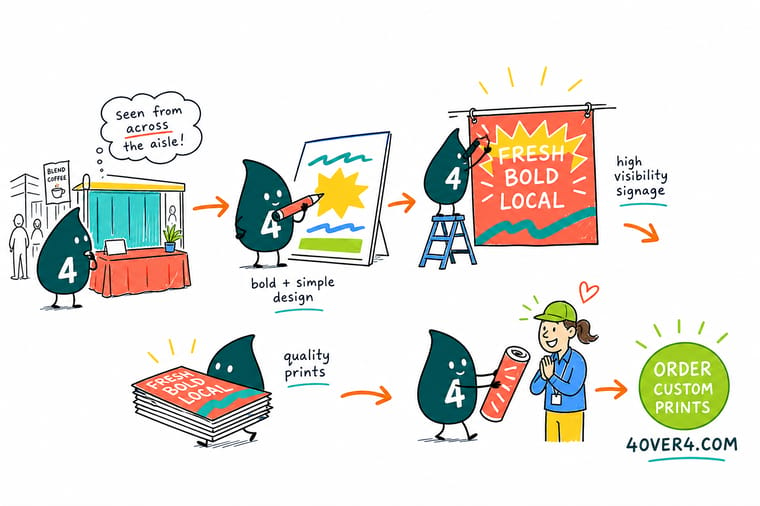
Wally works the aisle for a living. From thirty feet he can only see the top band of your booth, so that band gets the company name in three inch capitals and nothing else. At fifteen feet he reads the banner beside the wall, which tells him what you sell in one line. At five feet he reads the table throw, and by then he has already decided. Below his waist he sees chairs, boxes and your staff, so anything printed down there was printed for the carpet.
Order a retractable banner stand →
Specs and pricing
Booth sign sizes and starting prices
Three pieces cover a standard inline booth. Retractable banner stands run from 24 by 79 to 59 by 85 inches on 13 oz smooth blockout vinyl, from $139.00, in 3 business days. Table throws come in two sizes, 84 by 126.5 inches for a 6 ft table and 84 by 150.5 inches for an 8 ft table, on 9 oz premium polyester from $225.00. Foam core signs start at 16 by 20 inches on 3/16 inch white or black board, from $49.99.
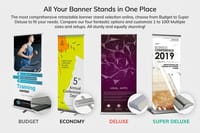
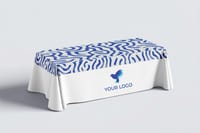
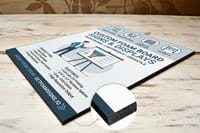
Back wall, table, stand
Order the signs that hold your booth together

Posters, stands and throws
Where to go next

One printer since 1999
Flags, throws, and stands in one run
Common Questions
Your booth sign questions, answered
What booth signs do I need for a 10 by 10 booth?
Four pieces cover a standard inline booth: something on the back wall, something at eye level beside it, a table throw, and one small counter sign. In practice that is a fabric backdrop or a pair of retractable banner stands across the back, a table throw over the six or eight foot table the show provides, and a foam core sign propped on the table for the offer or the price. Add a feather flag only if you are in an outdoor market or an end cap where people approach from the side. A fabric booth kit bundles the back wall and its hardware if you would rather buy the whole wall at once.
How big do the letters have to be to read from the aisle?
Allow one inch of capital letter height for every ten feet you want it read from. Aisles at most shows run about ten feet wide, so a passerby on the far side is roughly fifteen feet from your back wall and needs one and a half inch capitals. A person scanning the row from thirty feet down needs three inch caps. Set your company name at the top in that size and let everything else be smaller, because a wall of evenly sized text reads as a paragraph and nobody reads a paragraph while walking.
Can I hang a sign above my booth?
Only if the show allows it, and inline booths usually do not. Hanging signs are typically reserved for island and peninsula spaces, and they carry a rigging charge from the show contractor on top of the print. For a standard inline booth the top band of your backdrop is your hanging sign, which is why the company name belongs in the top two feet of the graphic rather than centered.
Should a trade show backdrop be vinyl or fabric?
Fabric for anything you fly or carry, vinyl for anything that has to survive weather. Printed fabric folds into a suitcase and the fold marks relax out overnight, and it does not glare under the hall lighting the way a gloss vinyl does. Vinyl banners are the better answer outdoors and on any surface that gets rain, wind or a rope. The trade off is glare and creasing indoors, so a vinyl banner meant for repeat shows travels rolled on a tube, never folded.
What size table throw fits a show table?
Show contractors supply six foot and eight foot tables, both thirty inches tall and usually twenty four or thirty inches deep, so buy the throw to match the table length in your booth kit rather than guessing. Keep the artwork in the top twelve inches of the front panel. Attendees stand at the table, chairs go under it, and boxes end up beside it, so the bottom half of a throw is invisible for the whole show.
How far ahead should I order booth signs?
Order early enough to hit the advance warehouse date in your exhibitor kit, which is normally several weeks before move in, and add your print turnaround on top of that. The failure people actually hit is not the printing, it is discovering three days out that the show kit forbids the height they ordered. Read the display rules first, then set the artwork, then order. Turnaround options and cutoffs for each product are listed on its own page in the configurator.
Get Started
A table throw costs $225.00, a feather flag $108.75
Pick your back wall, add a stand at eye level and a throw for the show table, and we print the set so it lands before your advance warehouse deadline.
Legal Disclaimer
Gold Standard guarantees apply to all standard orders placed through 4over4.com. Price match requires verifiable proof of a competitor's published price for an equivalent product with matching specifications and turnaround time. Satisfaction guarantee covers manufacturing defects and print quality issues. Contact support with order number and documentation.
