
How Pearlescent Paper Prints and When to Use Pearl Stock


Pearl stock is the one finish where the paper does the work and the ink gets out of the way. Here is what the shimmer is made of, how it moves your color, and the four artwork changes it needs.
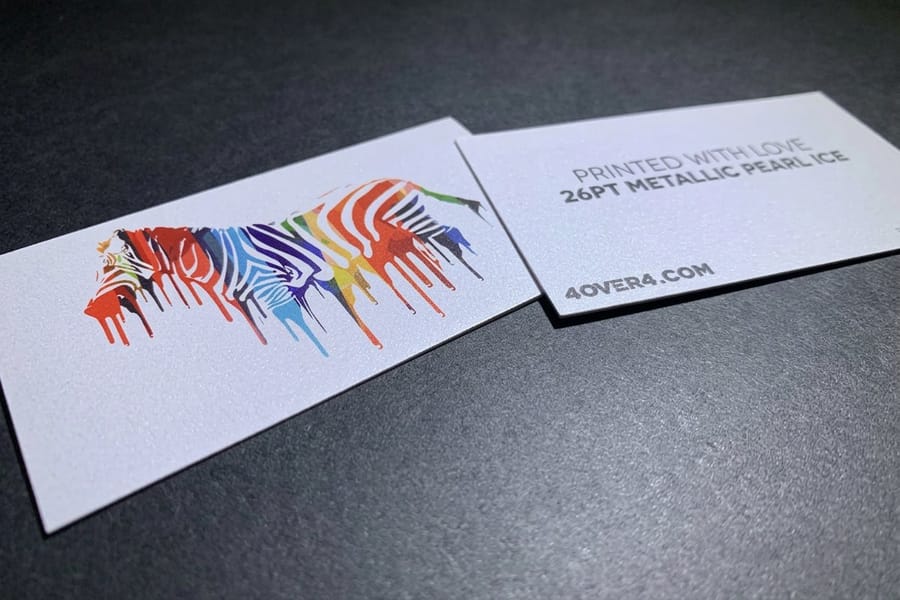
Pearlescent paper is stock coated with mica pigment, so the sheet itself shimmers and shifts as it tilts. The shine is in the paper rather than in an ink or a foil, which means it covers the whole card and shows strongest in the areas you leave unprinted. Process ink is transparent, so light returns through it off the mica: dark colors deepen, pale tints wash out, and white in your file prints as bare shimmer because no press carries white ink.
Quick answer
Mica in the coating, ink in front of it
Pearl stock shimmers because flat mica platelets sit in its coating and reflect light back in one direction. Your ink film is transparent, so the returning light passes through it twice. Saturated colors gain depth, tints under about 20 percent vanish into the sheen, and unprinted areas are where the effect is strongest. There is no white ink on a four-color press, so anything white in the file comes back as bare pearl. Judge it in the hand, at an angle, never on a screen.
What Pearlescent Paper Actually Is
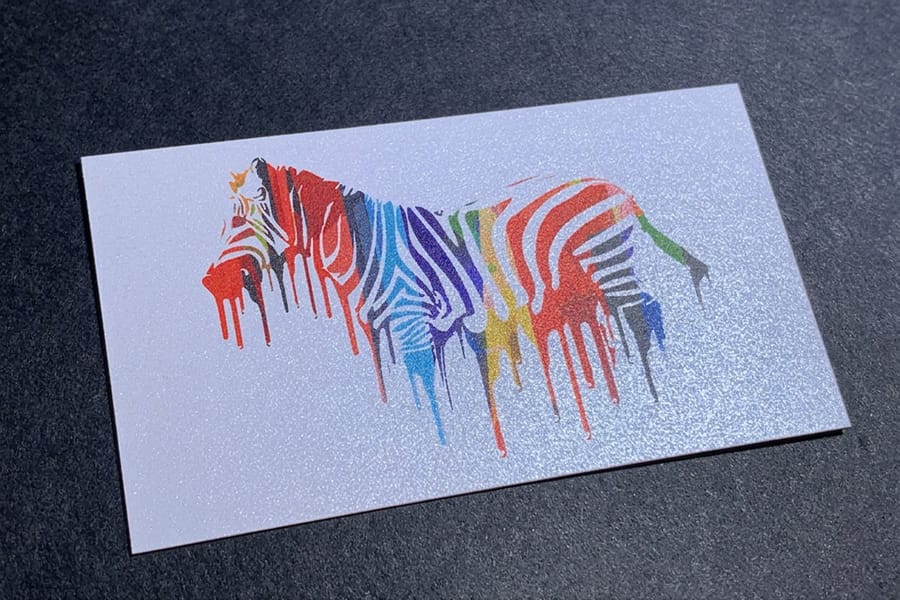
Pearlescent stock is paper coated with mica pigment. Mica splits into flat transparent platelets that settle roughly parallel to the surface, and each platelet reflects a fraction of the light while passing the rest deeper into the coating. Reflections coming back from slightly different depths are what produce the soft glow that shifts as you tilt the card. Car paint and pearl nail polish use the same pigment for the same reason.
Two consequences follow, and both are easy to miss on a screen. The shimmer covers the entire sheet, including the areas you never print, so the cheapest part of the design is the part you leave alone. And the effect is directional: it flares under raking light and disappears when the card is flat under a ceiling fixture. That is why a pearl card looks unremarkable in a photograph and impressive in a hand.
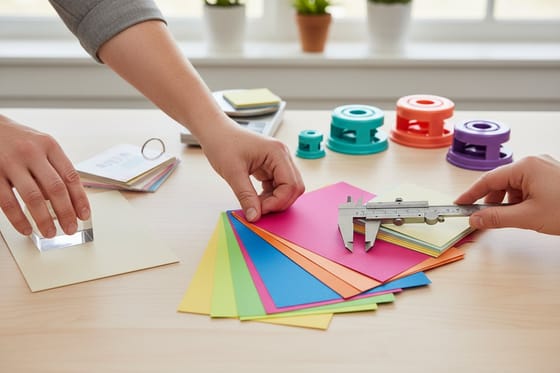
Every pearl product we print runs on one sheet, 26pt Metallic Pearl Ice, which is roughly twice the caliper of the 14pt stock most business cards use. If the point system is unfamiliar, the cardstock weights guide lays out how points map to what you feel.
| Effect | Where the shine lives | Coverage | What drives the cost |
|---|---|---|---|
| Pearlescent stock | In the paper coating, under the ink. | The whole sheet, printed areas included. | The stock price. Using more of it changes nothing. |
| Metallic ink | In the ink film, on top of plain paper. | Only where you place it in the file. | An extra ink station or a spot color run. |
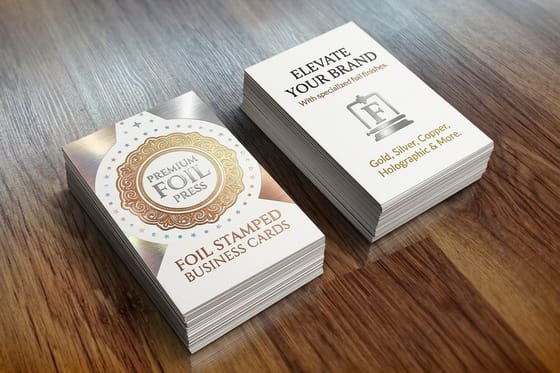
| Foil stamping | A mirror-bright film bonded to the sheet. | Only the shapes cut into the die. | The die plus a separate stamping pass. |
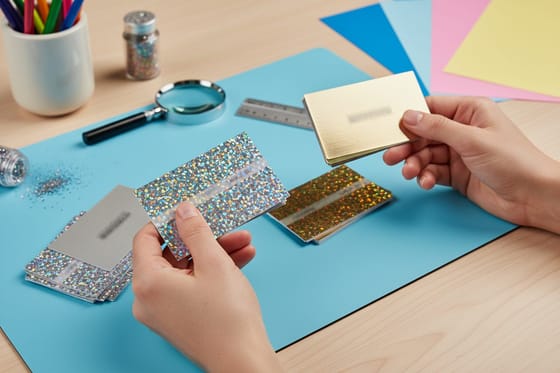
| Glitter stock | Coarse reflective flake on the surface. | The whole sheet, with visible sparkle. | The stock, and the type sizes it rules out. |
Read the coverage column before you choose. Pearl is the right answer when you want the whole piece to feel expensive; foil is the right answer when one logo has to be the brightest thing on the card. The glitter and metallic comparison covers the third row in detail, including why fine type struggles on glitter.
How Pearl Stock Changes Your Color
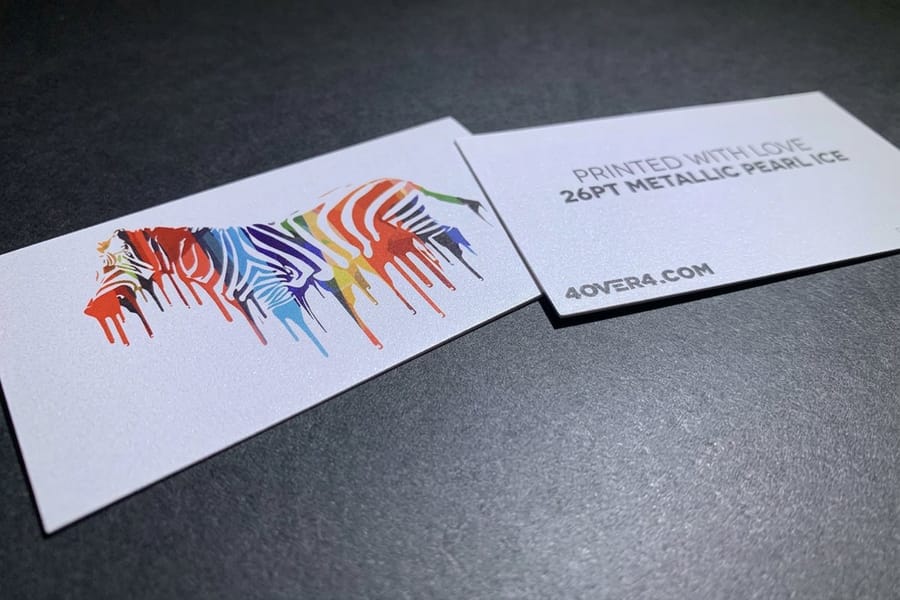
Process inks are transparent. On plain coated white, light hits a bright clay coating and scatters back evenly, which is why a tint looks the same from every angle. On pearl, the light travels through the ink, reflects off the mica, and travels back through the ink again before it reaches your eye. Same file, two very different results.
Dark and saturated colors win. Deep navy, burgundy, forest green and solid black all gain depth, because the returning light is lit from behind the ink rather than bounced off a flat white. Light tints lose. Anything under roughly 20 percent coverage tends to disappear into the sheen, so a pale grey panel, a soft blush background or a 10 percent tint rule may simply not read. Photographs flatten out, because the pearl adds a broad highlight the photographer never put there and skin tones pick up a sheen that looks wrong.
Then there is white, which is the single most common surprise. A press with four inks has no white, so white in your file means no ink at all, and no ink on pearl means pearl. Reverse a logo out to white and it comes back shimmering. Nine times out of ten that is exactly what you wanted, but design for it deliberately rather than discovering it on the proof.
The practical rule: build pearl artwork the way you would build a design for dark stock. Commit to strong color or to bare paper, and skip the middle. If you want the same shimmer applied selectively instead of everywhere, metallic business cards put the effect in the ink and leave the rest of the sheet plain.
Setting Up Artwork for Pearl Stock
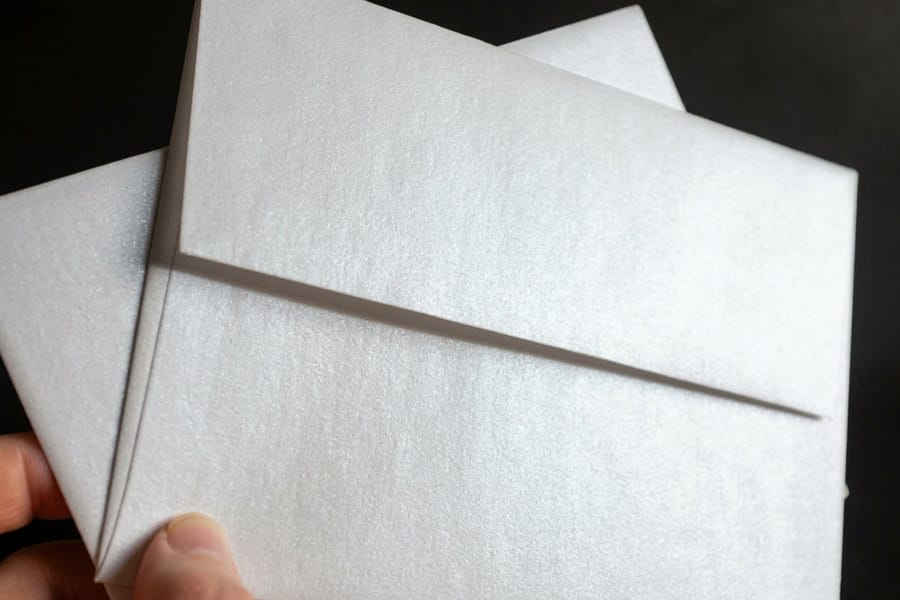
Build the file in CMYK at full size with fonts outlined, the same as any print job, then make four adjustments that are specific to pearl.
- Leave negative space on purpose. Unprinted areas are where the effect actually shows. A layout that covers the card in a full-bleed solid hides the stock you paid for.
- Delete the white boxes. Anything filled with paper white in your file will print as shimmer. Check drop shadows, logo backgrounds and placed images with white edges, because those are the usual offenders.
- Keep type dark and reasonably weighted. Black, deep brand colors and heavy rules hold up against a reflective background. Grey type at 40 percent on a shimmering surface is hard to read at an angle.
- Score anything that folds. A 26pt sheet cracks on an unscored fold, and the crack shows as a bright white line where the coating splits. Ask for the score and run the fold with the grain.
One more thing worth planning around: heavy solid coverage on a slick coating is more prone to scuffing in transit than the same solid on uncoated stock. It is not a defect, it is physics, and it mostly matters on large dark areas that run to the trim edge. Pulling a solid back a couple of millimetres from the edge, or breaking it with a lighter panel, is usually enough.
Start from a correctly sized layout in the blank template library so the bleed and safety margins are right the first time, and read how to choose paper for a print project if you are still weighing pearl against a plain premium stock.
Where Pearl Earns Its Price, and Where It Does Not
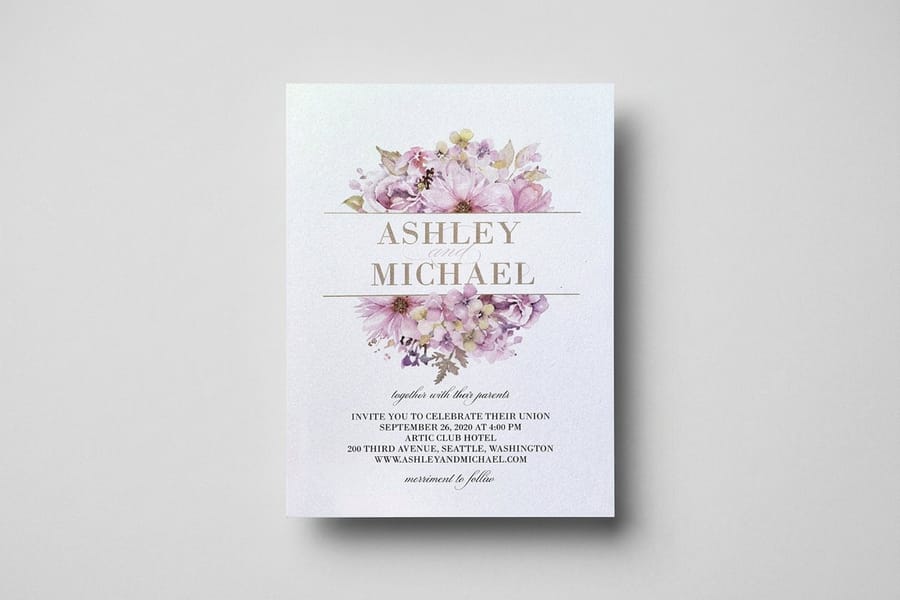
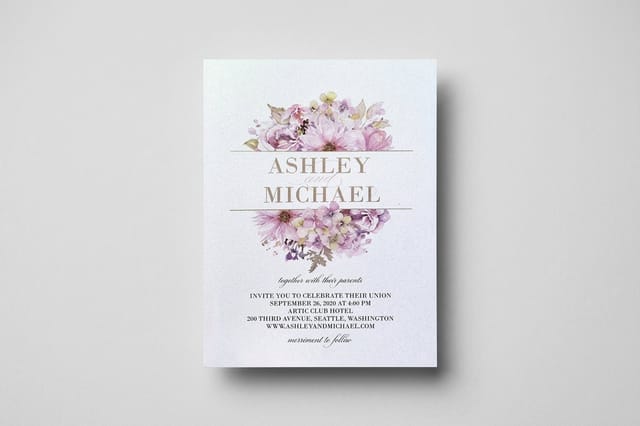
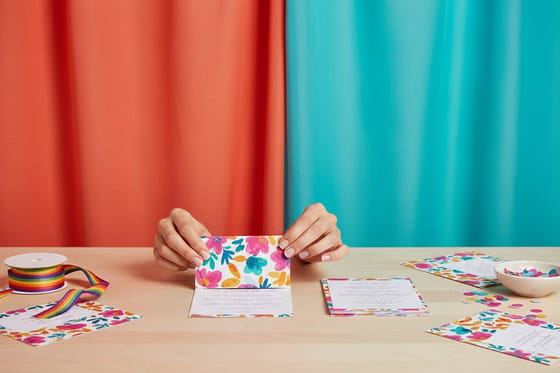
Pearl pays off when the piece is handed over, held, and kept. Invitations are the clearest case: the recipient reads the card slowly, often in daylight near a window, which is exactly the lighting the effect needs. Ultra thick metallic pearl invitations start at $67 for 50, which works out to $1.34 a card with a matching Pearl Ice envelope, in 4.25 by 5.5, 5 by 7 or 6 by 6 square, plus custom sizes up to 6 by 7. For a wedding suite the format question comes first, and folded versus flat settles it before you pick a stock.
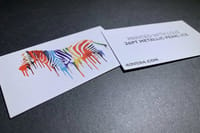
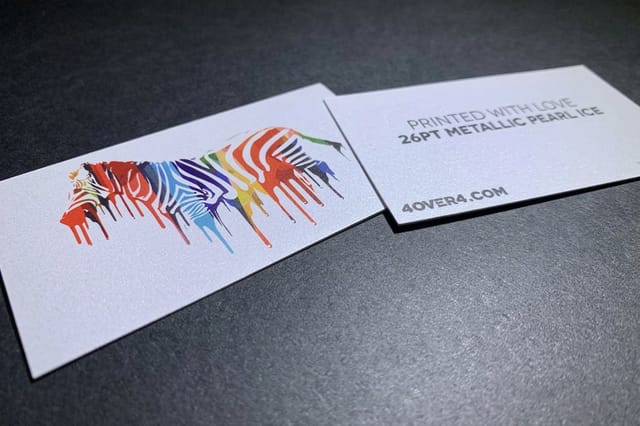
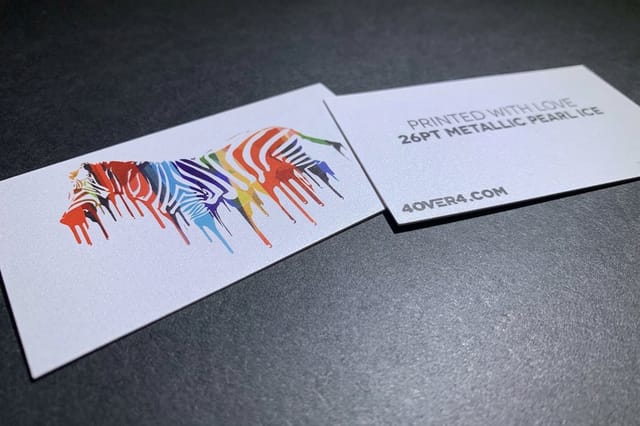
Business cards are the second case, and the arithmetic is friendly. Ultra thick metallic pearl business cards start at $39.11 for 50 against $17.57 for standard business cards, and the per-card price on pearl slides toward about 10 cents at 10,000. That is a small premium on a box that lasts a year. The 26pt caliper does as much work as the shimmer, because the card lands in a hand with a weight that plain 14pt does not have.
Direct mail is the third, in one specific situation: when the mailing is small enough that arrival matters more than unit cost. Ultra thick metallic pearl postcards start at $30.76 for 50 across 14 sizes, from a 2.5 inch square up to 6 by 11, and a thick pearl card in a stack of envelopes gets picked up first.
Where pearl does not earn its keep: photo-led work of any kind, large-volume mail that is skimmed and binned, anything that has to go through an office laser printer afterward, and pieces built around pale pastel color. For those, spend the money on caliper or a coating instead and browse the full range on invitation printing or the metallic printing collection. And order samples before a big run. Pearl is the one finish that cannot be judged on a monitor.
Wally explains pearl stock
The paper glows, the ink just sits in front of it
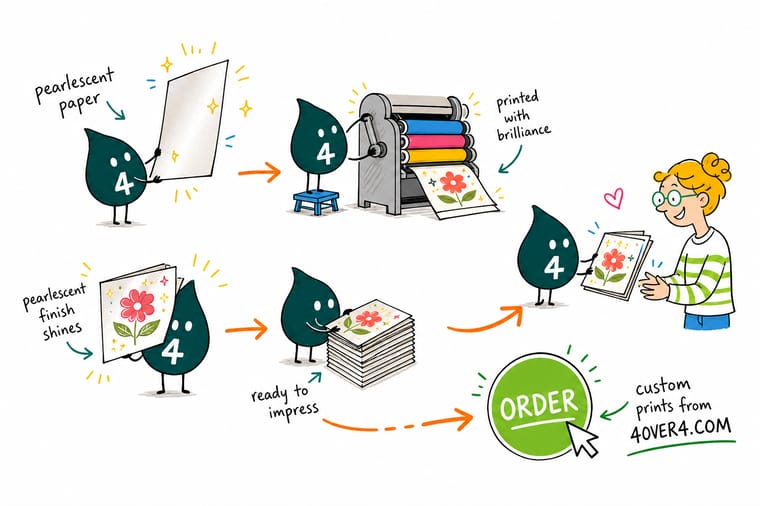
Wally tilts the card until the mica in the coating throws the light back at him. Hold it flat and it looks like a nice heavy card. Tilt it and the whole sheet lights up, including every spot he left blank. That is the trick: the shimmer belongs to the paper, so the empty areas do the most work. He keeps his type dark, throws out the white boxes because white means bare pearl, and never approves a pearl job from a screen.
Order metallic pearl business cards →Specs and pricing
Metallic Pearl Ice sizes, ink layouts and starting prices
The same 26pt pearl sheet across three formats, with live configuration choices and starting prices straight from the 4OVER4.COM configurator.
Print it
Print on 26pt Metallic Pearl Ice
Explore more
Where to go next

By the numbers
Pearl printing you can plan around at 4OVER4
Common Questions
Your pearlescent paper questions, answered
What is pearlescent paper made of?
It is ordinary paper base with a coating that carries mica pigment. Mica splits into flat, transparent platelets that lie roughly parallel to the surface, and each one reflects a little light while letting the rest pass to the platelet below. Stacked reflections from slightly different depths produce the soft shifting glow, which is the same optical trick behind car paint and pearl nail polish. Because the pigment sits in the coating rather than on top of the ink, the shimmer belongs to the sheet and appears everywhere, printed or not.
Can you print white on pearlescent paper?
Not on a standard CMYK press, and this catches people out more than anything else about pearl. There is no white ink in the process, so white in your file means no ink, and no ink on pearl stock means pearl. A logo you reversed out to white will come back shimmering rather than flat white. That is usually the effect you want, but if you genuinely need an opaque flat white on a shimmering sheet, it takes a white-ink press or a white foil, not four-color printing.
Does pearl paper change my colors?
Yes, and in a predictable direction. Process inks are transparent, so the light that reaches your eye has passed through the ink, bounced off the mica, and passed through the ink again. Dark and saturated colors gain depth and look richer than the same file on plain coated stock. Light tints under roughly 20 percent go the other way and disappear into the sheen, so a pale grey background or a soft pastel wash may vanish. Photographs flatten, because the pearl adds a highlight the image never had.
Is pearlescent paper the same as metallic ink or foil?
No, and the difference decides which one you should order. Pearl is a property of the stock, so it covers the whole sheet and costs the same whether you use it on ten percent of the card or all of it. Metallic ink is printed, so it only appears where you place it, and it sits on plain stock. Foil is a separate stamping pass that bonds a mirror-bright film to specific shapes, which is far brighter than pearl but limited to the artwork in the die. Our comparison of gold foil against metallic gold ink walks through how each one behaves in a real job.
Will pearl stock crack when it is folded?
A 26pt sheet will crack along a fold if it is not scored first, and on pearl the crack is more visible than on plain stock because the white fibre core shows through the coating as a bright line. Any folded piece on heavy pearl needs a proper score, and the fold should run with the grain wherever the layout allows. If a design calls for a folded card on pearl, discuss it before the run rather than after, and consider a flat card with a matching envelope instead.
How much more does pearl cost than plain stock?
Less than most people expect, because the sheet does the work instead of an extra finishing pass. Ultra thick metallic pearl business cards start at $39.11 for 50 against $17.57 for standard business cards, and the gap narrows on longer runs as the per-card price on the pearl set falls toward about 10 cents each at 10,000. Ultra thick metallic pearl invitations start at $67 for 50, which is $1.34 a card including a matching Pearl Ice envelope, and ultra thick metallic pearl postcards start at $30.76 for 50.
Can I run pearl stock through my office laser printer?
Do not plan on it. Pearl coatings are slick and non-absorbent, toner has very little to grip, and a 26pt sheet is far thicker than most office printers will feed without jamming. If a piece needs names, dates or seat numbers added later, have the variable content printed with the job rather than overprinting it yourself, or keep the personalised layer on a plain insert card.
Get Started
Ready to print on a sheet that shimmers?
Pick your size, choose full color on one side or both, and we print it on 26pt Metallic Pearl Ice with a 5 business day standard turnaround and same-day rush when you need it.
Legal Disclaimer
Gold Standard guarantees apply to all standard orders placed through 4over4.com. Price match requires verifiable proof of a competitor's published price for an equivalent product with matching specifications and turnaround time. Satisfaction guarantee covers manufacturing defects and print quality issues. Contact support with order number and documentation. On-time delivery rate based on tracked orders 1999 to 2026. Individual results may vary based on shipping carrier performance.
