
How to Reuse and Recycle Packaging Boxes, Pouches and Inserts


A sorting rule you can tape above the bin, material by material, plus the checks that keep a reused box from collapsing or arriving at the wrong address.
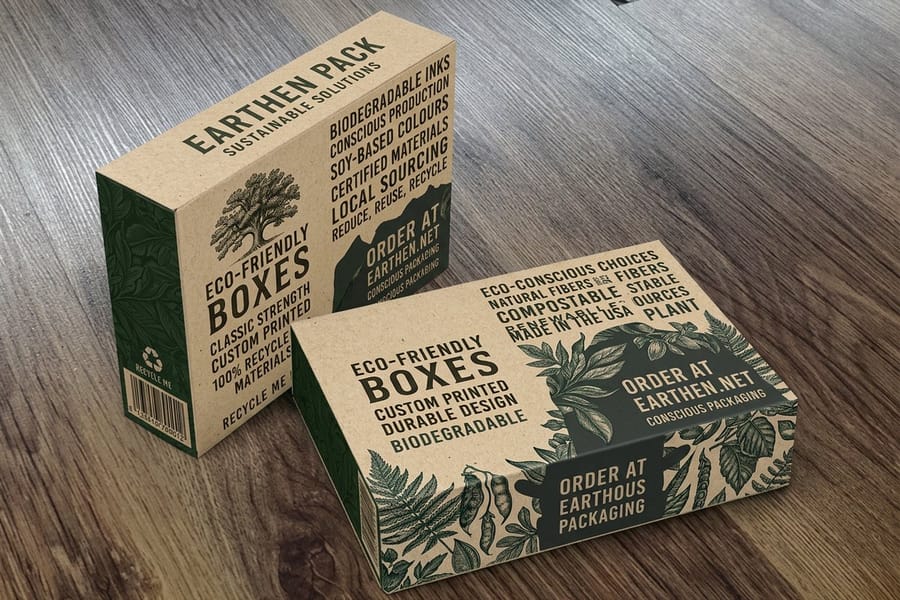
Reuse whatever still has its structure, then recycle the rest by material: corrugated board, kraft paper and molded pulp go in the curbside bin, clean plastic film goes to a grocery store drop off, and laminated pouches and foam go in the trash because their layers cannot be separated. A box is worth reusing until the flutes crush and the corners go soft, and every reused box needs its old shipping label removed or blacked out before it travels again.
Quick answer
Two questions decide where every piece goes
Ask whether it still has structure, then ask whether it is one material. A box with firm corners and uncrushed flutes gets used again, which skips the mill entirely. Once it fails, single material items have a route: corrugated, kraft, chipboard and molded pulp go curbside, and clean polyethylene film goes to a store drop off bin rather than the household recycling. Anything laminated, foil lined or foam has no route at all, so reuse it as storage or accept that it is trash.
Why Reuse Beats Recycling, and Why Both Beat the Bin
Recycling a box means shredding it, soaking it, pulping it, screening it, pressing it and drying it, then trucking the result to a converting plant. Reusing the same box means writing a new address on it. The gap between those two sentences is the whole argument.
That is not an excuse to skip recycling. It is a reason to put reuse first in the sequence, because every reuse delays a trip through the mill without any equipment at all. Corrugated fibre survives roughly six to seven passes through a mill before the fibres are too short to bond, so each reuse is one pass you did not spend.
For a small shop the practical version is simple. Keep a flat stack of intact inbound boxes near the packing bench, sorted by rough size. Use them for outbound orders where the box is not part of the brand experience: returns, wholesale, samples, replacement parts. Save the printed custom mailer boxes for the orders a customer opens on camera. You get the sustainability win and the branding win in the same workflow, without buying two sets of boxes.
The honest limit: reuse only works if you have the space. A stack of mismatched boxes eats floor area that a small studio may not have. If you cannot store them, flatten and recycle immediately rather than letting a damp pile sit in a corner, because wet corrugated is worth nothing to a mill and nothing to you.
Sorting What Can Be Reused, What Can Be Recycled, and What Cannot
Two questions decide everything, and they run in order. First: does this piece still have its structure? If yes, reuse it and stop. Second: is it made of one material? If yes, it has a recycling route. If no, it does not, however green it looks.
That second question catches most of the mistakes. A kraft coffee pouch with a foil barrier is paper, aluminium and polyethylene laminated together. Nothing separates those layers at reasonable cost, so it is landfill. A paper mailer lined with bubble film has the same problem. A plain kraft box is one material and recycles anywhere.
| Packaging | Reuse test | Recycling route | Common mistake |
|---|---|---|---|
| Corrugated box | Corners firm, flutes uncrushed, dry | Curbside, flattened | Recycling it while it is still a perfectly good shipper |
| Mailer box | Tuck flap and side tabs intact | Curbside, flattened | Cutting the tuck flap open and losing the closure |
| Molded pulp insert | No cracks in the wall | Curbside with paper | Assuming it is foam because it is grey |
| Poly mailer | No tears, adhesive strip unused | Store film drop off, clean and dry | Putting it in the household recycling bin |
| Laminated stand up pouch | Reuse as storage only | None, it is landfill | Trusting the kraft look on the outside |
| Tissue paper | Not torn, not creased through | Rejected by most programs | Filling the paper bin with it |
| EPS foam insert | No crumbling edges | Specialist drop off only | Bagging it with the cardboard |
Print that logic on a card and tape it above the bin. The people unpacking your deliveries are rarely the people who read the sustainability policy, and a four line rule at the point of decision beats a policy every time. If you want the full material by material breakdown, our guide to types of packaging materials covers what each substrate is actually made of.
Reusing Shipping Boxes and Mailer Boxes Without Losing the Parcel
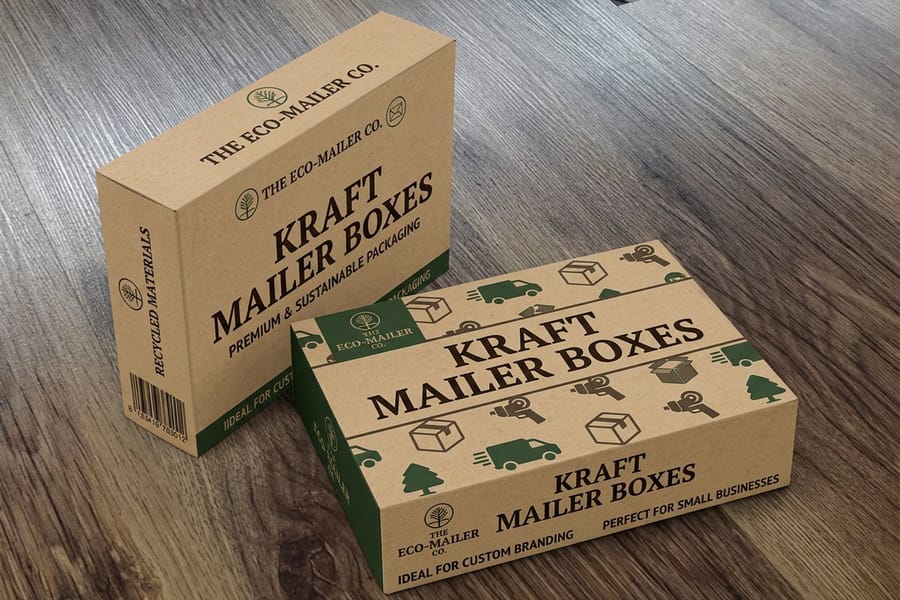
A reused box fails in one of two ways: it collapses, or it goes to the wrong address. Both are avoidable in about a minute per box.
Check the board before you check anything else. Press each vertical corner between finger and thumb. A sound corner resists and springs back. A crushed one folds flat and stays flat, which means the flutes inside have collapsed and the box has lost most of its stacking strength. Look at the bottom flap for the round box maker certificate: it prints the board grade and a maximum gross weight, and that number still applies to a box on its second trip only if the board is undamaged.
Then kill every old marking. Carrier scanners are not fussy about which barcode they read. Peel the previous shipping label off, and if it will not come away cleanly, cover it completely with a fresh label or a solid block of marker. Do the same with any routing barcodes printed directly on the box. This is the single most common cause of a reused parcel arriving back where it came from.
Two rules that catch people out. Boxes supplied free by a carrier for a specific service, such as USPS Priority Mail boxes, may only be used for that service, so they are not a general reuse stock. And a mailer box opened with a knife instead of the tear strip usually loses its front tuck flap, which is the part that holds it shut. If you plan to reuse mailers, open them by the strip. The differences between the two styles are set out in our guide on mailer boxes versus shipping boxes.
When the board finally fails, flatten it and put it out. Do not try to rescue a soft box with extra tape: the tape holds the shape but adds no stacking strength, and the failure happens in the middle of a stack rather than in your hands.
Pouches, Void Fill and Protective Inserts
Inserts are where good intentions go wrong, because the protective layer is almost always a different material from the box it sits in and it rarely says so anywhere.
Kraft paper, honeycomb wrap and crinkle fill are paper. They go in the curbside bin with the box, and they can be smoothed out and reused two or three times before they lose their spring.
Molded pulp trays are paper as well, despite looking like foam. Recycle them with cardboard, or keep the ones sized for something you ship regularly.
Air pillows and bubble wrap are polyethylene film. Deflate them, because a bin full of air is a bin full of nothing, then take the flat film to a grocery store drop off point with your plastic bags. Never put film in the household recycling bin: it wraps around the rotating screens at the sorting facility and shuts the line down.
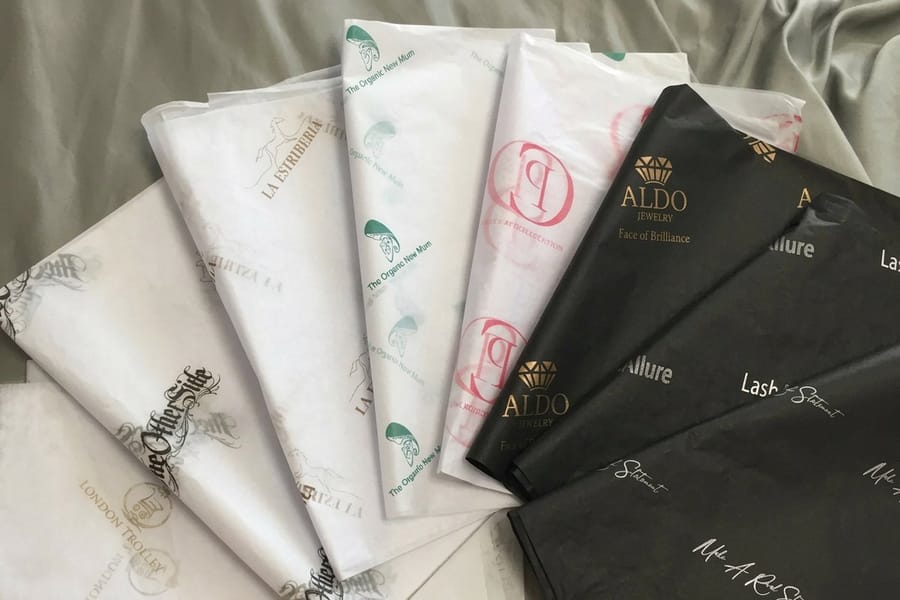
Tissue paper sits on its own. The fibres are too short for a mill to recover, so most programs will not take it, but it survives handling well and folds flat. Treat it as a reuse item and it earns its keep for months.
Laminated pouches have no recycling route at all in ordinary municipal collection. Reuse is the only honest option: they hold small hardware, seeds, offcuts and cables well because the barrier that made them unrecyclable also makes them airtight.
If you are choosing what to put in the box in the first place, a packaging sleeve at $438.25 does the branding job that a printed insert card and a plastic wrap would otherwise share, in one recyclable piece of board. Our guide on packaging inserts that drive repeat sales covers what to include beyond the padding.
Recycling Correctly, Material by Material
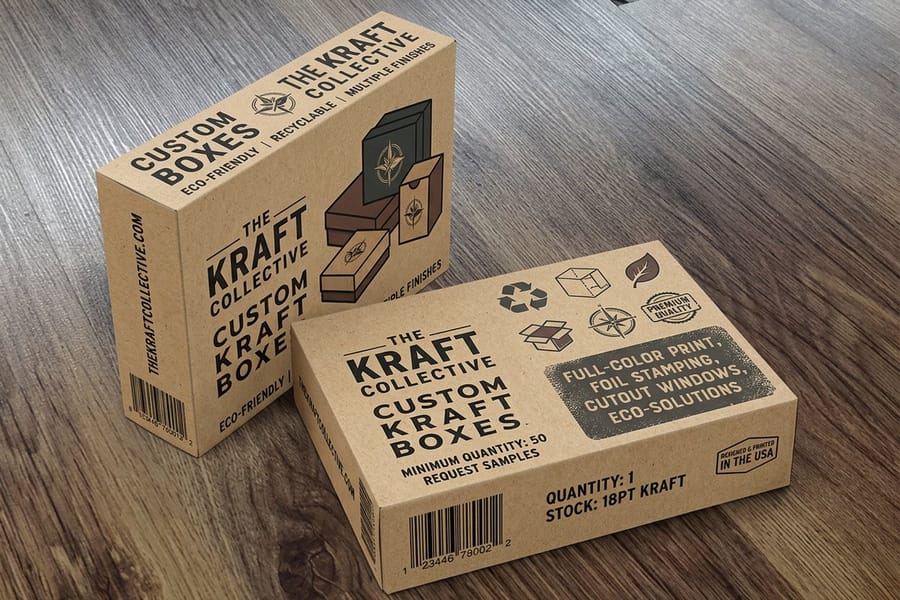
Contamination is what turns a bale of recyclable board into a bale of rejected board, and it comes from four things: grease, moisture, plastic and food. Everything below assumes the item is clean and dry.
Corrugated and kraft board. Flatten, keep dry, leave the labels on. Grease is the hard stop: an oil soaked pizza base cannot be pulped, so tear off the greasy panel and recycle the clean lid. Wax coated produce boxes are also out, and you can spot them because water beads on the surface instead of soaking in.
Chipboard and folding cartons. The thin grey board behind cereal boxes and cosmetic cartons recycles with paper. Take out any plastic window or foil liner first, which is usually a single tug.
Plastic film. Look for the number four inside the triangle, meaning low density polyethylene. Clean, dry, single layer film goes to store drop off. A film with a printed foil layer or a paper backing does not, whatever number is printed on it.
Rigid plastic. Clamshells and blister packs are usually PET or PVC, and acceptance varies by town more than any other material. Check your municipal list rather than guessing, because a wrong guess here contaminates the whole load.
Foam. Expanded polystyrene is not collected curbside anywhere in the United States. Some shipping stores and a small number of drop off centres take clean white blocks. Everything else goes in the trash.
Tape and adhesive. Plastic tape is screened out at the mill and does not need heroic removal. Water activated kraft tape repulps with the board, which is why it is the better choice on packaging you print anyway. The mechanics of the board itself are in our corrugated board guide, and the choice between board types is covered in cardstock versus corrugated.
Designing Packaging That Earns a Second Life
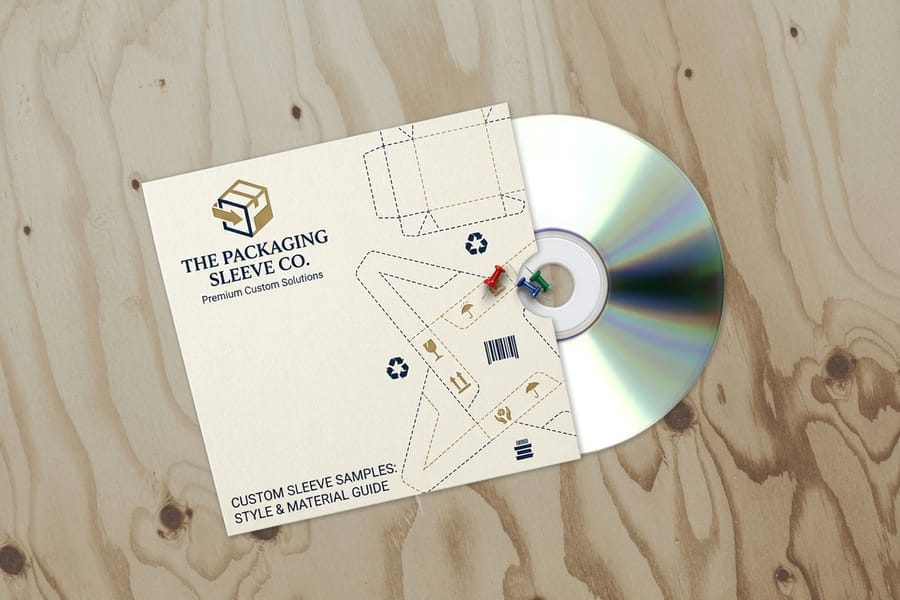
Most packaging is thrown away because nothing about it suggested keeping it. A few decisions at artwork stage change that, and they cost nothing on a run you are already printing.
- Put a tear strip on the mailer. It is the difference between a box that opens intact and a box someone cuts the front off. Reuse depends entirely on the closure surviving.
- Print the return instructions inside the lid. The customer sees them at the moment they are deciding what to do with the box, which is the only moment that matters.
- Keep the outside calm. A heavily printed box announces a specific brand and a specific order, which makes it awkward to send onward. A kraft exterior with the logo on the inside reuses far more easily.
- Choose one material per component. Uncoated board, paper tape and paper void fill make a parcel that recycles as a single unit with no sorting at all.
- Skip the full flood laminate. A gloss laminate makes board harder to pulp and adds nothing a spot varnish would not. Save the coating for the piece that genuinely needs scuff protection.
- Size the box to the product. An oversized box needs more void fill, costs more in dimensional weight, and crushes more easily because the walls have nothing to brace against.
None of this requires a different print process. It is the same artwork file, arranged with a second use in mind. If you are building the file now, our guide to preparing files for packaging products covers dielines, bleed and the assembly instructions for each box style.
Eco Friendly Packaging We Print at 4OVER4.COM
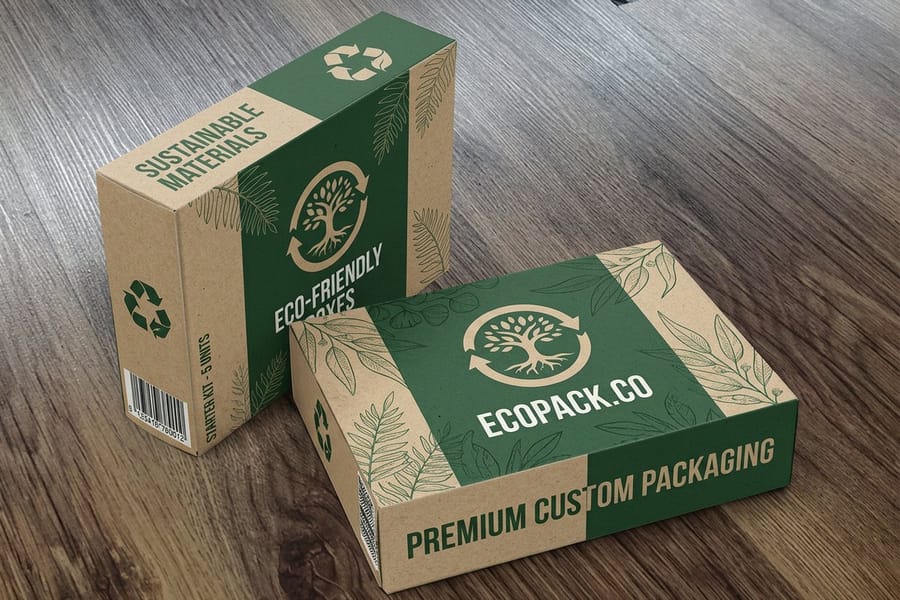
The packaging with the best end of life is the plainest packaging: uncoated board, one material, printed rather than laminated. That is most of what we print.
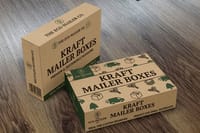
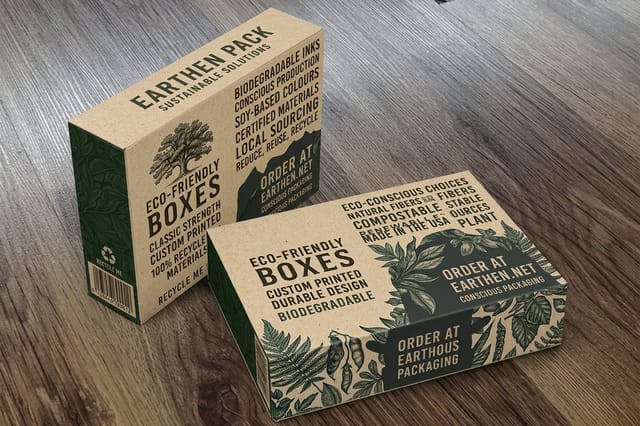
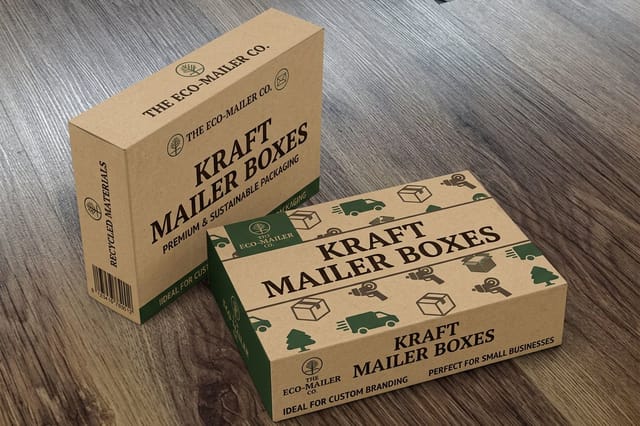
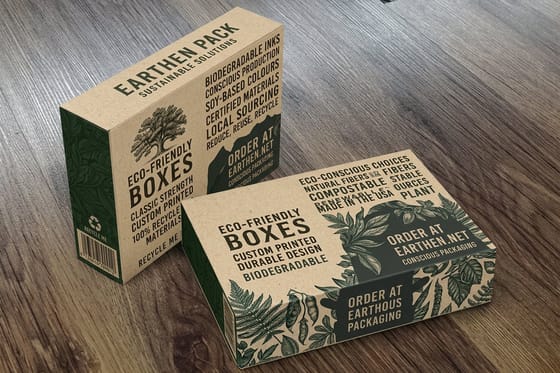
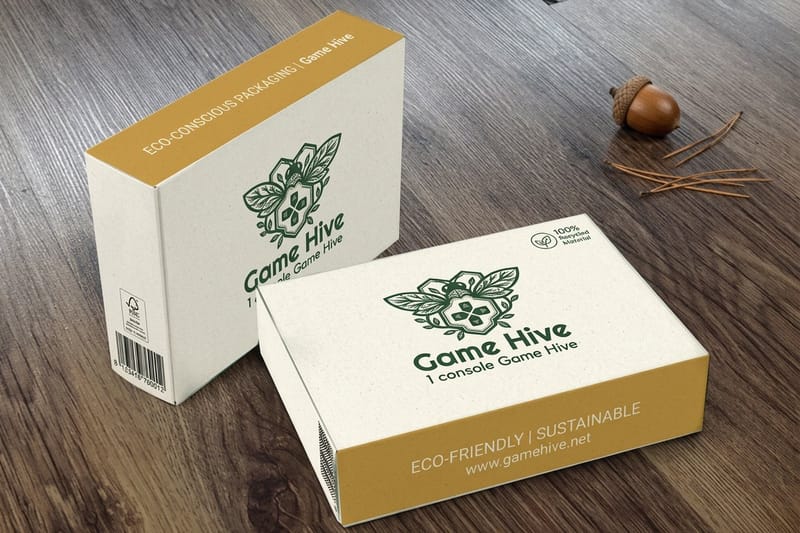
Eco friendly boxes start at $711.78 and use recyclable board without a gloss laminate, so the whole box goes curbside when it finally gives out. Kraft mailer boxes at $711.78 do the same job in natural brown board, which is the easiest exterior to reuse because it does not shout about the previous sender. Shipping boxes at $711.78 are the plain workhorse for the outbound stack.
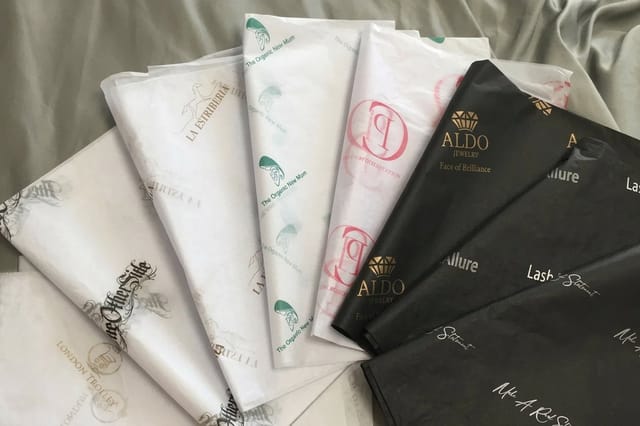
For the inside of the box, custom tissue paper at $126.32 replaces plastic wrap with something the customer keeps, and packaging sleeves at $438.25 carry the branding on a separate strip of board so the box underneath stays plain and reusable.
Two honest caveats. These are minimum order quantities on a custom printed run, so they suit a business shipping regularly rather than someone sending a dozen parcels a year. And recyclable board is only recyclable if the customer treats it as board, which brings us back to what you print on it. Browse the full range in the packaging printing collection or the custom box printing category.
Turning a Second Life Into a Brand Story Worth Telling
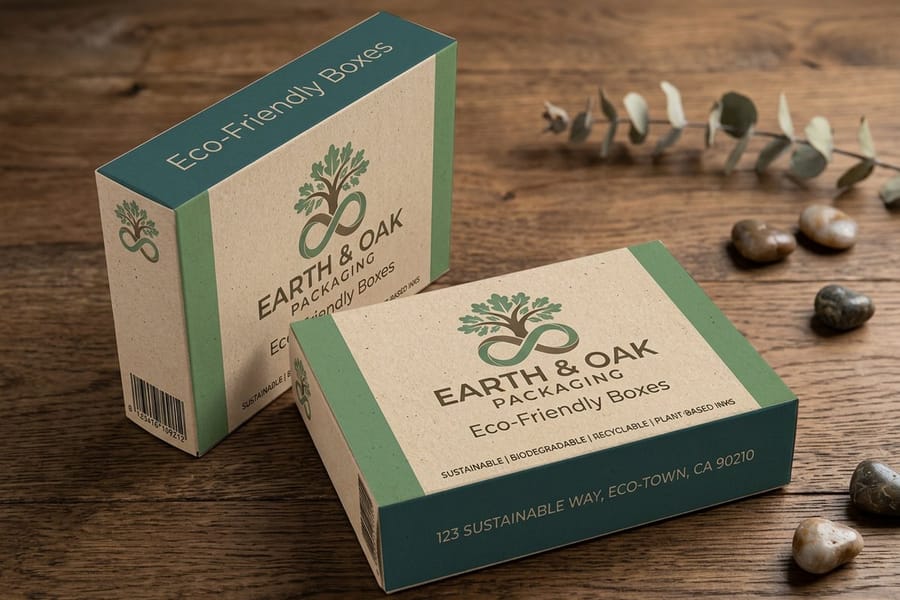
Sustainability claims fail when they are vague. "Eco friendly packaging" tells a customer nothing and reads as marketing. A specific instruction reads as competence.
Say the concrete thing on the box itself. "This box is uncoated board. Flatten it and it goes in your paper bin." "The tape is paper. Leave it on." "Pull the strip to open, and the lid still closes if you need to send it back." Each of those is a fact the customer can act on within ten seconds of reading it, and each one quietly proves you thought about the whole life of the parcel rather than the unboxing photo.
The same specificity works everywhere else you talk about it. Instead of claiming a percentage you cannot verify, describe the decision: you moved to paper tape, you dropped the laminate, you cut the box down a size so it needs less void fill. A customer who reads that learns something. A customer who reads "committed to the planet" learns nothing and believes less.
The commercial argument is straightforward too. A box a customer keeps stays in their home with your logo inside the lid, which no disposable mailer achieves. If you are working the whole brand rather than one box, our ecommerce branding guide covers where packaging sits alongside the rest, and the eco friendly printing collection shows what else can be printed on recycled and uncoated stock.
Wally sorts the packaging pile
Structure first, material second
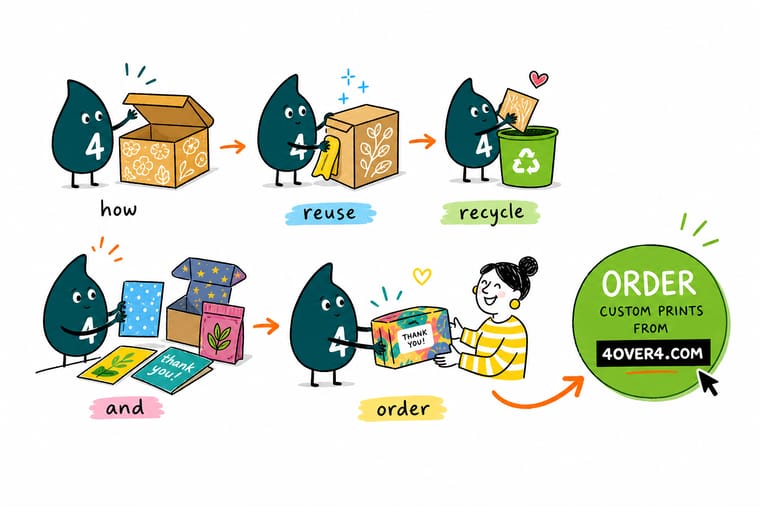
Wally squeezes each corner. If it springs back, the box joins the reuse stack and gets its old label blacked out. If it folds and stays folded, he flattens it for the paper bin. Then he checks the layers: kraft board and molded pulp go curbside, clean plastic film goes to the store drop off, and a foil lined pouch goes in the trash because nothing can pull those three layers apart. Tissue paper he keeps, because the fibres are too short to recycle but perfectly good for wrapping the next order.
Shop eco friendly boxes →Specs and pricing
Recyclable box options, sizes and starting prices
Uncoated board, printed rather than laminated, with live configuration choices and starting prices straight from the 4OVER4.COM configurator.
Print it
Packaging built to be kept, then recycled
Explore more
Where to go next


By the numbers
Packaging you can count on at 4OVER4
Common Questions
Your reuse and recycling questions, answered
Do I have to remove the tape before recycling a cardboard box?
Not all of it. Paper mills pulp the box in water and screen out plastic tape and label adhesive as reject, so a couple of strips of packing tape will not get a box thrown out. Pull off the long runs anyway, because tape that wraps a whole seam holds the flattened box together and slows the sorting line. Water activated kraft tape needs no removal at all: it is paper with a starch adhesive and repulps with the board, which is the main practical reason to switch to it.
Are padded bubble mailers recyclable?
The bubble lined ones are not. A poly bubble mailer is plastic film and goes in a store drop off bin, and a paper mailer lined with bubble wrap is two materials glued together, which means neither stream accepts it and it goes in the trash. Honeycomb kraft mailers are the exception: they are paper all the way through, including the padding, so they go straight in the curbside bin with your boxes.
How many times can a shipping box be reused?
There is no fixed number, because it depends on how hard the first trip was. Check the box rather than counting trips. Run a thumb down each vertical corner and press the side walls: if the corners are soft, the flutes are visibly crushed, or the board has taken any moisture, the box has lost the stacking strength the box maker certified and should not carry weight again. A box used once for a light, dry, local delivery is often as good as new. One that came off a pallet in the rain is not.
Where is the strength rating printed on a corrugated box?
On the bottom flap, in the round box maker certificate stamp. It names the mill, the board grade, and either an edge crush test figure or a burst strength figure along with a maximum gross weight. That stamp is the fastest way to judge a box someone handed you: if the printed weight limit is below what you are about to ship, the box is the wrong one even if it looks perfect.
Is printed tissue paper recyclable?
Usually not, and that surprises people. Tissue is made from very short fibres that have already been recycled several times, and there is not enough usable fibre left for a mill to want it. Most municipal programs reject it. Tissue is a reuse material rather than a recycling material: it folds flat, stores in a drawer, and wraps the next fragile thing perfectly well. Our custom tissue paper starts at $126.32 and is worth keeping for that reason.
What should I do with packing peanuts and air pillows?
Test the peanuts under a tap. Starch based peanuts dissolve in warm water and can go down the drain or into a compost bin. Expanded polystyrene peanuts do not dissolve, are not accepted curbside anywhere, and are best given to a local shipping store, most of which take clean peanuts back for reuse. Air pillows are different again: pop or slit them, flatten the film, and put it in the same store drop off bin as plastic bags.
Get Started
Ready to print packaging worth keeping?
Pick an uncoated board, print the artwork rather than laminating it, and ship in a box your customer can flatten for the paper bin or send straight back to you.
Legal Disclaimer
Gold Standard guarantees apply to all standard orders placed through 4over4.com. Price match requires verifiable proof of a competitor's published price for an equivalent product with matching specifications and turnaround time. Satisfaction guarantee covers manufacturing defects and print quality issues. Contact support with order number and documentation. On-time delivery rate based on tracked orders 1999 to 2026. Individual results may vary based on shipping carrier performance.
