
How to Design Custom Skincare Boxes That Fit the Bottle and Sell the Brand


Box style, dieline setup, stock, and the ingredient panel the law expects. Written from the sizes and prices actually in our configurator, not from a mood board.
Design a skincare box in this order: pick the die that fits the bottle, build the artwork on that dieline with 0.125 inch of bleed past every cut edge, then lay out the ingredient panel at the legal type size before anything else fills the space. The cartons here are fixed die-cut sizes printed full color on the outside only, on 14pt uncoated or 18pt gloss-coated board, so the high-shine or kraft look most skincare brands want comes from the bottle label rather than an effect on the box.
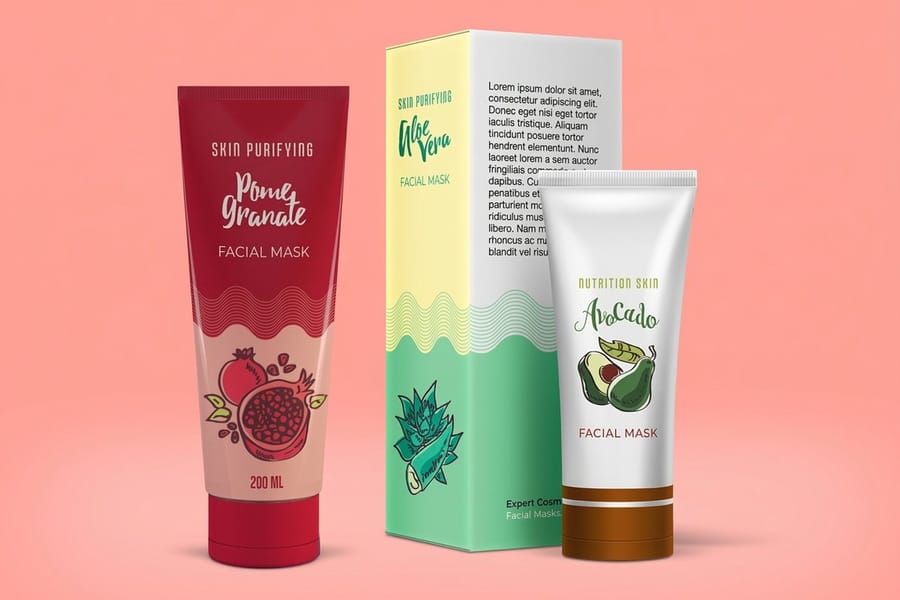
Quick answer
Die first, dieline second, legal panel third
The box is a fixed die-cut shape, so the sequence is choose, then draw. Measure the bottle with its pump or dropper, add about an eighth of an inch of clearance, and pick from the pillow box at 3.625 by 1.5 by 7.25 inches, the 2.75 or 4 inch cube box, or the roll end tuck top box at 5 by 7 by 1.7 inches. Then build the artwork on that dieline, panel by panel, with 0.125 inch of bleed past every knife line and nothing important within 0.125 inch of a score. Reserve the ingredient panel at 1/16 inch type before the illustration goes in, because that is the one part of the layout you cannot shrink your way out of.
Pick the Die That Fits the Bottle, Then Design to It
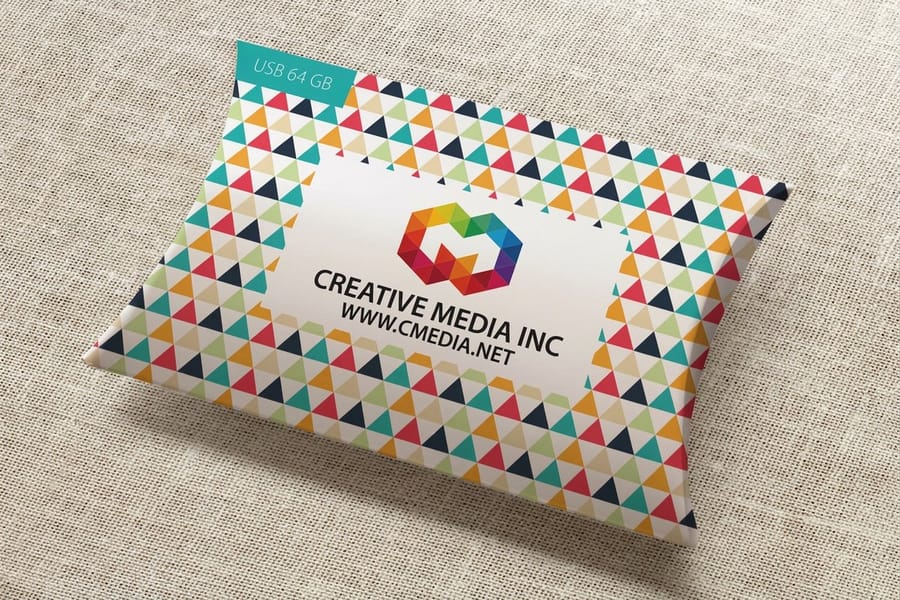
Skincare packaging goes wrong most often at the first decision, because the designer starts in a blank document and the box gets chosen afterwards. Folding cartons are cut with steel rule dies, and a die is a fixed shape. Choose the shape, get its dieline, then draw.
Measure the primary container first, including the pump or dropper collar, and add roughly an eighth of an inch of clearance on each side. A tight box scuffs the bottle label on the way in and the fulfilment team will hate it by the second hundred.
Pillow boxes run at a single 3.625 by 1.5 by 7.25 inch size, tall and slim, which is the right proportion for a serum dropper, a bar of cleansing soap, or a sheet mask set. They start at $284.49. Cube boxes come as a 2.75 inch or 4 inch cube and suit a squat cream jar or a candle, from $213.09. Roll end tuck top boxes are the workhorse for a duo or a small set, at 5 by 7 by 1.7 inches or 5.5 by 5.5 by 2.625 inches, from $711.78 because their minimum run is 250 boxes rather than 100.
If the bottle is an odd height and none of those clear it, that is worth knowing before the artwork exists rather than after. The guide to measuring a box explains why the inside dimension is the number to work from, and choosing a box style compares the closures side by side.
How to Build Artwork on a Dieline Without Losing a Panel
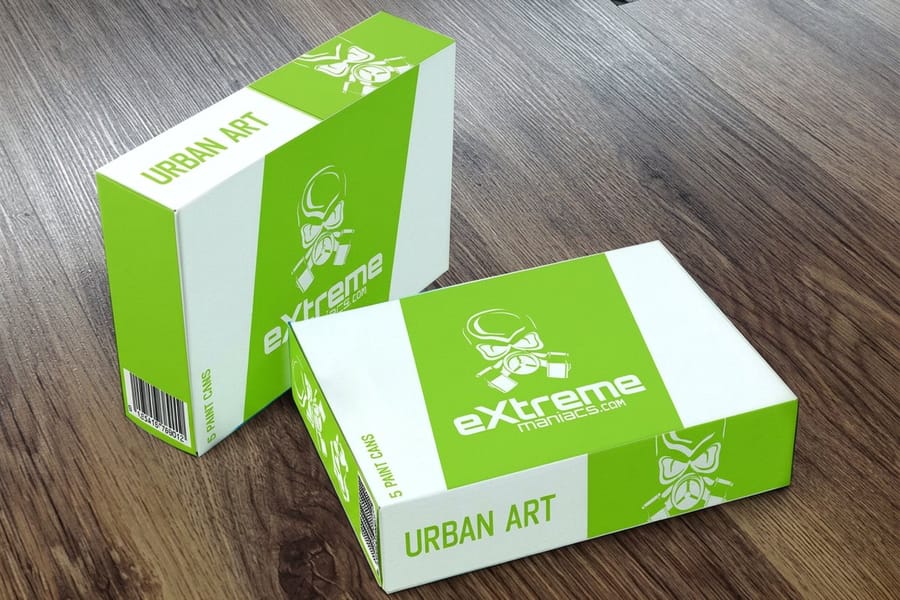
A carton is not one canvas. It is four faces the customer reads in sequence, plus flaps nobody sees. Treat each panel as its own layout and the design survives the fold.
Put the dieline on its own layer, set to overprint, and never flatten it into the art. Background color and images extend 0.125 inch past every knife line, because a die-cut sheet shifts a fraction under the press and a background that stops exactly at the cut shows a white sliver on one edge of the run. Pull type and logos 0.125 inch inside the score lines too. A word that crosses a fold gets a crease through the middle of a letter and looks like a mistake even when it was deliberate.
Rotation catches almost everyone once. Lay the flat out, then mentally fold it: on most tuck cartons the back panel and one side end up rotated 180 degrees relative to the front. Print the flat on your office printer, fold it by hand, and the error becomes obvious in about ten seconds.
| Panel | What belongs on it | What ruins it |
|---|---|---|
| Front | Brand, product identity, size or net contents, one image. | Ingredient text crammed in to save a panel. |
| Back | Ingredient declaration, directions, responsible party address. | Type below 1/16 inch, or art rotated the wrong way up. |
| Sides | Barcode, batch or lot code, a short claim, a repeat of the logo. | A barcode within 0.125 inch of a score, which kills the scan. |
| Glue flap | Nothing. Leave it clean. | Ink under the adhesive, which lets the seam separate. |
Build the file in CMYK at 300 dpi with fonts converted to outlines. The full handoff sequence, including what we check before the plate, sits in how to prepare files for packaging products, and you can start from a correctly sized layout in the blank template library.
Where the Premium Feel Actually Comes From

Here is the part most packaging articles skip. The carton stocks in our configurator are 14pt uncoated and 18pt gloss-coated paperboard. There is no soft-touch lamination and no foil stamp on the box itself, so if a mood board is built around a matte velvet carton with a foiled logo, that is not what this die-cut run produces.
What it does produce is worth knowing. The 18pt gloss-coated board holds a deep, even solid, which is why a dark navy or black skincare box prints with far more depth on 18pt than on 14pt uncoated. The 14pt uncoated goes the other direction: ink sinks slightly, colors read softer, and a botanical or clean-beauty palette lands closer to the intent. Neither is better. Pick by the look you are chasing, and see glossy versus matte cardstock if you want the fuller comparison.
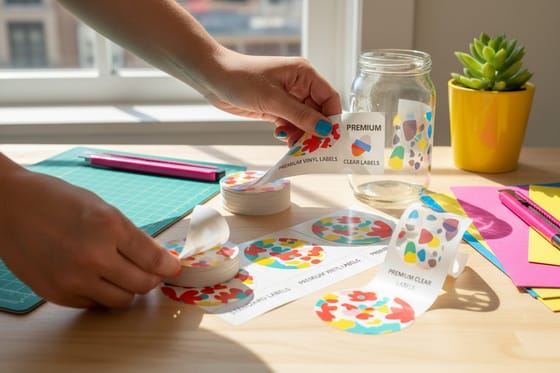
The high-shine and specialty surfaces live in the label range instead, and that is where most skincare lines here get their premium moment. Premium health and beauty labels run on 23 materials, including high-gloss UV, white and clear vinyl, and brown kraft, in 7 sizes from 3 by 5 inches up to a custom 7 by 6 inches, starting at $29.16 for 25. Clear vinyl on a frosted bottle gives the no-label look. Kraft gives the apothecary look. Both survive a bathroom shelf, which matters more than it sounds: personal care sits in steam and gets handled with wet hands, and an uncoated paper label goes soft and grey inside a month.
Premium jar labels cover the lids and curved glass, and the paper, vinyl and clear label comparison makes the material call quicker. If the label has to be die-cut to a custom shape, die cutting explained covers what shapes are practical.
The Ingredient Panel and the Rules Behind It
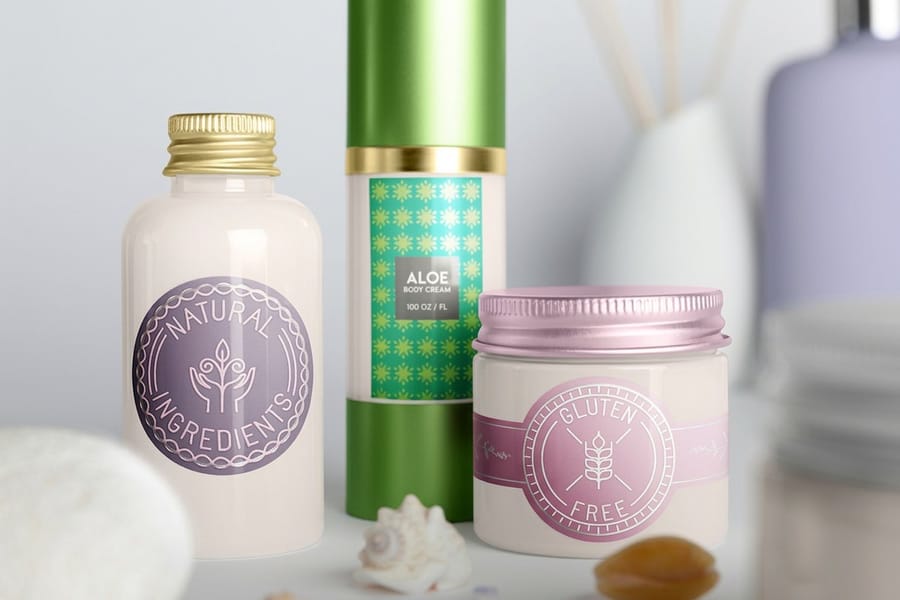
Cosmetic labeling in the US has a shape, and designing around it after the layout is locked is how brands end up with 5 point type nobody can read. Plan the space early.
The principal display panel, the face a shopper sees on shelf, carries the identity of the product and the net quantity of contents. An information panel, usually the back or a side, carries the ingredient declaration in descending order of predominance using INCI names, along with the name and place of business of the manufacturer, packer or distributor. Ingredients present at 1 percent or less can be listed in any order after the ones above that threshold, and colorants come last.
Type size is the constraint that bites a small carton. The ingredient declaration has to be at least 1/16 inch in height, and only drops to a permitted 1/32 inch when the total surface area available for labeling is under 12 square inches. A 3.625 by 1.5 by 7.25 inch pillow box is nowhere near that limit, so 1/16 inch is your floor and a 20 ingredient formula needs real estate. Count the characters, set the type at the legal minimum, and see how much panel is left before the illustration goes in.
Two more things that are cheap to plan and expensive to retrofit: a batch or lot code position, and space for a responsible person contact. Leave a clear rectangle for the code on a side panel so it can be inkjetted or stickered after the fill. And check the printed proof against the artwork properly, panel by panel, using how to check a packaging print proof before you approve. On a die-cut run there is no correcting a rotated panel after the knife.
Wally folds the flat before he prints it
A panel that reads fine flat can end up upside down
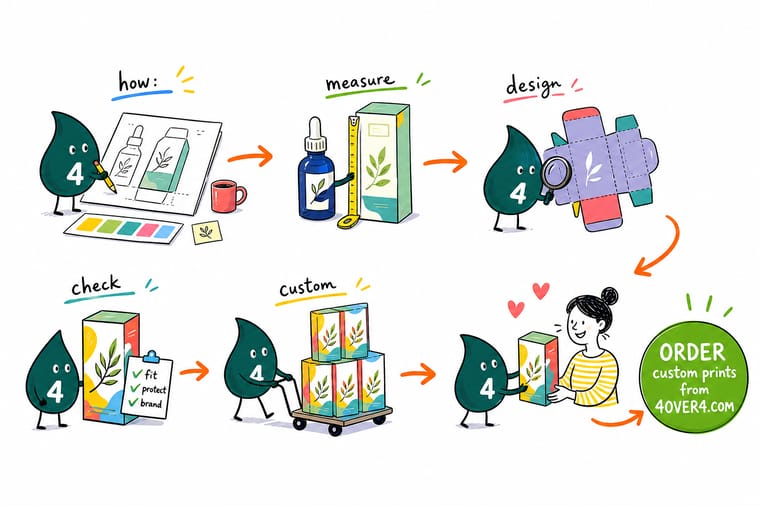
Wally prints the dieline on plain paper, folds it by hand, and stands the bottle inside it. Ten seconds of that catches the two errors that cost a whole run: a back panel rotated the wrong way, and a bottle that does not slide in without scuffing its label. Then he checks the ingredient type is a real 1/16 inch, not 1/16 inch shrunk to fit the illustration. Cut once.
Configure custom box printing →Specs and pricing
Box styles, sizes, and starting prices
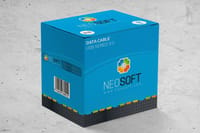
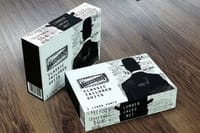
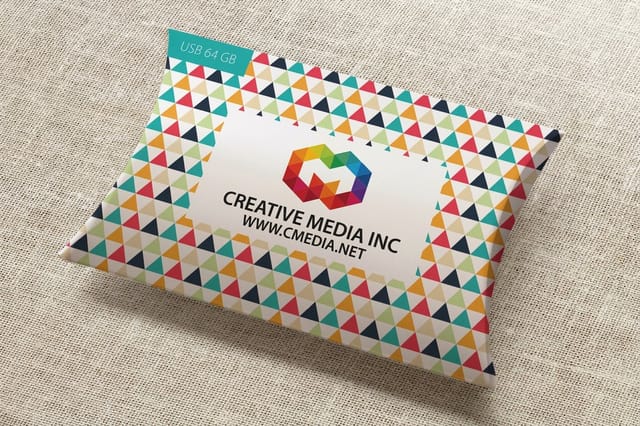
The three carton dies skincare brands use most, with the live size, stock and quantity choices straight from the 4OVER4.COM configurator.

Print it
Order the box and the label together
Explore more
Where to go next
By the numbers
Packaging printing you can count on at 4OVER4
Common Questions
Your skincare packaging questions, answered
What size should a skincare box be?
Measure the bottle or jar, then pick the die that clears it by roughly an eighth of an inch on each side so the product slides in without forcing. A 30ml serum dropper bottle sits well in a pillow box at 3.625 by 1.5 by 7.25 inches. A 50ml cream jar suits the 2.75 inch cube box. A wider set, a bar and a tin together, or anything shipped as a duo usually needs the roll end tuck top box at 5 by 7 by 1.7 inches. These are fixed die-cut sizes, so the honest order of work is to choose the box first and design to it.
How do I set up the artwork file for a folding carton?
Work on the flat dieline supplied for that box, not on a plain rectangle. Give every panel its own composition, extend background art 0.125 inch past every cut line, and keep text and logos at least 0.125 inch inside the fold scores so nothing gets clipped or bent through a letterform. Convert fonts to outlines, supply CMYK at 300 dpi, and rotate each panel the way it will sit once folded. Our walkthrough on how to prepare files for packaging products covers the handoff step by step.
Can I print the inside of a skincare box?
Not on these cartons. Cube boxes, pillow boxes and roll end tuck top boxes print full color on the outside and leave the inside blank, which is standard for die-cut folding cartons at this price. If the brand relies on an unboxing reveal, get the color from something that goes inside: a printed insert card, a wrap around the bottle, or a sticker sealing the tissue.
Can I get soft-touch lamination or foil on the box?
The carton stocks here are 14pt uncoated and 18pt gloss-coated board, so a soft-touch or foil effect is not part of the box configurator. Two things get close. Gloss-coated board on a dark ink lays down with real depth and takes fingerprints far less than people expect. And a high-gloss UV or clear vinyl label on the bottle carries the premium surface where the customer actually touches the product, at $29.16 to start rather than a plate charge.
What has to appear on a skincare label by law?
On the front panel, the identity of the product and the net quantity of contents. On an information panel, the ingredient declaration in descending order of predominance using INCI names, plus the name and place of business of the manufacturer, packer or distributor. Ingredient type must be at least 1/16 inch tall, and only drops to 1/32 inch when the total package surface is under 12 square inches. If a product has not been substantiated for safety, the warning statement is required too. Leave the panel room for this at the layout stage rather than shrinking type at the proof.
How much do custom skincare boxes cost?
Cube boxes start at $213.09, pillow boxes at $284.49, and roll end tuck top boxes at $711.78 because their minimum run is 250 rather than 100. The per-box cost falls hard with quantity on all three, so the jump from a test batch to a first real production run is usually cheaper per unit than people expect. Health and beauty labels start at $29.16 with a minimum of 25, which is why a lot of small lines launch with a stock box and a printed label, then move to a printed carton once the product proves itself.
Get Started
Ready to put your serum in a box that fits it?
Pick the die, set the stock, and add a health and beauty label for the bottle. Free online proof before anything is cut.
Legal Disclaimer
Gold Standard guarantees apply to all standard orders placed through 4over4.com. Price match requires verifiable proof of a competitor's published price for an equivalent product with matching specifications and turnaround time. Satisfaction guarantee covers manufacturing defects and print quality issues. Contact support with order number and documentation. On-time delivery rate based on tracked orders 1999 to 2026. Individual results may vary based on shipping carrier performance.
