
How to Size, Style and Brand Custom Printed Soap Boxes


Soap-specific box sizes, the four styles worth considering, the stock that survives fragrance oils, and when a label beats a carton outright.
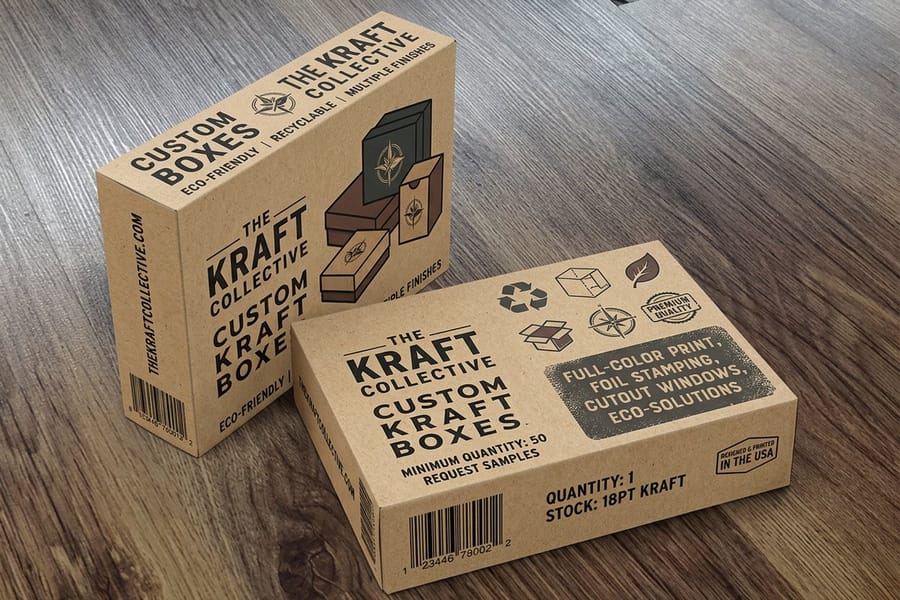
A standard loaf-cut bar finishes near 3.5 by 2.5 by 1 inch once cured, so its box is cut about 1/16 inch larger on every dimension, or roughly 3.56 by 2.56 by 1.06 inches inside. Pick a reverse tuck end for the cheapest die, a straight tuck end when the front panel has to stay free of a tuck slit, a roll end tuck top when the box ships on its own, and a sleeve when you want the buyer to smell the bar. Kraft board reads warm and shows oil marks, coated board holds color and resists them, and under roughly 200 bars a printed label costs a fraction of a die-cut carton.
Quick answer
Size to the cured bar, then pick the style by how it closes
Every soap box decision starts with a bar that has finished curing. Measure three slices from the middle of the loaf, take the largest, add about 1/16 inch to each dimension, and hand the printer inside dimensions rather than the outside of the folded carton. Then choose the closure: reverse tuck end for the lowest cost, straight tuck end for an uninterrupted front panel, roll end tuck top when the box ships alone, a sleeve when the scent sells the bar. Stock comes last and it is a straight trade between the warm, oil-marking character of kraft and the color accuracy of coated board.
What a Soap Box Has to Do Besides Look Good
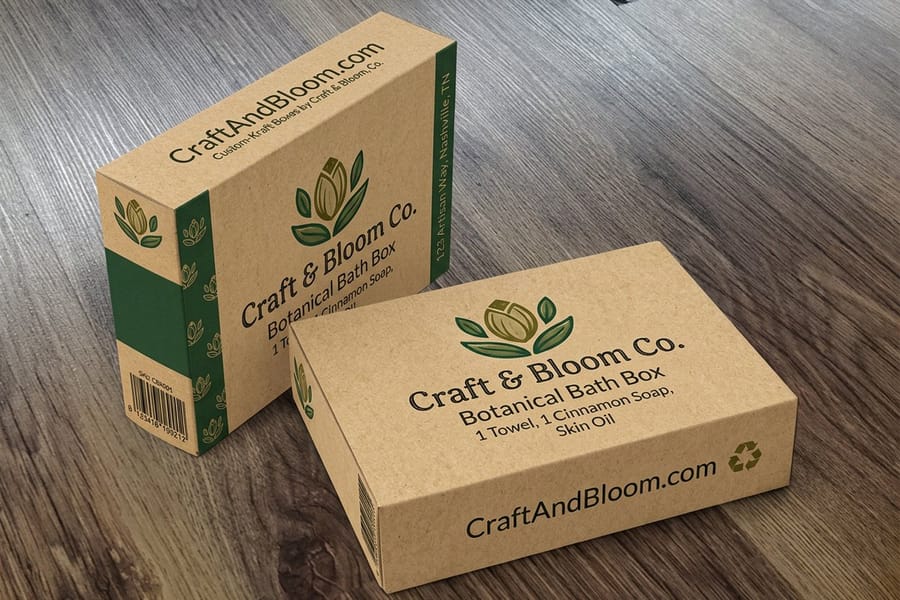
A soap box does three jobs at once, and makers usually only design for the first one. It has to sell the bar, it has to carry the legal copy, and it has to survive weeks of contact with a fatty, fragranced object that is still changing shape.
That third job is the one that catches people. Soap is not inert. A cold process bar keeps releasing water long after it is cut, and the oils in it move outward into whatever they touch. Package too early and the carton goes soft along its scores. Package a heavily superfatted bar in bare board and you get a translucent halo where the oil has soaked through. Neither of those shows up in a mockup.
The selling job is easier to get right because it is mostly restraint. A soap box is small, so it can hold one strong idea and not much else. Put the scent name where a shopper reads first, keep the brand mark smaller than you want to, and push the ingredient block to a side panel. On a 3.5 by 2.5 by 1 inch carton, those side panels are one inch tall, which is enough for about six lines of small type and no more. Plan that constraint before you design, not after the custom box printing proof comes back too crowded to read.
Soap Box Styles, and What Each One Costs You
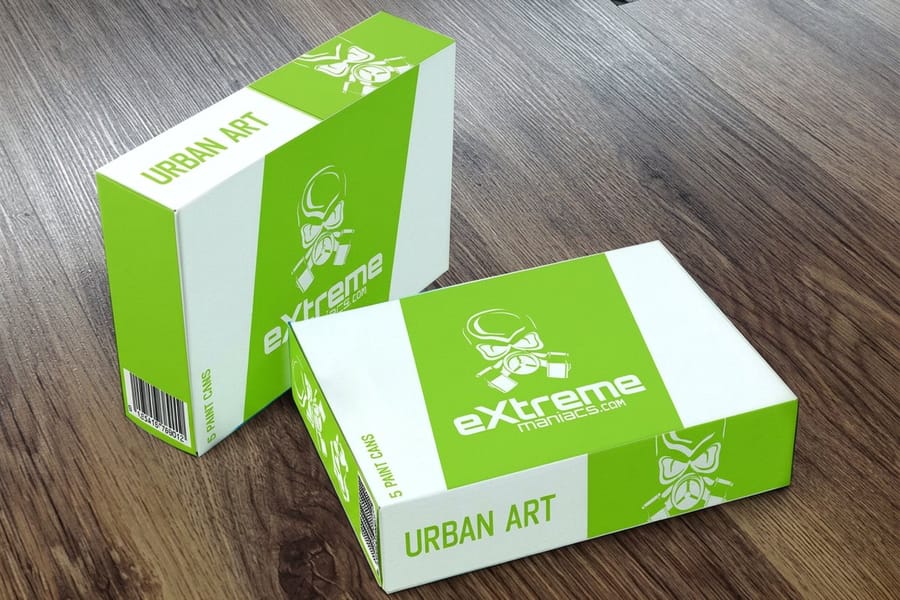
Four styles cover almost every soap product on a shelf. They differ in how they close, which decides the die cost, the amount of board per unit, and whether the front panel stays clean.
Reverse tuck end. The top flap hinges off the back panel and the bottom flap off the front, so the die is symmetrical and simple. It is the cheapest carton to make and the one most soap sells in. The trade is a visible tuck slit on the front face, which you either design around or ignore.
Straight tuck end. Both flaps hinge from the back panel, so the front face is uninterrupted. It uses slightly more board and the fold is a little slower, but if your front panel is a single illustration or a large scent name, this is the one that protects it.
Roll end tuck top. The lid rolls over glued side wings, the way a mailer does. It is rigid enough to ship on its own without an outer carton, which matters for online orders and gift sets. Roll end tuck top boxes start at $711.78, the same entry as custom kraft boxes, because both use heavier board than a tuck end carton.
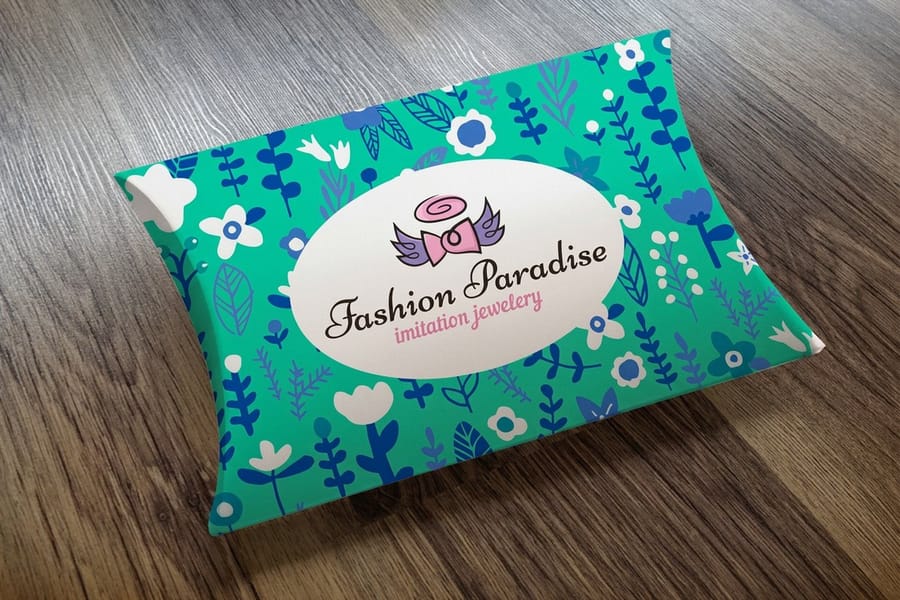
Sleeve and pillow. A sleeve is an open band that leaves both ends of the bar exposed, so the buyer can smell it before they commit. That is a real advantage at a market table and a real problem in a shipping box. Packaging sleeves start at $438.25. Pillow boxes, which start at $284.49, suit round pucks and gift bars where a rectangular carton looks wrong.
If you are weighing these against corrugated and rigid options for a bigger range, our packaging box materials comparison lays out the same styles across other categories.
Sizing a Box for a Cured Bar, and Labels for Bottles
Box printers work from inside dimensions. Give them the outside of the folded carton and every bar will be a sixteenth of an inch too tight, because the board thickness gets counted twice.
Measure three bars from the middle of a fully cured loaf, not the end slices, and take the largest of the three. Add about 1/16 inch to length, width and depth. That clearance sounds trivial and it is the difference between a bar that slides in cleanly and a tuck flap that bows the front panel outward every time someone closes the box.
| Soap format | Cured size | Inside box size | Style that fits |
|---|---|---|---|
| Loaf-cut bar, 4 to 5 oz | 3.5 x 2.5 x 1 in | 3.56 x 2.56 x 1.06 in | Reverse or straight tuck end |
| Guest or sample bar | 2 x 1.5 x 0.75 in | 2.06 x 1.56 x 0.81 in | Small tuck end or sleeve |
| Round bar or shampoo puck | 2.75 in across, 1 in deep | 2.81 x 2.81 x 1.06 in | Pillow box or sleeve |
| Gift set, three bars stacked | 3.5 x 2.5 x 3 in | 3.56 x 2.56 x 3.13 in | Roll end tuck top |
| 8 oz pump bottle | 2.25 in across, 6.5 in tall | No carton needed | 7.2 in wrap label |
Bottles are a different calculation and it catches people out. Multiply the bottle diameter by 3.14 to get the circumference, then decide what you want the seam to do. For a full wrap with a sealed overlap, add a quarter inch: a 2.25 inch bottle needs a label about 7.2 inches wide. For a deliberate gap that shows the liquid, subtract half an inch instead and land around 6.5 inches. Get this wrong by an eighth and the seam either gaps open or wrinkles as it laps over itself. The label sizing guide works through the curved-surface cases in more detail.
Kraft, Coated Board, and the Oil Problem
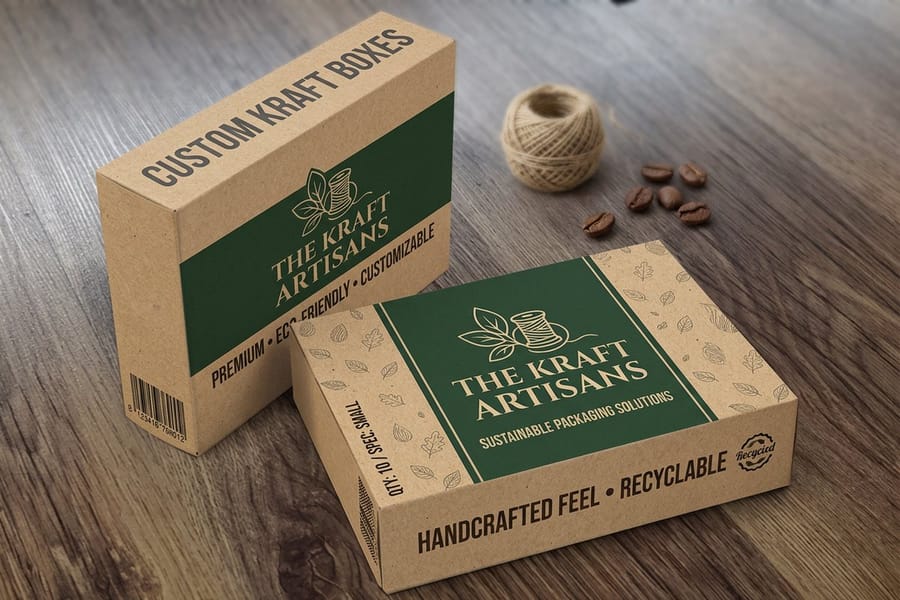
Two stocks cover most soap packaging, and choosing between them is mostly about how you feel about oil marks and warm color.
| Stock | How color prints | Oil resistance | Use it when |
|---|---|---|---|
| Natural kraft | Every color shifts warm. Light tints disappear into the brown. | Low. Oil marks show as translucent patches. | The brand is rustic, botanical or unbleached, and you can wrap the bar. |
| White coated board | True to proof. Photographic artwork and pale tints hold. | Better. The coating slows migration. | You need color accuracy, a gradient, or a clean clinical look. |
| Matte laminate | Slightly muted. Soft to the touch. | High. The film is a barrier. | The box gets handled repeatedly on a retail shelf. |
| Gloss laminate | Saturated, high contrast. | High. | Bright scent-led artwork that has to be seen from a distance. |
The kraft warmth is worth spelling out because it surprises people at proof stage. On brown board a soft pink reads as beige and a pale mint reads as grey. If your brand depends on those tints, either print a white flood behind the artwork or move to coated board. Choose kraft for what it is good at, which is dark ink, line work and a single accent color.
On oil migration, ranking the fixes by cost: a shrink wrap or poly liner between bar and board is the cheapest and the most reliable, an inside coating on the carton costs more per unit, and a sleeve avoids the problem entirely by keeping paper off the bar. Some makers simply let it happen, because on natural kraft a faint oil halo reads as handmade rather than as a defect. That is a brand decision, not a printing one, and it is worth making on purpose.
Branding With Labels When a Box Is Not Worth It
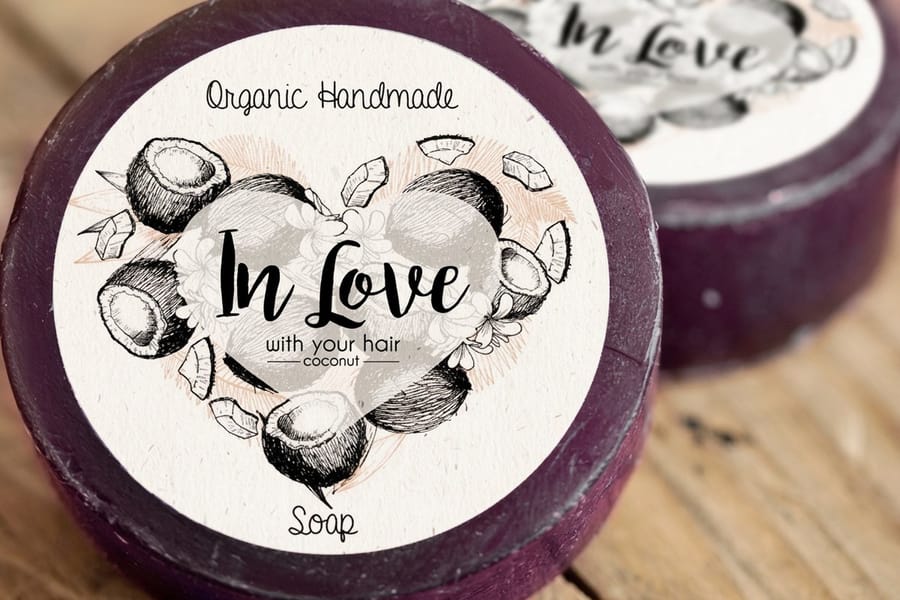
Most soap brands start with labels and should. A die-cut carton is a real run with real setup, and until one scent sells consistently, that money buys more reach as a label on stock kraft.
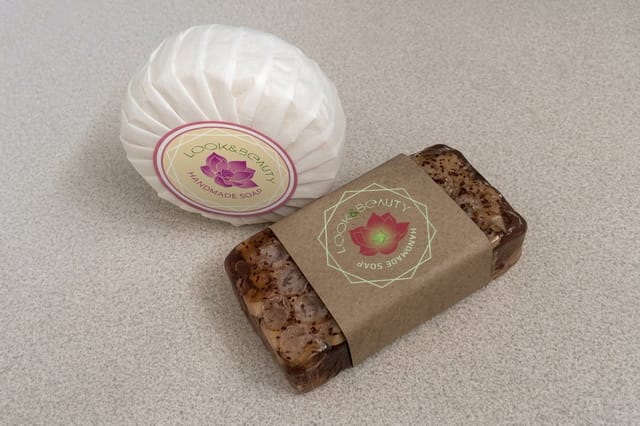
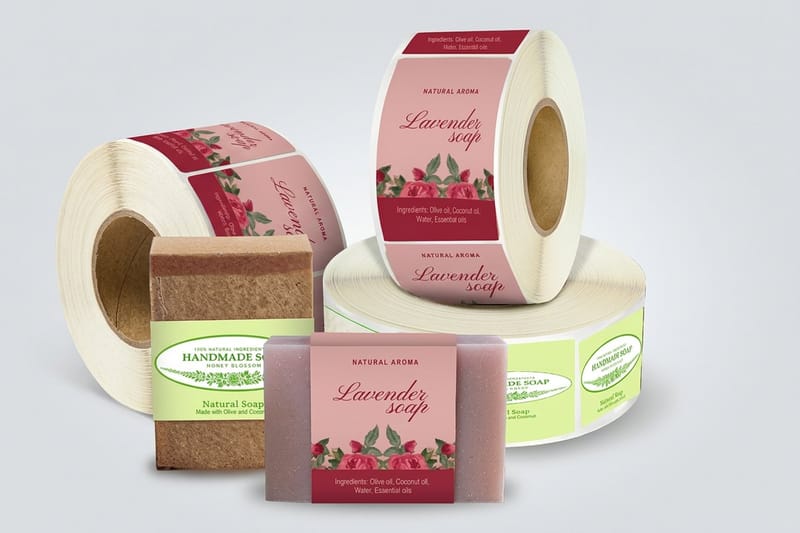
Standard soap labels start at $23.88 and premium soap labels at $29.16, which is the entire packaging budget for a market season. Three formats do most of the work. A belly band wraps the middle of the bar and leaves both ends open so the scent escapes. A full wrap covers the whole bar and needs a slit or a tab so the customer can open it without tearing the print. A single face label sits on a plain kraft box and turns a generic carton into your carton, which is the cheapest route to a shelf-ready look.
Whichever you pick, the legal copy has to fit. Product identity and net weight go on the panel a shopper sees first, with net quantity in the bottom 30 percent of that panel. Ingredients, if your claims require them, go on a side or back panel in descending order of quantity. On a belly band that wraps a 1 inch edge, you have one inch of height for all of it, so set the ingredient type before you finalise the band width rather than shrinking it to 4 point later.
Labels also solve the bottle side of a range, where a carton makes no sense. The same artwork scaled to a 7.2 inch wrap keeps a liquid soap on brand next to the bars. Browse the full range at soap labels printing or the wider packaging labels category.
Ordering Your Soap Boxes Without Paying for a Reprint
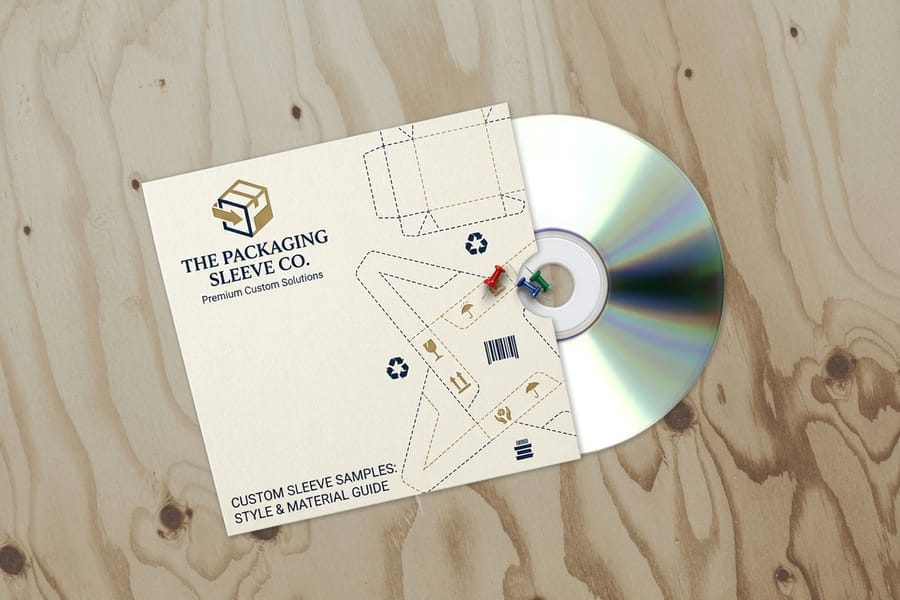
The reprints we see on soap packaging come from four places, and all four are avoidable before the file leaves your desk.
- Artwork built without the dieline. Ask for the dieline first, place your artwork on it, and keep live copy at least 1/8 inch away from every score and cut. Art itself extends 1/8 inch past the trim so a shift in folding never exposes bare board.
- Copy that changed the legal category. The word moisturizing on a bar that was going to ship as plain soap turns it into a cosmetic and pulls in an ingredient declaration you have no room for. Settle the wording before the layout.
- A box sized off a wet bar. Cure first, measure three middle slices, take the largest, add the sixteenth.
- Kraft colors approved on a white screen. Order a sample or ask for a hard proof if any part of the design relies on a pale tint.
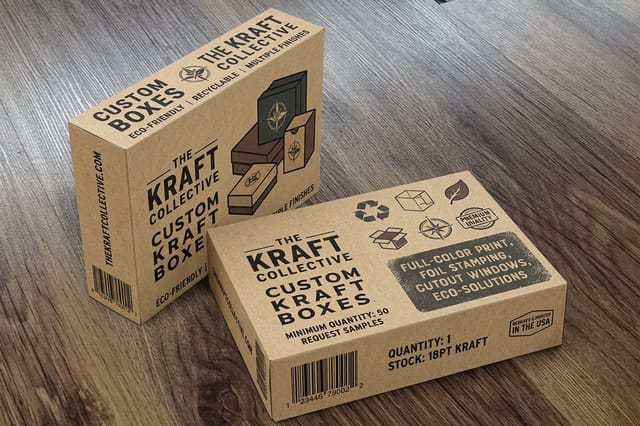
When the file is ready, start from a correctly proportioned layout in the blank template library, and read our guide to preparing packaging files for the bleed, score and color settings that packaging needs and flat print does not. Then configure the run on custom kraft boxes or browse the whole packaging printing collection to see the styles side by side with live pricing.
Wally packs a bar of soap
Cure it, measure it, then cut the box a sixteenth bigger
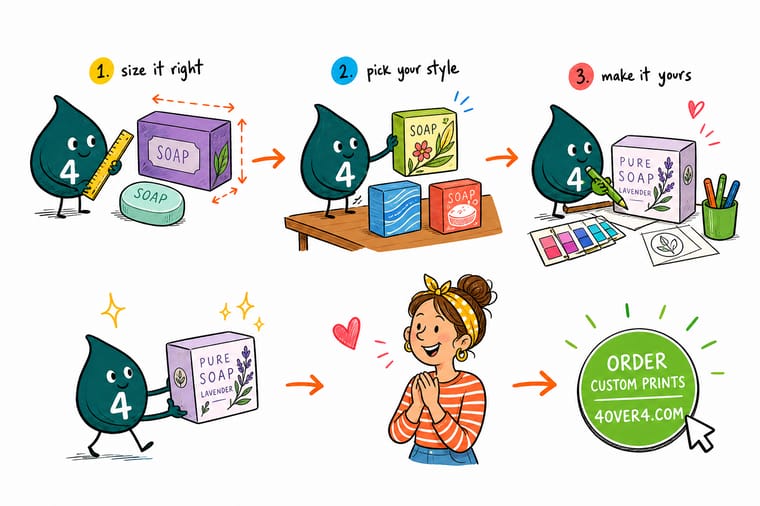
Wally waits until the bar has cured, measures three slices from the middle of the loaf, takes the biggest one and adds a sixteenth of an inch to each side. He hands the printer inside dimensions, never the outside of the folded box. If the bar is heavy on oils he wraps it before it touches kraft, because oil soaks through brown board and leaves a halo. And if he is only making sixty bars, he prints labels instead and keeps the die-cut carton for the scent that keeps selling out.
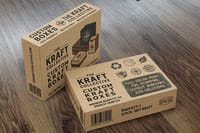
Configure custom kraft boxes →Specs and pricing
Soap packaging options, sizes and starting prices
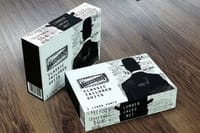
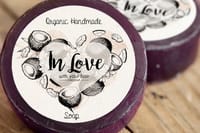
Compare cartons and labels side by side, with live configuration choices and starting prices straight from the 4OVER4.COM configurator.
Print it
Package your soap the way it deserves
Explore more
Where to go next

By the numbers
Packaging you can count on at 4OVER4
Common Questions
Your soap packaging questions, answered
What size box do I need for a standard bar of soap?
A loaf-cut bar of roughly 4 to 5 ounces usually finishes around 3.5 by 2.5 by 1 inch, and its box is cut about 3.56 by 2.56 by 1.06 inches inside. Those numbers are inside dimensions, which is what a box printer works from, not the outside of the folded carton. Measure three bars from the middle of a cured loaf rather than the end pieces, take the largest of the three, and add a sixteenth of an inch to each dimension. Guest bars at 2 by 1.5 by 0.75 inch and round pucks at 2.75 inches across follow the same rule with their own numbers.
Can I box soap before it finishes curing?
No, and this is the mistake that produces soggy cartons. A cold process bar is still giving off water for four to six weeks after it is cut. Seal that bar into a closed carton and the moisture has nowhere to go, so the board softens along the scores, the print can lift, and the bar itself shrinks away from the fit you paid to have die-cut. Cure the bars on an open rack first, then box them. If you need to ship early, a sleeve or a wrap label lets air keep moving.
Will essential oils stain a kraft soap box?
Often, yes. Oils migrate out of the bar and into uncoated paperboard, and on natural kraft the result is a translucent patch that looks like a grease mark. It shows up faster with a high superfat, with heavy carrier oils, and with warm storage. Three fixes work: shrink wrap or a poly-lined liner between bar and board, an inside coating on the carton, or a printed sleeve so the bar never sits against paper at all. Some makers leave it alone because on rustic kraft the mark reads as handmade.
Does my soap box legally need an ingredient list?
It depends on what you claim. Soap that is genuinely soap and only claims to clean falls under the Consumer Product Safety Commission, and the label needs the identity of the product, the net weight, and the name and address of whoever is responsible for it. Add a cosmetic claim such as moisturizing, anti-aging or aromatherapy benefits and the FDA treats the bar as a cosmetic, which requires a full ingredient declaration in descending order of quantity. Net quantity of contents belongs in the bottom 30 percent of the main display panel. Check your own wording against the current rules before the box goes to press, because a reprint over one word is expensive.
Is a sleeve enough, or do I need a full box?
A sleeve is enough when the bar is sold in person and the smell is doing the selling. It costs less board, it prints on one flat piece, and shoppers can lift it to their nose. What a sleeve does not do is protect edges in a shipping carton, hold a full ingredient panel, or stay put on a bar that has shrunk. If your soap ships to customers or sits on a retail shelf where it gets picked up all day, a closed carton earns its cost. Many makers run both: sleeves for markets, boxes for wholesale.
What is the cheapest way to package a small batch of soap?
Label first, box later. Standard soap labels start at $23.88 at 4OVER4.COM and premium soap labels at $29.16, which covers a full run of bars for the price of a single box order. Pillow boxes start at $284.49 and printed sleeves at $438.25, while die-cut cartons such as roll end tuck top boxes and custom kraft boxes start at $711.78. The usual path is a wrap label on plain kraft for the first season, a printed sleeve once the range settles, and a die-cut carton once one scent is selling steadily enough to justify the run.
Get Started
Ready to put your soap in a box that fits it?
Send us the cured bar dimensions, pick kraft or coated board, and we cut the die to your size so the bar sits snug and the front panel stays flat.
Legal Disclaimer
Gold Standard guarantees apply to all standard orders placed through 4over4.com. Price match requires verifiable proof of a competitor's published price for an equivalent product with matching specifications and turnaround time. Satisfaction guarantee covers manufacturing defects and print quality issues. Contact support with order number and documentation. On-time delivery rate based on tracked orders 1999 to 2026. Individual results may vary based on shipping carrier performance.
