
How to Choose Packaging Mailers That Fit Your Product and Your Shipping Bill


Five formats, one decision. Here is how depth, fragility and thickness pick the mailer for you, and where a printed box actually pays for itself.
Choose the mailer from the product, not the catalog: flat and soft goes in a poly or paper mailer, flat and rigid goes in a rigid mailer, anything with real depth goes in a corrugated mailer box, and heavy or fragile goes in a shipping box with void fill. Measure the item, add about a quarter inch of clearance per side, and order that inside dimension. Depth past three quarters of an inch moves the piece from flat rates into parcel pricing, which costs more over a year than the mailer itself.
Quick answer
Depth picks the format, thickness picks the postage
Start with the product and one number: its depth. Under half an inch and a flat mailer works, and the cheapest of those that survives the trip is the right one. With real depth, a mailer box is the only format that closes cleanly and gives you a print surface worth using. Weight is the second filter, because E flute crushes past a few pounds and the answer becomes a shipping box in heavier board. Then check thickness against three quarters of an inch, because that is where flat rates end and parcel pricing starts.
Measure the Product, Then Pick the Format
Every bad packaging decision starts the same way, with someone browsing box styles before measuring anything. Do it in the other order and the choice narrows itself in about five minutes.
One, measure the product at its widest points. Not the retail box it sits in, the thing itself, and include anything that ships with it such as a warranty card or a cable.
Two, add clearance. Roughly a quarter inch per side is enough for tissue and for hands that have to get the product out again. That total is the inside dimension you are shopping for, which is what you order. Board thickness lives outside that number.
Three, decide what the item is vulnerable to. Soft goods fear moisture and a split seam. Rigid goods fear crushed corners. Fragile goods fear shock, and shock is the only one that needs void fill.
Four, weigh it packed. A few pounds is the practical ceiling for a mailer box in E flute. Past that the board starts to crush under stacking, and the honest answer is a heavier flute in a shipping box.
Five, check the depth against three quarters of an inch. That is the line where a mail piece stops being a flat and starts being a parcel, and it moves your postage more than the packaging price ever will. The measuring guide covers the exact points to measure from.
The Five Mailer Formats, Side by Side
There are only five formats worth comparing, and each one fails in a specific way. The failure column is the one to read first, because a mailer that is wrong is almost always wrong for a reason that was predictable.
| Format | Best for | Print surface | Where it fails |
|---|---|---|---|
| Poly mailer | Apparel, textiles, anything soft and flat. | Flat spot color on film, logo scale. | Rigid corners cut through it, and it needs store drop-off recycling. |
| Paper mailer | Prints, documents, flat soft goods that want a recyclable wrap. | Kraft surface, one or two colors. | Tears at the seam if overstuffed, no impact protection at all. |
| Bubble mailer | Small rigid items that scratch or chip. | Limited, usually a label or printed tape. | Adds thickness fast, and the padding is wasted on soft goods. |
| Rigid mailer | Flat items that must not bend, such as framed prints. | Front panel. | Will not close over anything with depth. |
| Mailer box | Anything with depth, and any shipment meant to be opened slowly. | Full exterior and interior, edge to edge. | E flute crushes past a few pounds, and it is the priciest empty. |
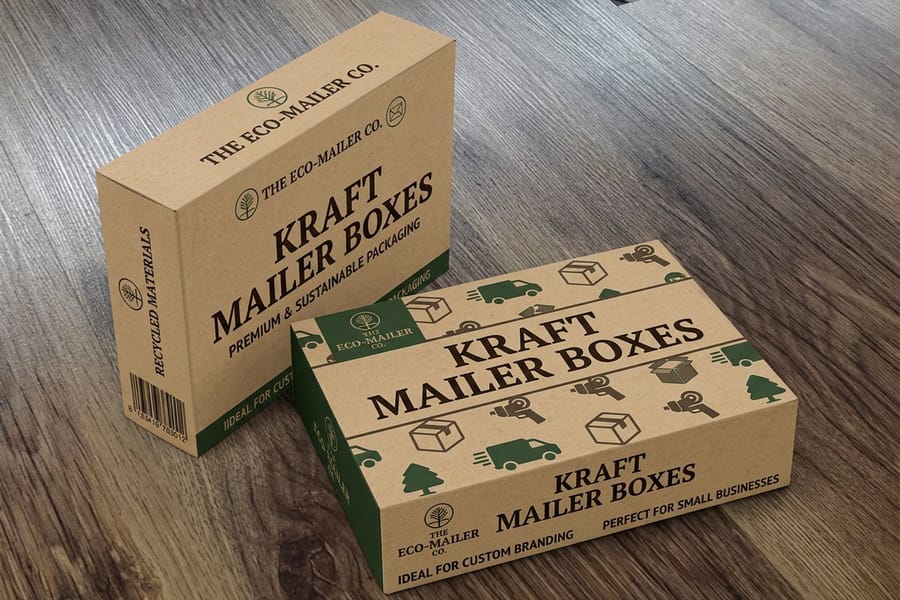
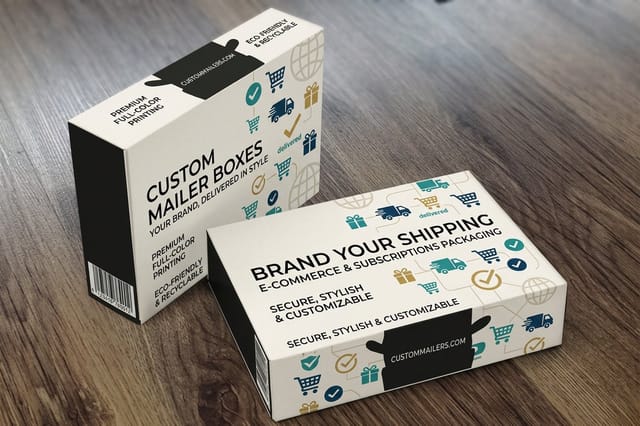
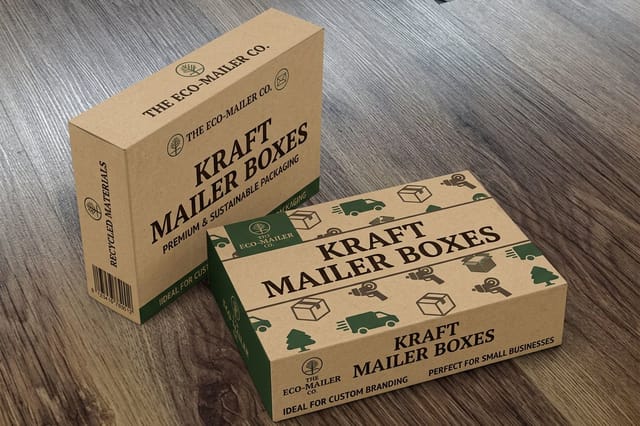
Two of those five are formats we do not print, and it is worth saying so plainly: poly and bubble mailers are commodity film goods bought by the case, not custom print jobs. What we print is the corrugated end of the table, in white for full-color work and in natural brown for kraft mailer boxes, plus the tape, tissue and labels that dress a plain box. If your product is soft and flat, buying stock poly and branding it with tape is the cheaper honest answer.
For a longer look at how the corrugated formats differ in construction, the mailer box versus shipping box comparison takes it apart panel by panel, and custom bubble mailers explained covers the padded end.
Thickness Is What Sets Your Shipping Bill
Most people compare mailers on the price of the empty mailer. That is the smaller number. The one that compounds across a year of orders is what the carrier charges to move the shape you created.
Two thresholds do the damage. The first is thickness: past about three quarters of an inch a mail piece is handled as a parcel rather than a flat, which is a different and higher rate table. The second is dimensional weight. Carriers bill the greater of actual weight and dimensional weight, and dimensional weight is length times width times height divided by a divisor the carrier publishes. Put a one pound product in a box with four inches of empty air around it and you will pay for something closer to five pounds. The carrier size and weight limits guide lists the points where surcharges start.
This is why sizing a mailer tight is not fussiness. Every inch of clearance you add gets billed twice, once as void fill you have to buy and stuff, and again as air the carrier charges you to fly. It is also why the cheap instinct of ordering one box size for everything usually costs more than ordering two.
The flutes themselves are worth knowing by feel. E flute is about a sixteenth of an inch thick and is what mailer boxes are made from, because it folds crisply and prints well. B flute runs about an eighth of an inch and C flute about five thirty-seconds, both stiffer, both heavier, both what a custom shipping box uses when the contents have weight. Going up a flute buys protection and costs postage. Choose deliberately.
Where Printing Pays, and Where It Does Not
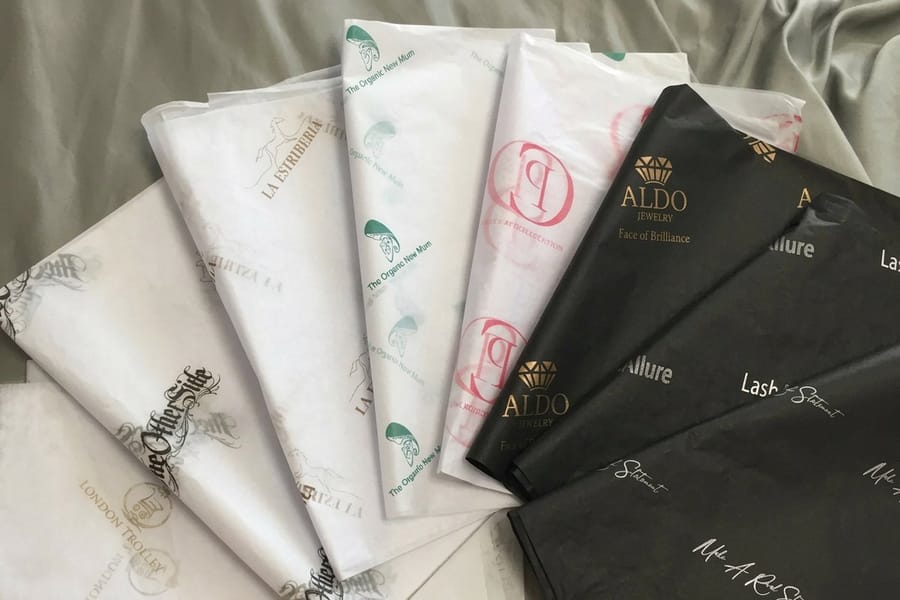
A printed mailer earns its cost in exactly one situation: when the customer opens the parcel slowly and alone, with nobody rushing them. Subscription shipments, first orders, launch drops and gifts all qualify. A warranty replacement does not, and printing one is money spent on a person who wants their part, not a moment.
When it does qualify, the interior is where the spend belongs. The outside of a mailer gets scuffed in transit and is seen for a second at the door. The inside is seen at full attention with the product still in it, which makes it the right home for a pattern, a short thank-you, or a reorder code that you can actually track.
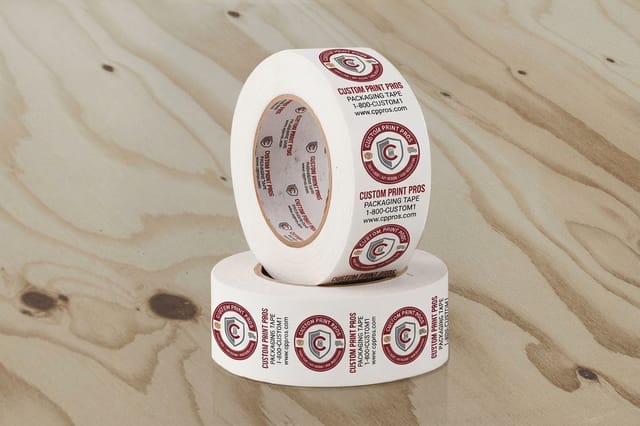
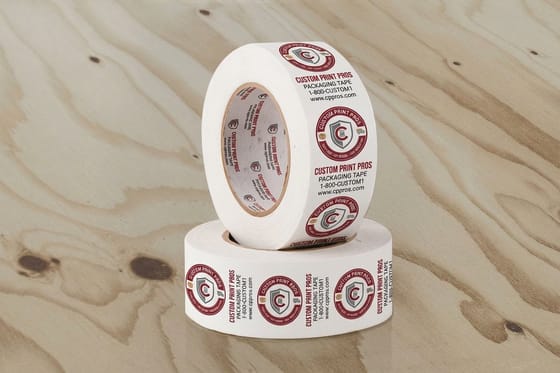
When it does not qualify, there is a middle path that most brands underuse. A plain kraft box with printed packaging tape across the seam and a sheet of custom tissue paper inside reads as branded from three feet away, and it costs a fraction of a printed run. Tape starts at $347.11 and tissue paper starts at $126.32, against $711.78 for a run of custom mailer boxes. It also flexes: one roll of tape brands every box size you ship, which a die-cut box never does.
Inserts are the third lever, and the one people reach for last when it should be second. A card that names the next product, explains care, or asks for a review does more repeat business than a printed lid. The packaging inserts guide covers what to put on one.
Getting the File Right and Ordering a Run You Will Use
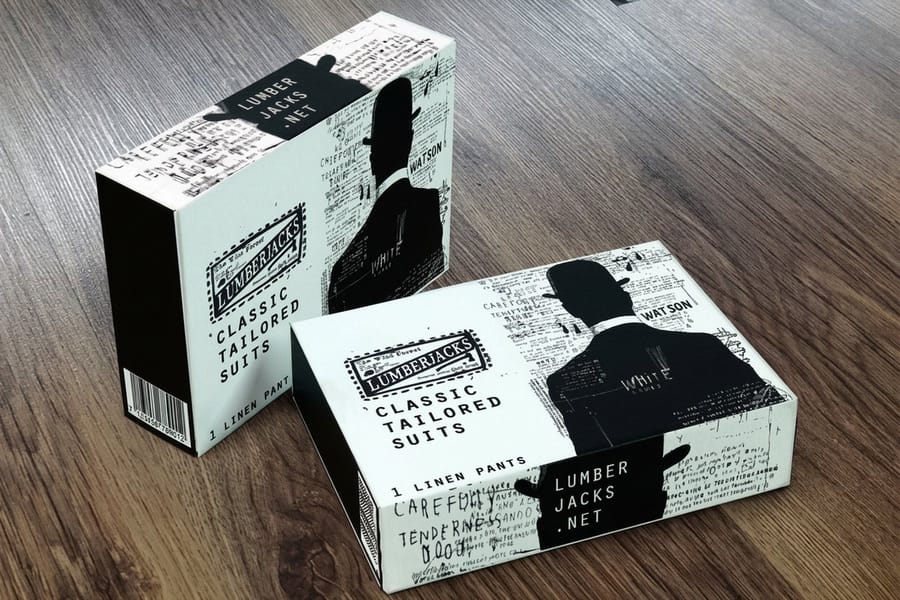
Custom mailers are die-cut, which means the first order pays for tooling and the run size is set by the press rather than by your appetite. That is why custom mailer boxes start at $711.78 rather than at the price of one box. Before you design anything, work out how many parcels you ship in a year at that size. If the answer is less than the run, buy stock boxes and brand them with tape and tissue until the volume is real.
When the volume is there, the file is straightforward but unforgiving. Build to the dieline we supply, keep cut and fold lines on separate layers, convert fonts to outlines, place images at 300 dpi at final size, and carry a quarter inch of bleed past every trim edge. The panel that trips people is the one that folds: art has to run across the fold, not stop at it, or the crease shows a white line the moment the box is assembled. The packaging file preparation guide has the full checklist, and blank templates give you a correctly sized starting layout.
Order a proof, and check it on the assembled box rather than on screen. Corrugated absorbs ink differently from a coated sheet, so solid dark coverage reads slightly softer in print than it does on a monitor, and small reversed type on kraft loses definition. Both are fixable at proof stage and expensive to discover after the run.
If you are still weighing formats, the full packaging printing collection lists every mailer, box, tape and label we make with live configuration and starting prices, so you can price two sizes against each other before committing to a die.
Wally sizes the mailer
Measure the product, add a quarter inch, then read across
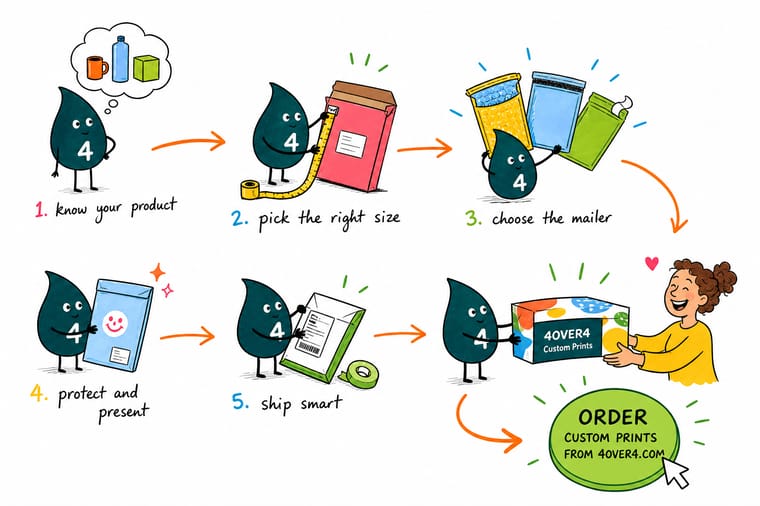
Wally never picks the box first. He measures the product, adds about a quarter inch of clearance on each side, and that inside dimension tells him the format. Flat and soft goes in a poly or paper mailer. Flat and rigid goes in a rigid mailer. Anything with depth goes in a corrugated mailer box, where the inside is the surface worth printing. Heavy or fragile gets a shipping box in stiffer flute with the voids filled. Then he checks the thickness, because past three quarters of an inch the carrier stops calling it a flat and starts billing it as a parcel.
Order custom mailer boxes →Specs and pricing
Mailer boxes and shipping boxes, sizes and starting prices
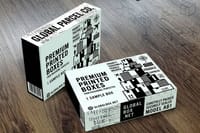
Compare the three corrugated formats side by side, with live configuration choices and starting prices straight from the 4OVER4.COM configurator.

Print it
Order the mailer that fits the product
Explore more
Where to go next
By the numbers
Packaging you can count on at 4OVER4
Common Questions
Your packaging mailer questions, answered
What is the difference between a packaging mailer and a shipping box?
A mailer is sized to one product and meant to arrive looking like part of the purchase. A shipping box is sized to a load and meant to survive stacking. In practice that means a mailer box is one piece of E flute with self-locking front flaps that closes without tape, while a shipping box is a taped regular slotted container in heavier B or C flute. If your item weighs a few pounds or less and you want the customer to notice the packaging, use a mailer. If it is heavy, oddly shaped or going out on a pallet, use a shipping box and fill the voids.
What size mailer should I order for my product?
Measure the product at its largest points, then add roughly a quarter inch per side for clearance and any tissue or insert. So a 9 by 6 by 1.5 inch item wants an inside dimension near 9.5 by 6.5 by 2 inches. Order the inside dimension, not the outside, because corrugated board adds its own thickness to the outside measurement. Going a full inch larger than needed feels safe and then costs you twice, once in void fill and again when dimensional weight kicks in.
Do I need bubble mailers if my product is soft?
Usually not. Padding protects against impact, and apparel, printed matter, and anything else that bends does not need protecting from impact. It needs protecting from moisture and from a torn seam. A poly mailer or a paper mailer handles both at a lower cost and a lower weight. Save padded mailers for small rigid items that can chip or scratch, like a ceramic piece or a framed print, and jump straight to a mailer box once the item has depth.
Can you print the inside of a mailer box?
Yes, and it is the one print upgrade that changes how the shipment feels. The interior is the surface the customer sees at the moment the flaps come up, so a pattern, a thank-you line or a reorder code lands there with full attention on it. Interior print costs more than exterior alone because it adds a pass, so it earns its place on subscription boxes, launch runs and gift shipments, and rarely on a replacement part.
How much do custom packaging mailers cost?
Custom mailer boxes start at $711.78 at 4OVER4.COM and kraft mailer boxes start at the same point, because both include the die and a full production run rather than a handful of boxes. Printed packaging tape starts at $347.11 and tissue paper starts at $126.32, which is why a plain box dressed with printed tape and tissue is the usual first step for a brand that is not yet shipping in volume. Get the run size right before you get the design right.
Are poly mailers cheaper than boxes once shipping is counted?
For flat, light goods, yes, and the gap is bigger than the packaging price suggests. A poly mailer weighs almost nothing, adds no measurable depth, and keeps the shipment inside flat rates where a box would push it into parcel pricing. The trade-offs are real though: film mailers need store drop-off recycling rather than curbside, they print in flat spot color rather than photographic detail, and a rigid corner will work its way through the film in transit.
What file do I need to send for a custom mailer?
A dieline, supplied as vector artwork with the fold and cut lines on their own layers, and the design built to that dieline at full size. Fonts converted to outlines, images at 300 dpi at final size, and a quarter inch of bleed past every trim edge. Panels that meet at a fold need art that carries across the fold rather than stopping at it. Our guide to preparing files for packaging products walks through the whole handoff, and the blank template library has correctly sized starting layouts.
Get Started
Ready to size a mailer to your product?
Pick the format, set the inside dimension, and we print mailer boxes that close without tape and arrive looking like part of the purchase.
Legal Disclaimer
Gold Standard guarantees apply to all standard orders placed through 4over4.com. Price match requires verifiable proof of a competitor's published price for an equivalent product with matching specifications and turnaround time. Satisfaction guarantee covers manufacturing defects and print quality issues. Contact support with order number and documentation. On-time delivery rate based on tracked orders 1999 to 2026. Individual results may vary based on shipping carrier performance.
