
How to Choose a Packaging Printer for Custom Boxes and Labels


Six questions separate a packaging printer that will hit your date from one that will explain why it missed. Here they are, with the die charges, minimums and proof rules behind each one.
Choose a packaging printer by what it runs in its own plant, what it charges for tooling, and where its minimum sits. Ask whether printing, die cutting and gluing happen under one roof, whether your box style needs a new cutting die, what the minimum order is, what a physical sample costs, and whether turnaround is counted from proof approval. A printer that answers all five in writing beats a lower per box price with the details left open.
Quick answer
One roof, no die charge, and a minimum you can actually use
The printer that wins your job is the one that prints, die cuts and glues in its own plant. Every step bought from a third party adds transit days and removes someone who can catch a problem while the press is still running. After that, the two numbers that decide whether a quote is real are the die charge for your box shape and the minimum order. Standard styles run on tooling the printer already owns, so they carry no die charge. And if the minimum is bigger than your next few months of orders, brand a plain box with labels or a sleeve until the volume catches up.
First Find Out What the Printer Actually Makes In-House
Printed packaging goes through five steps: a dieline is set, the board is printed, the shape is die cut, the seam is glued, and the flat blanks ship nested. A converter runs those steps on its own floor. A broker sells the job and buys each step from a different plant.
Both can deliver a good box. The difference shows up in the schedule and in who fixes a problem. When printing and die cutting sit in one building, a press operator can pull a sheet, hold it against the die and correct the register before the run finishes. When the printed sheets have to travel to a second plant for cutting, nobody sees both halves of the job, and a misregistered crease is discovered by you, on delivery.
Ask the question plainly: which of the five steps happen in your plant. A printer that owns the presses will say so without hedging. If the answer is vague, treat the quoted turnaround as optimistic and ask for the date the boxes leave the building rather than the date they finish printing.
One more useful test: ask who drew the dieline for the box style you want. A converter hands you a template within minutes because it matches tooling on the floor. A reseller has to ask someone else, and the delay tells you what you needed to know. If you are still deciding between sourcing routes, our guide to choosing a custom packaging supplier covers the buying side of the same question.
The Questions That Make Two Quotes Comparable

Packaging quotes are hard to compare because printers include different things in the number. Send the same six questions to everyone on your shortlist and the cheap quote usually stops being the cheap one.
| Ask this | Why it changes the price | The answer you want |
|---|---|---|
| Is there a die charge? | A shape outside their stock tooling needs a new steel rule die, billed on your first order. | None, because the style runs on existing tooling. |
| What is the minimum? | Setup, plate or file prep, die cutting and gluing cost the same at any quantity. | A stated minimum quantity and its price, not a range. |
| What board and caliber? | Cardstock, kraft and E flute corrugated behave differently and are priced differently. | A named stock, not the word premium. |
| What proof do I get? | A PDF proof is free and checks content. A physical sample checks color and fold. | PDF included, physical sample priced separately. |
| When does the clock start? | Turnaround measured from checkout and from proof approval are different numbers. | Business days after approved artwork. |
| What happens on a reprint? | Whether a fault is remade or credited decides how bad a bad run gets. | A written remake policy you can point to. |
Read the die charge line first. It is the one that turns a competitive per box price into an expensive first order, and it is the one most often left out of an emailed quote. Standard styles avoid it entirely, which is the practical argument for designing your packaging around a shape the printer already cuts. The box materials comparison guide lays out which styles are common enough to count on.
Minimums, Dies, and Why the First Box Costs the Most
Every printed box carries a block of work that happens once: the file is imposed to the dieline, the press is made ready, and the cutting die is set in the platen. That work costs the same for two hundred boxes as for two thousand, which is why packaging minimums are stubborn and why the per unit price falls steeply as the run grows.
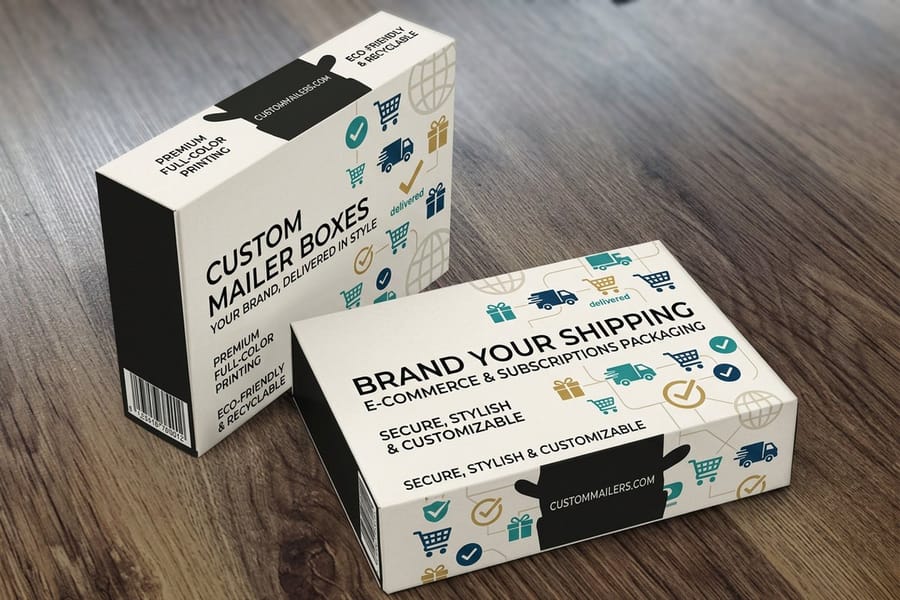
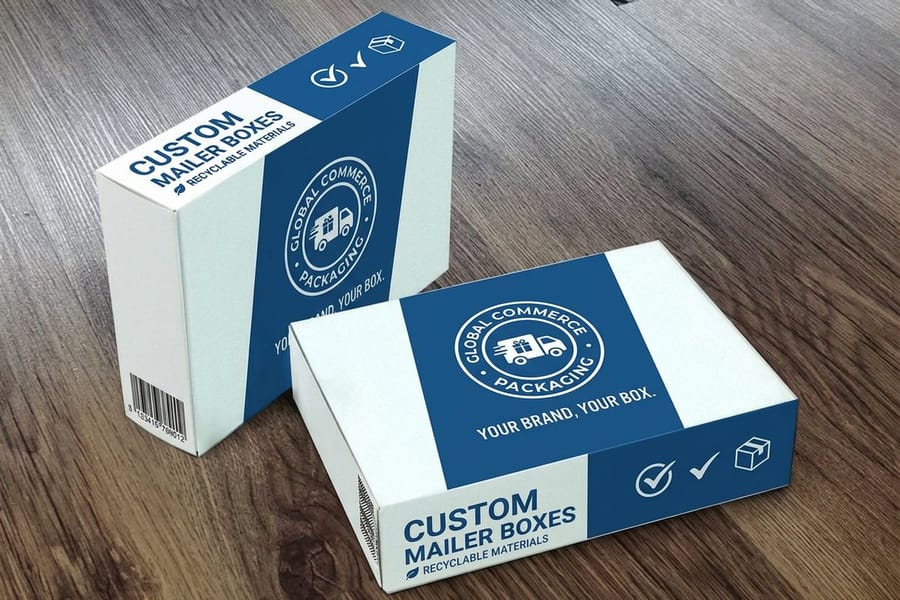
The numbers at 4OVER4.COM show the shape of it. Custom mailer boxes and retail boxes both start at $711.78. Packaging sleeves start at $438.25 because a sleeve is a printed band with fewer cuts and no glued seam. Cube boxes start at $213.09. Against that, premium packaging labels start at $29.16.
That last comparison is the honest advice for a young brand. If you are shipping thirty orders a month, a printed box ties up money in inventory you will outgrow before you use it. A plain stock box with a well printed label on the lid, or a sleeve around it, gets you a branded unboxing for a fraction of the outlay, and you keep the freedom to change the artwork. Move to printed boxes when your monthly volume makes the minimum look small.
When you do order, get the board decision right at the same time. Cardstock holds fine detail and looks correct on a shelf. Corrugated survives a carrier network. Our comparison of cardstock and corrugated boxes covers where each one fails, and choosing a box style narrows the shape before you spend anything on a die.
Proofs, Color on Kraft, and the Turnaround Clock

Three things go wrong on packaging jobs more than anything else, and all three are settled before the press runs.
The proof. A PDF proof shows content on a dieline. It confirms your spelling, your barcode placement and that nothing important sits across a crease. It cannot show you color on board, and it cannot show you whether a tuck flap clears the product inside. On a first run of a new box, buy the physical sample. Fold it by hand around the actual item. Our walkthrough of checking a packaging proof lists what to look at panel by panel.
The color. CMYK inks are transparent, so on kraft board they sit over brown rather than white. Deep colors survive. Pale tints and anything that relies on white space do not, and pure white is not printable without a white ink pass. Decide this before the proof: either specify a coated white board, or accept the muted kraft look and design for it deliberately.
The clock. Turnaround quoted from the moment you pay is not the same as turnaround from the moment you approve artwork, and on packaging the gap is usually where the days go. Confirm which one you are being sold, and confirm whether gluing sits inside that window. Set your artwork up correctly the first time using the printer's own template, which our guide to preparing packaging files covers in detail, with sizes waiting in the blank template library. If labels are your route in, the label printing category lists every stock and finish we run.
Wally explains packaging printers
Five steps, and you want them in one building
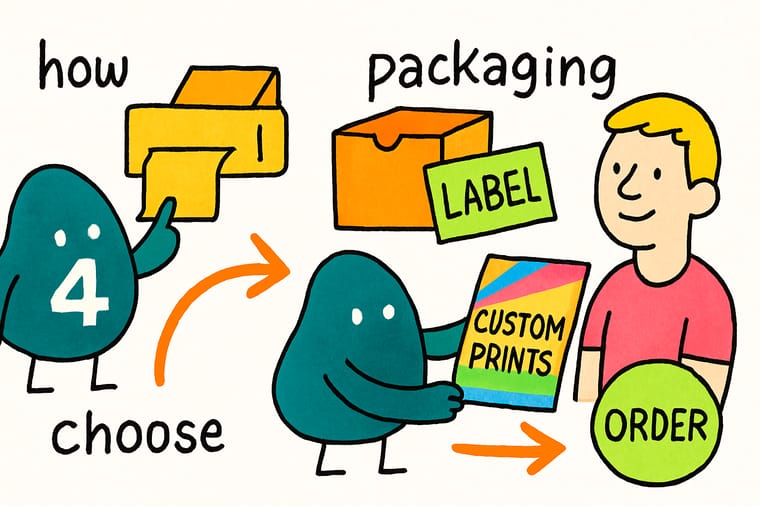
Wally sets the dieline, prints the board, cuts the shape, glues the seam and stacks the blanks flat. All of it happens on the same floor, so when a crease drifts he catches it before the run finishes instead of shipping it to you. Ask any printer which of those five steps it does itself. Then ask what the cutting die costs, what the minimum is, and whether the turnaround clock starts at checkout or at proof approval. Those four answers tell you more than any per box price.
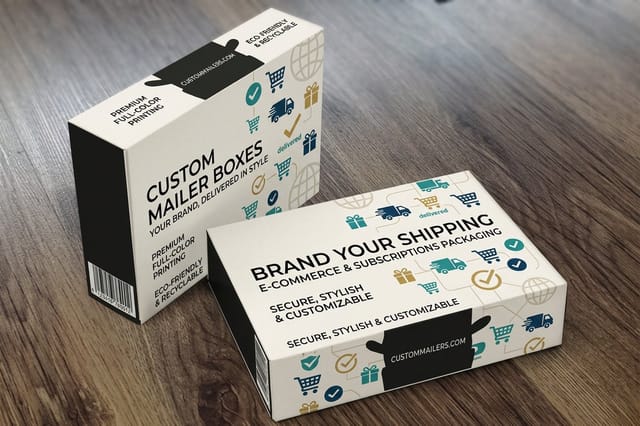
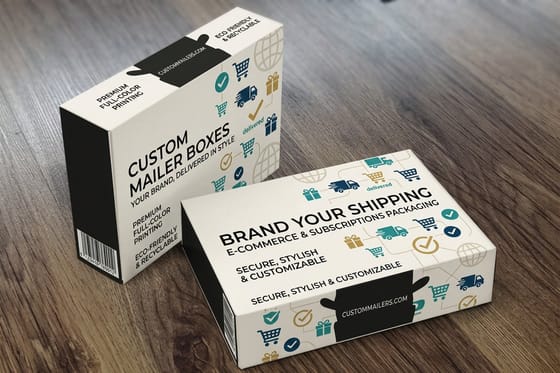
Price custom mailer boxes →Specs and pricing
Box sizes, board options and starting prices
Configure the packaging you are shopping for and compare the real numbers side by side, straight from the 4OVER4.COM configurator.
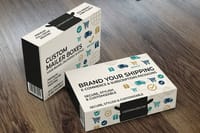
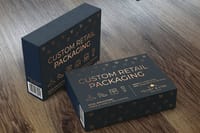
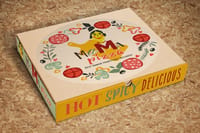
Print it
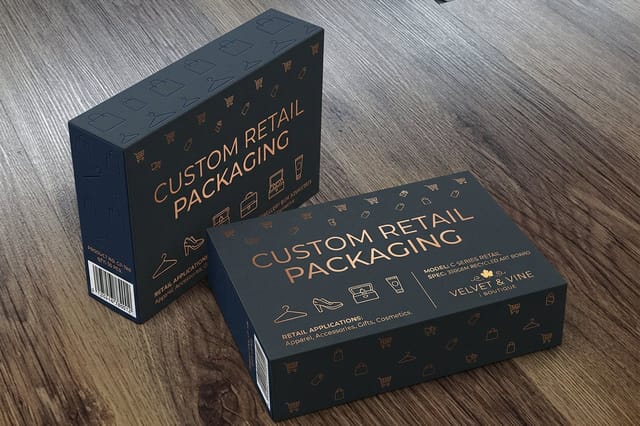
Packaging we print on our own presses
Explore more
Where to go next
By the numbers
Packaging printing you can plan around at 4OVER4
Common Questions
Your packaging printer questions, answered
How do I choose a packaging printer?
Start with three questions, in this order. First, which production steps happen in the printer's own plant: printing, die cutting and gluing, or only some of them. Second, does your box style run on tooling they already own, or does it need a new cutting die with its own charge and lead time. Third, what is the minimum order and what does a physical sample cost. A printer that answers all three plainly, in writing, is a better bet than one quoting a lower unit price with the details left vague. Price only becomes comparable once the die charge, the sample cost and the minimum are on the same page.
What is the difference between a packaging printer and a packaging supplier?
A supplier sells you the finished box and may have printed none of it. A packaging printer runs the press. The distinction matters when something goes wrong: a supplier has to go back to its source and wait, while a printer can pull the job, check the sheet against the proof and rerun it. Ask directly whether they own presses. Our guide to choosing a custom packaging supplier covers the sourcing side of the same decision.
Do I need to supply a dieline?
No, and you should not build one from scratch if the printer offers theirs. Every box style has a flat template with cut lines, crease lines and a bleed allowance that matches the tooling in that plant. Download the printer's dieline, put your artwork on its own layer above it, and send both back. A dieline drawn from measurements you took with a ruler is the single most common cause of a box that prints beautifully and folds wrong.
What minimum order quantity should I expect on printed boxes?
Higher than you want, because a box run has to be set up, printed, die cut and glued whether you order two hundred or two thousand. That fixed work is why box minimums exist at every printer. At 4OVER4.COM, custom mailer boxes and retail boxes start at $711.78, packaging sleeves at $438.25, and cube boxes at $213.09. If your volume sits below that, print labels or a sleeve for a plain box first and move to printed boxes when the volume justifies it.
Why does my color look different on a kraft box?
Kraft board has a brown base, and CMYK inks are transparent, so every color you print sits over brown rather than white. Blues go muddy, light tints almost disappear, and pure white is not printable at all without a white ink layer. If your brand color has to hold, either specify a white coated board or ask the printer whether they can lay down white first. This is worth settling before the proof, not after.
Should I get a physical sample before a full run?
On a first order of a new box, yes. A flat printed sample or an unglued sample shows you the real color on the real board and lets you fold it by hand to check the fit around your product. It costs a fraction of a rerun. On a repeat of a file that has already run, a PDF proof is usually enough, as long as the board, the size and the finish have not changed.
Get Started
Ready to get a real packaging quote?
Pick a box style that runs on tooling we already own, set your quantity, and see the price with no die charge hiding behind it.
Legal Disclaimer
Gold Standard guarantees apply to all standard orders placed through 4over4.com. Price match requires verifiable proof of a competitor's published price for an equivalent product with matching specifications and turnaround time. Satisfaction guarantee covers manufacturing defects and print quality issues. Contact support with order number and documentation. On-time delivery rate based on tracked orders 1999 to 2026. Individual results may vary based on shipping carrier performance.
