
Gloss, Silk and Soft Touch Postcards Compared by Feel, Color and Postage


Nadia is our customer education voice, built from the knowledge of our production team, with over 20 years in printing.
Gloss, silk and soft touch postcards are three films on one press sheet. Here is what each one does to your color, your QR code, your postage and the way the card feels when somebody picks it up.
Gloss laminated postcards give the strongest color and the highest shine, silk gives a smooth low glare surface that stays readable, and soft touch gives a velvet feel at the cost of contrast on dark artwork. All three are plastic films bonded to both faces after printing, so all three resist water, none of them take a pen, and every one of them pushes the card past the 0.016 inch thickness ceiling for the USPS postcard price. Pick gloss for photography, silk for anything that has to be read, soft touch for a card that gets handed over.
Quick answer
Same sheet, three films, three different weaknesses
The finish decides how light leaves the card, and that is the whole argument. Gloss film returns one hard reflection, so blacks deepen and photographs look wet, and the same reflection lands on your text as glare. Silk film breaks that reflection into a few soft ones, which keeps type readable and hides handling marks. Soft touch film scatters it widest, which is why the card feels like suede and why dark solids read lighter than they did on screen. Cost is identical between gloss and silk, and all three change what you pay to mail the card.
Weighing satin against gloss for a gift card? The same trade holds on plastic: our plastic gift cards come in UV gloss or silk laminated matte, where gloss gives the deepest color and silk keeps the card number and barcode readable under store lighting. The rest of this page compares the three films on postcards.
Lamination Is Film, Not Coating, and That Changes Everything
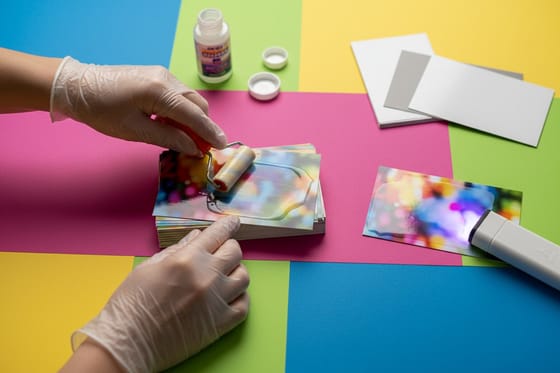
Before comparing the three, it helps to know what they have in common. Gloss, silk and soft touch postcards are all laminated, which means a thin plastic film is bonded to the printed sheet with heat and pressure after the ink has dried.
That is a different process from a coating. Aqueous coating and UV coating are liquids laid down on press and cured into the paper surface. Film sits on top of the paper as its own layer. You can feel the difference at the corner of a card: a laminated edge has a faint plastic lip, and a coated edge is just paper.
Three consequences follow from that, and they apply to all three finishes equally. The card becomes water resistant, because the film keeps rain and coffee off the fiber. The card becomes much harder to tear, because the film has to fail before the paper can. And the card gets thicker, because film is added to both faces, which is the part that catches people out at the post office.
What separates gloss from silk from soft touch is only the film itself. Same press sheet, same lamination line, different roll on the machine. If you want to see how a finish behaves on a smaller piece first, the same three films run on cards too, and our silk laminated business cards guide covers how the film wears in a wallet.
Gloss, Silk and Soft Touch Side by Side
Read the failure column first. Everyone agrees the three look good, and the choice is really about which weakness you can live with on this particular job. Gloss and silk both print on 16 point laminated stock in 22 sizes from 2 by 3 to 9 by 12 inches, from 250 cards; soft touch prints on 32pt to 80pt soft touch stock in 14 sizes from 50.
| Finish | Look and feel | What it does to artwork | Where it fails | Starts at |
|---|---|---|---|---|
| Gloss laminated | High shine, slick, reflective. | Deepest blacks, most saturation, photos look wet. | Glare across text under a ceiling light, and a phone can miss a QR code at an angle. | $74.53 |
| Silk | Smooth with a faint satin gleam. | Color a shade below gloss, type stays crisp and readable. | Not shiny enough for a piece that has to shout on a counter. | $74.53 |
| Soft touch | Velvet, almost suede under a thumb. | Dark fields read lighter, contrast drops, texture does the selling. | Finger oils sit in the surface and a scratch shows as a shiny line. | $29.44 |
| No laminate | Plain coated or uncoated stock. | Honest color, takes ink from a pen. | No water resistance and the corners soften in a bag. | $16.48 |
Two notes on that table. Gloss and silk start at the same price because they are the same film line with a different roll, so the choice between those two costs nothing and comes down entirely to how the piece will be looked at. And the starting prices are for each product's own opening size and quantity, so configure the size and run you actually need on each page before you treat one as cheaper than another.
If the piece is going to be photographed for a listing, or read at arm's length in an office, silk is the one that keeps working under both conditions. Gloss and soft touch each have a lighting situation that flatters them and one that does not.
What Lamination Does to Postage and Addressing
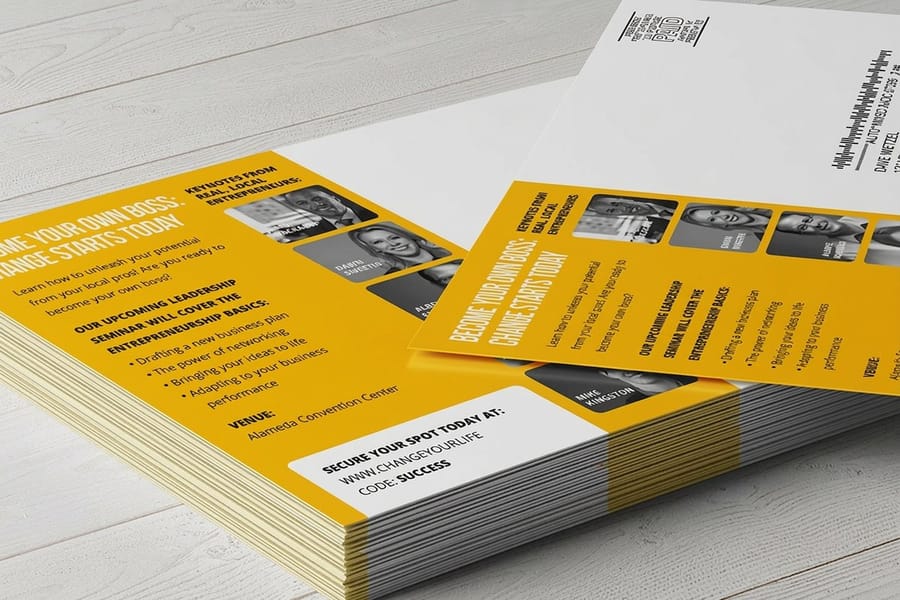
This is the part that costs money quietly. The USPS postcard price has a thickness ceiling of 0.016 inch along with its size limits. A 16pt sheet measures 0.016 inch by definition, since a point here is one thousandth of an inch, and lamination adds film to the face and the back on top of that.
So a laminated postcard is over the ceiling before it leaves the bindery, and it is paid at the letter price rather than the postcard price. On a run of a few hundred that is a rounding error. On a run of twenty thousand it is a line item somebody will ask about. Work the postage out first: our postcard mailing rules guide covers the size and thickness limits in full, and postcard printing pricing covers what the print side costs.
Addressing is the second surprise. Water based inkjet, which is what most mailing equipment uses to spray a name and address onto a card, does not bond to a laminate film. It beads, then smears in the sorting machine. There are three ways round it: print the variable data before the sheet is laminated, use a label, or use UV curable inkjet. Tell us the piece is being mailed when you order so the right route is planned, and if the whole campaign is a mailing rather than a leave-behind, direct mail postcards start at $89.68 with the mailing built into the job.
The same rule applies to anything handwritten. A date, a name, a signature: none of them stay put on a laminated surface. Leave that panel unlaminated or order the piece as standard postcards, which start at $16.48 and take a pen without argument.
Which One to Order for Your Job
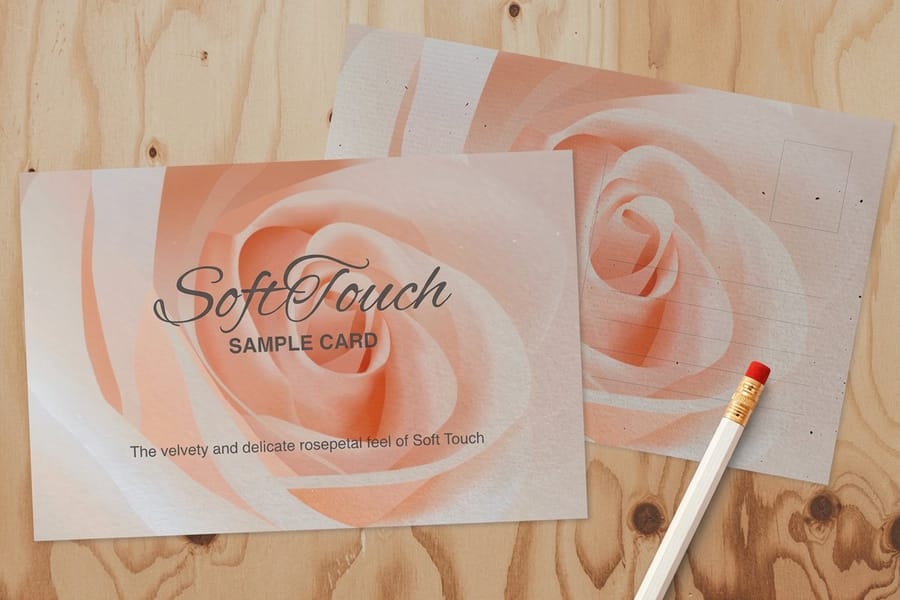
Match the finish to how the card gets used, not to how it looks on a screen.
- Photo led promotions, menus, retail and event cards. Gloss. The artwork is doing the work and the extra saturation is the whole reason to laminate.
- Real estate, healthcare, finance, anything with a paragraph of text or a QR code. Silk. It stays readable under office lighting and it scans reliably, which gloss does not always do.
- High value leave behinds, invitations, portfolio cards, anything handed over in person. Soft touch. People hold it longer, and that is measurable in how many end up on a desk instead of in a bin.
- Large mailings on a postage budget, or any card that has to be written on. Skip the film and print standard postcards.
If you have to commit without seeing the artwork, order silk. It is the only one of the three with no lighting condition where it lets you down, it costs the same as gloss, and it photographs well for a listing or an ad. Gloss is the specialist for saturated imagery. Soft touch is the specialist for the handover moment, and it is the right base if you want to add a gloss spot UV highlight over the top, since the contrast between velvet and varnish is what makes that effect land.
Whichever way you go, set the file up on the correct trim before you start. Grab a correctly sized layout from the blank template library, and if you are still deciding between calipers rather than finishes, the postcard paper and cardstock guide is the one to read next. The full range sits in postcard printing.
Wally holds all three under the lamp
Gloss flashes, silk glows, soft touch swallows the light

Wally prints the same card three times and laminates each one with a different film. Under the lamp the gloss card throws a hard white streak across the type, the silk card shows a soft sheen and stays readable, and the soft touch card shows almost nothing and asks to be touched instead. Then he runs all three past the caliper and they are all too thick for the postcard rate. Choose the film for how the card gets used, and budget the postage as a letter.
Order silk postcards →
Specs and pricing
The three finishes, sizes and starting prices
Configure the size, stock and quantity you actually need. Gloss and silk run from 250 cards for $74.53 with 7 business days of production, or 4 on the faster option. Soft touch runs 2.5 by 2.5 to 6 by 11 inches from 50 cards for $29.44 with 5 business days.


Print it
Order the finish that suits the job
Gloss and silk print full color on one side or both. Soft touch adds a black ink back and a next day hardcopy proof, which is worth ordering before a large run of dark artwork.



Explore more
Where to go next
See what the soft touch layer is made of, how silk film wears on a business card, when a liquid UV coating beats a laminate, and which caliper to pick before the finish. The category card prices every postcard stock.


By the numbers
The postcard press behind all three finishes
Common Questions
Your postcard finish questions, answered
Which postcard finish is best for mailing?
For a piece that has to travel at the USPS postcard price, none of the three. The postcard price allows a maximum thickness of 0.016 inch, and a 16pt sheet already measures 0.016 inch before film is bonded to either face, so a laminated card is paid as a letter. If the mailing budget is the constraint, print uncoated or coated stock as standard postcards and spend the difference on the list. If the piece is handed over, left on a counter, or slipped into a folder, laminate is worth it and the postage question never comes up.
Can you write on gloss laminated postcards?
Not with a normal ballpoint or a felt tip. Ink sits on top of the film and smears with a thumb instead of soaking in. Silk and soft touch take a permanent marker slightly better because the surface is not slick, but neither is a writing surface in the way uncoated stock is. When a card needs a handwritten note, an appointment date, or a signature, ask us to leave a writable panel unlaminated or order the piece on uncoated stock.
Does soft touch make colors look dull?
It lowers contrast rather than dulling everything equally. The matte film scatters light, so the deepest blacks and heavy dark fields read a step lighter than the same file printed under gloss. Mid tones and pastels barely move. The practical fix is to build the file knowing this: push rich blacks, avoid dark type on a dark background, and keep any small reversed text a size larger than you would for a gloss card.
Is silk the same as matte?
Close, but not identical. A matte laminate is flat with almost no sheen. Silk film keeps a faint satin gleam, so the card looks smooth and slightly luminous rather than chalky, and it resists scuffing better than a dead matte surface. Soft touch is a third thing again: a matte film with a textured top layer that gives it the suede feel. Our silk postcards sit in the middle of the three deliberately.
Do laminated postcards cost more than plain ones?
Yes, and the gap is real. Standard Postcards start at $16.48 at 4OVER4.COM. Soft Touch Postcards start at $29.44, and Gloss Laminated Postcards and Silk Postcards both start at $74.53. The starting configurations differ in size and quantity, so price the exact size and run you need in the configurator on each product page rather than reading across the three starting numbers as if they were the same job.
Can you put spot UV on a soft touch postcard?
That is the combination the effect was made for. A gloss varnish printed only on the logo or a headline stands out hardest against a matte velvet background, which is why raised or flat spot UV on soft touch is the standard premium build. Spot UV Postcards start at $190.02. On a gloss laminated card the same varnish barely reads, because the whole surface is already shiny.
Get Started
250 silk postcards cost $74.53, or 30 cents each
Pick your size, choose gloss, silk or soft touch, and we print postcards that hold up in a bag, on a counter and in somebody's hand.
Legal Disclaimer
Gold Standard guarantees apply to all standard orders placed through 4over4.com. Price match requires verifiable proof of a competitor's published price for an equivalent product with matching specifications and turnaround time. Satisfaction guarantee covers manufacturing defects and print quality issues. Contact support with order number and documentation.
