
What Soft Touch Paper Is and How the Velvet Finish Works


Emma is our prepress and print production voice, built from the knowledge of our production team, with over 20 years in printing.
The suede feel comes from one of two completely different builds. Each one is made differently, treats your colors differently, and appears on a different set of products at 4OVER4.COM carry it.
Soft touch paper is a sheet with a velvety, suede-like matte face, produced either by laminating a printed card in a soft touch film about 1.2 mil thick or by printing on an uncoated stock that already carries the texture. The feel comes from a microscopically rough surface that scatters light and drags slightly under a fingertip, which is why the same ink reads deeper and the piece reads as expensive. The laminated build is thin, sealed and accepts spot UV. The uncoated build is thick, takes a pen, and will not crack at a fold.

Quick answer
One feel, two ways of building it
Soft touch is the surface, not the paper grade. A laminated soft touch card is a 16pt core sealed in film on both faces, which finishes near 18pt, resists water, and gives spot UV gloss something to sit on. An uncoated soft touch card carries the texture in the sheet itself at 32pt through 80pt, so it is far thicker, it takes a ballpoint, and a fold will not lift a white line at the crease. Both feel like suede in the hand, and both make deep colors look richer and bright colors look a shade quieter than they did on screen.
What Soft Touch Paper Actually Is
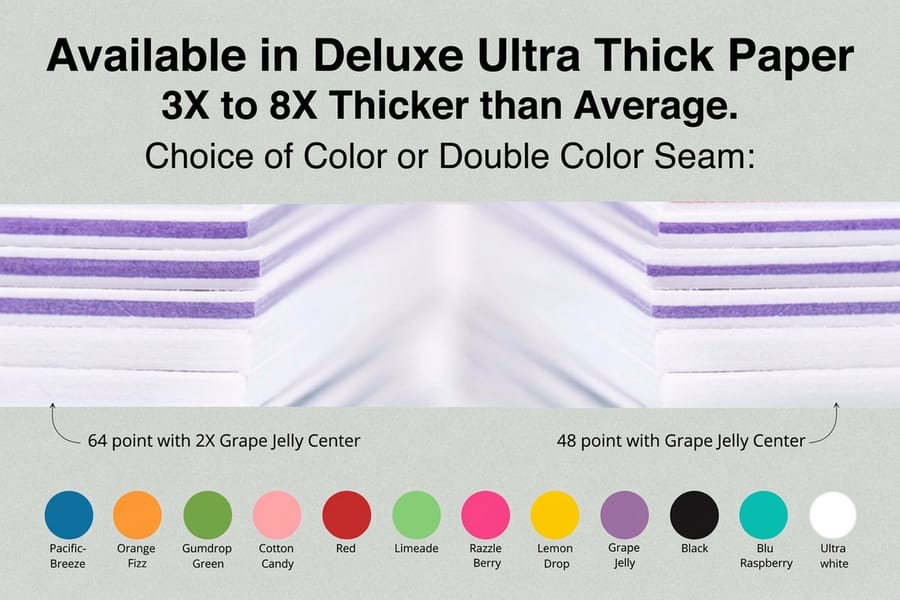
Soft touch paper is a card stock with a velvety, slightly grippy matte face. It comes two ways: a soft touch film about 1.2 mil thick bonded over a 16pt core, or an uncoated soft touch stock in 32pt, 48pt, 64pt or 80pt with the texture in the sheet.
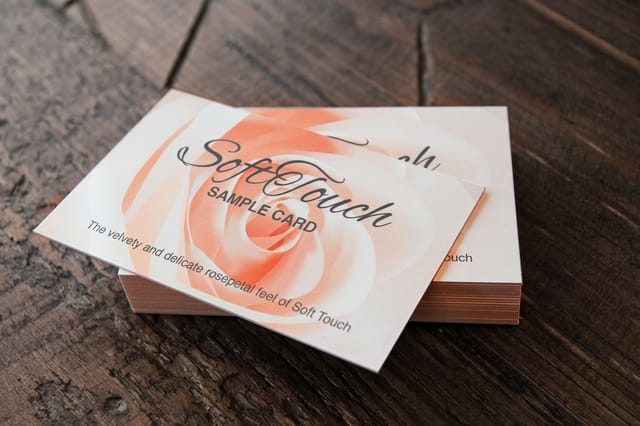
Soft touch describes the face of the sheet, not the sheet itself. Run a finger across it and the surface catches slightly, like the flap of a hardback jacket or the outside of a phone case. That drag is a microscopically rough matte surface breaking up reflected light and giving your skin something to hold on to.
Two very different builds produce that feel, and printers use the same word for both, which is where most of the confusion starts.
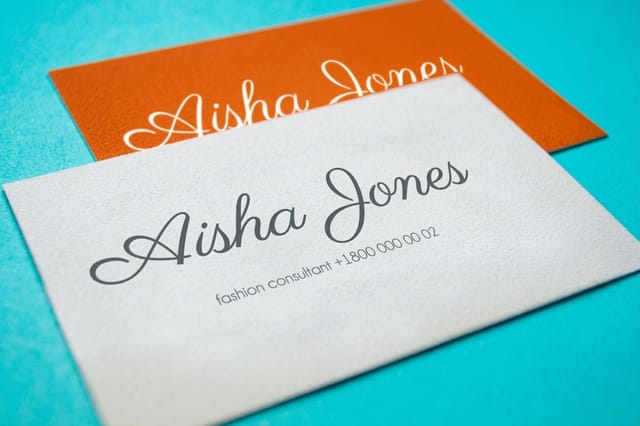
The laminated build. A card is printed normally, then a soft touch film about 1.2 mil thick is bonded to both faces with heat and pressure. Suede business cards are a 16pt core in that film, and silk laminated business cards use a closely related film with a slightly slicker hand. The card ends up around 18pt finished, sealed, water resistant, and much harder to tear. Short videos show both: suede business cards and silk laminated business cards.
The uncoated build. No film at all. The sheet is a soft touch uncoated stock and the ink dries into the fiber. Soft touch business cards run this way in 32pt, 48pt, 64pt and 80pt, so even the thinnest option is roughly twice the caliper of a normal card. It is the route that gives you heft rather than protection, and the soft touch business cards story has more on that card.
Suede and velvet are just trade names for the laminated version, so nothing is lost when a quote uses one instead of the other. What matters is which build you are buying, because everything below follows from it. If you want the wider context on how coatings and stocks behave, the paper stocks guide covers the rest of the family.
Soft Touch Paper Sizes in Inches
Soft touch paper stock comes in four calipers on the uncoated build, 32pt, 48pt, 64pt and 80pt, and one on the laminated build, a 16pt core. Each product cuts it to its own set of sizes:
| Product | Size (inches) | Soft touch stock | Starts at |
|---|---|---|---|
| Soft touch business cards | 2 x 3.5, 2 x 2, 1.5 x 3.5 | 32pt to 80pt uncoated | $40.28 for 50 |
| Suede business cards | 2 x 3.5, 2 x 2, 1.5 x 3.5, 2.125 x 3.375 | 16pt core in suede laminate | $87.15 for 250 |
| Soft touch postcards | 14 sizes, 2.5 x 2.5 to 6 x 11, including 4 x 6, 5 x 7 and 6 x 9 | 32pt to 80pt uncoated | $29.44 for 50 |
| Soft touch hangtags | 2 x 2, 2 x 3.5, 2.5 x 2.5, 3 x 3, 3 x 4, 2 x 6 | 32pt to 80pt uncoated, with a drilled hole | $38.91 for 50 |
| Standard business cards | 2 x 3.5 and three more | 16pt uncoated with soft touch as one stock option | $17.57 |
Pick the size the piece needs first, then the caliper. A 2 x 3.5 card at 32pt already feels about twice a normal card, and a 6 x 9 postcard at 80pt lands like a board.
Soft Touch Against Matte, Silk and Gloss
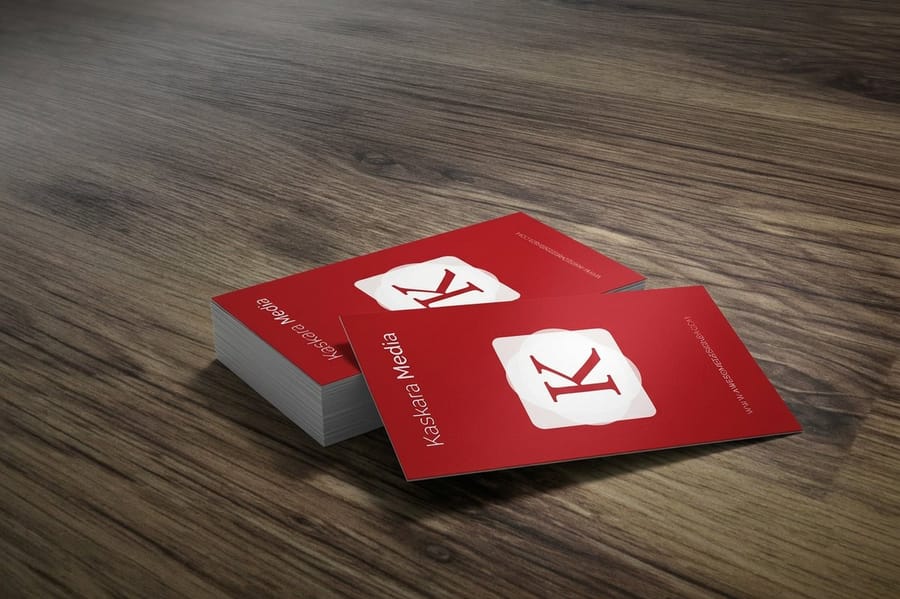
Matte and soft touch get quoted as if they were the same thing. They are not. Matte controls shine. Soft touch changes texture, and texture is what people remember, because it is the only print property a customer registers before reading anything.
| Finish | How the surface is made | Takes a ballpoint | Spot UV option | Starts at |
|---|---|---|---|---|
| Soft touch uncoated | Texture is in the sheet, 32pt to 80pt, no film over the ink. | Yes, like any uncoated stock. | No, there is no film to gloss. | $40.28 for 50 |
| Suede laminate | 16pt core sealed in soft touch film on both faces. | Not reliably, ink sits on plastic. | Yes, front, back or both. | $87.15 for 250 |
| Silk laminate | 16pt core in silk film, tear and water resistant. | Not reliably. | Yes, and it pops hard against the matte. | $74.53 for 250 |
| Standard coated | Press coating on the stock, glossy or matte, no film. | Varies with the coating. | Sold as its own product. | $17.57 |
The column that decides most jobs is the ballpoint one. A card that gets a handwritten appointment date on the back has to be uncoated, and no soft coating makes up for a date that smears in a customer's bag.
The second thing to plan for is color. A velvet surface scatters light rather than bouncing it, so deep blacks and saturated navies gain depth while neon brights and delicate gradients go a shade quieter than they look on screen. Designers who work in soft touch regularly build their blacks a little richer to compensate. The matte and gloss comparison works through the same trade-off on ordinary coated stock, and the finish guide puts all three next to each other.
Where a Soft Touch Finish Earns Its Money
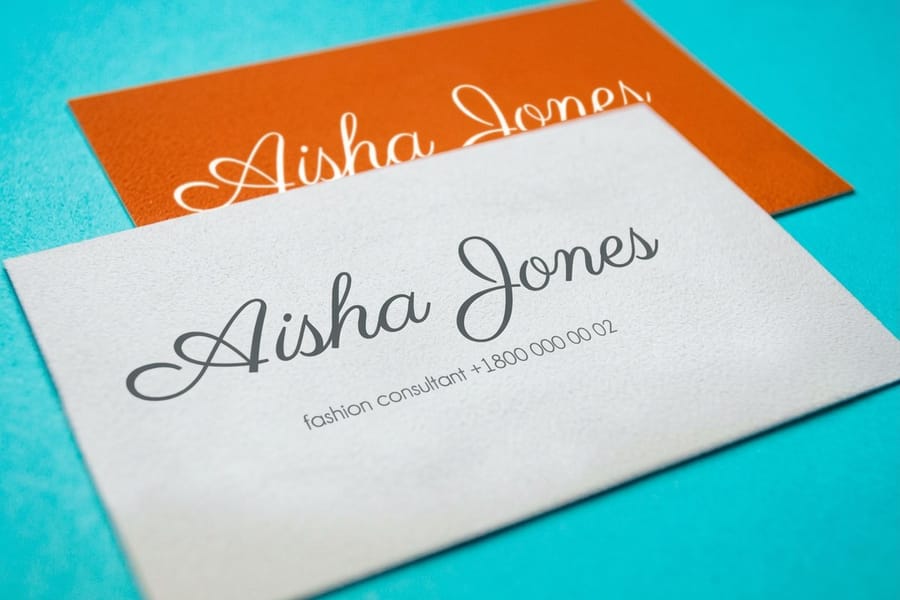
A tactile finish only pays where the piece gets handled. That sounds obvious until you see it spent on a bulk mailer that goes from mailbox to bin in four seconds, which is money burned on a sensation nobody had time to notice.
Business cards are the clearest win. The card is taken, turned over, and put in a pocket, and the whole exchange lasts long enough for the surface to register. Soft touch business cards start at $40.28 for 50 against $17.57 for standard business cards, and the per-card cost falls from about 77 cents at 100 to 11 cents at 10,000, so a real box makes the upgrade almost free. Browse the rest of the range on business cards printing if you want to see where soft touch sits.
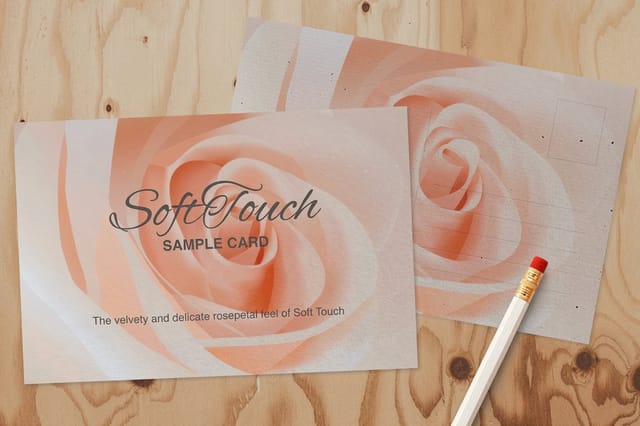
Retail packaging is the second. A soft touch hangtag from $38.91 per 50 is touched by a shopper who is already holding the product, in the exact moment they are deciding, and a velvety tag next to a shiny one does quiet work on the price they will accept. Invitations and thick mailers are the third: soft touch postcards start at $29.44 for 50 across 14 sizes, and a 32pt or 80pt card lands with a weight a normal postcard cannot fake; the soft touch postcards story has more on them. The wider postcards printing range covers the standard versions.
Where it does not earn its cost: anything that has to be written on after lamination, anything folded without a proper score, since film can crack and show a white line at the crease, and high-volume drops where nobody handles the piece for more than a moment. In those cases spend on stock weight or on the mailing list instead of the surface.
Choosing and Setting Up a Soft Touch Job
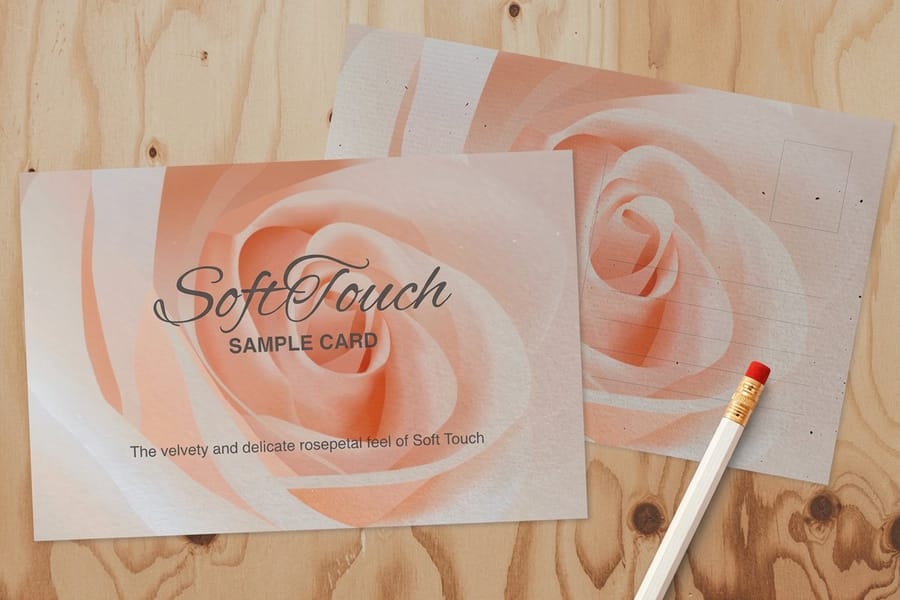
Start with one question: does anything need to print or be written on top of the surface? If yes, you want the laminated route so spot UV has a film to grip, or you want uncoated so a pen has fiber to grip. Everything else is preference.
Then pick the caliper. On the uncoated products, 32pt is already thicker than a normal card, 48pt reads clearly premium, and 64pt and 80pt land in the hand like a chip and cost more to mail. On the laminated products the core is 16pt, so thickness is settled and the decision is really about the spot UV accent and rounded corners.
- Build blacks richer than usual. A matte surface drops a little apparent density, so a flat 100 percent black often looks gray next to what you saw on screen.
- Keep the darkest solid off the primary face if the piece will be handled daily, since heavy dark coverage is where skin oils eventually show as a dull patch.
- Score anything you plan to fold on a laminated stock, and mark it on the order rather than assuming it.
- Order free samples before a large run and test with your own pen, your own lighting and your own darkest color.
Set the file up the way you would any other print job, at full size with bleed and fonts outlined. Start from a correctly sized layout in the blank template library, then compare the live options and prices on the soft touch collection and the suede collection before you commit to a build.
Wally explains soft touch
Velvet by film, or velvet by fiber

Wally has two ways to hand you a card that feels like suede. He can wrap a 16pt card in a soft touch film on both sides, which keeps it thin, seals it against water, and lets a glossy spot UV logo sit proud of the velvet. Or he can print on a soft touch uncoated sheet from 32pt up to 80pt, which is thick as a chip, takes a pen, and will not crack white at a fold. Ask him which one you need and he will ask you one question back: is anyone going to write on it?
Order soft touch business cards →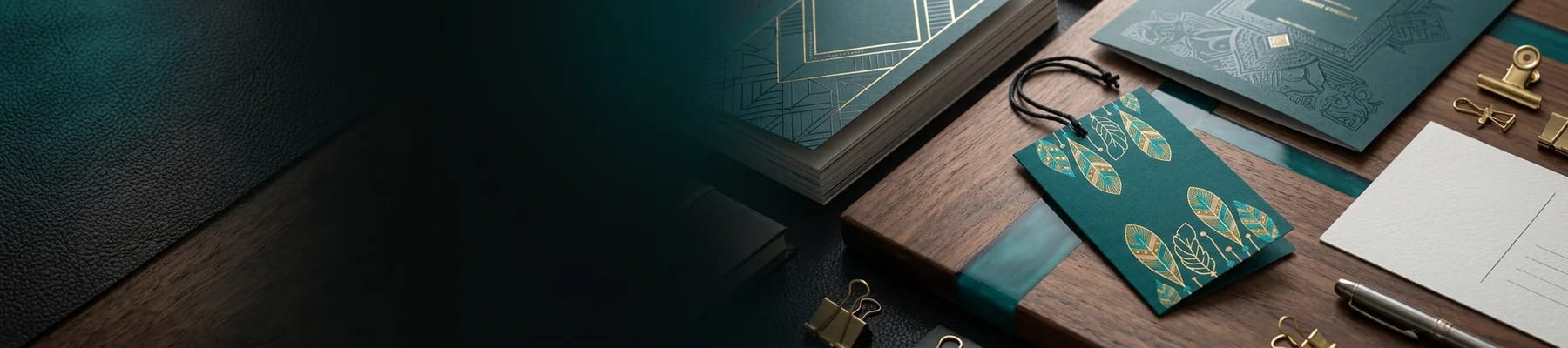
Specs and pricing
Soft touch options, sizes, and starting prices
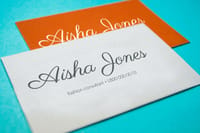
Soft touch business cards come in three sizes on 32pt to 80pt uncoated stock, from 50 cards. Suede business cards add the 2.125 x 3.375 size on a 16pt laminated core, from 250, with spot UV on the front, the back or both. Soft touch postcards run 14 sizes on the same four calipers, from 50. Set the caliper and quantity on each widget to compare.


Print it
Order a finish people stop to touch
Soft touch business cards for heft you can write on, suede business cards when the card needs a spot UV accent and a sealed face, and soft touch postcards at 32pt or 80pt for an invitation or a thick mailer.

Explore more
Where to go next
Compare matte, gloss and soft touch cards, see how a laminated card is built, weigh spot gloss against spot UV on a soft face, and read how the rest of the paper stocks behave.


By the numbers
Finish choices inside a 1,000 product lineup
Common Questions
Your soft touch questions, answered
What is soft touch paper?
Soft touch paper is a sheet with a velvety, suede-like matte face that drags very slightly under a fingertip instead of sliding. It is made one of two ways. Either a thin soft touch film is laminated over an already printed card, which is how the 16pt suede and silk cards are built, or the sheet itself is a soft touch uncoated stock that carries the texture without any film. The name describes the surface, so two products both called soft touch can be built completely differently.
Is soft touch the same as matte, silk or suede?
Suede and velvet are trade names for the same soft touch laminate, so those are genuinely interchangeable. Matte is not: a plain matte coating kills the shine but leaves the sheet feeling like ordinary paper, while soft touch changes what the paper feels like. Silk sits between them, a matte film with a slightly slicker, more slippery hand than suede. If you hand someone a matte card and a soft touch card with their eyes shut, they can tell which is which immediately.
Can you write on soft touch paper with a pen?
On soft touch uncoated stock, yes. There is no film over the fiber, so a ballpoint or gel pen writes the way it would on any uncoated sheet. On a laminated suede or silk card, ballpoint ink sits on top of the plastic film and can bead or smear for a while before it sets, which is why appointment cards and referral cards with a write-in line are a bad fit for lamination. If someone on your team will be writing a date on the card, order free samples and test with the exact pen they use.
Does soft touch show fingerprints and scuffs?
It hides the greasy shine that gloss shows, which is the usual complaint people are trying to solve. It is not immune. Heavy dark coverage on a soft touch surface picks up a faint dull sheen from skin oils over time, and a laminated card that gets dragged across a rough edge can pick up a scuff. Practical fix: keep the very darkest solid on the back of the card rather than the face people study, and let a lighter background carry your type.
Can you add spot UV or foil to a soft touch card?
Spot UV is where the laminated route pulls ahead. Suede business cards and silk laminated business cards both offer spot UV gloss on the front, the back, or both, and glossy shapes against a velvet field is one of the strongest contrasts available in print. The soft touch uncoated products do not carry that option, because there is no film for the gloss to sit on. If you want a raised or foiled accent over a suede feel, the suede greeting card family is built for exactly that combination.
How much more does soft touch cost than a standard card?
Standard business cards start at $17.57. Soft touch business cards start at $40.28 for a set of 50 and fall to about 11 cents a card by 10,000, and suede business cards start at $87.15 for 250, which the configurator works out to roughly 35 cents a card. So the entry price roughly doubles and the volume price barely moves. If you print in the thousands, the tactile upgrade costs pennies per card, and if you only need 50, it costs about the price of one lunch.
Get Started
Soft touch hangtags run 50 for $38.91 on 32pt uncoated
Pick the laminated suede card or the thick uncoated soft touch stock, set your size and quantity, and we print a surface that gets handled instead of filed.
Legal Disclaimer
Gold Standard guarantees apply to all standard orders placed through 4over4.com. Price match requires verifiable proof of a competitor's published price for an equivalent product with matching specifications and turnaround time. Satisfaction guarantee covers manufacturing defects and print quality issues. Contact support with order number and documentation.
