
Foil vs Spot UV vs Embossing on Business Cards, Compared


Three finishes that get quoted against each other constantly. Each does something different to the card, each carries its own price at 4OVER4.COM, and only some artwork survives it.
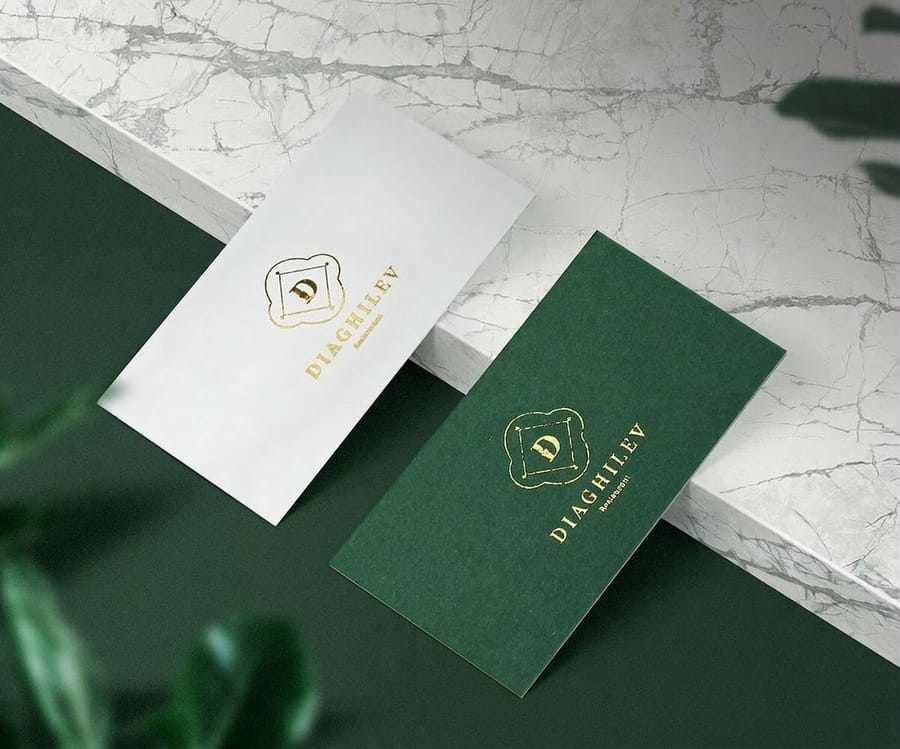
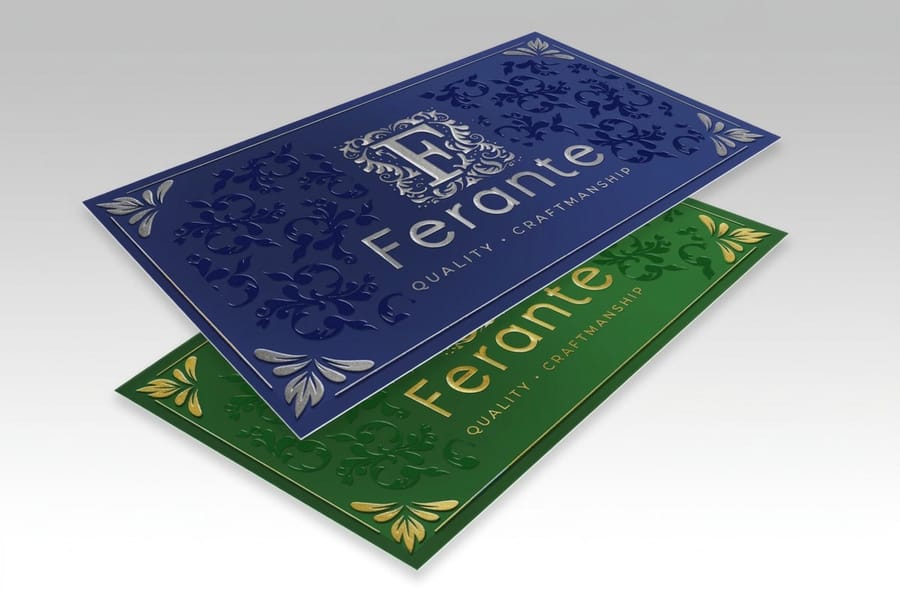
Foil stamping bonds metallic film to the card with a heated die, spot UV cures a clear gloss varnish over chosen areas, and embossing squeezes the paper between two dies so the sheet itself rises. Foil adds a metal no press can print, spot UV buys contrast for the least money at $76.88, and embossing is the only one of the three that shows on the back of the card. Foil and embossing need tooling cut from your artwork. Spot UV needs only a mask file, so it is the one you can still change.
Quick answer
One adds metal, one adds varnish, one moves the paper
Foil and spot UV build upward from the card surface, so the back stays flat. Embossing reshapes the sheet, so the back never does. Foil is a metallised film released onto the stock by a heated die, spot UV is a clear varnish cured hard under ultraviolet lamps, and embossing adds no ink or film at all. Foil and embossing each need a die cut from your artwork, which is where their cost sits. Spot UV runs from a mask file, starts at $76.88, and stays cheap to revise.
What Each Finish Physically Does to the Card
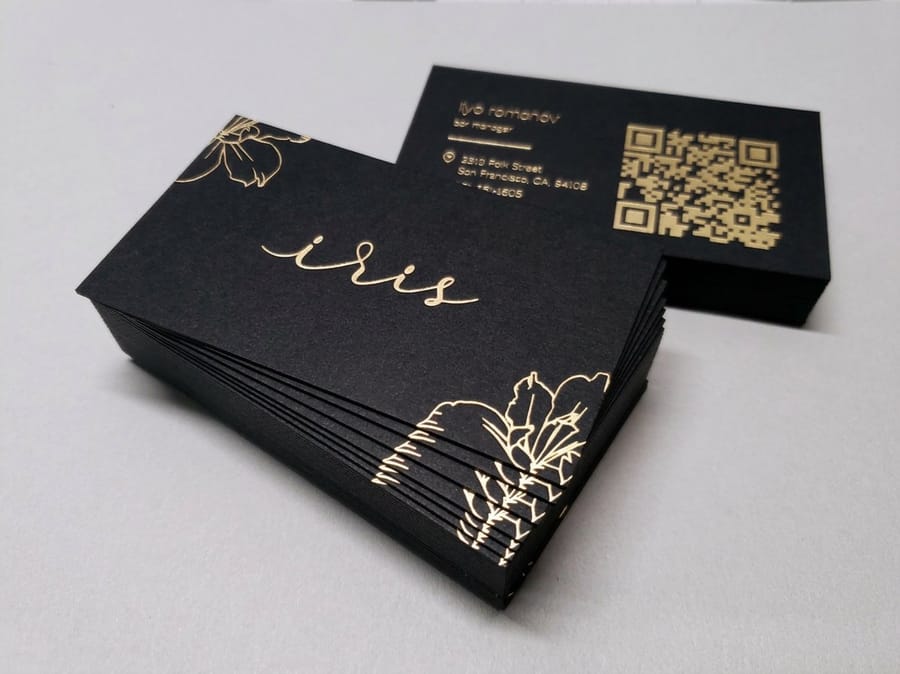
The three get grouped together as premium finishes, but they are not variations of one idea. One adds metal, one adds varnish, and one adds nothing at all.
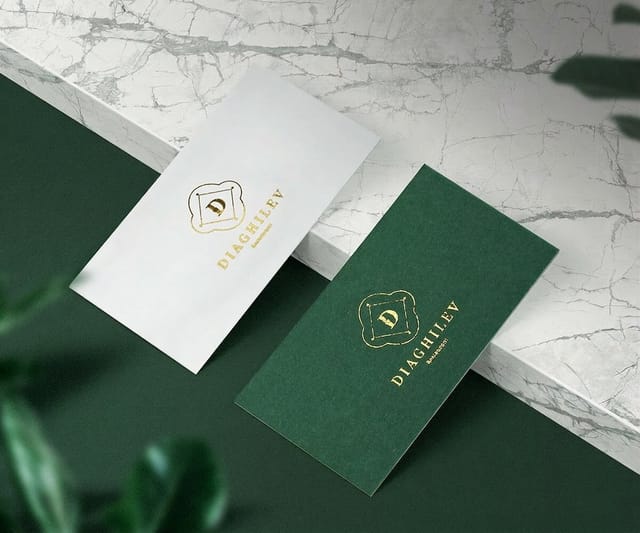
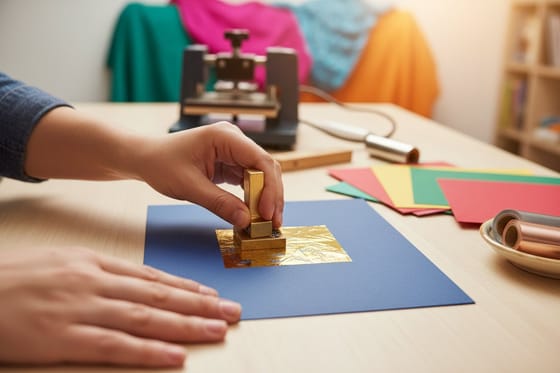
Foil stamping works from a roll of film. The film carries a metallised or pigmented coating on a polyester carrier, and a die cut from your artwork is heated and pressed through it into the stock. Heat and pressure release the coating exactly where the die touches, the carrier film peels away, and the metal stays behind. That is why foil reflects rather than glows: it is a mirror surface, not an ink. There is no CMYK build that reproduces it, which is the entire argument for paying for it. The foil stamping guide covers the die and the press side in more detail.
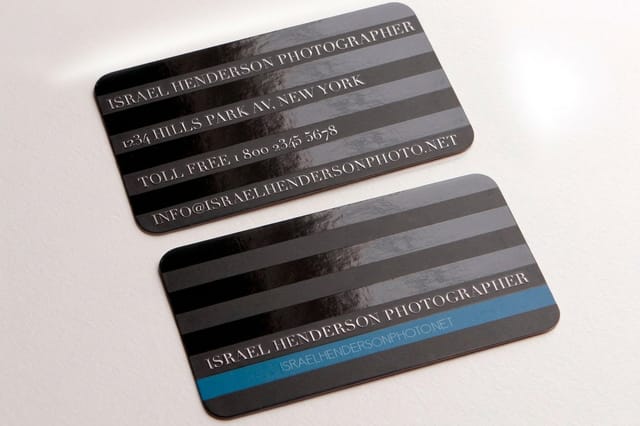
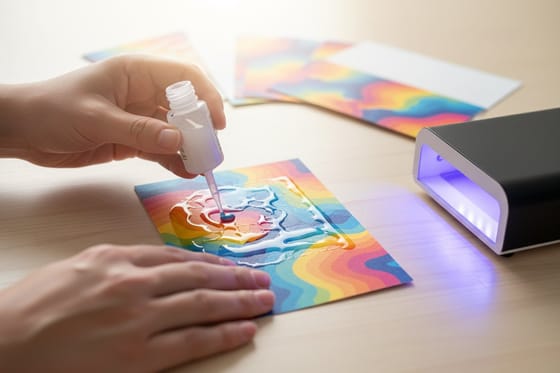
Spot UV starts after the card is already printed. A clear liquid varnish is applied through a mask so it covers only the shapes you chose, then the sheet passes under ultraviolet lamps that cure it in a fraction of a second into a hard, glassy film. Nothing is heated to the point of moving the paper, and no tooling is involved, so the only file you supply beyond the artwork is the mask. Read how spot UV printing works for the masking rules.
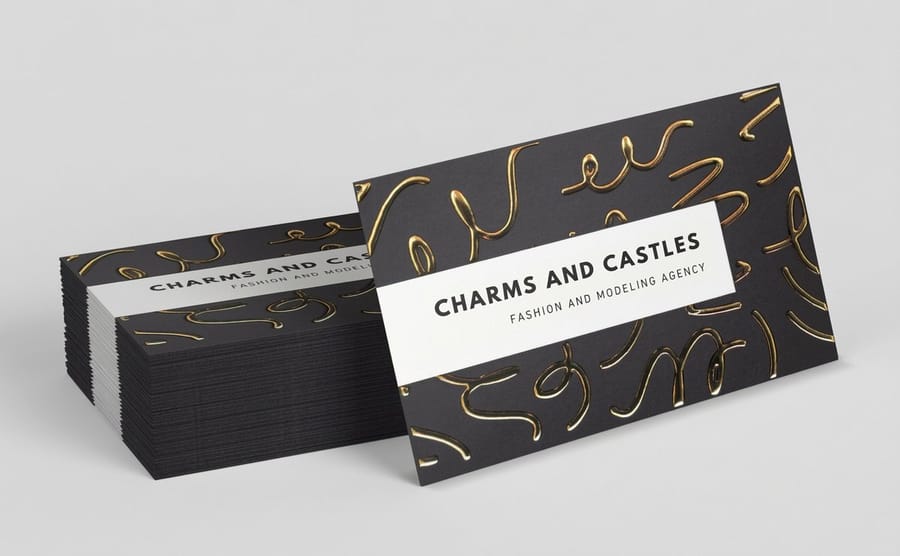
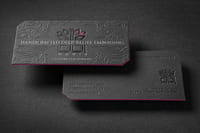
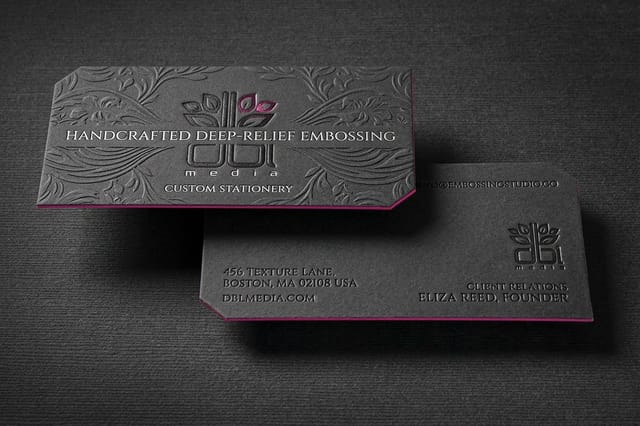
Embossing is pure mechanics. Your artwork becomes a matched pair of dies, one raised and one recessed, and the sheet is squeezed between them until the fibres take the shape permanently. No ink goes down and no film is added. When it carries no printing at all it is called blind embossing, and on a heavy uncoated stock that quiet version is the most expensive looking of the three.
Foil vs Spot UV vs Embossing, Side by Side
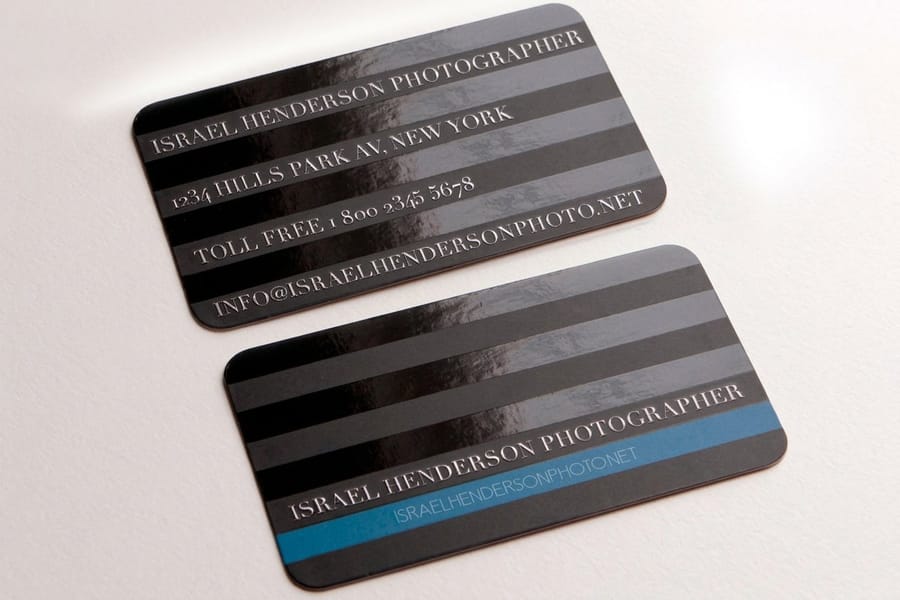
Five things decide which finish suits a job: what it adds, whether it needs tooling, what happens to the back of the card, what artwork survives it, and what it costs to start.
| Finish | What it adds | Needs a die | Back of the card | Best artwork | Starts at |
|---|---|---|---|---|---|
| Foil stamping | A metallised film bonded to the stock. | Yes, cut from your art. | Flat, fully printable. | Solid marks, logos, rules, display type. | $222.13 |
| Spot UV | A cured clear gloss varnish. | No, a mask file only. | Flat, fully printable. | Large shapes, photo panels, solid blocks. | $76.88 |
| Embossing | Nothing. It reshapes the paper. | Yes, a matched pair. | A permanent matching recess. | Weighted marks, monograms, borders. | $251.36 |
Read the fourth column before the last one. A card that has to carry a full bleed image or a dense back panel rules out embossing on layout grounds alone, whatever the budget says. A card whose whole job is one logo and a name has room for the recess and gains the most from it.
There is a fourth option the table leaves out because it belongs to a different family. Raised printing builds a resin layer on top of wet ink using powder and heat instead of tooling, which gives you height without a die. Raised foil business cards start at $86.78 and behave like the foil column with a softer, thicker edge. The comparison of foil stamping and raised foil covers where the two diverge.
What Each One Costs and Where the Money Actually Goes
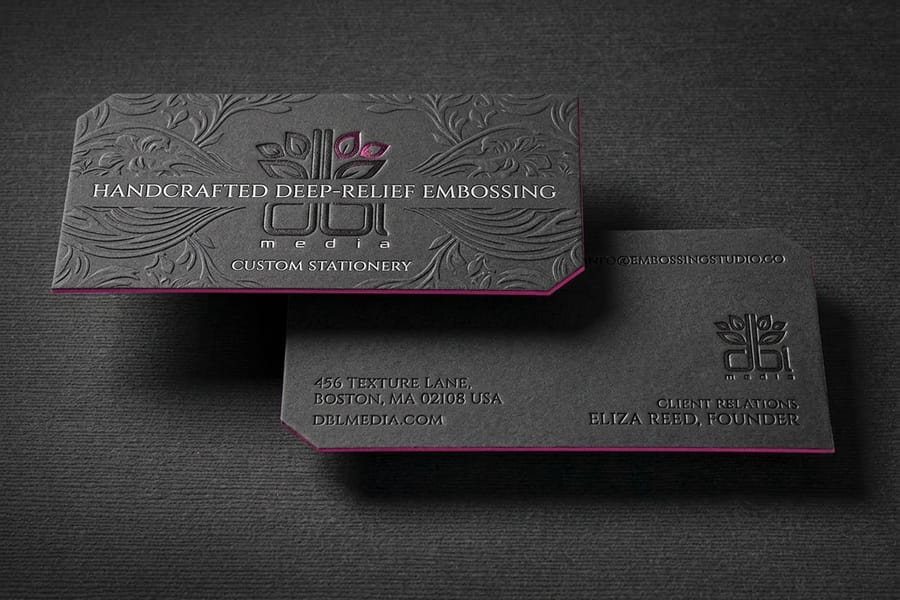
Against $17.57 for standard business cards, every finish here is a deliberate spend. What is worth understanding is that the price gap between them is not a quality ladder. It is tooling.
Spot UV starts at $76.88 because the only extra input is a mask and a pass under the lamps. Foil starts at $222.13 and embossing at $251.36 because both require a metal die made from your artwork before a single card can be produced. The die is tied to that specific shape, so a logo revision, a changed tagline, or a second version of the card for a different office each mean new tooling rather than a reprint.
That single fact should drive the decision more often than it does. If the brand is settled and the card will be reordered as it stands, a die is a one time cost spread over every future run and foil or embossing is easy to justify. If the design is still moving, spot UV gives you a premium looking card that costs nothing to change, and you can move to a die based finish once the artwork stops shifting.
The middle ground is worth pricing too. Raised spot UV business cards start at $108.75 and dual raised business cards at $149.00, both built from resin and heat rather than tooling. Stock choice moves the number as well, and our business card stock guide explains which weights suit a heavy finish. The full range sits in the foil printing collection and the spot UV collection.
Setting Up Artwork That Survives Each Process
All three need the same thing from you: a separate vector layer holding the finish shapes as solid 100 percent black, on top of the normal artwork, clearly named. What differs is what those shapes are allowed to be.
- Foil. Solid vector shapes only. No gradients, no tint screens, no photographic content, because the die either touches the sheet or it does not. Very fine serifs at small sizes tend to thicken, so check the smallest type in your foil layer before you commit.
- Spot UV. The most forgiving of the three. It handles large areas and even a full photo panel. The one habit worth keeping is to pull the varnish shape very slightly inside the printed shape it sits on, so a hair of movement on press hides under the ink instead of showing a clear halo along one edge.
- Embossing. Give the shapes weight. Thin strokes and tiny counters flatten out or tear, and a deep emboss on a heavily coated stock can crack the coating along the shoulder of the shape. Uncoated and cotton stocks take the deepest impression and hold it best.
Set the card up at the right trim size from the start, with fonts converted to outlines. Our file setup guide for foil shows the layer structure we expect, and the blank template library has correctly sized business card layouts to build on. If you are weighing spot UV against a simple spot gloss coating, the difference between spot gloss and spot UV is worth two minutes.
The Verdict: Which Finish to Order
If the card is the only object you hand a person and the artwork is final, order foil business cards. Metal is the finish people notice at arm's length, before they read anything, and nothing else on this page competes with it for pure attention.
If you want a premium card for the least money, or the design is still being argued about, order spot UV business cards on a matte or soft touch stock. At $76.88 it is a third of the cost of foil, it changes freely because there is no die, and on the right surface it reads clearly across a table.
If the brand is quiet and the card is mostly white space with a monogram, order embossed business cards and consider running them blind. Restraint is the whole effect, and embossing is the only one of the three that delivers it without adding color.
Skip all three if the back of the card has to carry dense information and you were leaning toward embossing, if your stock is gloss laminated and you were leaning toward spot UV, or if the logo will change next quarter and you were leaning toward a die. In those cases spend the budget on a heavier stock instead. For a broader view of what a finish does for a card, what makes a business card premium and the seven best print finishes both widen the field.
Wally explains the three finishes
Metal on top, gloss on top, or the paper itself
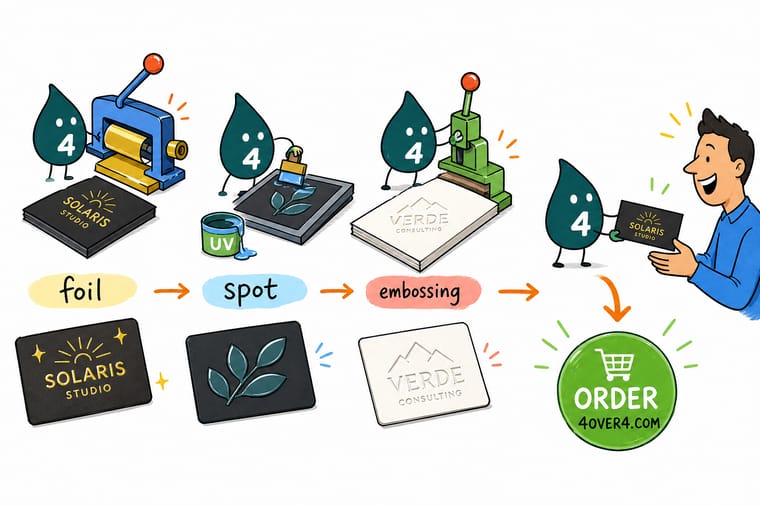
Wally presses a hot die through a roll of foil and a mirror finish stays on the card. He brushes clear varnish over one shape, runs it under a lamp, and it sets glassy against the matte around it. Then he squeezes a card between two dies and the paper rises, which means it also sinks on the other side. That last card is the one to turn over before you design its back.
Order foil business cards →Specs and pricing
All three finishes, sizes and starting prices
Compare foil, spot UV and embossed cards side by side, with live configuration choices and starting prices straight from the 4OVER4.COM configurator.

Print it
Order the finish you just picked
Explore more
Where to go next

By the numbers
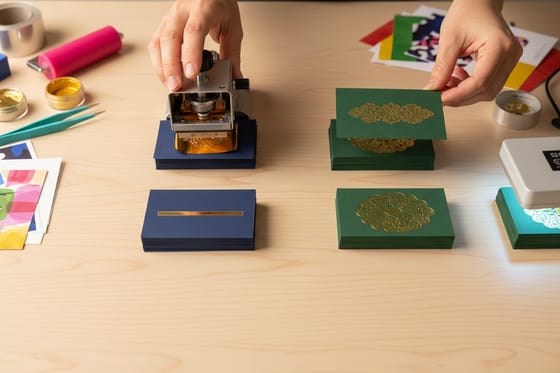
The finishing floor that runs all three
Common Questions
Your finish questions, answered
What is the difference between foil, spot UV and embossing?
Foil stamping bonds a thin metallised or pigmented film to the card using a heated metal die. Spot UV lays a clear liquid varnish over chosen areas of the printed sheet and cures it hard under ultraviolet lamps. Embossing uses a pair of dies to squeeze the paper into a raised shape, adding no ink, no film and no color at all. Foil and spot UV both build upward from the surface and leave the back of the card flat. Embossing moves the sheet, so the raised front always has a matching recess behind it.
Which finish is the cheapest?
Spot UV, and it is not close. Spot UV Business Cards start at $76.88 at 4OVER4.COM, Foil Business Cards start at $222.13 and Embossed Business Cards start at $251.36. The gap is the die. Spot UV works from a mask file that costs nothing to produce, while the other two need a metal die cut from your artwork before anything can be printed. If you want the raised feel without paying for a die, Raised Foil Business Cards start at $86.78 and Raised Spot UV Business Cards start at $108.75.
Will spot UV show up on a glossy business card?
Barely. Spot UV works by contrast between a glossy area and a duller surrounding area, so it needs a matte, dull or soft touch surface to sit against. On a gloss laminated card the varnish and the laminate reflect light almost the same way and you have to angle the card under a lamp to see the shape. Ask for matte lamination or an uncoated stock under the varnish and the effect reads instantly.
Can you combine foil and spot UV on the same card?
Yes, and combinations are common on cards that only carry one premium element. The usual pairing is a foil logo with spot UV over a photographic panel or a large solid block, because the two catch light in different ways and do not compete. Keep them physically apart on the layout: varnish that runs over the edge of a foil area can lift at that edge. Our dual raised business cards combine two raised effects on one card and start at $149.00.
Does embossing damage the card if I print on both sides?
It does not damage it, but it does change what the back can carry. The recess behind an embossed shape is permanent, so any text or image sitting in that area on the reverse will run across a dent. The practical fix is layout, not process: keep the back of the card clear where the front is embossed, or use a light background there instead of small type. If you need a raised effect with a genuinely flat back, spot UV or raised printing is the honest answer.
Which finish holds up best in a wallet?
Embossing, because the shape is the paper itself and nothing can rub off. Foil is a bonded film and it is tough, but a keyring can scratch a line across a large solid foil panel over time. Cured spot UV is a hard varnish that resists scuffing well, though on a soft touch stock the surrounding matte surface usually shows wear before the varnish does. For a card that lives in a pocket for a year, a heavier stock matters more than the finish you choose.
Get Started
100 dual raised cards cost $149.00, 250 embossed $251.36
Choose foil, spot UV or embossing, set your stock and quantity, and we print cards that get looked at twice before anyone reads the name.
Legal Disclaimer
Gold Standard guarantees apply to all standard orders placed through 4over4.com. Price match requires verifiable proof of a competitor's published price for an equivalent product with matching specifications and turnaround time. Satisfaction guarantee covers manufacturing defects and print quality issues. Contact support with order number and documentation. On-time delivery rate based on tracked orders 1999 to 2026. Individual results may vary based on shipping carrier performance.
