
Flyer vs Poster and Which One Your Job Actually Needs


Sofia is our design and templates voice, built from the knowledge of our production team, with over 20 years in printing.
Both are one sheet of paper with one message on it. What separates them is reading distance, quantity and where the piece ends up, and those three things decide the size and the stock for you.
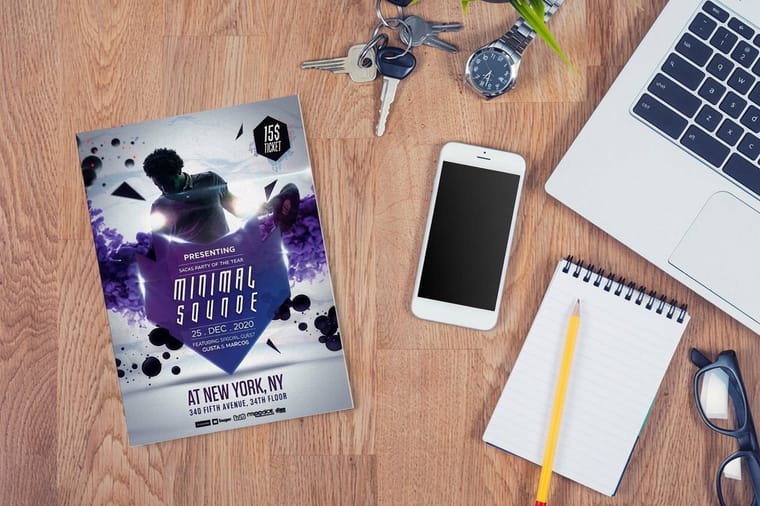
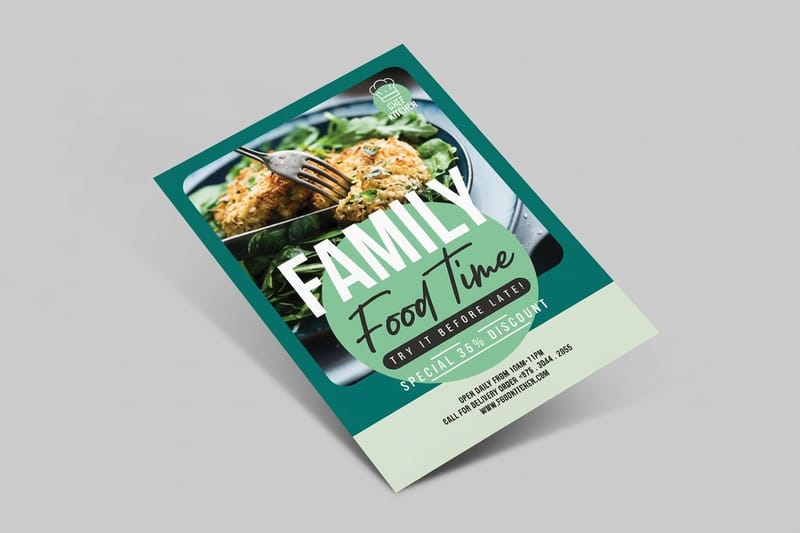
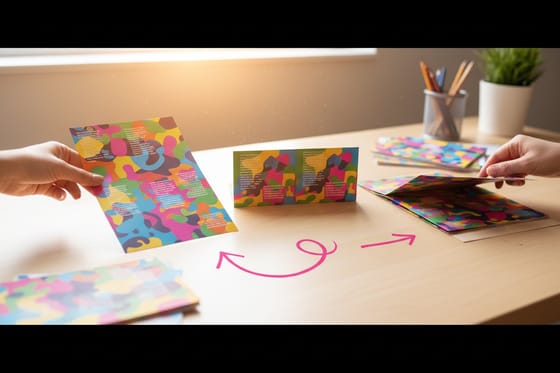
Choose a flyer when the piece leaves with the reader, and a poster when it stays on a wall. Flyers are read at arm’s length, so they can carry detail and are ordered by the thousand; posters are read from six to twenty feet away, so they get one headline and are ordered by the dozen. At 4OVER4.COM the two products share exactly one size, 11 by 17 inches, and the same 100# gloss and silk text stocks. Standard Flyers start at $39.54, Standard Posters at $108.75, both at a 50 piece minimum. The Silk Flyers web story shows the silk matte text version in hand.
Quick answer
Reading distance decides it, then quantity confirms it
A flyer is held; a poster is passed. That single difference sets the size, the amount of copy the piece can carry and how many you order. Flyers run 4.25 by 5.5 up to 11 by 17 inches and go out by the thousand. Posters run 11 by 17 up to 27 by 40 and go out by the dozen. The stock is the same text weight family for both, so a poster from this product is a sheet you mount, not a board that stands on its own.
One Question Settles Most Flyer and Poster Decisions

Ask whether the piece leaves with the reader. If it does, it is a flyer. If it stays on a wall and works on everyone who walks past it, it is a poster. Everything downstream follows from that answer, and getting it backwards is the single most expensive mistake in this category.
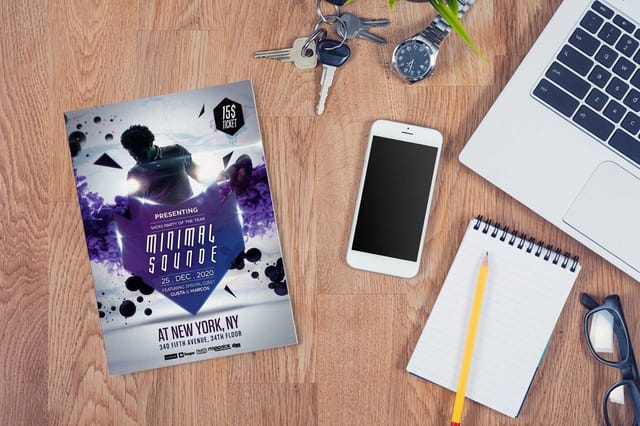
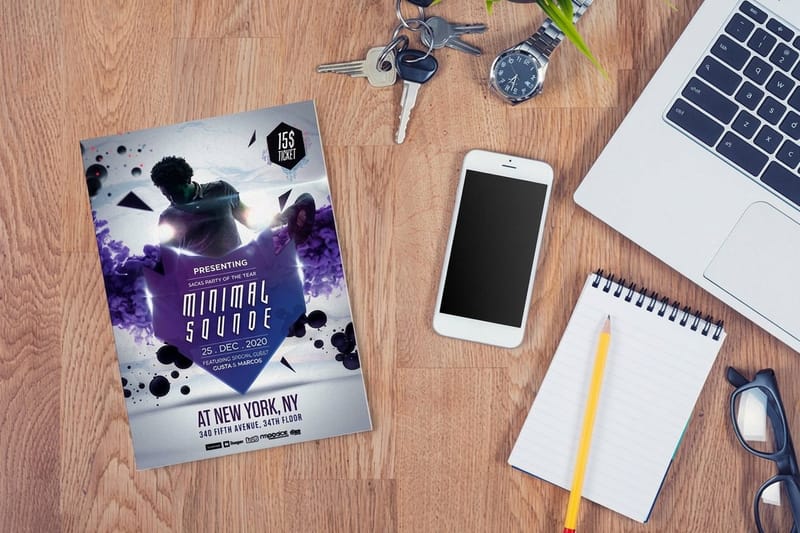
A flyer is read by one person, holding it, at roughly the distance of a book. That is why a flyer can carry a paragraph of explanation, a price list, an address, a QR code and a tear-off strip. It also means the flyer has to survive being folded into a pocket or a bag, which is a physical requirement, not a design one.
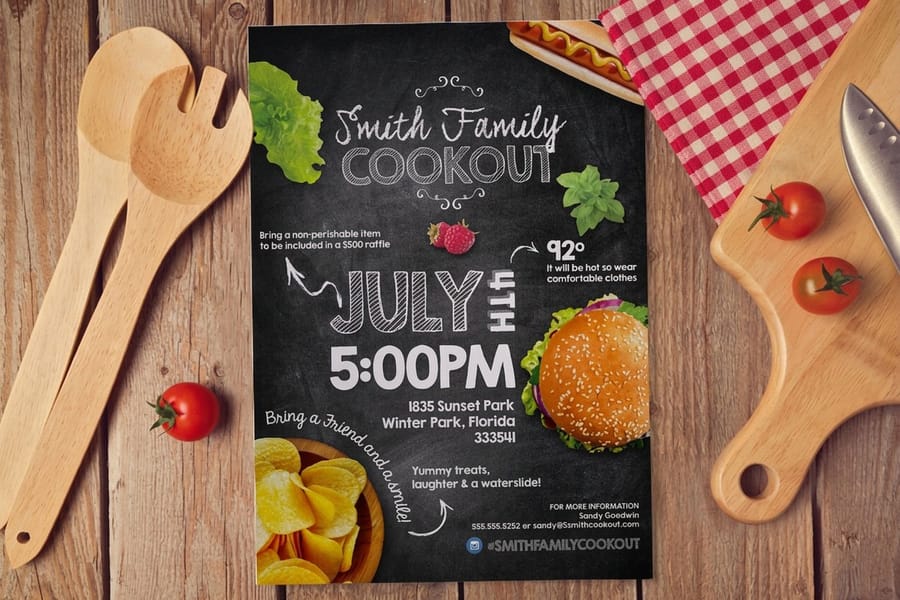
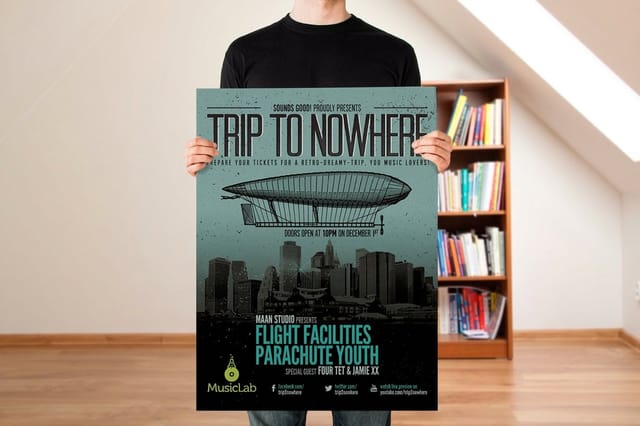
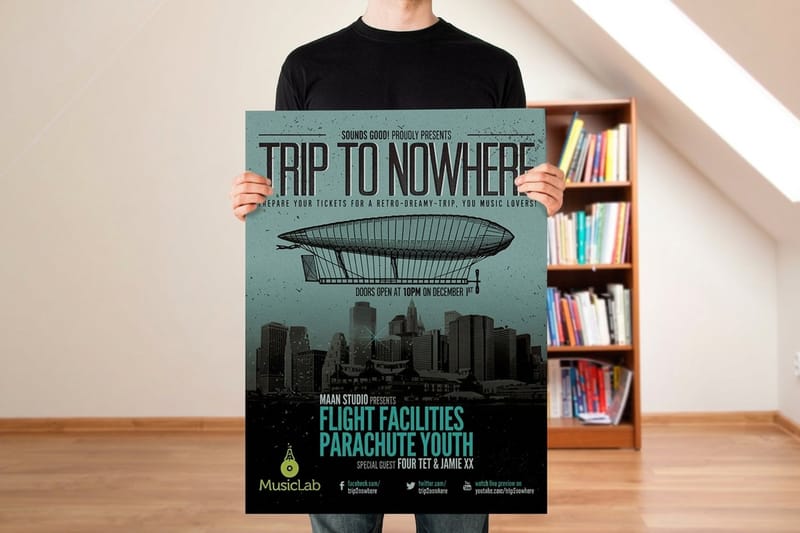
A poster has one reader at a time too, but that reader is walking and is six to twenty feet away. Sign shops work to roughly one inch of capital letter height per ten feet of viewing distance, and if you hold your own layout to that rule the poster more or less designs itself: a headline, an image, a date, a way to act. Every extra line you add is a line nobody reads.
The quantity difference falls straight out of this. You print Standard Flyers by the thousand because each one reaches one person. You print Standard Posters by the dozen because each one reaches everyone who passes a doorway for a month. Same message, completely different economics.
Sizes, Stocks and Finishing Side by Side
Here is what the three products in this decision actually offer, straight from the configurator rather than from a brochure.
| Product | Size range | Paper | Finishing | Starts at |
|---|---|---|---|---|
| Standard Flyers | 4.25 x 5.5 up to 11 x 17 inches, 9 sizes | 7 types, built on 100# gloss text and 100# silk matte text | Scoring, folding and perforation available | $39.54 |
| Standard Posters | 11 x 17 up to 27 x 40 inches | 9 types, same 100# gloss and silk text family | Ten folding options, perforation | $108.75 |
| Club Flyers | 2.5 x 2.5 up to 6 x 11 inches, 14 sizes | 22 types including 14pt gloss cover and 15pt cover | High gloss UV coating | $16.48 |
Read the paper column twice, because it is the part people get wrong. A Standard Poster here is not a rigid board. It is the same text weight sheet a flyer is printed on, just bigger, which is right for a poster that gets taped or pinned to a wall and wrong for one that has to stand in a frame on a table or survive being rolled and unrolled every week.
Both flyers and posters carry two finishes, a standard finish and a high gloss UV coating, and both have a 50 piece minimum with production in zero to five days. If you want the full stock breakdown before committing, the paper weight guide for flyers walks through how each weight behaves in a hand.
The ordering specifics line up closely too, with production time the one real gap.
| Spec | Standard Flyers | Standard Posters |
|---|---|---|
| Quantity steps | 50, 100, then up to 25,000 | 50, 100, then up to 25,000 |
| Standard production | 3 business days | 5 business days |
| Print sides | Full color front, or both sides | Full color front, or both sides |
| Proof | Free online proof or next day hardcopy proof | Free online proof or next day hardcopy proof |
| What to upload | A PDF at trim size with 0.125 inch bleed | A PDF at trim size with 0.125 inch bleed |
What Happens at 11 by 17, The One Size They Share
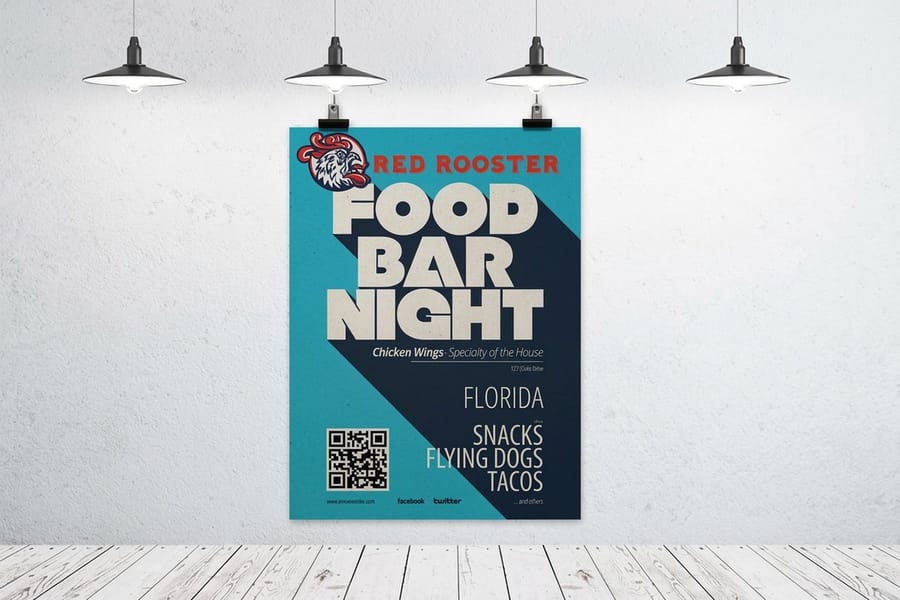
11 by 17 inches is the only size that appears on both products, and it is where most of the confusion lives. Physically it is the same sheet on the same stock, so the choice at that size is not about the print, it is about how you order and what happens next.
Order it as a flyer when you want hundreds of them, when you might fold or score the sheet, and when people will pick one up. Order it as a poster when you want twenty of them, when the folding options matter for shipping a flat sheet, and when the piece is going on a wall. The configurator quantity breaks are built around those two very different runs.
The trade-off to name out loud: at 11 by 17 on text weight, a sheet taped to a shop window will ripple within a day and tear at the tape line within a week. That is not a defect, it is what text weight paper does. If the poster has to survive weather, handling, or a season on a wall, step up to a bigger size on the same stock and mount it properly, or move the job to large format printing where the material changes entirely.
Going the other direction, a 24 by 36 poster cannot become a flyer no matter how you cut it. If you need both, lay out two files. The flyer size guide and the large format poster size guide give you the working dimensions for each, and the blank template library has correctly sized starting files with the bleed already set.
How Quantity Changes the Answer

Starting prices tell you almost nothing on their own here, because the two products are ordered in wildly different volumes. Standard Flyers start at $39.54 and Standard Posters at $108.75, both at a 50 piece minimum, but the flyer job that actually happens is two thousand sheets and the poster job that actually happens is twenty.
The practical rule is to print flyers deeper than feels comfortable. Unit cost falls steeply with quantity on a press run, so a second short reprint three weeks later usually costs more than printing the whole campaign at once, and running out mid-campaign is worse than having a box left over. Posters are the opposite. Print exactly the number of walls you have, plus two spares, because a poster you never hang has no salvage value.
There is a third option people miss. If the piece is being pushed into hands at an event or a venue, a text weight flyer is the wrong tool, because it creases the moment it goes into a pocket. Club Flyers on 14pt gloss cover start at $16.48 and behave like a thick postcard, which is why they survive a night out and a text weight sheet does not. Our notes on flyer distribution cover where handing them out actually returns something.
When the Right Answer Is Neither
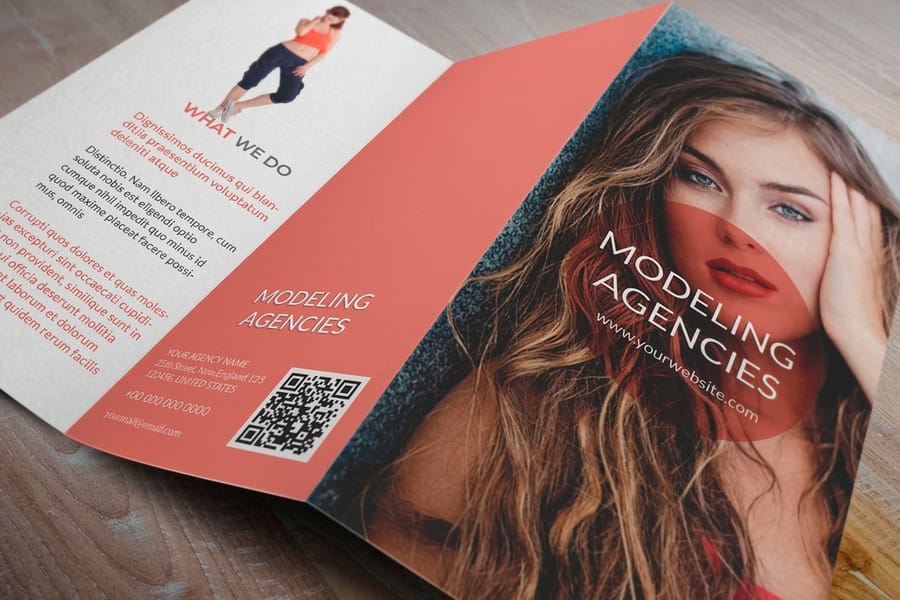
Sometimes the reason a flyer feels wrong is that the job has more than one message in it. A flyer that has grown a services list, a price table and a map is not a flyer any more. Fold it and it becomes a brochure, and the reader gets a sequence of panels instead of a wall of type. Standard Brochures start at $57.11 across six sizes, with the same 100# gloss and silk text stocks and a range of folds.
If the piece is going in the mail rather than into a hand, look at Standard Postcards instead. Cover stock survives the mail stream where a text weight flyer arrives creased, and the postcard sizes are built to mail without an envelope. A flyer in an envelope costs more to send and gets opened less.
And if the answer is a poster but the wall is outdoors, or the piece has to last a season, neither of these products is right. That is a large format job on a different material. Browse the full range in flyer printing and poster printing to see the sizes and stocks next to each other before you commit, or take the comparison one step further with flyers versus brochures versus booklets.
Wally settles the flyer or poster argument
One goes in a pocket, the other goes on the wall
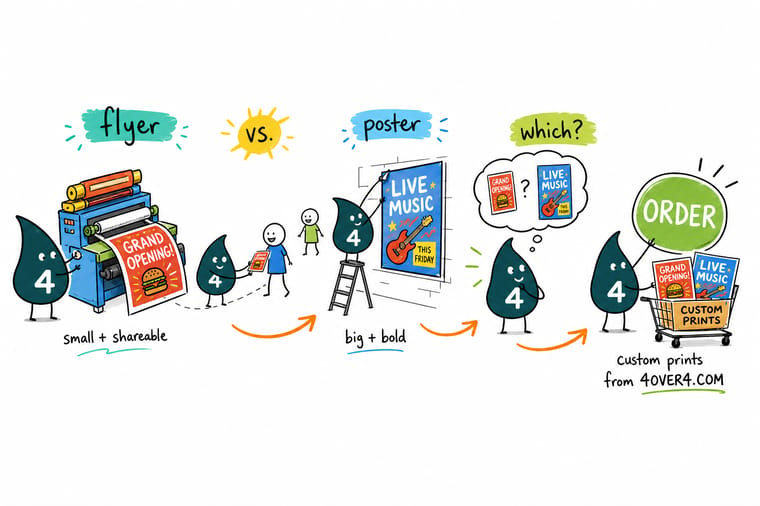
Wally holds a flyer out at arm's length, because that is exactly how far away it gets read, and it can carry an address, a price and a tear-off. Then he steps back twenty feet and looks at the poster, where all he can make out is the headline and the date, which is all a poster should ever try to say. Same paper on both, 100# gloss or silk text. The only size they share is 11 by 17. Above that, the poster keeps growing and the flyer stops.
Configure your flyers →
Specs and pricing
Flyers, posters and club flyers with live pricing
Standard Flyers come in nine sizes on seven stocks from 50 in 3 business days, Standard Posters in sizes from 11 by 17 inches on nine stocks from 50 in 5 business days, and Club Flyers in 14 sizes from 2.5 by 2.5 to 6 by 11 inches on 22 card stocks from 50 in 3 business days. Each panel shows the live options and starting price.



Print it
Order the format the job actually calls for
Order flyers by the thousand for hands and bags, posters by the dozen plus two spares for the walls you have, and Club Flyers on 14pt card from $16.48 for anything that goes into a pocket.


Explore more
Where to go next
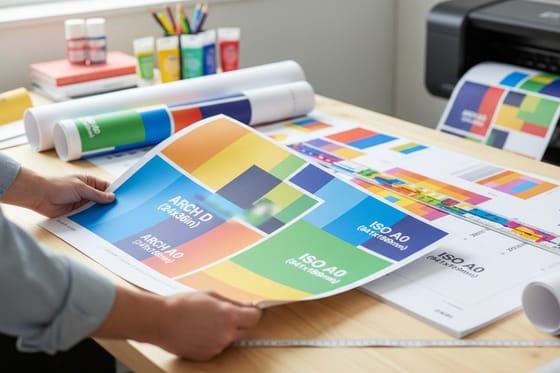
The cards below give flyer dimensions and large format poster sizes, compare paper weights, cover flyer distribution and poster layout, and add brochures and booklets to the choice.
By the numbers
Flyers and posters share one press and one stock list
Common Questions
Your flyer and poster questions, answered
What is the difference between a flyer and a poster?
A flyer is handed out, stacked on a counter, or mailed, and it is read at arm’s length by one person holding it. A poster is mounted and read from several feet away by whoever walks past. That difference in reading distance drives everything else. A flyer can carry a paragraph of copy, an address and a tear-off; a poster gets one headline, one image and one instruction, because nobody stands close enough to read more.
Can I just print my flyer at poster size?
You can, and at 11 by 17 inches it is the same sheet either way. Past that size the design usually breaks. Type set for a hand-held 8.5 by 11 sheet, scaled up to 24 by 36, gives you a headline the size of a fist and body copy nobody reads, and any logo or photo placed at 300 dpi for the small sheet is now stretched thin. If you want the same message in both formats, lay out the poster separately with far less on it.
Do flyers and posters use the same paper?
At 4OVER4.COM, yes for the standard products. Standard Flyers offer 7 paper types and Standard Posters offer 9, and both lists are built around 100# gloss text and 100# silk matte text. This is worth knowing before you order, because a text weight poster taped to a window will ripple and will tear at the tape line. If the poster has to be handled repeatedly or stand unsupported, you want a cover stock or a large format material instead.
What size poster is readable from across a room?
The rule sign shops work to is roughly one inch of capital letter height for every ten feet of viewing distance, and you can measure your own space against it. At 18 by 24 inches a headline can reach about three inches tall, which carries across a small shop. At 24 by 36 you get comfortably past that and the poster still works on a standard wall. Anything meant to be read from the far side of a hall belongs at 27 by 40 or in large format.
How many flyers should I order?
More than you think, because the unit cost falls sharply with quantity and the second reprint always costs more than printing deep the first time. The minimum here is 50, which suits a single event or a counter stack. Street and door to door distribution burns through a few thousand quickly, since a realistic response rate means the pile has to be large to produce a handful of calls. Order the quantity that matches the distribution plan, not the quantity that matches the budget you had in mind.
Should a poster be gloss or matte?
Gloss makes photographs snap and colors look deeper, which is why retail and event posters lean that way. Matte, the silk stock, kills reflections, so it wins anywhere the poster sits under a downlight or opposite a window, and it is the safer choice for a poster with a lot of text. High gloss UV coating is available on both products as a separate finish option, and it adds shine and a little scuff resistance but also more glare. Order free samples if the lighting is the deciding factor.
Are club flyers the same as regular flyers?
No, and the name confuses people. Club Flyers are printed on cover stock, 14pt gloss cover among 22 paper options, in small handout sizes from 2.5 by 2.5 up to 6 by 11 inches. They behave like a thick postcard, which is exactly what you want for something passed around a venue. Standard Flyers are text weight and come in larger sheet sizes, which is what you want for something read at a table or folded into a mailer.
Get Started
50 club flyers cost $16.48, 50 brochures $57.11
Pick your size, choose a gloss or silk text stock, and we print flyers by the thousand or posters by the dozen with a 50 piece minimum either way.
Legal Disclaimer
Gold Standard guarantees apply to all standard orders placed through 4over4.com. Price match requires verifiable proof of a competitor's published price for an equivalent product with matching specifications and turnaround time. Satisfaction guarantee covers manufacturing defects and print quality issues. Contact support with order number and documentation.
