
Guide to Large-Format Poster Sizes


Tobias is our voice for cutting, binding and large format, built from the knowledge of our production team, with over 20 years in printing.
Four sizes cover almost every big poster: 18 x 24, 24 x 36, 27 x 40, and 36 x 48 inches. Here is what each one is for, how to pick by viewing distance, and when a custom size is the smarter call.
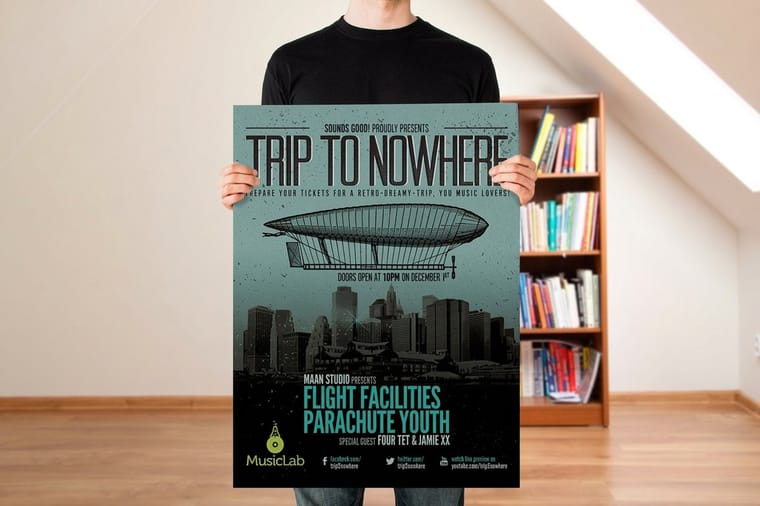
The common large poster sizes are 18 x 24, 24 x 36, 27 x 40, and 36 x 48 inches. 24 x 36 is the everyday standard, while 36 x 48 and larger is true large-format. Pick by viewing distance, roughly one inch of poster height per ten feet a reader stands away, and step up to a custom size only when the space itself sets the shape. Film one-sheets have their own chart in standard movie poster sizes and how to print your own. Square formats answer what is the size of a poster with one number, since both sides match.
Quick reference
The four large poster sizes at a glance
Most large posters land on one of four sizes: 18 x 24, 24 x 36, 27 x 40 and 36 x 48 inches. The table gives each one in centimeters, the job it suits and how far away it reads, from about 6 ft for an 18 x 24 to 15 ft and beyond for a 36 x 48. Match the size to the room here, then use the viewing-distance rule below to settle the choice.
What counts as a large-format poster

There is no single line where a regular poster becomes a large one, but in print shops the shift starts around 18 x 24 inches and runs up through anything you would call true large-format. The everyday poster most people picture, the kind taped in a shop window or pinned in a dorm, usually lives between 18 x 24 and 36 x 48. If you are weighing standard posters vs large format posters and when each one wins, that comparison has its own guide, and the shop-window kind is covered under window poster printing. Bigger than that and you are into large-format printing, where the stock, the equipment, and the way you build the file all change.
The smaller common poster sizes print as paper posters in runs: 11 x 17, 12 x 18, 14 x 22, 16 x 20, 18 x 24 and 22 x 28 inches, on stocks from 100# gloss text to 14pt cover and 15pt synthetic plastic, starting at 50 for $108.75 with 5 business days standard production.
Size is not just about impact. A poster that is too small for its spot gets skimmed and forgotten, while one that is too big fights the wall and wastes budget. The trick is matching the dimensions to where the poster will hang and how far away people read it. That is what the rest of this guide walks through, starting with the four sizes you will reach for most.
If you want the full breakdown of every standard measurement, the complete poster sizes guide lists them side by side. Here we stay focused on the large end and how to pick well.
The common large poster sizes

Four sizes do most of the heavy lifting. Learn these and you can spec ninety percent of poster jobs without a second thought.
18 x 24 inches
The smallest size that still reads as a real poster. It works for counter signs, in-store promotions, and art that sits close to the viewer. At this size you can order in higher quantities without the price climbing fast, so it is a favorite for promo runs. Our large-format posters start here and scale up.
24 x 36 inches
The default. When someone says poster without a size, this is usually it. It reads from across a room, drops into standard frames, and hits the sweet spot between presence and cost. Retail windows, event boards, and framed prints almost always land on 24 x 36. If you only remember one size, remember this one.
27 x 40 inches
The classic one-sheet, the exact size of a cinema movie poster. It is taller and a touch wider than 24 x 36, which gives artwork more room to breathe on a lobby or gallery wall. Theaters, galleries, and anyone who wants that film-poster proportion reach for 27 x 40. Printed on a mounted poster board, it hangs flat with no frame at all.
36 x 48 inches
Where posters become large-format in earnest. At four feet on the long edge it commands a hallway, a trade-show panel, or a lobby. This is the size that stops foot traffic. It leans on sturdier large-format stock so the sheet stays flat and the type stays crisp at a distance.
Ordering any of the four takes five choices. The large-format poster menu lists 13 fixed sizes from 11 x 17 to 48 x 96 inches plus any size you type in:
- Stock: 10mil semi gloss or hi gloss, 32# bright white uncoated, semi gloss or gloss canvas, 13oz blockout vinyl, adhesive backed vinyl, 10 mil backlit film or 7mil weatherproof polypropylene.
- Finish: no lamination, or 3 mil gloss or matte lamination on one or both sides.
- Quantity: from a single poster, at $25.00 for one 11 x 17.
- Turnaround: 2 business days standard, with faster production for an added fee.
- Upload: your file built at the final size with bleed, sent straight to production or to a free online proof first.
Landscape poster sizes and when to turn the sheet sideways

Every size above also prints landscape. Turned sideways the four become 24 x 18, 36 x 24, 40 x 27 and 48 x 36 inches, and the photo sizes 20 x 30 and 40 x 60 flip to 30 x 20 and 60 x 40. The configurator lists each size once, width by height, so a landscape 36 x 24 uses the 24 x 36 option at the same price. You set the orientation in the artwork file.
Landscape suits work that reads left to right: an event backdrop behind a stage, a menu board with columns of dishes, a panoramic photo, or a wide wall above a counter where a tall sheet would leave empty space on both sides. Keep portrait for anything read top to bottom, such as a doorway notice or a sign on a narrow pillar.
How to pick the right size by viewing distance
Most people size a poster by the wall in front of them. The better question is how far away the reader stands. A poster is only doing its job if the message lands from where people actually see it, so start there and work back to the dimensions.
A practical rule of thumb: plan for roughly one inch of poster height for every ten feet of viewing distance, then round up to the nearest standard size. Read from six feet in a small shop, an 18 x 24 is plenty. Read from twenty or thirty feet across a lobby, you want 36 x 48 or larger. When in doubt, size up. A poster that is slightly too big still reads, while one that is too small disappears.
Headline text follows the same logic. The main line should be large enough to catch someone at the far edge of the room, with supporting detail sized for readers who step closer. If you are laying the artwork out yourself, the Online Designer lets you build at the exact final size so what you see on screen is what prints, and the design-a-poster guide covers the layout order step by step.
The four sizes, drawn to scale
Same four sizes, drawn to the same scale so the jump from an 18 x 24 to a 36 x 48 is easy to feel. Every rectangle shares the baseline, so both the width and the height differences show at once.
Large print sizes beyond posters
People searching for large print sizes are not always after a poster. The same size ladder applies to photo enlargements, rigid signs and wall art, and the useful cut-offs are the same. Anything from 18 x 24 inches up counts as large format. 24 x 36 is the size most people mean when they say a big print. 36 x 48 is the largest sheet that still goes on a standard wall without seams, and above that you are into banner and rigid sign territory measured in feet. For art at home, the walls guide covers poster sizes on wall space room by room.
- Photo enlargements: 16 x 20 and 20 x 30 are the frame-shop sizes; 24 x 36 is where a photo becomes a statement piece.
- Rigid signs and mounted prints: 18 x 24 and 24 x 36 fit easels and A-frames; 36 x 48 fills a lobby wall.
- Banners: start at 2 x 4 feet and scale by the foot, so a 36 x 48 poster and a 3 x 4 foot banner are the same face.
Poster board sizes compared with printed poster sizes
Craft poster board is a blank sheet you letter by hand. A printed poster arrives with your artwork already on it, and a mounted poster is that print laminated to a rigid board. The size most buyers know from the craft aisle, 22 x 28 inches, sits on both our paper poster and mounted poster menus, next to 18 x 24, 20 x 30 and 24 x 36.
Pick the mounted version when the poster has to stand on an easel, lean on a counter or survive handling at an event. Mounted Posters come on 3/16 inch white or black foam core in 13 sizes from 8 x 10 to 40 x 60 inches plus any size, starting at $39.99 for one 8 x 10. Foam Core Posters start at 16 x 20 for $49.99 and run to 40 x 60.
4OVER4 prints posters in all four large sizes and in custom sizes, on 60+ paper stocks, mounted or unmounted.
Going bigger: the largest poster sizes
When 36 x 48 is not enough, large-format printing keeps going. Common oversized formats run 40 x 60 and 48 x 96 inches, and roll-fed stock takes custom widths past that for backdrops and wall graphics. On our large-format poster menu the big end runs 24 x 48, 24 x 60, 24 x 72, 30 x 40, 36 x 48, 36 x 72 and 48 x 96 inches, and the Any Size option takes custom dimensions. At these sizes the material choice matters as much as the dimensions.
Matte and gloss papers cover most indoor wall work. For high-traffic spots, floor-standing displays, or anything that needs to survive handling, vinyl and fabric large-format stocks hold up far better and still lie flat. A canvas poster gives a gallery texture for art and photography, while a foam-core poster stays rigid for easel and countertop display. If the graphic is really a wall, our signs and banners range crosses into banner territory.
Heading to a show? Booth graphics have their own sizing logic built around backdrops and sightlines, and the trade-show poster sizes guide breaks down how big to go for a booth without overspending.
When to use custom-sized posters
Standard sizes are cheaper and faster, so reach for a custom size only when the space genuinely calls for it. Three situations make custom worth it.
- The space is a fixed shape. A window bay, an elevator panel, or a narrow pillar has dimensions you cannot change. A poster cut to fit looks intentional where a standard size would leave awkward gaps.
- You are matching a set. A series of graphics that must align across a wall or share a backdrop reads better when every piece is measured to the layout rather than forced from stock sizes.
- The proportion carries the design. Tall and narrow, or wide and short, some artwork only works at an unusual ratio. Custom lets the shape serve the message.
Ordering custom at 4OVER4.COM is straightforward: set your exact width and height on the large-format poster product, pick the stock, and the price updates live. Build the file at those precise dimensions with proper bleed so nothing shifts at the trim, and lean on the printing terms glossary if bleed or trim is new to you.
Setting up your file at large sizes
Big posters do not need monstrous files. They need files built correctly for the size. Get these three things right and the print lands sharp.
Build at the final dimensions. Set your document to the actual poster size, whether that is 24 x 36 or a custom measurement. Designing small and scaling up softens type and blurs edges. Starting at full size keeps everything crisp.
Match resolution to distance, not ego. Because posters are read from a few feet away, 100 to 150 DPI at full size looks perfectly sharp for most large formats. A photo-quality 300 DPI is only worth it for pieces viewed up close. Oversizing the resolution just creates a slow, heavy file with no visible payoff.
Add bleed and keep type off the edge. Extend the background past the trim line so no white slivers appear, and keep important text a safe margin inside the edge so it survives cutting. The terms glossary defines bleed, trim, and safe area if you want the specifics before you export.
Where large posters do their best work
Sizing is a means to an end, and the end is a poster that earns its wall. A few settings where large formats pull their weight:
Retail and windows. A 24 x 36 in the window turns passing traffic into browsers. Big, simple, one clear message beats a busy layout every time at this distance.
Events and lobbies. Welcome boards, schedules, and directional graphics read best at 27 x 40 or 36 x 48 so guests catch them from across a room. Pair them with our poster printing range for a matched set.
Trade shows and booths. This is where 36 x 48 and larger earn their keep, backing a stand and pulling eyes down the aisle. If you have never printed a poster before, where to print posters and hanging posters without a frame cover ordering and display.
Wally sizes it up
Pick the size by where people read it, not by the wall alone
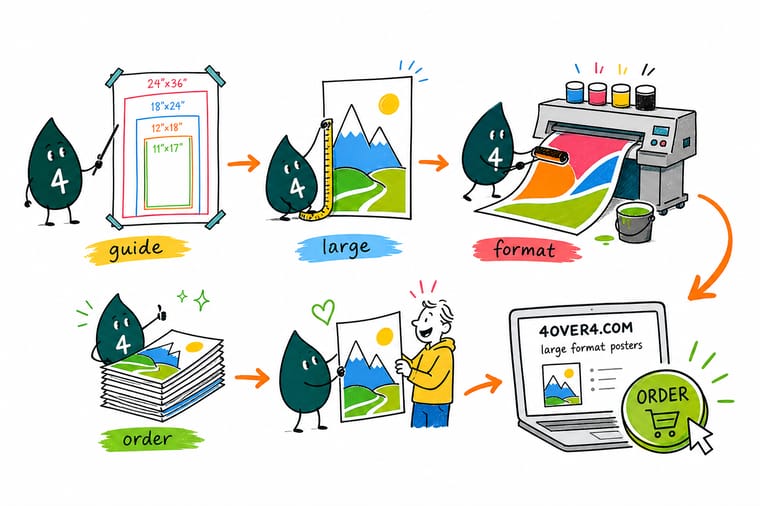
Wally treats a poster like a message that has to reach the back of the room. Stand where your readers will stand, count the feet, and give it about one inch of height for every ten. Most jobs land on 24 x 36, big lobbies and booths want 36 x 48, and when the space is an odd shape he sets a custom size to the exact inch. Build the file at full size, add bleed, and print it large at 4OVER4.
Order large-format posters →
Specs and pricing
Compare standard and large-format poster specs and pricing
A standard paper poster prints 11 x 17 to 22 x 28 inches on text and cover stocks in runs from 50, starting at $108.75. A large-format poster prints one at a time from 11 x 17 to 48 x 96 inches or any size, on photo paper, canvas, vinyl or backlit film, from $25.00. The live specs and price-per-unit below come straight from the configurator: pick a size, set a quantity, and the numbers update.

| Quantity | Price Per Unit | Total |
|---|---|---|
| 50 | $2.18 | $108.75 |
| 100 | $1.64 | $163.67 |
| 200 | $1.01 | $202.11 |
| 300 | 80.2¢ | $240.55 |
| 400 | 69.7¢ | $278.99 |
| 500 | 63.5¢ | $317.44 |
| 600 | 55.8¢ | $335.02 |
| 700 | 50.4¢ | $352.59 |
| Quantity | Price Per Unit | Total |
|---|---|---|
| 1 | $25.00 | $25.00 |
Print it
Popular ways to print your poster at 4OVER4
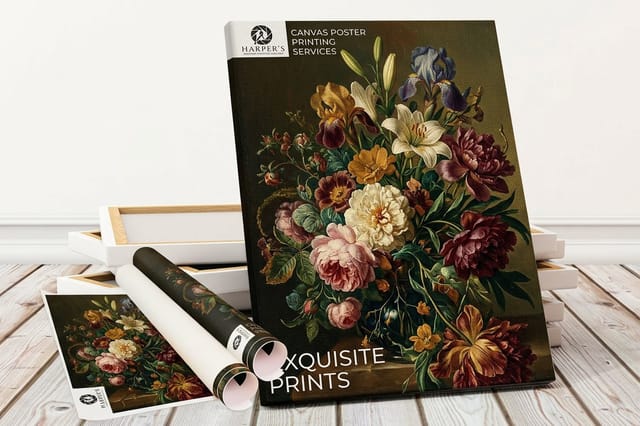
Three ways to take a poster past plain paper: a mounted poster on 3/16 inch foam core from $39.99, a 3D lenticular poster from 10 for $823.78, or a canvas poster from $25.00 for one 11 x 14.

See it in use
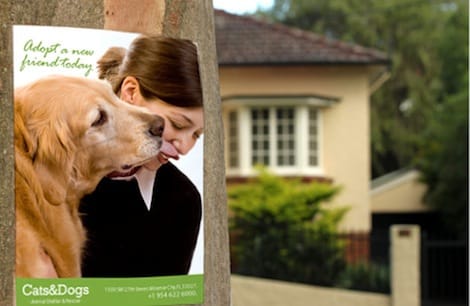
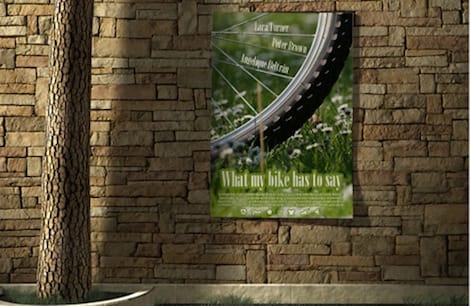
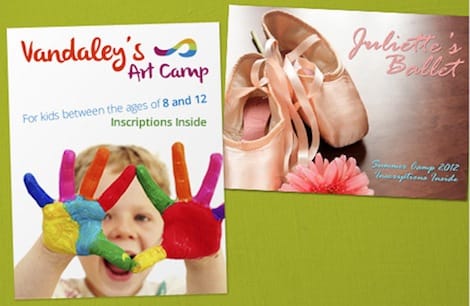
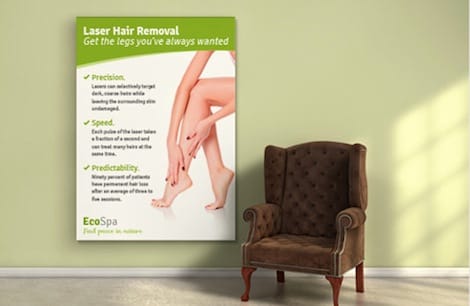
Poster sizes as customers ordered them




Explore more
Where to go next
By the numbers
Poster sizes and the 60+ stocks they print on
Common Questions
Common questions about large poster sizes
What size is a large print?
In print shops a large print starts at about 18 x 24 inches and runs up through 36 x 48. Below 18 x 24 you are in flyer and small poster territory. The most ordered large size is 24 x 36 inches.
What are the standard sizes for large prints?
The four standard large sizes are 18 x 24, 24 x 36, 27 x 40 and 36 x 48 inches: 45.7 x 61 cm, 61 x 91.4 cm, 68.6 x 101.6 cm and 91.4 x 121.9 cm. Those four cover most retail, event and wall-art work before you need a custom size.
Is 11x14 or 11x17 more common?
11 x 17 is the more common print size: it is the tabloid sheet that flyers and small posters run on. 11 x 14 is a photo frame size you will find in frame shops more than in print shops. Neither counts as large format, which starts at 18 x 24.
What is the most common large poster size?
24 x 36 inches is the most ordered large poster size. It is big enough to read from across a room, it fits standard off-the-shelf frames, and it prints affordably. If you are unsure which size to pick, 24 x 36 is the safe starting point for retail, events, and wall art.
What size is considered a large-format poster?
Anything from roughly 18 x 24 inches up is treated as a large poster, and 36 x 48 and larger is squarely large-format. The four workhorse sizes are 18 x 24, 24 x 36, 27 x 40, and 36 x 48 inches. Past that, large-format printing goes to 40 x 60, 48 x 96, and fully custom dimensions.
What is the biggest poster size you can print?
Standard large-format runs to 40 x 60 and 48 x 96 inches, and past that the size is set by your space rather than by a menu, because we print fully custom dimensions. Give us the finished measurement and the file is built to it. In practice the practical ceiling is the roll width of the stock you choose, so pick the material and the size together rather than one after the other.
What size is a standard movie poster?
The standard movie poster, the one sheet, is 27 x 40 inches, which is 68.6 x 101.6 cm. Cinema lightboxes and lobby frames are built to that size, and it reads cleanly from about 10 to 15 ft. Retail and wall-art versions of the same artwork are usually printed at 24 x 36 inches instead, because that size fits off-the-shelf frames.
How do I choose the right large poster size?
Start with viewing distance. A practical rule is roughly one inch of poster height for every ten feet a reader stands away. A poster seen from across a small shop can be 18 x 24, while a lobby graphic read from 30 feet wants 36 x 48 or bigger. Then check your frame and wall space so the size fits the spot.
What is the largest poster size I can order?
With large-format printing you are not limited to standard sizes. Common big formats run 40 x 60 and 48 x 96 inches, and custom widths go wider still on roll stock. For very large graphics, vinyl and fabric large-format materials keep the print flat and readable at scale.
Do large posters need a higher resolution file?
Not necessarily higher, but the right resolution for the viewing distance. Posters read from several feet away look sharp at 100 to 150 DPI at full size, so a huge file is rarely required. What matters most is building the artwork at the final dimensions with the correct bleed so nothing gets cropped or stretched.
How much do large posters cost?
Price scales with size, paper stock, finish, and quantity. Large-format posters at 4OVER4.COM start at $25, and per-unit cost drops sharply as you order more. The specs and price table on this page pull live pricing straight from the configurator so you can compare sizes and quantities before you commit.
Get Started
Ready to print a large poster?
Choose a standard size or set your own to the exact inch, pick the stock, and we print it crisp and flat at scale.
Legal Disclaimer
Gold Standard guarantees apply to all standard orders placed through 4over4.com. Price match requires verifiable proof of a competitor's published price for an equivalent product with matching specifications and turnaround time. Satisfaction guarantee covers manufacturing defects and print quality issues. Contact support with order number and documentation.
