
Flyer Advertising That Works for Small Businesses


The spelling question settled in one line, then the part that decides the campaign: which offers suit a flyer, how to lay one out, where you are allowed to hand it over, and what to print it on.
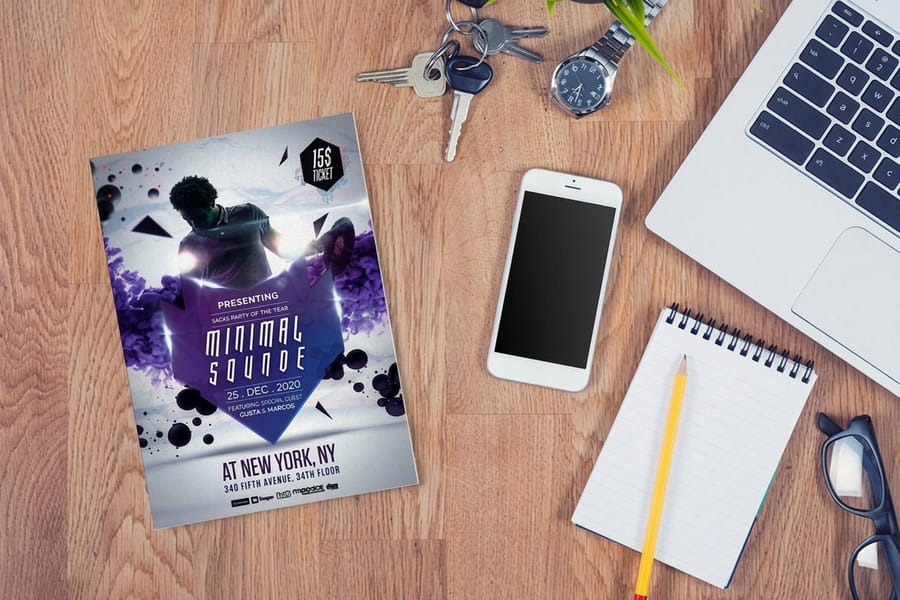
Flier and flyer are two spellings of the same printed sheet, and flyer is the one the print trade uses. Flyer advertising pays when the offer is local, dated and simple enough to act on without research, and when the drop is concentrated on a small area repeatedly instead of spread thin across a city. Design for a two second glance at arm's length, keep one message and one action per sheet, and pick the stock from the channel: text weight for handouts, cover weight for racks and doorknobs, cardstock for anything mailed. Never put a flyer inside a mailbox.
Quick answer
One offer, one action, one tight area
A flyer earns its cost by being specific, local and repeated, not by being beautiful. The spelling flier changes nothing about the sheet. What changes results is the offer, the deadline, the single action, and how tightly the drop is concentrated. The distribution channel then decides the paper, because a knob, a rack and a mail sorter each damage a sheet in a different way.
Flier or Flyer, and Why the Spelling Barely Matters
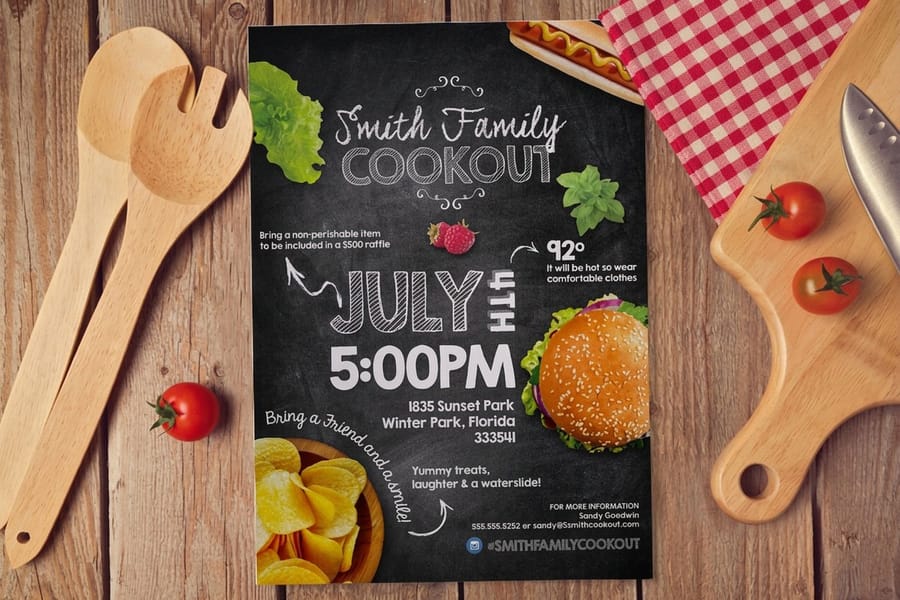
They are the same word for the same object. A flyer is a single page, printed one side or both, handed over or displayed rather than mailed in an envelope. Spelling it flier does not change the product, the price, or anything a printer does with the file.
The split is a style habit, not a rule of grammar. Flyer is the entry you will find first in most dictionaries and the only spelling that appears on print order forms, quote sheets and product pages. Flier hangs on mainly in American news writing, where the Associated Press stylebook long favored it for a handbill, and in the useful convention that keeps flier for a person or thing that flies. Frequent flier, printed flyer. In British and Irish usage the same sheet is often a leaflet, which our leaflet printing explainer unpacks.
Where the choice does cost you something is consistency. If your ad copy says flier, your artwork header says flyer, and your landing page says leaflet, you have split one campaign across three vocabularies and made your own tracking harder to read. Search behaves the same way: the two spellings pull separate query traffic, so if you buy keywords, buy both and write the page in one voice. We use flyer throughout, including on Standard Flyers, and this guide does the same.
When Flyer Advertising Actually Pays, and When It Does Not
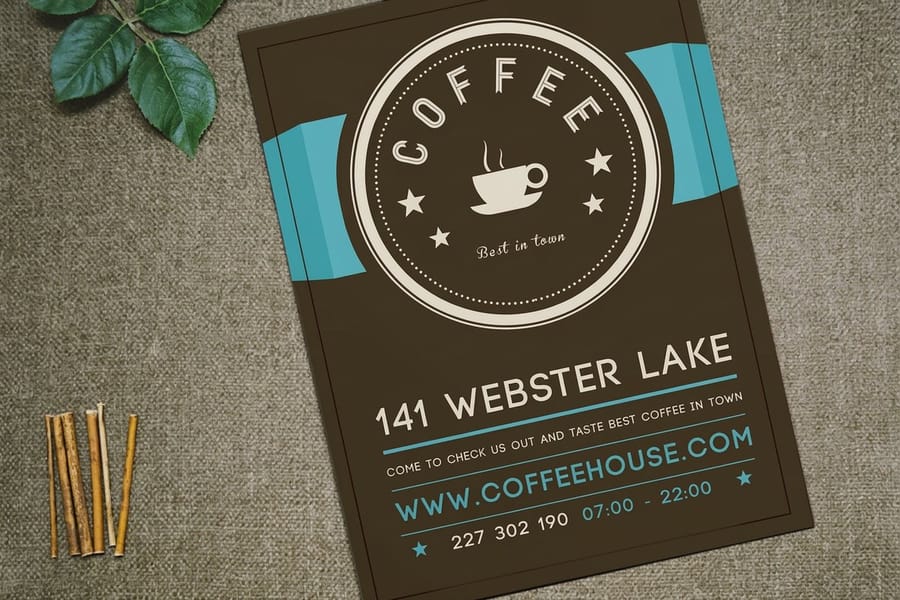
A flyer buys you one glance from someone who did not ask for it. That is the entire budget you are working with, and it explains both the wins and the failures.
It pays when four things are true at once: the offer is local, the deadline is real, the action is single, and the drop is concentrated. A dated grand opening within walking distance, a first appointment discount for a salon, a lawn service quoting a neighborhood in spring, a class with a start date. Those all convert because the reader can act without research. Concentration is the part most first campaigns get wrong. Five thousand flyers across a whole city reach nobody twice; the same five thousand across ten blocks reach the same households three times, and repetition is what turns a glance into a call.
It does not pay when the purchase needs comparison. Software, insurance, anything with a long consideration cycle, anything where the buyer wants to read reviews before they commit. Those need a page, not a sheet. It also stops paying when the flyer tries to be a brochure. If the message needs three panels of explanation, print Standard Brochures from $57.11 instead and let the format do the job it was built for. The choice between the two formats is laid out in flyers vs brochures vs booklets.
One more limit worth naming out loud: a flyer campaign with no measurement is a donation. Put a code, a dedicated phone extension, or a QR link that lands on a page nothing else points to. Without that you will never know whether the offer failed or the distribution did, and those two problems have opposite fixes.
Designing a Flyer That Gets Read Instead of Binned
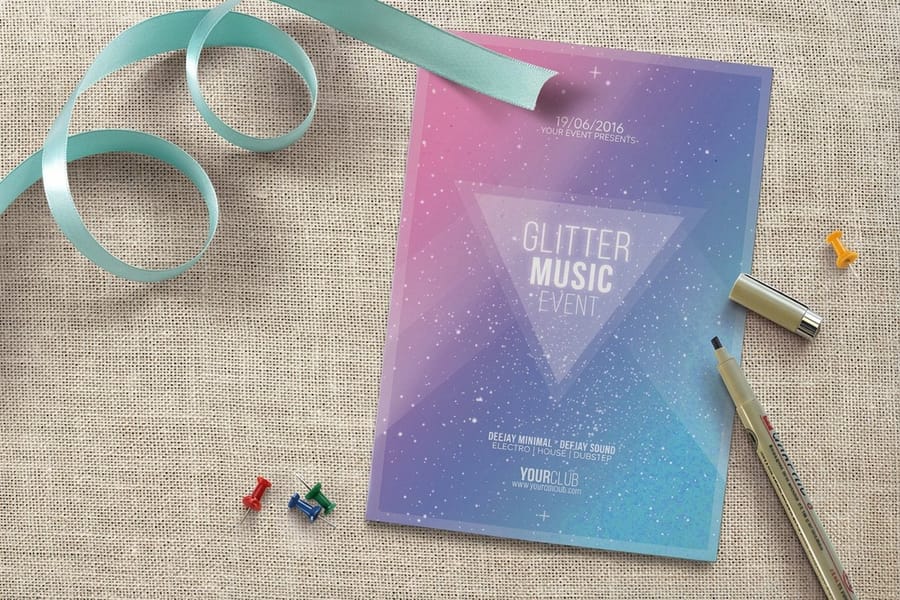
A flyer is read at arm's length in about two seconds, standing up, often outdoors. Design for that reading position and most of the usual advice sorts itself out.
One message per sheet. The headline should be legible from three feet away, which in practice means the largest thing on the page and a weight heavy enough to survive a busy background. Under it goes the offer, the deadline and one action, in that order. Everything else is supporting detail set small, because detail is what a reader looks for after the headline has already won them, never before.
The mechanics that stop a file at prepress are simple and worth getting right the first time. Build at final size with 0.125 inch bleed on every edge, keep type and logos at least 0.25 inch inside the trim so nothing gets clipped when the stack is cut, supply images at 300 dpi at the size they print, and convert to CMYK before you export. A photo that looks sharp on screen at 72 dpi will print soft, and there is nothing a press operator can do about it afterwards. Start from a correctly sized layout in our blank template library, or build the whole piece in the browser with our online design templates.
Two habits earn more than any styling choice. Use the back. A second side costs far less than a second flyer, and it is the natural home for the map, the hours, the service list or the testimonial that would otherwise crowd the front. And give a QR code room to work: print it at roughly 0.8 inch or larger with clear space around it, never over a busy photo, and point it at a page built for phones. Our QR codes on print guide covers the sizing and the tracking. For the writing itself, how to design a promotional flyer works through a full layout step by step.
Where and How to Distribute Flyers Legally
Start with the rule that ends most first campaigns badly: do not put a flyer in a mailbox. In the United States a mailbox is reserved for mail carrying postage, and an unstamped sheet inside it is a postal violation rather than a grey area. Our guide on flyers in mailboxes covers the detail, and it is worth reading before anyone walks a route.
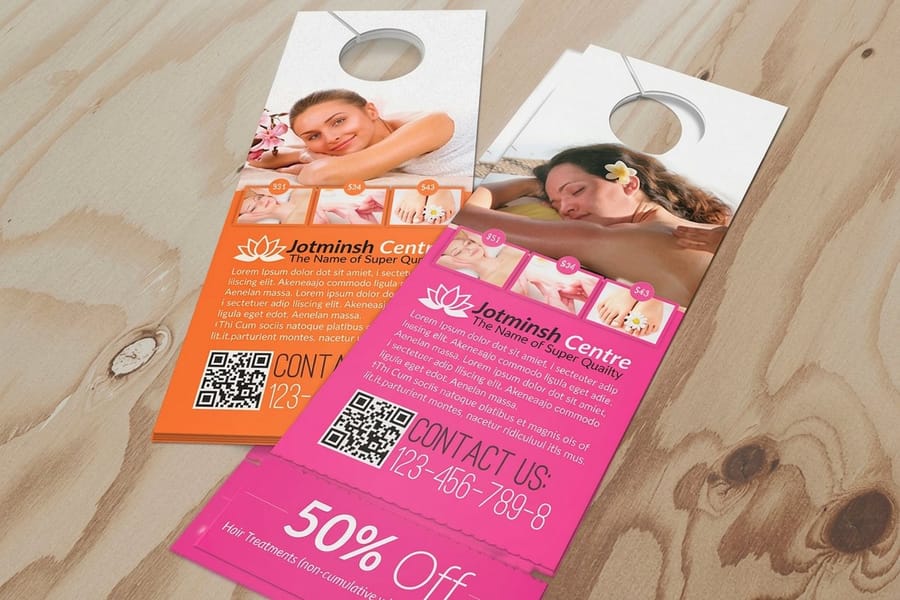
That leaves plenty of legal ground. Hand to hand at markets, events and outside your own door converts best because a person is attached to the paper. Counters, racks and community boards at partner businesses cost nothing but a conversation, and they keep working for weeks. Door to door is the highest volume option, but it belongs on the knob, which is exactly why Door Hangers exist as their own die cut product from $290.41; a flat sheet wedged in a screen door blows away and reads as litter. Inserting a flyer into every order you ship is the cheapest channel in the list and the most consistently ignored one.
If you want the piece to arrive in the mail, mail it properly as a card. Standard Postcards start at $16.48, survive postal sorting because they are cardstock, and qualify for postcard rates that a folded sheet does not. The mechanics of that route are in how to mail flyers and sending direct mail postcards.
Two practical constraints govern the walk itself. Check local rules before you post on poles, windows or public boards, because plenty of towns fine for it and some malls and campuses ban outside material entirely. And walk the same area more than once. A single pass through a neighborhood is a test; three passes over a few weeks is a campaign, and the difference in response between the two is larger than any design change you could make. Six best practices for flyer distribution goes deeper on routing and timing.
Sizes, Stocks and Finishes, Matched to the Job

Choose the channel first, then the paper. The route a flyer travels is what wears it out, and that single decision explains most of the stock choices below.
| Where it goes | Format that fits | Stock to ask for | Why that pairing |
|---|---|---|---|
| Handed out at events | 5.5 by 8.5, or 4 by 6 | Text weight gloss | It goes straight into a pocket or a bag, so folding tolerance matters more than rigidity, and the lower weight keeps a large run cheap. |
| Counter, rack or board | Full 8.5 by 11 | Cover weight | The sheet has to stand in a holder and stay flat for weeks. Text weight curls within days and starts looking abandoned. |
| Door to door | Door hanger die cut | Cover weight or cardstock | It hangs outdoors on a knob through wind and damp. A thin sheet tears at the hole or blows into the yard. |
| Mailed | Postcard sizes | Cardstock | Postal sorting equipment creases anything limp, and card formats qualify for postcard rates a folded sheet does not. |
| Kept as a reference | Half sheet or full sheet | Heavy cardstock, club flyer | A menu, a price list or a class schedule gets pinned up and handled for months, so the extra thickness is what buys the lifespan. |
On finish, the trade-off is glare against a pen. Gloss makes photographs snap and shrugs off a light rain, which is why retail and event flyers default to it. Uncoated cannot compete on color, but you can write on it, so it is the right call whenever staff will add an appointment time, a name or a handwritten price. Matte sits between the two and reads more easily under hard overhead lighting because it throws less glare. Our flyer stocks and weights guide lists every option we run, and best paper weight for flyers settles the text against cover question with the numbers.
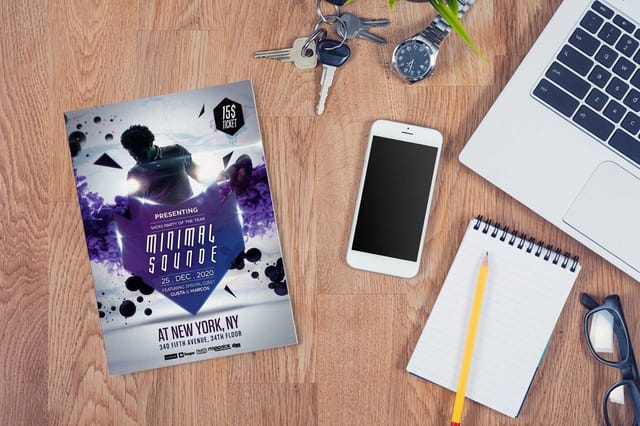
The heavy end of the range has its own product name. Club Flyers start at $16.48 and print on thick cardstock with the saturated color that nightlife, gyms and salons ask for. They cost more per sheet than a text weight flyer and they are worth it only when the piece will be kept or displayed, not when it will be handed to a thousand people on a sidewalk. Compare the formats side by side in door hangers vs flyers before committing a full run.
Wally explains flyer advertising
Same sheet, whichever way you spell it
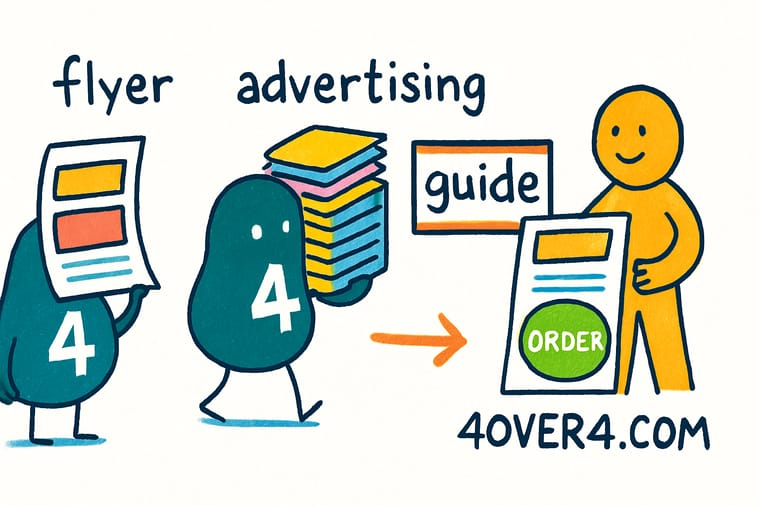
Wally walks ten blocks three times instead of a whole city once, because the second and third pass are what get remembered. He hands the thin gloss sheets to people at the market, puts the cover weight ones in the rack at the coffee shop, hangs the die cut ones on doorknobs, and mails the cardstock ones with a stamp. The mailbox stays shut, because that is the law. One offer per sheet, one date, one thing to do next.
Order flyers for your next campaign →Specs and pricing
Flyer formats, sizes and starting prices
Configure the size, stock and quantity yourself and watch the price move, straight from the 4OVER4.COM configurator.



Print it
Print your flyers with 4OVER4

Explore more
Where to go next

By the numbers
Flyer printing you can count on at 4OVER4
Common Questions
Your flyer advertising questions, answered
Is it flier or flyer for an advertisement?
Both spellings are correct and both mean the same printed handbill. Flyer is the form used across the printing trade, on order forms, and in most dictionaries as the main entry, while flier survives mainly in American news writing where the Associated Press stylebook long preferred it. Many writers also keep flier for a person or thing that flies, as in frequent flier, and flyer for the piece of paper. Pick one and stay consistent inside a single campaign so your file names, your ad copy and your landing page all agree.
Do printed flyers still work for a small business?
They work in a narrow band and fail outside it. A flyer earns its cost when the offer is local, immediate and simple: a grand opening, a dated discount, a service inside a few square miles, a class starting on a date. It fails when the product needs comparison, when there is no deadline, or when the same 5,000 sheets get spread across a whole city instead of the ten blocks that could actually walk in. Concentration beats volume every time.
What size flyer should I print?
Match the size to how the flyer gets handed over. Full 8.5 by 11 is the default for racks, counters and community boards because it holds a headline plus real detail. A 5.5 by 8.5 half sheet is easier to hand to someone on a sidewalk and folds into a pocket without creasing across the message. Smaller formats around 4 by 6 behave like a postcard and cost less per piece, which suits a giveaway you expect people to keep. Our guide to flyer sizes walks through every trim we run.
Can I put flyers in mailboxes?
No. In the United States a mailbox is reserved for mail that carries postage, and dropping an unstamped flyer inside it is a postal violation, not a grey area. The legal ways to reach a door are hanging the piece on the knob with a die cut door hanger, wedging it in a screen door where permitted, handing it to a person, or mailing it with postage as a postcard. This is the single most common mistake in a first flyer campaign.
How many flyers should I print for a first campaign?
Enough to cover one tight area properly rather than a wide area thinly. A few hundred is enough to test whether an offer pulls at a market stall or a single street. Once one message works, the per piece price falls steeply with quantity, so the large run is the reward for a proven offer rather than the starting point. Printing 10,000 of an untested headline is the expensive version of guessing.
Should flyers be glossy or uncoated?
Gloss makes photographs snap and resists a light rain, which is why it dominates retail and event flyers. Uncoated is duller but you can write on it with a ballpoint, which matters if staff will add an appointment time, a name or a price by hand. Matte sits in between and is easier to read under harsh lighting because it does not throw glare. If the flyer will be handled outdoors or displayed for weeks, the coating matters less than the weight of the sheet underneath it.
Get Started
Ready to put a flyer in someone's hand?
Pick your size, choose a stock that suits the route it will travel, and we print flyers that still look deliberate on the third pass through the neighborhood.
Legal Disclaimer
Gold Standard guarantees apply to all standard orders placed through 4over4.com. Price match requires verifiable proof of a competitor's published price for an equivalent product with matching specifications and turnaround time. Satisfaction guarantee covers manufacturing defects and print quality issues. Contact support with order number and documentation. On-time delivery rate based on tracked orders 1999 to 2026. Individual results may vary based on shipping carrier performance.
