
How Digital Foil Printing Puts Metal on Paper Without a Die


Digital foil skips the brass die that hot stamping depends on. The foil bonds to a toner layer, the process gives out somewhere, and which foil products are worth the premium.
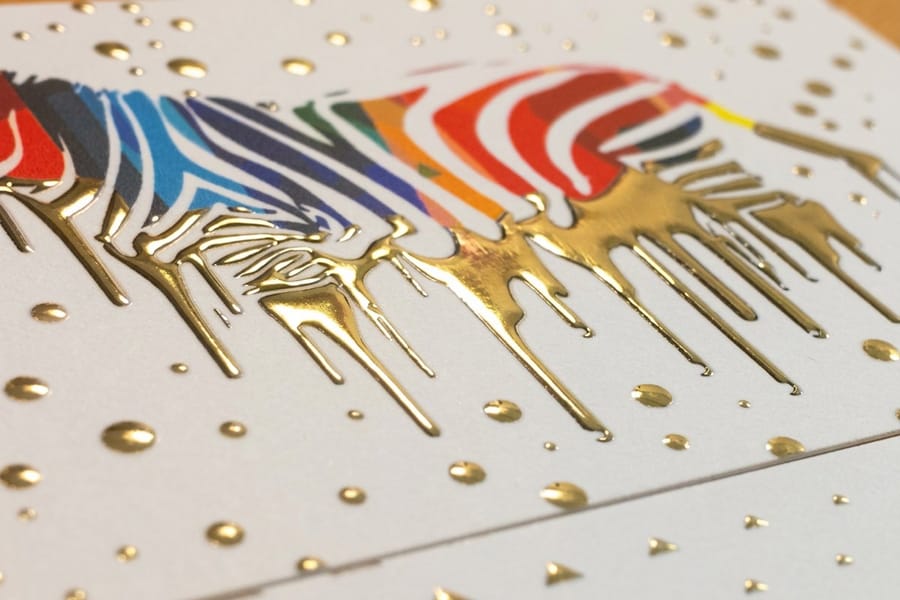
Digital foil printing bonds a metallic film to dry toner using heat and roller pressure, with no engraved die and no setup charge. Hot foil stamping does the same job with a heated brass die cut for your artwork, which holds finer detail and works on textured stock, but only pays for itself over a long run. Digital foil registers to the printed image, so it cannot drift, and it leaves the back of the sheet flat.
Quick answer
Foil that follows the toner instead of a die
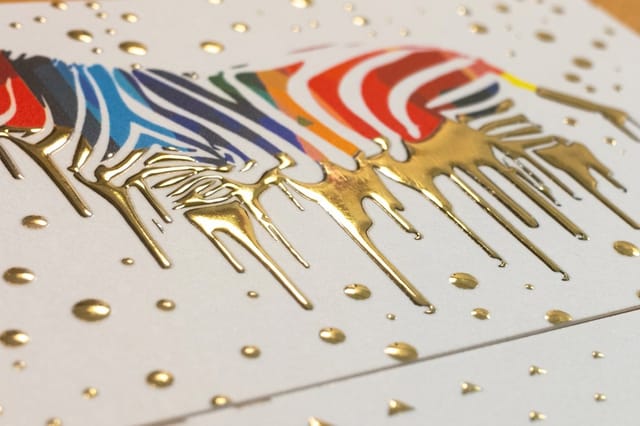
Digital foil is foil applied by heat to a printed image rather than pressed in by tooling. A metallized film runs against the sheet between heated rollers, releases wherever dry toner sits, and winds away everywhere else. Nothing is engraved, so short runs carry no setup cost and the artwork can change between jobs. The limits are real: the process needs a smooth stock and a dense image under the foil, and nothing prints or writes on top of the metal afterwards.
How Digital Foil Bonds Metal to a Printed Sheet
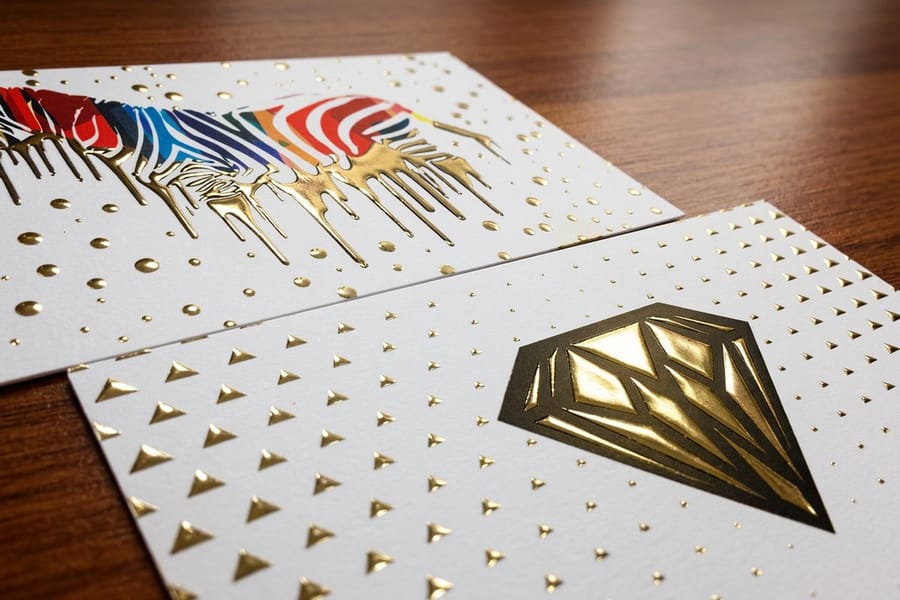
The sheet is printed first and foiled second. Everything that makes digital foil behave the way it does follows from that order.
One, the image prints in dry toner. A digital press lays the artwork down and fuses it. At this point the foil areas look like ordinary printed shapes.
Two, the sheet meets the foil web. It runs into a foiling unit where a roll of metallized polyester film is pressed against the printed surface between heated rollers.
Three, the foil releases only onto the toner. Heat softens the adhesive layer on the film. Where there is toner, the foil lets go of its carrier and bonds. Where there is bare paper, it stays put and winds off with the web.
Four, the carrier winds away. What is left on the sheet is a mirror-bright layer sitting exactly on the printed image, with no die, no plate and no impression in the paper.
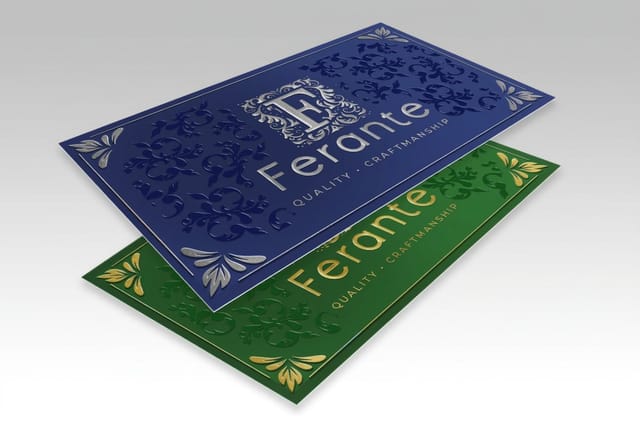
That third step explains most of the rules. The foil is looking for something to grab, so a dense solid holds it and a 15 percent tint does not. It also explains why registration is a non-issue: the foil cannot land anywhere the image is not. A stamping die has to be aligned by hand and can wander a hair over thousands of impressions, which is one reason stamped and raised foil cards behave differently on tight artwork. Our raised foil business cards use the same die-free logic, with the foil laid over a printed resin layer so it stands up as well as shines.
Digital Foil, Hot Stamping and Raised Foil Compared
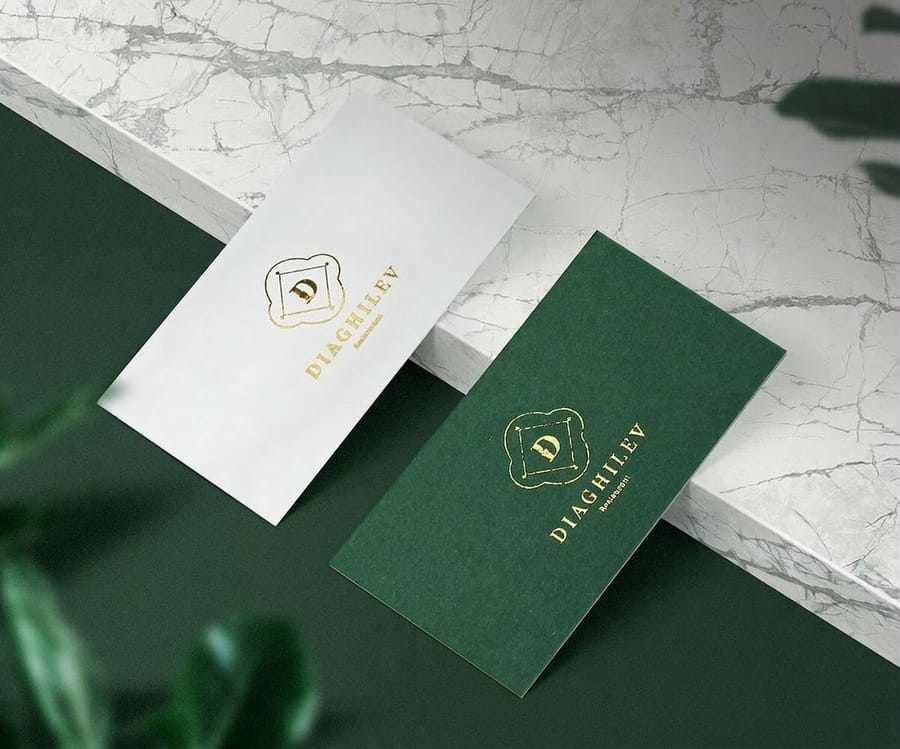
Three processes, one look from across a room, three very different quotes. The fastest way to tell which one a job needs is to ask what the run length is and whether the stock is smooth.
| Process | How the foil is applied | Tooling | Where it wins |
|---|---|---|---|
| Digital foil | Heat and roller pressure fuse foil to dry toner. | None. Artwork can change between runs. | Short runs, coated stock, jobs where the design is still moving. |
| Hot foil stamping | A heated brass die presses foil into the sheet. | A die engraved for your artwork. | Fine detail, uncoated and textured stock, long runs that spread the die cost. |
| Raised foil | Foil sits on a printed resin layer, then fuses to it. | None. Digital image, no die. | Tactile work where you want height and shine in one pass. |
Read the tooling column first, because it decides the quote. A die charge is a fixed cost, so it disappears into a run of 5,000 and dominates a run of 250. That is the honest reason foil business cards start at $222.13 while raised foil starts at $86.78: you are paying for a tool in one and not in the other.
The stock column decides whether the job is possible at all. Hot stamping forces foil into a surface, so it copes with linen, felt and cotton. Digital foil and raised foil transfer by contact on a smooth plane, so a textured sheet gives you speckle instead of a solid. If the brand sheet calls for uncoated cotton and a metallic logo, stamping is the answer and no amount of digital foil will fake it.
Building Artwork That Foils Cleanly
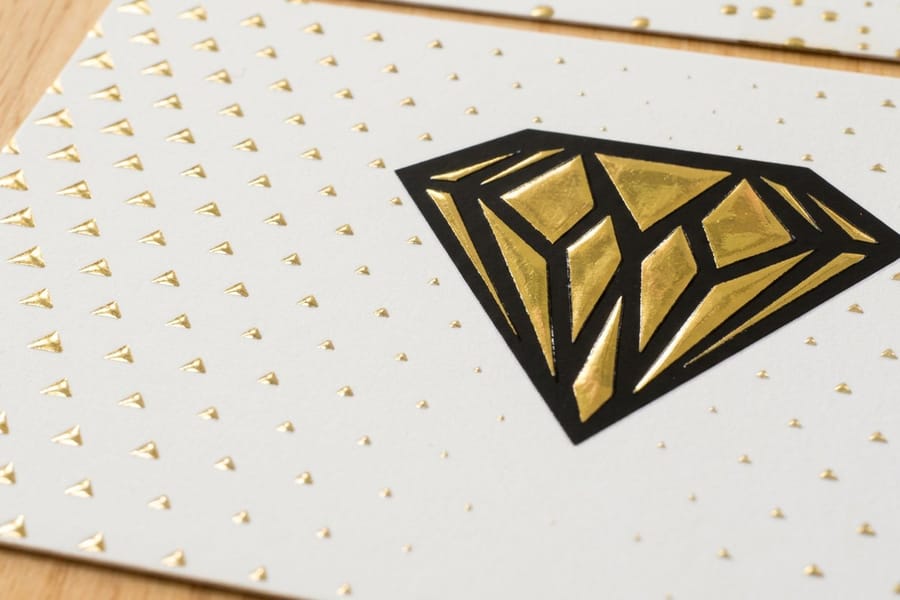
Foil files fail in the same handful of ways every time, and all of them are visible in the artwork before anything goes near a press.
Put the foil on its own layer, as a single 100 percent spot color, sitting above the rest of the art with overprint turned off. Name the swatch something unmistakable such as Foil. Prepress separates on that swatch, so a foil element built as a rich black or a 90 percent tint of a process color creates an argument nobody needs.
Weight matters more than size. Rules at half a point or heavier hold, hairlines do not. Type reads cleanly from around 6 point up in a normal or bold weight, while a light italic at the same size loses its thin strokes and fills its counters. Keep two foil elements a little apart, roughly a sixteenth of an inch, because foil will bridge a narrow gap between two heavy shapes and close it. Pull foil back at least an eighth of an inch from the trim so a shift on the cutter does not leave a bright sliver on the edge.
The last trap is scale. A large flat panel of foil looks glorious in a mockup and shows every speck of dust as a pinhole in reality, so break big areas into shapes with structure, or accept a little mottle as part of the character. Start from a correctly sized layout in the blank template library, and if you are adding height as well as shine, the raised foil setup guide covers the extra stroke weights that job asks for. Choosing between metallic ink and real foil is a separate decision, and the gold foil versus metallic ink comparison settles it quickly.
Which Foil Products Earn the Premium
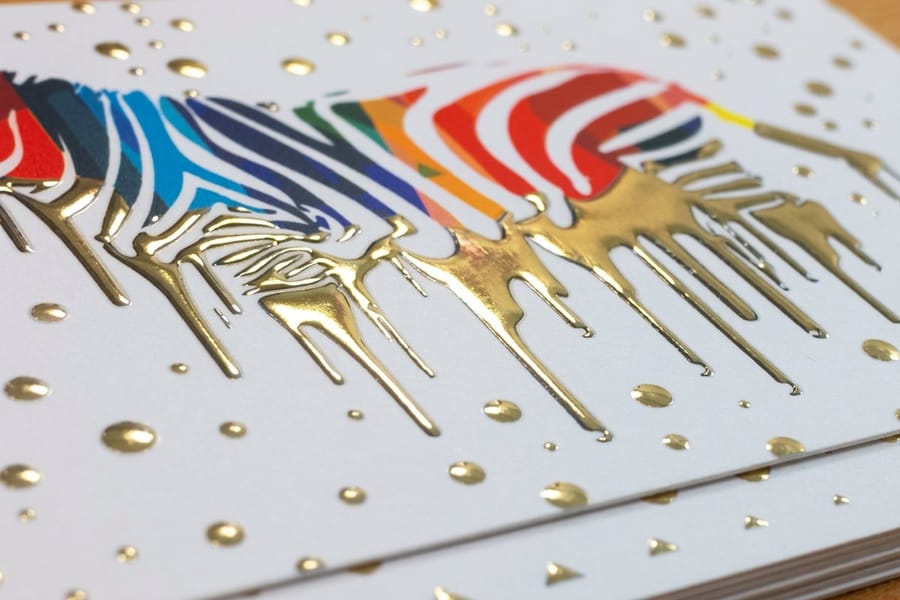
Foil pays off on anything that gets handed to someone and held. It is wasted on anything that gets skimmed and dropped in a recycling bin, which is a useful filter for deciding where the budget goes.
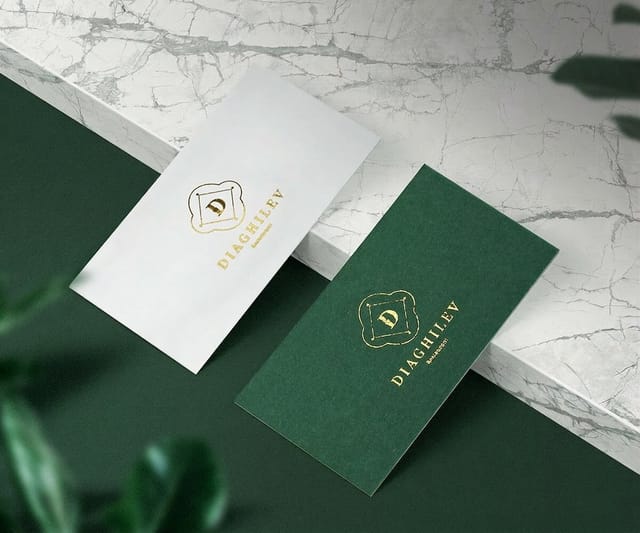
Business cards are the clearest case. Raised foil business cards start at $86.78 against $17.57 for standard business cards, so the box costs roughly five times as much and lasts the same six months. If you want the tactile effect doubled, dual raised business cards at $149.00 combine raised foil with raised spot UV on one card, which reads as texture in the hand before the shine even registers.
Beyond cards, raised foil postcards start at $299.00 and work well for invitations and announcements that sit on a desk rather than travel in bulk. The whole range lives in the foil printing collection, and if you are still comparing finishes rather than products, the business cards category lays the flat, laminated and raised options out together.
Two places to skip it. Anything staff will run through an office laser printer afterwards, because the fuser heat can lift or smear a fused foil layer, is safer left flat. And anything with a write-on line, since a pen will not mark foil at all. On those, the same money spent on a heavier stock or a soft touch laminate does more work. The thermography guide covers the other way to raise a surface if height, not metal, is what the piece actually needs.
Wally explains digital foil
The foil goes where the toner already is
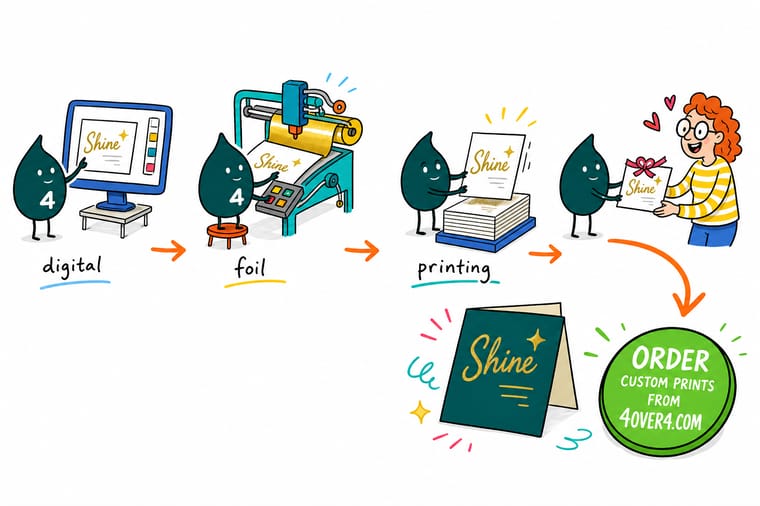
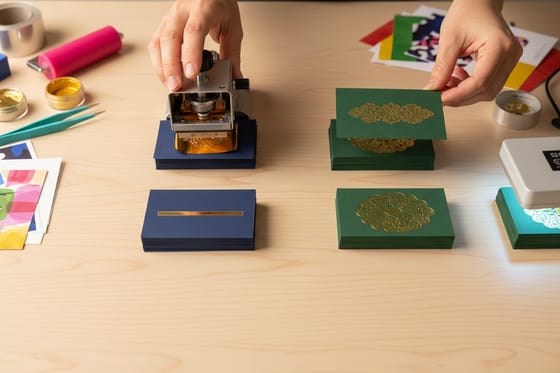
Wally prints the card first, then rolls a sheet of gold film across it under a warm roller. The film lets go only where there is toner underneath, so the logo comes out mirror bright and the bare paper stays bare. No die is cut, nothing is stamped, and the back of the card is as flat as when it started. Give him a bold mark on a smooth sheet and it sings. Give him a hairline on linen stock and the foil has nothing to hold.
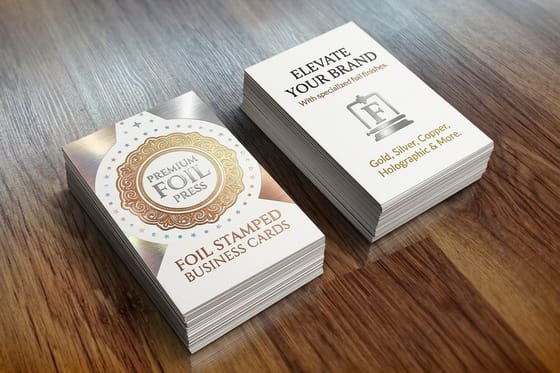
Order raised foil business cards →Specs and pricing
Foil options, sizes, and starting prices
Compare the die-free raised foil against traditional stamped foil, with live configuration choices and starting prices straight from the 4OVER4.COM configurator.

Print it
Order a foil finish people stop to look at
Explore more
Where to go next


By the numbers
The press that lays digital foil, in numbers
Common Questions
Your digital foil questions, answered
What is digital foil printing?
Digital foil printing bonds a thin metallic film to dry toner using heat and roller pressure, with no die and no plate. The sheet is printed first on a digital press, then passes through a foiling unit where a roll of metallized polyester runs against it. Wherever toner sits, the foil releases from its carrier and fuses to the image. Everywhere else it stays on the carrier web and winds away. The trade name varies from shop to shop, and you will see it sold as digital foil, toner foil or foil fusing, but the mechanism is the same in each case.
Is digital foil the same as hot foil stamping?
No. Hot foil stamping presses foil into the sheet with a heated brass die that has to be engraved for your specific artwork. It holds finer detail, works on textured and uncoated stocks where toner will not grip, and leaves a slight impression you can feel from the back. Digital foil applies no meaningful pressure, adds effectively no height, and leaves the reverse of the sheet flat. The practical split is tooling: stamping carries a die charge that only makes sense once the run is long enough to spread it, while digital foil has none at all.
Does digital foil need a die or a plate?
It does not. That is the whole point of the process and the reason it took over short-run foil work. Because the foil registers to the printed image rather than to a mechanical tool, you can foil 50 pieces without paying for engraving, and you can change the artwork between runs without paying again. Raised foil works the same way, with the foil laid over a printed resin layer instead of over flat toner.
What artwork works for foil, and what fails?
Solid, reasonably weighted shapes hold well: display type, logo marks, monograms, rules at half a point or heavier, and borders. What fails is predictable. Hairline strokes break up. Fine serifs and small counters in letters like e and a fill in as the foil bridges the gap. Screened tints and gradients give the foil too little to grab, so it goes patchy. Large flat foil panels are the sleeper problem, because any dust or paper fiber under the film shows as a pinhole and a big panel gives it plenty of room to show. Build the foil as its own 100 percent spot layer above the artwork so the prepress team can separate it cleanly.
Can you print color on top of foil?
Not reliably, and it is the most common thing designers try. Foil is a metallized polyester layer with no absorbency, so ink sits on the surface, dries slowly and scuffs off under a fingernail. Plan the foil and the ink as neighbours rather than as a stack. If you want a two tone effect, print the color first, leave a knockout in it, and drop the foil into the gap. The same applies to writing: a pen skids across foil, so an appointment line or a signature block has to stay clear of it.
What does foil printing cost at 4OVER4.COM?
Raised foil business cards start at $86.78 and foil business cards, which use the traditional stamped method, start at $222.13. Standard business cards start at $17.57, so the foil premium is real. On larger formats, raised foil postcards start at $299.00 and raised foil greeting cards at $618.16. The gap between the raised foil and stamped prices is mostly tooling, which is exactly what the die-free process removes.
Get Started
100 dual raised business cards cost $149.00, or $1.49 each
Pick your stock, choose raised foil or traditional foil stamping, and we print cards where the metal sits exactly on the artwork and the back of the sheet stays flat.
Legal Disclaimer
Gold Standard guarantees apply to all standard orders placed through 4over4.com. Price match requires verifiable proof of a competitor's published price for an equivalent product with matching specifications and turnaround time. Satisfaction guarantee covers manufacturing defects and print quality issues. Contact support with order number and documentation. On-time delivery rate based on tracked orders 1999 to 2026. Individual results may vary based on shipping carrier performance.
