
Dental Brochures vs Appointment Cards vs Postcards for Busy Practices


Three pieces every dental and medical office prints, and the honest case for each one. Sizes, stocks, postage limits and where each piece stops working.
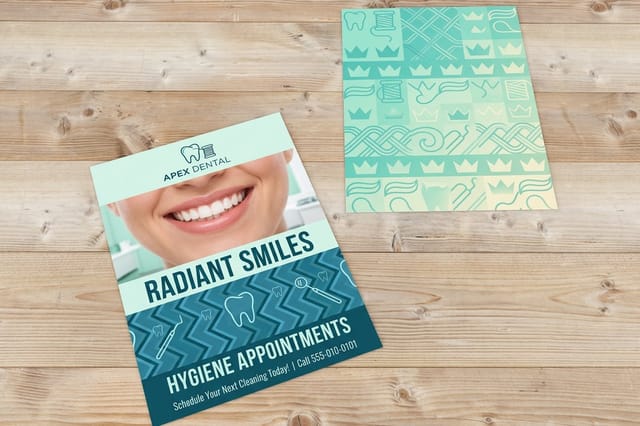
Appointment cards hold a booked visit, brochures explain a treatment somebody is deciding about, and postcards are the only one of the three that reaches people who are not patients yet. Cards start at $17.57 and need a matte or uncoated back so ink does not smear. Postcards start at $16.48 and keep the USPS card postage rate up to 4.25 by 6 inches. Brochures start at $57.11, so hand them out deliberately instead of stacking them in a rack.
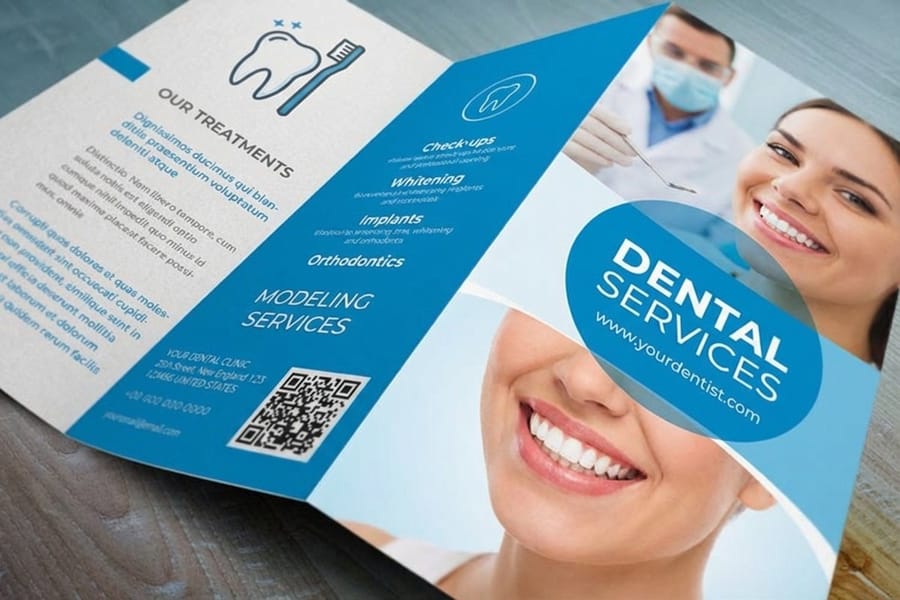
Quick answer
One holds the visit, one explains the treatment, one finds the patient
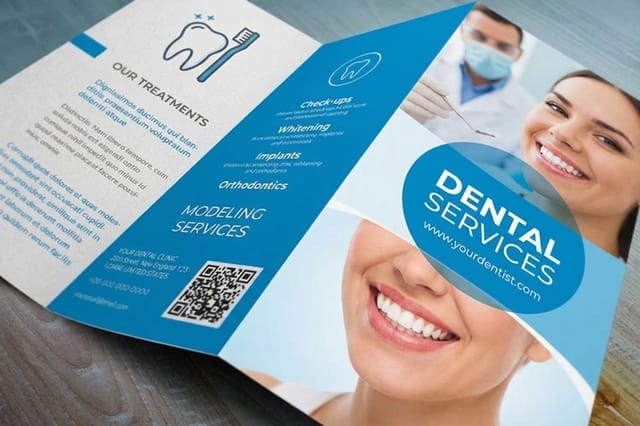
Pick by the job, not by the price per piece. An appointment card is retention: it goes home with somebody already booked, so print it on 14pt or 16pt with a matte or uncoated back that takes pen ink. A dental brochure is persuasion: three panels that answer the questions a patient still has after a consult on implants or aligners, handed over rather than racked. A dental postcard is reach: the only piece here that lands with people who have never called the office, and the only one whose size is set by postage rather than design.
What Each Piece Actually Does in a Practice
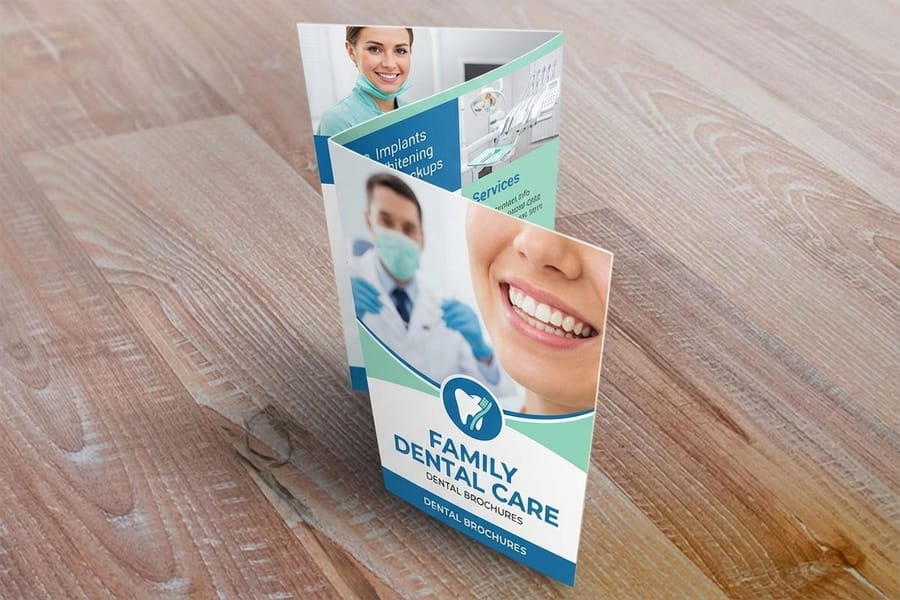
Ask a front desk what each piece is for and the answers rarely overlap, which is the clearest sign these are three different tools rather than three price points for the same tool.
The appointment card holds a booked slot. It leaves with the patient at checkout, it carries a handwritten date, and its whole job is to survive a week in a wallet. The brochure explains something the patient has to decide about, usually a treatment with a real price attached: implants, clear aligners, sleep apnea appliances, a perio plan. The postcard goes out to an address list. It is the only one of the three that reaches somebody who has never sat in the chair, and it is also what most practices use for six month recall and for reactivating patients who quietly stopped coming.
| Piece | Typical size | Who sees it | Starts at | The catch |
|---|---|---|---|---|
| Appointment card | 3.5 x 2 in | The patient at checkout | $17.57 | Reaches nobody new, and needs a writable back. |
| Dental postcard | 4 x 6 in up to 6 x 9 in | Any address you can buy or own | $16.48 | Postage rules bite above 4.25 x 6 in, and anyone can read it. |
| Dental brochure | 11 x 8.5 in folded to three panels | Whoever is handed one | $57.11 | Costs about three times a postcard and needs a person to give it out. |
Read the last column before the price column. Cost per piece is the wrong comparison here, because the pieces are not interchangeable. A stack of dental brochures that nobody hands over is worse value than a postcard that lands unasked in a mailbox, and a beautiful postcard cannot answer the four questions a patient has about an implant.
Appointment Cards: Cheap, Boring, and the One That Pays for Itself

Nothing about an appointment card is exciting, and it is still the piece we would print first for a new practice. Dental appointment cards start at $17.57, the same entry price as a plain business card, and they carry the reminder that keeps a chair full.
One decision matters more than the design: the finish on the write-on side. Ballpoint and gel ink do not soak into an aqueous or UV coating, they sit on the surface, and the first thing the card touches wipes the date away. Specify an uncoated or matte back. If the front needs gloss for the logo, print gloss front and matte back rather than both sides.
Stock is the second decision. 14pt is the everyday choice and 16pt is noticeably more rigid, which matters because this card lives in a wallet next to keys for months rather than sitting in a card holder. Beyond that, keep the layout ruthless: practice name, phone number, two or three blank lines for the date and time, and the cancellation window. Anything else and the front desk has nowhere to write.
Two habits from practices that use them well. Print the recall interval on the card so the patient can see when they are due, and print a second short line for the treatment coordinator to note the next step. If your design keeps drifting past the space available, the appointment card template guide shows the layouts that fit, and there is a matching argument about which card a service business should hand over in our comparison of salon flyers, appointment cards and standard business cards.
Dental Brochures: For the Treatment That Needs Explaining
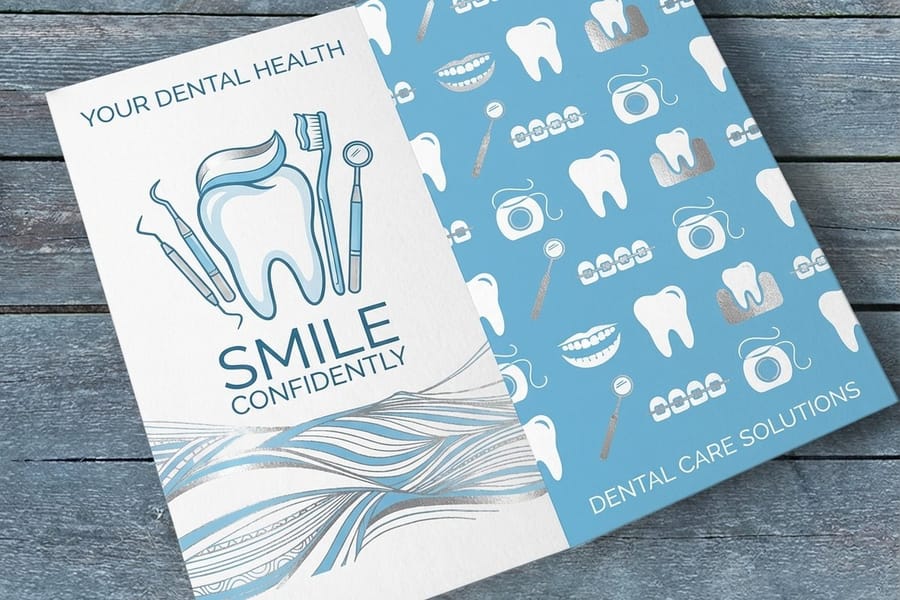
A brochure earns its cost in exactly one situation: a patient is weighing a treatment that costs real money and has questions that outlast the consult. Implants, aligners, veneers, sleep appliances and full perio programs all fit. A cleaning does not.
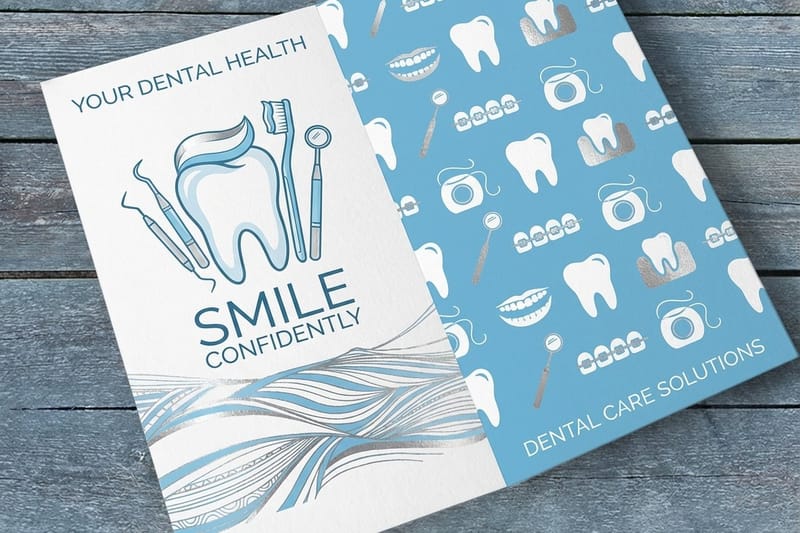
The standard build is an 11 by 8.5 inch sheet folded to three panels of roughly 3.67 inches. The panel that tucks inside is cut about a sixteenth of an inch narrower so the fold closes flat instead of buckling at the spine, which is the single most common file mistake we see on a first dental job. Panel order also has a job to do:
- Front cover. The treatment named plainly, one image, the practice name. Not a mission statement.
- Tuck-in panel. Two lines: what the treatment is and who it suits, read first when the brochure is half opened.
- Inside spread. The process step by step, what the appointment feels like, healing time, and what it costs or how financing works.
- Back panel. Address, phone, hours, booking link. This is the panel that faces up on a kitchen counter for a week.
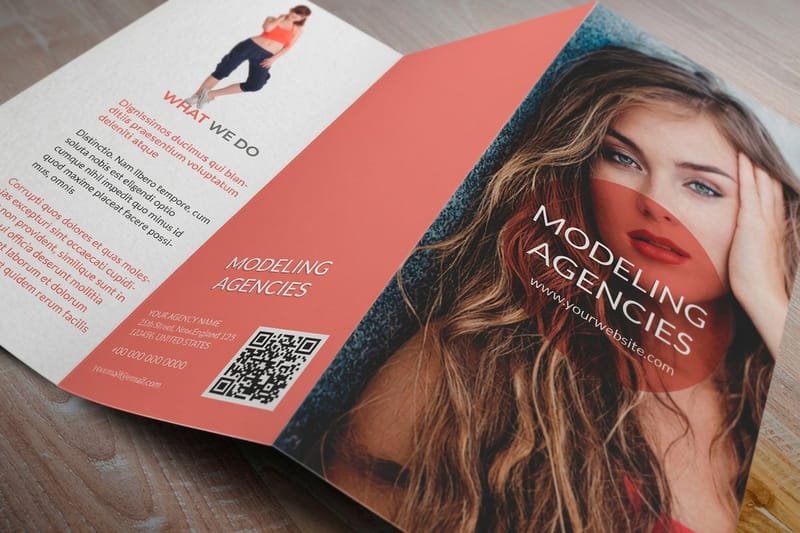
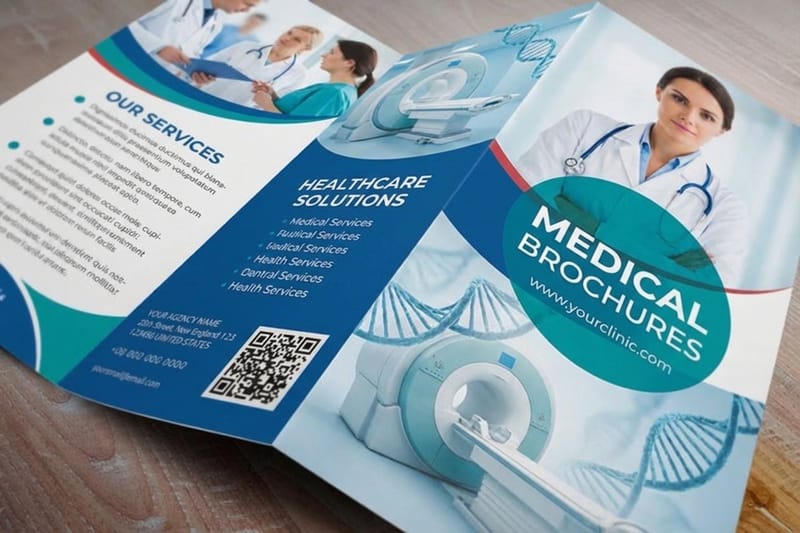
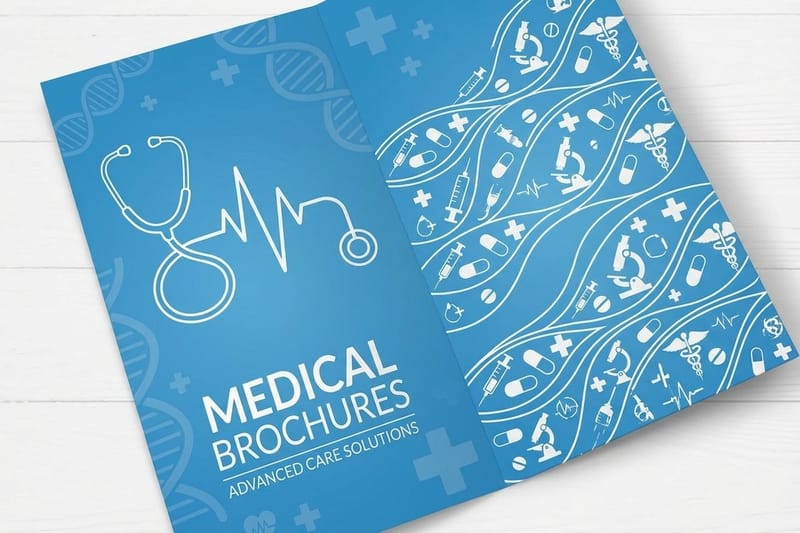
Where a brochure fails is distribution. Printed and left in a rack, it mostly gathers dust. Handed over by the treatment coordinator at the end of a consult, with a circled number on it, it works. If your practice is medical rather than dental, the sections and page order are laid out in the medical brochure template guide, and medical brochures print on the same stocks. Choosing between a trifold and a half fold is covered in our breakdown of brochure fold types.
Dental Postcards: The Only One That Reaches Strangers
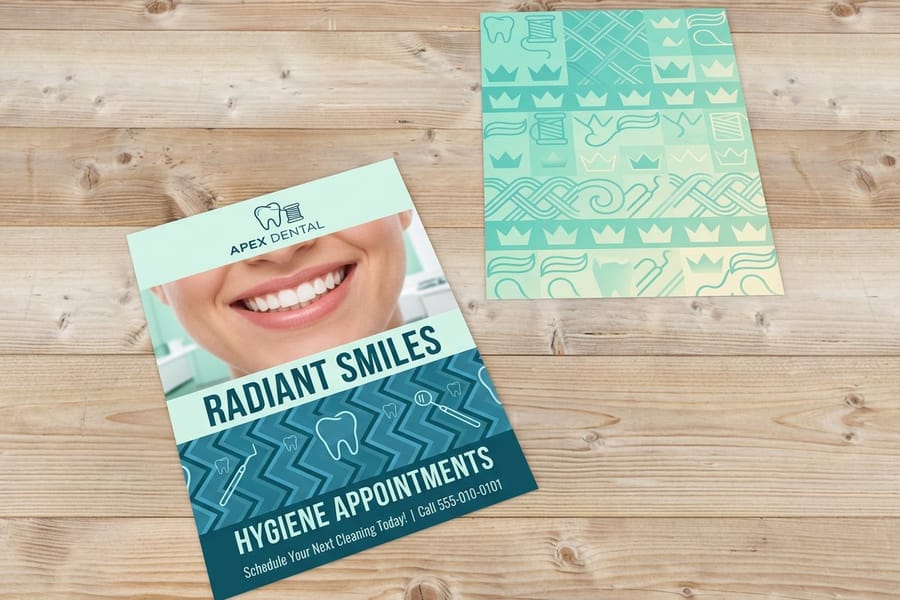
Everything else in this comparison waits for the patient to arrive. A postcard does not, which is why practices that want growth rather than retention start here. Dental postcards start at $16.48, and the piece needs no envelope, so nothing stands between the message and the person holding it.
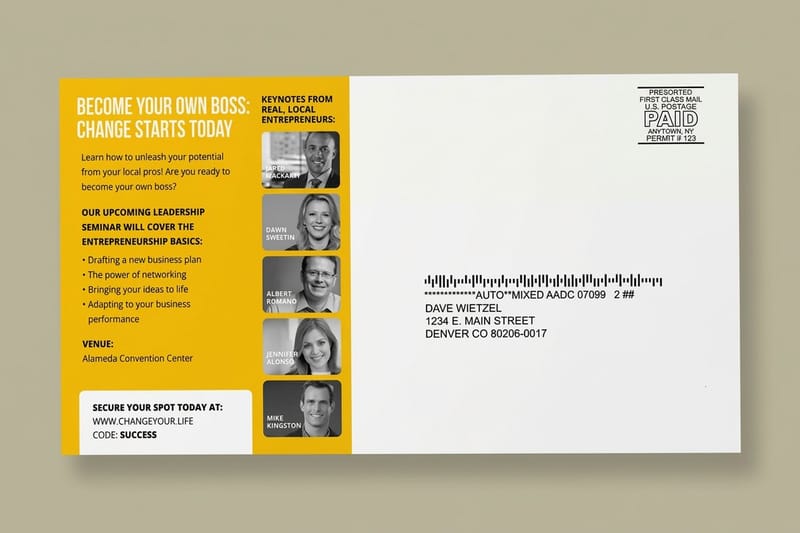
Size is a postage decision before it is a design decision. USPS holds its postcard price for pieces between 3.5 by 5 inches and 4.25 by 6 inches, with a thickness between 0.007 and 0.016 of an inch. A 4 by 6 card on 14pt stock measures about 0.014 of an inch and clears both limits. Print the same design at 5 by 7 and it is a letter, and it pays letter postage for the rest of the campaign. Bigger is not wrong, it is just a different budget: a 6 by 9 card is far harder to ignore in a stack of mail, and if you are saturating a neighborhood rather than mailing a list, EDDM postcard sizes start above the letter limits on purpose.
Leave the right half of the address side clear for the address block, and keep the bottom right corner empty for the barcode. The exact measurements are in our guide to postcard address side layout and barcode clear zones. Postage tiers by size sit in the postcard mailing rates guide.
One rule that is specific to dental and medical mail: a postcard is readable by everybody who touches it. Appointment reminders are fine to send, but keep the printed side general. The practice name, a reason to come in stated broadly, a phone number and a booking link. No procedure names, no balances, no chart detail. If the message needs any of that, it needs an envelope. When you are ready to mail rather than just print, direct mail postcards start at $89.68 and include the mailing, and the process is walked through in how to run postcard mailings.
The Verdict: How to Split a Fixed Print Budget
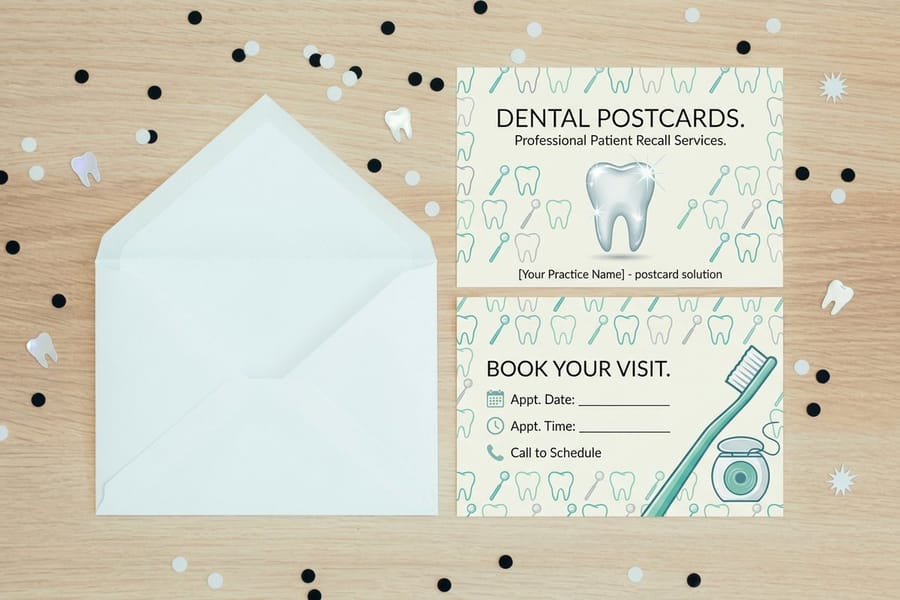
If the practice is established and the schedule has gaps, print appointment cards and postcards, and skip the brochure for now. Cards protect the appointments you already booked, postcards refill the schedule from your own inactive list, which is the cheapest new business a dental office has. Both are under $18 to start, so this is not an expensive position to hold.
If the practice is new, or has just added a high value treatment, the order changes. Postcards first to announce it, brochures second so the treatment coordinator has something to hand over during the consult, cards third but immediately, because a new practice cannot afford a no show. That is the only case where the $57.11 brochure earns its place early.
If the practice is buying growth, put the money into mail volume rather than into a better brochure. The same $500 buys a lot more mailed postcards than it does brochures nobody distributes. Build or rent the list carefully first, because a mediocre card to a good list beats an excellent card to a bad one every time. Our guide on building or renting a mailing list covers the sourcing.
Whatever the split, print all three in one order. The stocks match, the color matches across the run, and you pay one setup instead of three. The full set for a practice sits in the dental printing collection, the clinic equivalents in the medical printing collection, and everything else a front desk hands out is in marketing materials. Correctly sized starting files for all three are in the blank template library.
Wally sorts out the dental front desk
Card at checkout, brochure at the consult, postcard in the mail
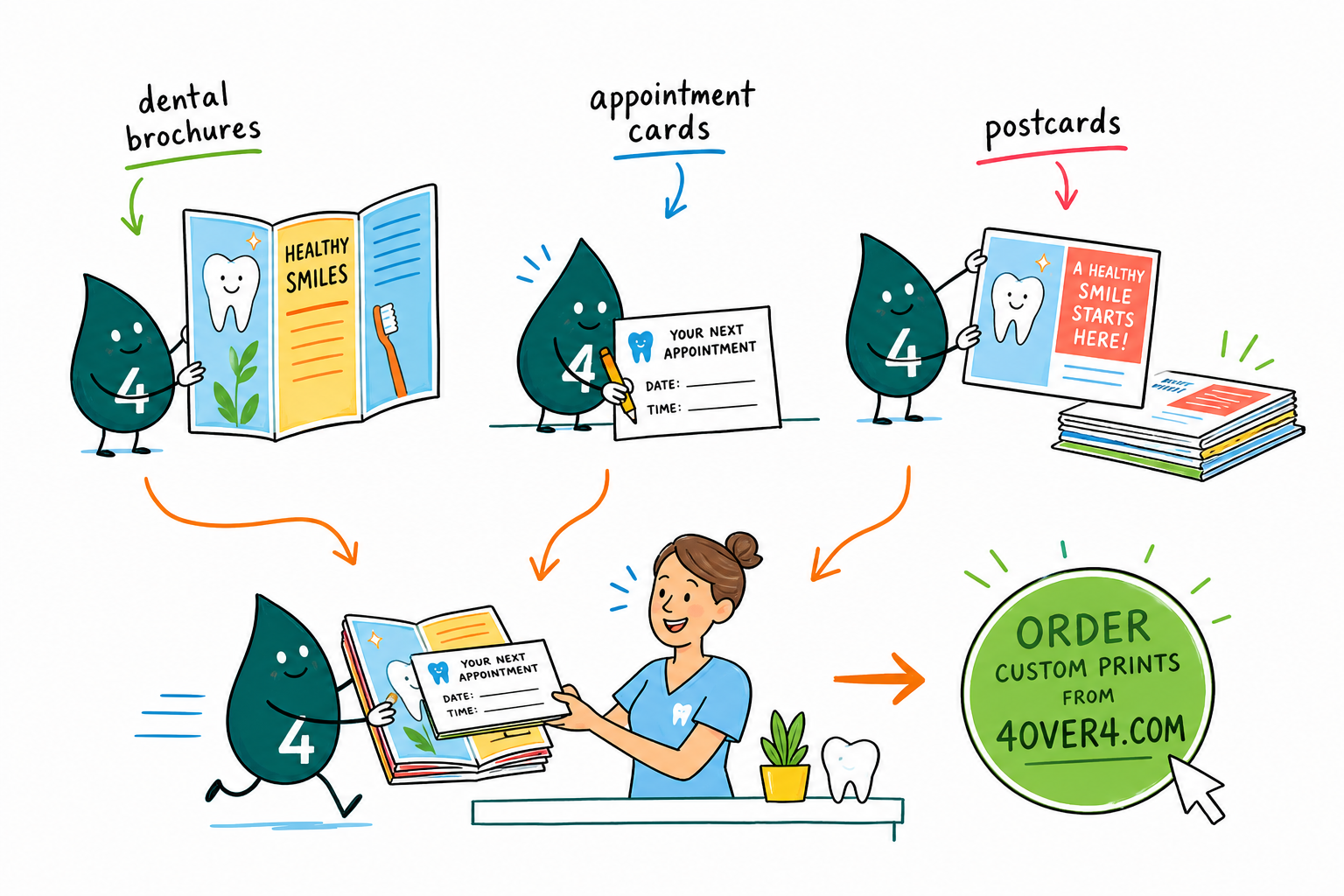
Wally gives the card to the patient walking out, because it holds the next visit and costs almost nothing. He keeps the brochure for the chair, where somebody is deciding about implants and still has four questions. The postcard he mails, because it is the only one that reaches a person who has never been in. He also checks two things before printing: the back of the card is matte so the date does not smear, and the postcard stays inside 4.25 by 6 inches so it keeps the cheap postage.
Shop the dental printing collection →Specs and pricing
Sizes, stocks and starting prices, side by side
Configuration choices and starting prices for all three pieces, straight from the 4OVER4.COM configurator.

Print it
Print the set in one order

Explore more
Where to go next

By the numbers
Printing for dental and medical offices at 4OVER4
Common Questions
Dental print questions the front desk actually asks
If a practice can only print one of the three, which one?
Appointment cards, and it is not close. They are the cheapest of the three at $17.57 to start, every patient leaves with one, and the card is doing the job of holding a booked chair rather than trying to create demand. A missed hygiene appointment costs the practice a whole slot; a card in a wallet is the cheapest reminder in the building. Print postcards second, because that is the piece that reaches people who are not patients yet. Print brochures third, when there is a treatment worth explaining at length.
Can a dental brochure be mailed without an envelope?
It can, but a folded self-mailer has rules that surprise people. USPS wants the final fold on the bottom edge and the open edge tabbed closed, otherwise the piece catches in the sorting equipment and gets surcharged or returned. Tabs add a finishing step and a cost. For most practices the simpler answers are to mail a postcard instead, which needs no envelope and no tabs at all, or to put the brochure in an envelope with a letter. Keep the loose brochures for the front desk and the operatory.
What size dental postcard keeps the cheapest postage?
Stay between 3.5 by 5 inches and 4.25 by 6 inches, and keep the thickness between 0.007 and 0.016 of an inch. A 4 by 6 card on 14pt stock, which measures about 0.014 of an inch, sits comfortably inside both limits and mails at the USPS postcard price. Go to 5 by 7 or 6 by 9 and the piece is a letter, so it pays letter postage even though it is still a card. Our guide to postcard mailing rates walks through the tiers, and the same math applies to a recall card and a new patient card.
Can we print the procedure on a recall postcard?
Do not. A postcard travels with the message face up, and every person who handles it can read it. Privacy rules let a practice send appointment reminders, but an open card is the wrong surface for anything clinical. Keep the mailed side to the practice name, the reason to come in stated generally, a phone number and a booking link. Anything specific to a treatment, a balance or a chart note belongs in a sealed envelope.
What stock should an appointment card be printed on?
14pt or 16pt, with the write-on side uncoated or matte. 16pt survives a wallet better and feels closer to the business card a patient already carries. The finish matters more than the weight here: a full gloss or high gloss UV back rejects ballpoint ink, so the front desk ends up writing with a Sharpie that bleeds through. If the design needs gloss on the front, print gloss on the front only and leave the back matte.
Do the three pieces need three separate designs?
They need one identity and three layouts. Reuse the logo, the two brand colors and the typefaces, then build each layout for its own shape. The card has almost no room, so it carries the practice name, the phone number and blank lines. The postcard has a mailing side that must stay clear on the right for the address block and the barcode zone. The brochure has three panels of about 3.67 inches each, and the panel that tucks in is cut slightly narrower. Start from the correct size in the blank template library rather than resizing one file into three.
Get Started
100 dental appointment cards cost $17.57, 50 brochures $57.11
Appointment cards with a back you can write on, brochures folded to the right panel widths, and postcards sized to hold the cheaper postage. Printed together, matched across one run.
Legal Disclaimer
Gold Standard guarantees apply to all standard orders placed through 4over4.com. Price match requires verifiable proof of a competitor's published price for an equivalent product with matching specifications and turnaround time. Satisfaction guarantee covers manufacturing defects and print quality issues. Contact support with order number and documentation. On-time delivery rate based on tracked orders 1999 to 2026. Individual results may vary based on shipping carrier performance.
