
Medical Office Signage Every Clinic Needs, Room by Room


A room by room checklist for a small practice, with the material each position needs, the sizes that stay readable down a corridor, and the one sign type we will tell you not to print.
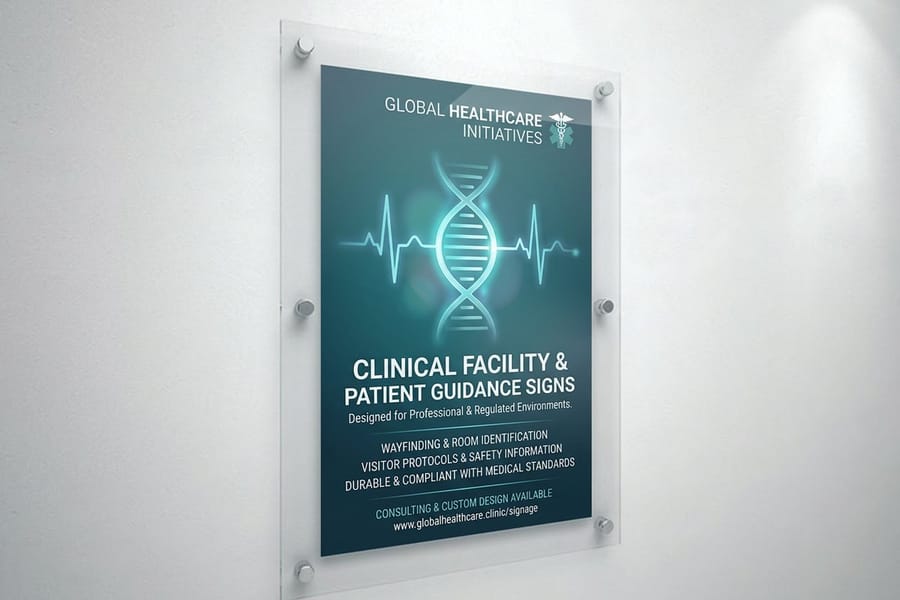
A clinic needs six sign positions: exterior identification, check-in at the desk, one directional sign where the corridor begins, room identification on every exam door, restroom identification, and restricted access on staff and imaging doors. Only the room and restroom signs must carry raised characters and Braille under the ADA, so those come from a tactile fabricator; the other four are printed. Put corridor and safety signs on aluminum from $36 because a clinic disinfects its surfaces daily, and save acrylic from $152.72 for the lobby and the desk.
Quick answer
Six positions, and only two of them need Braille
Map the signs to the route a patient walks, not to the walls you have. Exterior identification, check-in, one junction directional, exam room plates, restrooms, and restricted access cover a single-floor practice. The exam room and restroom plates name permanent spaces, so the ADA requires raised characters and Braille on those two and nowhere else. Everything else is printed, and the cleaning routine decides the substrate: aluminum and acrylic survive daily disinfecting, foam board and uncoated paper do not.
Why Clinic Signage Is a Staffing Problem Before It Is a Design Problem

Every question a patient asks at the front desk is a sign that is missing or unreadable. In a practice where one person handles check-in, phones, and insurance, being asked where the restroom is forty times a day is a real cost, and it lands on the busiest person in the building.
Look at it as a route rather than a shopping list. A first-time patient parks, finds the suite, walks in, stops at the desk, sits, gets called, follows someone down a corridor, and leaves. Six decision points, six places a sign either answers the question or does not. Signs placed anywhere else are decoration.
The second reason is regulatory. Room identification, restroom identification, and accessible route signs are covered by the ADA 2010 Standards, and a landlord fit-out inspection will look for them. Restricted access and imaging warnings are covered by your state health department and by the equipment manufacturer. Neither of those is optional, and neither is a design decision. Our medical printing collection covers the printed side of that set, and the breakdown of signage types is a useful cross-check before you order anything.
Wayfinding and Directional Signs: One Sign Per Decision
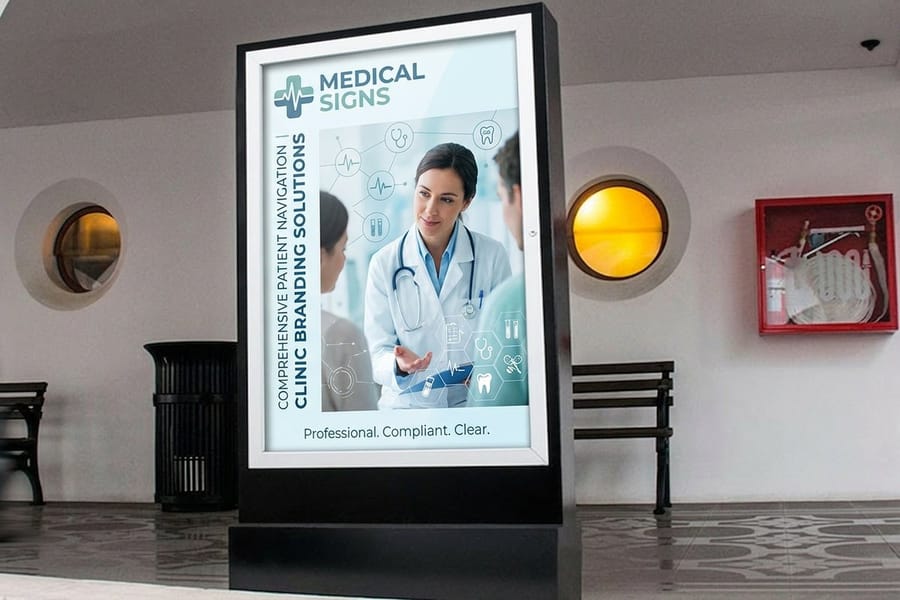
Good clinic wayfinding is boring on purpose. One sign at each point where a patient could turn the wrong way, using the same words every time. If the corridor sign says Imaging and the door plate says Radiology, you have created the confusion you were trying to prevent.
Three placements do most of the work in a small practice:
- The entry sign. Visible from inside the door, naming the desk. It stops the patient wandering past reception into the clinical area.
- The junction sign. Where the corridor begins. It lists exam rooms by number range, lab, imaging, and restrooms, with arrows. This is the one that gets undersized.
- The end-of-run sign. Where the corridor turns or a numbering block changes. Without it, a patient walks the full length and comes back.
Size from the longest sightline, not from the wall. One inch of capital height per 25 feet of viewing distance is the working rule, so a junction sign first seen from 40 feet wants roughly 1.5 inch caps. Left-align the text, put the arrow on the side it points to, and keep the list to five entries. Our medical signs start at $25 and print in the 12 by 18 and 18 by 24 sizes that suit a corridor, and the wayfinding planning guide walks the full route method if you are laying out more than one floor.
One more thing that costs nothing: number your exam rooms in a single ascending run, and never skip a number when a room changes use. Patients count.
Safety and Compliance Signs, Including the One We Cannot Print
Here is the limit, stated plainly, because most pages on this subject avoid it. Signs that identify a permanent room or space have to carry raised characters and grade 2 Braille under the ADA 2010 Standards. That is a fabricated tactile plate. A printed sign, however good the contrast, does not satisfy it. Exam room plates and restroom plates should come from a tactile sign fabricator.
Everything else in the compliance layer is printable, and there is more of it than people expect:
| Sign | Where it goes | Why it exists |
|---|---|---|
| Restricted access | Staff doors, medication room, records room | Keeps patients out of areas holding drugs and charts |
| X-ray or laser warning | Imaging room door and control area | Required by the equipment maker and by state radiation rules |
| Biohazard and sharps | Soiled utility, sharps stations | OSHA bloodborne pathogen labeling |
| Occupancy and emergency | Exit routes, fire equipment, assembly point | Fire code, checked at inspection |
| Notices at the desk | Check-in window | Privacy practices, payment policy, and mask or illness policy |
Print those on aluminum signs, which start at $36 and stay legible after years of wiping. Red and yellow warning signs in particular should be on a rigid substrate, because a curled safety sign reads as an ignored one. The workplace safety signs guide covers the color and wording conventions, and if you are mounting anything on the building exterior, check the state by state sign permit rules first. Suite and monument signs are often governed by the landlord and the municipality at the same time.
Reception and Check-In: The Signs People Actually Read
Reading distance at the desk is three to six feet, which changes everything. Type can be small, panels can be modest, and finish suddenly matters because the patient is close enough to see a cheap edge. This is where the budget belongs.
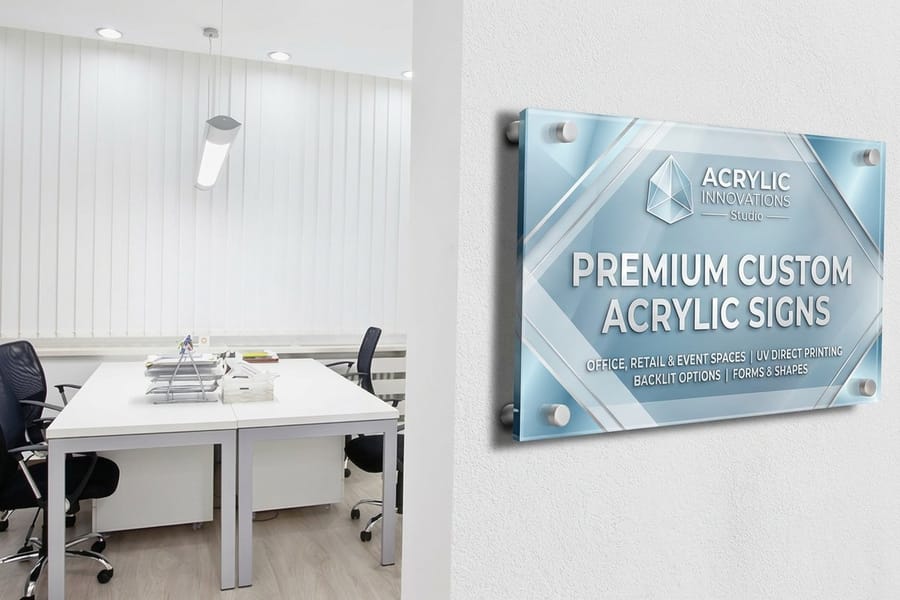
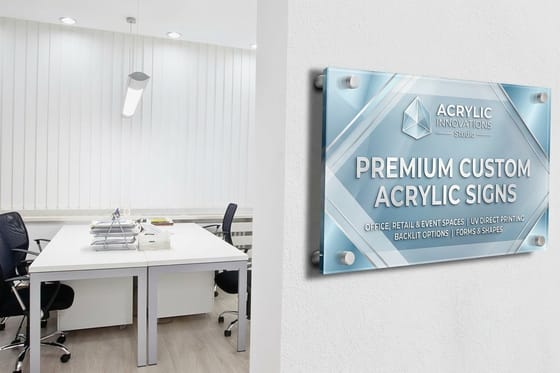
Keep the messages separate. One panel for check-in instruction, one for the notices, and a lobby piece with the practice name. Crowding a privacy notice, a payment policy, and a queue instruction onto a single panel is how all three go unread. A logo panel on standoffs behind the desk reads as a permanent practice rather than a leased room, and acrylic signs start at $152.72 for that job. If you want the mounting hardware explained before you drill, the standoff signage guide covers it, and the acrylic lobby signs guide compares edge finishes.
The reception glass is the other opportunity. Frosted or patterned window decals from $93.37 give the check-in window privacy at seated eye level while leaving the top clear, which is what a patient handing over an insurance card actually needs. Measure the glass before you order, because the visible opening is almost never the frame size. The window graphics measuring guide shows how to template it properly.
Material and Durability: Cleaning Chemistry Picks the Substrate

A clinic wipes its surfaces several times a day with quaternary ammonium or diluted bleach. That single fact eliminates most of the cheap sign materials, so decide the substrate before the design.
| Material | Holds up to daily disinfecting | Best position | Starting price |
|---|---|---|---|
| Aluminum | Yes, indefinitely, indoors or outdoors | Corridors, staff doors, exterior identification | $36 |
| Acrylic | Yes, though it scratches if wiped dry with grit | Lobby wall, behind the check-in desk | $152.72 |
| Rigid PVC | Yes indoors, less so in direct sun | Back office, temporary room labels | $25 |
| Floor decal | Yes, but the print wears with traffic | Queue spacing, route arrows | $34 |
Two failure modes to plan for. Foam board and uncoated paper go chalky and lift at the corners after a few weeks of wet wiping, so they belong on a bulletin board, not on a wall people clean. And floor decals from $34 need a textured slip-rated surface to grip properly; on polished vinyl tile that gets mopped nightly, the edges start lifting far sooner than on carpet or sealed concrete. Treat floor graphics as a consumable and reorder rather than expecting a year out of them.
Lamination is the middle path when a print has to live somewhere damp or heavily handled. It adds cost and a slight sheen, and it will not turn a soft substrate into a rigid one. The laminated signs guide covers what it does and does not fix, and the durable sign materials comparison ranks the substrates side by side.
Ordering the Set: Sizes, Files, and What to Buy First

Walk the space with a tape measure and a phone before you open a design file. Photograph every position, note the wall width, and note the distance a patient will read it from. Twenty minutes of that saves a reprint.
A sensible order for a new practice: exterior identification and the junction directional sign first, because those two remove the most questions. Restricted access and imaging warnings next, because they are inspected. Reception and lobby pieces third, since they are the ones you will want to get right rather than fast. Floor and window graphics last, because they are the easiest to change once the space is in use.
On the file side, build at full size in CMYK, keep live text at least 0.25 inches inside the trim, and outline your fonts before you export. Start from a correctly sized layout in the blank template library rather than guessing bleed. If yours is a dental practice, the dental signs range carries the same materials with the room labels that fit an operatory layout, and medical appointment cards from $17.57 finish the patient-facing set that the signage begins.
Browse the full rigid range in rigid signs printing, or read the indoor signage guide and the wall signs and graphics guide if you are also fitting out a waiting room wall.
Wally maps a clinic
Walk the patient route and sign every turn
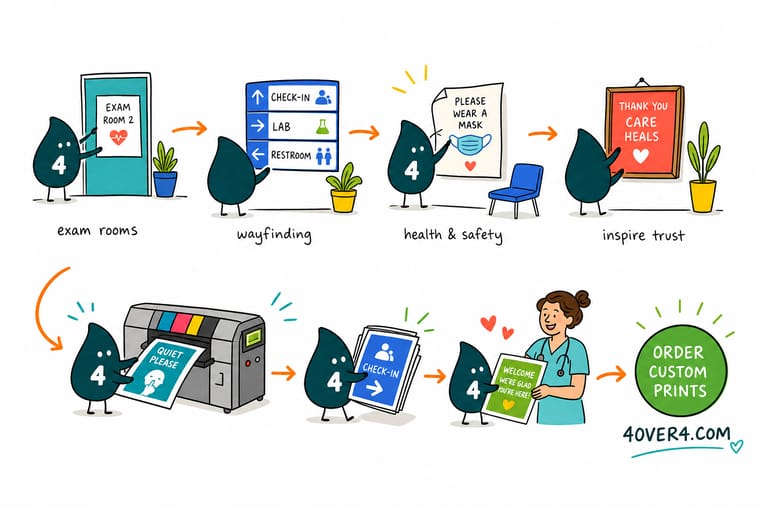
Wally parks in the lot, finds the suite, walks in, stops at the desk, sits, gets called, and follows a nurse down the corridor. Six stops, six signs. He puts aluminum in the corridor because the place gets wiped down every day, acrylic at the desk where people stand close enough to see the edge, and he leaves the exam room plates to a tactile fabricator because those need Braille. Everything else he prints.
Order medical signs →Specs and pricing
Clinic sign materials, sizes, and starting prices
Compare the three substrates a practice actually uses, with live configuration choices and starting prices straight from the 4OVER4.COM configurator.



Print it
Order the printed half of your clinic set


Explore more
Where to go next

By the numbers
Clinic signage printed to order at 4OVER4
Common Questions
Your clinic signage questions, answered
What signs does a medical office actually need?
Six positions cover a single-floor practice. Outside: the practice name, suite number, and hours where someone can read them from the parking row. Inside the door: a check-in sign and the notices that belong at the desk. At the corridor junction: one directional sign that names exam rooms, lab, and restrooms. On each exam door: room identification. At the restrooms: identification with the accessibility symbol. On staff doors and the imaging room: restricted access and equipment warnings. Anything beyond that list is usually marketing rather than navigation.
Do printed signs meet ADA requirements?
For some positions, yes. The ADA 2010 Standards split signage in two. Signs that identify a permanent room or space need raised characters and grade 2 Braille, which is a fabricated tactile plate, not a printed one. Signs that give direction or information, and the safety and notice signs, only have to meet the visual character rules on contrast, finish, and character height. That means the exam room and restroom plates should come from a tactile sign fabricator, while the directional, safety, notice, and marketing layers can be printed. We will tell you that rather than sell you a printed plate that fails an inspection.
What sign material survives daily disinfecting?
Aluminum and acrylic. Both wipe clean with the quaternary ammonium and bleach products a clinic already uses, and neither swells at the edges. Rigid PVC is the middle option and holds up well indoors. What fails is uncoated paper, unlaminated foam board, and anything with an exposed inkjet surface, because repeated wet wiping lifts the ink and leaves a chalky haze. If a sign will be touched or cleaned, put it on a hard substrate or laminate it.
How big should a corridor sign be?
Work backwards from the longest sightline. The practical rule signmakers use is one inch of capital letter height for every 25 feet of reading distance. A junction sign a patient first sees from 40 feet needs about 1.5 inch caps, which usually lands the panel at 12 by 18 inches once you allow for arrows and spacing. Going smaller is the most common mistake in a clinic corridor, because the designer proofs the file at arm length on a monitor rather than at the distance the patient stands.
Where should privacy and check-in signage go?
Put it where the patient is already stopped, which is the desk, not the wall behind it. A person at the window reads at three to six feet, so the type can be small and the panel can be modest. Keep the queue instruction separate from the notice text; combining a payment policy, a privacy notice, and a check-in instruction on one crowded panel means none of them get read. A window graphic on the reception glass handles the privacy screening while the panel handles the words.
What does a full clinic signage set cost?
At 4OVER4.COM the printed layer of a small practice usually runs a few hundred dollars. Medical signs start at $25, aluminum signs at $36, floor decals at $34, and window decals at $93.37. Acrylic signs start at $152.72, which is why most clinics use one or two acrylic pieces at the lobby and desk and put everything else on aluminum. The tactile room and restroom plates sit outside that budget because they come from a tactile fabricator.
Get Started
25 window decals cost $93.37, acrylic signs run 4 business days
Pick your sizes, choose aluminum for the corridor and acrylic for the desk, and we print a clinic set that stays readable after years of wiping.
Legal Disclaimer
Gold Standard guarantees apply to all standard orders placed through 4over4.com. Price match requires verifiable proof of a competitor's published price for an equivalent product with matching specifications and turnaround time. Satisfaction guarantee covers manufacturing defects and print quality issues. Contact support with order number and documentation. On-time delivery rate based on tracked orders 1999 to 2026. Individual results may vary based on shipping carrier performance.
