
How to Run Postcard Mailings That Earn Back More Than They Cost


Postcard mailings are won on arithmetic, not artwork. Here is how to size the card for the cheapest postage class, choose between saturation and a targeted list, and know what a drop has to return before you print it.
A postcard mailing is four decisions taken in order: who receives it, what size the card is, how it enters the mail stream, and what one delivered piece costs. Settle the size first, because the dimensions set the postage class and postage is normally the bigger half of the bill. Stay inside 6 by 4.25 inches and 0.016 inches thick for postcard pricing, go past 6.125 inches tall for the flat size EDDM requires, and work out how many sales the drop needs before anything goes to press.
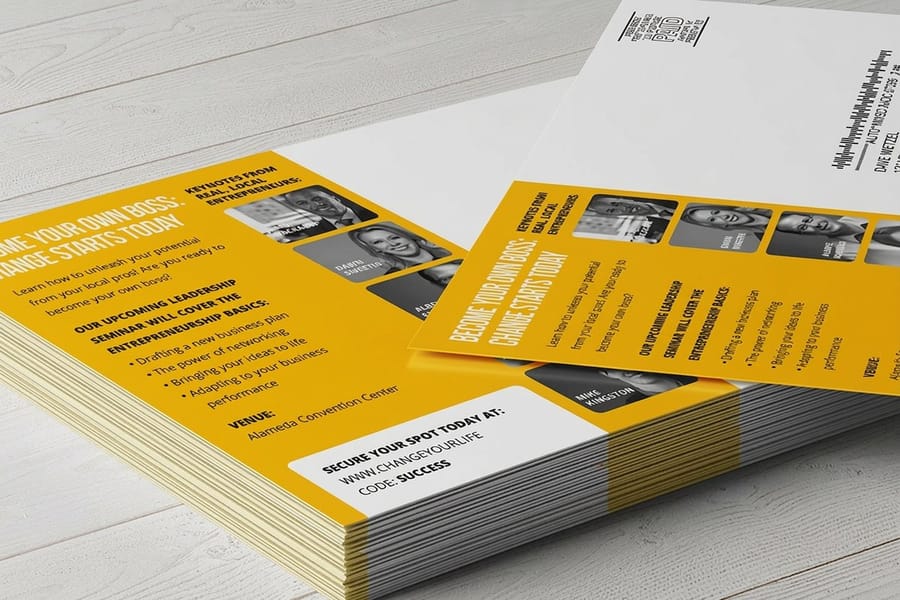
Quick answer
Size decides the postage, postage decides the budget
Run the mailing in this order: list, size, mail class, then artwork. Postcard pricing applies to a rectangular piece between 5 by 3.5 and 6 by 4.25 inches, 0.007 to 0.016 inches thick. Cross either line and every piece in the run pays letter postage. Go the other way, past 6.125 inches tall or 11.5 inches long, and the piece becomes a flat, which is the size class EDDM saturation routes require. Once the class is fixed, divide the all-in cost by your margin on one sale and you have the number the drop has to hit.
What a Postcard Mailing Costs and What It Has to Bring Back
A drop has four cost lines, and only one of them shrinks meaningfully with volume. Printing falls per piece as the quantity climbs. Postage does not, beyond the presort discounts. Data processing and address hygiene are a small fixed charge. List rental, if you are renting, is priced per thousand names and is usually the line people forget to budget.
That shape has a practical consequence. Doubling the quantity roughly halves your print cost per piece but does almost nothing to the postage, so past a few thousand pieces the mailing is mostly a postage bill with some ink on it. It is why the size decision in the next section carries more money than the stock decision, and why a small card to a good list beats a big card to a bad one at the same budget.
Work the return backwards. Take the all-in cost of the drop, divide by your gross margin on one closed sale, and you have the number of sales that gets you to zero. A roofer with $2,400 of margin on a job needs one sale from a $2,000 mailing. A cafe with $6 of margin on a visit needs the offer to bring people back more than once for the same drop to work. Same postcard, completely different decision, and no general response rate tells you which side of that line you are on.
Entry prices at 4OVER4.COM give you the floor rather than the answer: standard postcards start at $16.48 and direct mail postcards, which include the mailing service, start at $89.68. Configure the real quantity before you build the budget, and browse the sizes and stocks on the postcard printing pages so the number you plan around is the number you will pay.
Size and Format, the Two Lines That Change Your Postage
Two dimension thresholds decide which postage class your card falls into, and crossing either one applies to every piece in the run rather than the few that are oversized.
| Piece | Size class | Why it lands there | Where it fits |
|---|---|---|---|
| 4 x 6 in | Postcard rate | Inside 6 by 4.25 in and above the 5 by 3.5 in minimum. | High volume drops where postage per piece decides the budget. |
| 5 x 7 in | Letter rate | Seven inches long clears the 6 in postcard ceiling. | An offer that needs room, on a list small enough to absorb letter postage. |
| 6 x 9 in | Letter rate | Still inside 11.5 by 6.125 in, so it is a letter, not a flat. | Menus, coupon panels and anything with a detachable offer. |
| 6.5 x 9 in | Flat | Taller than 6.125 in, which is what makes it a flat. | EDDM saturation routes, where a flat is required. |
| 8.5 x 11 in | Flat | Beats both letter dimensions comfortably. | Full menus and multi offer sheets on EDDM routes. |
The 6 by 9 row is the one that costs people money. It looks like a big mailer, so it gets designed for EDDM, and then it is rejected because it never left the letter size class. Growing the height to 6.5 inches is the cheapest fix and changes nothing about the layout.
Thickness is the quieter trap. Postcard pricing needs the piece between 0.007 and 0.016 inches, so 14pt stock at roughly 0.014 inches has headroom while 16pt with lamination on both faces can measure over the ceiling. A laminate also resists ballpoint pen and inkjet addressing, which matters if anyone is writing on the card by hand. Silk postcards look and feel excellent in the hand, and they are the wrong choice for a piece that has to be hand addressed at 4 by 6.
Formats change the arithmetic too. Oversized postcards start at $51.62 and buy you room for a map, a menu or a coupon. Folded postcards start at $84.36 and give you four panels instead of two, though a folded self mailer has to be tabbed shut before USPS will take it, so budget the tabbing. Set up either one at the correct trim from the blank template library rather than resizing a design after the fact.
Who Gets It, and How the Mail Actually Enters the Stream
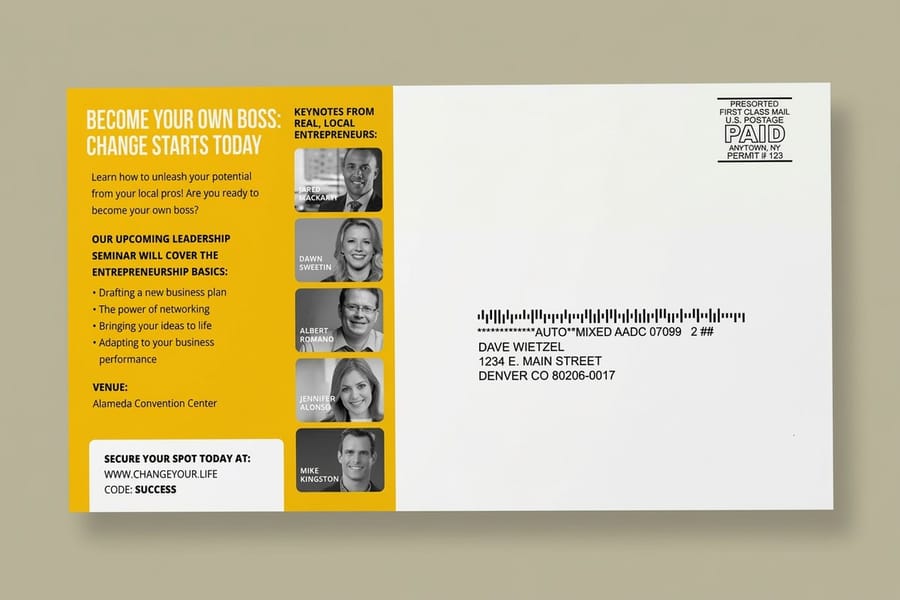
There are four normal ways to put a postcard in the mail, and they differ in what you have to supply, not just in price.
| Route | What you supply | Minimum | Best for |
|---|---|---|---|
| EDDM Retail | A flat sized piece and chosen carrier routes. No list. | None, capped at 5,000 pieces per ZIP per day. | Local trade whose customers are simply the nearest households. |
| Marketing Mail presort | An addressed, cleaned list and a permit or a mail house. | 200 pieces or 50 pounds. | Repeat drops to a defined audience where a few days of transit is fine. |
| First Class presort | An addressed, cleaned list and a permit or a mail house. | 500 pieces. | Time sensitive offers, and lists you want returned when addresses are dead. |
| Stamped singles | Stamps, a pen or labels, and your own time. | One. | Under a hundred pieces, or a personal note where the stamp is the point. |
Notice what the middle two rows have in common: a permit. Holding a bulk mail permit yourself only pays if you drop regularly, which is why most businesses order the mailing as a service and let the print shop hold the permit. That is exactly what direct mail postcards are, a card and the mailing bundled, so the run leaves us addressed and sorted rather than arriving back at your office in a box you then have to deal with.
On the list itself, start with the names you already own. Past customers respond better than any rented file, cost nothing per name, and let you say something specific. Rented lists are priced per thousand and are worth it for reaching people you have no relationship with, filtered by geography, home ownership, income band or a life event like a recent move. Whatever the source, run it through address standardization and a change of address update before you print, because a stale file quietly converts a slice of your postage into waste paper. The full picture is in our guide to building or renting a mailing list, and the saturation alternative is covered in what every door direct mail is.
If you are weighing presort classes against each other, the mechanics of permits, minimums and drop scheduling are laid out in how bulk mailing works.
Getting the Drop Out the Door Without a Reprint
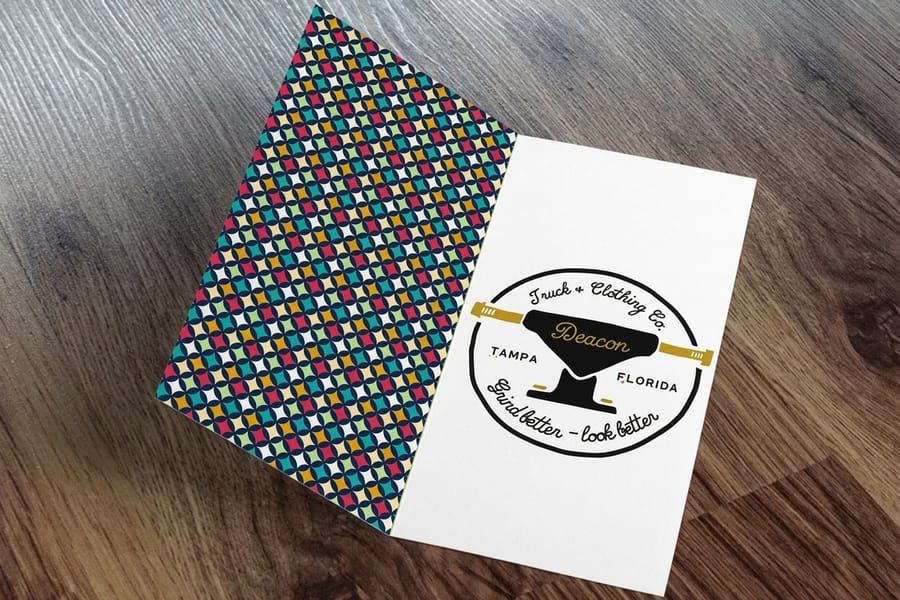
Most reprints on a mailing come from three things: an address side that fights the machine, a list file the processor cannot read, and a deadline printed on the card that arrives after the fact.
The address side needs real estate reserved before design starts. Keep the bottom 5/8 inch clear across the right 4.75 inches of the card so the barcode has somewhere to land, leave the address block itself free of background art and dark tints, and do not run a bleeding photo behind where the name will be printed. Ink jetting on top of a dark or glossy area is the single most common cause of an unreadable address.
The list file wants to be boring:
- One CSV, one row per recipient, one field per column, headers on the first row.
- Separate columns for name, address line 1, address line 2, city, state and ZIP. A single blob column has to be parsed and parsing invents errors.
- ZIPs kept as text so leading zeros survive. New England addresses lose theirs in a spreadsheet every time.
- Duplicates removed before you send it, because you pay postage on every duplicate that goes out.
- No blank rows, no merged cells, no formatting that only exists in the spreadsheet.
On timing, mail arrives across a window rather than on a date. Standard class transit varies by distance and by how busy the network is, so an offer that expires eleven days after the drop can expire for some of the list before it lands. Give the deadline slack, or use a season instead of a date. Our guide to mailing a postcard and the USPS rules covers the addressing side in more detail.
Last, make responses countable. A dedicated phone number, a unique promo code, a landing page that exists only for this drop, or a QR code on the postcard all do the job. Without one, you are guessing at attribution and the next mailing gets planned on a feeling. The card itself still has to carry the offer well, and the elements that make it work are set out in how to design a postcard. Rates and presort discounts sit in the postcard postage guide.
Wally runs the numbers first
Measure the card, then price the drop
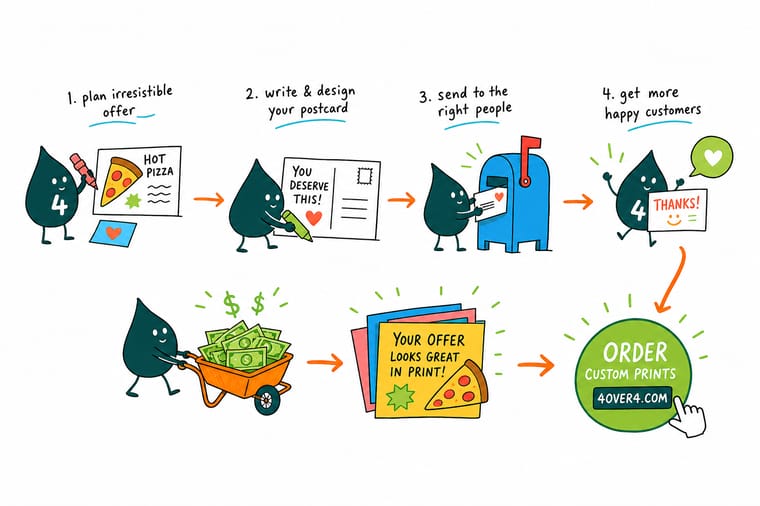
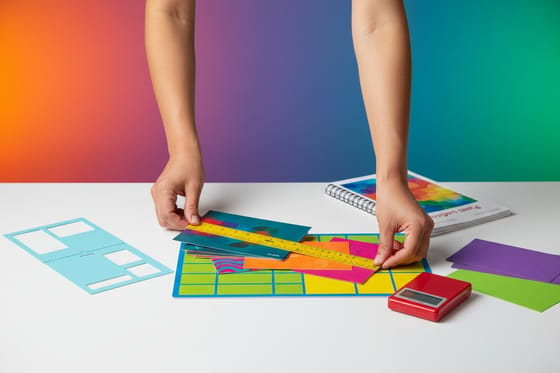
Wally puts a ruler on the card before he puts ink on it. Inside 6 by 4.25 inches and under 0.016 inches thick, it mails at the postcard rate. One quarter inch too long and the whole run pays letter postage. Bigger than 6.125 inches tall and it turns into a flat, which is the only size EDDM accepts. Then he divides the total cost by the margin on one sale, and that is the number the mailing has to beat.
Configure direct mail postcards →Specs and pricing
Postcard sizes, stocks and starting prices
Compare the mailing options side by side, with live size and stock choices and starting prices straight from the 4OVER4.COM configurator.



Print it
Order the cards and the drop together

Explore more
Where to go next


By the numbers
Direct mail printing you can count on at 4OVER4
Common Questions
Your postcard mailing questions, answered
What does a postcard mailing cost per piece?
Add four lines: printing, addressing and data processing, postage, and the list if you are renting one. Printing is the line that drops fastest with quantity, so entry prices tell you very little about a real drop. Standard postcards start at $16.48 and direct mail postcards start at $89.68 at 4OVER4.COM, and the per-piece figure falls sharply once you configure a few thousand. Postage barely moves with volume beyond the presort discounts, so on most mailings it ends up the larger half of the invoice. Price the exact quantity and size in the configurator rather than scaling an entry price in your head.
Do I need a mailing list, or can I just cover a neighborhood?
You can do either, and they are separate mail products. EDDM delivers to every address on a chosen carrier route with no names and no list purchase, which suits a business whose customers are simply the people nearby. A targeted list lets you pick households by geography, home ownership, income bracket, recent movers or your own past customers, and it is the only way to mail a small 4 by 6 card. The trade is coverage against precision: EDDM buys you every door cheaply, a list buys you the right doors and costs more per door.
Which postcard size gets the cheapest postage?
Anything that stays inside the postcard window: at least 5 by 3.5 inches, no more than 6 by 4.25 inches, rectangular, and 0.007 to 0.016 inches thick. In practice that means the classic 4 by 6 card, which is why it stays the default for high volume drops. Step up to 5 by 7 or 6 by 9 and the piece pays letter postage, which can be worth it if the extra room lifts response, but it should be a decision rather than a surprise.
Is a 6 by 9 postcard eligible for EDDM?
No, and this catches people constantly. EDDM requires a flat, which means the piece has to beat at least one letter dimension: taller than 6.125 inches, longer than 11.5 inches, or thicker than a quarter inch. A 6 by 9 card is inside both letter limits, so it is a letter, not a flat. Popular sizes that do qualify are 6.5 by 9, 8.5 by 11 and 9 by 12. If you have already designed at 6 by 9 and want EDDM, growing the height to 6.5 inches is the smallest change that fixes it.
How many postcards should I mail to test an offer?
Enough that the result is not noise, and to one list rather than four. We will not invent a response rate for you, because it swings enormously by industry, offer and list quality, and any number quoted as a general figure is worthless for planning. What is reliable is the method: mail one list with one offer, put a unique code, phone number or QR landing page on it so responses can be attributed, hold the second half of the list back, and repeat to the same names before you judge it. A single drop to a cold list almost always underperforms the same list on the third contact.
Can 4OVER4.COM print and mail the cards for me?
Yes. Direct mail postcards are configured with the mailing service included, so you upload artwork and a list file and the cards go to the post office addressed, sorted and paid rather than back to your office in a box. If you would rather handle the drop yourself, or you are running EDDM bundles by hand, order standard postcards or oversized postcards instead and they ship to you. The file requirements are the same either way, but the address side has to stay clear of the barcode zone if we are addressing it.
Get Started
Ready to put a card in every mailbox that matters?
Pick the size, upload the list, and we print, address, sort and drop the run so the only thing left on your side is answering the phone.
Legal Disclaimer
Gold Standard guarantees apply to all standard orders placed through 4over4.com. Price match requires verifiable proof of a competitor's published price for an equivalent product with matching specifications and turnaround time. Satisfaction guarantee covers manufacturing defects and print quality issues. Contact support with order number and documentation. On-time delivery rate based on tracked orders 1999 to 2026. Individual results may vary based on shipping carrier performance.
