
Mailer Boxes vs Thank You Cards vs Product Labels for Ecommerce Unboxing


Three ways to brand a shipment, at wildly different entry prices. Each has a different starting cost, leaves an impression that lasts a different length of time, and belongs at a different point in a growing store's buying order.
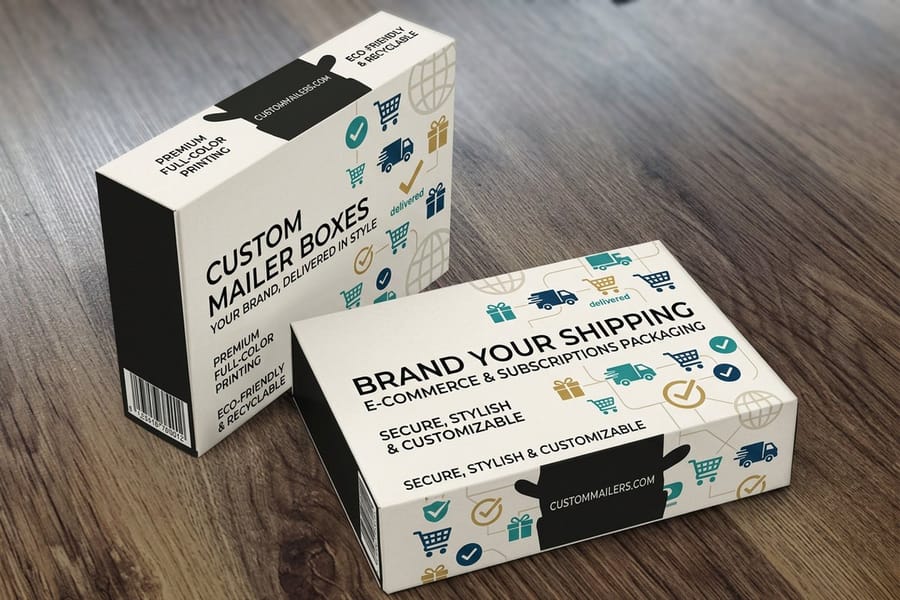
Print the product label first, the thank you card second, and the mailer box last. Premium product labels start at $29.16 and ecommerce thank you cards at $19.77, while custom mailer boxes start at $711.78 because a corrugated run needs a cutting die built for your exact dimensions. The label is also the only one of the three that survives past the day the parcel arrives.
Quick answer
Cheapest piece, longest impression, and the one that needs a die
The three pieces sit at opposite ends of both cost and lifespan. Premium product labels start at $29.16 and stay with the customer for the life of the product. Ecommerce thank you cards start at $19.77 and are the only piece that can carry a code or a request. Custom mailer boxes start at $711.78 because corrugated needs a cutting die made for one set of dimensions, and the box is usually flattened for recycling within a day. Buy from the inside out, and reach for printed tape and tissue before you commit to a box run.
What Each of the Three Actually Does in an Unboxing
They are not three versions of the same idea. Each one is seen at a different moment, by a customer in a different mood, and each one survives for a different length of time after the parcel is opened.
The box is doorstep theater. It works for a few seconds, in a hallway, often while someone is holding a phone. The thank you card works at the exact moment the flaps come up, which is the only point in the whole transaction where a customer is looking for something to read. The product label works forever, or at least until the product runs out, and it is the piece that ends up on a shelf where guests see it.
| Piece | When it is seen | How long it lasts | Starts at | Where it fails |
|---|---|---|---|---|
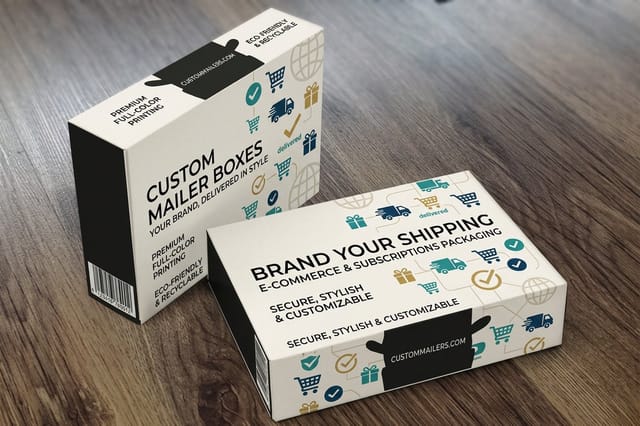
| Mailer boxes | On the doorstep, before anything is opened. | Usually flattened for recycling the same day. | $711.78 | Small runs. The die and setup are paid once across the whole quantity. |
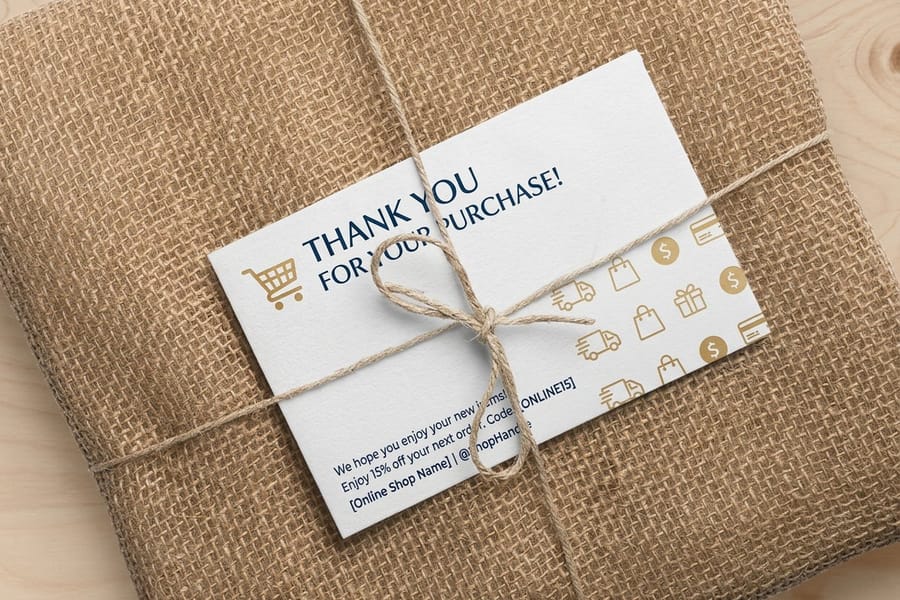
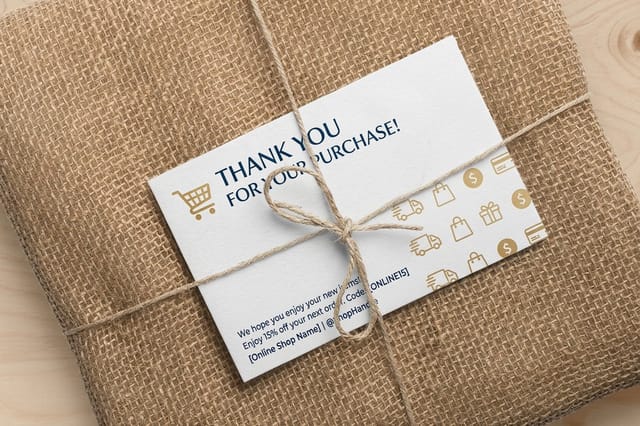
| Thank you cards | The second the box is opened, first thing lifted out. | Kept only if it carries a code or a QR worth keeping. | $19.77 | Generic copy. A card that only says thank you goes straight in the bin. |
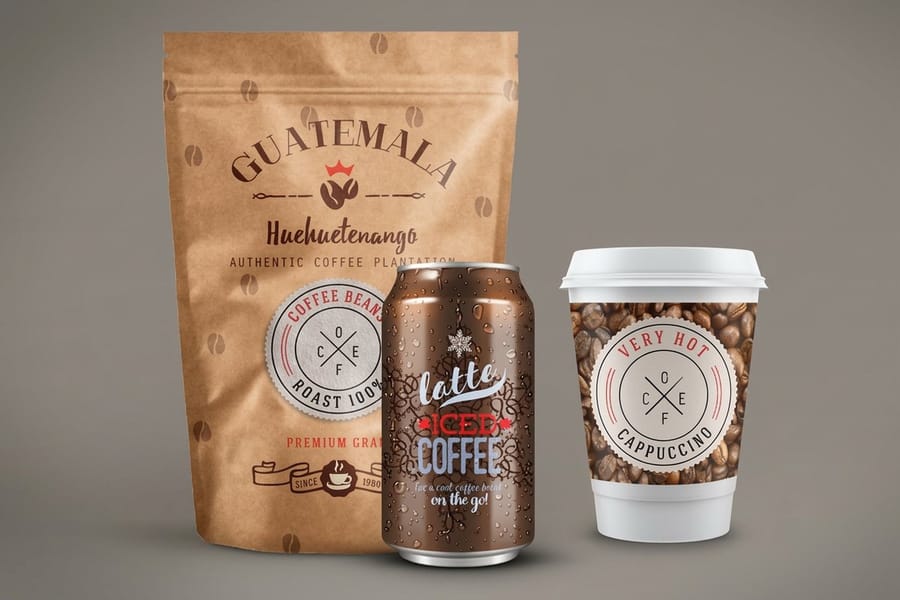
| Product labels | At the product, then every time it is used. | As long as the product does. | $29.16 | Wrong material. Paper on anything wet lifts at the edges within weeks. |
Read the third and fourth columns together. Custom mailer boxes buy you the shortest impression at the highest entry cost, and premium product labels buy you the longest at the lowest. That is not an argument against boxes. It is an argument about sequence, which is the rest of this guide.
Why the Price Gap Between a Box and a Card Is So Wide
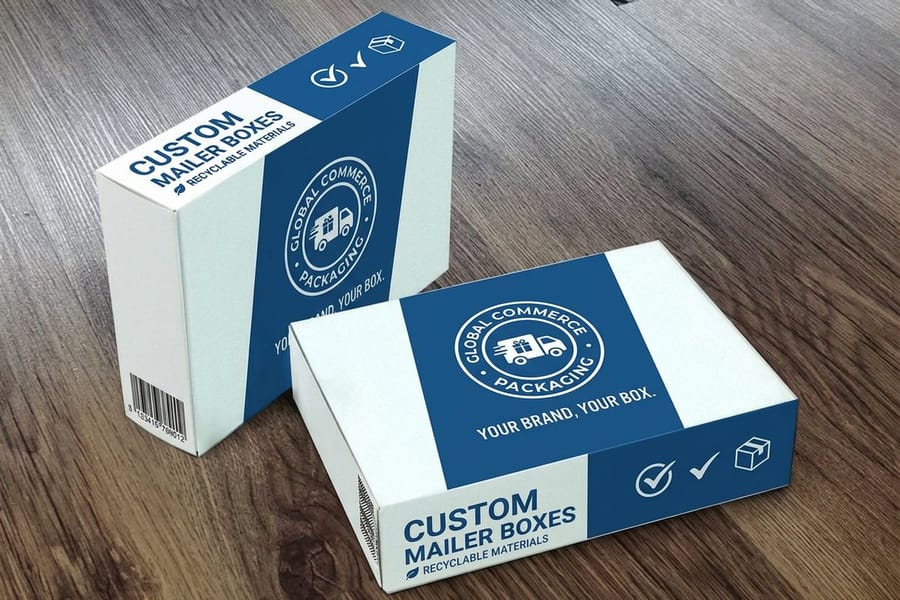
The gap is not markup. It is tooling. A corrugated mailer is cut with a steel rule die shaped for one specific set of dimensions, and that die exists only for your box. Once it is made, every additional box off the press is cheap, so the sensible thing is to run a lot of them. That is the whole reason a box job starts in the hundreds of dollars while a flat card job starts in the tens.
Labels and cards have no equivalent tooling problem. Cards print flat on cardstock and get trimmed on a guillotine, the same economics as a business card. Labels print on sheets or rolls and are cut with either a standard shape or a custom die that is far smaller and simpler than a box die. Here is what that looks like across the packaging pieces we print:
| Product | Starts at | What drives the price |
|---|---|---|
| Ecommerce thank you cards | $19.77 | Flat cardstock, no die, quantity only. |
| Standard product labels | $23.88 | Sheet stock and cut shape. |
| Premium product labels | $29.16 | Upgraded stock and finish over the standard label. |
| Custom tissue paper | $126.32 | Roll printing, priced by sheet count. |
| Printed packaging tape | $347.11 | Continuous roll printing, one roll covers hundreds of parcels. |
| Kraft mailer boxes | $711.78 | Corrugated run plus a cutting die for your dimensions. |
| Custom mailer boxes | $711.78 | Same corrugated run, printed exterior. |
Two things fall out of that list. First, kraft and printed mailers start at the same number here, so choosing kraft is a durability and ink coverage decision, not a way to spend less on the first order. Second, printed packaging tape does most of the doorstep job a printed box does, for less than half the entry cost, and it works on whatever plain box you already stock. Our guide to seals, labels and tape goes through that route in detail, and the packaging printing collection lists every piece side by side.
Three Different File Setups, and Where Jobs Get Held Up
Most delays on packaging orders are file problems, and each of the three fails in its own way.
Boxes need a dieline, and the art goes on the flat. A mailer box is one piece of board with panels that fold. Your artwork has to be built on the unfolded shape, which means the panel that becomes the front is nowhere near the panel that becomes the lid, and at least one panel is upside down relative to another. Designing on a 3D render and hoping the printer will work it out is the most common reason a box job comes back for revision. Check whether you are paying for one printed side or two before you design the inside of the lid.
Labels need the material chosen before the artwork. Paper takes ink beautifully and dies in a bathroom. Waterproof film survives condensation and reads slightly cooler. Clear film needs a smooth container behind it or every bubble shows. Decide the stock, then the shape, then draw. Keep type and logos clear of the cut edge, because a label die tolerance is real and a name that runs to the edge will show it. Our complete guide to how label printing works covers sheet against roll and where each one makes sense.
Cards are the easy one, and people still get bleed wrong. Flat stock, standard sizes, two printable sides. Extend any background past the trim, keep the discount code away from the edge, and remember the card gets read at arm length in poor hallway light, so set the code larger than looks right on screen. You can start from a correctly sized layout in the blank template library.
One more thing that only affects boxes: heavy dark coverage on corrugated shows the flute lines through the surface and picks up every scuff from the conveyor. If your brand color is close to black, look at how cardstock and corrugated behave differently before you commit a whole run to it.
The Order to Buy In as the Store Grows
Spend from the inside out. The pieces that touch the product first are the cheapest and the longest lived, and the piece that touches the doorstep is the most expensive and the shortest lived.
First, label the product properly. A premium product label from $29.16 does more for how a brand reads than anything else on this page, and on regulated goods it is not optional anyway. Get the material right and reprint when the recipe or the size changes.
Second, put a card in the box. Ecommerce thank you cards from $19.77 are the only piece here that can ask the customer to do something. A repeat code, a review link, a referral. Because the reprint cost is low you can change the offer seasonally and find out what actually works, which you cannot do with a box you bought a year of.
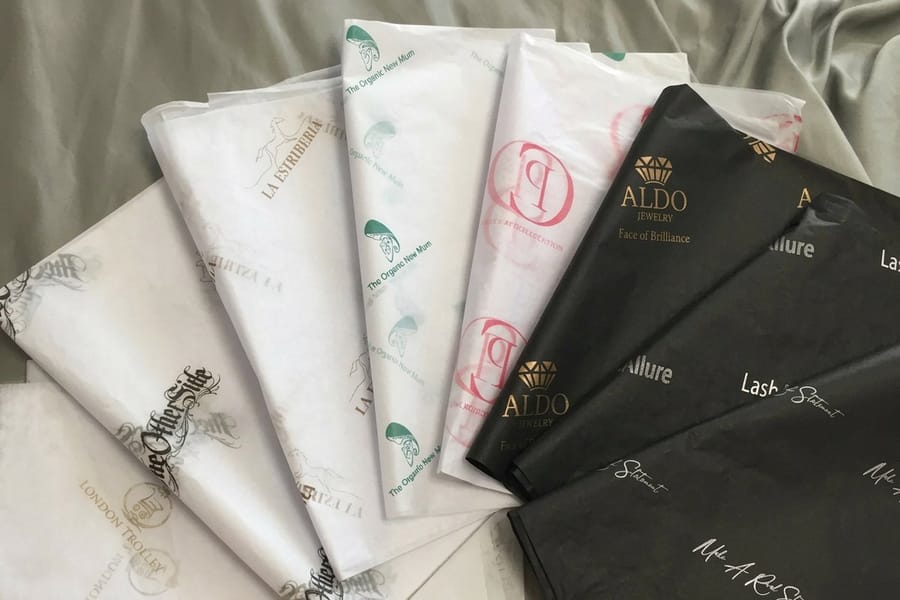
Third, brand the outside without a die. Printed packaging tape from $347.11 and custom tissue paper from $126.32 attach to any plain box, so they survive a change in box size, a change in supplier, and a change in product line. This is where most stores get the best return for the money.
Last, print the box. Move when your shipping volume means a full run turns over within a season rather than sitting on a pallet, and when your box size has stopped changing. Both matter, because the die is cut for one set of dimensions and a product range that is still moving will outgrow it. When you are ready, size it against the box size chart by product type and browse what fits in custom box printing. If you want the wider view of what else goes in a shipment, the nine types of packaging is the place to start.
Wally packs one order three ways
The box lasts a day, the label lasts a year
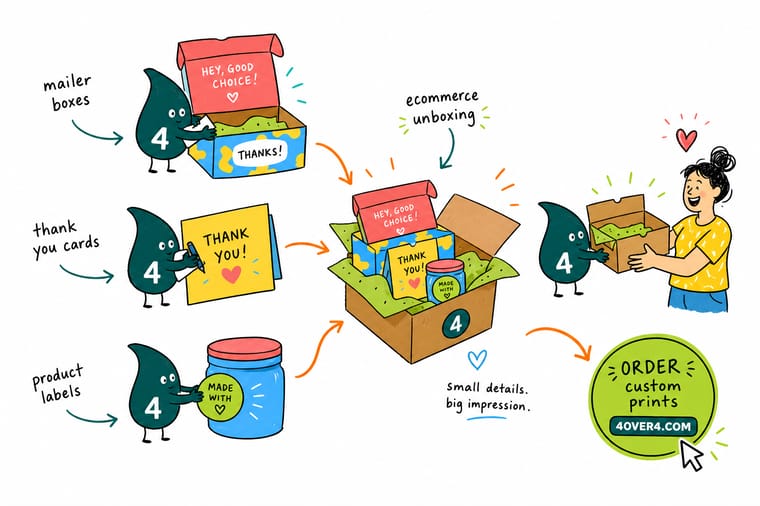
Wally hands you the box on the doorstep and it is flat in the recycling by teatime. He tucks a thank you card under the flaps, and that card is the only piece that gets to ask for a second order. Then he sticks a proper label on the product itself, and that one sits on a shelf for months. Same shipment, three very different lifespans, and the cheapest piece is the one that lives the longest.
Order premium product labels →Specs and pricing
Sizes, stocks and starting prices for all three
Compare the three side by side, with live configuration choices and starting prices straight from the 4OVER4.COM configurator.
Print it
Build the unboxing one piece at a time
Explore more
Where to go next

By the numbers
Boxes, tape, tissue and cards for one parcel
Common Questions
Your unboxing print questions, answered
If I can only print one of the three, which should it be?
Premium product labels. They start at $29.16, they are the only piece of the three that stays with the customer after the packaging is recycled, and on many products the label is doing legal work as well as branding: net weight, ingredients, batch codes, care instructions. A plain shipping box with a well printed label on the product inside reads as a real brand. A beautiful box with a supermarket sticker on the product does not.
Do custom mailer boxes have a minimum order?
Effectively yes, and it is built into the price rather than shown as a rule. Corrugated mailers are cut with a steel rule die made for one set of dimensions, and that die plus the press setup is paid once no matter how many boxes come off it. That is why custom mailer boxes start at $711.78 while ecommerce thank you cards start at $19.77. Before you commit, work out how many parcels you ship in a quarter. If a box run will sit in storage for a year, the money is better spent elsewhere.
Are kraft mailer boxes cheaper than printed ones?
Not at our starting price. Kraft mailer boxes and custom mailer boxes both begin at $711.78 because they run through the same corrugated production. Kraft still has two real advantages: the brown surface hides scuffs and handling marks far better than a solid dark print, and it needs less ink coverage, which matters on a stock that shows every crease. Choose kraft for durability of appearance, not to save on the first order.
What label material survives a fridge, a shower or a cooler?
A synthetic film, not paper. Paper labels absorb moisture, the adhesive edge lifts, and the print wicks. For anything that gets condensation, gets wet, or gets handled with damp hands, ask for a waterproof or vinyl label stock. It costs more per label than paper and it is the single upgrade customers notice most, because a peeling label makes a good product look old.
Will a printed mailer box still look good after shipping?
It depends almost entirely on how dark the artwork is. Corrugated board has a fluted core, and a solid heavy color across the whole panel shows both the flute lines and every scuff a conveyor belt leaves. Light coverage, kraft board, and designs that use the unprinted board as part of the layout arrive looking intentional. If your brand color is near black, expect visible handling marks and plan the design around them.
Is branded tissue paper or tape worth doing before boxes?
For most small stores, yes. Custom tissue paper starts at $126.32 and printed packaging tape starts at $347.11, both well under a mailer box run, and both work on any plain box you already buy. Tape in particular does the doorstep job a printed box does, because it is what the customer sees before anything is opened. Tissue then carries the moment when the flaps come up. The combination gets you most of the branded arrival without committing to one fixed box size.
Should the thank you card be handwritten?
Handwrite the signature, print everything else. Printed cards keep the type legible, keep the code scannable, and keep your brand marks consistent across every order. A signed name and one line in pen on top of that reads as genuine and takes a few seconds per parcel. Fully handwritten cards stop being possible at about the point your order volume starts to matter, and the drop off is obvious to repeat customers.
Get Started
Order 100 sheets of printed tissue paper from $126.32
Start with the label on the product, add a card that asks for the next order, and print the box when your volume says it is time.
Legal Disclaimer
Gold Standard guarantees apply to all standard orders placed through 4over4.com. Price match requires verifiable proof of a competitor's published price for an equivalent product with matching specifications and turnaround time. Satisfaction guarantee covers manufacturing defects and print quality issues. Contact support with order number and documentation. On-time delivery rate based on tracked orders 1999 to 2026. Individual results may vary based on shipping carrier performance.
