
Concert Posters vs DJ Flyers vs Event Tickets for Packing Out a Show


Three pieces, three jobs, three reading distances. Each has its own purpose, its own sizes and stocks for a show night, and its own share of a promo budget.
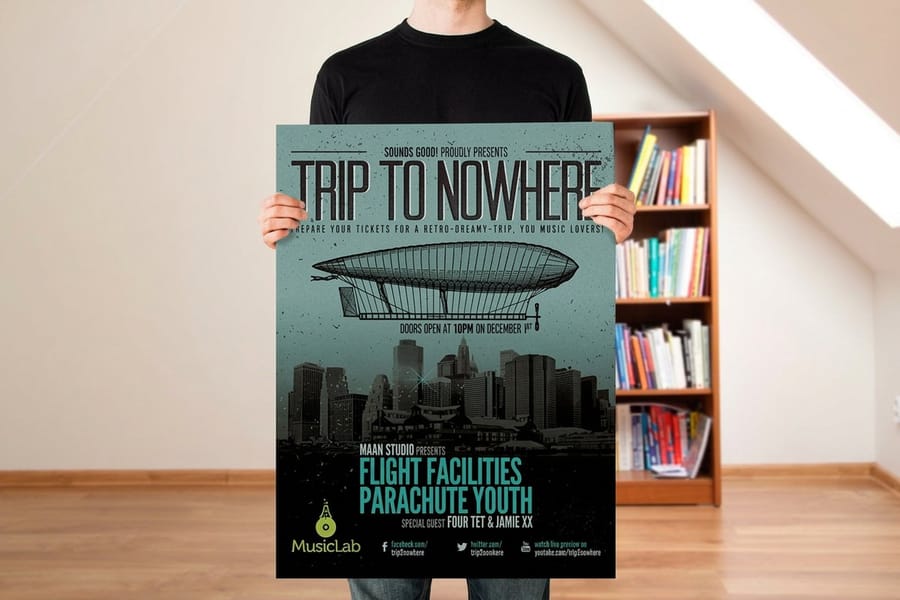
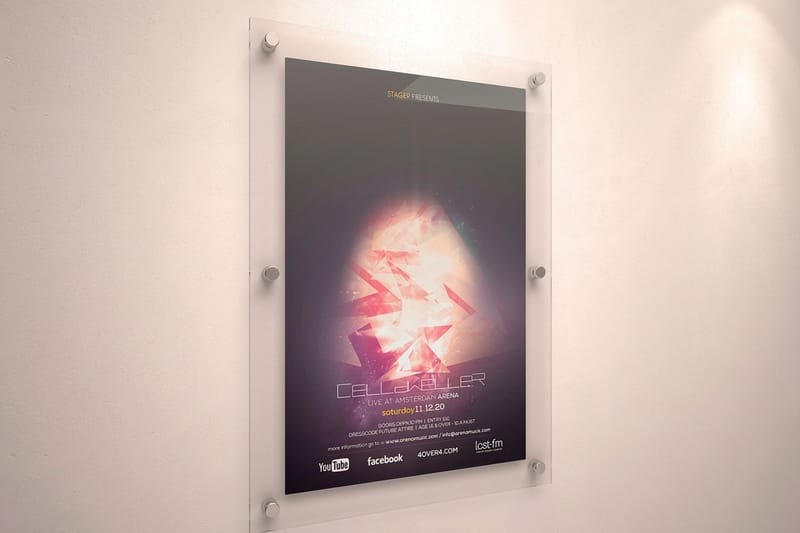
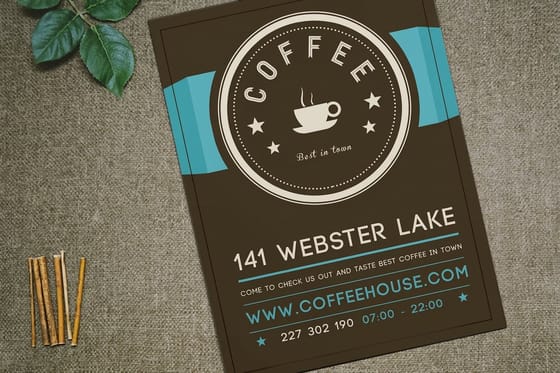
Print a concert poster to sell the date to people walking past, a DJ flyer to put the full lineup and door price in someone's hand, and an event ticket only when you are taking money or counting heads at the door. They are not interchangeable: the poster is read from 10 to 20 feet, the flyer from about 18 inches, the ticket from a foot away by a door person in one second. That distance sets the type size, the size sets the stock, and the stock decides whether the piece survives the night.
Quick answer
Distance decides which piece you are printing
A poster works at 10 to 20 feet, a flyer at arm length, a ticket at a foot. That single difference drives everything else. Posters need headline capitals near an inch and a half and run on 100 lb gloss text at 18 by 24 inches. DJ flyers run 4 by 6 on 16pt card so they survive a pocket, with the lineup and door price legible in the hand. Tickets run about 2 by 5.5 inches with a perforated stub and sequential numbering, and they exist to control the door rather than to promote anything.
What Each Format Is Actually For

The three pieces sit at three different points in the run up to a show, and they are not substitutes for one another. Put them on a timeline and the choice stops being a debate.
| Piece | Job it does | Where it lives | Read from | Starts at |
|---|---|---|---|---|
| Concert poster | Announces the date to people passing by, weeks out. | Window, pole, venue wall, record shop. | 10 to 20 feet | $108.75 |
| DJ flyer | Puts the full lineup, door time and price in a hand. | Pocket, flyer rack, bar top, other nights. | About 18 inches | $16.48 |
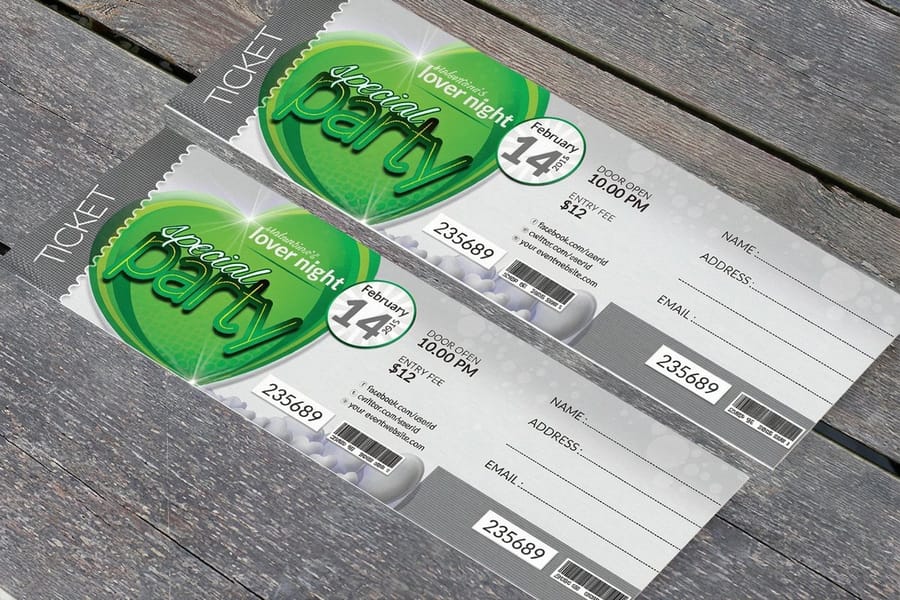
| Event ticket | Proves entry, counts the door, leaves a stub. | Wallet, then the box at the door. | About 12 inches | $25.27 |
Notice that the poster is the most expensive per piece and the least numerous. That is correct. Each poster occupies a physical spot somebody had to agree to give you, so forty good placements beat four hundred sheets in a box. The flyer is the opposite: it is meant to be given away and mostly discarded, which is why club flyers are priced to run in the thousands.
The ticket is the odd one out, because it is not promotion at all. It is operations. If nobody buys at the door and you scan phones instead, you can skip it. The moment cash changes hands at the entrance, a numbered event ticket is the only thing standing between you and an argument about the count.
Sizes and Stocks That Survive the Night
Format failures show up on the night, not in the proof. A flyer that goes limp in a pocket, a poster that curls off a wall, a ticket that shreds instead of tearing: all three are stock decisions made too fast.
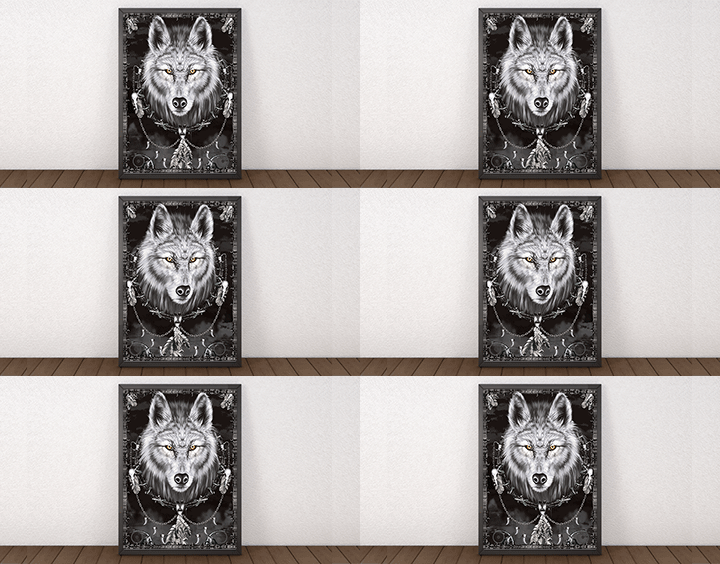
Posters. Eighteen by twenty four inches is the club and theatre standard, with eleven by seventeen for windows and tight spots. Run them on 100 lb gloss text if they go indoors and you want the artwork to pop, or matte if the poster sits under direct light and glare would kill it. Our gloss versus matte poster paper guide covers the difference in daylight. Anything going outdoors on a pole needs to be treated as disposable, because rain will take it inside a week.
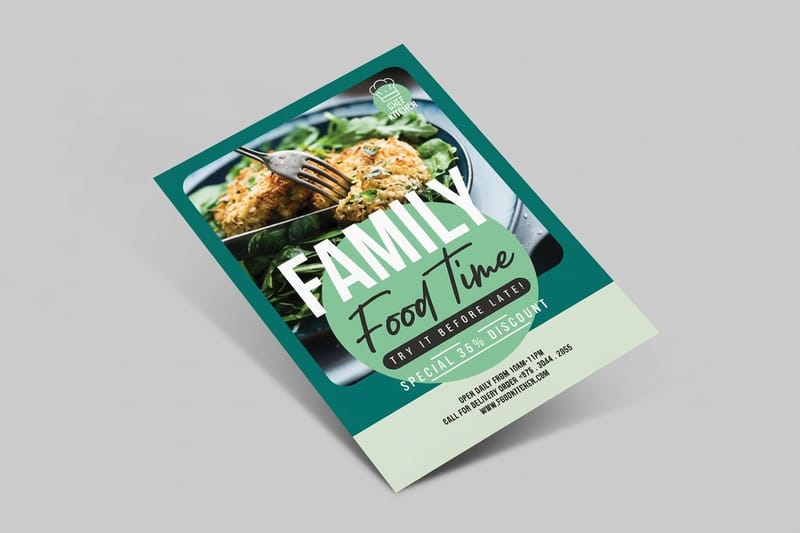
DJ flyers. Four by six on 16pt card is the format that works. Text weight flyers feel cheap the instant somebody takes one, and they curl in a jacket. A gloss or UV coating on 16pt keeps the black rich, which matters because most club artwork is dark. If you want the flyer to survive being carried around all night, that coating is the whole difference. The flyer paper stocks guide lays out the weights side by side.
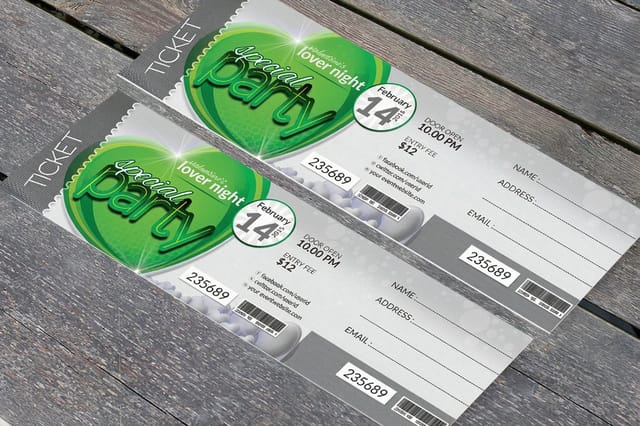
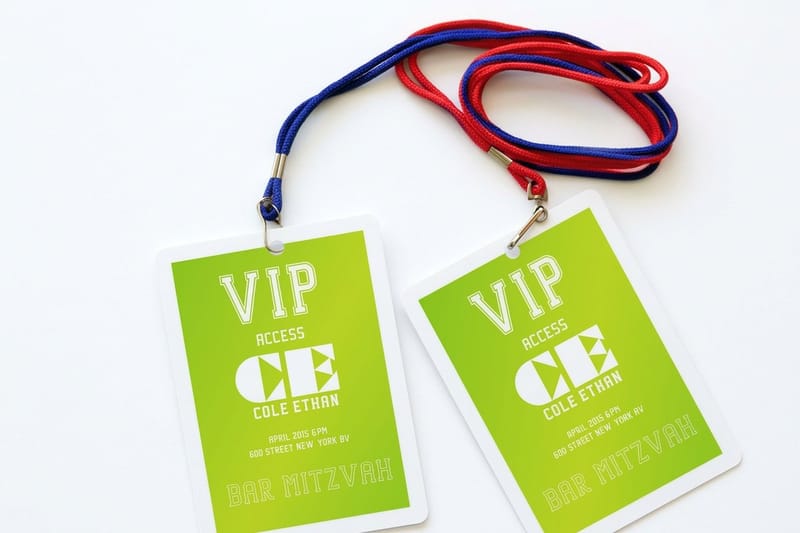
Tickets. Two by five and a half inches is the common size, with the perforation placed so the stub keeps the event name and the number while the patron keeps the rest. The stock has to be stiff enough to tear on the line rather than tearing across it. Sequential numbering is set at print time as variable data, so it has to be specified with the order, not added later.
Design Changes With Reading Distance
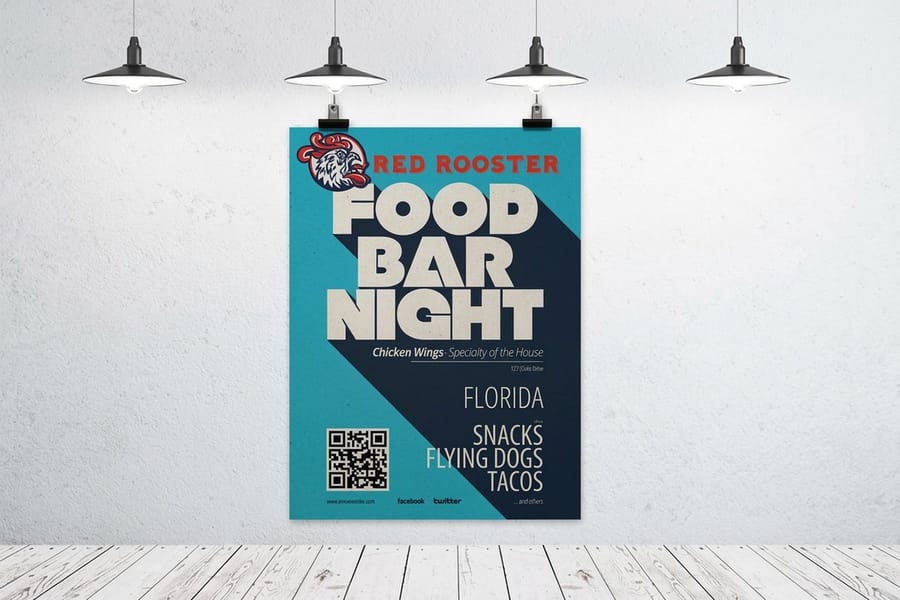
The single most useful number in event print is the cap height rule: allow roughly one inch of capital letter height for every ten feet of viewing distance. A poster meant to be read from fifteen feet across a sidewalk needs headline capitals around an inch and a half, which is about 108 point. That is far bigger than most designers instinctively set, and it is why so many posters read as a blur of texture from the far side of a street.
Work down from there. A DJ flyer is read at arm length, roughly eighteen inches, so a 24 to 36 point headline is plenty and the body can sit at 9 or 10 point. A ticket is read at about a foot, held still, so 9 to 12 point body copy is fine, but the number and the date have to be the two things the eye finds first because a door person checks them in about a second.
This is where the shared artwork idea breaks. Scale a poster down to flyer size and the act name still fills the sheet while the door time disappears. Scale a flyer up to poster size and the layout looks empty and the type looks timid. Keep the photograph, the palette and the typeface. Rebuild the hierarchy three times. Start from correctly sized artboards in the blank template library so the bleed and safe margins are right before you place a single element.
One more practical point: put the QR code on the flyer, not the poster. A QR on a poster is scanned from too far away to focus reliably, and it competes with the type you actually need people to read. Our QR code guide covers the minimum size and quiet zone that make a scan work first time.
The Verdict, and How to Split the Budget
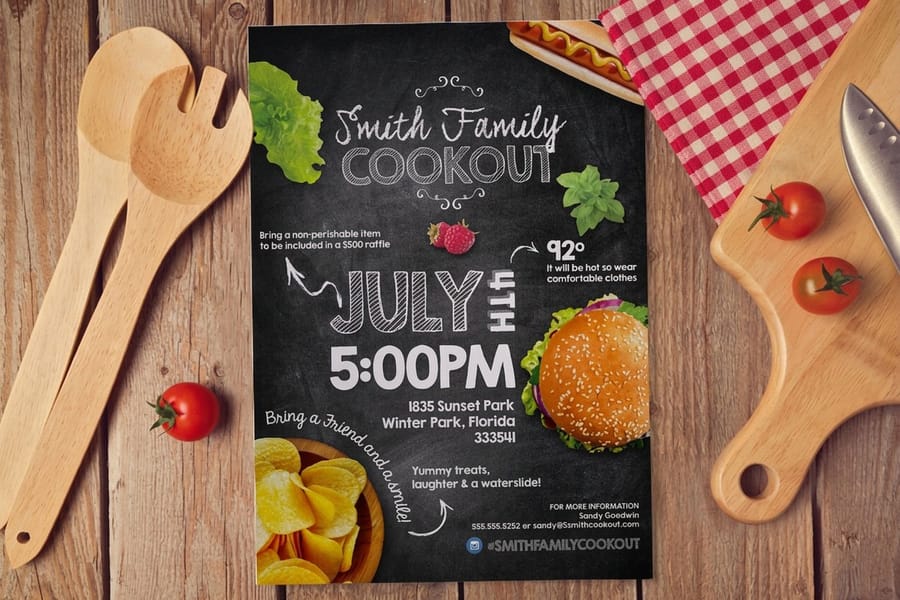
Print flyers first, posters second, tickets only if cash crosses the door. For a club night or a DJ show, flyers do the heaviest lifting per dollar and the acts themselves will distribute them. For a seated concert, a listening room or a theater show, reverse it: posters carry more weight because that audience reads walls and windows, and the piece needs to look like an event rather than a party.
A working split for a 300 capacity room is around 40 posters, 1,000 to 1,500 flyers and 350 tickets. Tickets exceed capacity on purpose because a handful get damaged, comped or voided. Posters stay small because each one needs a negotiated spot. If the budget only stretches to one piece, print flyers and hand them to every act on the bill.
Where each format wastes money is worth naming. Posters waste money when you print two hundred and place forty. Flyers waste money when they are printed on text weight stock that goes soft and gets binned before anyone reads the lineup. Tickets waste money when the show is scanned at the door and the printed stub is decoration. Compare the live configurations and quantity breaks on poster printing, flyer printing and event ticket printing before you commit to any of the three, and read our event printing checklist so nothing gets ordered the week of the show.
Wally works the whole show
One night, three pieces, three distances
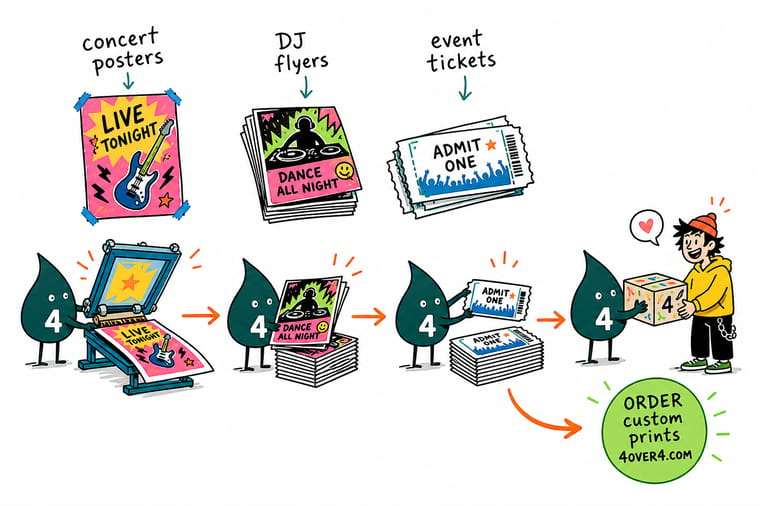
Wally tapes the poster up three weeks out so people walking past learn the date. He hands flyers to the acts the week of the show, because a DJ giving you a flyer for their own night beats a stack on a bar. On the night he stands at the door and tears numbered stubs, which is how he knows what actually sold. Same artwork across all three, rebuilt hierarchy on each one, because the poster is read from across the street and the ticket is read from a foot away.
Print your show flyers →Specs and pricing
Sizes, options and starting prices for all three
Compare the three formats side by side with live configuration choices and starting prices straight from the 4OVER4.COM configurator.


Print it
Order the pieces your show actually needs

Explore more
Where to go next
By the numbers
Posters, flyers and tickets from a single 4OVER4 order
Common Questions
Your event print questions, answered
Do I still need posters if the show is promoted online?
A poster reaches people who are already near the venue and are not following the account. That is the one audience paid social does not sell you cheaply. Posters also work as proof to the venue and to the acts that the night is being pushed. The practical answer for a club night is a small poster run, maybe 25 to 50 sheets for windows, poles and the venue itself, plus a much larger flyer run. If the show is a listening room or a seated theater, flip the ratio and print more posters, because that audience walks past the venue and reads the wall.
What size should a DJ flyer be?
Four by six inches is the working standard for club flyers, and it exists because that size fits a jacket pocket, a stack in a hand, and the flyer racks at record shops and bars. Five by seven gives you more room for a long lineup and still fits a pocket folded once. Eight and a half by eleven is a handbill, not a club flyer, and it gets folded or dropped within a block. Print the small size on 16pt card so it does not go soft, and check our flyer size guide before you build the file.
Do printed tickets have to be numbered?
They do if you are selling entry at the door or reconciling cash afterward. Sequential numbering is how you count what sold, spot duplicates, and settle with the promoter without arguing. If tickets are free RSVP passes or artist guest list, numbering is optional and a plain stub is enough. Numbering is set up as variable data at print time, so decide before you send the file rather than trying to write numbers on 500 tickets by hand the afternoon of the show.
Can I use the same artwork for the poster, the flyer and the ticket?
Share the artwork, not the layout. The image, the type family and the color should carry across so the three pieces read as one campaign. The hierarchy has to change. On the poster the act name and the date dominate and nothing else matters. On the flyer the full lineup, the door time and the price all have to be legible in the hand. On the ticket the act name shrinks and the number, the section and the date take priority, because that is what gets checked at the door.
How many of each should I order for a 300 capacity room?
A workable split for a 300 cap club night is around 40 posters, 1,000 to 1,500 flyers and 350 tickets. You print more tickets than capacity because a few get damaged, comped or voided, and running out mid door is worse than a small overrun. Flyers are the highest volume because most of them get handed out and thrown away, and that is fine. Posters are the smallest run because each one occupies a spot you had to negotiate.
What is the cheapest way to promote a small show on print?
Print club flyers, which start at $16.48, and keep the poster run tiny. Give the flyers to the acts themselves, because a DJ handing you a flyer for their own night converts far better than a stack left on a bar. Skip printed tickets entirely if you are selling online and scanning at the door, and put that money into flyer quantity. Print tickets only when you are selling cash at the door or you want a keepsake stub for the release show.
Get Started
50 club flyers cost $16.48, 50 event tickets $25.27
Posters for the walls, 16pt club flyers for the hands, numbered tickets for the door. Pick your sizes, upload the artwork, and we print all three on the same schedule.
Legal Disclaimer
Gold Standard guarantees apply to all standard orders placed through 4over4.com. Price match requires verifiable proof of a competitor's published price for an equivalent product with matching specifications and turnaround time. Satisfaction guarantee covers manufacturing defects and print quality issues. Contact support with order number and documentation. On-time delivery rate based on tracked orders 1999 to 2026. Individual results may vary based on shipping carrier performance.
