
Ticket Paper and Stock Options, 15 Materials Compared for Events and Raffles


What each ticket stock does at a door, how perforation and sequential numbering change your setup, and the weight where a clean tear starts to fight you.
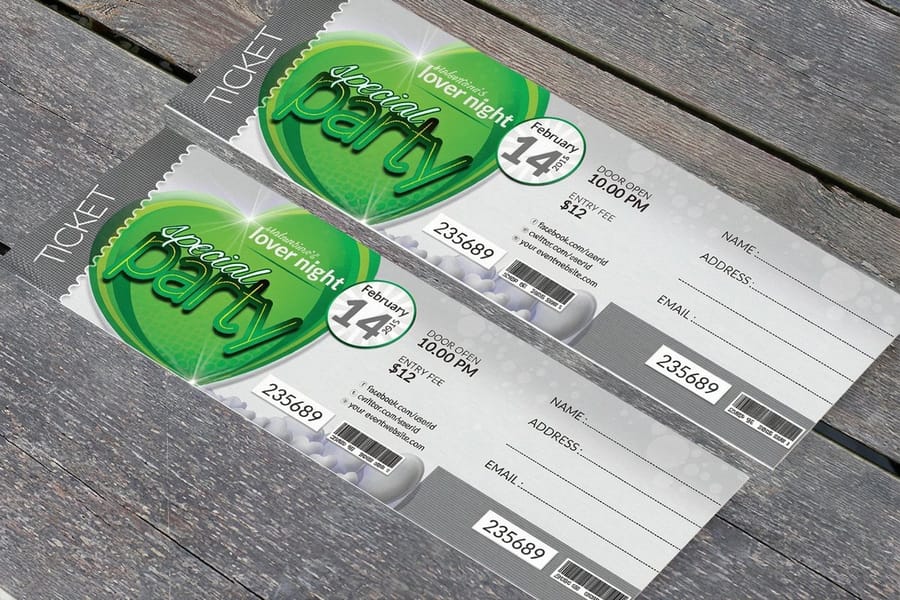
Event tickets print on cover stock between 13pt and 18pt, and 14pt gloss cover is the default because it holds full color, tears cleanly at a perforation and keeps 50 tickets at $25.27. Go heavier for a gala, uncoated when staff need to write on the ticket, 15pt synthetic when it will get rained on. Above 16pt the perforation stops tearing one-handed, which slows a busy gate more than the extra thickness helps.
Quick answer
Cover stock, 13pt to 18pt, and the tear decides the top end
Ticket paper is cover stock measured in points, where one point is a thousandth of an inch of thickness. 4OVER4.COM prints event tickets on 15 of them: gloss cover in 14pt and 16pt, uncoated cover from 13pt to 18pt including cream and recycled PCW, 14pt and 18pt white linen, four metallic pearl finishes, and a 15pt synthetic plastic. The trim is fixed at 2 by 5.5 inches. Pick by handling, not by looks: coated for photos, uncoated when someone writes on it, linen or pearl for a gala, synthetic for rain. Then check the tear, because heavy stock resists a perforation.
Ticket Stock and Weight, From 13pt to 18pt

Ticket stock is cover stock, measured in points. A point is one thousandth of an inch of caliper, so 14pt is 0.014 inches thick. That is the only number worth memorising, because it maps directly to how the ticket behaves in a hand and at a perforation.
The 15 stocks on event tickets group into five families, and each family solves a different problem.
| Stock family | Weights | What it does | Where it falls down |
|---|---|---|---|
| Gloss cover | 14pt, 16pt | Sharpest full color, brightest photo, lowest price. The 14pt default. | Sealed surface refuses pen and stamp ink. |
| Uncoated cover | 13pt to 18pt, plus cream and recycled PCW | Natural, writable face. Takes a hand-stamp, a signature, a table number. | Ink soaks in, so photos read flatter and darker. |
| White linen | 14pt, 18pt | Woven texture you feel before you read anything. Reads formal. | Fine type and small barcodes sit on a textured surface and lose crispness. |
| Metallic pearl | Ice, champagne, silver, gold | Catches light like foil at a fraction of the foil price. Gala and VIP tiers. | The shimmer tints every color printed on it, so proof carefully. |
| Synthetic plastic | 15pt | Waterproof and tear resistant. Multi-day and outdoor events. | Costs the most, and indoors nobody notices what it bought you. |
Between 14pt and 16pt gloss the difference is about 14 percent more caliper. It sounds trivial written down. Hold fifty of each and the 16pt stack is visibly taller and stands up on its own edge, which is why premium events reach for it. Anything above 16pt starts trading tear quality for heft, which we come back to below. The pt paper guide walks the whole caliper range if you want the comparison outside a ticket context, and the paper weight guide covers how pt and lb relate.
Perforation and Sequential Numbering, the Two Things That Make It a Ticket
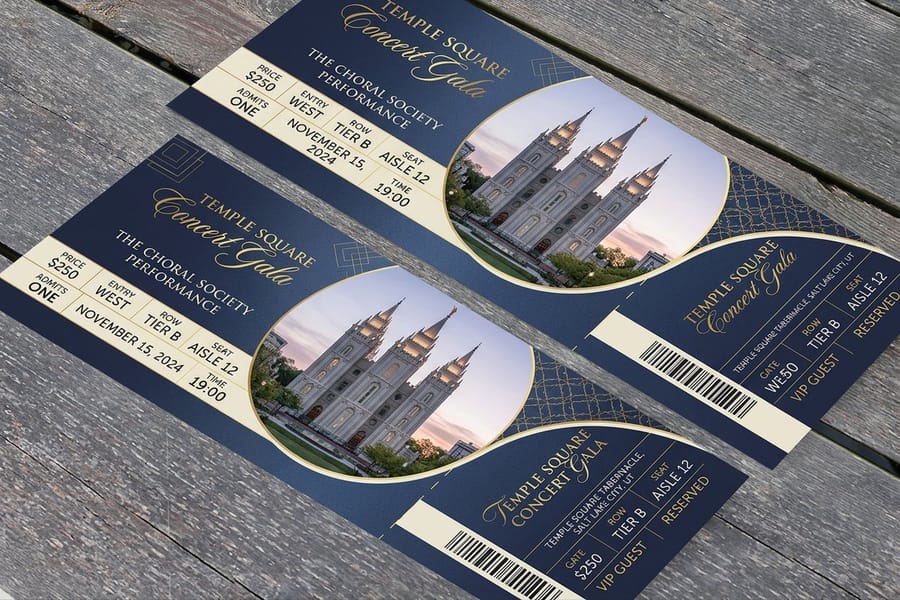
Strip the perforation and the number off an event ticket and you have an expensive small postcard. Those two options are the whole reason the product exists, and both interact with the stock you picked.
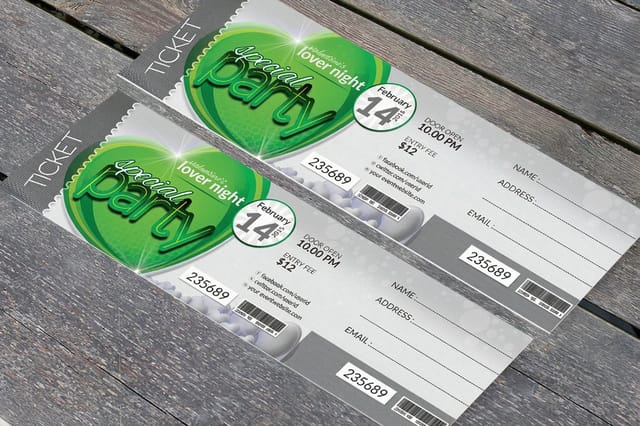
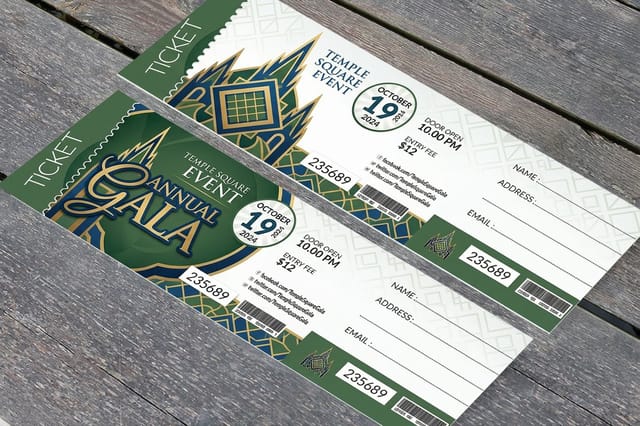
Perforation is a line of small cuts with paper left between them. It splits the 5.5 inch ticket into a stub the gate keeps and a keeper the guest walks away with. The tear quality depends almost entirely on caliper and coating. Coated 14pt and 15pt tear one-handed and leave a straight edge, which is what a volunteer working a queue needs. Uncoated 18pt and 18pt linen need a two-hand pull, and the tear can wander along the fibers and fluff. Grain direction matters too: a perforation running across the grain tears more raggedly than one running with it. If your event moves hundreds of people through a single door, stay at or below 16pt and pick a coated stock.
Sequential numbering is a separate black-ink pass that counts forward across the run. You choose the starting number and where it sits on the ticket. Two setup rules save most of the reprints we see. First, leave a clear light area for the number, because black on a dark headliner photo is invisible in a dim venue. Second, put the number on both halves of the perforation. A stub with no number tells you a body walked in but not which sale it belonged to, which defeats the point of numbering at all.
Numbering is a straight counter, not a variable-data upload, so it gives you a running sequence rather than named tickets. Plan your blocks around that: order in one run if you want an unbroken sequence, and note the last number if you reorder later. The diagram above shows the standard split, the safety margin and where the number sits on each half.
Size, Ink Coverage, and Setting the File Up Right
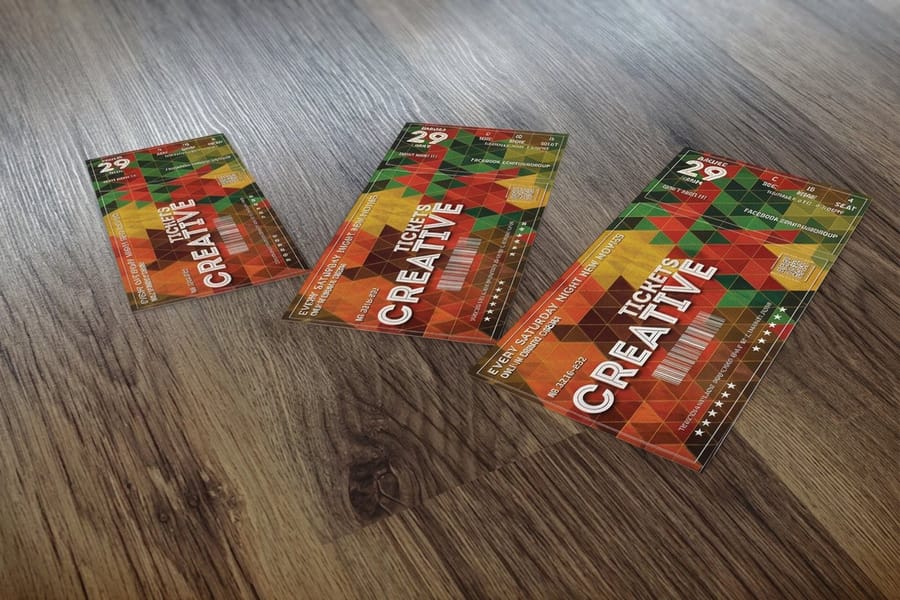
Event tickets trim at a fixed 2 by 5.5 inches. That is not a suggestion or a default in a size dropdown, it is the press layout, so build the artboard at exactly that size with 0.125 inches of bleed on every edge and keep type 0.125 inches inside the trim. Square event tickets run the same 2 by 5.5 inch trim with square corners rather than the rounded ticket profile, on the same 15 stocks.
Ink coverage comes in three layouts and the choice is a budget decision more than a design one. Print 4/0 for full color on the front and a blank back, which is the cheapest and works when the front carries everything. Print 4/1 for full color front and black on the back, which is where terms, a map, a sponsor line and a barcode belong. Print 4/4 when the back needs a photo or a colored panel of its own.
A barcode wants a 4/1 back on an uncoated or matte face. Scanners struggle with gloss under venue lighting because the coating throws a highlight straight back at the reader, and a linen texture breaks the bar edges. If tickets are being scanned rather than torn, that single decision matters more than the stock weight.
Start from a correctly sized layout in the blank template library rather than building the artboard from scratch. Our bleed and trim guide explains the 0.125 inch margin, and how online printing works covers the file handoff from upload to shipped box.
Matching the Stock to the Event, and Knowing When to Skip Tickets
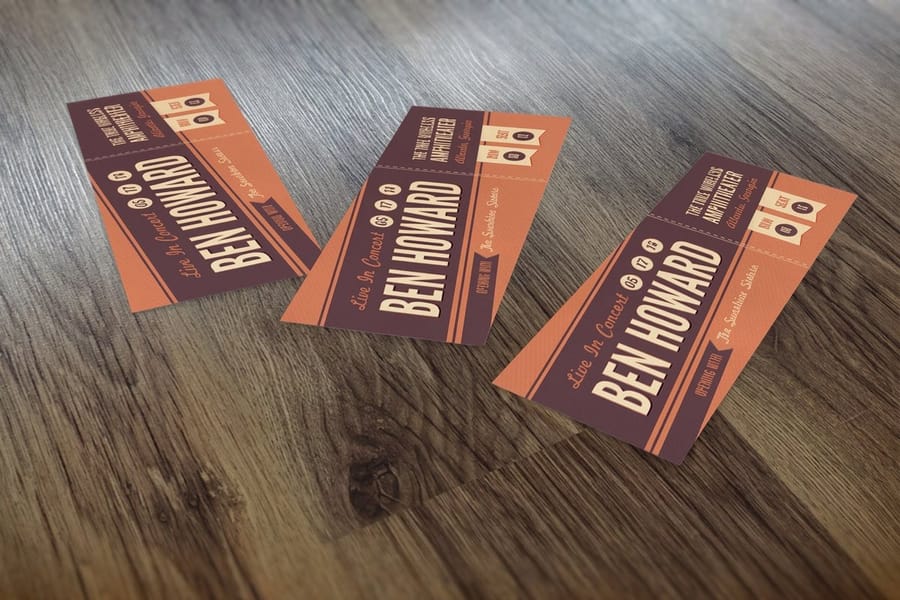
Pick the stock from how the ticket gets handled, not from how the artwork looks on screen. Four common cases cover most events.
- School fundraiser, raffle, church supper. 14pt gloss cover, numbering on, perforation on. Fifty tickets start at $25.27 and the numbers do the reconciliation for you at the end of the night.
- Club night or concert with a scanned entry. 14pt or 15pt, 4/1 ink, barcode on an uncoated or matte back. Coated fronts scan badly under stage lighting.
- Gala, awards dinner, VIP tier. 16pt gloss, 18pt linen or a metallic pearl. These get kept, photographed and pinned to a board, and the extra caliper reads as care. Accept the slower tear and staff the door with two people.
- Outdoor festival, multi-day pass. 15pt synthetic plastic. It is the most expensive option and the only one that survives a rainstorm, a back pocket and three days of a wristband-free crowd.
There is a fourth answer worth saying out loud: sometimes the honest choice is not a ticket. If nobody tears it and nobody counts it, you are buying finishing you will never use. Standard postcards start at $16.48 and give you far more surface for a handout, and standard flyers at $39.54 cover a much wider drop for the same budget. Reach for a ticket when the perforation or the number is doing real work.
Whichever way you go, order a slightly larger run than your headcount. Tickets get torn wrong, handed to the wrong person and lost between the print shop and the door, and the price per piece falls as the quantity climbs. Browse the full range at event ticket printing, and if you are still weighing coatings, the UV coating guide explains what a heavier gloss does to a surface that has to be written on.
Wally picks the ticket stock
Thick enough to hold, thin enough to tear
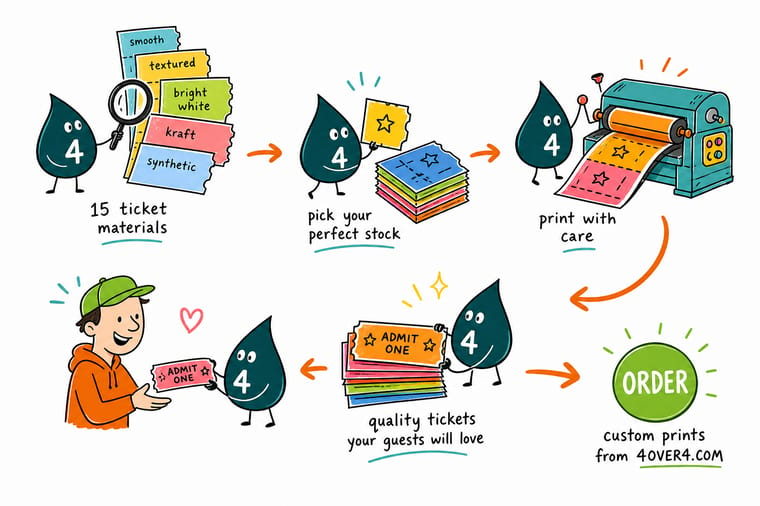
Wally starts at 14pt gloss cover, because it prints bright, tears one-handed at the perforation and keeps fifty tickets at $25.27. He goes uncoated when the door staff write on the ticket, linen or metallic pearl when the event is a gala worth keeping, and 15pt synthetic when the weather has a vote. What he will not do is order 18pt for a queue of four hundred people, because a stub that needs two hands to tear turns a fast door into a slow one.
Configure event tickets →Specs and pricing
Ticket options, sizes, and starting prices
Every configurable group side by side, with live options and starting prices straight from the 4OVER4.COM configurator.


Print it
Order tickets your gate can actually tear
Explore more
Where to go next



By the numbers
Ticket printing you can plan around at 4OVER4
Common Questions
Your ticket paper questions, answered
What paper are event tickets usually printed on?
Cover stock in the 13pt to 18pt range, and the working default is 14pt gloss cover. Cover stock is stiff enough to hold its shape in a pocket and thin enough to tear cleanly at a perforation. Text-weight paper, the kind used for flyers, is too floppy to survive being handed over, torn and carried. 4OVER4.COM prints event tickets on 15 stocks: 14pt and 16pt gloss cover, uncoated cover from 13pt to 18pt including cream and recycled PCW, 14pt and 18pt white linen, four metallic pearl finishes in ice, champagne, silver and gold, and a 15pt synthetic plastic.
What does pt mean on ticket stock, and how does it relate to lb?
Points measure caliper, the physical thickness of the sheet. One point is one thousandth of an inch, so 14pt stock is 0.014 inches thick. Pounds measure the weight of a fixed number of parent sheets, which is why a 100lb text and a 100lb cover feel nothing alike. For tickets, points is the useful number because what matters at the door is stiffness, not mass. If you want the full conversion picture, the pt paper guide and the paper weight chart both cover it in detail.
Does perforation work on every ticket stock?
It works on all of them, but not equally well. Thin and mid-weight coated stocks around 14pt and 15pt tear with one hand and leave a straight edge. Heavy uncoated and linen at 18pt fight back, and the tear can wander or fluff along the fibers, particularly across the grain. Synthetic plastic perforates but stretches slightly before it gives, so the edge looks softer than on paper. If the tickets get torn by volunteers at a busy gate, stay at or below 16pt.
How does sequential numbering actually get printed?
It is a separate pass of black ink applied after the color work, and it runs a counter forward across the whole job. You set the starting number and the position on the ticket in the configurator. Two practical rules: leave a clear area for it, because numbering printed over a dark photo becomes unreadable, and put the same number on the stub and the keeper so a torn half still ties back to a sale. Numbering is an on or off option, not a per-ticket data upload.
Can I write on a ticket after it is printed?
Only on the uncoated stocks. A gloss or matte coating seals the surface, so ballpoint skips and marker beads up and smears. Uncoated cover, the recycled options and the linen stocks all take pen and a rubber stamp. If your door staff hand-write a table number or initial each entry, order uncoated even though the color will look slightly softer than it does on gloss.
When is a ticket the wrong product?
When nobody has to tear it or count it. If you are handing out something at a table for people to read and keep, a postcard at $16.48 gives you far more space for the same money, and a flyer at $39.54 covers a wider drop. Tickets earn their price through the perforation and the number. If you are not using either, you are paying for finishing you will never touch.
Get Started
Ready to print tickets that count themselves?
Pick one of 15 stocks, switch on sequential numbering and a tear-off perforation, and we print a run your door staff can move through fast.
Legal Disclaimer
Gold Standard guarantees apply to all standard orders placed through 4over4.com. Price match requires verifiable proof of a competitor's published price for an equivalent product with matching specifications and turnaround time. Satisfaction guarantee covers manufacturing defects and print quality issues. Contact support with order number and documentation. On-time delivery rate based on tracked orders 1999 to 2026. Individual results may vary based on shipping carrier performance.
