
Print Flyers That Boost Event Exposure and Fill Seats


Flyers fill seats when they land inside the distance people already travel, in two waves, and answer four things in a glance: what it is, the date, the venue, and the price. Everything else on the sheet is decoration, and the placement you negotiate matters more than the design you agonise over.
Event flyer formats at a glance
| Placement | Size that fits | What the sheet carries | Where it works | Product at 4OVER4 |
|---|---|---|---|---|
| Hand to hand on the street | 4 x 6 in | Headline, date, venue, QR to tickets | Queues, campuses, market days | Club flyers |
| Counter stack in a shop | 5.5 x 8.5 in | Full lineup, times, price tiers | Cafes, record shops, gyms | Event flyers |
| Community board or window | 8.5 x 11 in | Big headline readable at 10 feet | Libraries, campuses, laundromats | Event flyers |
| Handout that has to be kept | Cut to shape | One image, one line, one code | Festivals, launches, tastings | Die-cut flyers |
| The thing they bring to the door | 2 x 5.5 in | Seat, tier, serial, tear-off stub | Ticketed shows, fundraisers | Event tickets |
Check the counter holder before you commit to a size, because an 8.5 by 11 inch sheet folded to fit a small acrylic stand looks like an afterthought. You can order event flyers in any of these sizes straight from the configurator.
What a flyer actually does for an event turnout
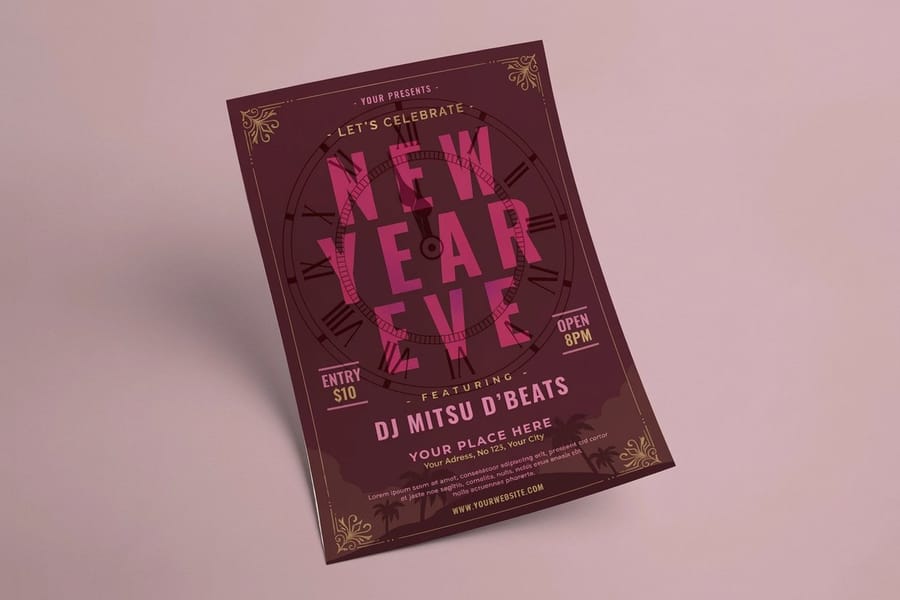
A flyer does one job well: it puts your event in front of people who are already close enough to come. It is a geography tool. Hand a flyer to someone eight blocks from the venue and you have a plausible attendee; mail the same sheet forty miles out and you have paid postage to be ignored.
That is also the honest limit. Flyers do not build reach, they build density. If your problem is that nobody in the county knows your name, print is the wrong first spend. If your problem is that four hundred people within walking distance have never heard of Thursday night, a run of event flyers at $57.11 will do more than the same money spread across a boosted post.
The second thing a flyer does, which digital does badly, is sit still. A sheet on a coffee shop counter is seen by the same regulars four days running. A story disappears in a day. Physical placement buys repetition without buying more impressions, and repetition is what turns a vague interest into a date in someone’s calendar.
The radius that matters
Draw the area people already travel for a coffee or a haircut and treat that as your flyer zone. In a dense city that is a mile. In a suburb it is the three or four commercial strips people actually drive to. Outside it, hand delivery costs more per attendee than any other channel you have.
Within the zone, rank the drop points by dwell time rather than footfall. A busy sidewalk has high footfall and zero dwell. A laundromat has low footfall and twenty minutes of a bored person looking for something to read. The laundromat wins, and the list of places worth leaving flyers is longer than most promoters use.
Two drops beat one big one
Split the run. The first drop goes out two to three weeks ahead and does the awareness work, so the name has time to become familiar. The second drop goes out three to five days before the doors, when people are actually deciding what to do with their weekend, and it can be a smaller, cheaper piece because it only has to remind.
Print both at once. The unit price falls as the quantity climbs, so ordering one run and holding half of it back costs less than two separate orders, and it means the reminder is already printed when the week gets busy.
Pair the flyer with a real ticket
A flyer creates the intention and then leaves. A printed ticket is the object that survives the week on a fridge door, and it is much harder to forget an event you are physically holding. Event tickets from $25.27 with sequential numbering also give you door control, comp tracking and a stub that tells you which promoter moved which block.
For advance sales at the counter of a partner business, tickets do something a flyer cannot: they take the money before the night. If your venue sells across a table, square event tickets read as a keepsake rather than a receipt, and the whole event ticket printing range covers numbering, perforation and tear-off stubs.
Where to leave flyers so they get seen

Placement decides more of your turnout than the design does. A beautiful flyer in a stack by the door of a shop nobody browses is worth less than an ugly one taped inside a gym where members stand still for ten minutes.
Ask before you place. Independent shops, gyms, salons, campus departments and libraries mostly say yes when you ask the person behind the counter and offer to bring more when the stack runs low. Poles, bus shelters, private windows and construction hoarding mostly get you a fine or a removal within the day, and in several cities the fine lands on the event name printed on the sheet.
Reciprocity works better than volume. Offer the shop a pair of comps, or put their logo on the flyer as a stockist, and the stack gets refilled and moved to the till instead of ending up in a drawer. Our guide to where to print flyers covers the ordering side, and promotional handouts covers the versions built to be given rather than left.
Counters, boards and windows need different sheets
A counter stack is read at arm’s length by someone waiting to pay, so a 5.5 by 8.5 inch half sheet with the full lineup works. A community board is read at ten feet by someone scanning twenty other notices, so the headline has to be enormous and the detail can be small. A window is read from outside through glare, which rules out dark backgrounds and thin type.
Printing one size for all three surfaces is the most common mistake. It is cheaper to print two sizes in one order than to watch the 8.5 by 11 inch sheets get folded and shoved into a counter holder they do not fit.
Handing them out without being ignored
Hand to hand only works where people are already stationary or queuing, and it works far better when the person handing has an obvious reason to be there. Outside a venue after a similar show, at a market stall, at the end of a class: the flyer arrives as information rather than as an interruption.
Club flyers at $16.48 exist for exactly this. Heavy gloss stock, 4 by 6 inches, cheap enough to give away by the hundred and stiff enough that it survives a pocket instead of turning to pulp. For a hybrid event where the print piece has to work alongside a stream link, hybrid event ideas using print is worth a read before you set the layout.
Size, stock and how many to order
Three decisions set the cost: the size, the stock and finish, and the quantity. Artwork is free to change; these are not, once the run is on the press.
On stock, the split is simple. Gloss text weight is the standard for a flyer that has to look bright under club lighting or shop lighting and gets thrown away the same week. A heavier cover weight feels like something worth keeping, which is what you want for a ticketed show, a gala or anything with a price above a casual night out. Uncoated stays writable, which matters if door staff will scribble a name or a guest list note on it.
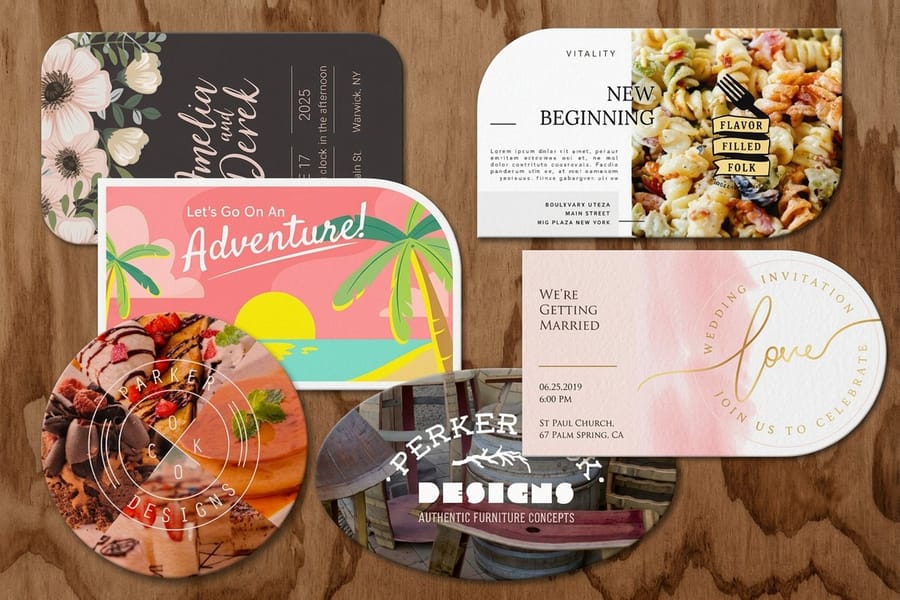
Shape is the one upgrade that reliably changes pickup rate from a shared counter. Die-cut flyers at $34.05 cost more per piece than a rectangle and they are the only thing in a stack of twenty rectangles that is not a rectangle. Use them where flyers compete with each other, and use the plain sheet where yours is the only one on the board.
How many to actually print
Plan the quantity from drop points, not from your attendance target. Count the venues that agreed to hold a stack, multiply by the stack size they will accept, multiply by the number of times you will refill during the campaign, then add whatever the hand to hand nights will consume. That number is usually higher than promoters expect and much cheaper per piece than they expect too.
Never order the exact number you need. Flyers get rained on, folded, taken by the handful by one person, and left behind in a car. A ten percent overrun costs very little at print quantities and saves a second order at short notice, which is where the real money goes. If budget is the binding constraint, how to print flyers cheap covers the levers that reduce cost without wrecking the piece.
Setting the file up so it prints as designed
Build at 300 DPI in CMYK, add 0.125 inch bleed on every side, and keep the date and the venue at least 0.125 inch inside the trim line so a normal cutting tolerance never clips them. Convert type to outlines or embed the fonts before you export the PDF.
The color that looks electric on your screen will not always survive the conversion to ink, and dates set in a thin light weight are the first thing to fill in on a coated stock. Creating commercial print-ready files walks through the export, and color combinations that work in print covers the pairings that hold contrast on paper.
Flyer pricing and specs at 4OVER4.COM
Flyer pricing moves with size, stock, finish and quantity, and the per piece cost drops steeply as the run grows. The numbers below come straight from the live configurator, so you can size the campaign budget before you commit a drop plan.
Quantity and price
Event flyer pricing and specs
Real configurator numbers, where ordering the reminder run in the same order as the awareness run is what keeps the unit price down.
| Quantity | Price Per Unit | Total |
|---|---|---|
| 50 | $1.14 | $57.11 |
| 100 | 82.4¢ | $82.38 |
| 200 | 53.3¢ | $106.55 |
| 300 | 41.0¢ | $123.02 |
| 400 | 34.9¢ | $139.49 |
| 500 | 31.2¢ | $155.97 |
You can also earn coins on every order and redeem them against the next print run, which matters when you are printing for a season of events rather than a single night.
Paper stock and finish for flyers that get handled
Stock is a durability decision disguised as a look. A light text weight is right for a sheet that gets read once and recycled, and it feels flimsy the moment somebody has to carry it home in a pocket. A heavier cover weight with a gloss finish survives a jacket, a bag and a damp night outside a venue, which is why club flyers are printed on it and why a ticketed show should not economise here.
Print it
Event flyers, ready to drop
Preset sizes on gloss and matte stock, the fastest route from artwork to a counter stack.
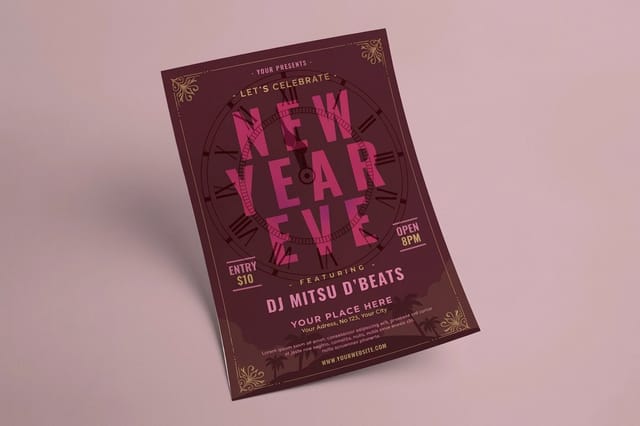
Finish changes how the sheet reads in the room it sits in. Gloss lifts photography and color and shrugs off a spilled drink, which suits nightlife and anything shot on a dark background. Matte cuts glare, which is what you want on a window that faces the street or a board under fluorescent light. Uncoated stays writable, so door staff can add a name or a comp note without the ink beading. If your event also needs a banner behind the stage or a printed backdrop, banner sizes and templates explained covers the setup.
Choosing the right flyer for your kind of event
The right size and stock changes with the kind of night you are selling, so here is the quick version by event type.
- Music venues and clubs. Club flyers by the hundred for hand to hand outside comparable shows, plus a counter stack at record shops and bars within walking distance. Reprint the reminder run three days before the door.
- Theaters and arts organizations. A heavier cover-weight flyer for the season lineup on counters and library boards, backed with numbered event tickets so subscribers hold something physical.
- Conferences and trade events. Half sheets on partner counters, a die-cut piece for the badge lanyard drop, and printed badges so the day itself is not run off a spreadsheet at the door.
- Festivals and street markets. Large format for boards, die-cut handouts at the gate, and a tented stand where the flyer becomes the schedule people carry around all day.
- Fundraisers and community events. One clear 8.5 by 11 inch sheet for community boards and places of worship, with a tear-off ticket price and a phone number that a person actually answers.
Badges, tents and signage all pull from the same artwork once the flyer is settled, which is why it pays to fix the layout early. Browse event badge printing for the day itself and event tent printing when the event spills outdoors.
Flyer blanks at every event size
If you are not starting from a designer’s file, templates remove the setup risk. 4OVER4.COM sizes its blanks to exact product specs, so bleed, trim and safe area are already marked and your date never lands on the cut line. Grab a print-ready blank from the blank template library before you start laying out.
Start fast
Flyer blanks at every event size
Flyer blanks at club, event and die-cut sizes, with the trim already marked.

Wally plans the drop that fills the room
Two waves, the right size for each surface, and a ticket in hand
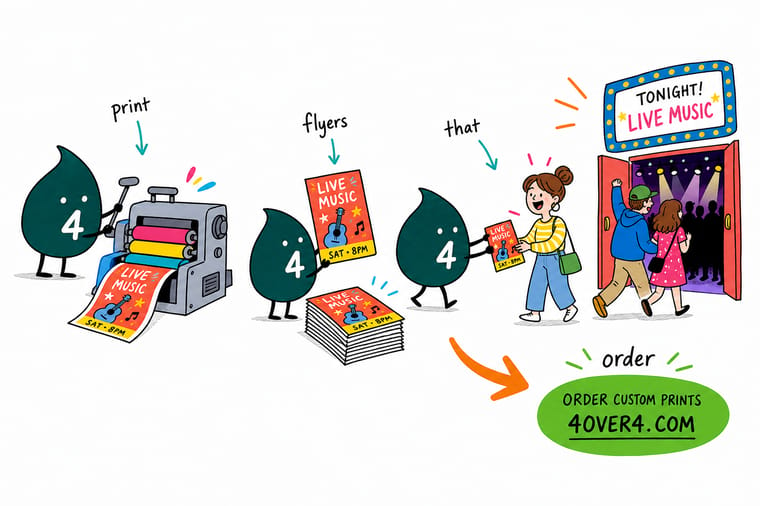
Print 4 by 6 inch club flyers for hand to hand, 5.5 by 8.5 inch half sheets for counters, and 8.5 by 11 inch sheets for community boards. Set the date larger than the logo, add 0.125 inch bleed on every side, and build at 300 DPI in CMYK. Send the first wave two to three weeks out, hold the second for three days before the doors, and back it with numbered tickets so the door runs itself.
Order event flyers →What a flyer has to do before the doors open
Design decisions that hold up on a crowded board
- Four facts, one glance. What it is, when, where, and how much. If a passerby cannot recover all four in about two seconds, the layout is doing something else with the space.
- Date bigger than the logo. Nobody attends because of your logo. They attend because the date is a night they are free, so set the date at a size that reads before anything else.
- Point the QR at the ticket page. Not the homepage. A code that lands somewhere generic teaches people that your codes are not worth scanning, and print the date next to it because most people photograph the flyer rather than scan it.
- One image, not a collage. A single strong image survives being seen at ten feet in bad light. Four small images become gray texture at the same distance.
- Leave a quiet corner. A block of empty space around the headline is what makes it readable on a board covered in other notices. Filling every inch is what makes a flyer invisible.
Print itself keeps shifting under promoters, from shorter runs to faster turnarounds, and print industry trends and their relevance to consumers is a useful check before you plan a full season of events.
Explore more
More ways to print and promote your event
Club flyers run 50 for $16.48 and event tickets 50 for $25.27, a door stack and a hand stack.
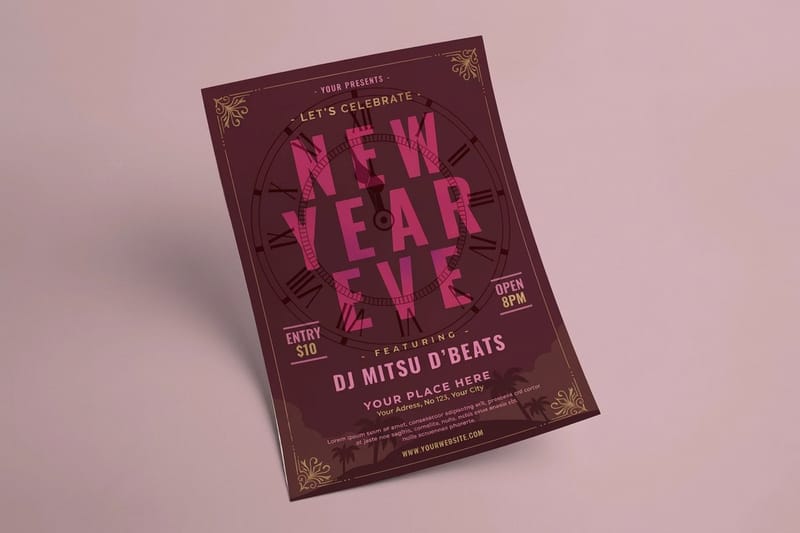 Product Event Flyers Counter stacks and board sheets from $57.11.
  Product Club Flyers Heavy gloss 4 by 6 for hand to hand nights.
 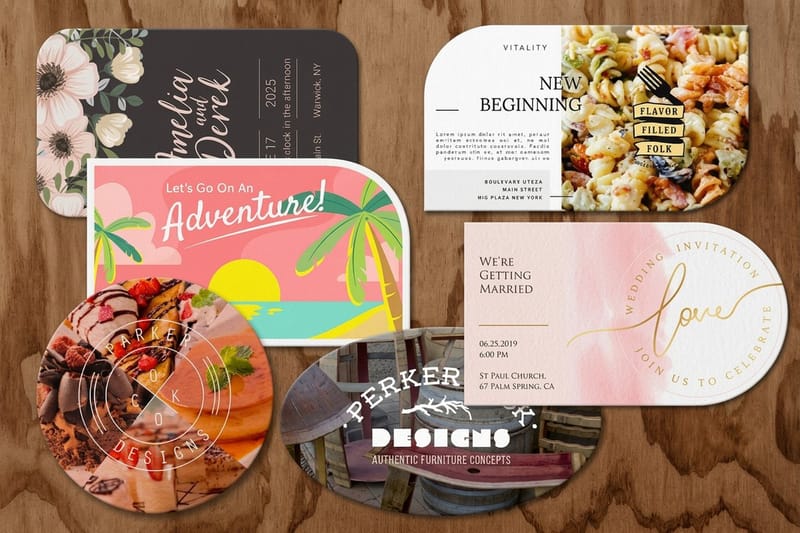 Product Die-Cut Flyers The only shape in a stack of rectangles.
 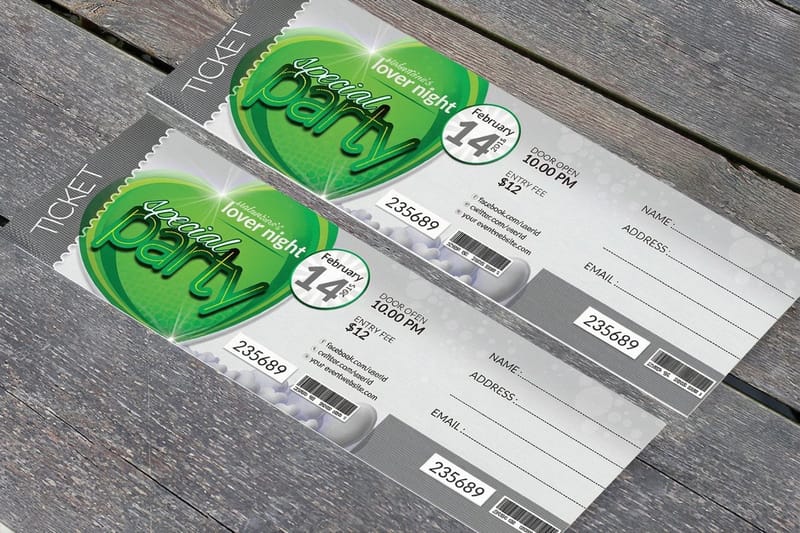 Product Event Tickets Numbered stubs for door control and advance sales. Category Event Ticket Printing Numbering, perforation and tear-off stubs.
 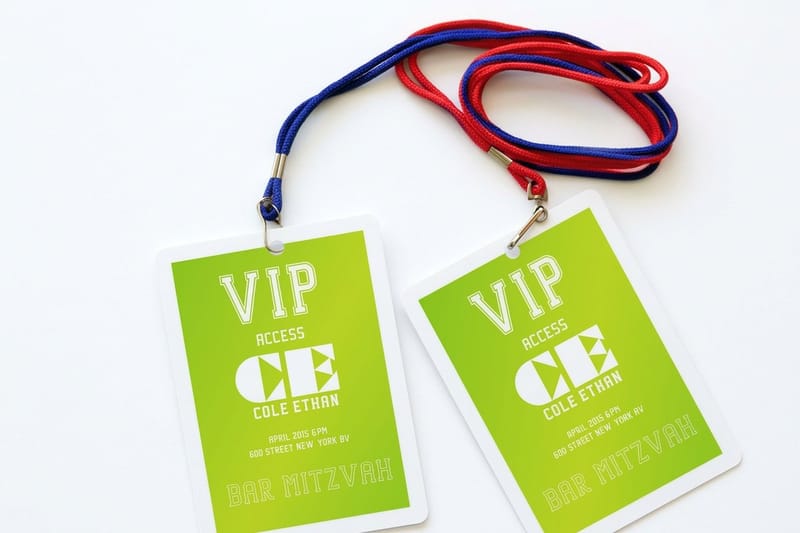 Category Event Badge Printing Name badges and credentials for the day itself.
 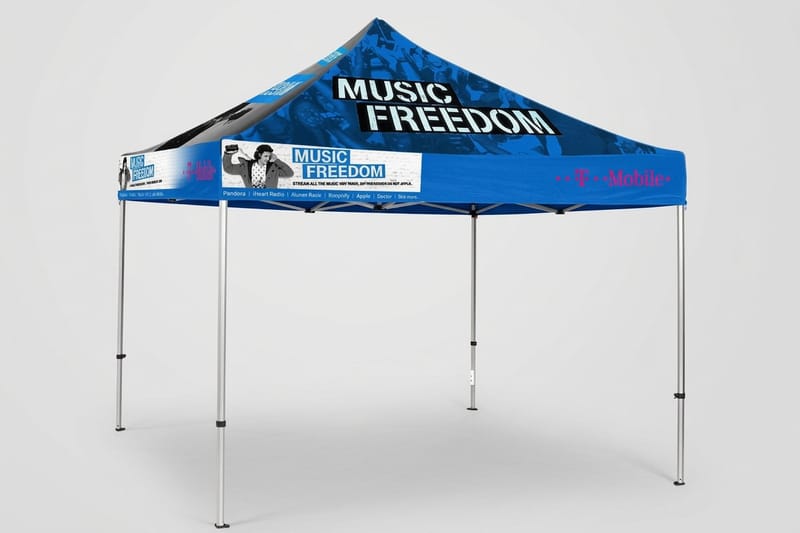 Category Event Tent Printing Branded cover for the stall the flyers point to.
  Article 20 Places to Leave Print Flyers Drop points ranked by who actually stands still.
 Ready to print the run that fills the room?
Pick your size, upload your artwork or start from a free template, and 4OVER4.COM prints it sharp on gloss or matte stock, in time for the drop.
Common questions about event flyers
How many flyers do I need to fill an event?
Work it out from drop points rather than from your attendance target. Count the businesses that have agreed to hold a stack, multiply by the number of sheets each one will take, multiply by how many times you will refill during the campaign, then add what your hand to hand nights will consume. Add roughly ten percent on top, because flyers get rained on, folded and taken by the handful. The per piece cost falls sharply as the quantity climbs, so the overrun is almost always cheaper than a rush reorder in the final week.
How far in advance should I hand out flyers for an event?
Run two drops. The first goes out two to three weeks ahead so the name has time to become familiar, and the second goes out three to five days before the doors, when people are deciding what to do with their weekend. A single drop three weeks out is forgotten by the night; a single drop two days out reaches people who already have plans. Print both runs in one order so the reminder is sitting ready when the week gets busy and the unit price stays low.
What size flyer works best for promoting an event?
It depends on the surface. Hand to hand wants 4 by 6 inches on a heavy gloss so it survives a pocket, which is what club flyers are built for. A counter stack in a shop wants 5.5 by 8.5 inches, big enough for a full lineup and small enough to fit a counter holder. A community board or a window wants 8.5 by 11 inches with a headline readable from ten feet. Printing one size for all three is the most common mistake, and printing two sizes in one order costs less than most promoters assume.
Do QR codes on event flyers actually get used?
Some people scan, more people photograph the flyer and deal with it later, so design for both. Point the code at the ticket page rather than the homepage, because a code that lands somewhere generic trains people to stop scanning yours. Print the date, the venue and a short URL next to the code so the photograph on someone’s phone is still useful with no scan at all. If you are selling at the door as well as online, a printed ticket at the partner counter converts better than any code.
Is it legal to post event flyers around town?
Counters, community boards and shop windows are fine when you ask the person in charge, and most independent businesses say yes if you offer to refill the stack. Poles, bus shelters, private walls and construction hoarding are restricted in most cities, and the penalty tends to follow the event name printed on the sheet rather than the person who put it up. Check your local code before a large drop, and keep the placements to businesses that have agreed, which is also where flyers perform best.
