
Entrepreneur Success Stories That Started With a Printed Piece


Why So Many Businesses Began With Something Printed

Every founder starts from the same position. Nobody knows the business exists, nobody is searching for it, and there is no budget to buy attention. For most of commercial history there was exactly one affordable answer to that problem, which was to print something and put it directly into people's hands.
That is not nostalgia, it is a description of the mechanism. A printed object does not need an algorithm to distribute it, does not need permission from a platform, and does not disappear when someone closes a tab. It can be left on a counter, pushed through a door, handed across a table, or mailed to an address, and it works the same way for a business with no reputation as it does for one with plenty.
What follows is not a list of companies who happened to own a printer. It is a set of stories where a printed object was genuinely the thing that made the business possible, plus what a founder can take from each of them. The pattern that emerges is more useful than any individual story, and it is a pattern about distribution rather than about design.
A Teenager, a Magazine, and a Business That Grew Out of It
The most direct example is Richard Branson, who launched Student magazine as a teenager in the late 1960s, well before Virgin existed as anything. Branson has spoken often about being dyslexic and about school being a poor fit, and the magazine is the part of that history worth studying, because it was not a hobby that later inspired a business. It was the business.
Running a magazine meant selling advertising, which meant learning to make an argument to companies with money. It meant managing print costs, distribution, and deadlines, all of which are the actual mechanics of running a company. And it created an audience, which is the asset that made everything afterwards possible, because the mail order record business that became Virgin had somewhere to advertise from day one.
The transferable lesson is not to start a magazine. It is that the printed thing was the vehicle rather than the marketing. Branson did not print a brochure about a business he wanted to run, he printed the business itself and figured out the rest around it. Founders often get this backwards, spending on material that describes an offer nobody has yet agreed to want. If you are earlier than that, the honest sequence is in our guide to what branding actually is.
Print picks
Four printed pieces that still start businesses
Live starting prices from the configurator, for the pieces founders reach for first.
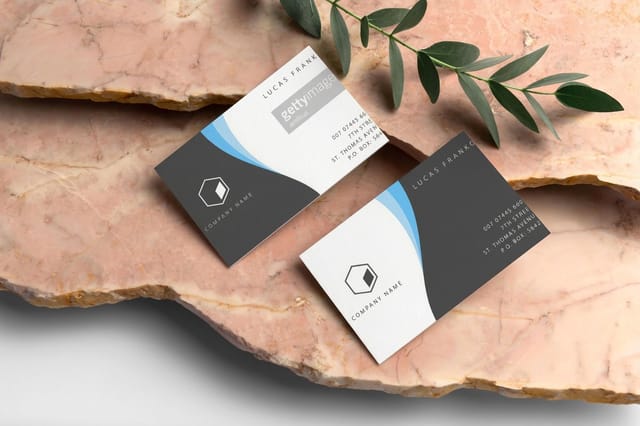 Classic Business Cards From $17.57 The cheapest way to leave something behind that proves the business is real.
 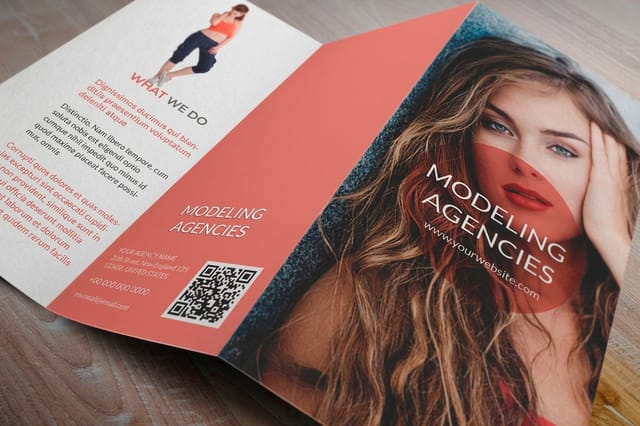 Standard Brochures From $57.11 Room to make the whole argument when a conversation is not enough on its own.
 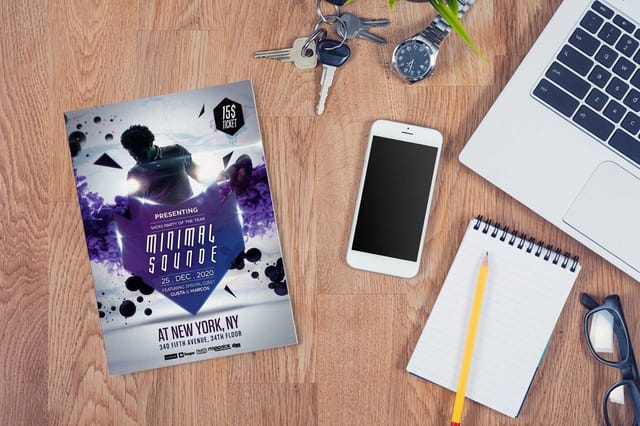 Standard Flyers From $57.11 The format that finds strangers in a neighborhood before anyone is searching for you.
 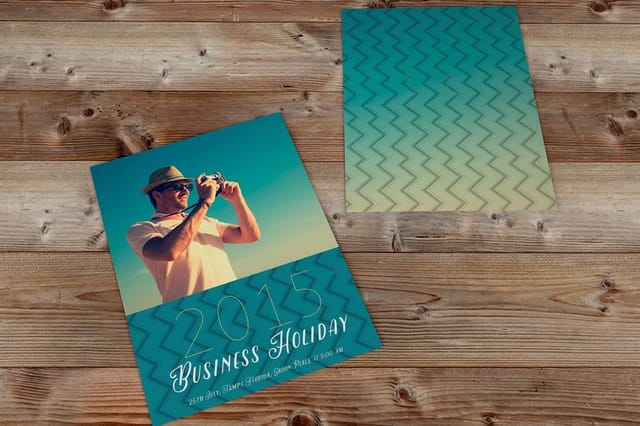 Standard Postcards From $16.48 A mailed offer that lands in a hand rather than competing in an inbox nobody reads.
 Zines, and the Economics of Printing Something Nobody Asked For

The independent zine tradition is the clearest example of print as a launchpad, and it produced an enormous number of small businesses: record labels, clothing lines, bookshops, promoters, and design studios that all began as somebody photocopying a stapled publication for a scene they belonged to.
What made zines work was not quality. Most were crudely produced by design. What made them work was that they were made by someone inside a community, distributed to people already in that community, and unfiltered by anyone deciding whether the subject deserved coverage. That combination created trust that no advertising budget can buy, and trust is what converts into a business when the maker eventually sells something.
The mechanism is entirely reproducible today, and the format barely matters. A printed newsletter for a specific trade, a well made zine for a local scene, a recipe booklet for the customers of a food business. The requirements are that you genuinely belong to the audience, that the thing is worth having on its own terms, and that you hand it to people rather than waiting for them to find it. Our guide to building a brand identity covers making it look like it came from somewhere.
The Menu, the Most Underrated Printed Product in Business
Food businesses have always been print businesses, and the menu is a genuinely unusual object. It is the only printed piece a customer reads with full attention, at length, having already decided to buy, and it directly determines what they spend. That combination does not exist anywhere else in commerce.
Independent restaurants, food trucks, and market stalls have used this for as long as they have existed. A short menu printed on decent card says the kitchen knows what it does well. A long laminated menu with photographs of everything says the opposite, and both messages land before a single item is ordered. The layout decides what sells, since the eye lands where the designer puts it, and items given room and position outsell items buried in a list.
The wider lesson applies well outside food. Somewhere in most businesses there is a printed piece a customer reads while deciding to spend, whether that is a price list, a treatment card, a service sheet, or a options leaflet. That is almost always the most valuable print in the business, and it is almost always the one designed last and cheapest. Find yours and treat it as the important one.
Mail Order, and Selling to People You Will Never Meet
The mail order catalog is the largest scale demonstration of print as a business engine. Through the late nineteenth and twentieth centuries, catalogs built enormous retail companies by solving a problem that sounds contemporary. How do you sell to someone who cannot visit your shop, cannot see the goods, and has no reason to trust you?
The answers those catalogs arrived at are the same answers direct commerce uses now. Describe the product honestly and in detail. Show it clearly. State the price without games. Make returns easy enough that the risk sits with the seller. Print the whole thing well enough that the object itself argues the company is substantial and will still exist when the order arrives.
Direct mail is the surviving descendant, and it works for the same reason it always did. A physical piece arrives in a hand rather than competing in an inbox where it is one of several hundred. For a small business, a well targeted mailing to a specific list is often the most measurable spend available, since you know exactly what went out and can count what came back. Our guide to postcard marketing covers the practical version, and direct mail postcards are the format most often used for it.
Proof at the door
The piece that makes a new business look established
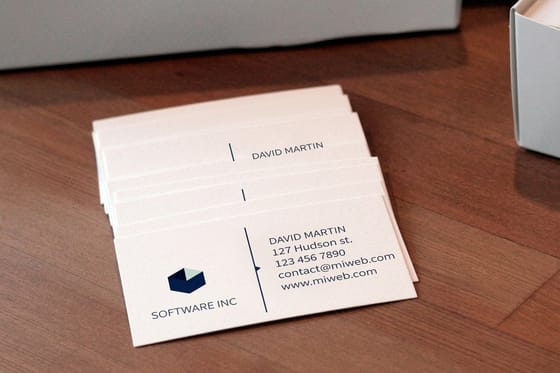
A well printed card ends the quiet question every new founder gets asked, which is whether this is a real business or a hobby.
The Pattern Underneath All of These
Line the stories up and the same four things appear every time, regardless of era or industry.
What the successful uses of print had in common
- The printed thing had value on its own. A magazine, a zine, a menu, and a catalog were each worth having in their own right, so people accepted them willingly rather than being handed advertising.
- Distribution was planned before printing. Every one of these founders knew exactly whose hands the object would reach. The design mattered far less than the route.
- The audience was specific and real. A scene, a neighborhood, a trade, a customer base. None of them printed for a general public, because a general public is nobody.
- Cost per copy forced editing. Paying for every unit makes a founder decide what genuinely earns its place, which is why the messaging in these examples is unusually sharp.
That last point is worth sitting with, because it is the one advantage print retains outright. Digital publishing is effectively free per copy, which quietly removes the pressure to decide what matters. Print charges you for every extra page and every extra word, and that discipline tends to produce better arguments. If you want the numbers on how new businesses actually perform, our startup statistics page is the sober version.
What This Means for a Business Starting Now
None of this argues that print replaces anything. It argues that print does a specific job unusually well, which is turning an abstract new business into a real object a stranger can hold. That job is arguably harder now than it was, because anyone can produce a convincing looking page in an afternoon, so a digital presence no longer proves that a business is serious.
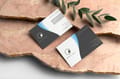
The practical starting point is smaller than most founders expect. One piece, done properly, beats five formats printed cheaply. For most businesses that first piece is a card, because it is the thing handed over at the end of a conversation that already went well, and because a card on decent stock quietly answers the question of whether this is a real business or something being tried at weekends.
After that, let the next piece be decided by an actual bottleneck rather than a checklist. If people understand the offer but forget you, you need something they keep. If people forget the offer, you need something that explains it, which is usually a brochure. If not enough people have heard of you at all, you need reach, which is usually flyers or a mailing. Our roundup of affordable branding strategies covers doing this without an agency.
Quantity and price
Business card pricing and specs, straight from the configurator
Real numbers on the piece most founders print first, with the stocks and finishes that make it feel considered.
| Quantity | Price Per Unit | Total |
|---|---|---|
| 100 | 17.6¢ | $17.57 |
| 200 | 11.5¢ | $23.07 |
| 300 | 9.15¢ | $27.46 |
| 400 | 7.96¢ | $31.86 |
| 500 | 7.25¢ | $36.26 |
| 600 | 6.77¢ | $40.64 |
Printing the First Pieces Without Wasting the Budget
Two mistakes account for most wasted print spend at the start, and both are easy to avoid once named.
The first is printing too much too early. Volume pricing is genuinely tempting, since the unit cost falls sharply as quantities rise, but a large run locks in a phone number, an address, a service list, and a positioning statement that a new business is quite likely to change within months. Print a modest first run, accept the higher unit cost as the price of flexibility, and order volume once things have stopped moving.
The second is spreading a small budget across many formats. Five cheap items printed thinly communicate less than one good one, because quality is read instantly and unconsciously from stock weight and finish. A card on substantial stock with a considered finish says something a flimsy card cannot, no matter what is printed on it. Compare the options in our guide to print finishing techniques, start from a print ready layout in the blank templates library, and if the deadline is already close, Same Day Printing covers the orders that get approved late.
Wally on why print keeps starting companies
Something real, in a stranger's hand, before you can afford anything else
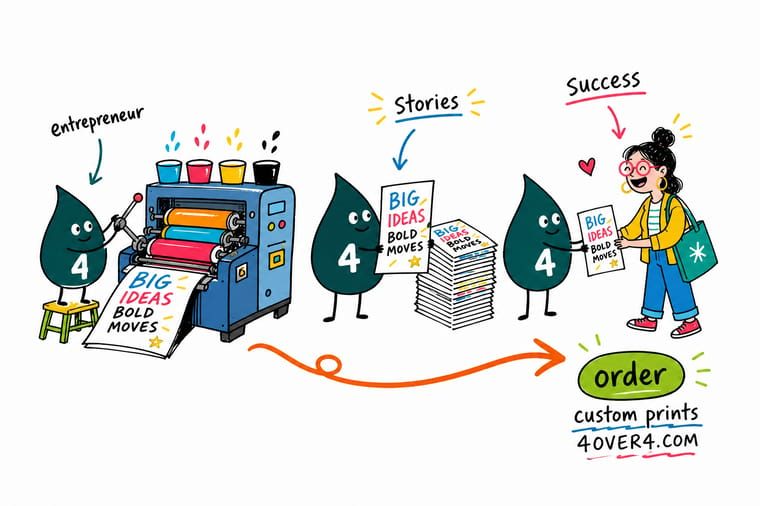
Every founder faces the same problem at the start. Nobody knows you exist and you cannot buy your way into their attention. Print solved that long before anything digital did, and it still does, because a printed object is something you can put directly into a hand. The founders who used it well treated one piece as the whole argument rather than as decoration. Pick your one piece, make it good, and put it where your people already are.
Print your first pieces →What founders can copy from these stories
Explore more
More on starting and branding a business
Standard postcards run 50 for $16.48 and classic cards 100 for $17.57, both out in 3 business days.
 Article Small Business Hacks Practical moves founders actually credit for early traction.
  Article Rebranding Tips What to change and what to leave alone when you grow.
  Article Affordable Branding Looking established without an agency budget.
 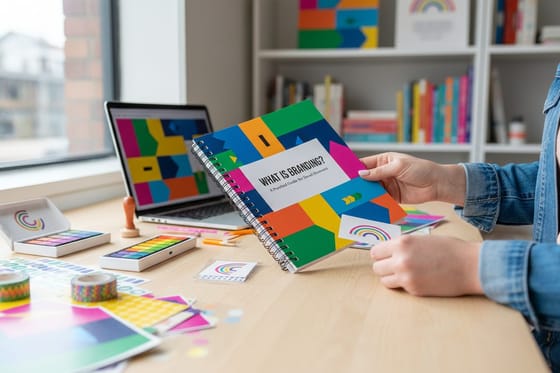 Guide What Is Branding The practical version, stripped of agency language.
 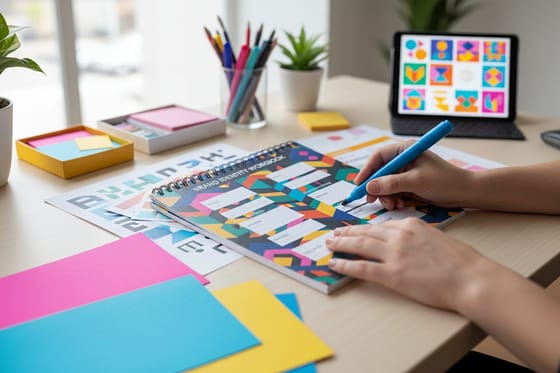 Guide Build a Brand Identity Turning a name into something recognizable in print. Guide Brand Messaging Saying the one thing that makes someone choose you.
 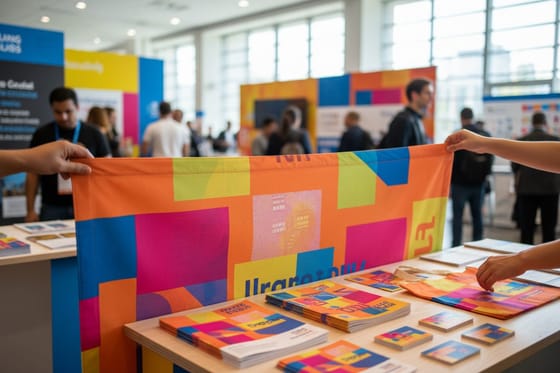 Case study A Startup's First Trade Show What a small team printed and how it landed.
 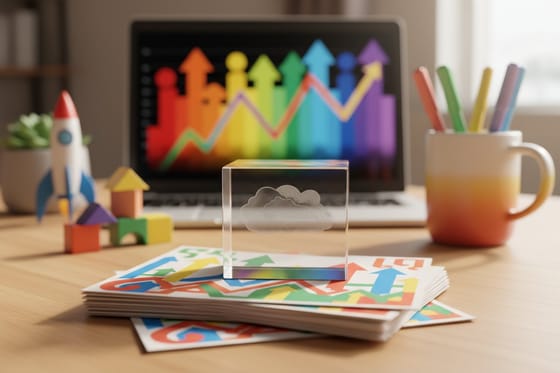 Statistics Startup Statistics The numbers behind how new businesses actually fare.
  Article Portfolio Examples How independents present work that wins the job.
  Guides All Printing Guides Every how-to across design, print, and delivery.
  Case studies Print Case Studies Real print stories from design through delivery. Product Brochures Room to make the whole argument on paper.
 Ready to print the piece your business starts with?
Pick one format, say one thing clearly, and 4OVER4.COM prints it on stock that makes a new business look like it has been here a while.
Print and entrepreneurship questions
Why did so many businesses start with printed materials?
Because print solved the founder's first problem cheaply. Nobody knows a new business exists, nobody is searching for it, and there is no budget to buy attention. A printed object does not need an algorithm to distribute it or permission from a platform, and it works identically for a business with no reputation and one with plenty. It can be handed over, left on a counter, pushed through a door, or mailed to an address. For most of commercial history that was the only affordable way to reach strangers, and it still does that job well.
How did Richard Branson start out before Virgin?
Branson launched Student magazine as a teenager in the late 1960s, several years before Virgin existed as a business. The magazine is the part worth studying, because it was not a side project that later inspired a company. Running it meant selling advertising, managing print costs and distribution, and hitting deadlines, which are the actual mechanics of running a business. It also built an audience, and that audience is what made the mail order record venture that became Virgin viable, because it had somewhere to advertise from the beginning.
What is the first thing a new business should print?
For most businesses it is a business card, and the reason is practical rather than traditional. A card is the thing handed over at the end of a conversation that has already gone well, so it is doing follow up rather than cold persuasion. A card printed on substantial stock also quietly answers the question every new founder gets asked, which is whether this is a real business or something being tried at weekends. Print a modest first run rather than chasing volume pricing, since a new business tends to change its phone number, address, or service list within months.
Does print marketing still work for startups?
It works for a specific job, which is turning an abstract business into something a person can hold. That job is arguably harder now than it used to be, because anyone can build a convincing looking website in an afternoon, so a digital presence no longer signals that a business is serious or funded. Print also retains one structural advantage: paying for every copy forces you to decide what genuinely earns its place, which tends to produce sharper messaging than publishing where extra pages cost nothing. The stories that work still turn on distribution rather than on the printing being remarkable.
How do I avoid wasting money on print when starting out?
Avoid the two common mistakes. The first is printing too much too early, because volume pricing locks in a phone number, address, and positioning statement that a young business is likely to change within months. Accept a higher unit cost on a small first run as the price of staying flexible. The second is spreading a small budget across many formats. Five cheaply printed items communicate less than one good one, since stock weight and finish are read instantly and unconsciously. Pick the single piece that removes your actual bottleneck and print that one properly.
