
The Best Holiday Marketing Campaigns and the Print Lesson Behind Each One


Sofia is our design and templates voice, built from the knowledge of our production team, with over 20 years in printing.
The holiday campaigns people can still name all did the same thing: they put one repeatable physical object in a customer’s hand and brought it back every year. The copyable part is never the film budget. It is the printed piece and the order date, and for a card that date is roughly six weeks before you want it in the mail.
The holiday print calendar, counted backwards
| Piece | Order by | Why that date | Product at 4OVER4 |
|---|---|---|---|
| Client holiday cards | 6 weeks before mailing | Printing is fast. Hand signing 300 cards, stuffing and addressing them is what eats the calendar. | Christmas Cards, from $31.86 |
| Direct mail postcards | 4 weeks before the offer opens | Standard mail moves in days, and every carrier slows through December. Build slack in before the offer, not after. | Direct Mail Postcards, from $89.68 |
| Packaging labels and seals | 5 weeks before the first shipment | Labels have to be sitting on the packing bench before orders start, or the first week ships plain. | Premium Packaging Labels, from $29.16 |
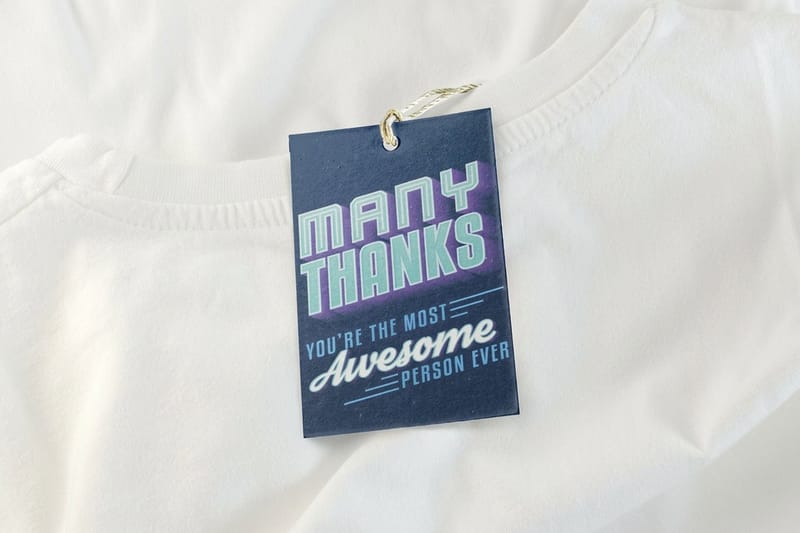
| Gift hang tags | 5 weeks before the first shipment | Tags get strung by hand. Budget the labor, not just the print. | Standard Hang Tags, from $25.27 |
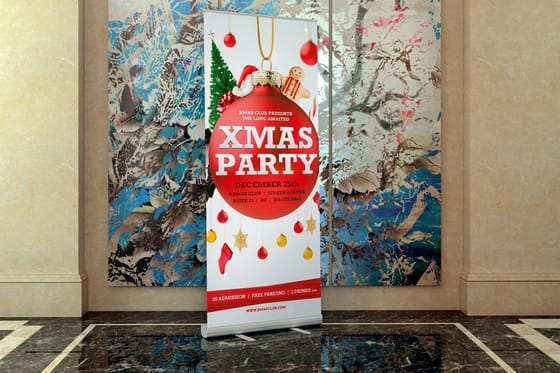
| Store and window banners | 3 weeks before the display goes up | Grommet spacing and hanging hardware always need a dry run against the real wall. | Holiday Banners, from $43.92 |
These are working dates for a normal run, not the fastest we can print: Christmas cards take 5 business days, postcards 3, labels 3, hang tags 5 and holiday banners 2, plus shipping, and the rest of each lead time is the hand work around them. If you are already inside them, order the smaller piece and post it early rather than sending the ambitious one late.
Why holiday marketing works, and when the print has to be ordered
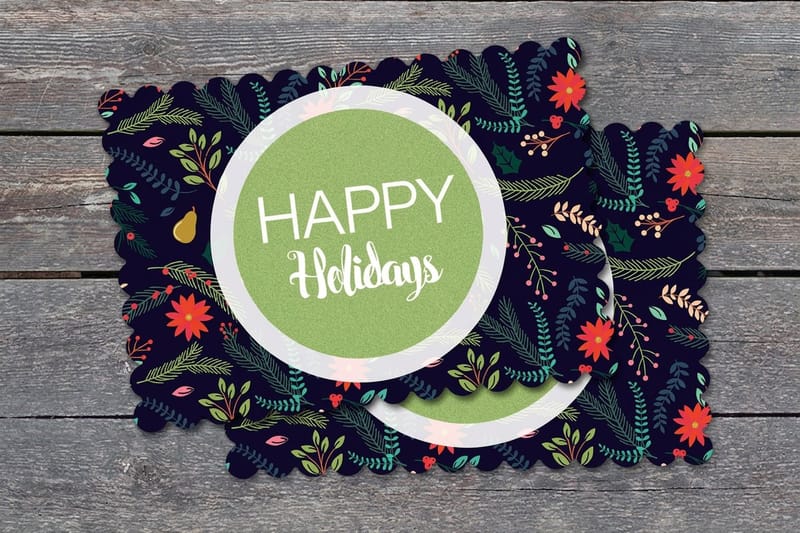
Holiday buying is one of the few moments in the year when people are actively looking to be sold to. They have a list, a deadline and a budget already set aside, so the job is not to create demand. It is to be in front of them, in a form they keep, during the weeks the list gets filled.
That is why print keeps holding its place in campaigns run by brands with unlimited screen budgets. A card on a desk, a tag on a gift, a cup in a hand: each one sits in physical space for days or weeks, where a scrolled impression lasts a second. The catch is the calendar. Print has a lead time and December has a queue, and the brands that look effortless in the last week of the year signed off their artwork in September.
Work backwards from the date the piece has to be in a hand, not forwards from the date you feel ready. Our walkthrough of sending direct mail postcards sets out the same discipline for a mailing list, and fall marketing ideas is where a lot of holiday work should actually start.
The two dates that matter
There is a press date and there is a hand date. The press date is when artwork has to be final, with bleed, in CMYK, no live fonts. The hand date is when the piece has to be in front of a customer. Everything between the two is production, transit, and the human work of signing, stuffing, stringing or hanging, which is almost always underestimated.
Give the human work more room than the printing. A run of 500 cards prints in a couple of days. Signing and addressing 500 cards is two evenings of somebody’s life, and that is the step that slips.
Small budgets get the same physics
None of the campaigns below needed a large budget for the idea itself. They needed one repeatable printed object and the discipline to bring it back the following year. A local shop can copy that at a hundredth of the spend, because the cost of the idea is zero and the cost of the print is what our postcard printing and greeting card printing pages already list.
Eight holiday campaigns and the printable idea inside each
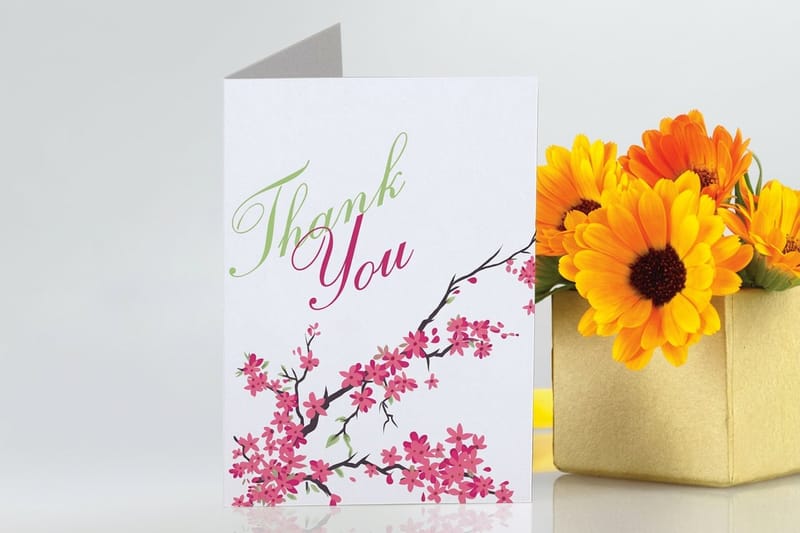
Each of these worked for a reason you can lift. Ignore the production budget and look at the mechanic: what physical thing changed hands, and why people held on to it. Two dates anchor the list, the Coca-Cola Santa artwork of 1931 and the Starbucks red cup of 1997, and both still run because the brand kept the asset.
One to four: the season arrives as an object
1. Coca-Cola and the Sundblom Santa. Haddon Sundblom painted the Coca-Cola Santa in 1931, and the brand has stayed inside that visual family ever since. The lesson is not the illustration. It is that they never restarted. Print it: pick one holiday illustration, one color pair, one typeface, and reprint that identity every year on the same piece so people recognize it before they read it.
2. Starbucks red cups. The red cup landed in 1997 and turned the packaging itself into the announcement. Nothing about the product changed; the container did. Print it: your packaging already touches every customer. A seasonal packaging label or a printed seal over the flap costs less than a display and reaches every single order, which no display does.
3. Macy’s Believe. Running since 2008, it asks children to write a letter to Santa by hand and drop it in a physical letterbox in store. Print it: a printed thing people have to write on beats a printed thing they only read. A card with a blank line, a wish tag, a stamped loyalty card. Participation is what makes it memorable.
4. John Lewis and the annual Christmas film. The UK retailer has released one story led Christmas advert a year since 2007, and the country now waits for it. Print it: the store windows, bags and cards carry the same characters the same week. If you run a seasonal story, make sure the printed pieces in store match it exactly. A mismatched window undoes the film.
Five to eight: personal, useful, or genuinely rare
5. Spotify Wrapped. Personal data turned into something people want to show other people. Print it: variable data printing puts a customer’s name, their local store, or their year with you on the piece itself. A personalized postcard outperforms a generic one because the recipient is in it.
6. Cadbury Secret Santa. The brand did the awkward job for you: pick a person, they post the bar. Print it: be the service, not the message. A gift tag, a card and a mailing slot at your counter turns your shop into the thing that makes someone else’s gift easier.
7. Warby Parker’s holiday gift guide. A printed guide that is genuinely useful to hold, rather than a catalog that is only a price list. Print it: a folded card or short guide with real recommendations gets kept on a kitchen counter through December. See business gift basket ideas for what to put inside one.
8. The beauty advent calendar. ELEMIS and most of the category built December around one high-value box with a fixed number of doors. Print it: scarcity plus a countdown is a structure, not a budget. A twelve day punch card, a numbered sticker sheet, a limited run of printed stickers for the first hundred orders. The count is what creates the urgency.
What actually made them memorable
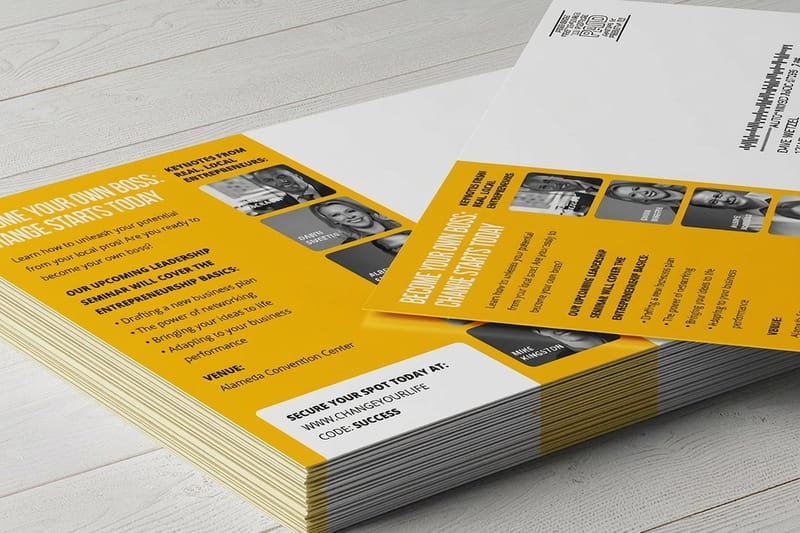
Strip out the production values and three things are left. First, repetition: the same asset returns every year until it becomes a signal that the season has begun. Second, a physical object with a job, whether that is a cup, a letter, a tag or a box. Third, a role for the customer, so they write, collect, open or hand something on.
What none of them do is announce a discount and stop there. A percentage off is forgotten the day the sale ends, which is why the campaigns that only ever ran a price are not the ones people can name. If your entire holiday plan is a number and a date, the printed piece has nothing to be except a coupon.
The other quiet common factor is restraint in the artwork. Holiday design fails by piling on: five colors, three typefaces, snow, and a starburst. Look at the campaigns above and count the colors. Usually two, plus the product. Our roundup of holiday color palettes is a useful place to pick a pair and then stop.
The trade-off nobody mentions
Seasonal print is a sunk cost with a hard expiry. A card that says 2026 is waste paper on 2 January, and overordering a dated piece is the single most common holiday print mistake we see. The way around it is to date only the small pieces and keep the expensive ones undated: no year on the banner, no year on the box, the year only on the card.
The second trade-off is finish. Foil and spot gloss genuinely lift a holiday card, and they also add production time and cost per piece. If the run is small and the recipients matter, pay for it. If the run is large and it is going in a mailbox with forty other envelopes, spend that money on better paper stock and a shorter list instead.
Print and direct-mail lessons you can copy this year
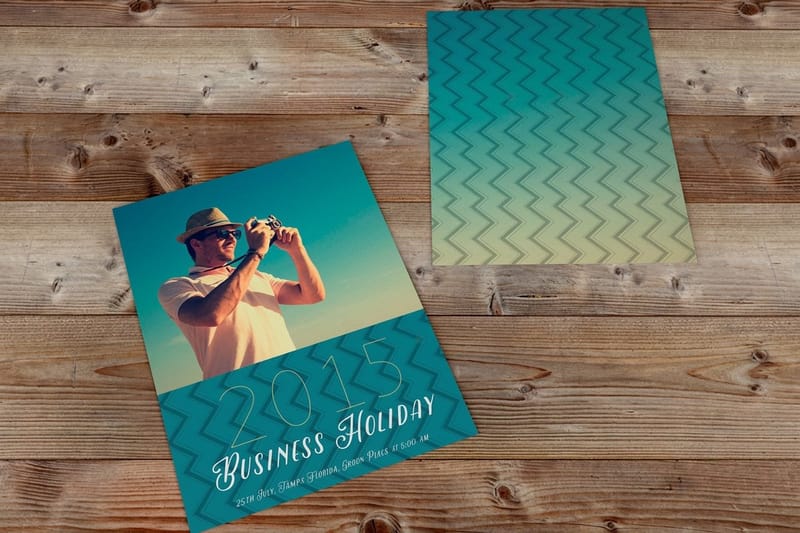
Here is the practical translation. Take the mechanic, drop the budget, and choose the format that fits how your customers actually reach you.
For a mailing, the format decides the read. A postcard is read without being opened, which is its whole advantage in December when envelopes pile up. An envelope buys ceremony and hides the message, which suits a card and suits nothing else. Direct mail formats compared goes through the rest, and the direct mail numbers give you the industry context before you commit a budget.
For a shop, the sequence that works is window first, counter second, package third. The window earns the walk in, the counter earns the extra item, the package earns the photograph and the reorder. Skipping the package is the common error, because it is the only one of the three that leaves the building with the customer.
Mailing list before artwork
A perfect card sent to a stale list loses to an ordinary card sent to a clean one. Clear the list first: dedupe, fix addresses, remove anyone who bought once in 2019 and never returned. That work costs nothing and it is the largest single lever on response.
Then decide the size. Larger postcards cost more per piece and are harder to ignore in a stack. If your list is short and the customers are worth real money, size up. If the list is long and the offer is simple, a standard postcard at $16.48 lets you cover more of it, and the anatomy of a postcard shows where the message has to sit so the mail panel does not swallow it.
Write the card like a person
Client holiday cards fail on copy far more often than on print. A card that thanks a named person for a specific thing gets kept. A card with a printed signature and a generic greeting gets recycled with the rest. If you have 40 clients, hand write all 40. If you have 400, hand write the top 40 and print the rest properly.
Our guide to holiday card messages has wording for clients and staff that does not read like a template, which is the only real test.
Holiday print pieces worth planning now
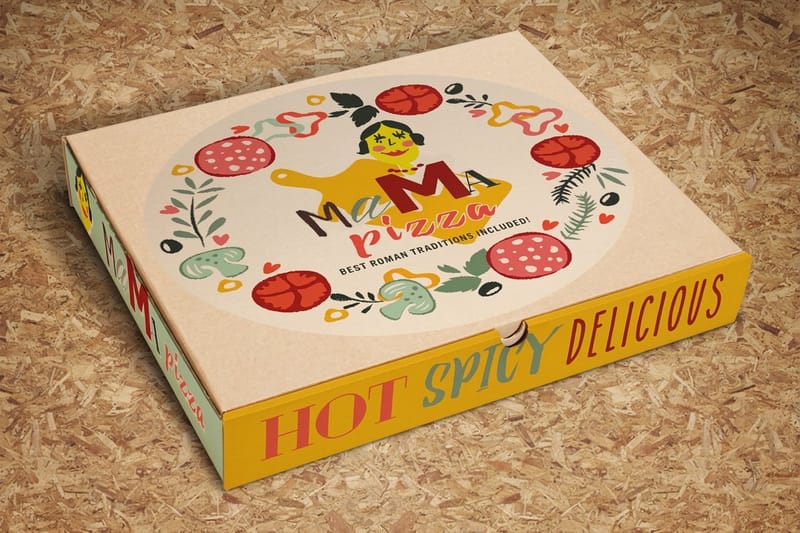
Five formats carry most holiday campaigns. Cards for relationships, postcards for reach, labels and tags for the package, banners for the room, and stickers for the low cost extras that make an order feel considered.
You do not need all five. Pick the one that touches the most customers for the least money in your business, and do that one properly. For an online seller that is almost always the package. For a service business it is almost always the card. For a store with foot traffic it is the window.
The package is the cheapest campaign you own
Every order you ship is already paying for postage. Adding a printed label, a hang tag or a sticker seal costs cents per order and changes what the customer sees when the box opens. There is no media buy in the world with that reach to spend ratio for a small brand, and holiday packaging ideas covers the execution.
One caution on stock. Gloss laminated labels resist scuffing in transit and matte uncoated ones do not, so a matte kraft look that photographs beautifully on the bench can arrive rubbed at the corners. If the box travels far, laminate it.
Holiday card pricing and specs at 4OVER4.COM
Custom Christmas cards start at $31.86 for 25, folded to 4.25" x 5.5" or 5" x 7" on 14pt gloss, uncoated or white linen with optional matching envelopes, in 5 business days; standard postcards start at $16.48 for 50 and print in 3. Coca-Cola has run one Santa artwork family since 1931, which is the argument for pricing a run you can repeat next year from the same file. The numbers below come straight from the live configurator, so you can size the mailing before you commit to a list.
Quantity and price
Christmas card pricing and specs
Christmas cards from 25 pieces up, with the run price shown before you commit to it.
| Quantity | Price Per Unit | Total |
|---|---|---|
| 25 | $1.27 | $31.86 |
| 50 | $1.12 | $56.02 |
| 100 | 78.0¢ | $77.99 |
| 200 | 50.0¢ | $99.95 |
| 300 | 40.6¢ | $121.92 |
| 400 | 36.0¢ | $143.89 |

You can also earn coins on every order and redeem them against next season’s printing, which matters when the same campaign comes back each December.
Stock, finish, and what survives a mailbox
Holiday pieces get handled more than anything else you print. Cards are picked up, propped open and moved around a desk for weeks. Packaging travels. A thin uncoated card curls in a warm room and a matte label rubs at the corners in transit, so the stock decision is a durability decision before it is a look decision.
Print it
Christmas cards, ready to sign
Folded cards on heavy stock, the piece that stays on a client’s desk into January.
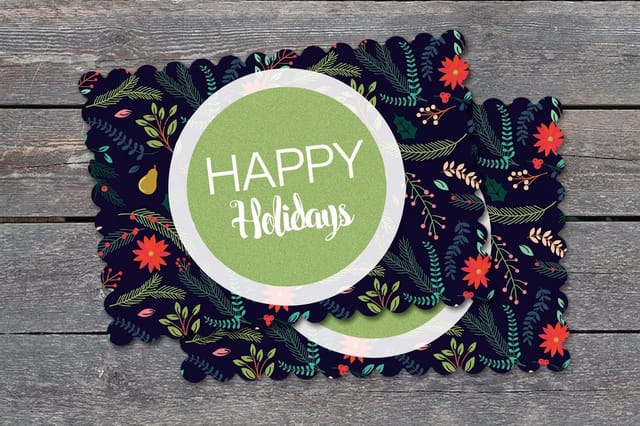
Finish changes both look and cost. Gloss lifts photography and deep reds, matte reads quieter and takes a handwritten note without smudging, and foil or raised spot gloss genuinely changes how a card feels in a hand. Foil is worth it on a short run to people who matter and rarely worth it on a large mailing, where the same money buys better paper and a shorter, cleaner list. For an in-store piece, check standard banner sizes before you design, because a window is measured in feet and a design made at the wrong ratio always loses its message to the crop.
What to print, by business type
Different businesses reach customers through different surfaces, so the piece that earns its cost changes with the model.
- Retail stores. Window banner, counter cards and a package sticker, all in the same two colors. The window earns the entry, the counter earns the add on, the sticker earns the photo.
- Online sellers. Spend the budget inside the box. A packaging label, a hang tag and a printed thank you card reach every buyer, which no advertising placement does at that price.
- Restaurants and cafés. Gift card holders and a table card for the December menu. Both are printed once and used for six weeks straight.
- Professional services. Hand signed client cards, ordered six weeks out, mailed in an envelope. Skip the discount entirely. The card is the whole message.
- Nonprofits. A year end appeal postcard mailed to a cleaned list, with one photograph and one number. The envelope version gets opened less at this time of year.
Seasonal blanks at the exact trim size
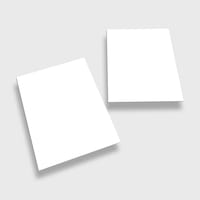
A 5" x 7" folded Christmas card starts as a 10" x 7" flat sheet, so its blank marks the fold line down the middle as well as 0.125 inch of bleed on every side; a 4" x 6" postcard blank is 4.25" x 6.25". Build the seasonal piece once on the right blank and keep the file, the way the 1997 red cup became a design the season returns to. Grab a print ready blank from the blank template library with bleed and trim already marked, and check the packaging types guide if the campaign includes a box.
Start fast
Seasonal blanks at the exact trim size
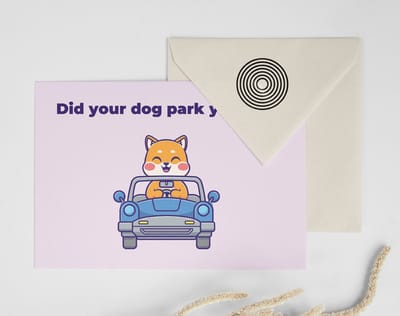
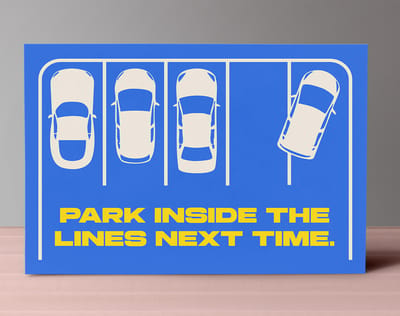
Holiday postcard blanks with bleed drawn and the address side already marked.

Wally counts the holiday calendar backwards
Start from the hand date, never from the day you feel ready
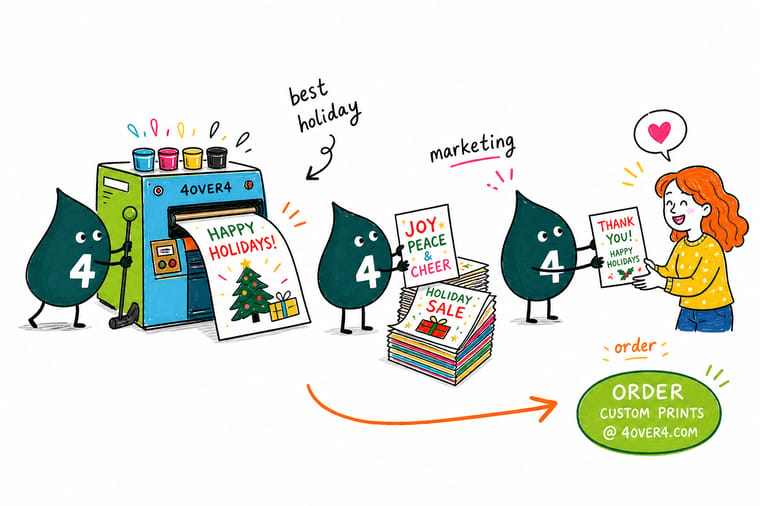
Six weeks before mailing for signed client cards, four weeks before the offer opens for direct mail postcards, and five weeks for labels and hang tags that have to be on the packing bench before the first order. Printing is the fast part. Signing, stuffing and stringing is what slips, so give the human work more room than the press.
Order holiday cards →What makes a season repeat instead of restart
Design tips that hold up on every piece
- Two colors plus the product. Count the colors in any holiday campaign you admire. It is rarely more than two. Snow, foil, starbursts and a third accent are what make a design look homemade.
- Date only the cheap pieces. Put the year on the card and never on the banner or the box. Undated pieces come back out next December instead of going in the bin.
- Leave a line to write on. A blank line invites a signature or a name, and a piece that has been written on is the piece that gets kept.
- Set type larger than feels right. December mail is read fast and store windows are read from the pavement. If it is comfortable at arm’s length on screen, it is too small on paper.
- Proof on the real stock. Deep reds and metallics shift noticeably between coated and uncoated paper. Order the proof before the run, not after the deadline has moved.
Explore more
More ways to print and promote
Holiday banners print in 2 business days and direct mail postcards run 500 for $89.68 in 4.
Product Custom Christmas Cards Client cards printed on stock worth signing by hand. Product Direct Mail Postcards Printed, addressed and mailed from one order. Product Premium Packaging Labels Seasonal seals and labels for every box you ship. 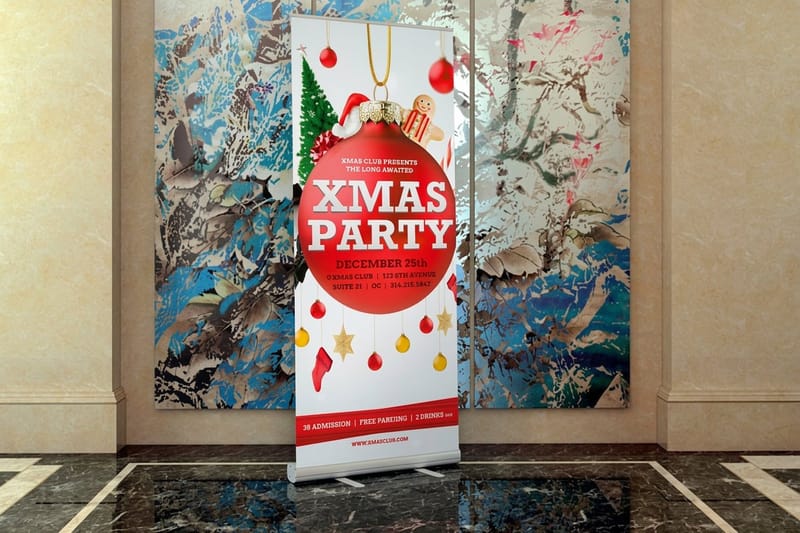 Product Holiday Banners Window and in-store banners that survive the season.
 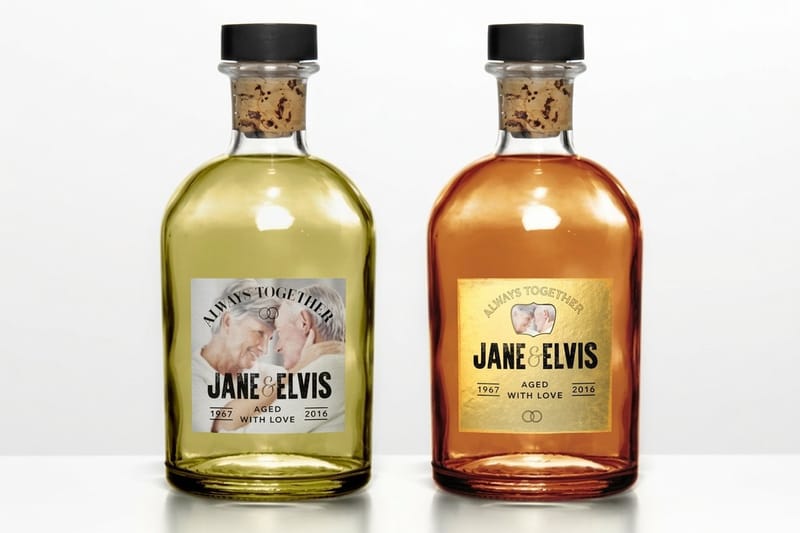 Product Premium Stickers Limited-run stickers for the first hundred orders.
 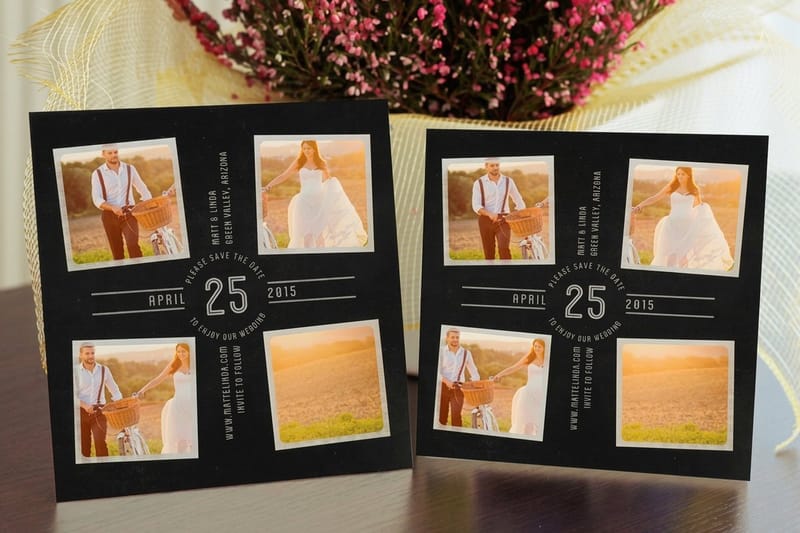 Category Greeting Card Printing Every fold, stock and finish in one place.
  Category Hang Tag Printing Gift tags and product tags, strung or plain.
  Article Holiday Postcard Design Examples Seasonal layouts that avoid the usual clichés.
 Ready to print your holiday campaign?
Pick your piece, drop in your design or a free template, and 4OVER4.COM prints it sharp on premium stock, as fast as your deadline needs.
Common questions about holiday campaigns
When should I order holiday cards and mailers?
Order client cards about six weeks before you want them in the mail, and direct mail postcards about four weeks before the offer opens. The printing itself is the fast part. What slips is the human work: signing several hundred cards, checking addresses, stuffing envelopes, and getting the whole stack to a post office in a week when every carrier is already carrying more than usual. If you are shipping product with printed labels or hang tags, pull that date earlier still, because those have to be sitting on the packing bench before the first order arrives rather than a week into the rush.
Is a holiday card actually worth printing, or is email enough?
For clients you want to keep, print it. A card sits on a desk or a shelf for weeks and carries a handwritten signature that an email cannot fake, and December inboxes are the most competitive of the year while December desks are not. The honest limit is the list size. Hand signing works up to a few hundred; past that the personal touch disappears and you are paying postage for something that reads as a mass mailing anyway. The practical split is to hand write the top tier and send everyone else a well printed card with a real message rather than a printed signature.
What is the cheapest holiday campaign for a small business?
A printed piece inside a package you are already shipping. Premium packaging labels start at $29.16 and premium stickers at $29.16, and both reach one hundred percent of your buyers because the postage is already paid. Compare that to a store banner, which only reaches the people who already walked past, or a mailing, which pays postage per person. If you sell online and you can only afford one printed thing this season, put it in the box.
Should the year be printed on holiday marketing pieces?
Only on the pieces that are cheap to reprint. Put the year on the card, because a dated card reads as current and cards are ordered fresh each season anyway. Keep it off the banner, the box, the hang tag and anything with foil or a long lead time, so those come back out next December instead of being thrown away on 2 January. Overordering a dated piece is the most common and most expensive holiday print mistake, and it is entirely avoidable at the artwork stage.
How do I stop a holiday design from looking generic?
Cut the color count and add a real photograph or a specific piece of writing. Most generic seasonal work is generic because it stacks five colors, snow, a starburst and a script typeface on one piece, so it looks like every template. Choose two colors plus whatever color your product is, set the type larger than feels comfortable, and put something in the design that only your business could have written. A named thank you, a real story from the year, or an actual photograph of your team beats any amount of decoration.
