
Variable Data Printing That Makes Every Piece Personal


Nadia is our customer education voice, built from the knowledge of our production team, with over 20 years in printing.
Variable direct mail printing puts each recipient's own name and offer on the postcard that reaches them, because a postcard that knows your name gets read and a postcard addressed to Resident gets binned. Variable data printing merges your spreadsheet into your design so every piece in the run prints unique. This page covers the data file, the template, and how to order a VDP run at 4OVER4.COM.
Variable data printing merges a data file into your design template so every piece in the run prints with its own name, address, offer, code, or image. The digital press composes each piece from one row of your spreadsheet and prints it at production speed, no plates, no version changeovers. It powers personalized direct mail, uniquely coded coupons, numbered gift cards, and any run where relevance to one recipient beats sameness across all of them.
Start here
Variable data printing in one paragraph
Variable data printing merges a spreadsheet into a design template so each piece prints unique: the address block from one column, the salutation from another, offers, codes, and even images swapping per row. The run prints at normal digital speed with no plates, so personalization costs setup, not per-piece premium. Clean data in, relevant mail out, and every unique code makes the response measurable.
Variable direct mail printing, from list to mailbox

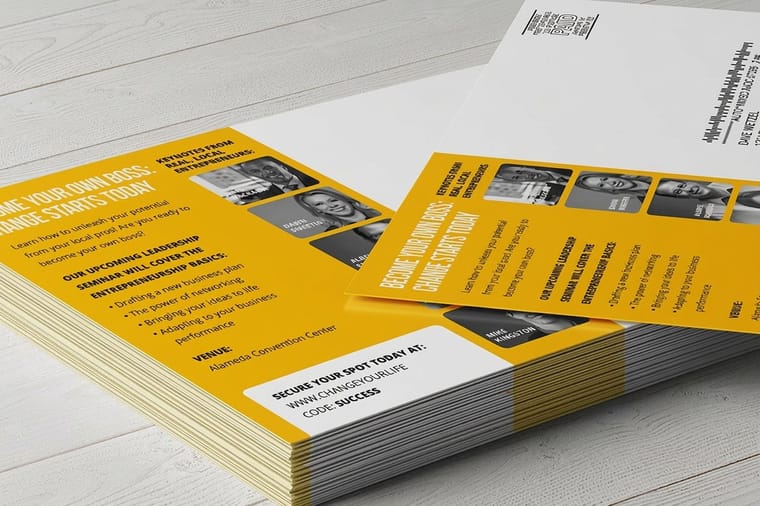
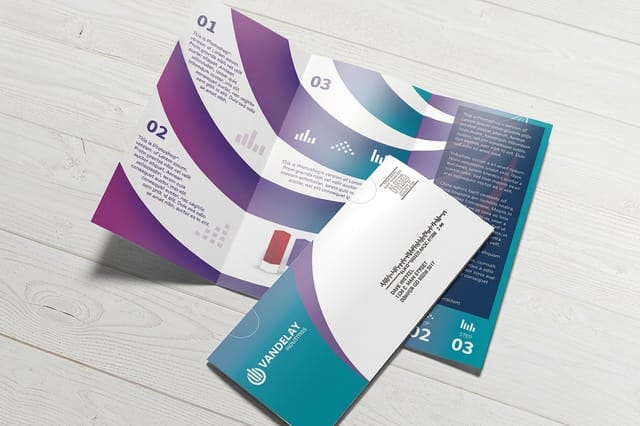
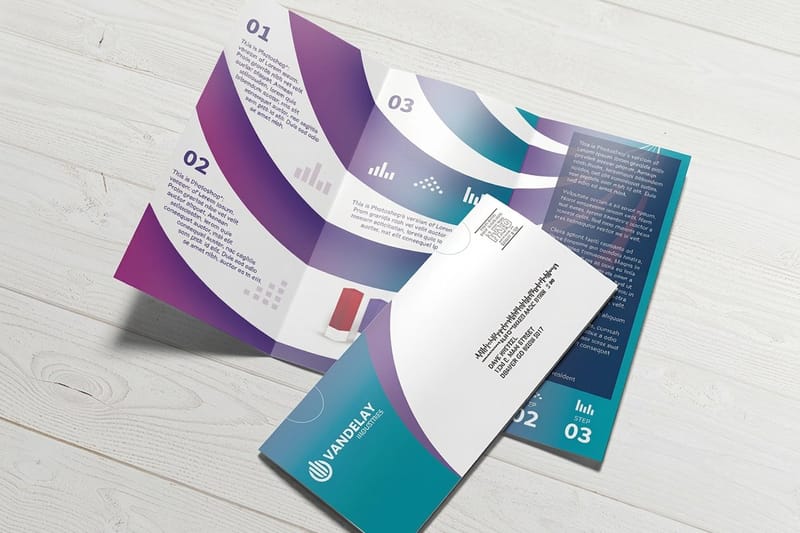
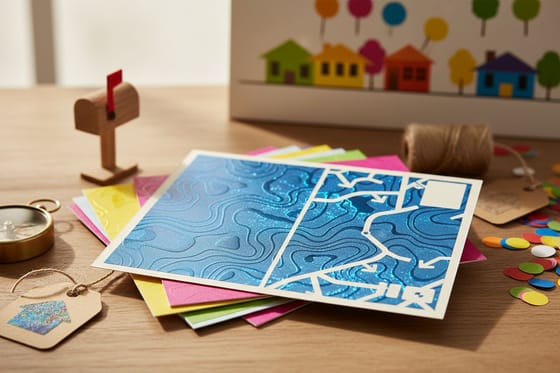
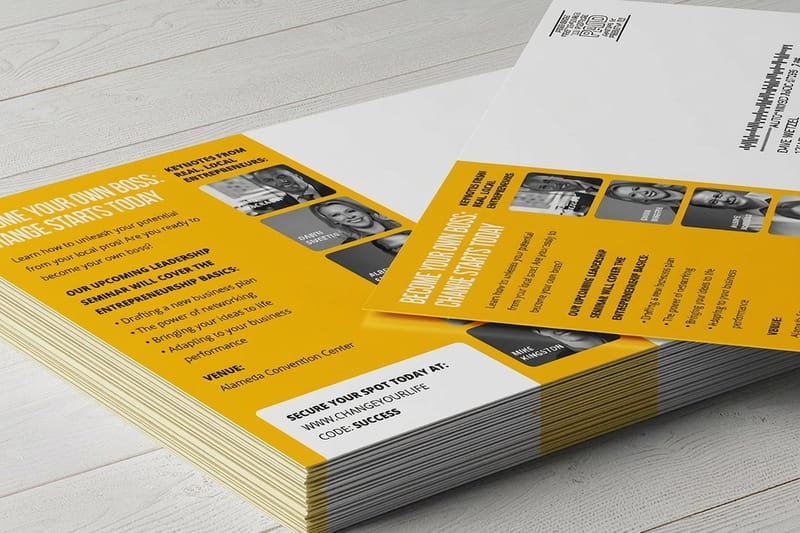
Variable direct mail printing is a direct mail run where each piece carries its own data, the address block at minimum and often the name, offer and tracking code on the message side. The usual carrier is the direct mail postcard, in nine sizes from 4.25 by 5.5 to 6 by 11 inches on 14pt or 16pt cover, from 500 cards with 4 business days of production; direct mail brochures run from 8.5 by 11 to 11 by 17 inches in folds from half to gate.
The mailing sits on the same order. On 500 postcards the mailing service fee is $125, First Class postage runs $0.515 a piece on a 4 by 6 card, mail processing takes 1 to 4 business days, and you choose whether leftover pieces are discarded or shipped to you. Send the list as a spreadsheet, one row per recipient, and the merge fills every field before the run prints.
Why one-size-fits-all mail gets binned

Every piece of mail, from a 4 by 6 postcard to a 6 by 11 one, passes a one-second audition over the recycling bin: is this about me? Generic pieces fail it by design, they are visibly about everyone. A piece that carries the recipient's name, their street, an offer tied to something they actually did, passes, and everything after that first second is a different conversation.
Variable data printing is the machinery behind passing that audition at scale. Instead of printing ten thousand identical postcards, the press prints ten thousand different ones, each assembled from your template and one row of your data, at production speed.
The technique is decades old and the measurement is consistent: personalized mail outperforms generic mail on response, because relevance is the whole game. This page explains how the merge works, what can vary on a piece, how to prepare a data file that merges cleanly, and how VDP connects to our direct mail and EDDM services at 4OVER4.COM. Every mailer format we print for those programs sits in our collection of direct mail and EDDM services.
What variable data printing actually is: template plus data

A VDP job has two inputs. The first is a template: your designed piece with certain elements marked as variable fields, an address block, a salutation, an offer line, a code, an image slot. The second is a data file: a spreadsheet with one row per recipient and one column per field.
The merge engine walks the rows. For each one, it fills the fields with that row's values, composes the finished piece, and sends it to the digital press, which prints it and moves to the next. There are no plates and no version changeovers, which is what makes ten thousand unique pieces cost roughly what ten thousand identical ones do.
The discipline this demands is unglamorous but decisive: the data must be clean. The press prints exactly what the spreadsheet says, typos, stray capitals, and duplicates included. Deduplicate, normalize casing, and spell-check before submitting, and we proof merged samples, real rows dropped into the real template, before the run commits.
What can vary: text, offers, images, and codes
Names and addresses are the entry level. The address block gets each piece to its person, and a real salutation, the recipient's actual name in the headline or greeting, is the cheapest personalization with the most visible effect. Offers go one step further: different discount tiers for new versus lapsed customers, expiry dates tied to each segment.
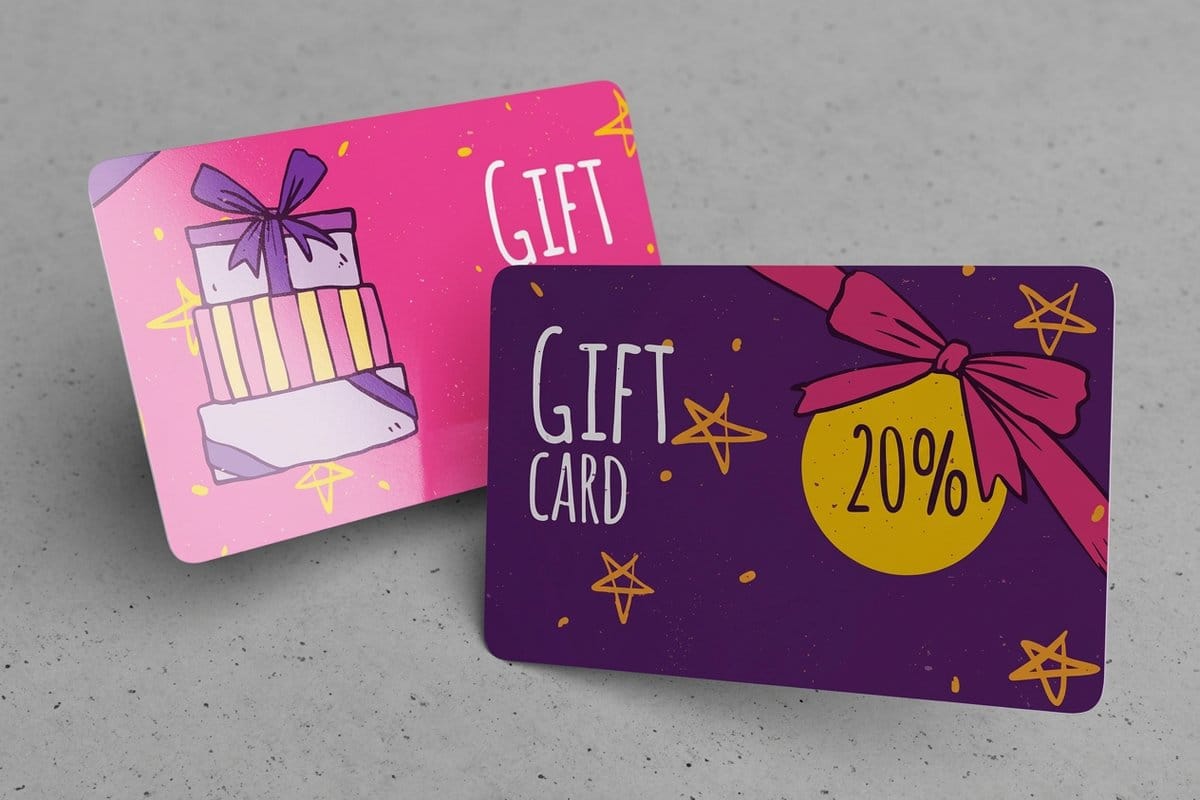
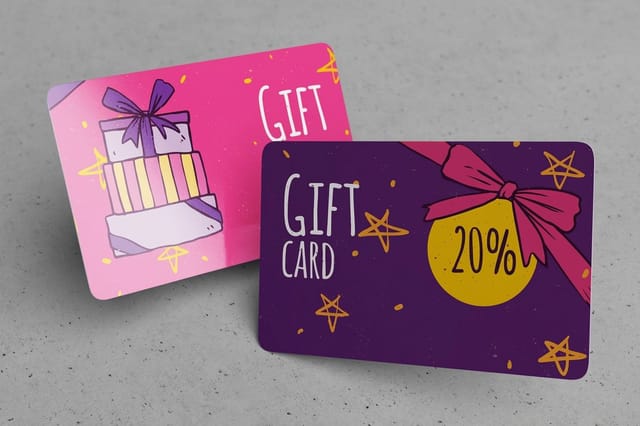
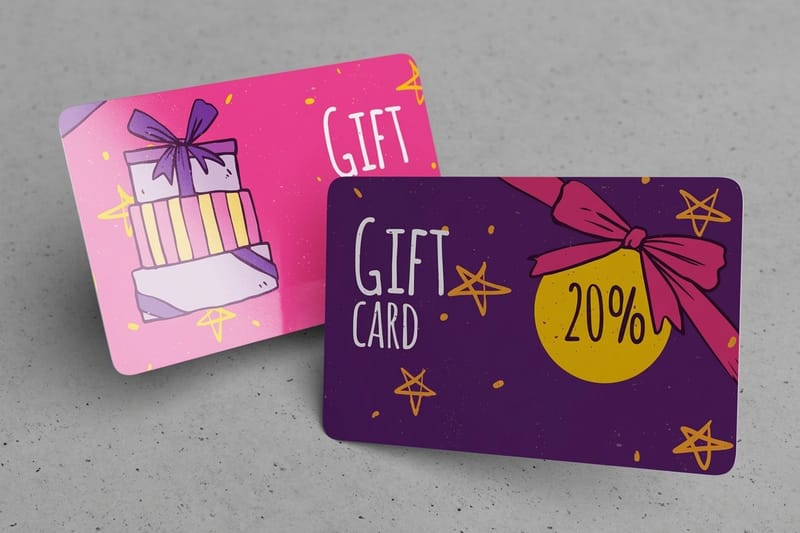
Codes are where VDP becomes infrastructure. Unique coupon codes let you trace every redemption to the exact piece that drove it, turning a mail campaign into measurable media. QR codes can each carry their own destination, one recipient lands on a personalized page, another on their local store. Plastic gift cards use the same engine for the unique number every card needs.
Images are the advanced move: an image slot in the template that swaps per row, the nearest location's photo, the recipient's product category, a tier badge on a loyalty card. Every one of these is just another column in the file. If you can put it in a spreadsheet, the press can put it on the piece.
The flagship use: personalized direct mail

Direct mail is where VDP earns its keep, because mail is expensive per impression and personalization protects that spend. A campaign built on direct mail postcards, 500 or more at $0.515 First Class postage per 4 by 6 card, uses variable data twice: once for the address block that gets each card delivered, and once for the message side, the name, the tailored offer, the code that tracks response.
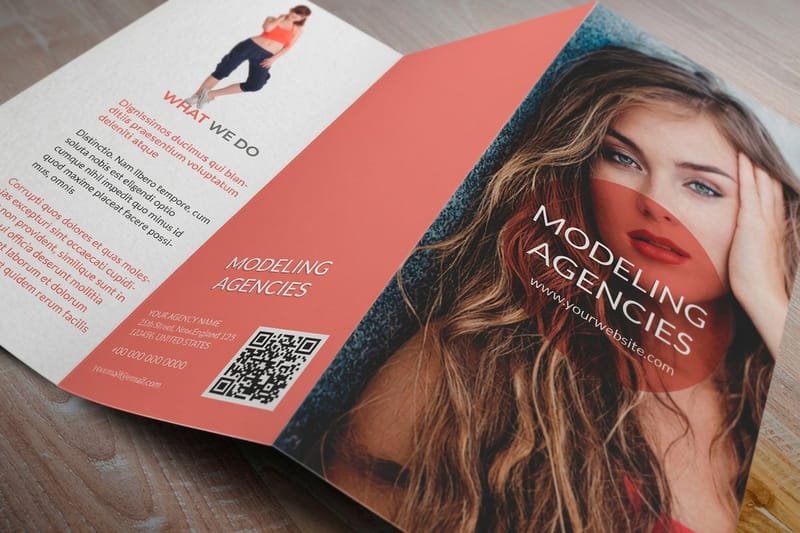
Direct mail brochures extend the same logic to pieces with room to sell: variable cover lines, segment-specific inserts of content, offers matched to purchase history. Letters, the highest-trust format in the mailbox, are almost pointless without VDP, a letter that does not know your name is a flyer in an envelope.
VDP handles the piece; delivery is its own discipline. Our direct mail and targeted mailing service covers lists, presorting, and postage, and EDDM covers the no-list alternative, saturating chosen postal routes. The strongest campaigns combine them: EDDM for area coverage, VDP-personalized targeted mail for the high-value list.
Preparing a data file that merges cleanly
Every VDP disappointment traces back to the file, so prepare it like it will be printed verbatim, because it will. One row per recipient. One column per variable field. A header row with unambiguous names: first_name, last_name, address1, city, state, zip, offer, code. CSV or Excel both work.
Then clean it: deduplicate against itself so nobody gets two pieces, normalize casing so JOHN and john both print as John, verify addresses against postal standards so deliverable mail stays deliverable, and read a random fifty rows with human eyes. Empty cells need a decision too, a fallback value like Neighbor beats a blank greeting.
Finally, think about field lengths in the design. The template must survive its longest value: a name field sized for Kim will mutilate Alexandrina. We proof merged samples covering your longest and shortest rows before printing, and the printing guides cover the file-side fundamentals if your team is building the template in-house.
Beyond the mailbox: cards, codes, and controlled documents
Strip the addressing away and VDP is simply per-piece uniqueness, which several product families need for reasons that have nothing to do with marketing. Gift cards and loyalty cards each need their own number and code to exist in a point-of-sale system. Membership cards carry names and tiers. Access passes carry per-person identifiers.
Coupons and vouchers use unique codes as fraud control, a code that redeems once cannot circulate on a deal forum the way a generic code can. Event credentials use per-piece names and QR codes for door scanning. In each case the variable element is small, but it is the difference between a printed rectangle and a functioning instrument.
For the simplest version of per-piece uniqueness, a consecutive number and nothing else, our sequential numbering service covers tickets and forms without a data file at all. And when the unique element must be machine-readable at a register or a door, barcoding turns the same data into scannable symbols.
What VDP costs and how to order it

Variable data runs on digital presses, so the printing itself prices like a digital run: no plates, per-unit cost falling with quantity. The variable layer adds a setup step, mapping your columns to the template fields and proofing the merge, which is a fixed cost that spreads thinner as the run grows. Unique codes and swapped images add complexity to setup, not meaningfully to the per-piece price.
To price the print side, configure the base product in the live configurator, the direct mail postcard panel below shows real numbers for this page's example. For the data side, reach our team through the services hub with your field list and row count, and we will quote the setup and proofing.
If your campaign also needs delivery, lists, presorting, postage, fold the direct mail service into the same order and the pieces go from press to postal stream without touching your desk. One project, printed, personalized, and mailed.
Compare the options
Ways to run a print job, side by side
Variable data is one of several ways to structure a run: on our order pages it is a $69 line on standard postcards and $75 on business cards, while numbering alone is a $40 black ink line on 50 event tickets. It sits against static, numbered, and versioned printing as follows.
| Approach | What it does | Best for |
|---|---|---|
| Variable data printing | Merges a data file into your design so every piece prints with its own text, code, or image in one run. | Personalized direct mail, unique offers and codes, addressed pieces, and loyalty cards. |
| Static printing | Prints the identical design on every piece, the classic run with one version for everyone. | Brand pieces where the message does not change: brochures, signage, business cards. |
| Sequential numbering | Prints a consecutive number on each piece, a simple single-field version of variable data. | Tickets, invoices, forms, and anything that needs counting or audit control. |
| Versioned printing | Splits one run into a handful of fixed versions, by region, store, or language, without per-piece data. | Campaigns with a few variants rather than a unique piece per recipient. |
%22%2F%3E%3Ccircle%20cx%3D%2249%22%20cy%3D%2220%22%20r%3D%2224%22%20fill%3D%22%232dd4bf%22%20opacity%3D%220.15%22%2F%3E%3Ccircle%20cx%3D%2254%22%20cy%3D%2227%22%20r%3D%22-3%22%20fill%3D%22%232dd4bf%22%20opacity%3D%220.1%22%2F%3E%3Crect%20x%3D%2279%22%20y%3D%22-9%22%20width%3D%2234%22%20height%3D%2220%22%20rx%3D%224%22%20fill%3D%22%232dd4bf%22%20opacity%3D%220.08%22%20transform%3D%22rotate(44%2080%2030)%22%2F%3E%3C%2Fsvg%3E)
Infographic
How the merge decides what prints on each piece
From a spreadsheet and a template to a run where every piece is unique, a VDP job comes together in four stages; on a mailed postcard run that means 4 business days to print and 1 to 4 more for mail processing.
The press composes each piece from your template and one row of data, so ten thousand unique pieces run at the speed of ten thousand identical ones.
Specs and pricing
What a personalized postcard costs to print
The print side of a VDP job prices like the product it runs on. The direct mail postcard comes in nine sizes from 4.25 by 5.5 to 6 by 11 inches on 14pt or 16pt gloss, matte or UV cover, or 14pt uncoated, from 500 cards with 4 business days of production. Here are its live specs and price-per-unit, the format personalization uses most, straight from 4OVER4.COM.
| Quantity | Price Per Unit | Total |
|---|---|---|
| 500 | 17.9¢ | $89.68 |
| 1,000 | 17.1¢ | $170.53 |
| 2,000 | 9.35¢ | $186.95 |
| 3,000 | 6.84¢ | $205.13 |
| 4,000 | 5.58¢ | $223.31 |
| 5,000 | 4.83¢ | $241.51 |
| 6,000 | 4.56¢ | $273.85 |
| 7,000 | 4.37¢ | $306.18 |
Personalize these
Products that run with variable data
Direct mail postcards in nine sizes from 500 cards, direct mail brochures from 8.5 by 11 to 11 by 17 inches from 500, and 30 mil plastic gift cards with sequential numbering and barcode options from 250.
Wally explains variable data printing
One template, one spreadsheet, every piece unique.
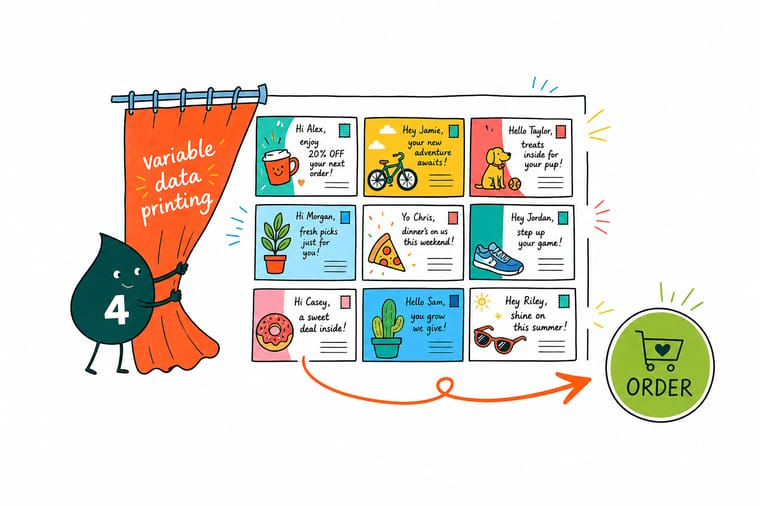
Wally thinks of VDP as a duplicating machine that refuses to duplicate: the template holds the design steady while every row of your spreadsheet changes the name, the offer, and the code on its way through the press. Clean your data like it will be printed verbatim, because it will. Then let 4OVER4 merge, proof, print, and mail the whole run.
Start a variable data project →%22%2F%3E%3Ccircle%20cx%3D%2242%22%20cy%3D%2249%22%20r%3D%2227%22%20fill%3D%22%23f59e0b%22%20opacity%3D%220.15%22%2F%3E%3Ccircle%20cx%3D%2278%22%20cy%3D%2258%22%20r%3D%2214%22%20fill%3D%22%23f59e0b%22%20opacity%3D%220.1%22%2F%3E%3Crect%20x%3D%2272%22%20y%3D%2229%22%20width%3D%2227%22%20height%3D%2234%22%20rx%3D%224%22%20fill%3D%22%23f59e0b%22%20opacity%3D%220.08%22%20transform%3D%22rotate(37%2080%2030)%22%2F%3E%3C%2Fsvg%3E)
Get Started
Ready to print a run where every piece is unique?
Bring your template and your data to 4OVER4.COM and we will merge, proof, and print the run, and mail it too if you want. Configure the base piece and watch the price update live.
Explore more
Where to go next
By the numbers
Every piece different, every piece checked
Common Questions
Common questions about variable data printing
What is variable data printing?
Variable data printing, usually shortened to VDP, is digital printing driven by a data file. Your design is built as a template with variable fields, a name, an address block, an offer, a code, an image slot, and a spreadsheet supplies the content for each field on each piece. The press then prints every piece unique in a single continuous run, at the same speed as a static job. It is the technology behind mail that greets you by name and gift cards that each carry their own number.
Why does personalization improve response rates?
Because relevance decides whether a piece gets read or binned, and personalization is manufactured relevance. A postcard that names the recipient, references their neighborhood, or speaks to their purchase history clears the first filter, this is about me, that generic mail never clears. The industry has measured this effect for decades across direct mail formats, and the mechanism is intuitive: people read what is addressed to them. VDP is how that relevance gets printed at scale without hand-producing each piece.
What can actually vary from piece to piece?
Almost any element of the design. Text fields are the everyday case: names, salutations, addresses, offer amounts, expiry dates. Codes are next: unique coupon codes, serial numbers, and QR codes that each point to their own destination. Images can swap too, so a real estate mailer shows the listing nearest each recipient, or a loyalty card carries a tier badge. The rule of thumb: if it lives in a column of your spreadsheet, it can vary on the piece.
What does my data file need to look like?
A clean spreadsheet, one row per recipient, one column per variable field, with a header row naming each column. CSV or Excel both work. The quality of the output is exactly the quality of the data, so the file should be deduplicated, consistently cased, and spell-checked before it is submitted, the press will print Mr. jOHN smITH exactly as written. Map each column to its field in the design, and we proof a sample of merged pieces before the run prints.
Which products can be printed with variable data?
The heaviest use is direct mail: postcards, brochures, and letters that carry each recipient's address and a personalized message or offer. Plastic gift cards and loyalty cards use VDP for unique numbers and codes. Labels can carry sequential or per-unit data. If a product prints digitally at 4OVER4, variable fields are usually possible, so if your idea does not match a listed product, ask through the services hub and we will confirm the setup.
How is VDP different from mail merge on my office printer?
Mechanically they share an idea, template plus data, but the scale and output are different worlds. A production press runs thousands of unique pieces per hour on real card and cover stocks, with color management, finishing, and postal presorting attached. An office mail merge tops out at letter paper and small volumes. VDP also merges into professional layouts, variable images, coded QR, so the personalized piece is a designed object, not a form letter.
How much does variable data printing cost?
VDP runs on digital presses, so there is no plate charge and the cost per piece is close to a static digital run, the variability itself adds mostly setup, mapping your data to the template and proofing the merge. That setup is fixed, so the per-piece premium shrinks as quantity grows. Configure the base product, direct mail postcards for example, in the live configurator for the print cost, and our team quotes the data setup based on your file and fields.
Legal Disclaimer
Gold Standard guarantees apply to all standard orders placed through 4over4.com. Price match requires verifiable proof of a competitor's published price for an equivalent product with matching specifications and turnaround time. Satisfaction guarantee covers manufacturing defects and print quality issues. Contact support with order number and documentation.
