
The 6 Window Graphics That Turn Storefront Glass Into a Salesperson
Your window is already paid for, already faces the sidewalk, and already works after closing. Six printed pieces are what turn it into a sign, and each one has a job, a side of the glass it belongs on, and a live price below.
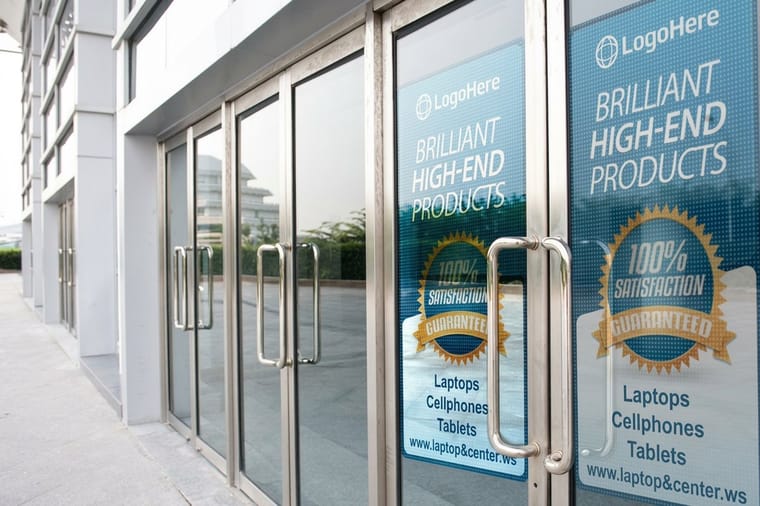
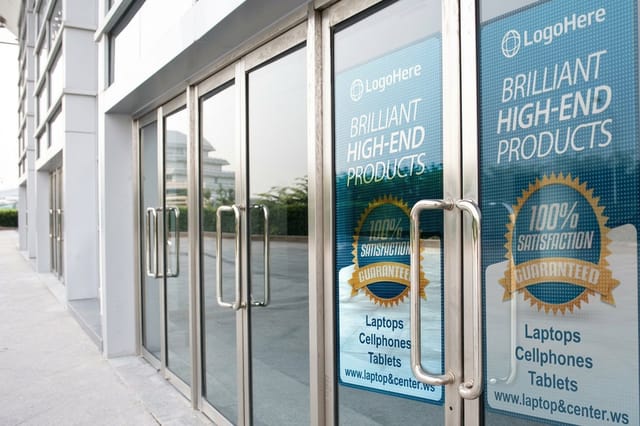
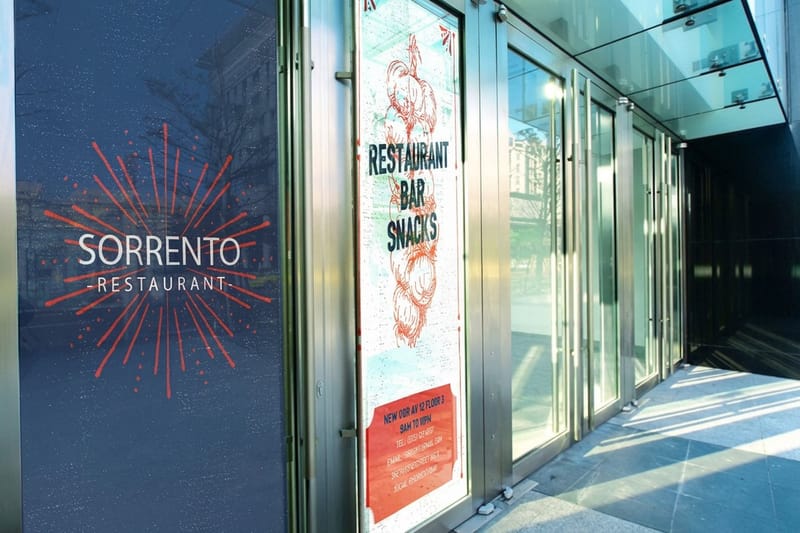
A complete storefront window graphics set is six pieces: perforated window vinyl, front adhesive vinyl, frosted etched vinyl, white window clings, clear window clings and door decals. Perf covers a whole pane and still lets staff see out, the front adhesive band carries the permanent name from behind the glass, frosted film screens what should not be on show, the two clings carry promotions you swap out, and the door decal answers the last question at the handle.
The picks
Six window materials, from clings to frosted etch
Start here. These are the six products that make up a storefront window set. Clings and perf build in 2 business days, adhesive and frosted vinyl in four, so order them in one go and the color, the material weight and the turnaround stay aligned. Read on for what each piece does and where it belongs on the glass. Every panel can be laid out from scratch in our free online designer or started from a retail-ready design template.


Placement
Which piece goes on which pane, and which side
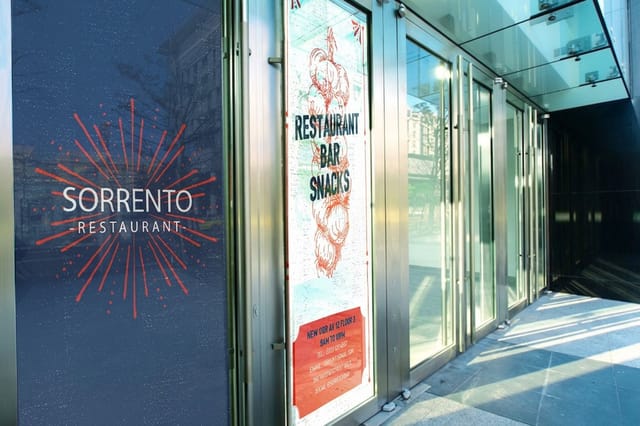
The most expensive mistake on a storefront job is not the artwork. It is mounting a graphic on the wrong face of the glass, which turns a name band backwards or leaves a cling in the sun where it will curl. Read the row, tap the piece to jump to its section, then put it where it belongs.
| Piece | Where it sits | Which face of the glass | What it is for |
|---|---|---|---|
| 1. Perforated window vinyl | The big display window, full panel | Outside face of the glass | A full-size image that people outside see and staff inside can still see through. It is the only piece that covers the whole window without going dark. |
| 2. Front adhesive vinyl | Name band across the top of the glass, 12 in to 24 in tall | Inside face of the glass | The permanent shop name and logo. The adhesive is on the printed face, so the glass sits over the ink and protects it. |
| 3. Frosted etched vinyl | Lower panel and the door, a band 6 in to 12 in tall | Inside face, or outside on a door | Sandblasted-glass look. Screens the cash wrap and the stockroom door while daylight still comes through. |
| 4. White window clings | One or two panels, seasonal position | Inside face of the glass | The promotion that changes. Opaque white base holds the color, and it peels off with no residue for the next campaign. |
| 5. Clear window clings | Scattered accents, hours block, QR square | Inside face of the glass | A lighter touch than the white cling. The art appears to float on the glass with no visible edge. |
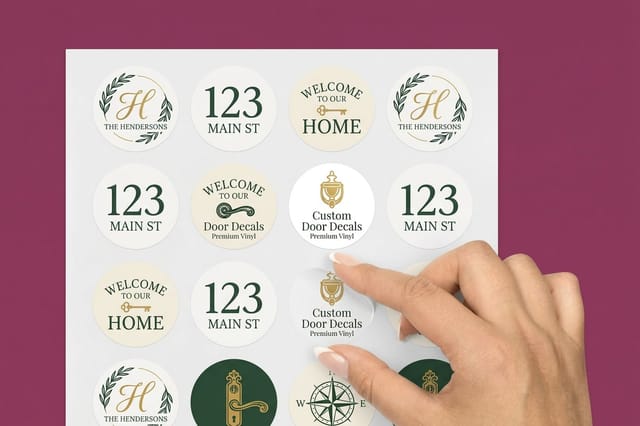
| 6. Door decals | Entry door, at the handle and at eye level | Outside face of the door glass | Hours, push and pull, payment marks. The last thing read before the hand touches the handle. |
Start here
How the six pieces work as one storefront
Split the glass into permanent and temporary before you order anything. The name band, the frosted privacy film and the door decal go up once and stay for years, which is why they are worth mounting behind the glass or laminating properly. The perf panel changes with the season or the campaign. The two clings change whenever you want them to. Sort the six pieces into those two piles first and the order writes itself, because you stop paying for permanence on a message that has a six-week life. If you are still deciding what belongs on the glass at all, window marketing for retail covers the thinking, and measuring and templating window graphics covers getting the sizes right before you upload a file.
1. Perforated window vinyl: cover the whole window and still see the street
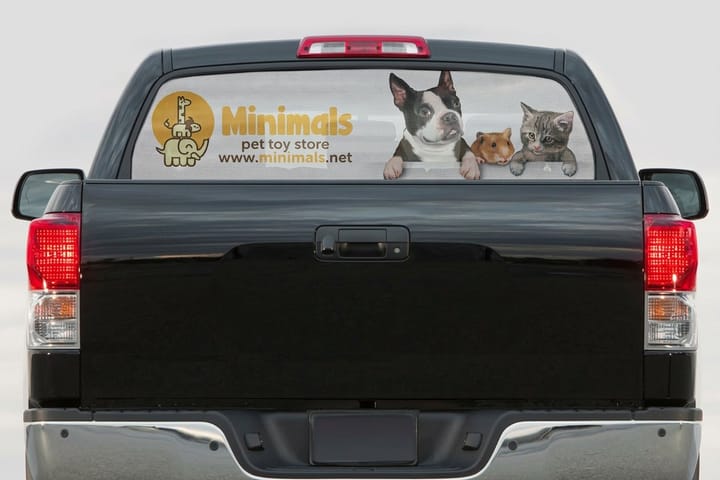
This is the piece that changes a storefront. Perforated window vinyl is printed film punched with a grid of tiny holes, so from the sidewalk you read a full-size photograph and from inside the shop you still look out at the parking meters. Nothing else in the kit gives you a whole pane of image without turning the room into a box.
The trade-off is light. Half the material is hole, and a perf panel takes a noticeable bite out of the daylight reaching your floor, so a narrow shop with one window feels dimmer the day it goes up. The one-way effect also reverses after dark: once the interior lights are brighter than the street, the graphic goes flat and passers-by see straight in. If your evening hours matter, keep the perf to the upper two thirds of the pane and leave the shopper eye line clear.
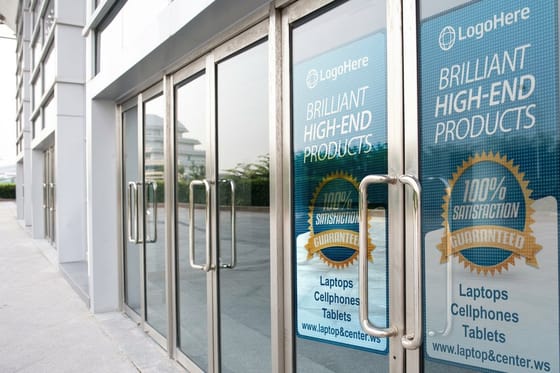
Two ordering details decide whether it lasts a season or three years. Perf mounts on the outside face, because the print has to point outward and the holes have to stay open, which means it takes the weather. Ask for the optically clear overlaminate on any exterior mount: without it, road grit packs into the perforations and the image goes gray and muddy within months. Our window perf guide walks through the hole pattern options, and perforated film compared with decals covers when a solid decal is the better call.
2. Front adhesive vinyl: the shop name, mounted behind the glass
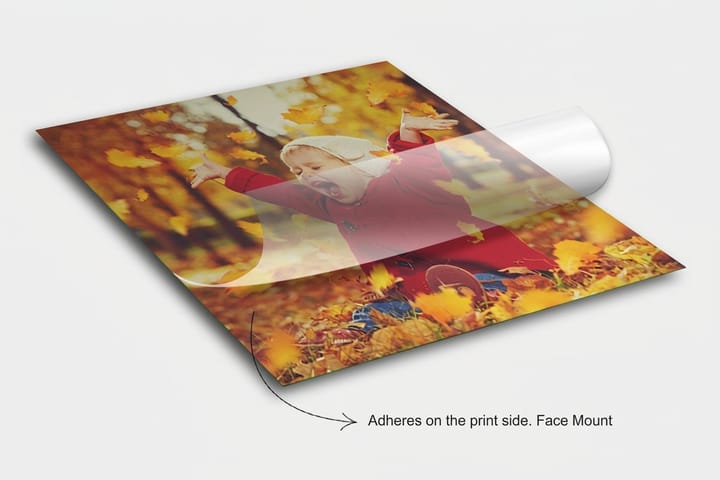
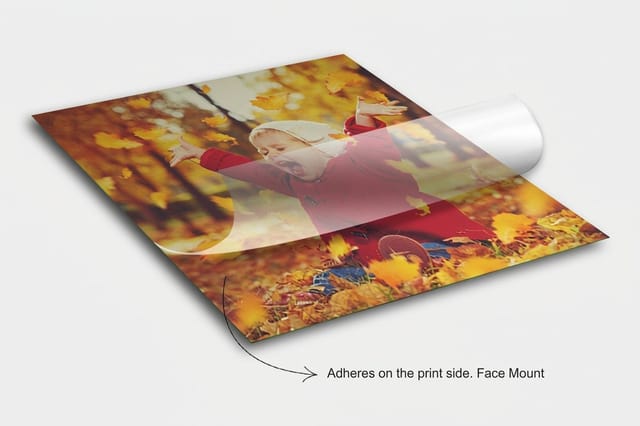
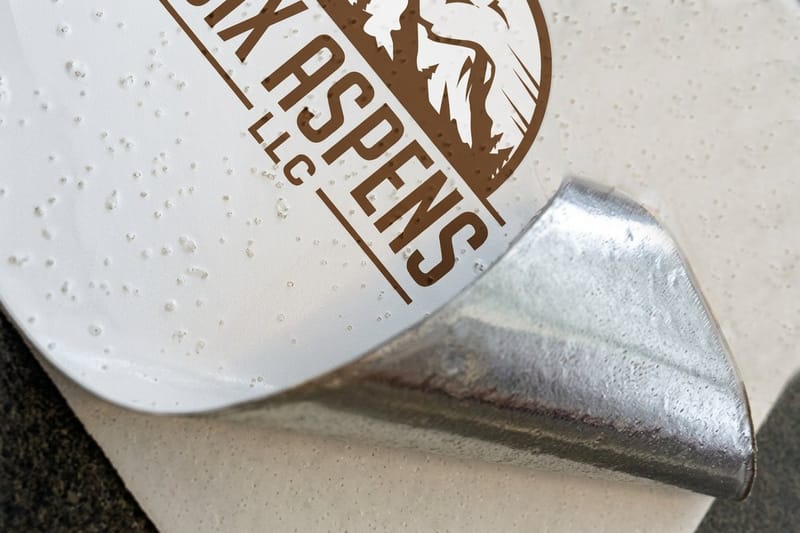
The name band across the top of your window should outlive every promotion under it, and that means mounting it where nothing can reach it. Front adhesive vinyl carries its adhesive on the printed face instead of the back, so it goes on the inside of the glass and reads correctly from the sidewalk with the pane itself acting as a permanent laminate over the ink.
Set up the file mirrored. Because the printed side is the side that touches the glass, artwork has to be flipped horizontally before it goes to press, and a file sent unmirrored comes back as a graphic that reads backwards from the street. Any print shop will flip it for you if you say the words, but say them on the order, not after the box arrives.
What you get for that extra step is a graphic no one can pick at. Rain, road salt, a razor blade and the window cleaner's squeegee all stay on the far side of the glass, so an inside-mounted logo holds its edges for years while an outside decal in the same spot starts lifting at the corners. Compare that with the outside-mount options in our see-through vinyl explainer, and if the whole storefront is still on the drawing board, choosing window signage lays out the decision in order.
3. Frosted etched vinyl: privacy that does not cost you daylight

Every storefront has a stretch of glass that should not be a window: the back of the cash wrap, the stockroom door, the fitting room wall, the lower panel where a passer-by looks straight at a customer's back. Frosted etched vinyl handles all of it. The film reads as sandblasted glass, blurring shapes to a soft silhouette while daylight keeps coming through, so the space stays bright and the view stops.
The standard move is a horizontal band rather than a full panel. Six to twelve inches across the lower third screens what needs screening and leaves the display height clear, and the same band on a full-height glass door doubles as the visibility marking that stops people walking into a pane they did not see. Many local building codes require some marking on large glazed doors, so check what your jurisdiction asks for before you pick the height.
Frosted film also cuts cleanly, which is why it is the usual choice for a logo etched into the entry door or lettering that has to look permanent without looking loud. Order it as a shape, not a rectangle, and it stops reading like a sticker. For the layout side, our guide on designing window sign decals covers weight, spacing and how small type behaves at reading distance.
4. White window clings: the promotion you change every six weeks

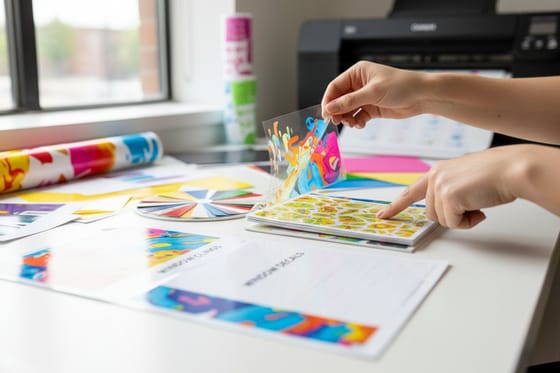
Permanent vinyl handles the name. The sale needs something you can pull off with a fingernail. White window clings are static cling film with no adhesive at all, held on by suction against smooth glass, and the opaque white base is what keeps a red headline looking red instead of dissolving into whatever is behind the pane.
They come off clean and go back on. Peel one down, lay it flat between the sheets it shipped in, and the same holiday set goes up again next year, which is why a shop that rotates four promotions a year usually prints all four at once and stores three. There is no residue to scrape, so the glass is ready for the next piece in about two minutes.
Know where they fail. Static cling wants smooth, clean, room-temperature glass: dust breaks the grip, textured or rippled glass never holds properly, and a cling on the outside face in full summer sun will curl at a corner and drop. Mount them inside, wipe the pane first, and they stay put. The mechanics are worth two minutes in how static cling vinyl works, and applying window clings covers getting one up without a trapped bubble.
5. Clear window clings: art that floats on the glass
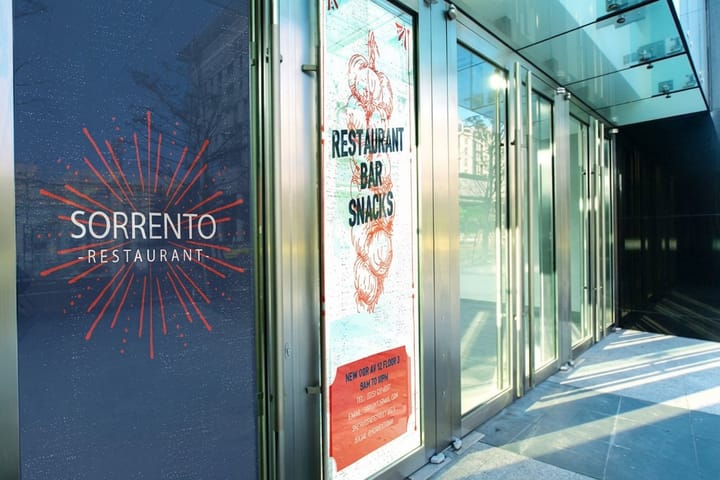
Clear window clings are the same removable static film without the white base, so there is no visible panel edge and the design sits on the glass as if it were painted there. This is the piece for the hours block, a QR square, a seasonal motif in the corners, anything that should be legible without taking a whole pane out of service.
Design for it differently than you would for white. On clear film the glass and whatever sits behind it become your background, so pale tints, thin strokes and light type wash out against a bright street reflection. Keep the palette to solid saturated colors, set type heavier than feels necessary, and treat any area you need to read reliably as a place where a white cling would do the job better.
Clear and white clings use the same film and the same handling, and most storefronts run both: white for the loud offer on the main pane, clear for the quiet details on the side lights and the door. If you are weighing clings against permanent decals for a given spot, clings compared with decals settles it, and cling pricing and sizes shows how the cost moves with the panel size.
6. Door decals: the last six inches before the handle
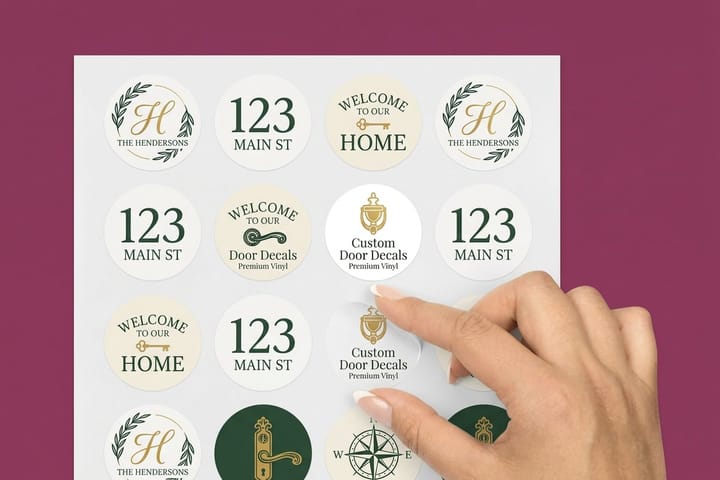
A shopper standing at your door has one question left, and it is whether you are open. Door decals answer it: hours, push or pull, the payment and delivery marks, the phone number for the person who arrives after close. This is the smallest piece in the kit and the one customers actually read from twelve inches away.
Height decides whether it works. Put the hours block at roughly 55 to 60 inches from the ground, which is adult eye level, and put push or pull right at the handle where the hand is already going. Anything below knee height is decoration. Keep the decal off the rubber weatherstrip and off the frame, because vinyl bridging glass and metal lifts at the joint the first cold week.
Order the hours as a separate small decal rather than building them into the big window graphic. Hours change, seasonal closures happen, and replacing one $93.37 door decal beats reprinting a full window panel because you started opening at nine. Match the type and the color to the rest of the set so the door looks like part of the storefront instead of an afterthought, and see the complete guide to retail signage for how the door sits in the wider sign plan.
Specs and pricing
Compare the two workhorses: perf and white clings
Perforated vinyl carries the big image and white clings carry the offer, so those are the two pieces a shop reorders most. Perforated window vinyl builds in 2 business days and white clings in two as well, and both are sized and quoted by the square foot below.

| Quantity | Price Per Unit | Total |
|---|---|---|
| 1 | $25.00 | $25.00 |
| Quantity | Price Per Unit | Total |
|---|---|---|
| 1 | $30.00 | $30.00 |
Wally explains the six-piece window set
Every piece has a pane and a side of the glass
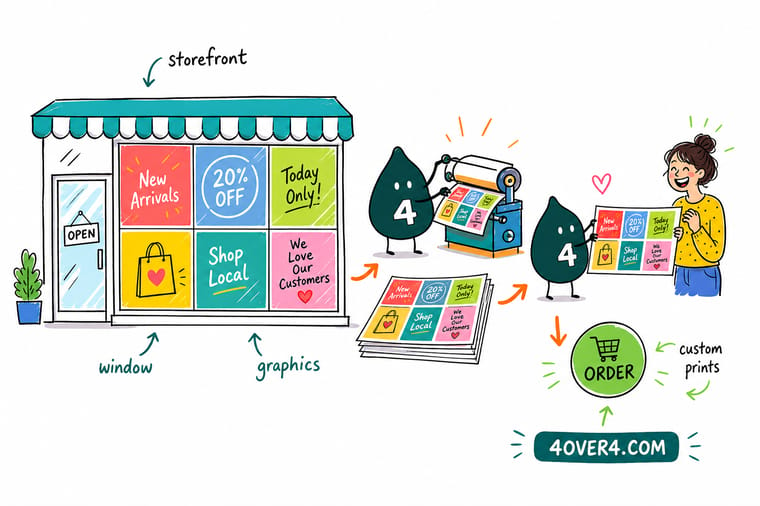
Wally walks the storefront the way a shopper does. The perf panel pulls the eye from across the street, the name band above it says whose shop this is, the frosted band screens the cash wrap, the clings carry this month's offer, and the door decal answers the last question before the handle. Print the permanent pieces once and swap the clings whenever the message changes.
Shop retail printing →Explore more
Where to go next

By the numbers
What a pane of glass can be printed with
Common Questions
Common questions about storefront window graphics
What window graphics does a storefront actually need?
Six pieces cover a normal shop front: perforated window vinyl for a full-pane image you can still see through, front adhesive vinyl for the permanent name band, frosted etched vinyl for privacy on the lower panel and the door, white window clings for the promotion that changes, clear window clings for hours and small details, and door decals at the entry. You can buy any one on its own, but printing them together is what keeps the color and the type consistent across the whole glass.
How much does a storefront window graphics set cost?
Pricing depends on the size of each panel, the material, and the quantity, and the configurator updates live as you build the order. Starting points at 4OVER4.COM are $25 for front adhesive vinyl, $25 for frosted etched vinyl, $25 for white window clings, $30 for perforated window vinyl, $30 for clear window clings, and $93.37 for door decals. Large panes cost more because the material is priced by area, so a full display window is the biggest line on the order.
Which side of the glass does each piece go on?
Perforated window vinyl mounts on the outside face, because the print has to point outward and the perforations have to stay open. Front adhesive vinyl mounts on the inside, since its adhesive sits on the printed face, which is also why that artwork has to be mirrored before printing. Clings go on the inside, where they are out of the sun and away from the weather. Door decals normally go on the outside of the door glass so they read at the handle.
Can you see out through perforated window vinyl at night?
The one-way effect depends on which side is brighter. In daylight the street is brighter than your interior, so people outside see the graphic and people inside see out. After dark, with the shop lit and the street dim, that reverses and passers-by can see in while the graphic goes flat. If your evening trade matters, run the perf across the upper part of the pane and keep the eye-level band clear.
Do window clings damage the glass?
No. Static cling film has no adhesive at all, so it leaves nothing behind and needs no solvent or scraper. What it does need is a clean, smooth, dry pane: dust and grease break the suction, textured or rippled glass never holds properly, and a cling on the outside face in strong summer sun will curl at a corner and fall. Wipe the glass, mount inside, and store the cling flat between its backing sheets for reuse.
How do I measure a shop window for graphics?
Measure each pane individually, edge of glass to edge of glass, not the width of the whole storefront. A shop front is a run of separate panes divided by mullions, and a single graphic ordered to the full width gets sliced by every frame it crosses. Then subtract about a quarter inch on each side so the vinyl sits inside the rubber seal rather than trying to bridge glass and metal, which is where a graphic lifts first.
How long do storefront window graphics last?
An inside-mounted graphic outlasts an outside-mounted one by a wide margin, because the glass takes the rain, the salt and the squeegee instead of the ink. Front adhesive vinyl behind the glass holds its edges for years. Perforated vinyl on the outside face depends on the overlaminate, and without one the holes fill with road grit and the image goes gray. Clings are the short-life piece by design, meant to come down and go back up with each campaign.
Can I keep every piece looking like one storefront?
Use one type family, two brand colors and one logo lockup across all six pieces, then change only the message. The fastest way to hold that line on a rushed order is to start each panel from the same file in our free online designer or from a retail-ready design template, so the name band, the cling and the door decal all come out of the same layout instead of three different ones.
Get Started
Order 25 door decals from $93.37 for the entrance
Print the six-piece storefront window set as one branded order at 4OVER4.COM. Pick your panel sizes, materials and finishes, and watch every price update live as you build it.
Legal Disclaimer
Gold Standard guarantees apply to all standard orders placed through 4over4.com. Price match requires verifiable proof of a competitor's published price for an equivalent product with matching specifications and turnaround time. Satisfaction guarantee covers manufacturing defects and print quality issues. Contact support with order number and documentation. On-time delivery rate based on tracked orders 1999 to 2026. Individual results may vary based on shipping carrier performance.
