
How Static Cling Vinyl Holds on Glass Without Any Adhesive


Tobias is our voice for cutting, binding and large format, built from the knowledge of our production team, with over 20 years in printing.
A cling is bare vinyl with nothing on the back. Something other than glue holds it to the pane, clear and white backings change what the street sees, and there is a point where a cling should be a decal instead.
Static cling vinyl is an unsupported film with no adhesive on it at all. Pressed flat against smooth glass with the air squeegeed out, the two surfaces sit close enough that air pressure alone holds the sheet up. That is why it peels off clean, goes back up next season, and fails on anything textured, dusty or porous. Clear backing lets the window show through, white backing keeps the color dense, and neither one survives on the outdoor face of the glass.
Quick answer
Nothing between the film and the glass
A static cling holds by contact, not by glue. The film is soft, unsupported vinyl with a completely bare back. Press it to clean glass, push the air out from the center, and air pressure keeps it flat against the pane. Remove it with a fingernail and there is no residue to clean up, which is why the same graphic can run for several seasons. The trade off is fragility: on frosted, textured or dusty surfaces it never seats, and on the outdoor face of a window the weather takes it down.
What Actually Holds a Cling Against the Glass
A static cling is a single layer of soft, unsupported vinyl, usually somewhere near 8 mil thick, printed on one face and left completely bare on the other. There is no adhesive, no release liner tack, no carrier. It is a sheet of plastic that happens to be flexible and very flat.
Flatness is the whole trick. Press that film against smooth glass and squeegee the air out, and the gap between the two surfaces becomes small enough that ordinary air pressure holds the sheet in place. Static electricity does play a part in the first few seconds, when peeling the film off its stack leaves a charge on it, and the trade name stuck. The hold that lasts a season is contact.
Once you know that, every rule about clings follows from it. Anything that keeps the film from touching the glass beats the hold: a fingerprint of grease, a film of dust, the etched face of a frosted pane, the texture of a molded acrylic panel. That is also why a cling that starts to slip can be revived with plain water on a clean cloth rather than replaced. Wipe the back, wipe the glass, put it up again.
The material has one more consequence worth planning around. Because the film is unsupported, a large sheet is floppy. A 12 by 18 cling goes up alone in a minute. A 24 by 36 wants two pairs of hands or a taped hinge along the top edge, the same technique used on large vinyl decals.
That contact hold works the same on every cling we print, so a window cling or a static cling sticker comes down to three choices on the order: the film, the size and which way the print faces. Every one ships from a single piece.
| Cling | Sizes | Print options | Production |
|---|---|---|---|
| Clear window clings | 11 by 17 up to 40 by 60 inches | Optional spot white ink; reverse print for the inside pane facing out, or regular print facing in | 3 business days |
| White window clings | 11 by 17 up to 40 by 60 inches | Opaque white film, color printed on white | 2 business days |
| Die-cut window clings | 11 by 17 up to 40 by 60 inches | Clear film cut to the artwork outline, with the same white ink and print direction choices | 3 business days |
Upload the artwork at final size and pick the print direction on the order, so a reverse mounted piece arrives mirrored and the words read the right way from the street.
Clear or White Backing, and How to Decide in One Look

This is the only choice on the order form that changes how the finished piece reads from the street, and it is easy to get backwards. Stand outside the window and look at what is behind the glass. That background is what a clear cling will show through your artwork.
| Backing | What the street sees | Best for | Where it disappoints |
|---|---|---|---|
| Clear | The graphic floats on the glass with the display, the lighting and the room visible behind it. | Logos, hours, promotional type over a dressed window you want to keep visible. | Pale colors and fine type against a bright, busy or sunlit background. |
| White | An opaque panel. Colors sit on white the way they do on paper, and the glass behind is blocked. | Photographs, gradients, pastel brand colors, long distance legibility, covering a view you do not want. | Any window where the display or the daylight is part of the sell. |
| Clear with a white underlay | A see through sheet with dense, solid artwork where the white ink sits behind it. | A crisp logo or headline that has to hold its color without blanking out the whole pane. | Designs with soft edges or large photographic areas, where the underlay outline becomes visible. |
Cost sits close together, so let the window decide rather than the price. White window clings start at $25 and clear window clings at $30, both from 4OVER4.COM. The underlay option is worth asking about on any clear job that uses yellow, light blue, pale pink or a thin script, because those are the inks that vanish against a bright sidewalk. The same trade off shows up in labels, covered in our paper, vinyl and clear label comparison.
Putting One Up So It Stays Up
Application takes about two minutes and nearly every failure traces back to the first thirty seconds of it. Glass that looks clean under shop lighting still carries a film of cleaner residue, and residue is the one thing a cling cannot seat through.
- Clean both sides of the glass and let it dry fully. Glass cleaner then a dry lint free cloth. Skip anything with a wax or water repellent additive, which leaves a slick coat the film will slide on.
- Work at room temperature. On cold glass the vinyl stiffens and refuses to lie flat, so let a cling that has been in a delivery van warm up indoors before you unroll it.
- Peel it off the backing sheet and hold it by two corners. Keep fingers off the back face. Skin oil transfers straight onto the surface that has to make contact.
- Touch the middle down first, then sweep outward. A plastic squeegee or a credit card wrapped in a cloth pushes the air to the nearest edge. Working from the center out is what stops a trapped pocket forming.
- Lift and redo anything you do not like. There is no adhesive to wear out, so repositioning costs nothing. That is the advantage a cling has over every sticker you have fought with.
- Store it flat when the promotion ends. Back onto its original liner, or between two sheets of clean paper, laid flat rather than rolled. A cling stored in a rolled tube keeps that curl and fights you next season.
One decision belongs on the order rather than the wall. If the piece is going on the inside pane with the printed face against the glass, so that fingers and cleaning sprays never touch the ink, the artwork has to be mirrored before it goes to press. Say which side of the glass you are mounting on when you order, and check the proof orientation. Setting the file up correctly the first time is the same discipline covered in our guide to how online printing works, and correctly sized layouts are free in the blank template library.
When a Cling Is the Wrong Answer
Clings win on reuse and lose on endurance. A seasonal retailer who changes a window six times a year and keeps every graphic in a drawer is the ideal customer for them. A restaurant that needs its hours on the door for the next three years is not.
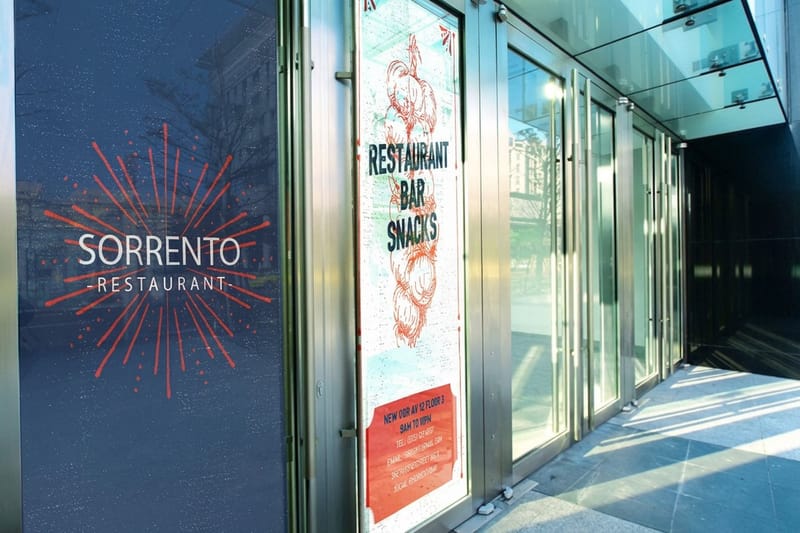
Put an adhesive product on the glass when the graphic faces the weather, when the pane is a swing door that gets pushed by a hand at the same spot all day, or when the message is permanent and nobody should be able to peel it off. Clear window decals handle the outside face of a window and stay through rain. Perforated window vinyl solves a different problem again: it covers a whole shopfront pane with full color artwork while the tiny holes let staff keep the view out and the daylight in, which no cling can do.
Stay with a cling when the piece moves. Price changes, holiday windows, a promotion that runs three weeks, a graphic that travels between two branches, anything a landlord will make you remove. Die-cut window clings take that further by cutting the film to the shape of the artwork, so a logo or a snowflake sits on the glass with no visible rectangle around it. You can see die-cut window clings cut to shape in their product video.
If you are still weighing the two families against each other, the difference in adhesive, removal and lifespan is laid out in stickers versus labels versus decals, and the full range sits in window clings printing and decals printing.
Wally explains static cling
Bare vinyl, clean glass, and the air pushed out
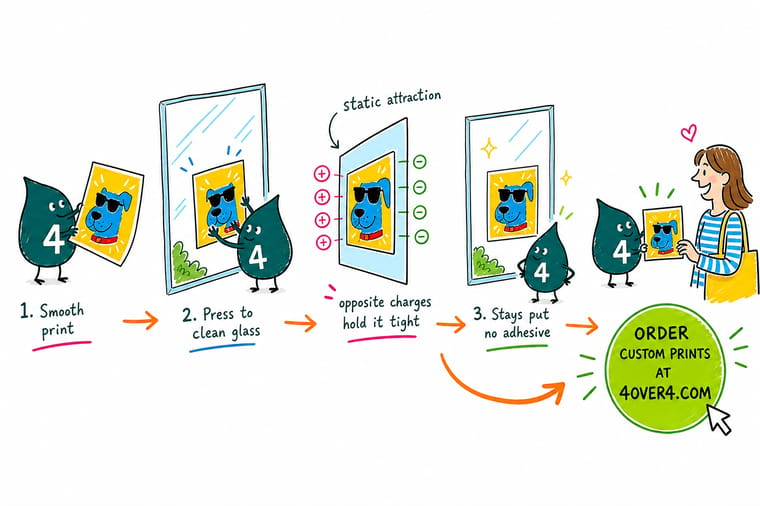
Wally holds the cling by two corners so he never touches the back, wipes the pane until it squeaks, and lays the middle down first. Then he sweeps outward and the air runs to the edge. Nothing sticky is involved, so if it lands crooked he lifts it and starts again. At the end of the season it peels off with a fingernail, goes back on its liner, and waits flat in a drawer for next year.
Order clear window clings →
Specs and pricing
Cling backings, sizes, and starting prices
Compare the two cling backings against perforated window vinyl. White clings start at $25 and clear at $30 in sizes from 11 by 17 up to 40 by 60 inches, and perforated window vinyl starts at $30 in the same range with 2 business days of production. The live configuration choices and starting prices come straight from the 4OVER4.COM configurator.
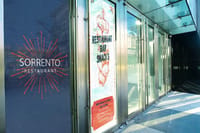


Print it
Order a cling that comes off as easily as it goes on
Order one cling or a hundred. White clings print in 2 business days, clear and die-cut clings in 3, and a clear or die-cut order takes a spot white underlay behind the type when the colors are pale.



Explore more
Where to go next
Apply a large vinyl decal with the hinge method, take old stickers off glass without scratching it, tell stickers, labels and decals apart, compare paper, vinyl and clear face stocks, then shop clings and decals.


By the numbers
Cling and window work against 25 years on press
Common Questions
Your static cling questions, answered
How does static cling vinyl stick without adhesive?
It seats. Static cling is a soft, unsupported vinyl film, calendered thin and left without any glue or liner tack. When you press it against smooth glass and squeegee the air out, almost nothing is left between the two surfaces, so the air pressing on the exposed face holds the sheet flat. The name blames static electricity, which contributes when the film is first peeled, but the lasting hold is the flat contact. That is why a cling on clean glass stays up for months and the same cling on a dusty pane slides down overnight.
Should I order clear or white window clings?
Look at what is behind the glass. If the display, the light or the view is part of the message, order clear so the graphic floats over it. If the artwork has to be read from across a parking lot, or it uses pale colors, or the background behind the glass is busy, order white. White window clings start at $25 and clear window clings at $30 at 4OVER4.COM. A middle path exists on clear film: keep the sheet see through and print a white underlay only behind the type and the logo, so those elements stay dense while the rest of the panel stays transparent.
How long does a window cling last?
Indoors on clean glass, a season or several, and the film usually outlives the promotion printed on it. The limits are heat and dirt rather than time. A cling on a south facing pane in direct summer sun gets hot and soft and can start to curl at the corners, and every time the edge lifts it collects dust that stops it seating again. Wipe the back with clean water when it starts to slip and it will grab again. On the outside face of the glass, plan in days, not months.
Can I put a static cling on the outside of a window?
You can, and it will not stay. There is no adhesive fighting the wind, water runs behind the film at the first edge lift, and one wipe from a passer by takes it down. For anything exposed to weather, use adhesive vinyl. Clear window decals hold on glass through rain, and perforated window vinyl covers a full shopfront pane while staff can still see out. Both are worth the harder removal for outdoor work.
Do I need to mirror the artwork?
Only if the cling goes on the inside pane with the printed face against the glass, which is how a graphic gets protected from fingers and cleaning sprays. In that reverse mounted setup the street reads the ink through the vinyl and the glass, so the file has to be flipped before it goes to press or every word comes out backwards. Say which side of the glass the piece is going on when you order, and check the proof orientation before approving it. A cling applied with the plain side to the glass and the ink facing the room needs no flip.
What is the difference between a window cling and a window decal?
The back of the film. A cling has nothing on it and relies on contact, so it lifts off clean and can be repositioned as many times as you like. A decal carries pressure sensitive adhesive that bonds to the surface, survives outdoors, and needs heat or a solvent to come away. Choose the cling for seasonal promotions, price changes and anything you want to move. Choose the decal for hours of business, a permanent logo on the door, or any graphic on the outside of the glass.
Get Started
Order window clings, printed in 3 business days
Pick clear or white backing, choose your size or a custom die cut shape, and we print clings that hold all season and lift off without a mark.
Legal Disclaimer
Gold Standard guarantees apply to all standard orders placed through 4over4.com. Price match requires verifiable proof of a competitor's published price for an equivalent product with matching specifications and turnaround time. Satisfaction guarantee covers manufacturing defects and print quality issues. Contact support with order number and documentation.
