
9 Notary Launch Essentials That Win Referral Offices Fast
A new notary has a commission, a stamp, and no storefront. This kit is the launch on paper: the card and sales sheet that get you into the referral drawers at title companies and law offices, the forms and envelopes that make every signing feel official, and the pieces that keep the pipeline warm.
The notary launch essentials are nine print pieces that take a new commission to steady bookings: business cards, business forms, sales sheets, flat notecards, printed envelopes, postcards, business flyers, appointment cards, and branded notepads. The card and sales sheet win the referral offices that send the volume, the forms and envelopes make each signing run like a practice rather than a favor, the notecards, postcards, and flyers keep both offices and the public reaching for your name, and the appointment cards and notepads put the next signing in writing and your number on the referral desk.
The picks
Nine pieces for the canvassing route and the signing table
The card at $17.57 for 100 and the sales sheet at $75.80 for 50 go into the referral drawers first. Forms start at $120.82 for 100 and printed #10 envelopes at $142.99 for 250 for the signing table; notecards, postcards, flyers, appointment cards and notepads keep the pipeline warm. Give the card in the referral drawer, the form on the signing table, and the envelope in the mail one look so they read as one practice, then read on for what each piece does.





Design and print help
Your commission number, printed the same on all nine
Referral offices file paperwork all day; yours has to look like the practice they can trust with a closing. Put your name, commission number and one color pair in the same position on the 2 in x 3.5 in card, the 8.5 in x 11 in sales sheet and the carbonless forms, so a title company clerk matches the envelope to the card at a glance.
How they work together
Canvass the offices, run the signing, keep the pipeline warm
Each piece owns a stage of the launch. Run the whole sequence and no part of the pipeline goes quiet, from the first canvassing visit to the thank-you note after a busy closing week.
The launch is a canvassing route: title companies, law offices, banks, hospitals, senior facilities. The card goes in the rolodex, the sales sheet, services, coverage area, hours, fees, goes in the drawer they open when a signing comes up.
Intake forms make each appointment orderly and documented, and completed papers go home in a branded envelope. The signing table is your storefront; these two pieces are its fixtures.
A handwritten notecard thanks every office that refers, postcards remind the list you exist before closing season, flyers on community boards catch the walk-in public need, appointment cards put the next signing in writing, and a branded notepad keeps your number on the referral desk all week.
1. Business cards: the card in the escrow officer's drawer
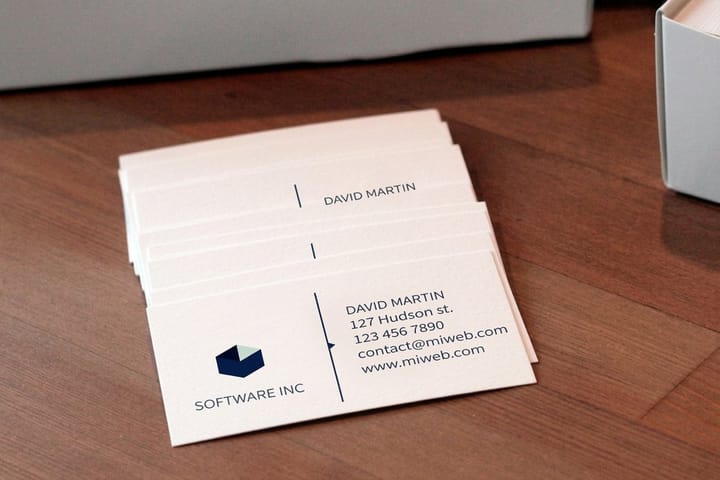
Notary work is decided by whoever is asked "do you know a notary?" and the card is how your name becomes the answer. Title companies, banks, law offices, and care facilities all keep a drawer of these; the launch job is getting into it.
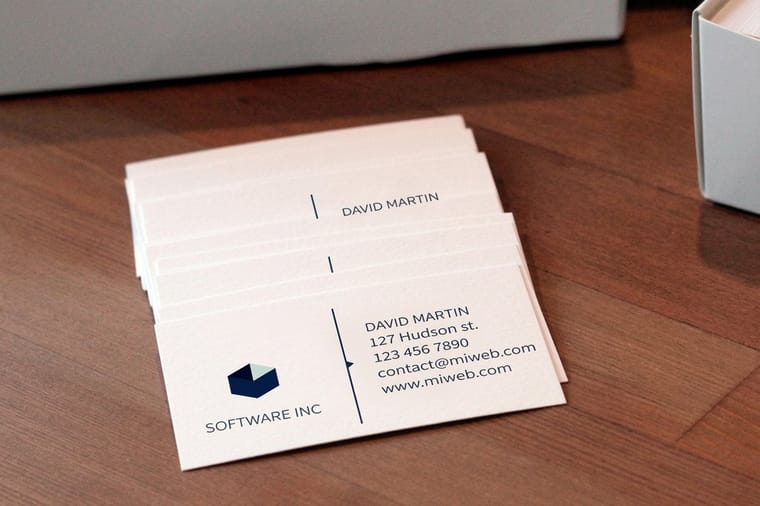
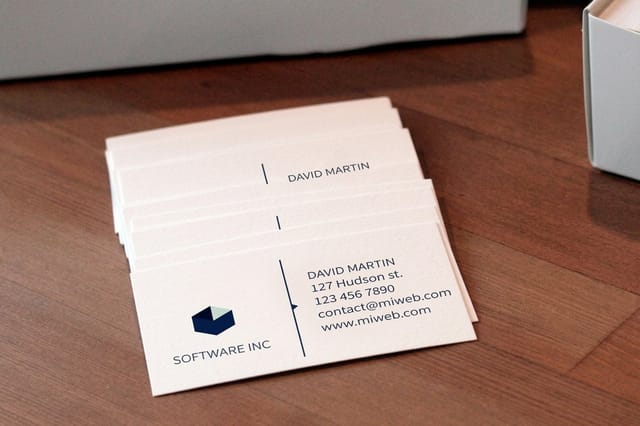
State the essentials plainly: commissioned notary, mobile if you travel, coverage area, evening and weekend availability, and both phone and text. The back is prime space for a QR code to your booking calendar. Our rundown of what to include on a business card keeps it disciplined, and where to leave business cards maps the counters and offices that actually get asked for notaries.
Order enough to be generous. A card left in every office you canvass is the cheapest distribution the trade has.
2. Business forms: the signing documented in duplicate
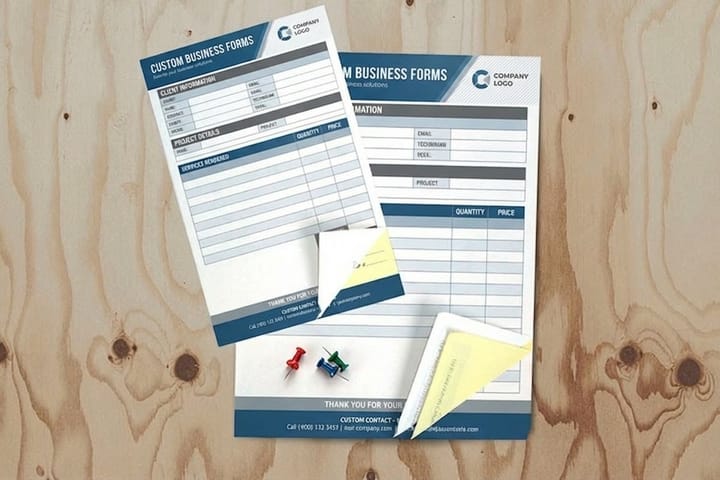
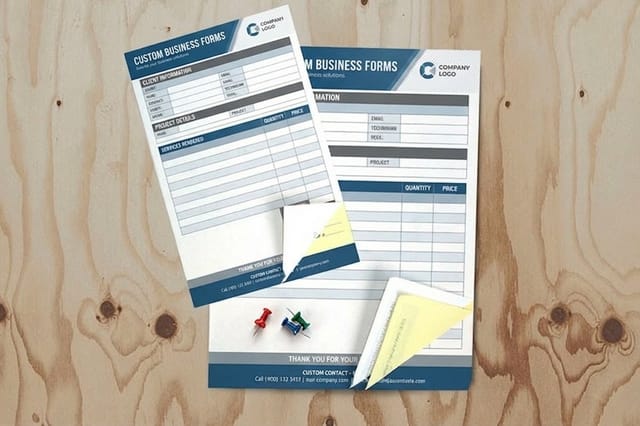
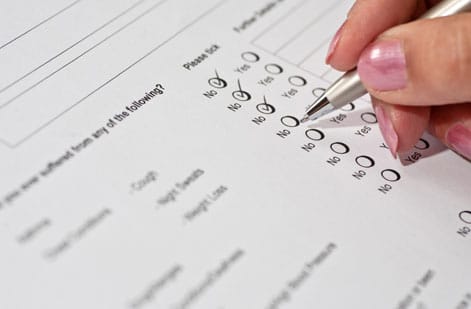
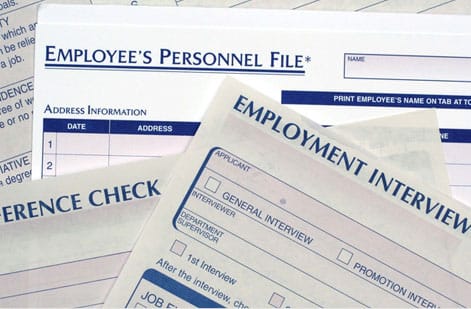
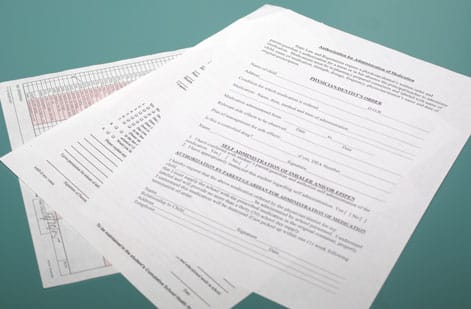
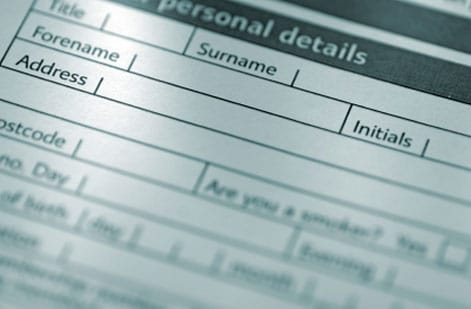
Every signing produces details worth recording beyond the journal: client contact, documents handled, ID verified, fees collected, mileage if you traveled. A printed intake form standardizes all of it, and a carbonless set gives the client a copy while yours goes to the file.
For a profession built on correct paperwork, your own paperwork is evidence of competence. A branded form at the signing table says this appointment is a process, not a favor, and the office copy builds the client list your postcards will mail later. Our explainer on what carbonless forms are covers two-part and three-part sequences, and sequential numbering keeps your records audit-ready.
It is the piece nobody sees in your marketing and everybody experiences at the table.
3. Sales sheets get filed for the day a signing appears
The card gets you remembered; the sales sheet gets you booked. It is the one-page document a title company files and pulls out the day a loan signing needs covering: your services, coverage radius, hours, fees, commission and insurance details, all answerable without calling you first.
Write it for the person doing the filing, not the person doing the signing. Bullet the services, table the fees, and make the phone number findable in two seconds. Our comparison of brochures vs sales sheets explains why the flat one-pager beats a folded piece for exactly this drawer-and-retrieve use, and a heavier stock keeps it alive through months of filing.
Leave one at every office on the canvassing route and refresh them when your fees or coverage change. An outdated sheet books the wrong job.
4. Flat notecards: the thank-you that guards the pipeline

Referral relationships decay silently: the escrow officer changes desks, a competitor drops by, and the work drifts. A handwritten thank-you on a branded notecard after a busy week is how you keep the relationship deliberate, and almost nobody in this trade sends one.
Keep the card itself quiet, your name and a clean mark, so the handwriting does the talking. Three sentences suffice: thank you for the signings, they went smoothly, here if you need anything after hours. Our guide to choosing paper with formal weight translates directly to notecards for a profession this formal, and the postcards vs greeting cards comparison shows when a flat card is the right register.
A box of these, used monthly, is the cheapest retention program a referral business can run.
5. Printed envelopes: documents handed back properly

A notarized document is the reason the client hired you, and how it is handed back is remembered. Papers slid across the table loose feel transactional; the same papers in an envelope with your name printed in the corner feel completed. For mailed originals, that printed corner also survives the recipient's mail triage.
Stock two sizes: the #10 for correspondence and invoices, and the 9 x 12 so signed documents travel flat, unfolded, and uncreased, which some recording offices effectively require. Our guide to standard envelope sizes maps size to document, and envelope sizes for business mail covers the options if you want the branding stronger.
Match the envelope to the card and forms and the whole kit reads as one practice.
6. Postcards: the reminder before closing season

Offices forget vendors between needs. A postcard to your referral list, before spring closing season, before year-end document rushes, after you add apostille or loan-signing services, resets your name to the top of the drawer exactly when volume is about to arrive.
One card, one message: available, mobile, evenings and weekends, book by text. Our guide to postcard design for direct mail covers the layout that gets kept, and sending direct mail postcards turns the office list into a mailed wave in an afternoon. For opening a new coverage area, EDDM reaches every business on a route without buying a list.
Starting under twenty dollars, it is the lowest-effort touch the referral pipeline accepts.
7. Business flyers: the public-facing announcement
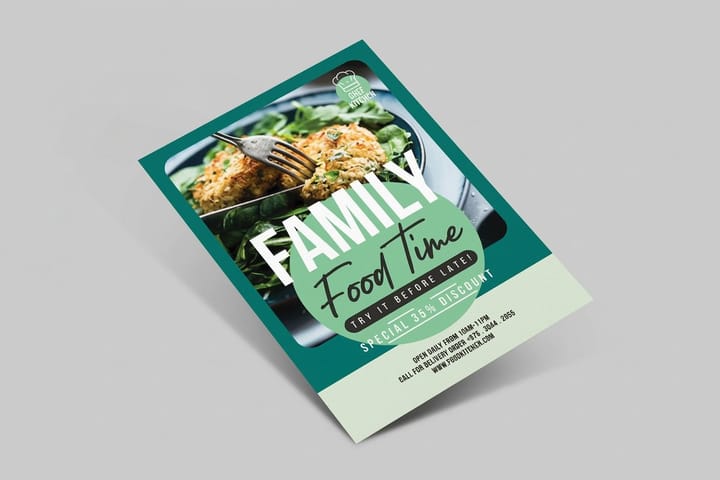
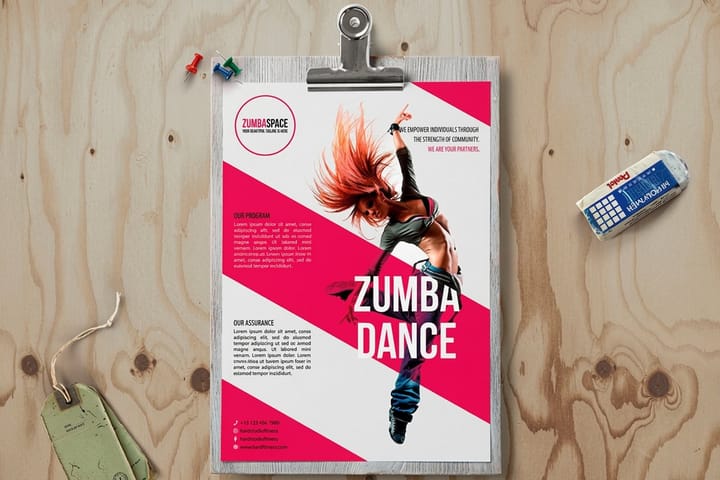
Beyond the offices, there is a steady stream of one-off public need: powers of attorney, vehicle titles, school forms, affidavits. The flyer catches it where people already stand waiting, community boards, mailrooms, senior centers, co-working spaces, laundromats near your coverage area.
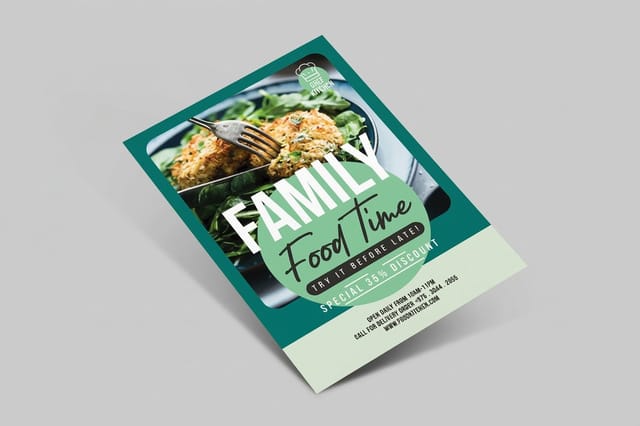
Lead with the problem, not the title: "Need something notarized? Mobile notary, comes to you, evenings and weekends." Then the fee basics and a phone number readable across a room. Our guide on how to design flyers covers the one-message structure, and where to leave flyers maps the locations that reach people mid-errand.
Refresh the stack monthly. A weathered flyer with a tear-off fringe long gone advertises neglect.
8. Appointment cards: the next signing, in writing
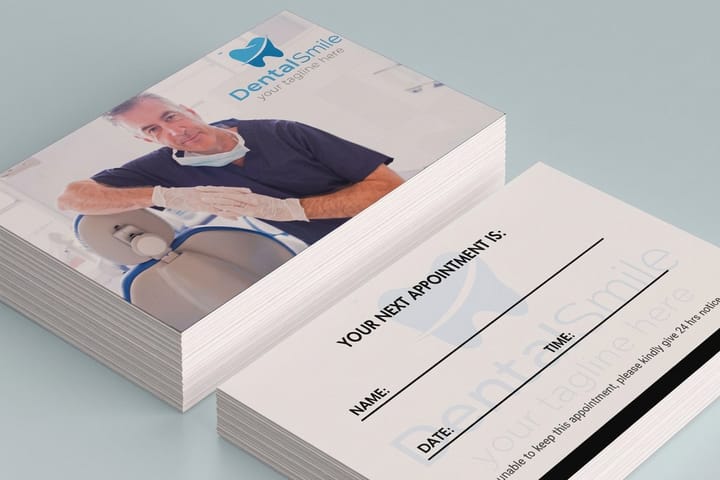
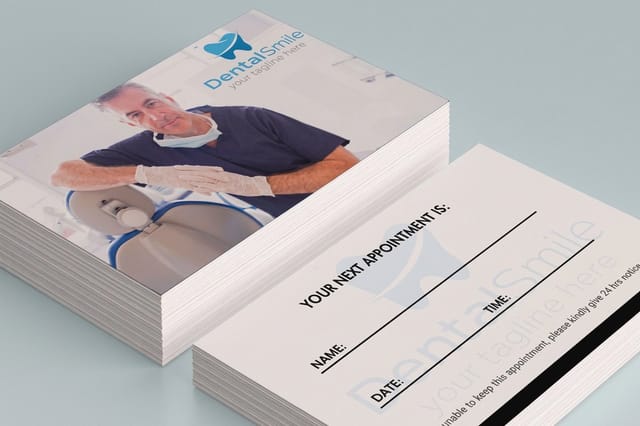
A missed signing costs twice: the fee you did not earn and the escrow officer who had to scramble. An appointment card closes that gap the moment a booking is made. The client leaves the call or the counter with the date, the time, the location, and the reminder to bring current ID, written on a card that carries your name and number.
The ID line is the quiet hero. The single most common way a signing fails is a client with expired identification, and a printed prompt on the card prevents the failure before the drive. Keep the front to your mark and contact details, print the appointment fields on the back, and order in the same stock family as your business cards from appointment cards printing so the pair reads as one practice. Configure the standard card starting under twenty dollars.
Hand one to every repeat client and every office that books ahead. A signing confirmed on paper is a signing that happens.
9. Notepads keep your number on the referral desk

The sales sheet lives in a drawer; the notepad lives on the desk. Front-desk staff at title companies, law offices, and bank branches burn through scratch paper all day, and a pad with your name, commission line, and mobile number at the top sits in their sightline for weeks. When the "do you know a notary" call comes in, the answer is literally under their hand.
Drop a pad with every canvassing visit and every restock of the sales sheet. It is the rare leave-behind that gets used daily instead of filed, and the comparison in notepads vs post-its covers why the full pad outlasts the sticky note on a busy desk. Order standard notepads by the bundle and the cost per desk-week lands in cents.
Keep the design quiet: name, number, one line about mobile and after-hours availability. The pad is not the pitch; it is the phone number that never gets lost.

Specs and pricing
Anchor the kit: business card specs and live pricing
The business card is the piece every referral office keeps, so it sets the stock and look for the rest of the kit. Here are the live specs and price tiers for standard business cards at 4OVER4.COM, straight from the configurator.

| Quantity | Price Per Unit | Total |
|---|---|---|
| 100 | 17.6¢ | $17.57 |
| 200 | 11.5¢ | $23.07 |
| 300 | 9.15¢ | $27.46 |
| 400 | 7.96¢ | $31.86 |
| 500 | 7.25¢ | $36.26 |
| 600 | 6.77¢ | $40.64 |
| 700 | 6.43¢ | $45.04 |
| 800 | 6.18¢ | $49.43 |
Wally explains the kit
Nine pieces that turn a commission into a practice
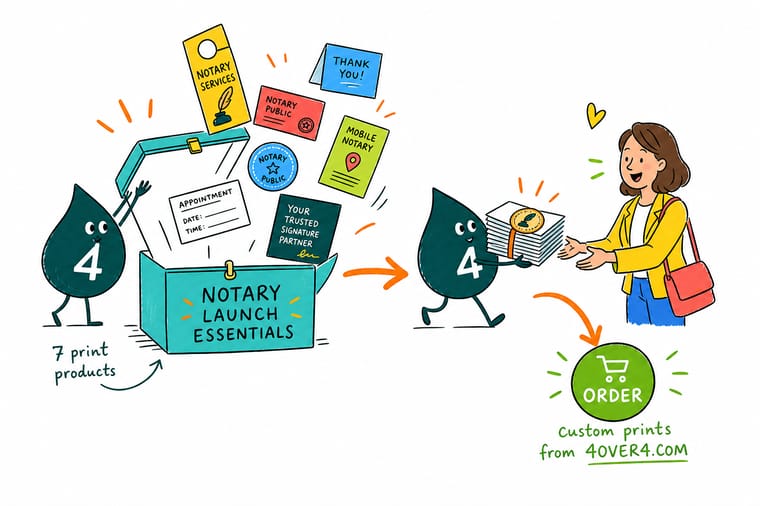
Wally sees a notary launch as a canvassing route plus a signing table. The card and sales sheet get filed at every title company and law office in the coverage area, the intake form and branded envelope make each appointment feel official, the notecards and postcards keep the offices sending work, and the appointment card and desk notepad make sure the next signing is written down and your number never leaves their sight. One name, one look, all nine pieces.
Shop the legal collection →See it in use
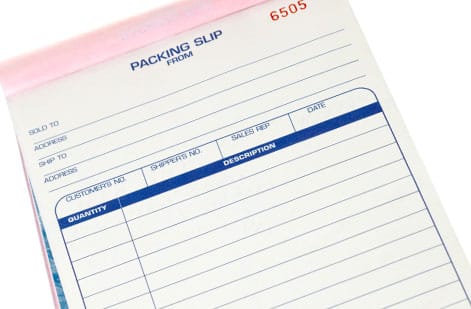
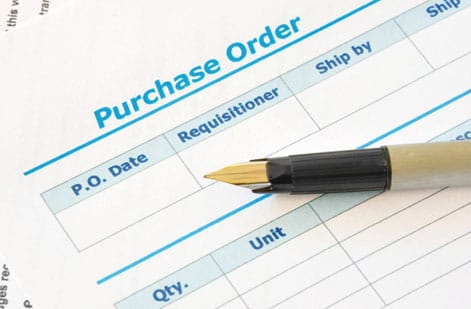
Carbonless invoice and receipt forms, printed in sets


Explore more
Where to go next


By the numbers
One kit, printed to open a practice
Common Questions
Common questions about the notary launch essentials
What is in the notary launch essentials kit?
Nine print pieces that take a new notary from commission to steady bookings: business cards, business forms, sales sheets, flat notecards, printed envelopes, postcards, business flyers, appointment cards, and branded notepads. The card and sales sheet win referral sources like title companies and law offices, the forms and envelopes make every signing run professionally, the notecards, postcards, and flyers keep the referral pipeline warm, and the appointment cards and notepads keep the next booking written down and your number on the referral desk.
Who should a new notary market to first?
Referral sources before the public. A single title company, law office, bank branch, or senior-care facility can send more signings in a month than a neighborhood sends in a year. The launch play is a canvassing route: walk in, leave a card and a sales sheet with your services, coverage area, hours, and fees, and follow up with a notecard. The public-facing flyers and postcards matter, but the offices are the volume.
What belongs on a notary sales sheet?
Everything a busy office manager needs to book you without a phone call: services offered, loan signings, general notarizations, apostille assistance if you provide it, coverage area, hours including evenings and weekends, fee structure, commission and insurance details, and two ways to reach you. One page, front and back at most. The sheet is filed, not read on the spot, so it has to answer questions on the day a signing appears.
Why does a mobile notary need printed forms and envelopes?
Because the signing table is the entire client experience. An intake form standardizes every appointment, who signed, what documents, what ID was checked, and gives the client a copy if they need one. Completed documents handed back in a branded envelope leave the appointment feeling handled rather than shuffled. For work this formal, loose papers and a borrowed pen quietly cost repeat bookings.
Do thank-you notecards actually generate notary work?
They protect the referral relationships that generate the work. The escrow officer who sent you three signings this month gets asked weekly for a notary recommendation, and a handwritten thank-you on a printed notecard is the reason your name stays the answer. It is a two-dollar gesture attached to a relationship worth thousands a year, and almost no competitor bothers.
How much does the full kit cost to print?
One of each at its starting quantity comes to about $561: postcards $16.48, business and appointment cards $17.57 for 100 each, notecards $19.77 for 25, flyers $57.11 for 50, sales sheets $75.80 for 50, notepads $93.37 for 25 pads, forms $120.82 for 100 and printed envelopes $142.99 for 250. Forms and envelopes are the big lines because they are bought in office volumes. Set your quantities in each configurator and the totals update as you choose.
Can I add more pieces as the practice grows?
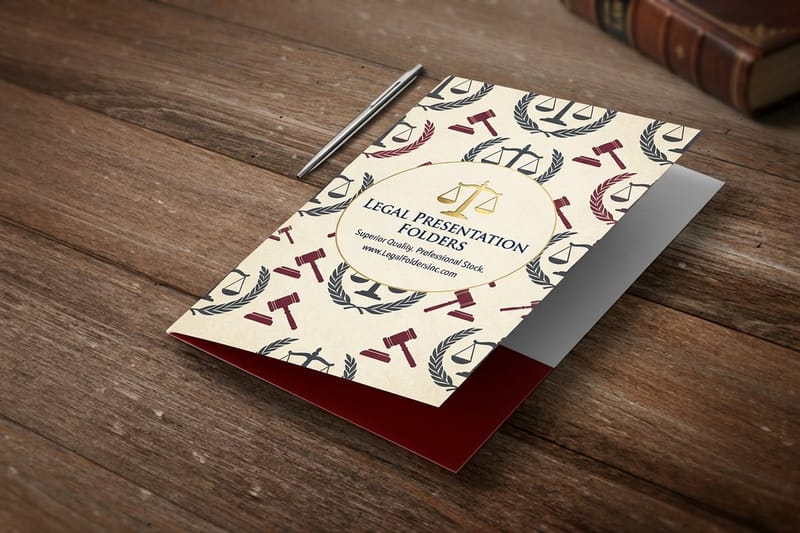
Yes. Established notaries commonly add window graphics for a storefront location, branded folders for loan-signing packages, and larger mailings once the referral list justifies them. Browse the legal printing collection at 4OVER4.COM to keep every addition consistent with the kit, and reorder any piece in a few clicks.
Get Started
Order 25 notepads for $93.37 for the notary desk
Order the launch kit from 4OVER4.COM piece by piece, envelopes and notepads first. A 100 pack of business forms is $120.82, or $1.21 each, and 25 notepads are $93.37.
Legal Disclaimer
Gold Standard guarantees apply to all standard orders placed through 4over4.com. Price match requires verifiable proof of a competitor's published price for an equivalent product with matching specifications and turnaround time. Satisfaction guarantee covers manufacturing defects and print quality issues. Contact support with order number and documentation.
