
How to Monetize Attention Without Losing the Trust You Built


Five ways attention turns into revenue, the two questions that tell a clean offer from a corrosive one, and why the money only holds once you own the channel it travels through.
Monetize attention by selling something the audience already wanted, from a channel you own, and refuse any deal that pays you whether or not the buyer ends up better off. Money arrives in five ways: display ads, sponsorship, affiliate commissions, your own product, and direct support. The first three hand control to somebody else and pay fastest. The last two point the incentive at your audience and take longer to build. Everything else on this page is how to hold that line without going broke.
Quick answer
Sell what they came for, from a channel you own
Attention is never the product. What sells is access to it, a recommendation made to it, or something you build for it. Access and recommendations pay quickly and hand control to an advertiser or a merchant. Your own product and direct support pay slowly and keep the incentive pointed at the audience. The line that decides whether either one lasts is ownership: a platform following can be switched off, while an email address, a mailing address and a printed piece in someone's hands cannot.
The One Test That Separates Clean Money From Money You Regret
Run every offer through two questions before the contract is signed. Would you recommend this if nobody paid you? And do you still get paid if the buyer regrets it?
A clean deal answers yes then no. You already liked the thing, and the money is tied to the buyer being satisfied. A deal that answers no then yes is the trap: you would not have mentioned it otherwise, and your revenue is unaffected by whether it worked out for the person who trusted you. Most of the offers that pay above market rate sit in that second group, which is precisely why they pay above market rate.
The cost is real and worth stating plainly. Turning down the highest bidder means a thinner month, sometimes several. Categories that reliably fail the test include high interest lending, most gambling adjacent apps, and dropshipped gadgets with no support behind them. They pay well because nobody with an audience they intend to keep will take the money.
There is a third question that catches the subtler cases. Can you say the price out loud, in your own voice, without softening it? If a product costs $2,400 a year and you find yourself writing "investment" instead of the number, the discomfort is information. Say the number. If the offer survives being described accurately, it belongs in front of your audience, and the way you describe it should sound like the rest of your work. Our guide to brand messaging covers keeping that voice consistent between the free work and the paid ask.
Five Ways to Turn Attention Into Revenue and What Each One Costs

There are only five basic ways money arrives, and each one hands control to a different party. Choosing badly is usually what people mean when they say monetizing ruined their work.
| Model | Who pays you | What you hand over | Where it breaks |
|---|---|---|---|
| Display ads | An ad network, per thousand impressions | Control of what appears beside your work | Small audiences earn almost nothing, so it pushes you toward volume over quality. |
| Sponsorship | One brand, for a placement | A slot and, if you are careless, editorial control | A sponsor who asks you to cut a caveat, and the awkward month after you say no. |
| Affiliate | A merchant, when someone buys | Nothing visible, but the incentive bends toward whoever converts | You get paid on the purchase, not on the outcome, so a bad product still pays. |
| Your own product | The audience, directly | Time, and the risk of building something nobody wants | Slow to start, and support becomes a real job once it sells. |
| Direct support | The audience, on a recurring basis | An ongoing obligation to keep showing up | Churn is quiet, and a bad month is felt immediately in revenue. |
Read the third column, not the first. The models that pay you fastest are the ones that hand the most control to somebody else, and the ones that keep the incentive pointed at your audience are the ones that take longest to build. That is the actual trade, and no clever structure removes it.
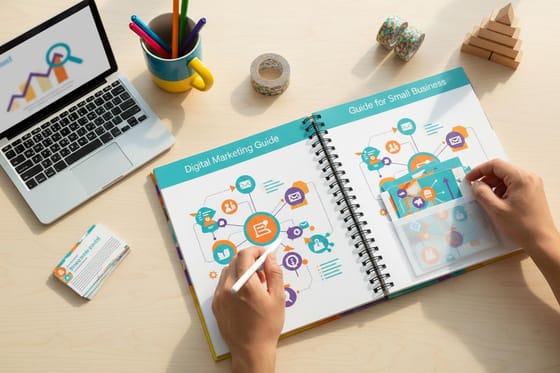
In practice most durable operations run two of these at once and refuse the rest. A common pair is one steady sponsor plus your own product, because the sponsor covers the fixed costs while the product carries the upside. Ad networks are the first thing to drop as soon as anything else works, since they earn least per reader and cost the most in atmosphere. If you are still deciding which channels feed the top of this, the small business digital marketing guide is the practical starting point, and loyalty card ideas show how the repeat side works when the audience is local.
Move People Off Rented Land Before You Ask Them for Anything

Every follower count sits on somebody else's server, under rules that change without a vote. The audience you can actually monetize is the one you can reach when a platform decides you are no longer interesting: an email address, a mailing address, and a physical object already in someone's hands.
Email is the obvious first move and the cheapest. The second, which most people skip, is a postal address. Asking for one feels like a large request, so it belongs at a moment when the relationship is already real: at checkout, after a workshop, at a booth, or when someone becomes a paying customer. Once you have it, the channel is genuinely yours, and it is the only one where you control both the timing and the format.
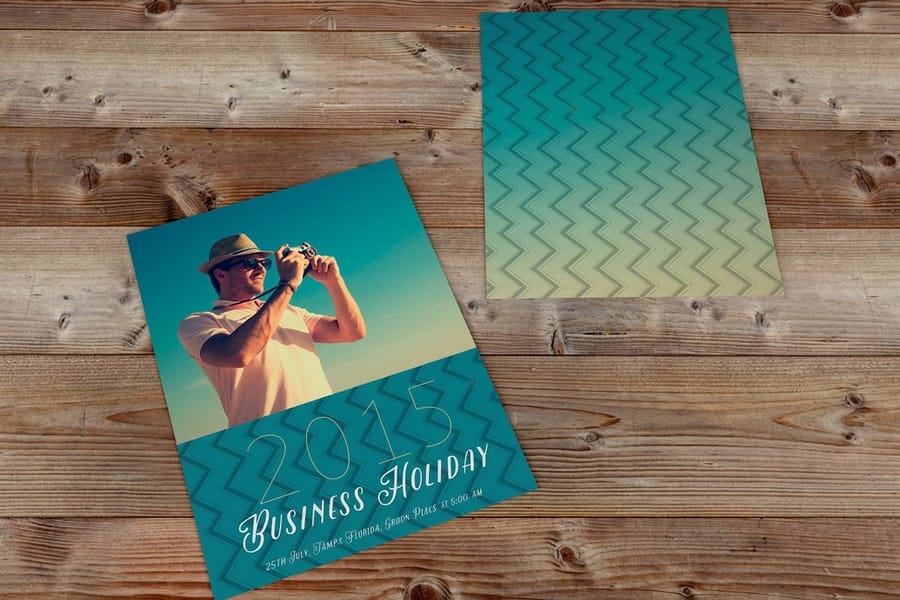
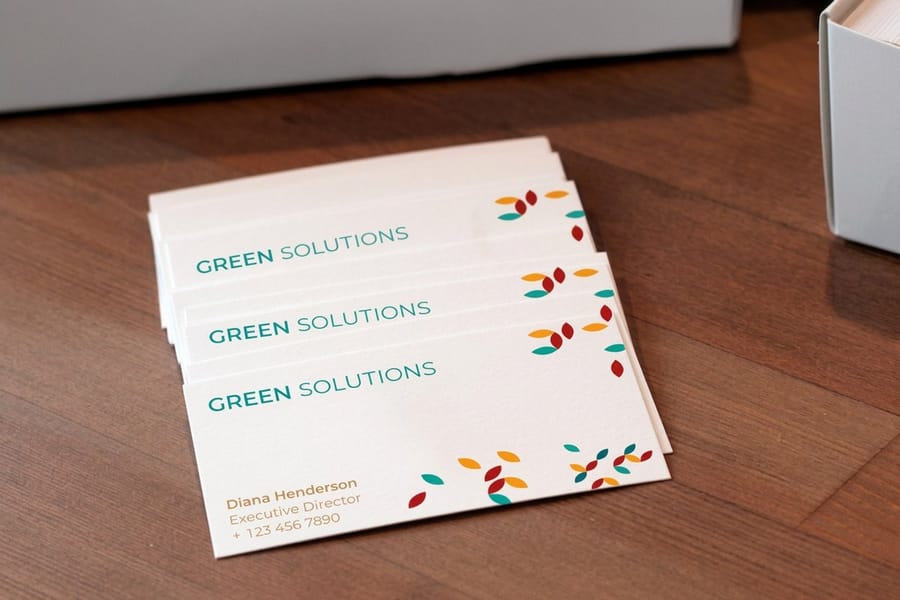
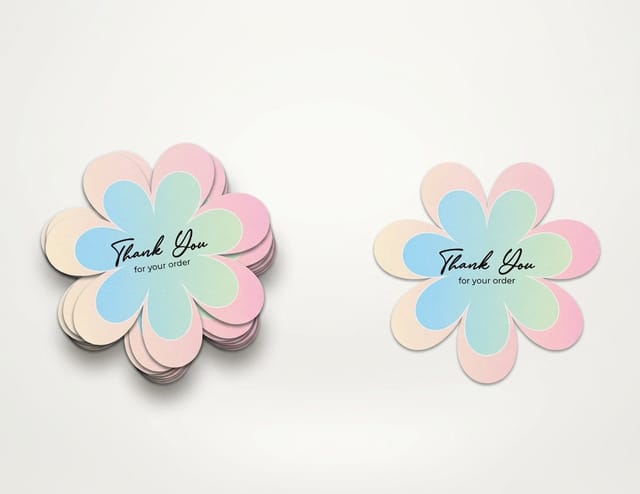
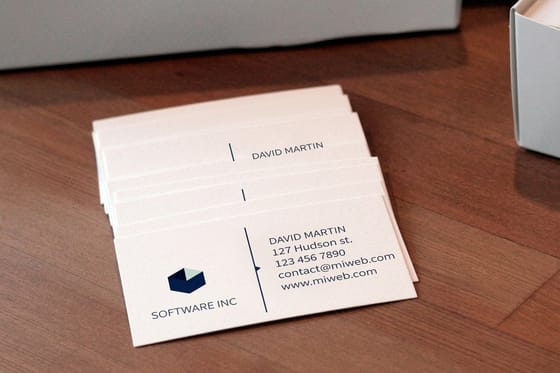
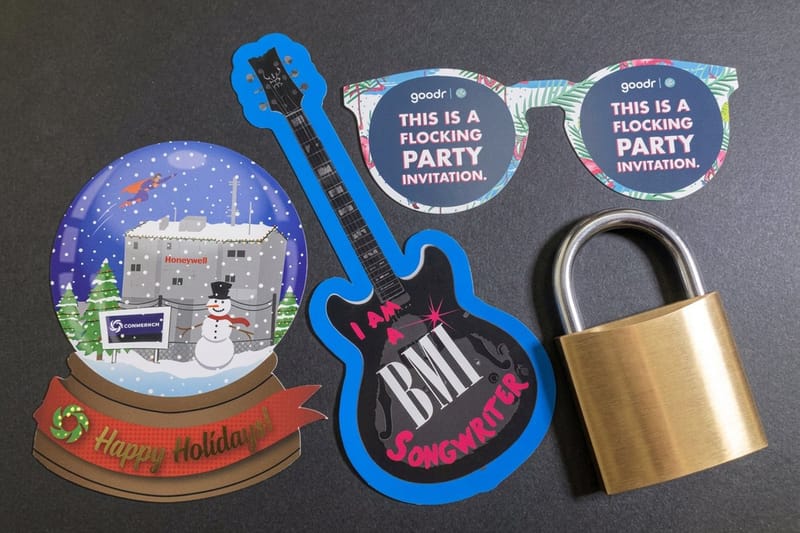
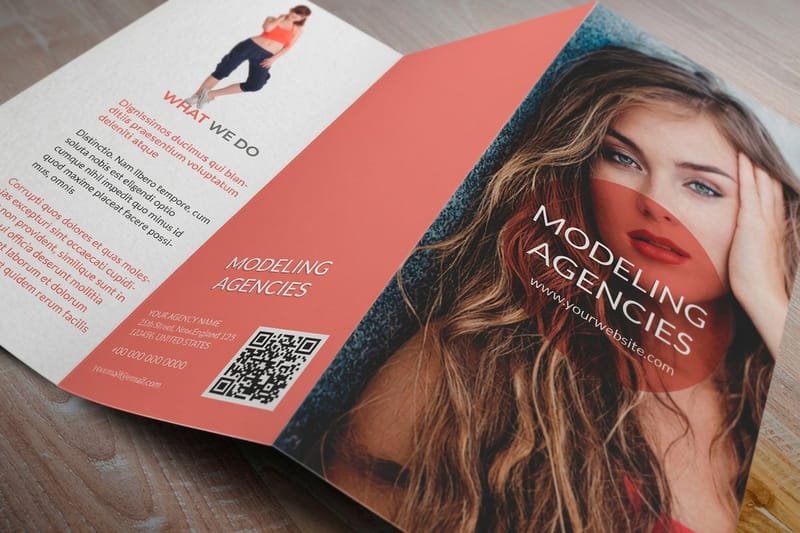
Print is where an owned channel becomes physical. Standard postcards start at $16.48 and do most of the work for a warm list, because a card on a counter keeps working for days without anyone opening anything. Standard business cards start at $17.57 and still do the job nothing digital does well, which is getting handed over in the two seconds after a real conversation. Die-cut stickers start at $93.37 and buy something odd and valuable: people display them voluntarily, which is the only advertising the audience chooses to carry. For anything you want kept rather than skimmed, standard booklets start at $240.55 and are the format for a guide, a catalog or a paid workbook.
Two warnings, because print punishes carelessness. Postal mail costs real money per person, so it belongs in front of a list you already know converts, never as a cold volume play from a rented list. And a physical piece has no undo button. Proof it twice, check the offer, the date and the phone number, then check them again. The five step direct mail postcard walkthrough covers the mailing side, and the full range sits in marketing materials.
The Sales Cadence That Does Not Cost You the Room

Audiences rarely object to being sold to. They object to being ambushed. Almost every complaint about a launch traces back to a surprise, a promotion with no end, or a pitch that sounded like it came from a different person than the free work.
Three habits fix most of it. Announce before you sell, so the first message about a product is a heads up rather than a checkout link. Give the promotion an end date and honor it, because a deadline that quietly extends teaches people that nothing you say about scarcity is true. And put the disclosure in the first sentence, not the footer. The paid relationship read early sounds like confidence. The same words at the bottom read like something you hoped nobody would reach.
Expect to lose some of the list on launch day. That is the cost of asking, and it happens to everyone who asks. The number to watch is not the unsubscribes during the promotion, it is whether open rates recover two weeks after it ends. If they do, the cadence is fine. If they do not, you sold something the audience did not think you should have.
Physical and digital touches work best in sequence rather than in parallel. A card mailed a week before an offer opens gives the email something to land on, and a printed piece carrying a scannable code moves the response back to a channel you can measure. Creative QR code uses in print covers that handoff, and newsletter design ideas help keep the owned channel readable once it starts carrying offers.
What to Do When the Money and the Audience Disagree

The conflict is not hypothetical and it does not arrive as a dramatic choice. It arrives as a small edit request, a product that gets worse after you recommended it, or a buyer who is unhappy and technically outside your refund window.
Handle the edit request by settling it before any money moves. Agree in writing that the sponsor may correct factual errors and may not alter opinion, comparisons or caveats. That single clause removes the entire argument, and a sponsor who refuses to sign it has told you exactly how the campaign would have gone.
Handle a product that degrades by saying so in public, in the same channel where you recommended it. You do not owe anyone an ongoing endorsement, and correcting a past recommendation buys more credibility than never being wrong would have. Handle the unhappy buyer by refunding past the deadline. The refund costs one sale. The story about you refusing costs an unknown number of them, and it travels further.
None of this requires a code of ethics document. It requires deciding, before the money is on the table, which specific things you will not do. Write them down while nothing is at stake. If you are building the commercial side from scratch, the ecommerce branding guide and the branded merch guide both deal with the same question from the product end: what you put your name on, and what you decline to.
Wally explains the ownership line
Rented reach on one side, an address you keep on the other
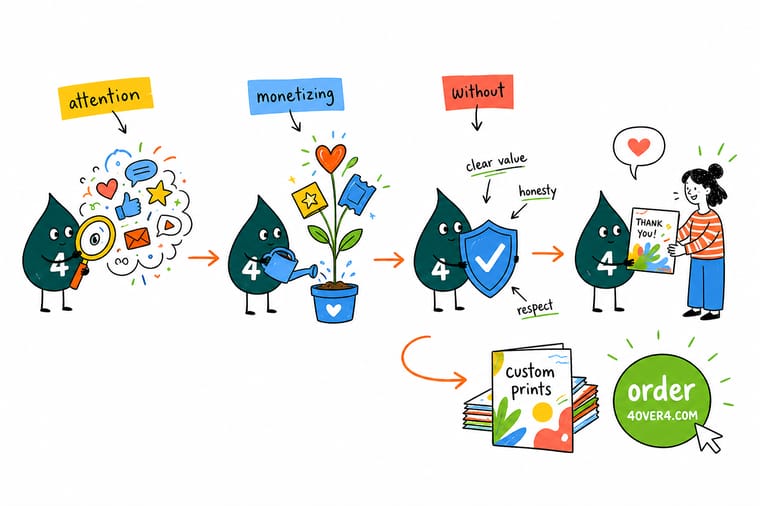
Wally can shout at a big crowd on a platform he does not own, or hand a card to the people who already stopped to listen. The crowd is bigger and somebody else decides who hears him tomorrow. The card goes home with a person, sits on a counter, and works again next week at no extra cost. So he collects addresses first and makes the offer second. When he does sell, he says the price out loud and puts the disclosure in the first line, not the footnote.
Print postcards for your list →Specs and pricing
The owned channel starter set, sizes and starting prices
Three formats that carry an offer to people who already know you, with live configuration options and starting prices straight from the 4OVER4.COM configurator.



Print it
Put the offer in a hand, not just a feed

Explore more
Where to go next

By the numbers
The print side of your audience, handled at 4OVER4
Common Questions
Your audience monetization questions, answered
What does monetizing attention actually mean?
It means converting the time people spend with your work into revenue. The attention itself is never the product. What sells is either access to that attention (a sponsor or advertiser pays you), a recommendation made to it (affiliate revenue), or something you make for it (a product, a service, a membership). The distinction matters because each one points the incentive at a different person. Two of those three pay you whether or not the audience is better off afterward, which is exactly where the soul selling begins.
How do I know if an offer crosses the line?
Ask whether you would still recommend it if the payment disappeared, and whether you get paid when the buyer regrets it. If the answer is no to the first and yes to the second, the deal pays you to be wrong. That is the whole test. It rules out most high paying gambling, lending and dropship offers without needing a moral argument, because the money and the audience are pulling in opposite directions.
How big does an audience need to be before it earns?
Small and specific beats large and vague, and the reason is arithmetic rather than inspiration. Display advertising pays per thousand impressions, so it punishes small audiences by design. Your own product, a service or a membership is priced per person, so a few hundred people who share one problem can support real revenue while a hundred thousand casual viewers cannot. If your audience is small, skip ad networks and sell something specific.
Is print still worth it when the audience lives online?
It is worth it exactly where online is weak, which is proof and permanence. A screen impression disappears when the tab closes. A postcard sits on a counter, a sticker stays on a laptop for years, and a printed booklet gets kept in a way a PDF never does. Standard postcards start at $16.48 at 4OVER4.COM and standard business cards at $17.57, so a physical touch for a warm list costs less than most ad tests you would run to reach the same people cold.
How often can I sell before the audience turns?
Judge it by ratio and by warning, not by a calendar rule. If most of what you publish is useful on its own, an offer every few weeks lands fine. Two habits do most of the work: tell people a promotion is coming before it starts, and give it an end date you keep. What burns an audience is not the frequency, it is the surprise and the promotion that never actually ends.
What do I do when a sponsor asks me to change what I said?
Fix an error, refuse an edit. If a sponsor points out that you got a spec wrong, correct it and thank them. If they ask you to remove a caveat, drop a comparison or soften a limitation, decline and offer to cancel the placement instead. Write that into the agreement before the first invoice, because arguing about it mid campaign, with money already promised, is how most people end up publishing something they would rather not have.
Get Started
Order 25 die-cut stickers at $3.73 each
Pick a size, upload the offer, and we print postcards, cards and stickers that reach a warm list without renting anybody's audience.
Legal Disclaimer
Gold Standard guarantees apply to all standard orders placed through 4over4.com. Price match requires verifiable proof of a competitor's published price for an equivalent product with matching specifications and turnaround time. Satisfaction guarantee covers manufacturing defects and print quality issues. Contact support with order number and documentation. On-time delivery rate based on tracked orders 1999 to 2026. Individual results may vary based on shipping carrier performance.
