
How to Create Newsletters for Direct Mail

Nadia is our customer education voice, built from the knowledge of our production team, with over 20 years in printing.
Plan one clear issue, design it to be scanned, print it on a stock that fits your brand, then hand off the mailing. The cadence you can actually keep matters more than the one you plan.
To create a newsletter for direct mail, give the issue one job and one reader, gather a lead story plus a useful tip and a single dated offer, lay it out to be scanned with a clear masthead and short columns, choose a size, stock, and fold that match the tone, then sort your mailing list or saturation route and send a proof to print. Keep it simple and consistent, and readers start to expect it.
The workflow
From blank page to mailbox, in six steps
A direct mail newsletter is a short, recurring printed piece you mail to a defined audience on a schedule they learn to expect. The build is the same every issue, so once you have a system it moves fast. The order below keeps it painless.
- Set the goal and the readerName one action and one audience for the issue before you open a template.
- Gather the contentA lead story, one useful tip, a customer spotlight, and a single dated offer is plenty.
- Lay it out to be scannedMasthead, columns, headlines, captions. Let whitespace do half the work.
- Pick size, stock, and foldChoose a self-mailer or an enclosed piece, then a stock that matches the tone.
- Sort the mailingBuild or rent a list, or saturate a neighborhood, and decide the mail class.
- Proof, print, and sendOrder a proof, check the bleed and margins, then hand the drop to our team.
Direct mail newsletters
Direct mail newsletters, size, fold and stock
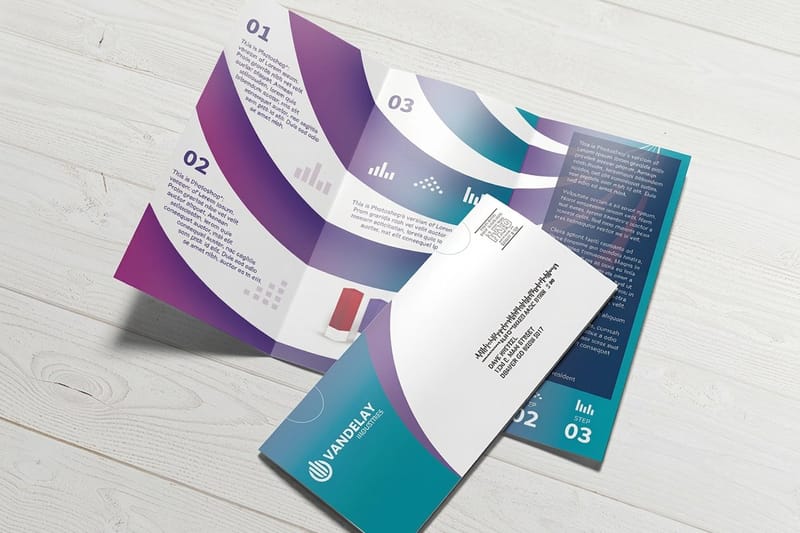
A direct mail newsletter starts as a flat sheet and folds down to mail. Newsletters print flat at 8.5 x 11, 8.5 x 14, 9 x 12, 11 x 17 or 11 x 25.5 inches, with a half fold, trifold, Z-fold, gate fold or one of six other folds. Pick 70 lb uncoated text when readers should write on a reply section, 100 lb gloss text for photography, or 14pt cover for a sturdier self-mailer. Runs start at 50 copies with 3 business days of standard production, and our direct mail services then address, sort and post the drop.
Newsletters: digital versus print, and why a printed one still lands
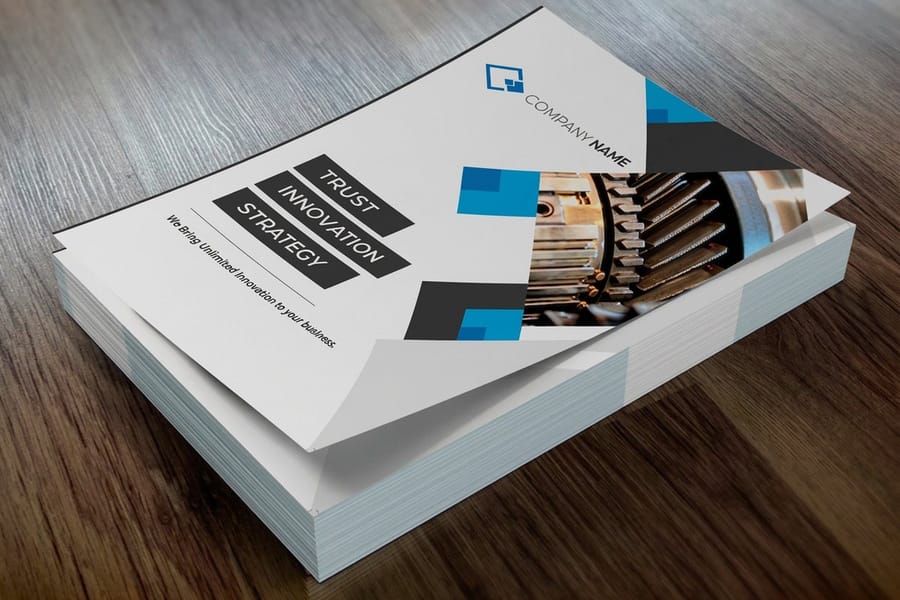
An email newsletter competes with a hundred other unread messages and a delete button that is one thumb-flick away. A printed newsletter competes with the refrigerator door, and a folded 8.5 x 11 inch self-mailer sits on a counter for days before anyone recycles it. It gets set down, picked back up, and shared across a kitchen table, which is exactly why print keeps earning its place in the marketing mix.
This is not an argument to abandon email. The two channels do different jobs, and the strongest programs run them together: email for speed and links, print for trust and staying power. If you want the head-to-head, our guide on printed vs digital newsletters breaks down where each one wins, and the direct mail response rate benchmarks put real numbers behind the case for mail.
The rest of this guide is the practical part: how to plan, write, design, print, and mail a newsletter people actually keep. When you are ready to hold the finished thing, newsletter printing at 4OVER4.COM turns your file into a folded, mail-ready piece.
Before you touch a layout: audience, cadence, and one clear job
The best newsletters are boringly disciplined about scope. Before you open a template, answer three questions. Who is this issue for? How often will it arrive? And what is the one thing you want a reader to do after they set it down?
Pick a cadence you can actually keep. A quarterly newsletter that always shows up beats a monthly one that appears twice and disappears, because the value of a newsletter compounds only when readers learn to expect it. Consistency is the whole strategy.
Give each issue a single job, whether that is booking a service, renewing a membership, or driving foot traffic to a sale. Everything else on the page is there to support that one action. If you are building this into a broader outreach push, our walkthrough on how to create a successful direct mail campaign shows how the newsletter fits alongside your other marketing materials.
What to put in a newsletter people actually keep
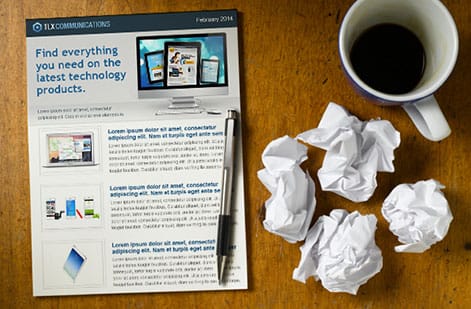
A newsletter is a conversation, not a catalog. A reliable lineup for a single issue looks like this, and you rarely need more:
- One lead story that is genuinely useful or genuinely human. A behind-the-scenes look, a customer win, a seasonal tip.
- One short practical tip the reader can use this week, which is what earns the piece a spot on the counter.
- A spotlight on a customer, a team member, or a community moment, so the newsletter feels like people, not a brand.
- A single dated offer with a clear deadline, because one focused call to action outperforms three competing ones.
Stuck for angles? The examples in brilliant direct mail marketing examples and the format ideas in effective direct mail formats are a fast way to fill a content calendar without starting from a blank page.
Designing a newsletter that guides the eye
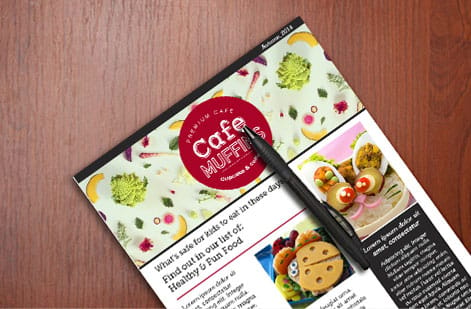
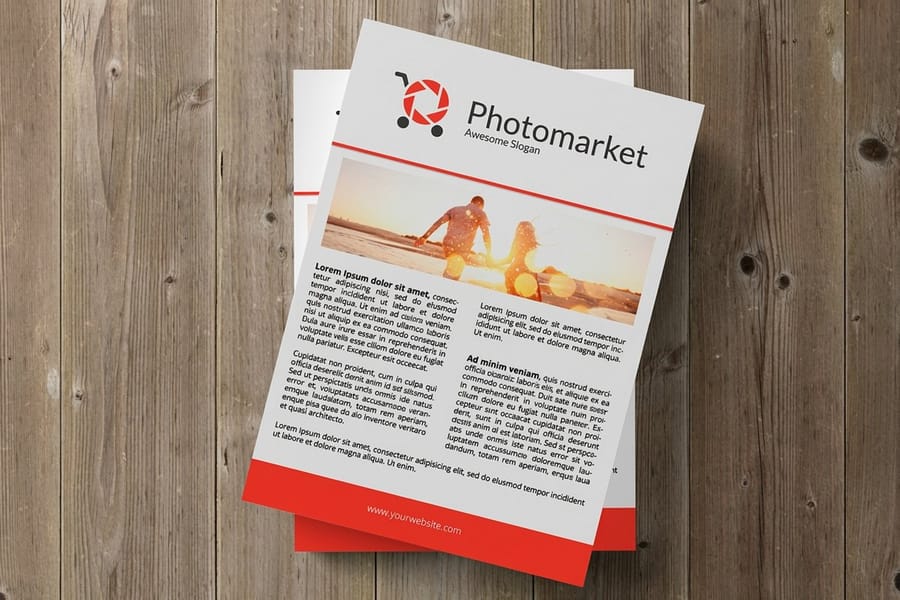
Most people skim before they commit to reading, so design for the skim. A strong masthead names the publication and the issue at a glance. Two or three columns keep line lengths short and comfortable. Clear headlines and photo captions carry the story for readers who never make it into the body copy.
Hold yourself to one accent color and one font family with a couple of weights. Let whitespace breathe rather than filling every corner, and caption your photos, because captions are among the most-read words on any printed page. You can build all of this without design software using our online designer, or start from a ready layout in the design templates library.
If postcards are also part of your program, the principles in how to design a postcard carry straight over to a newsletter cover.
Simplicity is your friend
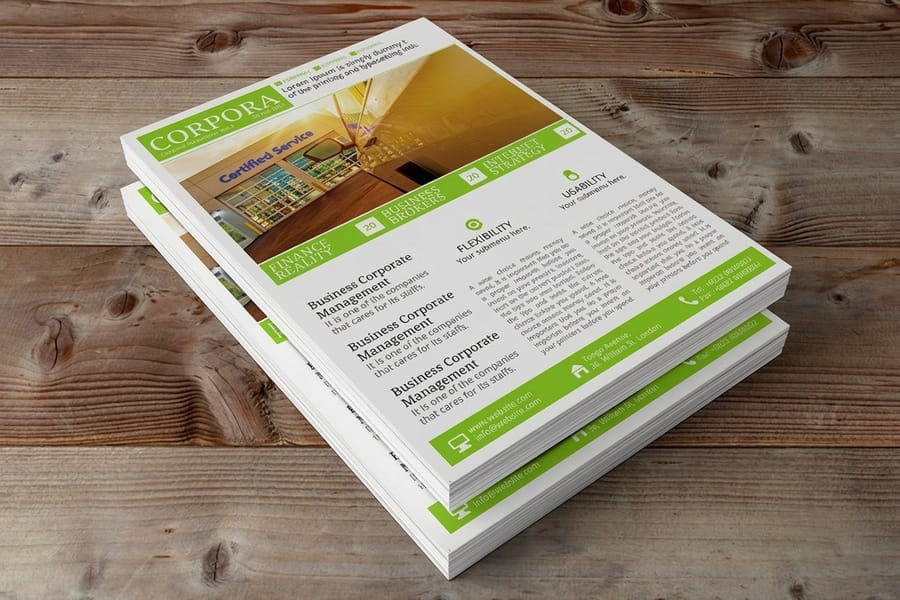
The most common newsletter mistake is trying to say everything at once. Resist it. A page crammed edge to edge signals effort to you and clutter to your reader, and the eye bounces off. On an 8.5 x 11 inch page, four items fill it: a lead story, a tip, a spotlight and one dated offer, set in two or three columns with one accent color and one font family.
Cut anything that does not serve the issue's one job. Trade a fourth story for wider margins. Trade a busy background for a single clean rule under the masthead. When you are unsure whether an element earns its place, it usually does not. A newsletter that feels calm gets read, and a newsletter that gets read gets results.
Getting it into mailboxes: your list and your route
A beautiful newsletter that never gets mailed correctly is just an expensive PDF. Decide the mailing before you finalize the design, because the route shapes the size, the fold, and the postage.
You have two broad paths. Target named households with a list you build from your own customers and donors, or rent for a specific campaign. Or saturate a neighborhood with an every-door style mailing when your audience is a place rather than a named person. Our guide on how to build or rent a mailing list covers the tradeoffs, and the definitive guide to direct mail advertising maps how a newsletter sits alongside other formats.
Whichever route you choose, our direct mail services handle addressing, sorting, and postage. If a postcard or letter turns out to fit the drop better than a folded newsletter, direct mail postcards and direct mail flyers are ready in the same workflow.
Printing options: sizes, stocks, and finishes
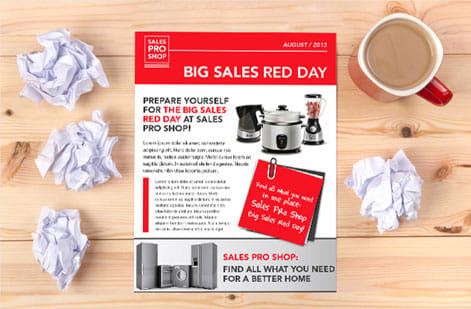
Most newsletters start life as an 8.5 by 11 inch sheet. Fold it and you have a tidy self-mailer. Step up to 11 by 17 folded to a four-page spread when you have more to say. The right choice is the one that carries your content without feeling cramped or padded.
Stock sets the tone as much as the words do. A lighter text weight reads like a personal letter, while a heavier coated stock feels like a polished brand piece. On finishes, matte is easy on the eyes for long copy, gloss makes photography pop, and uncoated is the one to pick when you want a reply section people can write on. Not sure how a stock feels in hand? Order free samples before you commit.
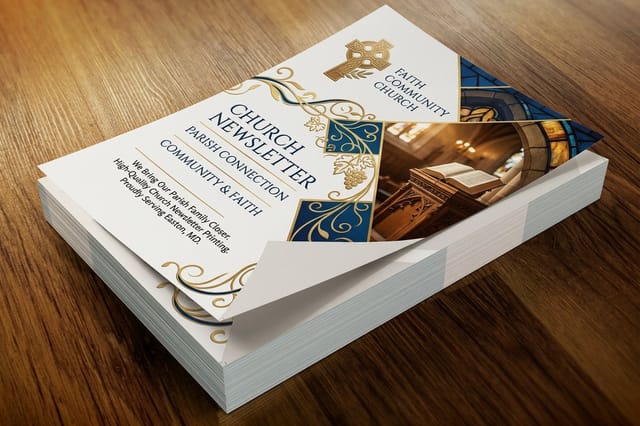
To configure the real thing, start with standard newsletters, browse the full newsletter printing range, or if you are producing a congregation or community edition, church newsletters are set up for exactly that.
What it costs, and getting your file press-ready
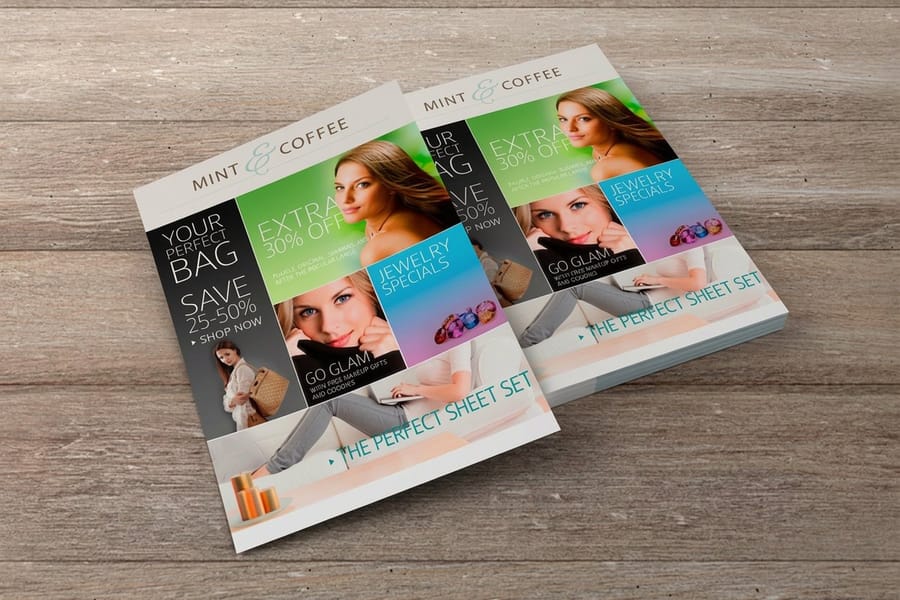
Newsletter pricing follows a short list of choices: quantity, flat size, page count, stock, one or two sides, any coating or folding, and turnaround. Quantity is the big lever. Per-piece cost drops sharply as the run grows, so a mailing of a thousand is far cheaper per unit than a hundred. The live price table below moves as you change those inputs.
Before you send the file, get the mechanics right. Build to the trim size with a bleed on any color that runs to the edge, keep text a comfortable margin off the trim, and export at 300 dpi in CMYK. Then order a proof and read every line, because it is far cheaper to catch a typo on one proof than across a thousand printed copies.
When the file is clean, configure your newsletter and drop it into the mailing. For the wider strategy behind the numbers, the direct mail industry data and our direct mail outreach guides are worth a read.
Wally explains direct mail newsletters
One clear issue beats a crowded one every time
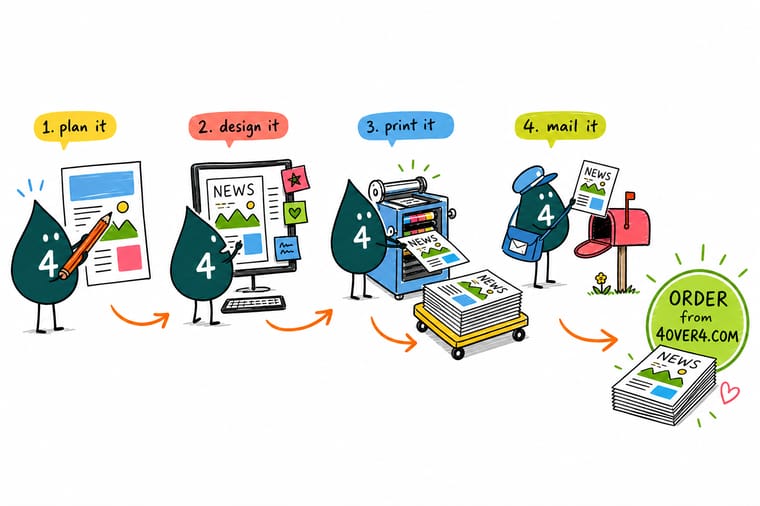
Wally thinks of a newsletter like a friendly knock on the door: it works when it shows up on schedule, says one useful thing, and asks for one clear action. Give each issue a single job, design it so a reader can skim it in ten seconds, then let our direct mail services handle the list, the sorting, and the postage. Print it once, mail it consistently, and the mailbox does the rest.
Order newsletter printing →
Specs and pricing
Newsletter specs and live pricing
Standard newsletters run 50 for $75.80, which is $1.52 a copy, with the option groups and price-per-unit below. Change the quantity and watch the per-piece cost drop.

| Quantity | Price Per Unit | Total |
|---|---|---|
| 50 | $1.52 | $75.80 |
| 100 | $1.09 | $108.75 |
| 200 | 70.8¢ | $141.70 |
| 300 | 54.6¢ | $163.67 |
| 400 | 46.4¢ | $185.63 |
| 500 | 41.5¢ | $207.60 |
| 600 | 35.7¢ | $214.19 |
| 700 | 31.5¢ | $220.78 |
Print it
Order newsletters and direct mail print at 4OVER4
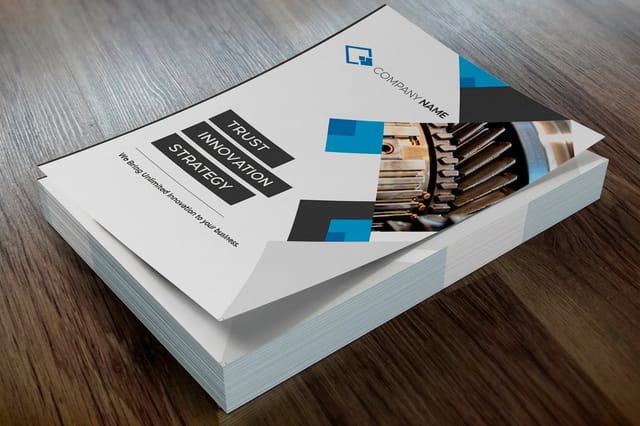
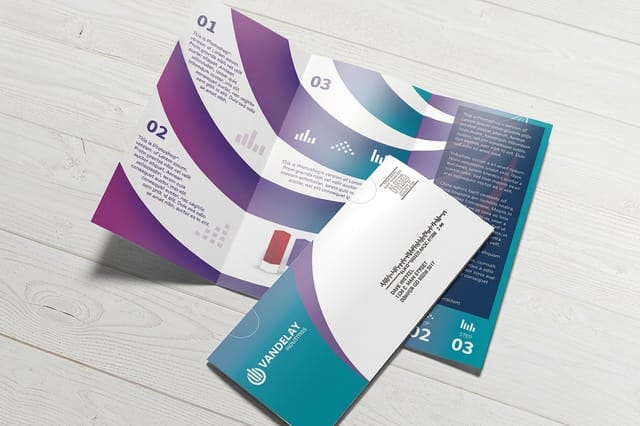
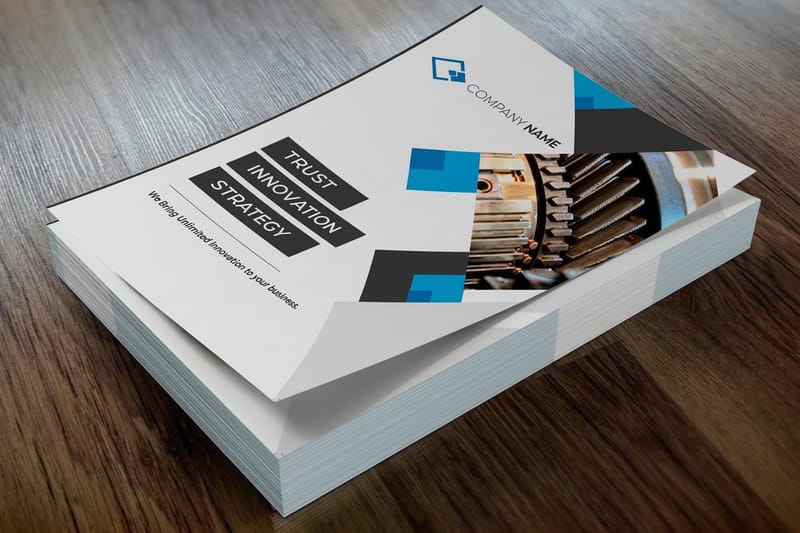
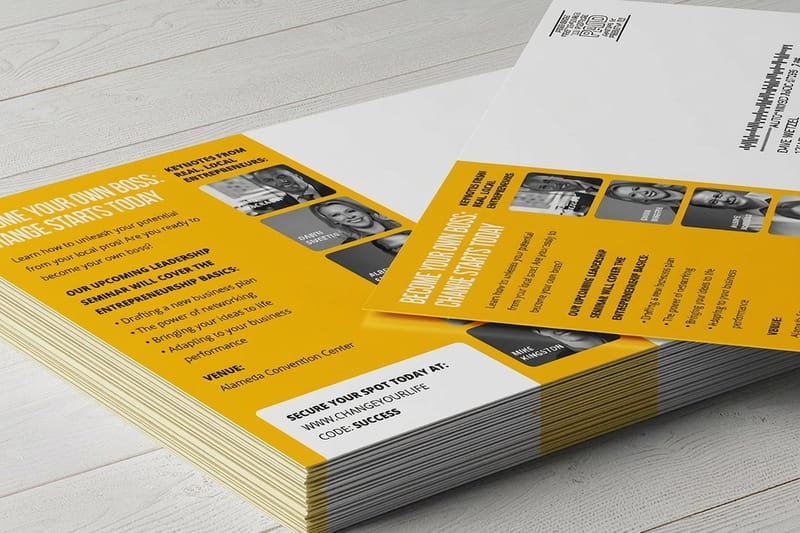
Standard newsletters from 50 copies on 3 business days of standard production, shown beside two of our direct mail pieces, postcards, brochures, flyers, letters or church newsletters, that run through the same mailing workflow.
See it in use
Mailed issues we printed and folded
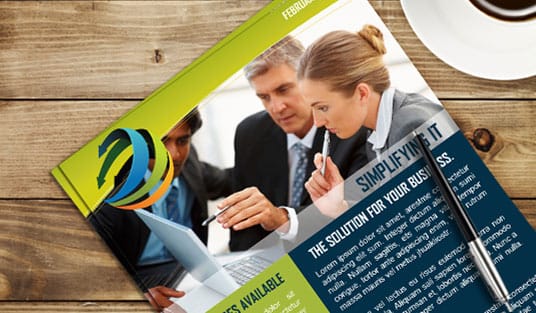
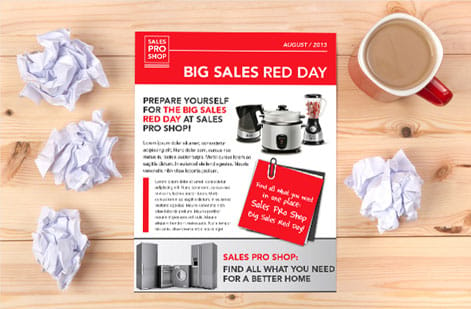
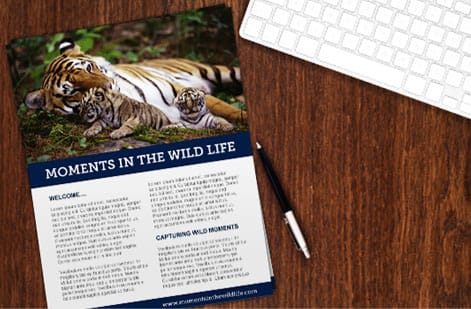
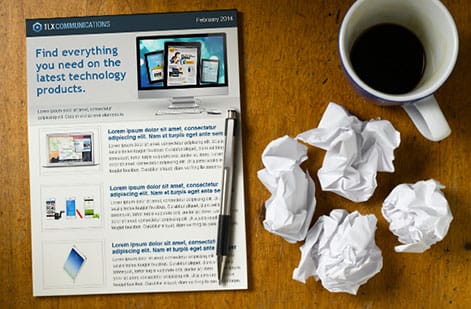
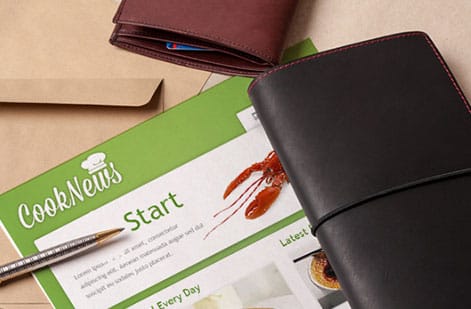
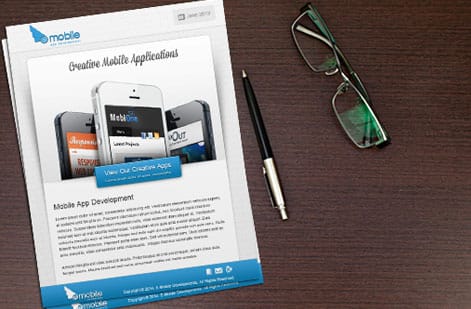
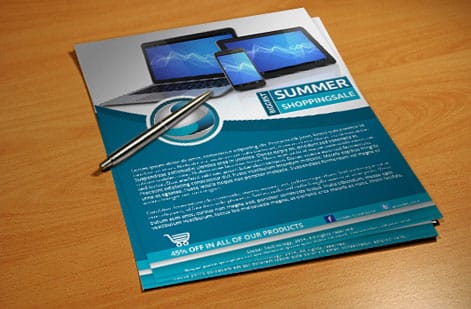
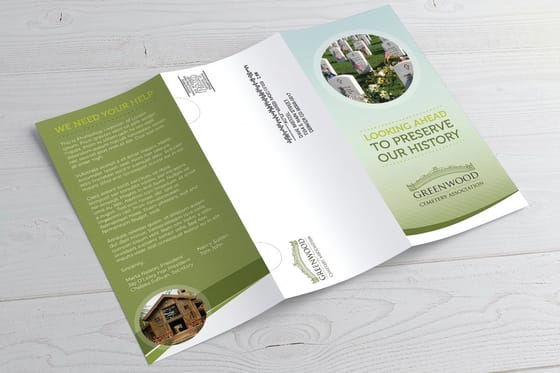
Newsletter orders from our customers, flat and folded, so you can see how a masthead and two columns read on an 8.5 x 11 inch sheet before you build yours.


Explore more
Where to go next
By the numbers
Newsletters at $1.52, mail brochures at $0.48
Common Questions
Common questions about direct mail newsletters
What is a direct mail newsletter?
It is a short, recurring printed publication you mail to a defined audience, customers, donors, members, or a whole neighborhood. Unlike a one-off flyer, a newsletter builds a relationship over time. Each issue mixes a lead story with a useful tip, a spotlight, and usually one clear offer, then arrives in the mailbox on a predictable schedule so readers start to expect it.
What are the first steps to start your own newsletter?
Pick one reader and one goal for the very first issue, then work backward. Choose a realistic cadence you can actually keep, monthly or quarterly beats an ambitious weekly you abandon. Draft a simple content lineup, sketch a masthead and a two-column grid, and decide early whether you are mailing to a named list or saturating an area. Our guide on how to create a successful direct mail campaign walks through the planning in more detail.
How many pages before a newsletter costs more to mail?
Match the format to the goal and the postage. A folded self-mailer skips the envelope and feels personal, which suits local outreach and community news. An enclosed piece in an envelope reads as more formal and gives you room for a reply card, which suits fundraising and membership. If you are unsure, order free samples of a few stocks and fold options so you can hold the difference before you buy.
What does newsletter printing cost, and how is pricing set?
Price is driven by a handful of choices: quantity, flat size, page count, the paper stock, whether you print one or both sides, any coating or folding, and how fast you need it. Larger runs bring the per-piece cost down quickly, which is why a mailing of a thousand costs far less per unit than a hundred. The price table on this page pulls live per-unit numbers straight from the newsletter configurator so you can see it move as you change quantity.
What sizes, stocks, and finishes are available for a printed newsletter?
The most common newsletter starts as an 8.5 by 11 inch sheet, often folded, and 11 by 17 folded to a four-page spread is popular when you have more to say. You can choose lighter text stocks that feel like a letter, heavier coated stocks for a polished brand look, and matte, gloss, or uncoated finishes. Uncoated is the one to pick if you want readers to be able to write on a reply section.
How often should I mail a printed newsletter?
Consistency matters more than frequency. A quarterly newsletter that always arrives is far more effective than a monthly one that shows up twice and vanishes. Most small businesses and nonprofits land on monthly or quarterly. Set a cadence you can sustain with the content and budget you actually have, then protect that schedule.
How do I get my newsletter into the right mailboxes?
You have two broad routes. Target named households with a list you build from your own customers or rent for a campaign, or saturate an entire neighborhood with an every-door style mailing when your audience is a place rather than a person. Our direct mail services handle addressing, sorting, and postage, so once your file is approved you hand off the drop and we take it from there.
Get Started
Order 50 church newsletters from $75.80
Configure the size, stock, and fold, drop in your file, and we print a clean, mail-ready newsletter and can handle the drop for you.
Legal Disclaimer
Gold Standard guarantees apply to all standard orders placed through 4over4.com. Price match requires verifiable proof of a competitor's published price for an equivalent product with matching specifications and turnaround time. Satisfaction guarantee covers manufacturing defects and print quality issues. Contact support with order number and documentation.
