
The 10-Piece Dental Launch Bundle That Books First Patients
A new practice opens with empty chairs and a two-mile radius of households that will need a dentist. These ten pieces tell that radius you are open: the announcement postcard, the door hanger on every porch, and the checkout card that books each first patient into a six-month recall.
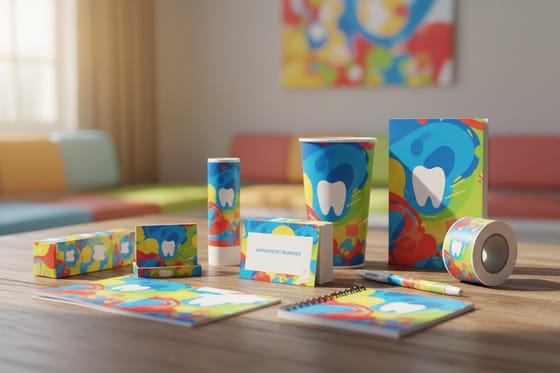
The dental launch bundle is ten print pieces that open a practice with the book already filling: appointment cards, postcards, brochures, rack cards, business cards, flyers, door hangers, business card magnets, window clings, and presentation folders. Postcards, door hangers, flyers, and window clings announce the opening across the patient radius, cards, brochures, and treatment folders convert and educate through the first visits, and appointment cards, recall postcards, and fridge magnets lock in the six-month hygiene cycle a practice lives on.
The picks
What opening day costs in print, piece by piece
Nine of the ten pieces start under $110. Appointment cards and business cards start at $17.57 for 100, postcards at $16.48, business card magnets at $19.68, vinyl window clings at $30 and 4 by 9 in rack cards at $42.84. Door hangers, from $290.41 in canvassing volumes, are the one large line. Every card below is priced live from the configurator; build all ten from one logo file so the door hanger, the waiting-room brochure and the checkout card share one calm clinical look.
Design and print help
Practice name, hours and insurance list, set once
Patients judge clinical care by every signal they get, including paper. Lock the practice name, hours and insurance list into the online designer once and they print the same on a 2 by 3.5 in appointment card and a 9 by 12 in treatment folder. Mailing services print, address and mail the two-mile announcement wave, and variable data prints each patient's name and due month on the recall cards in one run.
How they work together
Announcement wave, first visit, six-month recall
Your launch has three stages, and each piece belongs to one. Run the whole sequence and the practice opens with a mailed wave, converts at the front desk, and settles into the six-month recall that pays the rent.
The two-mile radius hears the news before opening day: a postcard wave to every mailbox, door hangers on the walkable streets, flyers with the new-patient offer at every counter that will take a stack, and window clings that tell the sidewalk you are accepting new patients.
The front desk hands a card with every hello, brochures in the waiting room explain whitening and aligners, rack cards at the pharmacy keep recruiting while you work, and the treatment plan goes home in a folder that keeps the case together.
Every checkout ends with the next hygiene visit written on a card, the six-month recall postcard catches everyone who left without booking, and the fridge magnet keeps the booking line in the kitchen between visits. This cycle is the practice.
1. Appointment cards: the six-month cycle, made physical
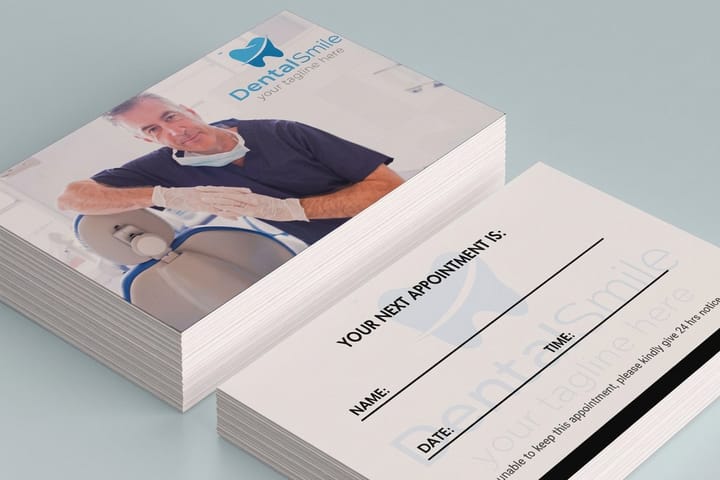
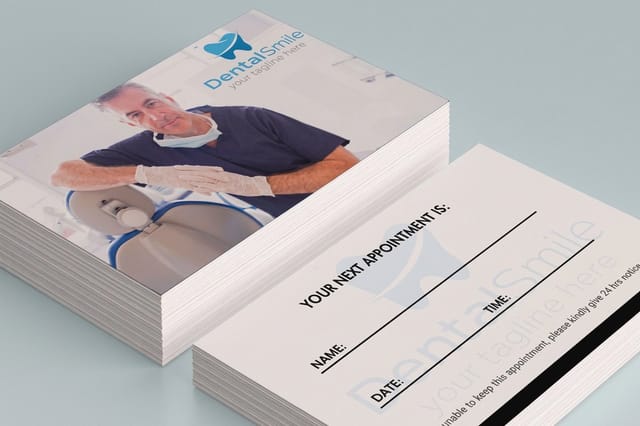
Dentistry runs on a rhythm no other retail business has: the six-month recall. The appointment card is that rhythm printed, the next visit written by hand at checkout, while the patient is standing at the desk and the cleaning is still fresh. That thirty-second habit is the difference between a book that fills itself and a front desk that spends afternoons calling.
Print a clean front with the practice logo and a clear line for date and time, and use the back for the reschedule number and a gentle note about what happens when hygiene visits slip. Match the stock to your business cards so the pair feels deliberate; the checklist in what to include on a business card translates almost directly.
Under twenty dollars a box, and every checkout ends with revenue protected.
2. Postcards: the announcement wave and the recall net
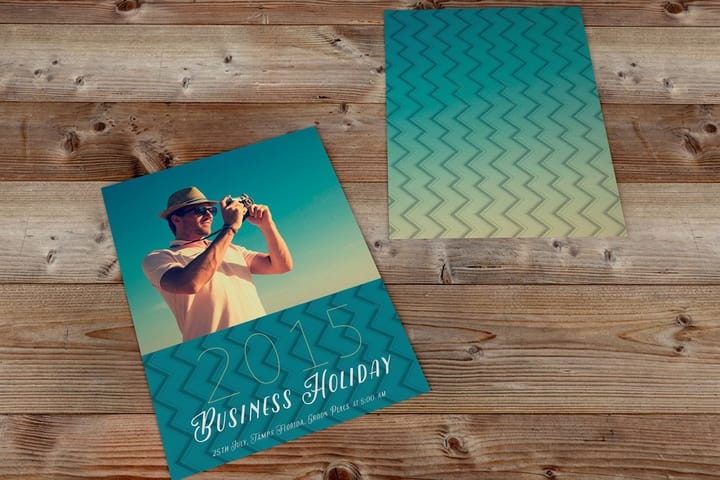
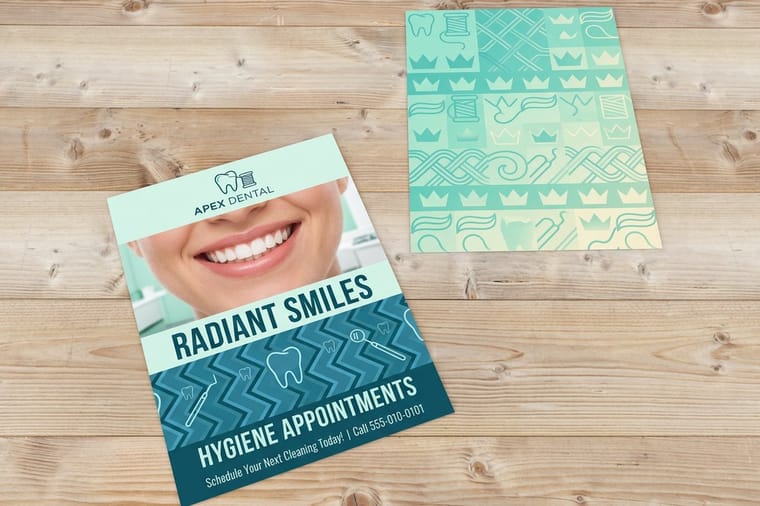
The postcard does two different jobs in a dental launch. Before opening, it is the announcement: a wave across the two-mile radius with the new-patient offer, the smiling team, and the opening date. After opening, it is the recall net: the card that lands in month five for every patient who left without booking their next visit.
Healthcare mail earns attention because it is about the recipient, not the sender; the category figures in direct mail response rates by industry show why practices keep mailing. Cover the radius efficiently with EDDM postcard sizes, and let mailing services handle addressing and postage.
Starting under seventeen dollars, the same product opens the practice and then keeps its book full.
3. Brochures: case acceptance starts in the waiting room
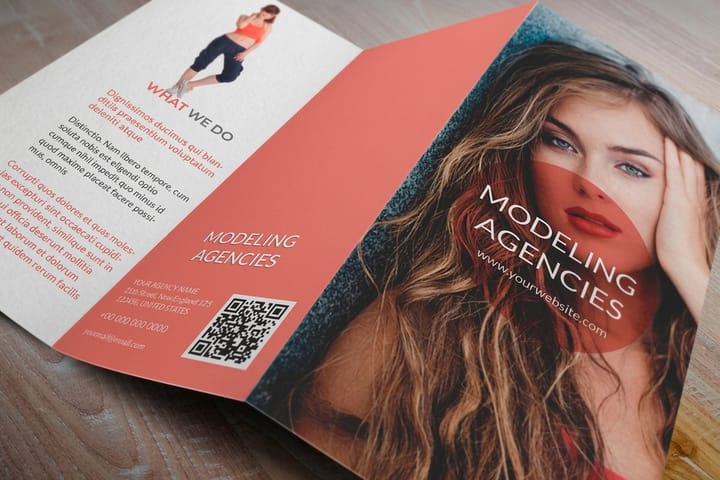
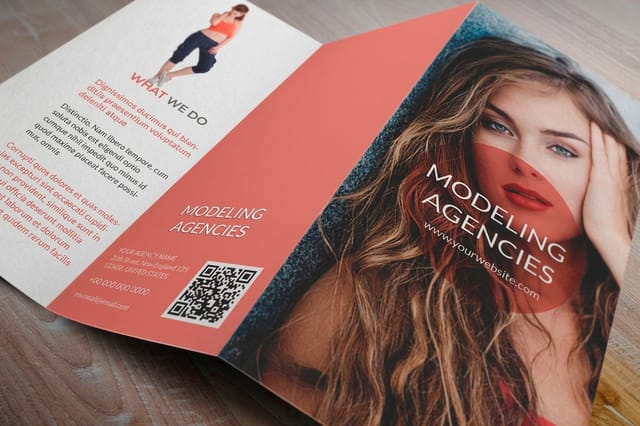
Patients rarely book whitening, aligners, or implants because they rarely know enough to want them. The waiting room brochure fixes that quietly: ten minutes of genuine attention, a plain-language explanation, and a question asked in the chair, "I saw the aligner brochure, does that work for me?" That question is case acceptance beginning on its own.
Write one brochure per treatment theme and structure each around the patient's real doubts: does it hurt, how long, what does it cost. The mechanics in how to fold a brochure match the fold to the content, and brochure paper types picks a stock that feels clinical-grade rather than promotional.
Stock one brochure per treatment in the waiting room rack and note which ones the hygienists refill most; that tells you which treatment patients ask about.
4. Rack cards: the practice, one arm's reach from the neighbors
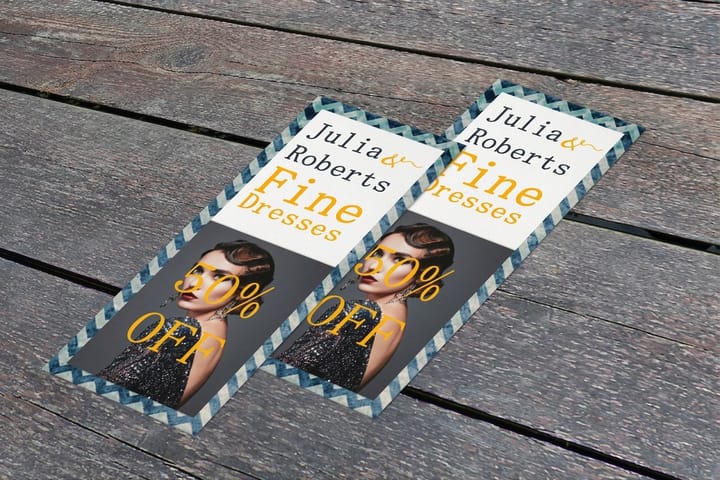
Between the practice and every household in the radius sit a dozen counters: the pharmacy, the coffee shop, the gym, the pediatrician, the grocery community board. A rack card at each one is a permanent, silent open house, the practice name, the new-patient offer, and a map, waiting at the exact moment someone thinks "I should find a dentist here."
The 4 x 9 format forces discipline: one headline, three benefits, one offer, one number. The layout rules in rack card design keep the hierarchy readable at a glance, and a matching design across rack card and brochure means the person who saw one recognizes the other in your waiting room.
Refill the racks monthly on the same loop as your flyer stops, and the whole neighborhood keeps hearing about you for pennies a card.
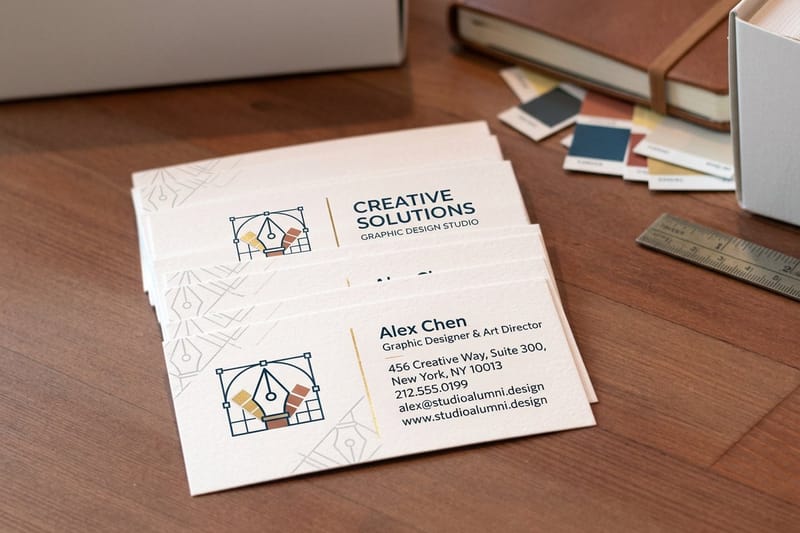
5. Business cards: the practice in every pocket
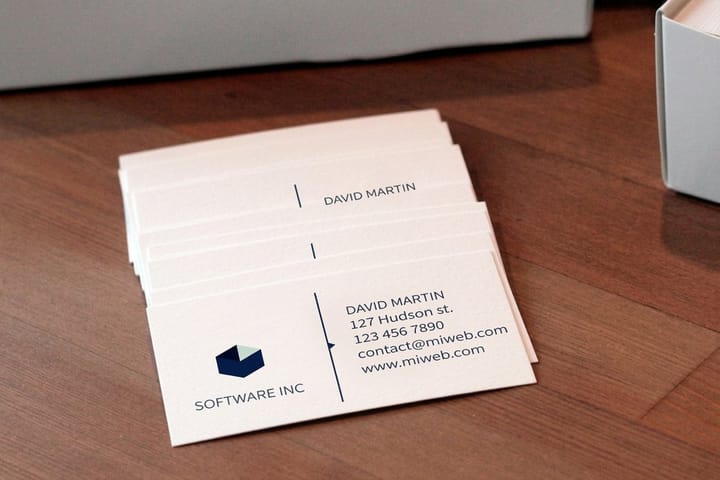
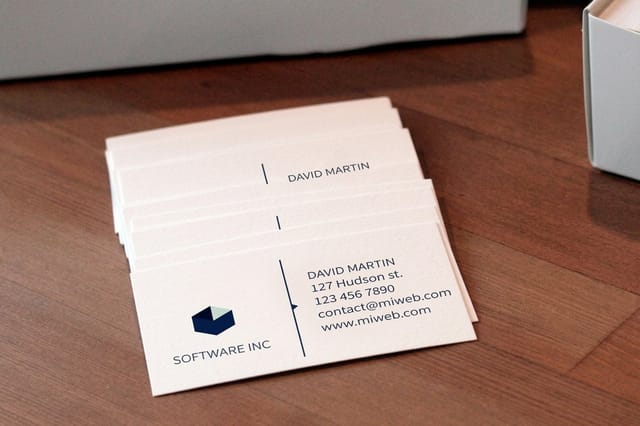
A new dentist is recommended one conversation at a time: a coworker with a toothache, a new family on the street, a parent at pickup asking who takes their insurance. The business card is what lets your first hundred patients make those referrals accurately, with the number and address in hand instead of a name half-remembered.
Hand two cards at every checkout, one to keep, one to give away, and print the booking line and insurance note on the back. In a trust profession the stock matters; the paper weight chart explains why a 16pt card reads as established, and there is more business card printing to browse for a soft-touch finish that suits a clinical brand.
A 100 pack starts at $17.57, so two cards per checkout for your first fifty patients costs less than one hygiene visit.
6. Flyers: the new-patient offer, posted everywhere at once
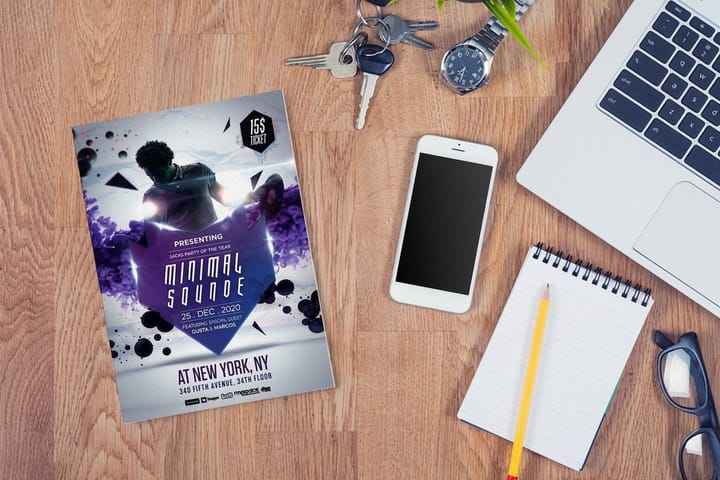
The launch needs one offer said loudly and everywhere: the new-patient special that makes trying an unknown practice feel safe. The flyer is that offer in poster form, on the community board, in the apartment lobby, at the daycare, stapled inside the welcome packet the leasing office hands new tenants.
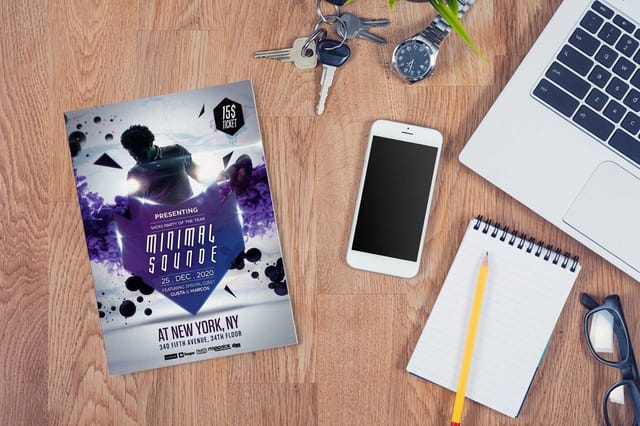
Make the offer the headline, exam, x-rays, and cleaning at one price, and everything else small: hours, insurance accepted, the booking QR code. Our guides on how to design flyers and how to make flyers cover the single-focal-point layout that survives a crowded corkboard.
Refresh the stack monthly through the first year; by the time the offer retires, the recall cycle has taken over the marketing.
7. Door hangers: opening news on every porch in the radius
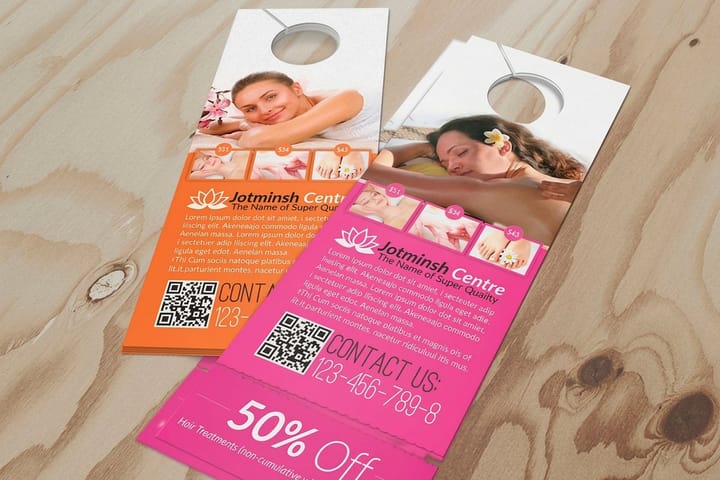
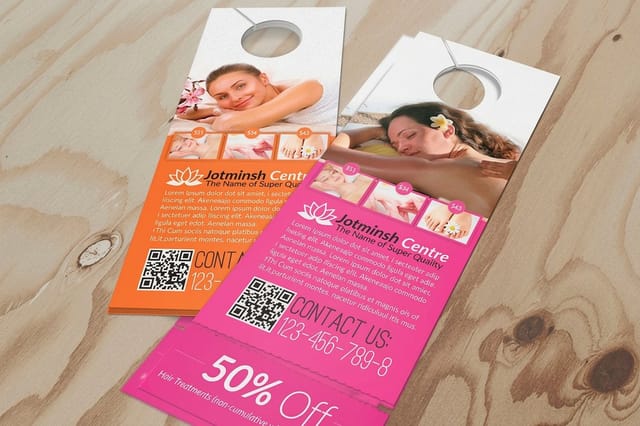
The households closest to the practice are worth a medium the mailbox cannot match. A door hanger arrives alone, on the knob, unignorable, and it says something a stamp never can: we are your neighbors, three streets over, and we saved you a checkup slot. For the walkable core of the radius, it is the highest-attention piece in the bundle.
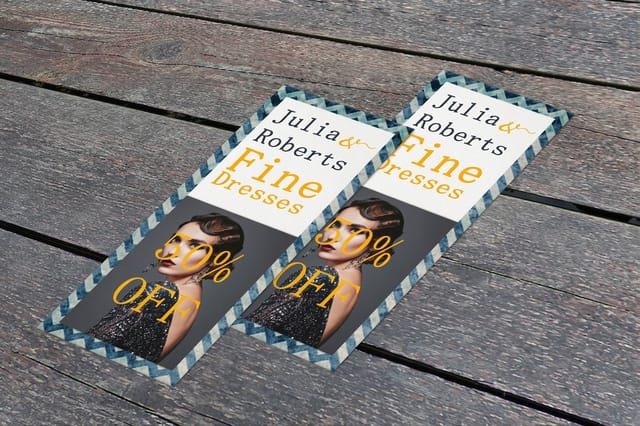
Lead with the neighborly line, follow with the new-patient offer, and add a perforated tear-off with the number so the hanger can stay on the fridge while the tab goes in a wallet. Check door hanger dimensions before designing so the hook, headline, and tear-off all land correctly.
Walk the streets within ten minutes of the practice first, one weekend at a time, and mark each street off so the second wave covers new doors.
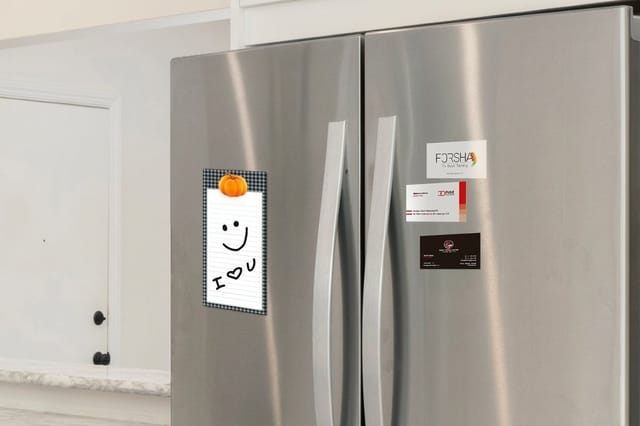
8. Business card magnets: the booking line on the kitchen fridge
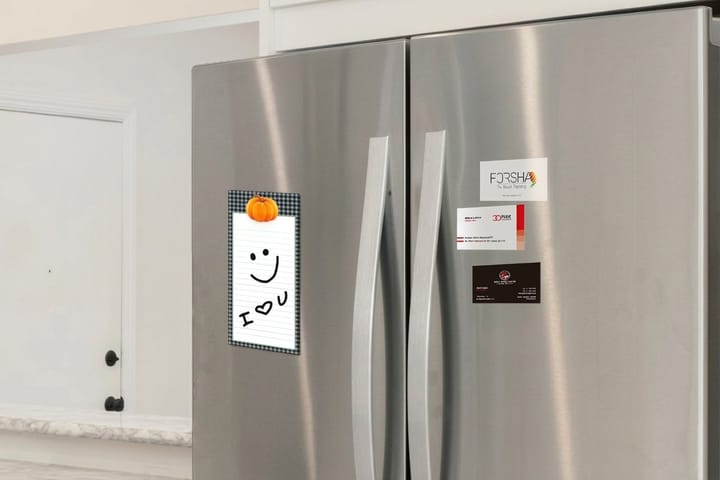
Between hygiene visits there are six months in which the practice must not be forgotten, and the fridge is where households keep the numbers they actually use. A business card magnet handed out at checkout puts the booking line exactly there, so the chipped tooth on a Saturday and the new neighbor asking for a dentist both get answered from the kitchen, not from a search results page.
Print the practice name, the booking line, and the after-hours emergency number, nothing else, so it reads in the two seconds a fridge glance allows. Our guide to how to make custom magnets covers art setup, and magnets versus stickers explains why the magnet earns years on the fridge where paper gets recycled.
Hand one to every new patient with the first appointment card. It is the piece still working when the recall postcard arrives in month five.
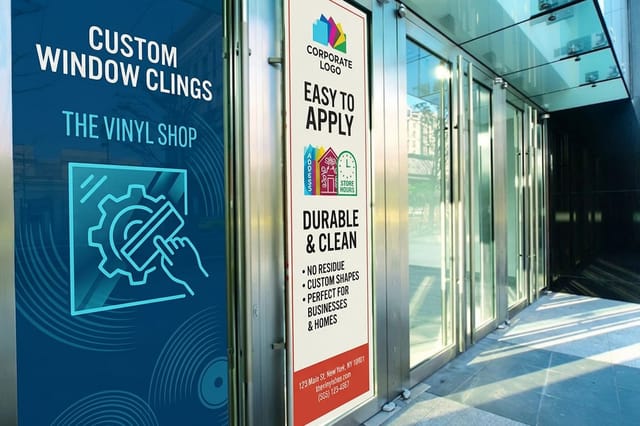
9. Window clings: now accepting new patients, said to the sidewalk
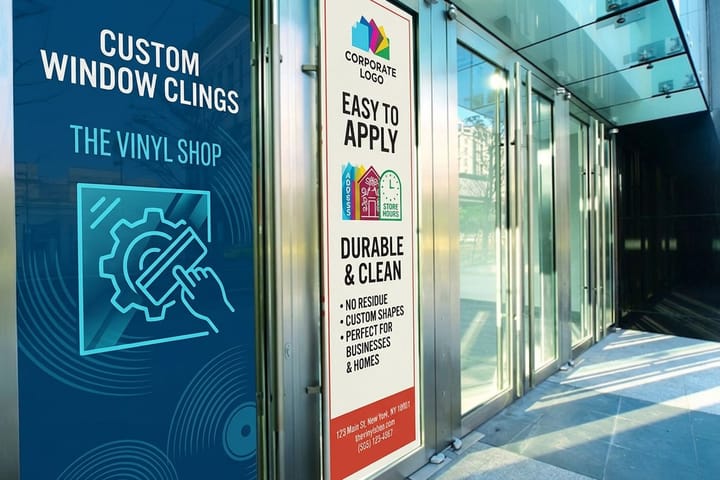
The practice front window talks to every school run, dog walk, and commute that passes it, and an empty pane says nothing. Vinyl window clings put the essentials on the glass: now accepting new patients, the hours, the insurance networks, and the booking number, all readable before anyone reaches the door. For a launch, that is the cheapest permanent advertising the location will ever get.
Clings apply without adhesive, peel cleanly, and reposition, so the opening-special message can swap to whitening season without a scraper. The explainer on what window clings and decals are sorts the material choices, and how to apply window clings gets them on smooth and bubble-free the first time.
Keep one pane clear at eye level so the calm, tidy waiting room shows through. In dentistry, the room itself is part of the pitch.
10. Presentation folders: the treatment plan that goes home intact
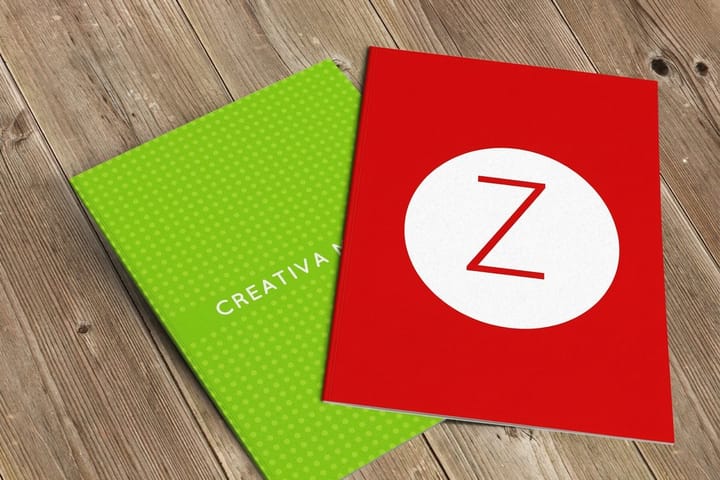
Case acceptance for implants, aligners, and multi-visit work rarely happens in the chair; it happens at home, when the patient and a spouse reread the plan. A branded presentation folder decides what that rereading looks like: the estimate, the financing sheet, the brochure, and the appointment card arrive together, in order, under the practice logo, instead of folded into a coat pocket.
Short runs keep it practical for a new practice: print a modest batch, hand one with every treatment plan, and reorder as the case load grows. The explainer on what pocket folders are covers the format, and standard folder sizes confirms the classic 9 x 12 that fits letter inserts and a business card slit.
When a patient and a spouse weigh a four-figure plan at the kitchen table, an ordered folder tells them the practice runs the same way.

Specs and pricing
Anchor the bundle: appointment card specs and live pricing
The appointment card is the piece the practice will reorder forever, so it anchors the stock and color choices. Here are the live specs and price tiers for appointment cards at 4OVER4.COM, straight from the configurator.
| Quantity | Price Per Unit | Total |
|---|---|---|
| 100 | 17.6¢ | $17.57 |
| 200 | 11.5¢ | $23.07 |
| 300 | 9.15¢ | $27.46 |
| 400 | 7.96¢ | $31.86 |
| 500 | 7.25¢ | $36.26 |
| 600 | 6.77¢ | $40.64 |
| 700 | 6.43¢ | $45.04 |
| 800 | 6.18¢ | $49.43 |
Wally explains the launch bundle
Ten pieces from the announcement wave to the six-month rhythm
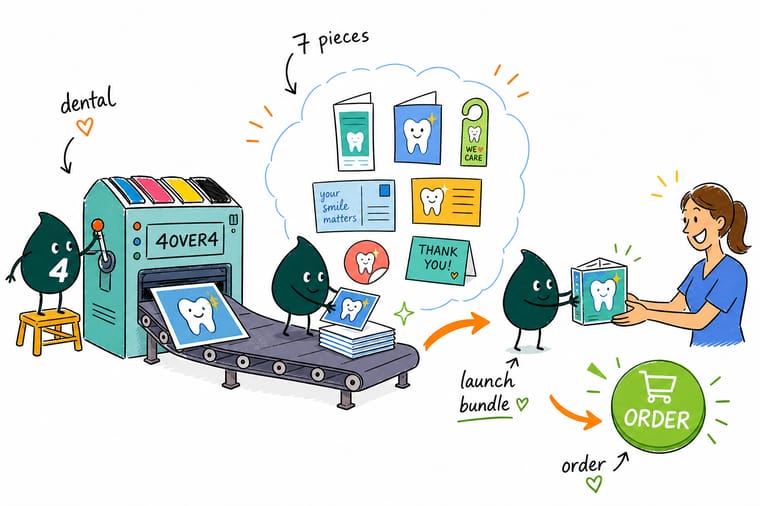
Wally opens a practice the way a gardener plants a bed. The postcard, door hanger, and window cling seed the whole radius before opening day, the flyer offer waters the first bookings, the brochures, rack cards, and treatment folders keep new growth coming, and the appointment card with its fridge magnet is the perennial, blooming every six months at checkout. One brand across all ten pieces, and the book fills on schedule.
Shop the dental collection →See it in use
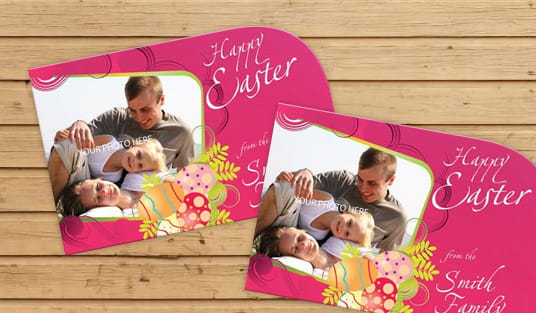
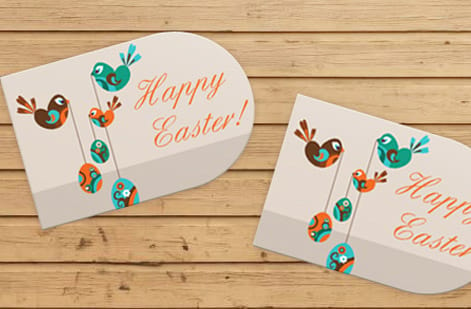
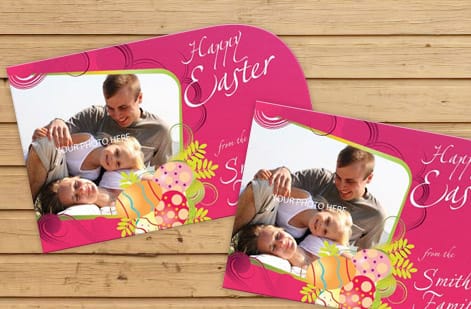
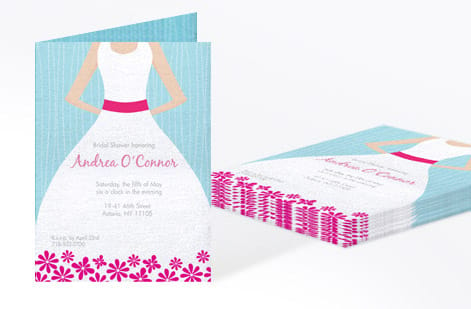
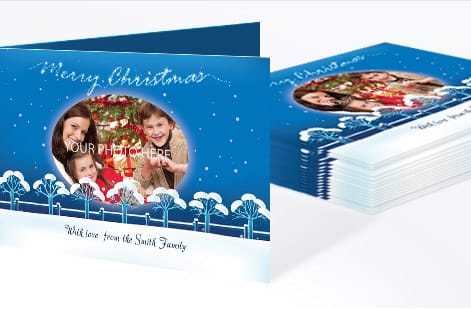
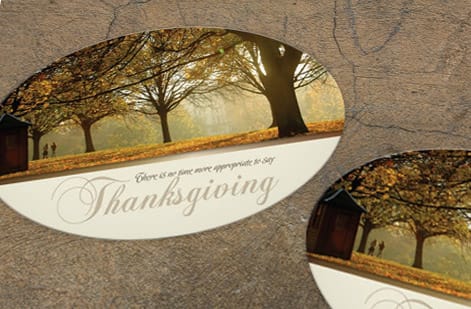
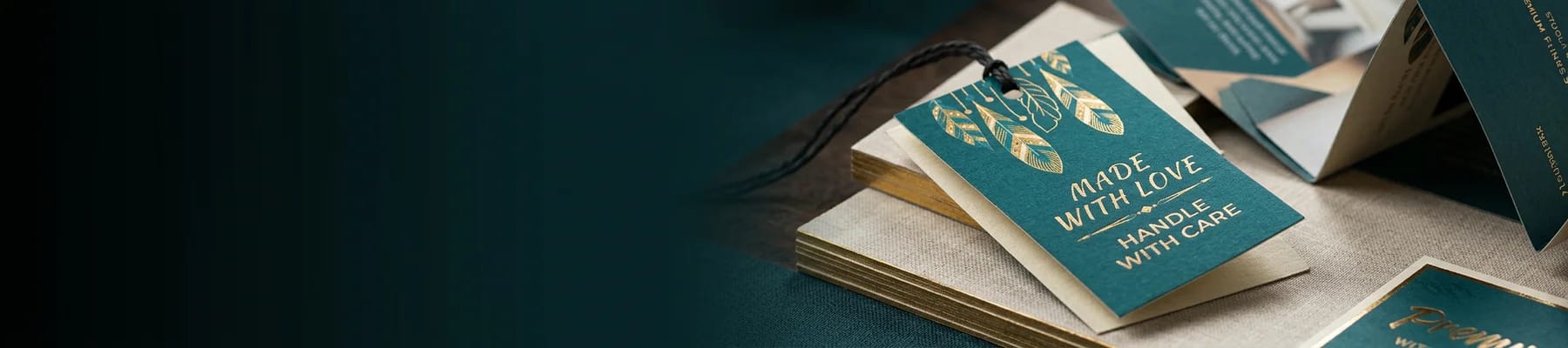
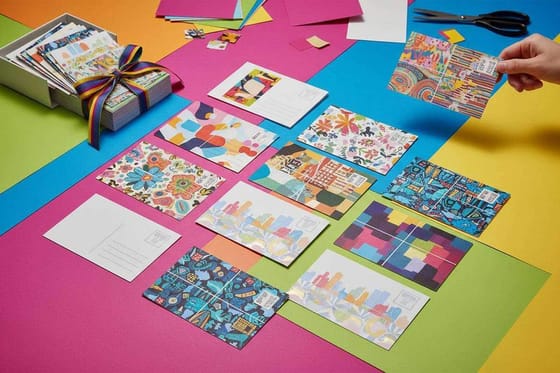
Postcards we have printed for customers


Explore more
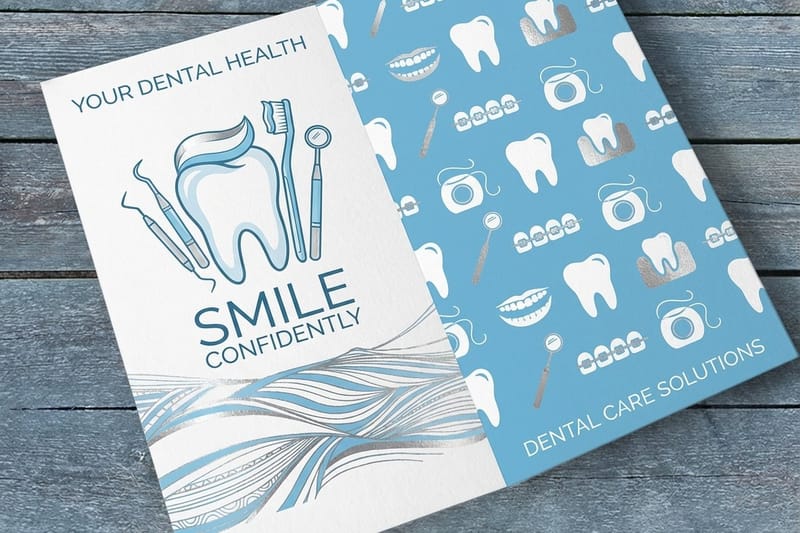
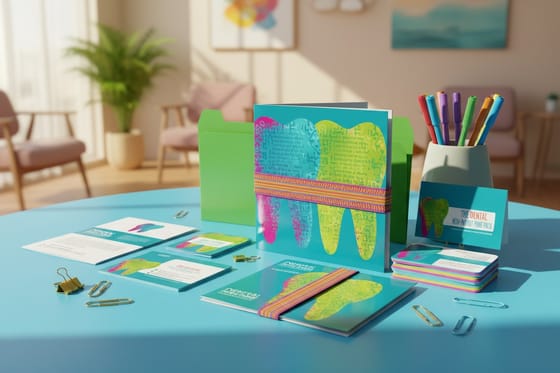
Where to go next
By the numbers
One bundle, printed to fill the book
Common Questions
Common questions about the dental launch bundle
What is in the dental launch bundle?
Ten print pieces that open a practice with the book already filling: appointment cards, postcards, brochures, rack cards, business cards, flyers, door hangers, business card magnets, window clings, and presentation folders. The postcards, door hangers, flyers, and window clings announce the opening across the patient radius, the cards, brochures, rack cards, and treatment folders convert and educate through the first visits, and the appointment cards, recall postcards, and fridge magnets lock in the six-month cycle the practice lives on.
Why does a new dental practice still need print?
Because dental patients are chosen locally and on trust. A new practice has no reviews, no referrals, and no map history, but it does have an address surrounded by households that all need a dentist eventually. Print reaches exactly those households on day one, and a clean, consistent set of materials is the first evidence that the clinical work will be careful too.
How big should the announcement mailing be?
Start with the radius patients actually drive: two to three miles residential, plus the office parks within five minutes. Mail the announcement postcard two weeks before opening with a strong new-patient offer, exam, x-rays, and cleaning at one clear price, then repeat a smaller wave a month in. A defined radius mailed twice beats a huge list mailed once, and EDDM routes make the geography simple.
What should the waiting room brochures cover?
The treatments patients do not book because nobody explained them: whitening, clear aligners, implants, sleep and grinding appliances. One brochure per theme, written in plain language with prices or financing noted, converts waiting time into case acceptance. Keep the tone informative rather than promotional; in a clinical setting, calm explanation sells better than excitement.
Do appointment cards still matter when the software sends texts?
Yes, because the card works at the exact second of highest intent: checkout, while the patient stands at the desk. Writing the next visit on a card converts "I will call later" into a booked slot, and the card on the fridge backs up every text the software sends. Practices see fewer no-shows when the reminder is both digital and physical.
How much does the full bundle cost to print?
The ten starting prices add up to $639.95, and 250 door hangers at $290.41 are close to half of it because they are ordered in canvassing volumes. 100 appointment cards or 100 business cards cost $17.57 and 50 postcards $16.48, 50 rack cards $42.84, 50 brochures $57.11, 50 flyers $39.54, and 10 short run presentation folders $108.75. Each piece prices live on its own product page and scales with quantity and options, so set your quantities in each configurator and the totals update as you choose.
Can I add more pieces as the practice grows?
Yes. Growing practices commonly add referral cards for the specialists they work with, branded letterheads for treatment letters, and exterior signage once the facade can carry it. Browse the dental printing collection at 4OVER4.COM to keep every addition consistent with the bundle, and reorder any piece in a few clicks when the racks run low.
Get Started
The first order is door hangers: 250 for $290.41
Door hangers are 250 for $290.41 and print in 7 business days, so start those first. Appointment cards are 100 for $17.57, brochures 50 for $57.11, and postcards 50 for $16.48.
Legal Disclaimer
Gold Standard guarantees apply to all standard orders placed through 4over4.com. Price match requires verifiable proof of a competitor's published price for an equivalent product with matching specifications and turnaround time. Satisfaction guarantee covers manufacturing defects and print quality issues. Contact support with order number and documentation.
