
5 Numbers Every E-Commerce CFO Must Know, and the Print That Moves Each One
Five figures decide whether an online store is a business or an expensive hobby. Each one has a printed line item sitting underneath it, and this page pairs the number with the product that moves it, priced live.
The five are contribution margin per order, paid new customer CAC with its payback period, 90 day repeat rate by cohort, cash conversion cycle in days, and return rate priced at the full cost of a return. Gross margin, blended CAC, and all time repeat rate are the three that feel reassuring and tell you almost nothing. Four of the five move when you change what you print and how much of it you commit to at once.
The picks
Five picks, numbered, each with its own price ladder
One printed piece per number, in the order the money moves. Prices come straight from the configurator and fall as the quantity climbs, so treat the figures below as the starting point of a ladder rather than a fixed cost. Start each one from a design template if you would rather not build artwork from scratch.
-
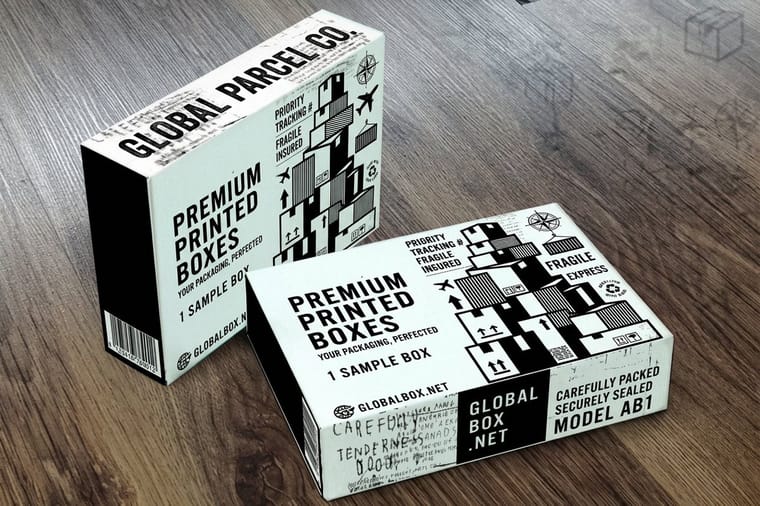
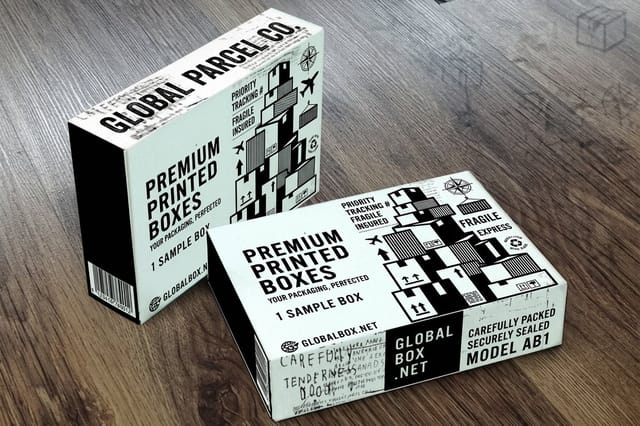
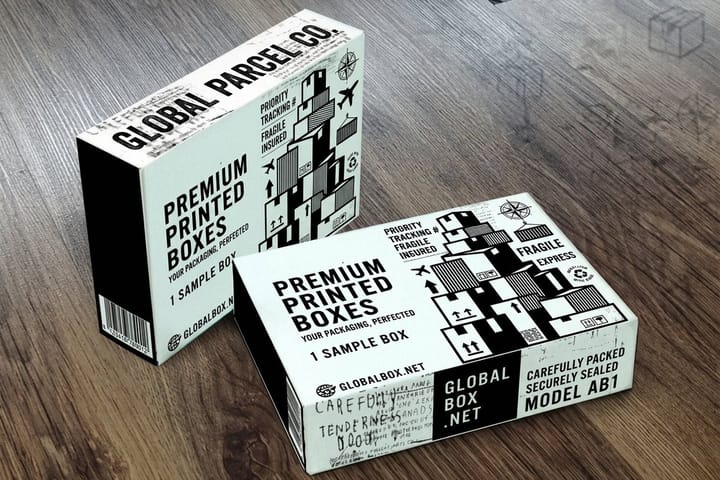
1. Shipping Boxes from $711.78
The box sets two costs at once: the board you buy and the dimensional weight the carrier bills. Right sizing the carton is the fastest way to move contribution margin per order without touching the price on the site.
-
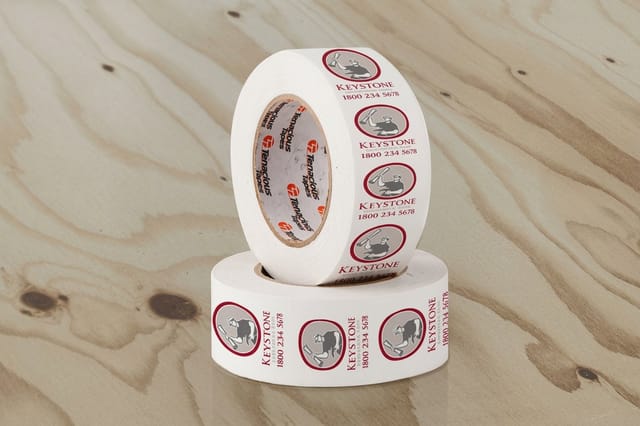
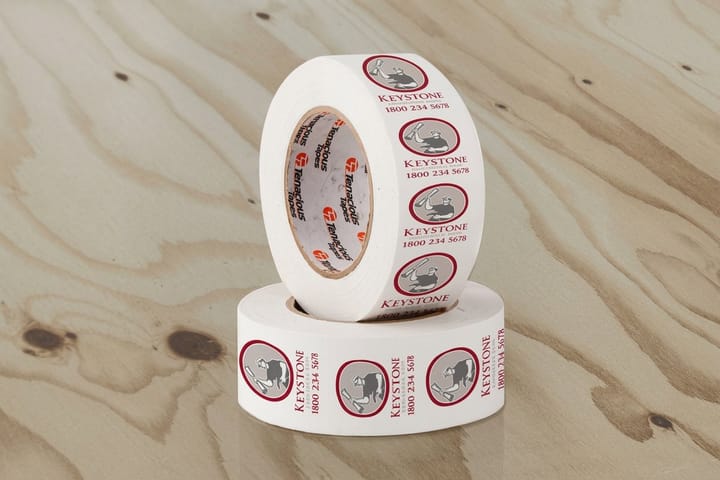
2. Packaging Tape from $347.11
Branding the tape instead of the carton is the low cash hedge. Tape does not become scrap when your box dimensions change, so the brand impression costs you a fraction of the committed inventory.
-
3. Standard Postcards from $16.48
The in box reorder card. Print a code that appears nowhere else and the redemption count gives you a clean read on repeat rate that no email or retargeting ad can claim credit for.
-
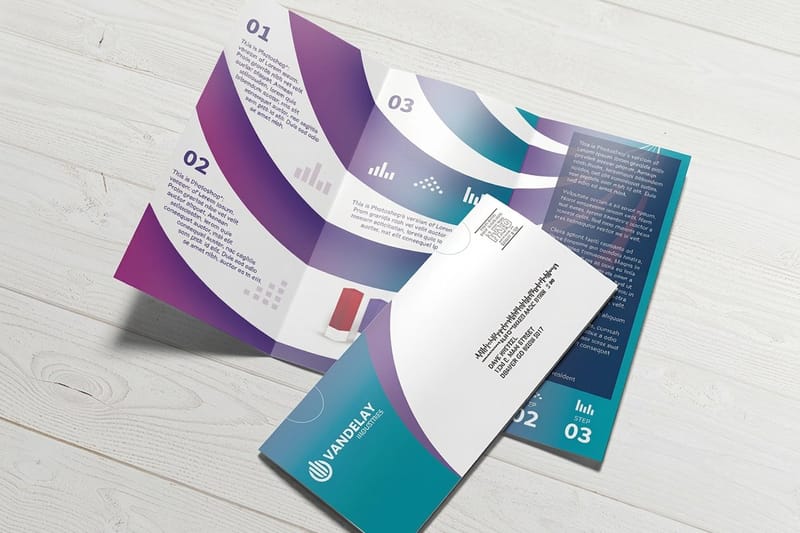
4. Direct Mail Postcards from $89.68
An acquisition channel that survives ad blockers and tracking opt outs. Printing, addressing, and postage are handled in one order, and the code on the card is the attribution.
-
5. Premium Labels from $29.16
Dimensions, material, care, and a scannable SKU on the unit itself. It shrinks the not as described bucket on returns and stops the receiving desk mis sorting the ones that still come back.



The scoreboard
How each number is built, and where print touches it
Every one of these can be pulled from a standard commerce platform export plus an invoice folder, and none of them needs a new analytics tool. Read the row, tap the number to jump to its section, then check whether your current dashboard is reporting the flattering version instead.
| Number | How you calculate it | Where print touches it |
|---|---|---|
| 1. Contribution margin per order | Revenue minus COGS minus packaging, outbound freight, pick and pack labor, and card fees | Box size and board cost, the two largest packaging line items on a shipped order |
| 2. Paid new customer CAC | Paid media spend divided by first time buyers in the same period, never blended across repeat orders | A mailed postcard carrying a code that is attributable without a pixel |
| 3. Repeat purchase rate at 90 days | Share of one month's new buyers who place a second order inside 90 days, read by cohort | An insert card with a reorder code that exists only on paper |
| 4. Cash conversion cycle | Inventory days plus receivable days minus payable days, in days | Packaging minimums are inventory. Tape and labels commit far less cash than a custom carton run |
| 5. Return rate and cost per return | Returned revenue over gross revenue, plus the fully loaded cost of processing one return | Spec labels and printed size guides cut the not as described reason code |
Start here
Why these five and not the usual dashboard
Revenue, sessions, and conversion rate describe activity. These five describe whether the activity pays. Two of them are profit questions, two are cash questions, and one sits in between. Run them in this order, because contribution margin is an input to CAC payback, and CAC payback is meaningless if the cash cycle will not let you wait that long. The deeper walkthrough of each metric lives in our guide to the five numbers.
1. Contribution margin per order, not gross margin
Gross margin stops at the cost of the goods. Contribution margin keeps going and subtracts everything that only happens because an order shipped: the box, the void fill, the tape, the shipping label, the pick and pack labor, the outbound freight, and the card processing fee, which on the common flat rate plans runs 2.9% plus 30 cents a transaction. What is left is the money that pays for ads, rent, and salaries.
Run it per order and per SKU, both. A store can hold a comfortable gross margin across the catalog and still lose money on its bestseller, because the bestseller is the heavy one that ships in an oversized carton. Almost every catalog has a SKU like that, and it is rarely the one the founder suspects.
Packaging is the line nobody opens. Corrugated shipping boxes cut to the product reduce both the board you buy and the dimensional weight the carrier charges you for, and dim weight is where an oversized box quietly doubles freight on a light item. If a right sized carton saves 60 cents of board and 80 cents of freight, that is $1.40 an order, and across 30,000 orders it is $42,000 that never shows up in gross margin. Our breakdown of carrier package size and weight limits shows where the billing bands sit.
The trade off is straightforward. A printed carton costs more per unit than plain kraft, and the difference only earns its keep if it lifts repeat rate, which almost nobody actually measures. Ship the plain box, brand it with tape or a label, and put the saving into the third number on this page.
2. Customer acquisition cost, read next to its payback period

Blended CAC, total marketing spend over all orders, is the number that makes a board deck look calm. Paid new customer CAC, paid spend over first time buyers only, is the number that tells you whether the business works. Track the second one, then divide it by contribution margin per order to get payback in orders, and multiply by the median gap between orders to get payback in months.
Payback is what sets your spending ceiling. If contribution margin is $18 an order and CAC is $54, three orders have to happen before the acquisition is paid off. If the median customer buys twice and stops, growth is being funded from the balance sheet rather than from the business, and no amount of top line hides that for long.
This is where print deserves a second look. A direct mail postcard costs more per impression than a social ad and it cannot be paused mid flight, but it carries a code that exists nowhere else, so redemption is attribution nobody argues about. No pixel, no tracking opt out, no attribution window debate. The inputs are in our numbers on direct mail cost per piece.
The limits are real. Standard mail takes days to land, so nothing at all happens for the first week after a drop, and the list decides the result before a single design choice does. A weak list burns the print run and the postage with it. Read how to build or rent a mailing list before committing a budget, and keep the offer code unique per drop so two campaigns never share credit.
3. Repeat purchase rate at 90 days, read by cohort

All time repeat rate flatters you. It counts customers who have had three years to come back against customers who bought last Tuesday, and it only ever drifts upward. Cut it by cohort instead: of everyone whose first order landed in March, what share ordered again within 90 days. Now the number responds when you change something, and you can see the response inside one quarter.
The cheapest lever on that number is already riding in the box. A printed insert card at 4 by 6 inches with a reorder code that appears in no email and no ad does two jobs at once. It gives a reason to come back, and the redemption count gives you a clean read on how many people did. Digital channels cannot hand you that second half, because email and retargeting are both busy claiming the same click.
Print the code, not just the sentiment. A card that says thank you is a pleasant gesture with no measurable outcome. A card that says 15% off your next order, code BOX15, good for 60 days, produces a number you can put in next month's report and compare against the cost of the print run.
Where it fails: consumables reorder, durables do not. If your product has a replacement cycle measured in years, an insert card will not shorten it, and that money belongs in the acquisition number instead. For the rest of the printed pieces that ride inside a shipment, see the DTC brand packaging set, and printed tissue paper if the unboxing itself is part of the pitch.
4. Cash conversion cycle, the number that caps how fast you grow
Cash conversion cycle is days inventory outstanding plus days sales outstanding minus days payable outstanding. For a direct to consumer store, days sales outstanding is nearly nothing, because the card settles in about two business days. So the cycle collapses into inventory days minus whatever terms your suppliers grant you, and that gap is the stretch you fund out of your own pocket.
Packaging is inventory too, and it is the kind that never sells. A custom carton run bought at a five thousand unit minimum parks your cash on a pallet, and the per unit price that made the quantity attractive is exactly why the money is now immobile. Change the logo in month four and the pallet becomes scrap.
The hedge is to brand the cheap part. Stock corrugated plus custom printed packaging tape buys the brand impression at a fraction of the committed cash, and tape does not go obsolete when a carton dimension changes. A printed label does the same job and lets three SKUs share one box size. Our guide to boxes, tape, and labels works through which pieces are worth locking down first.
Two 4OVER4.COM policies land directly on this number. No minimum order lets you test artwork on a short run before the pallet exists, and bulk discounts show precisely what the larger quantity buys, so the choice between cheaper units and free cash gets made against real figures instead of a hunch.
5. Return rate, priced at what a return actually costs

Report returns two ways: as a share of revenue, and as a fully loaded cost per return. A return charges you the outbound freight you already paid, the return label, receiving and inspection labor, repackaging, and often a markdown when the unit goes back out as open box. The lost sale is the smallest line on that list.
Then split the reason codes. Wrong size, not as described, damaged in transit, and changed my mind are four different problems with four different fixes, and only the last is genuinely outside your control. The first two are information problems, and information is what print does.
A product label carrying real dimensions, the material, care instructions, and a scannable SKU shrinks the not as described bucket and keeps the receiving desk from mis sorting whatever still comes back. Damaged in transit is a packaging problem, so it goes back to the carton and the void fill rather than to the listing. Our overview of adhesive labels, seals, and tape covers which face stock survives a warehouse and which one peels.
The honest limit: a label cannot rescue a product that is simply wrong for the buyer. When one SKU sits far above the rest of the catalog on returns, the fix is the listing photography or the product itself, and better print only makes the return arrive sooner. Fix the outlier first, then print the labels.
Specs and pricing
The two line items you will reorder most
Cartons and labels are the pieces a shipping operation buys again and again, so they are the two worth modeling properly. Here are the live specs and the price ladders for both, straight from the configurator.


| Quantity | Price Per Unit | Total |
|---|---|---|
| 50 | 33.0¢ | $16.48 |
| 100 | 24.2¢ | $24.16 |
| 200 | 15.9¢ | $31.86 |
| 300 | 12.8¢ | $38.45 |
| 400 | 11.3¢ | $45.04 |
| 500 | 10.3¢ | $51.62 |
| 600 | 9.89¢ | $59.31 |
| 700 | 9.57¢ | $67.00 |
| Quantity | Price Per Unit | Total |
|---|---|---|
| 1 | $347.11 | $347.11 |
| 2 | $302.40 | $604.80 |
| 5 | $272.53 | $1,362.67 |
| 10 | $233.28 | $2,332.75 |
| 20 | $189.39 | $3,787.89 |
| 30 | $176.79 | $5,303.65 |
| 40 | $166.70 | $6,667.83 |
| 50 | $162.16 | $8,107.79 |
Wally runs the five numbers
Every metric has a printed line item under it
Wally works down the list the way a controller does. Contribution margin lives in the box and the freight it triggers. CAC lives in the postcard and the code printed on it. Repeat rate lives in the insert card. The cash cycle lives in how many cartons you committed to at once, and the return rate lives in what the label told the customer before they bought. Pick the number you want to move, then print the piece that sits under it.
Shop packaging printing →See it in use
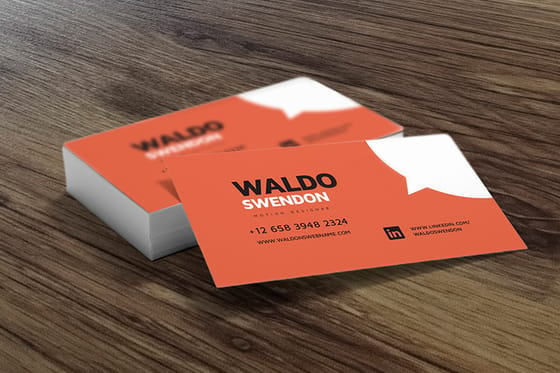
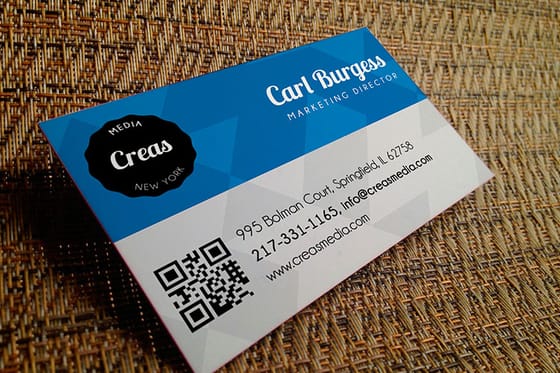
Real product label designs, printed in house


Explore more
Where to go next





By the numbers
How these five pieces are printed and shipped
Common Questions
Common questions from e-commerce finance teams
What is the difference between gross margin and contribution margin?
Gross margin subtracts only the cost of the goods. Contribution margin also subtracts every variable cost of getting that order out the door: the box, void fill, tape, shipping label, pick and pack labor, outbound freight, and the card processing fee, which on standard flat rate plans is 2.9% plus 30 cents a transaction. A store can hold a comfortable gross margin and still be losing money per order once packaging and freight are counted, which is why contribution margin per order is the figure to run weekly.
Should an e-commerce CFO track blended CAC or paid new customer CAC?
Track paid new customer CAC as the operating number: paid media spend divided by first time buyers in the same period. Blended CAC mixes in repeat orders and organic traffic, so it falls whenever your existing customers order more, which makes it look like acquisition improved when nothing about acquisition changed. Keep blended CAC for the investor summary if you like, but set budgets off the paid new customer figure and its payback period.
How do you attribute a direct mail campaign without a tracking pixel?
Print a unique code on the card and use it nowhere else, one code per drop and per list segment. Redemptions against that code are your response, with no attribution window to argue about and no opt out to erase it. Pair it with a vanity URL if you want session data as well. At 4OVER4.COM direct mail postcards start at $89.68 with printing, addressing, and postage handled in the same order, so the cost side of the calculation is a single number.
Does branded packaging actually raise repeat purchase rate?
It can, but almost nobody measures whether it did, which is the real problem. A printed carton costs more per unit than plain kraft and the difference is invisible in your reporting unless you run it as a test: same product, same offer, half the cohort in the branded box, then compare 90 day repeat rate between the two groups. Until you have that read, branding the tape or the label captures most of the impression for a fraction of the committed cash.
How large should a first packaging order be?
Small enough that changing your artwork does not create scrap. Custom cartons carry the highest minimums and the longest commitment, so they are the last piece to lock down, not the first. Start with stock corrugated plus printed tape from $347.11 or product labels from $29.16, run the design through a real season, and commit to a carton quantity once the logo, the box dimensions, and the SKU mix have all stopped moving.
What counts as a good return rate?
There is no cross category benchmark worth quoting, because apparel and consumables do not live in the same world. Judge two things instead: your own trend month over month, and your cost per return fully loaded with freight both ways, receiving labor, repackaging, and any open box markdown. Then break the rate down by reason code. A rate that is flat overall can hide one SKU quietly getting worse.
How do you calculate CAC payback in months?
Divide customer acquisition cost by contribution margin per order to get payback in orders, then multiply by the median number of months between a customer's orders. If CAC is $54, contribution margin is $18 an order, and customers reorder every two months, payback is three orders and roughly six months. Compare that against how long your cash can wait, because payback in months is a cash question, not a profit question.
Why does cash conversion cycle matter more than profit for a growing store?
Because growth consumes cash before it produces it. Inventory and packaging are paid for months before the revenue arrives, so a profitable store that is doubling can still run out of money. Cash conversion cycle is inventory days plus receivable days minus payable days, and for a direct to consumer store the receivable side is close to zero since cards settle in about two business days. That leaves inventory days against supplier terms, and packaging minimums sit squarely in the inventory half.
Get Started
Print the five pieces behind the five numbers
Cartons, tape, insert cards, mailers, and labels, ordered as one set at 4OVER4.COM. Pick your sizes, stocks, and quantities and watch every price update live before you commit the cash.
Legal Disclaimer
Gold Standard guarantees apply to all standard orders placed through 4over4.com. Price match requires verifiable proof of a competitor's published price for an equivalent product with matching specifications and turnaround time. Satisfaction guarantee covers manufacturing defects and print quality issues. Contact support with order number and documentation. On-time delivery rate based on tracked orders 1999 to 2026. Individual results may vary based on shipping carrier performance.
