
Brand Your Box With Adhesive Labels, Seals and Tape


Three sticky layers turn a plain carton into your packaging: a label, a seal and printed tape. Here is what each one is for, what holds on kraft, and where the money actually goes.
Adhesive packaging is the printed layer you stick onto a plain box instead of printing the box itself: labels, seals and tape. The label carries the information and the artwork, the seal spans the flap split so opening the carton destroys it, and printed tape brands the whole length of the box while doing the mechanical closing. Kraft corrugated is porous and slightly dusty, so it wants a permanent pressure sensitive adhesive, and that adhesive keeps building its bond for about a day after you press it down.

Quick answer
Stick the branding on, rather than print the box
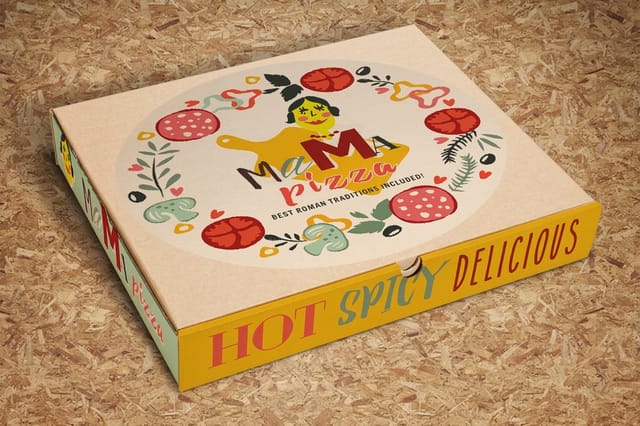
Adhesive packaging lets a stock carton carry your brand without a custom corrugated run. A printed label handles the information, a die-cut seal closes the flap and shows tampering, and printed tape covers the box at warehouse reading distance. The material choice follows the surface: permanent adhesive for kraft, a film facestock for anything that flexes or gets wet, and paper when the seal has to tear as proof. The cost break is simple, since packaging labels start at $29.16 and packaging tape at $347.11, so tape is the volume play and seals are the flexible one.
Labels, Seals and Tape Do Three Different Jobs

People buy all three under one heading and then wonder why the box still looks unfinished. Each layer answers a different question.
The label answers what is inside. Contents, SKU, weight, batch, warnings, the brand mark. It sits flat on one panel and it is the only layer anyone reads. Size it to the panel, not to the artwork, and keep it clear of the flap edge, because a label that crosses a fold lifts the first time the box is stacked.
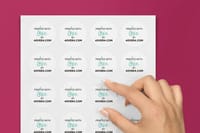
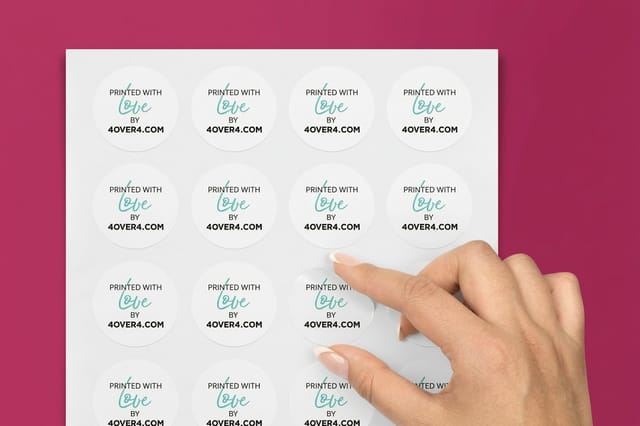
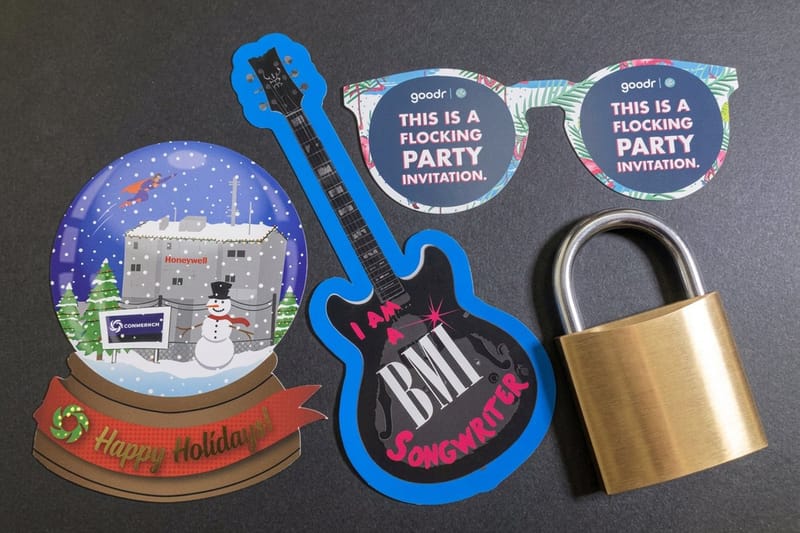
The seal answers whether the box arrived closed. It spans the flap split, so opening the box destroys it. A seal is small, cheap and the fastest branding you can add to a plain carton. Die-cut labels cut to a circle or a shaped mark are the usual form.
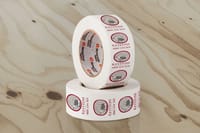
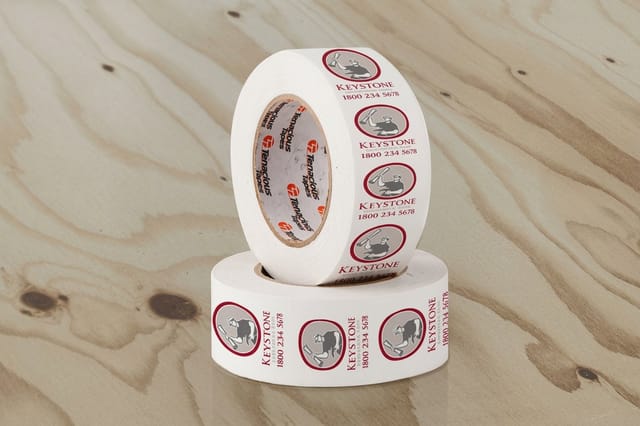
The tape answers who sent it. Printed packaging tape runs the length of the carton and works at the distance a warehouse or a doorstep sees the box from. It also does the actual mechanical work of holding the flaps shut, which a paper seal does not.
Most brands land on label plus seal, and add tape when volume justifies it. A fourth option worth knowing: on retail goods that leave the box, a hang tag from $25.27 carries the branding onto the shelf instead of onto the shipper. Our guide to creating branded packaging works through the whole stack, and the packaging printing collection lists the boxes these layers go onto.
What Actually Sticks to Kraft, Poly and a Cold Box

The surface decides the adhesive, and corrugated kraft is a harder surface than it looks. The outer liner is porous, often recycled, slightly dusty from the corrugator, and it has a shallow wash of flutes running under it. An adhesive lands on the high points first and needs time to flow down into the rest.
That is why the same label feels loose an hour after application and solid the next morning. Pressure sensitive adhesive gives you initial tack on contact and keeps building toward its ultimate bond for roughly a day. If your pack line applies labels and the boxes go straight onto a truck, you are shipping at the weakest point of that curve, and the corners are what lift.
Three surfaces that catch people out. Poly mailers flex and crease, so a paper facestock cracks along the fold even though the adhesive held fine. Cold or damp cartons stop the adhesive wetting out at all, and condensation on a box brought out of a chiller is enough to kill the bond, so label warm and chill afterwards. Waxed or heavily coated board is designed to shed moisture and sheds adhesive with it, which is why produce and frozen packaging use their own label grades.
Removable adhesive has one honest use here: a label you intend to peel off, such as a price or a temporary routing sticker. For anything that has to survive a courier, order permanent. If you have ever fought a label that would not come off cleanly, the residue guide explains what is happening in the glue.
Choosing the Label Material: Paper, Vinyl or Clear
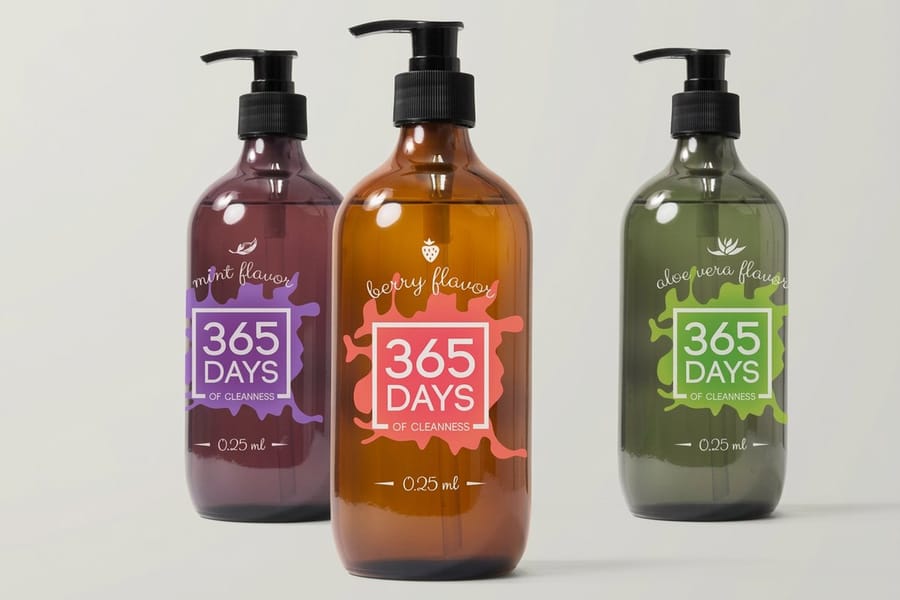
Four facestocks cover almost every packaging job, and they fail in different ways. Match the material to what the box goes through, not to the mood board.
| Facestock | Best on | Handles moisture | Where it fails |
|---|---|---|---|
| Uncoated paper | Dry shippers, kraft cartons, an unfussy natural look. | Poorly. Ink smears and the sheet cockles. | Cracks on a flexible mailer and marks in the rain. |
| Coated paper | Retail shippers and product panels that need a clean printed image. | Briefly. It survives a splash, not a soak. | Still paper, so a soaked box takes the label with it. |
| Vinyl or film | Poly mailers, buckets, anything outdoors or wiped down. | Yes. It is the reason to choose it. | Costs more, and it is screened out of paper recycling. |
| Clear | White board, glass and bottles, where the label should read as printing on the pack. | Yes on a film base. | On brown kraft the board reads straight through the artwork. |
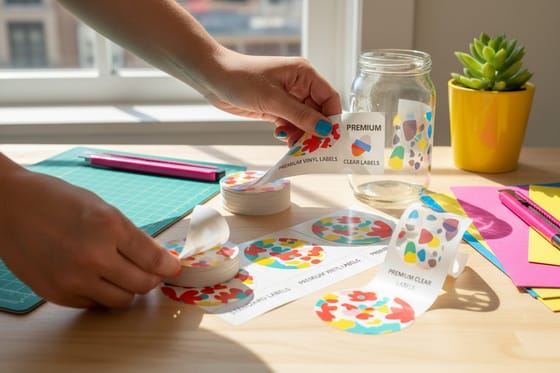
The clear row is the one that surprises people most often. A clear label does not create a no-label look on its own, it simply shows whatever sits behind it. On a white mailer that means the artwork appears to float. On a brown carton the same file turns muddy, and the fix is a white ink underlayer beneath the coloured areas. Premium clear labels start at $86.17, against $29.16 for premium packaging labels and $23.88 for standard labels, so it is worth being sure the effect will land before paying for it.
Two more decisions ride alongside the material. Shape: a rectangle from a sheet is the cheapest thing we print, and a cut shape costs more but reads as a designed object rather than a sticker, which kiss cut versus die cut covers properly. Format: rolls suit an applicator or a repetitive pack line, sheets suit hand application and short runs, and rolls versus sheets lays out the break even. Size before either of those, using the label size guide.
Custom Tape or a Printed Seal? Run the Entry Price
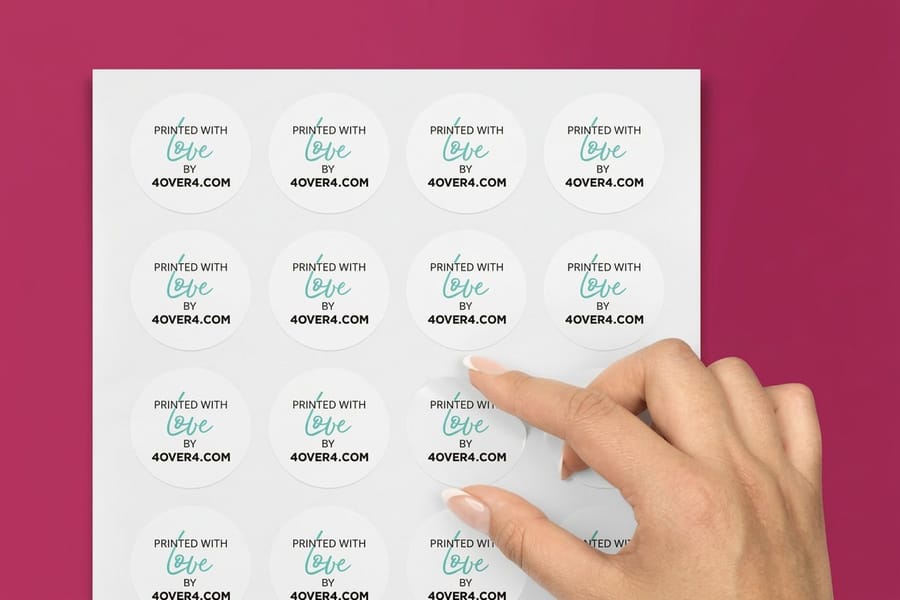
This is the decision most brands get wrong in both directions, either paying for tape too early or hand applying seals long past the point it made sense. The entry prices tell you where the line sits.
| Option | Starts at | Tamper evidence | Changing the artwork |
|---|---|---|---|
| Standard labels | $23.88 | None. It sits on a panel, not the seam. | Cheapest to reprint, so seasonal versions are easy. |
| Die-cut seals | $93.37 | Yes on a paper facestock, across the flap split. | Reprint a small run whenever you want. |
| Premium packaging labels | $29.16 | Only if placed over the seam. | Straightforward, and the usual workhorse. |
| Packaging tape | $347.11 | Partly. It is hard to reseal invisibly. | Slowest, because you carry the roll stock until it runs out. |
Read it as a labour question rather than a print question. A seal costs less to buy but somebody has to place it straight on every carton, and at a few hundred boxes a day that hand movement is the expensive part. Tape costs more up front and then applies itself with the closure you were doing anyway. The crossover is different for every operation, but the shape is always the same: seals for low volume and fast changing artwork, tape once the pack line is repetitive.
One quiet advantage of paper: water activated gummed tape keys into the corrugated fibre instead of resting on top of it, so it cannot be lifted and laid back down. If tamper evidence is the actual goal rather than branding, that is the stronger answer, and gummed paper tape explains how it behaves. For plastic carton sealing tape and printed kraft, custom package tape and custom kraft tape go deeper. When the box is heading into a carrier network, get the shipping label right too, with how to label a package for shipping.
Wally explains adhesive packaging
A label to read, a seal to break, tape to see from across the room
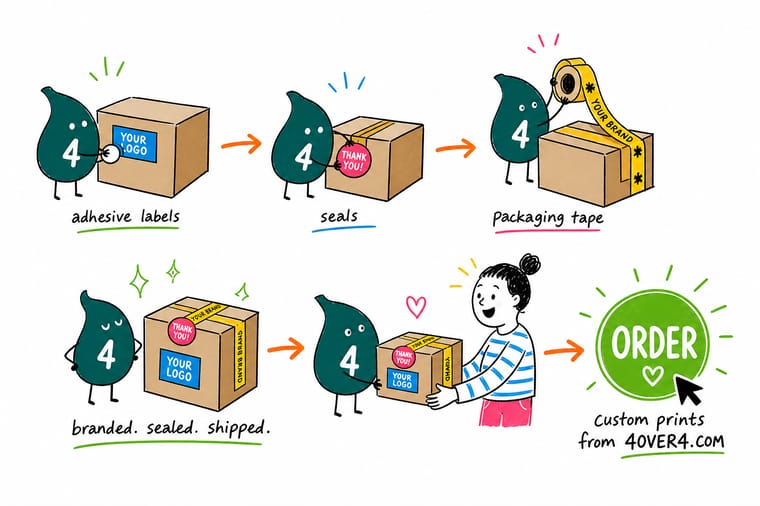
Wally starts with a plain brown carton. The label goes flat on one panel, away from the fold, because a label that crosses a fold lifts. The round seal goes across the flap split, so the customer has to break it to get in. The printed tape runs the length of the box for anyone looking from across the warehouse. Then he leaves the boxes overnight, because the adhesive keeps sinking into the kraft for about a day and the corners stay down.
Order premium packaging labels →Specs and pricing
Labels, seals and tape with live specs and starting prices
Sizes, stocks and quantities straight from the 4OVER4.COM configurator, so you can price the adhesive layer before you commit to a box.
Print it
Order the layer that brands your box
Explore more
Where to go next

By the numbers
Packaging print you can count on at 4OVER4
Common Questions
Your adhesive packaging questions, answered
What is adhesive packaging?
Adhesive packaging is the printed layer you stick onto a box instead of printing into the box itself: labels, seals, and printed tape. The box stays a plain stock carton or mailer, and the branding, the product information and the closure all arrive as pressure sensitive material you apply during pack out. It is how most small and mid sized brands get a branded box without paying for a custom printed corrugated run.
What adhesive sticks best to a cardboard box?
A general purpose permanent pressure sensitive adhesive on a paper or film facestock. The liner on a corrugated box is porous, slightly dusty and rarely flat, so the adhesive has to wet into the fibre rather than sit on a smooth surface. Removable and repositionable adhesives are the common mistake here. They are designed to release, and on kraft they start lifting at the corners as the box flexes in transit.
Can I use the same label on a poly mailer and a corrugated box?
The adhesive usually carries over. The facestock often does not. A poly mailer stretches and creases under handling, and an uncoated paper label on top of it will crack along the crease. A film facestock such as vinyl flexes with the bag and stays intact. If you ship in both formats, either run one film label for everything or accept two versions.
Do I need custom printed tape, or is a sticker enough?
Run the entry prices. Packaging tape starts at $347.11 at 4OVER4.COM, which reflects a roll run, while premium packaging labels start at $29.16 and die-cut labels at $93.37. If you pack a few dozen boxes a week, a die-cut seal across the flap gives you the same branded moment for a fraction of the outlay, and you can change the artwork for a seasonal run. Custom tape wins once volume is high enough that hand applying a seal to every carton costs more labour than the tape saves.
How do I make a seal actually tamper evident?
It has to span the flap seam, and it has to be a facestock that fails when pulled. A paper seal tears across the split and cannot be put back. A vinyl seal stretches, releases in one piece and can be reapplied, so it proves nothing about whether the box was opened. That is the entire trade-off: the material that survives shipping best is the material that is worst at showing tampering.
Will labels and tape stop the box being recycled?
Paper labels and water activated paper tape go back into the pulp with the box. Plastic film tape and vinyl labels are screened out at the mill, and a carton wrapped end to end in film tape is more likely to be pulled from the stream. If recyclability is part of the brand promise, keep the adhesive layer paper based and keep the coverage modest.
When should I label the boxes?
Ideally the day before they ship, not the minute before the courier arrives. Pressure sensitive adhesive keeps flowing into the surface after contact, so a label that has sat overnight has far more real contact area than one applied and thrown straight onto a truck. It also gives you a chance to spot a crooked label before it leaves the building.
Get Started
Ready to brand a plain brown box?
Pick a facestock that suits your carton, set the size and shape, and we print labels, seals and tape that stay put from the pack bench to the doorstep.
Legal Disclaimer
Gold Standard guarantees apply to all standard orders placed through 4over4.com. Price match requires verifiable proof of a competitor's published price for an equivalent product with matching specifications and turnaround time. Satisfaction guarantee covers manufacturing defects and print quality issues. Contact support with order number and documentation. On-time delivery rate based on tracked orders 1999 to 2026. Individual results may vary based on shipping carrier performance.
