
What YUPO Synthetic Paper Is and When It Beats Regular Paper


YUPO is a plastic film that behaves like paper. Here is how it stays waterproof and tear proof, the two limits nobody warns you about, and which jobs are better off on something else.
YUPO is a synthetic paper made from polypropylene resin and a mineral filler rather than wood pulp, which makes it waterproof, grease resistant, and effectively impossible to tear by hand. Because the sheet is a film, ink cannot soak in and has to cure on the surface, so it runs on UV presses and not on office laser printers, whose fusers get hot enough to warp it. It folds badly without a score, costs several times a comparable coated stock, and recycles in the number 5 plastic stream rather than with paper.
Quick answer
A plastic film that prints like paper, with two hard limits
YUPO is polypropylene with a mineral filler, stretched into an opaque sheet. No fiber means no swelling in water and no grain for a tear to follow, so the durability is structural rather than a coating that can chip off. The same absence creates the limits: ink has to cure on the surface instead of soaking in, a fold springs back unless it is scored, and the sheet softens at temperatures paper handles without noticing. Tree free is honest; curbside recyclable depends on whether your town collects number 5 plastic.
What YUPO Synthetic Paper Actually Is
YUPO is a brand, not a material category. Yupo Corporation of Japan makes it, and the name has drifted into general use for any synthetic sheet, the way people say Sharpie when they mean marker. If a supplier quotes you YUPO, ask which grade, because the range is wide.
The sheet begins as polypropylene resin mixed with an inorganic filler, usually calcium carbonate. That blend is extruded into a film and then stretched in two directions. The stretching opens microscopic voids around every filler particle, and those voids are what make the finished sheet opaque, white, and faintly toothy under a thumb instead of slick like a sandwich bag. No wood pulp goes in and no sheet is formed from a water slurry, which is the basis of the tree free claim.
Three consequences follow, and they explain everything else on this page. It does not absorb, so ink has to cure on the surface. It has no fiber grain, so it does not tear and does not hold a crease. It softens with heat instead of scorching. Hold those three and you can predict how a synthetic sheet will behave in any job. If you want the same reasoning applied to the stocks we actually run, start with our guide to choosing a paper stock.
Why It Shrugs Off Water and Refuses to Tear
Ordinary paper is a mat of cellulose fibers held together in part by hydrogen bonds between them. Water breaks those bonds. A wet sheet goes limp, the ink lifts, and a menu left in a puddle comes back as pulp. Polypropylene gives water nothing to attack, so a synthetic sheet comes out of a sink flat and the ink, if it was cured correctly, stays where it was put.
Tear resistance comes from the same absence. In paper, a tear travels along the fiber grain, which is why a sheet tears clean in one direction and ragged in the other. A stretched film has no grain path at all, so a nick has nowhere to run. Pull a sheet hard with both hands and it stretches before it gives. It is not immortal. Failures start at punched holes and at sharp die cut corners, so leave real margin around any hole and radius the corners rather than cutting them to a point.
Grease is the other one worth naming, because it is what kitchens actually deal with. Oil sits on the surface and wipes off, and so do fingerprints from wet hands. That combination, water plus grease plus constant handling, is the reason synthetic stock took over restaurant menus and cooler labels before it took over anything else. Our comparison of paper, vinyl and clear label stocks runs the same test across the three label faces we print.
Tree Free, Recyclable, and the Part Nobody Mentions

Tree free is accurate. Recyclable is accurate with a condition, and the condition decides whether the claim means anything for your customers.
YUPO is polypropylene, resin identification code 5. It recycles as plastic, in a plastic stream. Put it in a paper recycling bin and it becomes a contaminant, because it will not pulp and it fouls the batch around it. So the question is not whether the material is recyclable in principle. It is whether the town your piece ends up in collects number 5 at the curb, and plenty do not. It is also neither biodegradable nor compostable, so keep those two words off the artwork.
The stronger environmental argument is duller and holds up better: count reprints, not sheets. A site notice that survives three seasons outdoors replaces three paper notices and three shipments of them. A menu that gets wiped down after every seating replaces the stack you would otherwise reprint every fortnight because the corners went soft. When the piece is genuinely exposed, the durable substrate usually wins on total material used, and it wins on your time. When the piece is a handout that gets read once, the honest answer is that paper was the greener choice all along.
Where YUPO Earns Its Price, and What We Print Instead
Synthetic stock earns its cost in exactly one situation: the piece stays in service long enough, or gets abused hard enough, that a paper version would be replaced. Everywhere else the money is better spent on weight or on a coating.
We do not stock YUPO by brand name at 4OVER4.COM. We do print the jobs people ask for it by name, each on the stock that suits it, and in most cases a different construction reaches the same result for less. Here is the honest mapping.
| The job | Why people reach for YUPO | What we print | From |
|---|---|---|---|
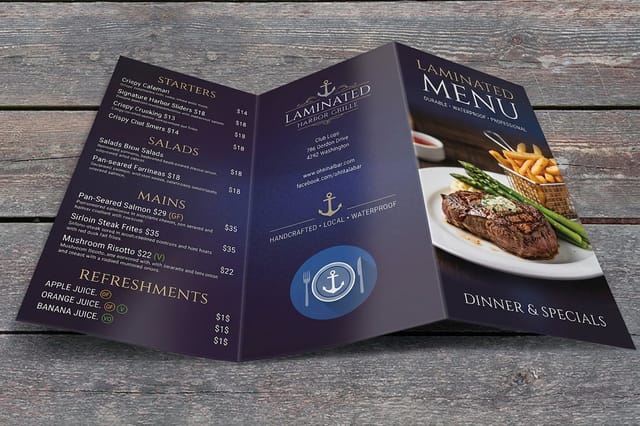
| Restaurant menu | Wiped after every seating, handled with wet hands, must not go soft at the corners. | Laminated Menus, paper sealed edge to edge in film | $57.11 |
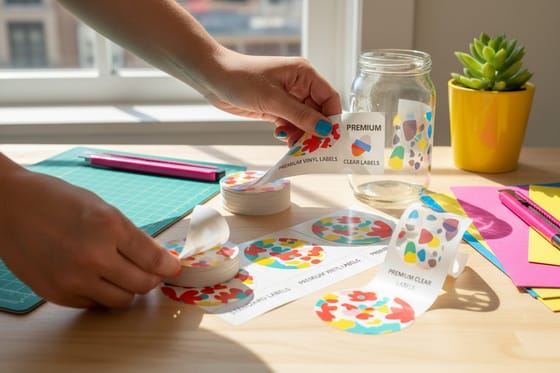
| Bottle or jar label | Lives in a cooler or an ice bucket and cannot wrinkle or lift. | Standard Waterproof Labels on a synthetic face stock | $23.88 |
| Label that gets scrubbed | Freezer, then a wash, then a shelf, with the print still legible. | Premium Waterproof Labels | $84.68 |
| Outdoor sign or site notice | Weeks of rain and sun without curling or fading at the edge. | Styrene Signs or Yard Signs | $29.00 |
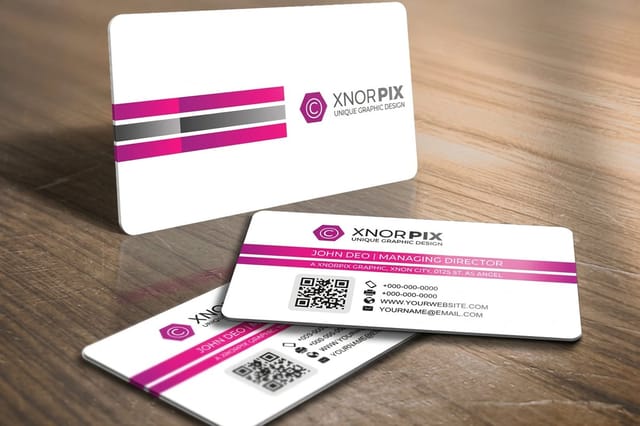
| Card that survives a wallet | Waterproof, unbendable, and still readable after a year in a pocket. | Plastic Business Cards | $180.02 |
The two jobs where a genuine synthetic sheet still has no close substitute are field pieces that must fold and unfold wet, such as trail maps and boat manuals, and forms that are filled in outdoors. For anything larger that lives outside, look at rigid substrates in large format printing rather than a flexible sheet.
Thickness, Finish, and How It Gets Specified
Synthetic stock is not ordered in pounds. Paper carries a basis weight tied to a parent sheet size that nobody outside the trade can picture; a film is quoted by thickness, in microns, usually with a gsm figure alongside it. Learning one conversion makes the whole scale readable: one mil is one thousandth of an inch, and one point of card caliper is one mil.
So a 200 micron sheet is about 8 mil, which sits between a heavy text sheet and a light card. A 400 micron sheet is close to 16 mil, the same caliper as the 16pt business card stock we print every day. That is the useful comparison to carry into a quote: identical thickness, completely different behavior, because one of them has fibers in it and the other does not.
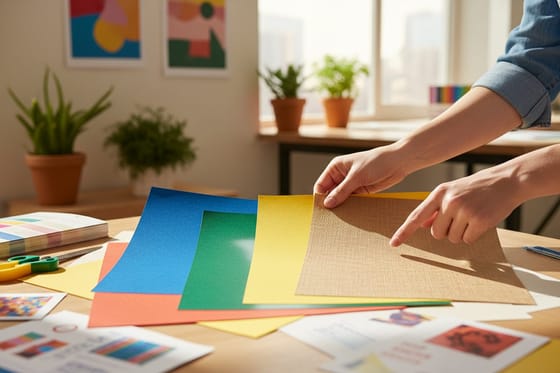
Grades run roughly from 60 microns, thin enough for labels and inserts, up past 300 microns for pieces that need to stand on a table. Finish on the standard sheet is a smooth matte white, brighter than most uncoated papers and flatter than a gloss coat, and there is a translucent grade for overlays and layered work. Two surface habits catch people out: pencil and ballpoint skate on it, and anything glued needs an adhesive made for film, because water based bindery glue will not bite. Whatever the substrate, build the file the usual way, at full size with fonts outlined. Our blank template library has the correct dimensions for every product, and how online printing works covers the handoff end to end.
YUPO Compared to Coated Paper and Rigid Plastic
These three get compared in almost every quote where a piece has to survive something. Read the table down the column that matters for your job rather than across the whole thing, because no material wins on every row.
| Attribute | Coated paper | YUPO synthetic | Rigid plastic |
|---|---|---|---|
| Made from | Wood pulp with a clay coating. | Polypropylene resin with mineral filler. | Styrene or PVC sheet. |
| In water | Goes limp, then pulps. | Unaffected, dries flat. | Unaffected. |
| Tearing | Tears along the grain. | Stretches, will not tear by hand. | Will not tear, can crack when cold. |
| Folding | Scores and holds a crease. | Springs back, needs a proper score. | Does not fold, it is a panel. |
| Ink drying | Absorbs into the coating. | Cures on the surface, UV or oxidative. | Cures on the surface. |
| Heat | Runs through a laser fuser fine. | Softens and can distort. | Warps, and it is not a sheet feeder job. |
| Recycling | Paper stream, widely collected. | Number 5 plastic stream. | Plastic stream, often not collected. |
| Cost | The baseline everything is measured against. | Several times a comparable coated sheet. | Priced by area, higher again. |
The verdict most jobs land on: coated paper for anything read once, a laminated paper build for menus and tags where the piece is handled but folded, and a rigid panel for anything that has to stand up outdoors. A true synthetic sheet is worth the premium when the piece must be flexible, waterproof, and long lived at the same time, which is a narrower set of jobs than the marketing around it suggests. For the sticker and label version of this same decision, choosing the right material for your stickers works through the face stocks one by one.
Which Job Should Go on Synthetic Stock

Three questions settle it, in this order.
- Does it get wet, greasy, or scrubbed? If no, stop here and print paper. Every advantage of a synthetic sheet costs money you are not getting back on a dry piece.
- Does anything have to go through an office printer afterward? If yes, paper, without further discussion. The fuser is not negotiable, and a warped sheet inside a machine is an expensive way to learn it.
- Does it fold, and how often? A single scored fold is fine on film. A three panel piece that gets opened and closed daily is happier as laminated paper, which creases and stays creased.
Run those against the real conditions rather than the ones in the brief. A menu on a covered patio is a wet piece even though nobody plans to pour water on it. A shelf label in a walk in cooler gets condensation every time the door opens. A yard sign gets a fortnight of rain in its first month, which is why yard signs print on corrugated panel rather than on board.
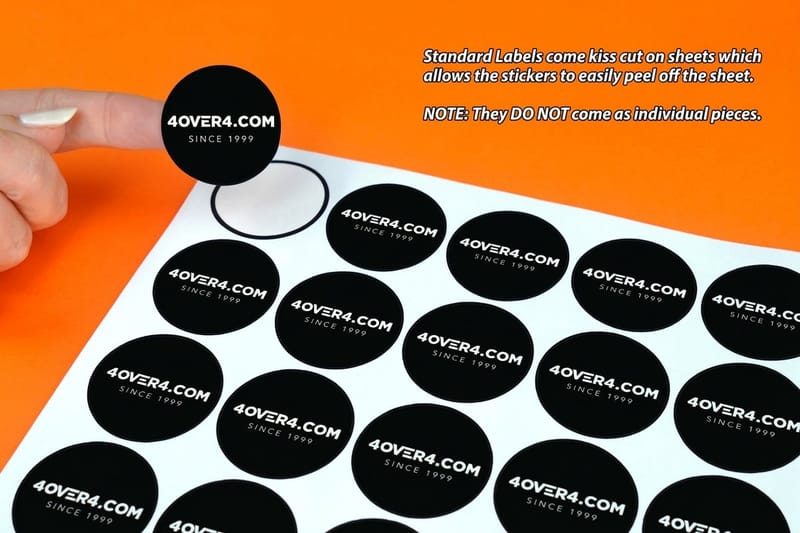
When the answer is yes to the first question and no to the second, we are printing on a synthetic face stock somewhere in the label range, and the choice is between the standard and premium waterproof grades. When the piece folds, it is laminated menus or a laminated card. Compare live options and starting prices below, and order free paper samples if you want the surfaces in your hand before you commit to a run.
Wally explains synthetic paper
No fibers, no swelling, no tear path
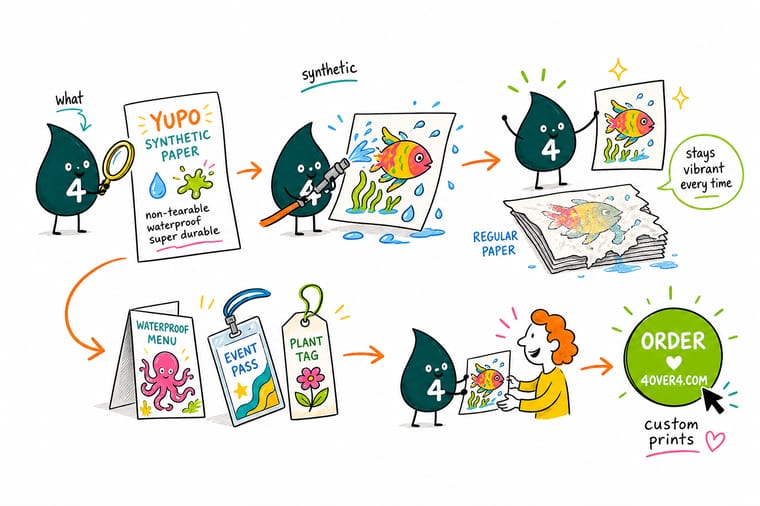
Wally runs two sheets under the tap. The paper one goes soft because water breaks the bonds between its fibers. The synthetic one comes out flat, because it is polypropylene and there are no fibers in it to break. That same missing fiber is why it will not hold a fold on its own and why the ink has to dry on top instead of soaking in. Wally will not put it through the office laser printer either. The fuser is hotter than the sheet can take.
Order waterproof labels →Specs and pricing
Waterproof stocks, sizes, and starting prices
The three builds people mean when they ask for YUPO, with live configuration choices and starting prices straight from the 4OVER4.COM configurator.

Print it
Print the job on a stock that survives it
Explore more
Where to go next

By the numbers
Durable printing you can count on at 4OVER4
Common Questions
Your YUPO and synthetic paper questions, answered
Is YUPO actually paper?
No. YUPO is a polypropylene film loaded with an inorganic filler, extruded and stretched into a sheet. It is called paper because it prints, cuts, and handles like paper, and because the microvoids created around the filler particles during stretching give it an opaque, slightly toothy surface rather than the slick feel of a plastic bag. Nothing about it is made from wood pulp, which is why the trade sells it as tree free synthetic paper rather than as recycled or FSC paper.
Can you run YUPO through a laser printer or copier?
Treat that as a no unless the specific grade is sold as laser approved, and even then run a test sheet first. A laser fuser bonds toner with heat, and polypropylene softens at a temperature well under what a fuser reaches. A sheet that warps inside the machine can wrap around the fuser roller, which turns a cheap experiment into a service call. If staff will be overprinting the piece in the office, keep it on paper and add a coating instead.
Is YUPO recyclable and is it good for the environment?
It is recyclable as plastic, resin code 5, and it is genuinely tree free. It is not biodegradable and it is not compostable, so no compostable claim belongs on it. The catch is the stream: dropped into a paper recycling bin it is a contaminant, because it will not break down into pulp. The honest environmental case for YUPO is durability rather than disposal. One sign that survives three seasons outdoors replaces three paper signs and three deliveries.
Will YUPO fold for a menu or a brochure?
It folds, but it fights you. Paper holds a crease because the fibers on the inside of the fold are crushed and stay crushed. A film has no fibers to crush, so an unscored fold has spring and the panel lifts. Score it properly and the fold behaves, though a heavy grade will still want to open slightly at the spine. For anything with more than one fold, a laminated paper sheet is usually the easier build.
Can you write on YUPO with a normal pen?
Not reliably. Pencil skates and ballpoint ink beads on the surface because there is nothing absorbent under the nib. Permanent marker and pens with pigment ink formulated for film will write on it, and they take longer to dry than they would on paper. If the piece includes a line someone has to fill in with whatever pen is in their pocket, that is an argument for paper.
Does 4OVER4.COM print on YUPO?
We do not stock YUPO by brand name. We do run the jobs people ask for it by name, on stocks chosen for each one: waterproof synthetic label material for bottles, coolers, and buckets, laminated stock for menus that get wiped after every seating, and styrene or corrugated panel for outdoor signage. Standard Waterproof Labels start at $23.88, Laminated Menus at $57.11 and Styrene Signs at $29.00, and order free paper samples if you want the surfaces in your hand before you commit.
Get Started
Printing something that has to survive water?
Tell us where the piece lives and we will put it on the right stock: synthetic label face for coolers and bottles, laminated sheet for menus, rigid panel for outdoors.
Legal Disclaimer
Gold Standard guarantees apply to all standard orders placed through 4over4.com. Price match requires verifiable proof of a competitor's published price for an equivalent product with matching specifications and turnaround time. Satisfaction guarantee covers manufacturing defects and print quality issues. Contact support with order number and documentation. On-time delivery rate based on tracked orders 1999 to 2026. Individual results may vary based on shipping carrier performance.
