
Kraft vs Laminated vs Standard Menus and Which One to Print


Three menu stocks, one decision. Each stock takes ink differently, fails differently, and starts at a different price.COM.
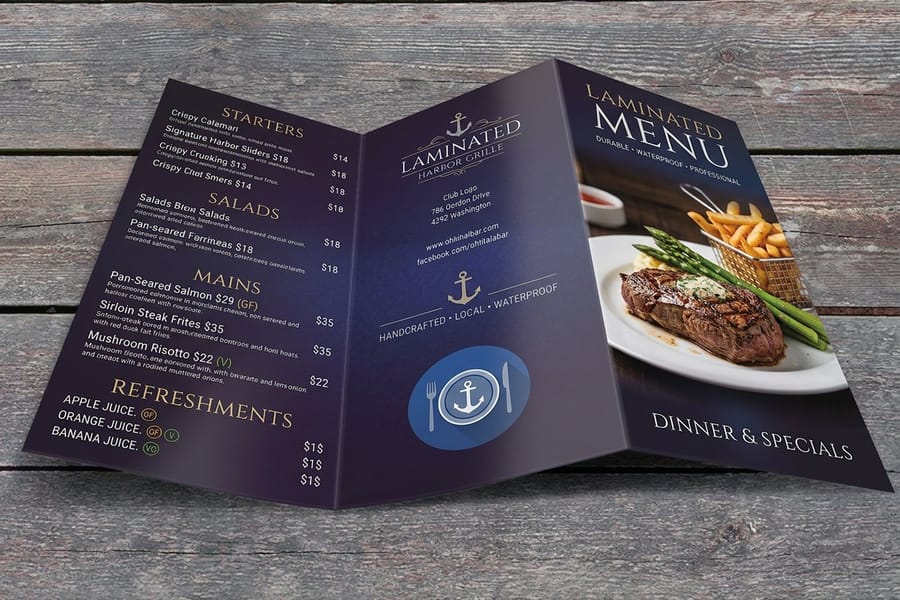
Print laminated menus when the menu comes back to the table and your prices hold, standard coated menus when the menu changes often or leaves the building, and kraft menus only when the brown texture is part of the brand and the room stays dry. Standard Menus and Laminated Menus both start at $57.11, so the film is not a premium at entry, while Kraft Menus start at $166.04. Kraft cannot print white and mutes every color, coated stock holds photographs and small type, and lamination is the only one of the three that takes a sanitiser wipe twice a day.
Quick answer
One difference decides all three, and it is where the ink sits
Kraft buries the ink in brown fiber, coated stock parks it on a clay surface, and lamination seals it under plastic film. Color, wipe down life, reprint cost and the way each sheet eventually fails all follow from that single difference. Laminated menus survive daily table service and cannot be written on. Standard coated menus print the sharpest and cost the least to run again. Kraft menus look the part on a dry counter and take the biggest hit on color and on entry price.
What Kraft, Standard and Laminated Menus Actually Are
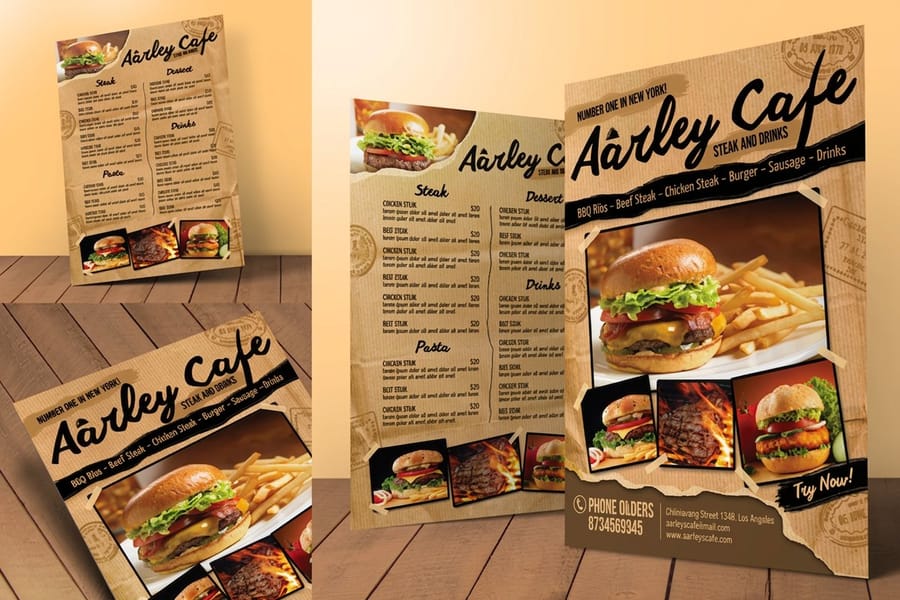
Two of these three names describe a paper. The third describes something done to a paper after it prints, and mixing that up is why quotes look strange when you set them side by side.
Kraft is a stock. Uncoated brown fiber with an open surface and a visible texture. Ink soaks into it rather than sitting on it, and the sheet arrives with a color already in it.
Standard is a stock. White cover or text weight with a clay coating on both faces, in gloss, matte or silk. The coating is what keeps ink on the surface, which is why photographs and small type come off it sharp.
Lamination is a process. A thin plastic film is bonded with heat across the printed sheet, usually both sides. Under that film is a coated stock, so a laminated menu is a standard menu wearing armor. Our lamination and UV coating comparison covers the difference between a bonded film and a liquid coating, which are not the same protection.
| Menu | Surface | Handles a wipe | Color on press | Starts at |
|---|---|---|---|---|
| Kraft Menus | Uncoated brown, textured, absorbent. | No. A wet cloth darkens the fiber and grease stays. | Warm and muted. No white ink in CMYK. | $166.04 |
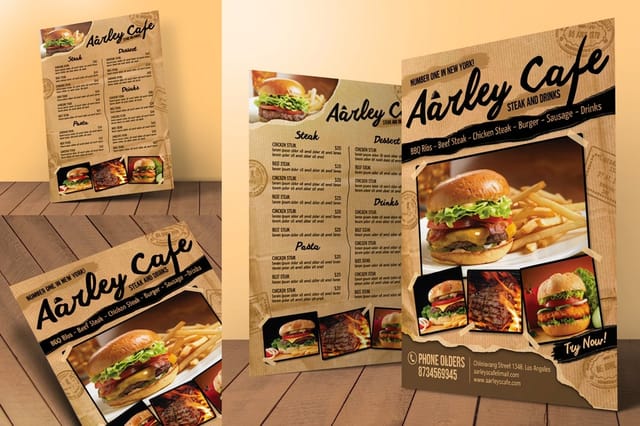
| Standard Menus | Coated white, gloss, matte or silk. | A smear wipes. A soak cockles the sheet. | Full range, sharp small type. | $57.11 |
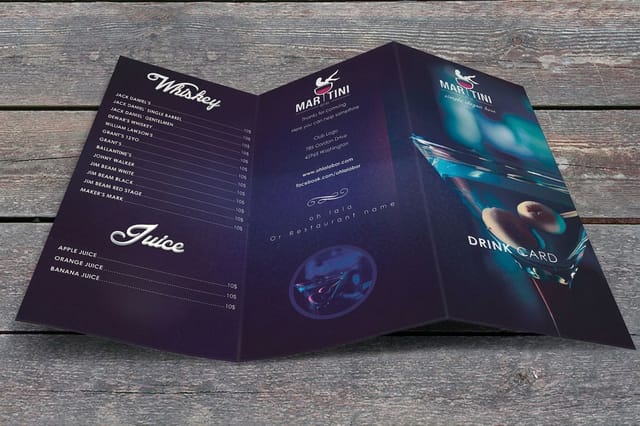
| Laminated Menus | Plastic film bonded over the print. | Yes, every service, sanitiser included. | Same as coated, with a slight shift under the film. | $57.11 |
Read the last column twice. Kraft is the one people assume is the budget option because it looks like packaging, and at 4OVER4.COM it is the most expensive entry order of the three. Laminated costs the same to start as plain coated, which changes the argument completely.
How Your Artwork Behaves on Each One
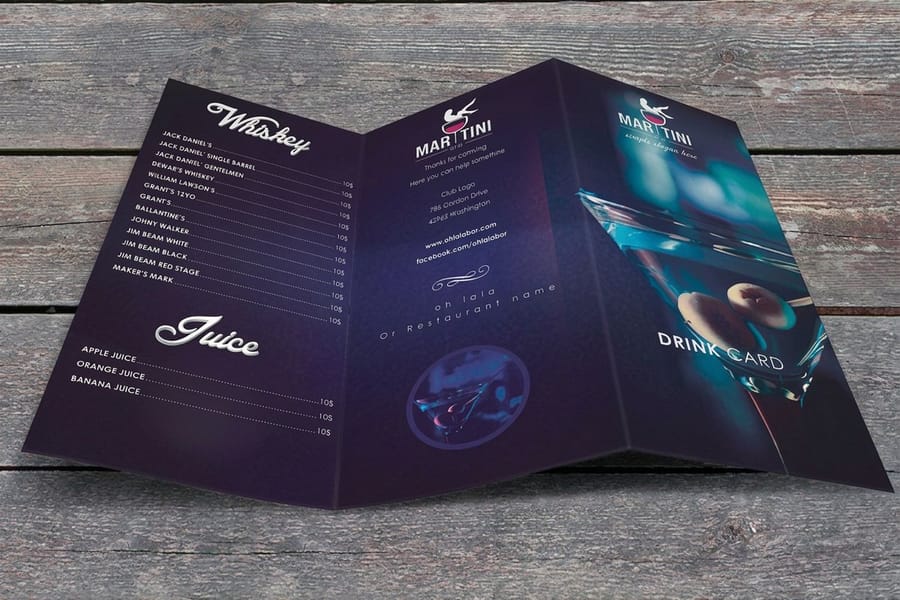
Most menu disappointments are color, not durability. The stock decides what your file can do before anyone sets a table.
On kraft, process ink is transparent and the brown underneath shows through everything. A soft blue reads gray green. A bright red lands closer to brick. White is not an ink in standard four color printing, so a logo built in white knocks out and the kraft itself becomes the logo. Fine type also thickens, because the ink spreads into open fiber, so a 6 point ingredient line that looked delicate in the file fills in on the sheet. Design for it: dark inks, confident weights, line art, and the brown treated as a color you chose. The full behavior is in our guide on how color prints on kraft paper.
On coated white stock, the clay layer holds ink at the surface. Photographs of the food hold detail, small type stays legible, and a matte coat kills the reflection that makes a gloss menu hard to read under downlights. This is the stock to pick when the menu carries images and long descriptions.
Lamination sits on top of finished print, so it does not change your file, but it does change the look. Gloss film deepens dark areas and adds shine. Matte film mutes it slightly and takes fingerprints far better, which is the real reason most dining rooms end up with matte. Plan the layout first either way, using the sizing advice in how to lay out a menu that sells and a correctly sized starting file from our blank template library.
What Happens After Fifty Services
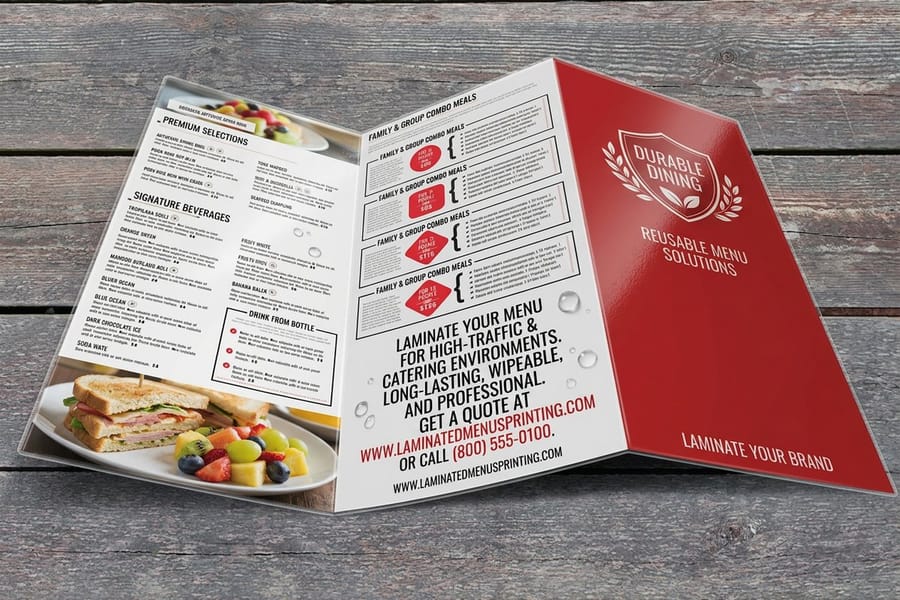
Every menu looks good in the box. The comparison that matters is the one you make six weeks later, and each of these three fails in its own way.
A coated menu without lamination goes first at the corners. Hands leave a shine along the outer edge, the corners soften and roll, and one dropped sauce leaves a mark that never comes out. It is still perfectly good for a takeaway menu that leaves the building, which is why takeout and delivery menus almost never get laminated.
A kraft menu ages faster and, oddly, often looks better doing it. The stock is meant to look worn. What it will not survive is liquid: water darkens the fiber in a ring that stays, and grease turns translucent. If your room serves anything with oil in it and the menu stays on the table, kraft is a short term piece.
A laminated menu fails at one place only, and it is worth knowing before you order. The two faces are sealed, but the sheet is trimmed after lamination, so the cut edge is open paper sandwiched between two films. Liquid finds that edge, wicks in, and lifts the film away from the paper. Once a corner delaminates it spreads with every handling. Two habits push that out a long way: dry the edges rather than the face when you wipe, and store the menus flat rather than standing them in a wet caddy. For a menu that lives outdoors or gets sprayed rather than wiped, film is not enough and you want the synthetic options in our waterproof menu printing guide.
Which One to Print for Your Room
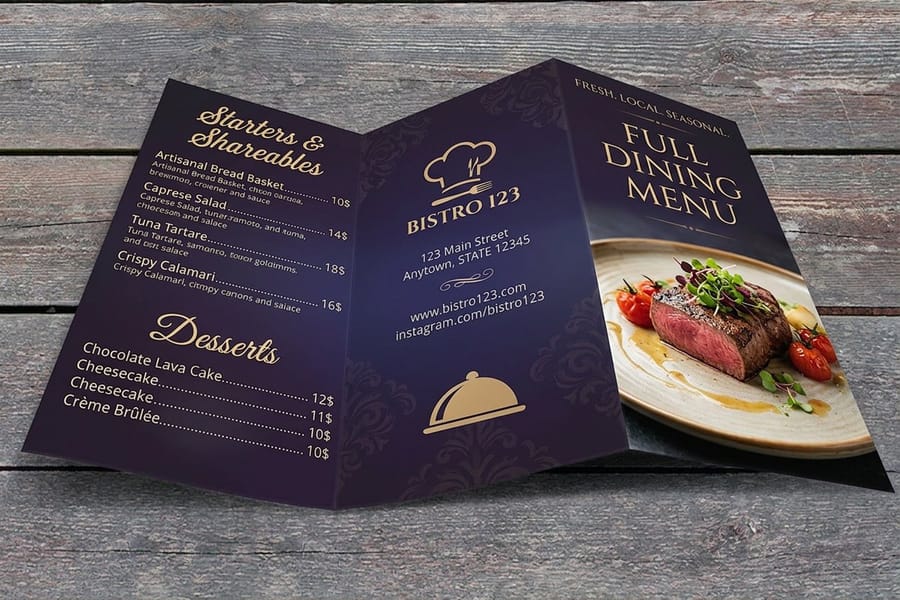
Answer one question first: does this menu come back to the table tomorrow? Everything else follows from that.
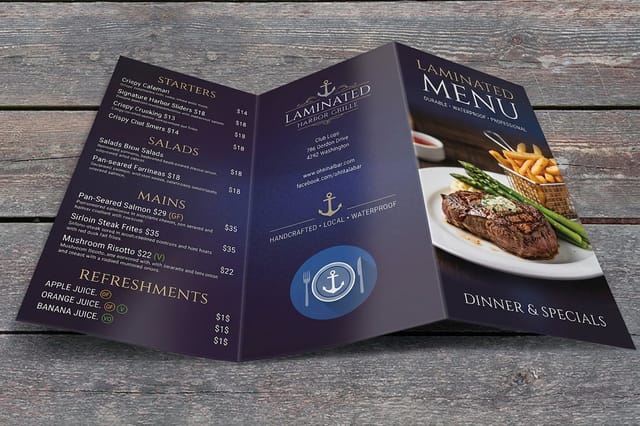
It stays and gets handled, prices are stable. Print Laminated Menus. Matte film unless your room is dim. From $57.11, it is the same entry price as plain coated and it removes the weekly reprint entirely.
It stays but the menu changes often. Print Standard Menus on a coated stock and reprint without pain. A kitchen changing dishes monthly loses more on obsolete laminated menus than it ever saves on durability. Pair them with table tents for the specials so the main sheet stays current longer.
It leaves the building. Print standard coated, unlaminated, and treat it as marketing rather than equipment. Nobody wipes a takeaway menu.
The look is the point and the room is dry. Print Kraft Menus. Bakeries, coffee bars, natural wine lists and anywhere the brand is built on paper texture. Go in knowing it starts at $166.04 and that your palette has to be designed for brown.
You want one menu that does most of it. Look at Restaurant Menus, which start at $57.11 and let you set size, stock and finish in one place. Browse the whole range in menu printing, or the wider restaurant printing collection when the menu is one piece of a bigger order. If you are still choosing a size, our menu size guide narrows it down before you configure.
Wally explains the three menu stocks
Same words, three very different sheets

Wally spills coffee on all three menus. The kraft one drinks it and keeps the ring forever. The coated one wipes mostly clean but cockles where it soaked. The laminated one shrugs it off, because the print is sealed under film, and the only place the coffee can get in is the trimmed edge. That is the whole comparison in one spill: kraft for texture on a dry counter, coated for color and cheap reprints, laminated for a menu that comes back to the table tomorrow.
Configure laminated menus →Specs and pricing
Menu stocks, sizes, and starting prices side by side
Standard, kraft and laminated in one row, with the live configuration choices and starting prices straight from the 4OVER4.COM configurator.

Print it
Order the menu your room actually needs
Explore more
Where to go next

By the numbers
Kraft, laminated and standard menus on one press
Common Questions
Your menu stock questions, answered
Which menu stock lasts longest in a busy dining room?
Laminated, by a wide margin. The film takes the abrasion, the grease and the wipe down, so the printed sheet underneath never touches a hand or a cloth. A coated menu without lamination picks up finger shine within a week of table service, and an uncoated kraft menu holds the first grease mark it gets. The honest limit on lamination is the trimmed edge, which stays open paper. If the menu is handed across a counter rather than left on a table, that edge sees less liquid and the sheet lasts longer still.
Can you write or stamp on a laminated menu?
No, and this catches people out. A ballpoint slides on the film and a rubber stamp will not hold, so a daily special written in marker wipes off with the next clean and a dry erase pen smudges under a warm hand. If someone needs to mark the menu, print the fixed pages laminated and run the changing part as a separate uncoated insert or a table tent. That split also keeps the reprint small when only the specials change.
Why do my colors look dull on kraft menus?
Because they are printing onto brown rather than white. Process ink is transparent, so the stock underneath shows through every color on the sheet: pale blues turn gray green, reds go brick, and anything set as white simply disappears into the kraft. There is no fix in the file, only a design choice. Work with dark inks, heavy type and line art, treat the brown as one of your colors, and read our guide on how color prints on kraft paper before you send artwork.
Are laminated menus more expensive than plain ones?
Not at the entry configuration. Laminated Menus and Standard Menus both start at $57.11 at 4OVER4.COM, so the film is not what pushes a menu order up. What moves the number is size, quantity and page count, which is why the configurator on each product page is the only sensible place to compare. Kraft Menus start at $166.04, higher than either, so the rustic option is the premium one here.
How often should a restaurant reprint its menus?
Reprint when the information is wrong, not on a schedule. That is the practical argument for standard coated menus in a kitchen that changes dishes or raises prices often, because the cheapest reprint wins when you are doing it four times a year. Where the menu is stable, spend the money once on lamination and stop replacing warped, greasy sheets every few weeks. Restaurants that change constantly usually settle on a laminated cover with a printed insert.
Is a kraft menu the eco friendly choice?
Kraft is uncoated and goes into a normal paper recycling stream, which laminated menus do not, because the plastic film has to be separated from the fiber. So on disposal, kraft is the cleaner option. The counter argument is lifespan. One laminated menu that survives a year replaces a stack of kraft sheets that stain and curl, and reprinting is where most of the material actually goes. Weigh disposal against how many times you would reorder.
Get Started
Order 100 kraft menus from $166.04
Pick your size, choose kraft, coated or a sealed laminated film, and we print menus that hold up between reprints instead of curling by the weekend.
Legal Disclaimer
Gold Standard guarantees apply to all standard orders placed through 4over4.com. Price match requires verifiable proof of a competitor's published price for an equivalent product with matching specifications and turnaround time. Satisfaction guarantee covers manufacturing defects and print quality issues. Contact support with order number and documentation. On-time delivery rate based on tracked orders 1999 to 2026. Individual results may vary based on shipping carrier performance.
