
How Gravure Printing Works and Its Best Alternatives


Gravure prints packaging and magazines from engraved cylinders at industrial scale. The process explains itself once you see the cylinder cost, and it is why offset or digital is the lower-minimum choice for almost every everyday print job.
Gravure printing transfers ink from an engraved metal cylinder onto a moving web of material. Millions of recessed cells hold the ink, a doctor blade wipes the surface clean, and an impression roller presses the image on. It excels only at enormous runs of packaging and magazines. For paper collateral at normal quantities, offset and digital give the same look at a far lower minimum and faster turnaround.
Start here
Why gravure needs a million impressions
Gravure prints from an engraved cylinder, not a plate or a screen. Ink fills millions of tiny cells cut into the metal, a blade wipes the surface, and the material presses against the cylinder to lift the ink off. It is built for huge continuous runs of packaging and magazines, which is why its quality is famous and its minimums are enormous. For the same rich look on paper at a realistic quantity, offset and digital at 4OVER4.COM are the practical choice.
What is gravure printing?
Gravure, known in full as rotogravure, is an intaglio printing process. Intaglio means the image lives below the surface of the printing carrier rather than raised above it or sitting flat on it. On a gravure press that carrier is a metal cylinder, and the artwork is engraved into it as millions of microscopic recessed cells.
Those cells are the whole idea. Deeper cells hold more ink and print darker, shallower cells hold less and print lighter, so the depth of the engraving controls the tone. Ink floods the spinning cylinder, a steel doctor blade scrapes the smooth areas completely clean, and only the ink trapped inside the cells transfers to the material as it presses against the cylinder.
Because the image is cut into hard, often chrome-plated metal, a single cylinder can print for a very long time without losing detail. That durability is exactly why gravure is used for continuous, high-volume work rather than the sort of paper jobs most businesses order. If your project is a brochure, a flyer, or a stack of business cards, this guide will help you get the same look on a faster, lower-minimum process.
How a gravure press actually works
Picture the cylinder turning at speed. The bottom of it dips into a pan of thin, fast-drying ink, so every cell fills as it rotates through. As the surface comes back up, the doctor blade rides against the polished metal and wipes away everything except the ink sitting safely down inside the engraved cells.
At the top of the rotation the material, usually a continuous web of film or paper, is pressed against the inked cylinder by a rubber-covered impression roller. The pressure pulls the ink up out of the cells and onto the surface. Each color has its own cylinder and its own ink, and the web runs through them one after another, drying between stations, so the colors stack into a finished image.
The result is a deep, uniform ink film that stays identical from the first meter to the millionth. That consistency is the payoff, and the engraved cylinders are the price. For paper collateral, our offset printing collection reaches the same saturated result using cheaper plates, while digital skips carriers entirely.
Gravure vs offset vs digital
Three processes, three sweet spots. Gravure is an industrial-volume method: engraved cylinders, huge runs, flexible packaging and magazines. Its quality is superb and its tooling is expensive, so it only earns its keep in the hundreds of thousands or millions.
Offset lithography does the paper work. It uses relatively inexpensive plates to print sharp, color-accurate work on business cards, brochures, catalogs, and flyers, and it scales cleanly from medium into high volumes. For most companies, offset is the process that quietly prints the professional pieces they hand out every day.
Digital needs no plates or cylinders at all, which makes it unbeatable for short runs, quick turnarounds, and variable data like names or numbers that change piece to piece. Between offset and digital, 4OVER4 covers the entire practical range of paper printing, so you get gravure-grade results without gravure tooling. For a deeper look, read digital vs offset printing.
How gravure compares with offset lithography
Both processes print from a cylinder, and that is where the similarity ends. Gravure is intaglio: the image is engraved into a copper cylinder as millions of recessed cells, the cylinder is flooded with thin ink, a doctor blade wipes the surface clean, and only the ink sitting down in the cells transfers to the material. Offset is planographic: image and non image areas sit on the same flat aluminum plate, kept apart chemically by water and ink, and the image is offset from plate to rubber blanket to paper rather than pressed straight on.
The practical difference is where the money goes. Gravure spends it up front, one engraved cylinder per color, cut over days, and then prints at speed for as long as you keep feeding it. Offset spends far less up front, one plate per color made in minutes, and then drives the cost per sheet down as the quantity climbs. That is why gravure only earns its keep at hundreds of thousands of impressions, and why offset owns everything below that line: brochures, flyers, catalogs, business cards, folders.
Quality is not what separates them. Gravure holds a beautifully even ink lay across a million copies because the engraved cells never change shape. Offset holds fine screens, clean solids and exact brand color on paper without an engraving bill. If you want the mechanics of the process most of your work will actually be printed on, our offset printing and offset lithography guide walks the plate, blanket and impression cylinder chain step by step.
What to run when the job is not a million impressions
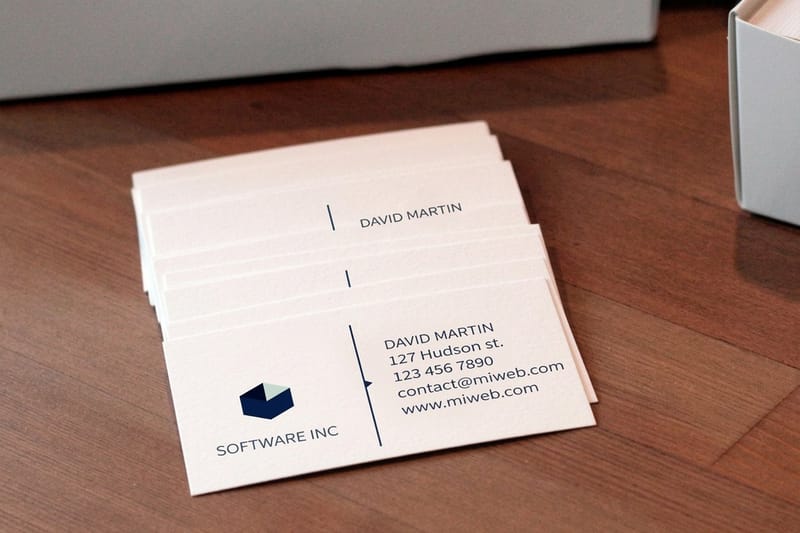
Almost nothing an everyday business prints belongs on a gravure press. A thousand brochures, five hundred flyers, a box of business cards: at those counts the engraving alone would cost more than the whole job, and the cylinders would take longer to cut than the campaign runs. The process is not wrong, it is built for a different scale of work.
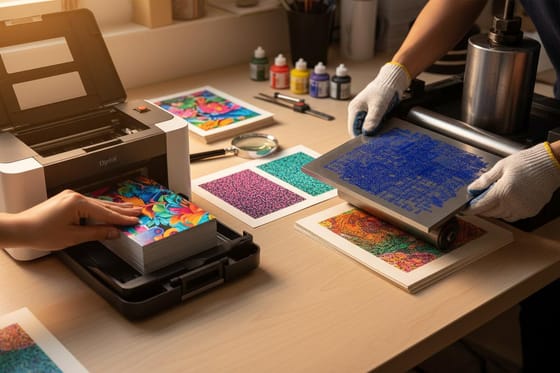
Two processes do that work instead. Digital images the sheet straight from your file with no plate and no cylinder, so there is no setup to spread out, a run of 100 costs what 100 should cost, turnaround is the fastest of the three, and every copy can carry different text. Offset makes one plate per color, a real but small setup, and then the cost per sheet falls as the quantity grows, with the tightest hold on heavy solids, fine type and exact brand color across a long run.
Choosing between those two is the only process question most jobs ever raise, and our digital printing versus offset printing comparison settles it on quantity, color accuracy, stock and deadline. In brief, small and fast is digital, large and color critical is offset, and gravure is what the packaging plant runs once your brand is on the shelf in millions.
When each process wins your job
Choose gravure when you are printing millions of identical units on continuous film or specialty webs, such as snack packaging or wallpaper, and the per-unit savings at that scale swallow the cylinder cost. Very few marketing or small-business projects live here.
Choose offset when you need excellent, consistent color on paper at real quantities, think a few hundred to many thousands of brochures, catalogs, or cards. The plate cost is modest and the unit price drops steadily as the run grows, which is the situation most businesses are actually in.
Choose digital when the run is short, the deadline is tight, or each piece needs to differ. It prints on demand with no makeready, so fifty cards or a same-day flyer are easy and affordable. With 4OVER4 you never have to pick the press yourself: select the product and options, and we run it on whichever process fits best.
What gravure costs, and the low-minimum alternative
Gravure economics are simple and unforgiving. Before anything prints, each color cylinder must be engraved, and that tooling runs into the thousands. Spread across ten million impressions it disappears into a tiny per-unit figure. Spread across a thousand it makes every piece absurdly expensive. That single fact is why gravure is an industrial process and not a service you would order for collateral.
Offset and digital work the opposite way. There is no cylinder to engrave, so the barrier to entry is low and the price scales sensibly with the job. On 4OVER4 you set quantity, size, stock, and finish and watch the total update live, with larger runs lowering the unit price and no giant tooling charge standing between you and your first order.
So if you love the rich, even look of gravure but need a realistic quantity, order it as a brochure, a flyer, or a card on offset or digital. You get the quality and skip the tooling, the minimums, and the wait.
Get the gravure look without a gravure press
The qualities people admire in gravure, deep saturation, smooth gradients, and rock-steady consistency, are all reachable on the presses 4OVER4 already runs. The trick is good file prep and the right stock, not an engraved cylinder. Build your art in CMYK, keep images at 300 DPI at final size, and choose a coated stock if you want that glossy, high-ink-density feel.
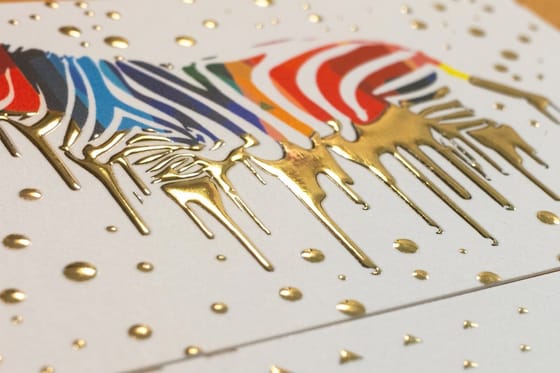
Pick a finish to push it further. A gloss or soft-touch coating deepens color and adds the tactile depth that heavy gravure ink film delivers on packaging. Our team runs a free file check on every order, so small issues are caught before they ever reach the press.
Ready to see it in your own hands? Configure a product below with live specs and pricing, or order free paper samples first so you can feel the stock and judge the color before you print the full run.
Wally reads the run before he picks the press
Gravure is for millions, your job probably is not
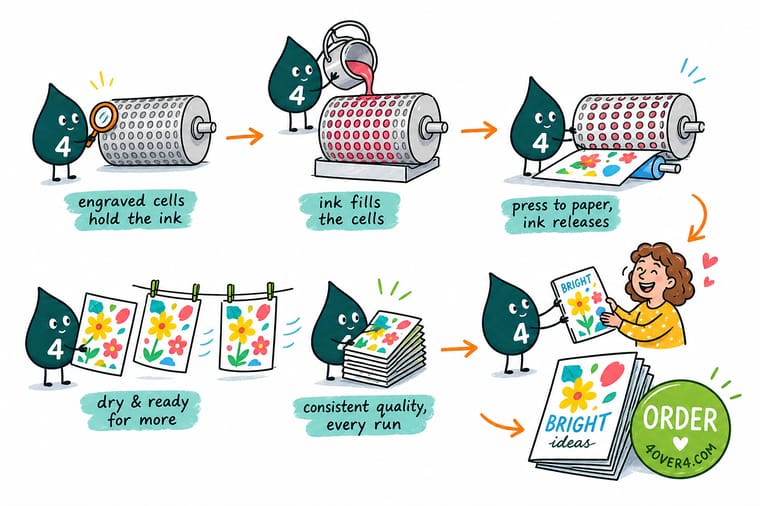
Wally loves the deep, even ink of gravure, but he knows an engraved cylinder only pays off across millions of packages. For a brochure, a flyer, or a box of cards, he steers you to offset and digital, the same rich look with no tooling charge, no giant minimum, and a turnaround that fits a real deadline. Tell 4OVER4 the finished piece and we run it on the right press for you.
Compare your print options →Quick reference
Gravure printing at a glance
The core facts of the process in one table, so you can see at a glance where gravure fits and where offset or digital serves you better.
| Attribute | Gravure | Why it matters |
|---|---|---|
| Process type | Intaglio (recessed cells) | The image sits below the surface in engraved cells, the opposite of a raised or flat plate, which is what gives gravure its deep, even ink lay. |
| Image carrier | Engraved copper cylinder | A copper cylinder is engraved cell by cell and often chrome plated so it survives millions of turns without wearing down. |
| Ink | Low viscosity, fast drying | Thin solvent or water based ink flows into the cells and dries almost instantly on the web, keeping the press running at high speed. |
| Best run length | Hundreds of thousands and up | The engraving cost only makes sense when it is spread across a very large quantity, so gravure is an industrial-volume process. |
| Common uses | Flexible packaging, cartons, magazines | Food film, folding cartons, catalogs, wallpaper, and laminates all favor gravure for consistency over long continuous runs. |
| Setup cost | High | Each color needs its own engraved cylinder, so tooling is a major upfront investment before the first sheet prints. |
| Lead time | Long | Cutting and finishing cylinders takes days, which rules gravure out for anything that needs a fast turnaround. |
Step by step
Choose the right print process in 7 steps
- Start with your real quantity Count how many pieces you actually need. Marketing and small-business jobs rarely reach the hundreds of thousands where gravure earns its cost, so an honest quantity usually points you to offset or digital.
- Name the material you are printing Paper collateral prints beautifully on offset and digital. Only continuous flexible film, cartons, and specialty webs make gravure worth its tooling.
- Weigh setup cost against the run Gravure buries a large cylinder-engraving charge in every job. Offset uses cheaper plates, and digital skips plates entirely, so the crossover only favors gravure at industrial volume.
- Check the turnaround you need If the job has to ship this week, gravure lead times are a dealbreaker. Digital can turn same day, and offset moves fast on standard products.
- Match color demands to the process For rich, saturated brand color on paper, offset holds tight tolerances and digital nails short runs. Both reproduce the look people associate with gravure.
- Pick the product, not the press Choose the finished piece first, a brochure, a flyer, a card, then let 4OVER4 print it on the right process behind the scenes at the right price.
- Order a sample before a big run Request free paper samples or a proof so you can judge the stock and color in hand before you commit to any quantity.
Specs and pricing
Print it on offset or digital with live pricing
Skip the cylinders and the minimums. Here are the live specs and price-per-unit for brochures at 4OVER4.COM, printed on offset and digital straight from the configurator.

| Quantity | Price Per Unit | Total |
|---|---|---|
| 50 | $1.14 | $57.11 |
| 100 | 82.4¢ | $82.38 |
| 200 | 53.3¢ | $106.55 |
| 300 | 41.0¢ | $123.02 |
| 400 | 34.9¢ | $139.49 |
| 500 | 31.2¢ | $155.97 |
| 600 | 26.7¢ | $160.36 |
| 700 | 23.5¢ | $164.75 |
Order it
Get the gravure look at 4OVER4
See it in use
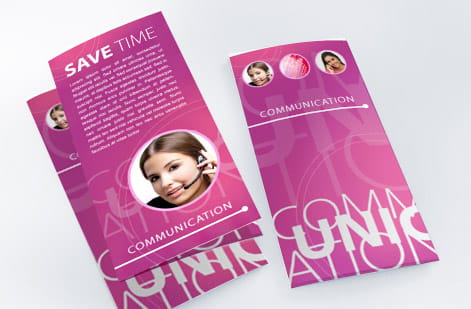
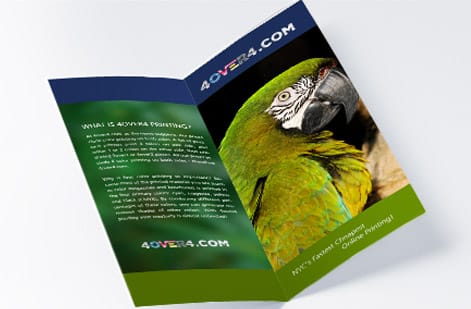
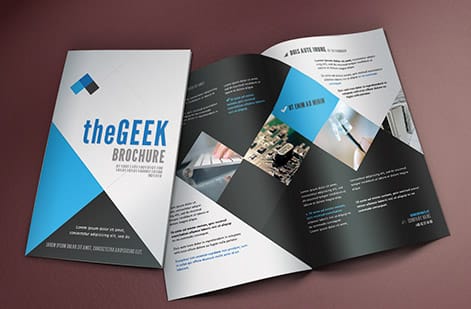
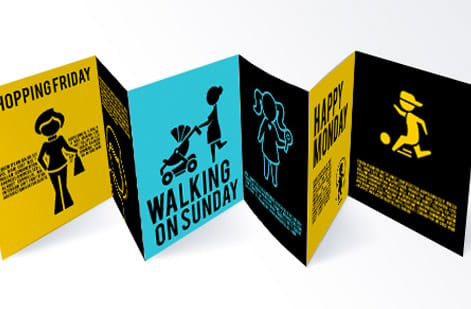
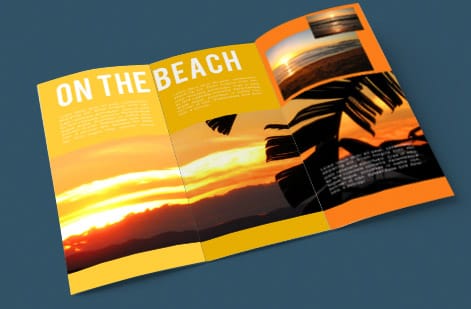
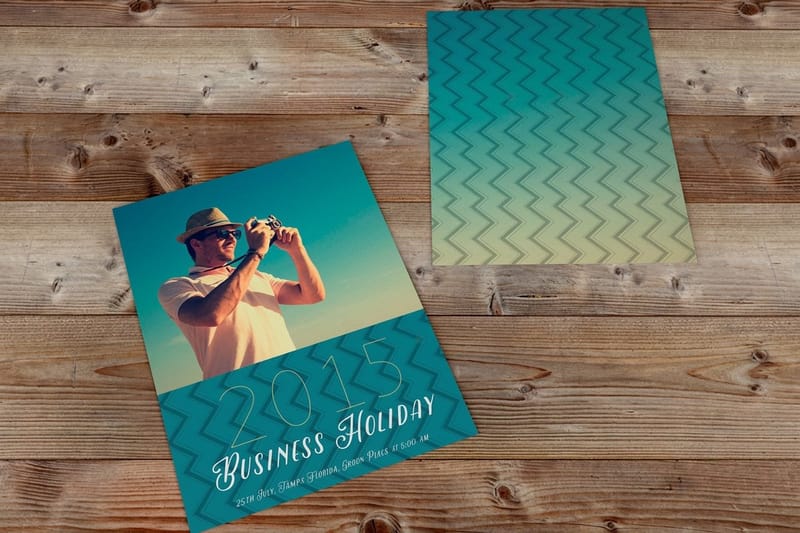
Paper work we printed on our own floor


Explore more
Where to go next
By the numbers
Offset and digital, without the cylinder
Common Questions
Common questions about gravure printing
What is gravure printing?
Gravure, also called rotogravure, is an intaglio printing process that transfers ink from an engraved cylinder onto a moving web of material. The image is cut into the copper cylinder as millions of tiny recessed cells. As the cylinder turns through an ink bath the cells fill, a doctor blade wipes the smooth surface clean, and the ink held in the cells transfers to the substrate under pressure. Because the carrier is engraved metal, it holds up across extremely long runs, which is why gravure dominates flexible packaging, magazines, wallpaper, and laminates rather than everyday print jobs.
How do I choose between gravure, offset, and digital?
Let quantity, material, and turnaround decide. Gravure only makes sense for industrial runs in the hundreds of thousands or millions on continuous webs like food film. Offset covers medium and high volumes of paper products such as brochures, catalogs, and business cards, holding excellent color at a sensible plate cost. Digital wins for short runs, fast turnarounds, and variable data because it needs no plates or cylinders at all. For almost every marketing and small-business job, offset or digital gives you the same quality without gravure tooling.
What does gravure printing cost and how are prices set?
Gravure carries a heavy upfront cost because every color requires its own engraved cylinder, and cylinder engraving runs into the thousands before a single impression prints. That tooling only amortizes across a very large quantity, so the per-piece price is low only at industrial volume and painful at low volume. Offset and digital set price very differently: with 4OVER4 you pick quantity, size, stock, and finish in the configurator and the price updates live, with more pieces lowering the unit cost and no giant tooling charge to clear first.
What substrates and finishes work with gravure, and what does 4OVER4 offer instead?
Gravure prints best on flexible films, foils, folding cartons, coated papers for magazines, and decorative laminates, materials suited to continuous web runs. For paper products you can order today, 4OVER4 offers 60 plus stocks with coatings and finishes like matte, gloss, soft touch, and foil across more than 1,000 products, all set on offset and digital presses. You get the saturated, professional look without needing a gravure line or its minimums.
How long does gravure take, and how fast can 4OVER4 print?
A gravure job includes days of cylinder engraving and press makeready before production even starts, so lead times are long by design. That is fine for a packaging brand ordering millions of units and wrong for a business that needs collateral this week. 4OVER4 runs offset and digital with fast standard turnaround and same-day options on many products, so your brochures, flyers, and cards ship on a timeline that matches real deadlines.
Is gravure better quality than offset or digital?
Gravure produces very consistent, richly inked results and excels at long continuous patterns, but that does not mean it beats offset or digital for your job. Modern offset holds tight color and sharp detail on paper, and high-end digital matches it on short runs while adding variable data. The right answer is the process that fits your quantity, material, and deadline. For paper collateral at normal quantities, offset and digital deliver quality people cannot distinguish from an industrial press.
What is the difference between gravure and rotogravure?
They are the same process. Rotogravure is gravure run on a rotary press, with the engraved cylinder turning continuously against a moving web, meaning a continuous roll of paper, film or foil rather than separate sheets, which is how nearly all commercial gravure runs today. The engraved cells, the doctor blade and the thin fast drying ink are identical either way. Sheetfed gravure still exists for art reproduction and proofing, but when someone in packaging or publishing says gravure, they mean rotogravure.
Get Started
Want the gravure look without the gravure minimums?
Bring your artwork to 4OVER4.COM and print it on offset or digital at the quantity you actually need. Flyers ship in 3 business days, brochures in the same 3.
Legal Disclaimer
Gold Standard guarantees apply to all standard orders placed through 4over4.com. Price match requires verifiable proof of a competitor's published price for an equivalent product with matching specifications and turnaround time. Satisfaction guarantee covers manufacturing defects and print quality issues. Contact support with order number and documentation. On-time delivery rate based on tracked orders 1999 to 2026. Individual results may vary based on shipping carrier performance.
