
What a French Fold Brochure Is and When the Right Angle Fold Wins


The French fold is the one brochure fold whose creases cross. Here is what that buys you, what it costs you in panels and paper, and the jobs it is genuinely the best answer for.
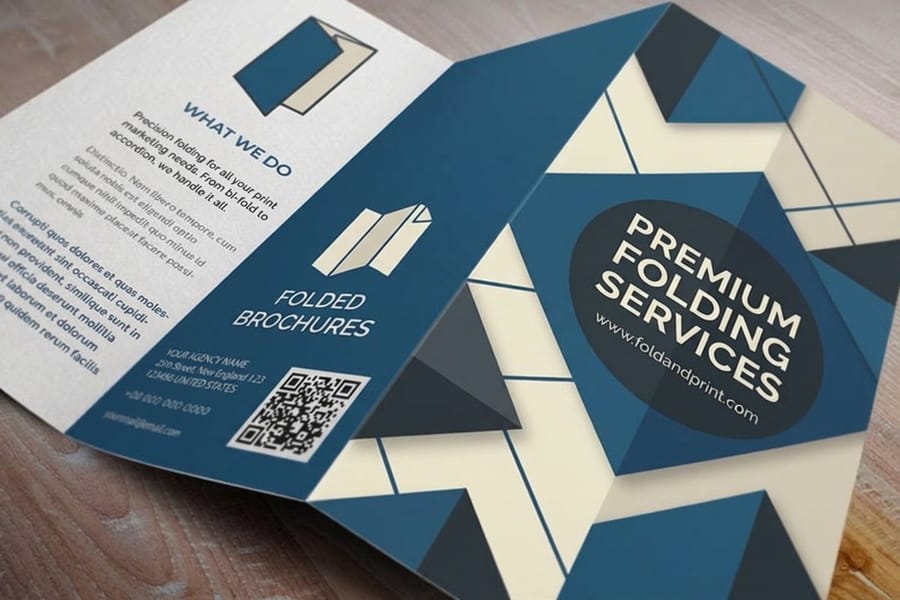
A French fold brochure is a sheet folded twice, with the second crease running ninety degrees to the first, so the finished piece is one quarter of the flat sheet. It prints on one side only, which gives four panels plus a full sheet reveal when the reader opens it flat, and hides the unprinted side inside the folds. Use it for invitations, notecards, programs and anything with a map or a single large image. Skip it when you need six or eight panels, or when the stock is heavier than 100 lb text.
Quick answer
Two creases at right angles, four panels, one printed side
Every other common brochure fold keeps its creases parallel. The French fold turns the second one ninety degrees. That gives a compact piece at a quarter of the flat sheet, four panels instead of six or eight, and a reveal no strip fold can match: opened out, the reader is holding one uninterrupted sheet. The cost is panel count and paper, because half the sheet carries no ink, and grain, because one of the two creases has to run across the fibers.
What a French Fold Brochure Actually Is
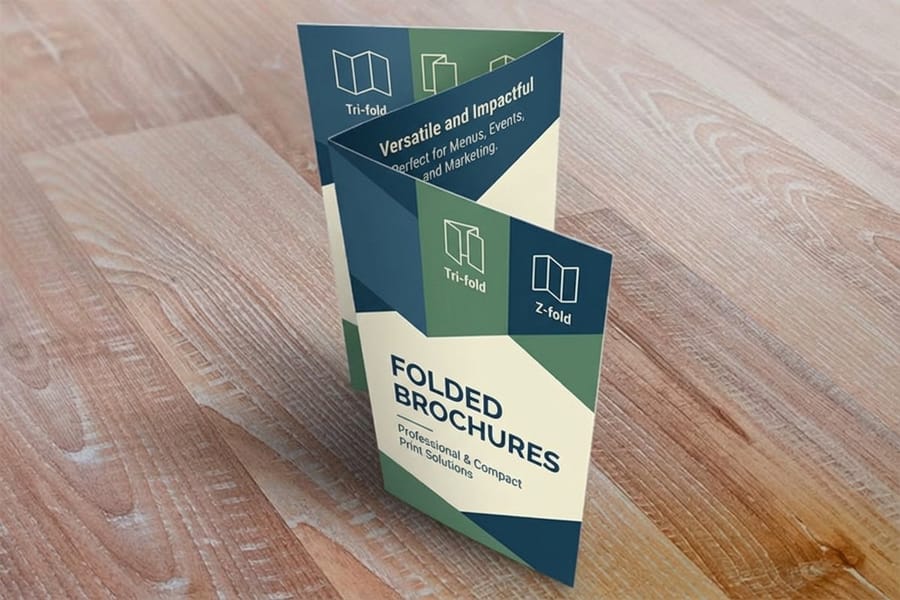
Take a sheet of paper. Fold it in half. Now turn it a quarter turn and fold it in half again. That second crease crosses the first at ninety degrees, and what you are holding is a French fold.
Printers use three names for the same thing: French fold, right angle fold, and quarter fold. All three describe the same move, and the last one describes the outcome best, because the finished piece is exactly one quarter of the flat sheet. A letter sheet at 8.5 by 11 inches comes out at 4.25 by 5.5 inches. A 12 by 18 inch sheet comes out at 6 by 9 inches.
The part that surprises people is the printing. A French fold carries artwork on one side of the sheet only. That one printed side supplies the front cover, the back, and the interior, because the folding sequence brings different quarters of the same face to the surface at each stage. The blank side ends up buried between the layers, and the reader never sees it. It is the fold behind almost every folded notecard and announcement card ever made, which is why folded notecards start at $38.22 rather than the price of a two sided job.
Set against the folds most people know, it is the odd one out. A tri fold, a Z fold and a roll fold all keep their creases parallel, so the piece stays a strip. The French fold breaks that pattern, and every one of its advantages and every one of its problems comes from that single decision. Our visual guide to brochure folding styles lays the whole family out side by side if you want the wider picture first.
How the French Fold Works, Step by Step
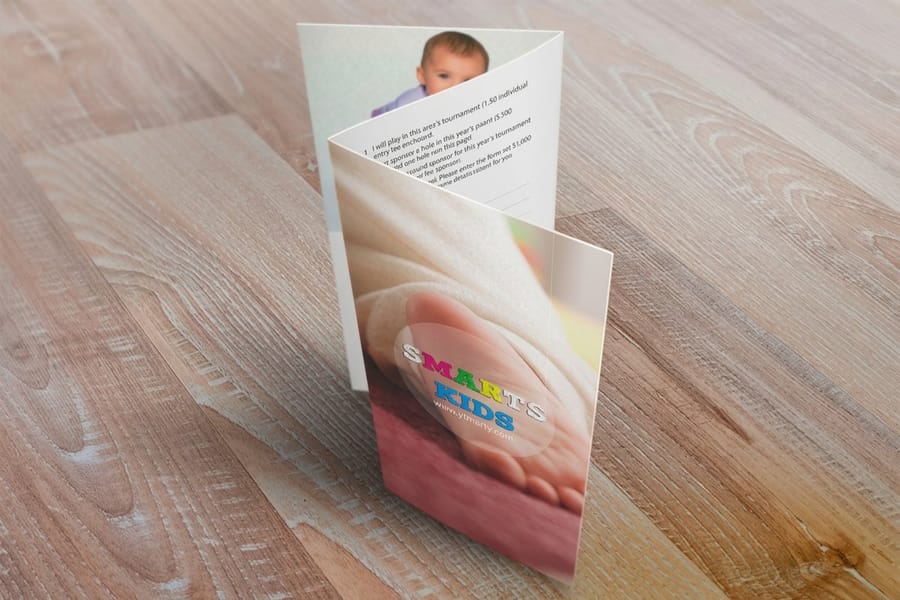
Four moves on the bindery floor, and each one explains a rule you will meet later in the file setup.
One, the sheet prints on one side. Press setup is simpler than a two sided job, because there is no backup to register. The layout is laid out as four quarters of one flat face, not as separate panels on separate sides.
Two, the sheet is scored. Both crease positions get a score before anything is folded. This is not optional on a French fold the way it sometimes is on a half fold, and the reason is grain, covered below.
Three, the first fold closes the sheet in half. Two thicknesses now, and the piece is 8.5 by 5.5 inches from a letter sheet.
Four, the second fold crosses the first. The folder turns the piece and folds it again at ninety degrees. Four thicknesses, and the finished 4.25 by 5.5 inch piece is done.
Count the thicknesses, because that number drives everything else. Four layers of 100 lb gloss text stacked at the closed corner already feel like a business card between your fingers. That is pleasant. Four layers of 14 pt cover feel like a folded coaster, and they refuse to stay shut. If you want the mechanics of folding in general, including how nested panels get trimmed narrower, the how to fold a brochure guide covers the bindery side in detail.
French Fold Against the Folds You Already Know
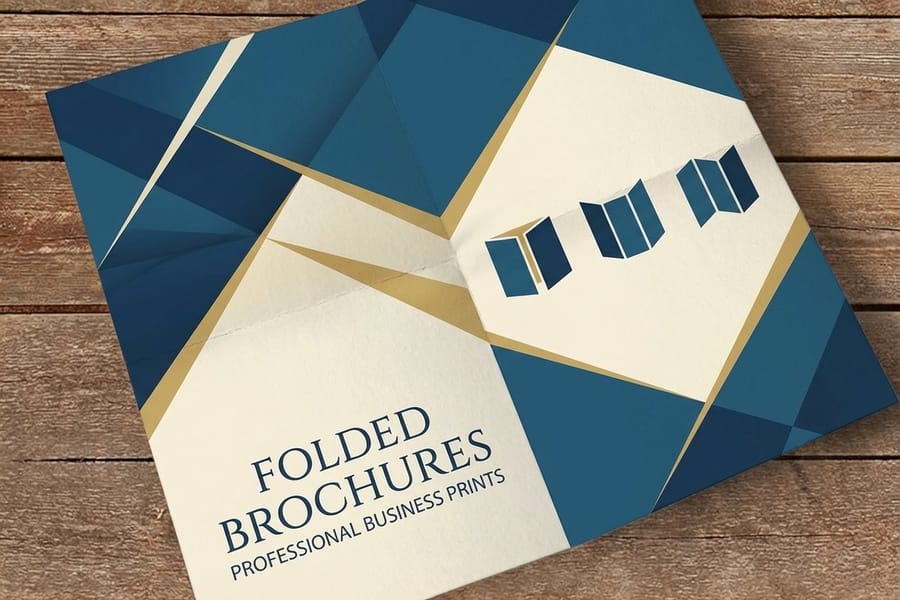
Four folds get confused with each other constantly in design briefs, mostly because two of them quarter the sheet and two of them do not. The fastest way to tell them apart is to count the creases and check which direction they run.
| Fold | Creases | Panels | From 8.5 x 11 in | What it is for |
|---|---|---|---|---|
| French fold | 2, crossing at 90 degrees | 4 on one printed side | 4.25 x 5.5 in | Invitations, announcements, notecards, and any piece meant to open flat to a single image. |
| Half fold | 1 | 4 across two sides | 8.5 x 5.5 in | Programs, short menus, two sided stories that need room rather than panels. |
| Tri fold | 2, both parallel | 6 across two sides | 3.67 x 8.5 in | Rack brochures and service lists that have to fit a standard literature holder. |
| Double parallel fold | 3, all parallel | 8 across two sides | 8.5 x 2.75 in | Dense instruction sheets and spec inserts that ship inside a box. |
Read the second and third columns together. A French fold and a double parallel fold both finish at a quarter of the sheet, so on a shipping manifest they look interchangeable. They are not. The double parallel gives you eight panels because the fold direction never changes, so both faces of the sheet stay usable. The French fold gives you four, and hands you the flat reveal in exchange.
That trade is the whole decision. If your content is a list, the extra panels win and you should be pricing standard brochures in a tri fold or double parallel configuration, which start at $57.11. If your content is one idea and one image, the reveal wins. When neither answer feels right, the content is probably too long for a brochure at all, and the comparison in booklet against brochure against flyer is worth ten minutes before you commit.
Where a French Fold Beats a Tri Fold
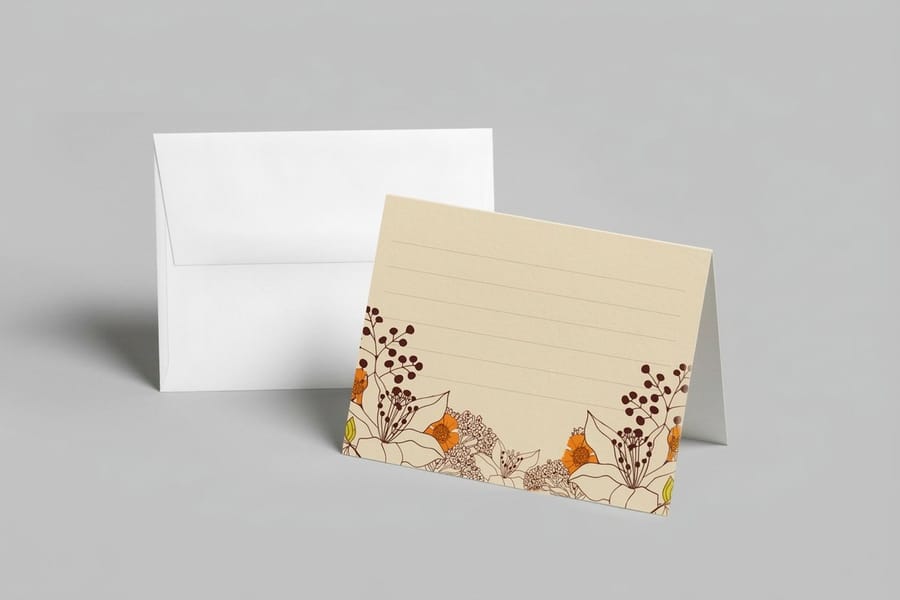
The French fold earns its place in four situations, and struggles everywhere else.
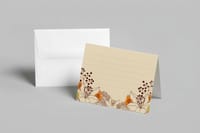
- Invitations and announcements. The piece is handed over or opened at a kitchen table, slowly, and it is often kept. A 4.25 by 5.5 inch card fits a standard A2 envelope, which is the practical reason this size became the default for the category.
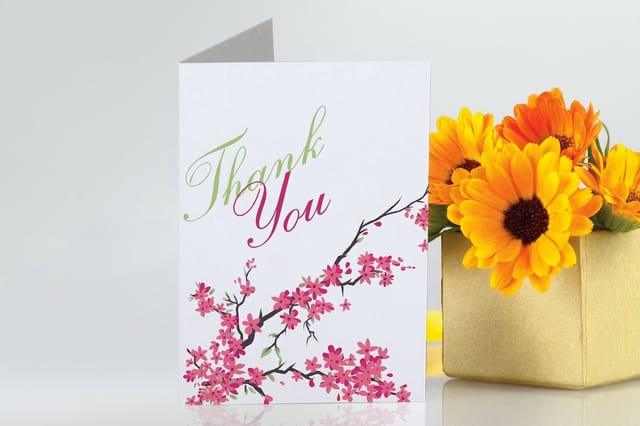
- Notecards and thank you cards. One printed side keeps the cost down while the interior stays clean for handwriting. Greeting card printing starts at $56.02 and runs on the same principle.
- Anything with a map, a floor plan or a full bleed photograph. This is the case a tri fold cannot answer. Open a French fold all the way and the image is uninterrupted across the whole sheet, with two creases running through it instead of a strip broken into thirds. Trade show floor plans and event programs live here.
- Short, high value messages. A product launch, a single offer, a save the date. Four panels force you to cut, and the cutting usually improves the piece.
Where it loses is volume mail and dense content. A tri fold sits in a rack and shows its cover panel; a French fold does not stand up in one. A tri fold takes a fold to a number 10 envelope; a French fold needs an A2 or a booklet envelope. And if you are printing a hundred thousand pieces where half the sheet carries no ink, you are paying for paper nobody reads. In that case run direct mail brochures from $238.73 with a parallel fold instead, or move up to standard booklets from $240.55 once the content genuinely needs pages.
The flat against folded question comes up constantly in the card categories too, and the reasoning transfers cleanly. Flat against folded greeting cards and the folded card printing guide both work through it with real sizes.
Sizes and Paper That Survive a Cross Fold
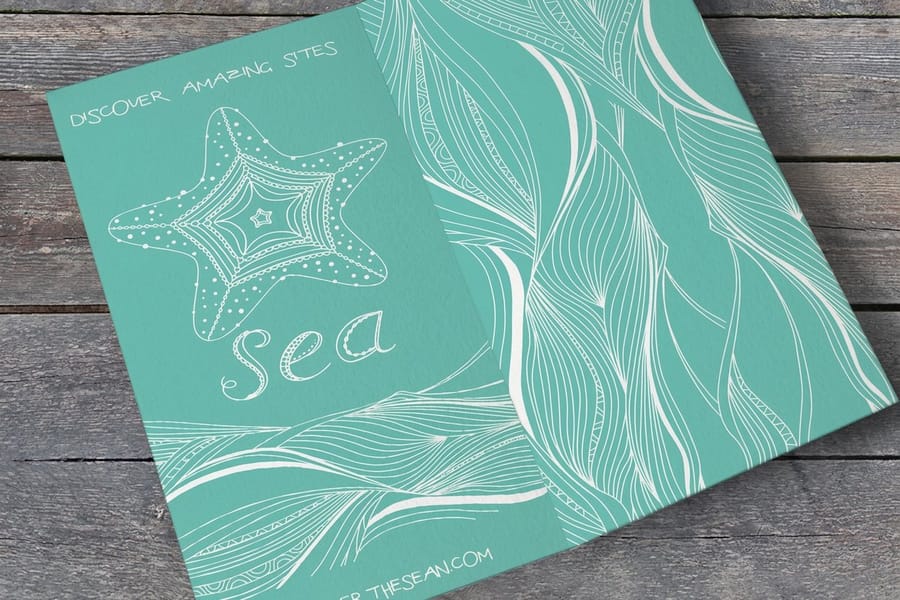
Start from the finished size and work backwards, because the flat sheet is always four times the area of what the reader holds.
| Flat sheet | Finished French fold | Envelope it fits | Typical use |
|---|---|---|---|
| 8.5 x 11 in | 4.25 x 5.5 in | A2 | Invitations, notecards, save the dates. |
| 11 x 17 in | 5.5 x 8.5 in | A9 or 6 x 9 catalog | Programs, announcements with a photograph. |
| 12 x 18 in | 6 x 9 in | 6 x 9 catalog | Event guides and floor plans with a large flat reveal. |
| 17 x 22 in | 8.5 x 11 in | 9 x 12 catalog | Maps and posters that fold down to a letter footprint. |
Now the paper, which is where French folds are won and lost. Two folds at right angles guarantee that one crease runs with the paper grain and the other runs across it. There is no layout trick that avoids this. Paper fibers align in one direction during manufacture, a fold along the fibers is clean, and a fold across them tears the fibers as it bends. On uncoated text stock the cross grain crease looks slightly fuzzy and nobody minds. On coated stock the ink layer sits on a clay surface that has no give, and the crease cracks into a visible white line, worst of all through a dark solid.
Three habits handle it. Score both creases before folding, which is standard on our folded work. Keep heavy dark solids off the fold lines where you can, or accept a hairline of cracking on the darkest one. And stay in text weight: 70 lb, 80 lb or 100 lb text all cross fold well, while cover weight does not. If you need the language for any of this, the brochure paper guide and the sizing reference in common brochure sizes and fold options cover the vocabulary printers use when quoting.
How to Order a French Fold Brochure

Build the file as one flat sheet, not as four separate panels. That is the single instruction that prevents most reprints.
- Set the document to the flat size. For a 4.25 by 5.5 inch finished piece, the document is 8.5 by 11 inches, plus 0.125 inch bleed on all four sides.
- Mark the fold positions with guides, not with printed lines. Guides at the vertical and horizontal centers. A printed crease mark will show on the finished piece.
- Rotate the panels correctly. When the sheet is folded twice, two of the four quarters end up rotated 180 degrees relative to the others. Fold a printed dummy on your desk before you send the file, write panel numbers on it, and match the artwork to what you see. Every experienced designer does this, and it takes two minutes.
- Keep live copy 0.25 inch inside the trim and away from the creases. Type sitting on a fold is unreadable and looks like a mistake.
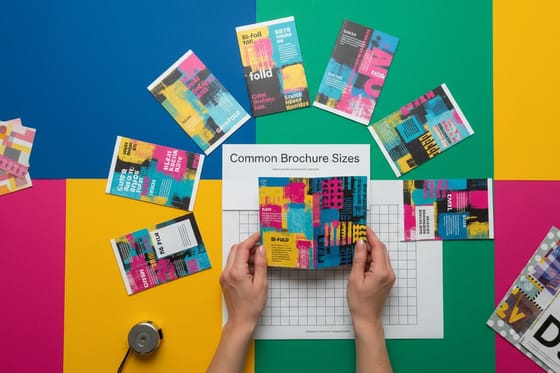
- Supply CMYK, 300 dpi, fonts outlined. The usual rules apply, and a correctly sized starting file from the blank template library saves the setup entirely.
Then price it. Folded brochures start at $57.11 and the fold option is chosen inside the configurator alongside stock, size and quantity, so you can see what the cross fold does to the price before you commit. If you want to feel the stock first, order free paper samples and fold one by hand. It is the fastest way to settle a text weight against cover weight argument, and it costs nothing.
Two related setups often come up in the same conversation. If the piece is going in the mail, read how to mail brochures for the tabbing rules first. And if you are still weighing a single crease against two, the half fold sizes and layout guide gives the direct comparison.
Wally explains the French fold
Fold once, turn the sheet, fold again
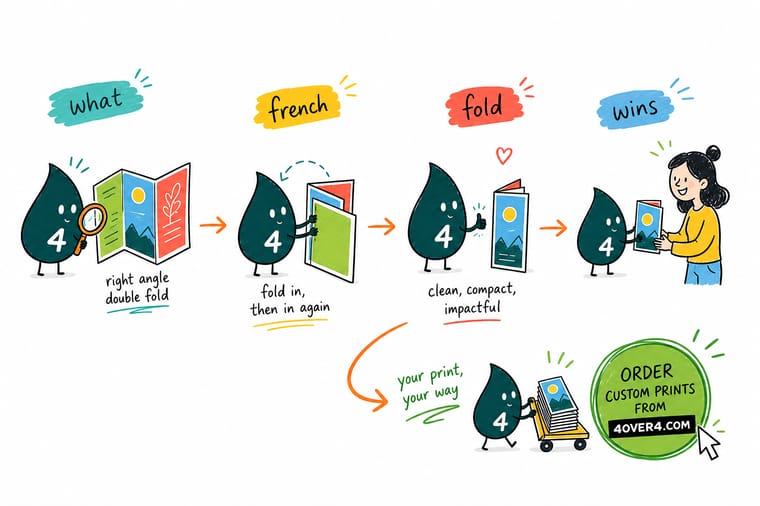
Wally prints one side of the sheet, folds it in half, turns it a quarter turn and folds it again. Two creases that cross, four panels, and a finished piece a quarter the size of what he started with. Open it back out and the whole printed face is there in one piece, which is the trick a tri fold cannot do. He scores both creases first, because one of them always runs across the paper grain and that is the one that cracks. And he keeps it in text weight, because four layers of cover stock will not stay shut.
Price a folded brochure →Specs and pricing
Folded formats, sizes, and starting prices
Compare the folded options side by side, with live configuration choices and starting prices straight from the 4OVER4.COM configurator.

Print it
Order a fold that opens the way you want it to
Explore more
Where to go next

By the numbers
Folded printing you can count on at 4OVER4
Common Questions
Your French fold questions, answered
What is a French fold brochure?
A French fold brochure is a sheet folded twice, with the second fold running at ninety degrees to the first. Printers also call it a right angle fold or a quarter fold. The finished piece measures a quarter of the flat sheet, so a standard 8.5 by 11 inch sheet finishes at 4.25 by 5.5 inches. It is traditionally printed on one side only, which yields four panels and leaves the unprinted side sealed inside the folds where it never shows.
How many panels does a French fold have?
Four, if you print one side, which is the standard way it is done. You get a front, a back, and the two panels that appear as you open it, plus the full flat sheet when it is opened all the way. Printing the second side would give eight panels on paper, but four of them sit on the face the reader only sees after unfolding the piece completely and turning it over, so they are rarely worth the ink.
Is a French fold the same as a double parallel fold?
No, and the difference is the direction of the second fold. A double parallel fold puts both folds in the same direction, which produces three creases, eight panels and a long narrow piece measuring 8.5 by 2.75 inches from a letter sheet. A French fold turns the second fold ninety degrees, which produces two creases, four panels and a compact 4.25 by 5.5 inch piece. Double parallel packs in more content. French fold opens flat to a single sheet.
What paper weight works best for a French fold?
Text weight, in the 70 lb to 100 lb range. Four thicknesses of 100 lb gloss text already feels like a card in the hand. Move up to 14 pt or 16 pt cover and the piece will not close flat, the outer fold springs open, and the cross grain crease cracks along the printed surface. If the brief calls for a heavy stock and a fold, a single half fold on cover weight is the honest answer rather than a cross fold.
Can you mail a French fold brochure?
Yes, but treat it as a folded self mailer rather than a flat piece. The open edges have to be sealed with tabs or wafer seals so the piece survives automated sorting, and the postal rules want the final fold along the bottom edge on letter size mail. Our guide on how to mail brochures walks through the tabbing and the address panel. If the run is going to a purchased list, direct mail brochures ship with the mailing handled from our end.
When should I not use a French fold?
When you have a lot to say. Four panels at 4.25 by 5.5 inches is roughly a page and a half of comfortable reading, so a product line with eight items or a service menu with specifications will feel cramped. Use a tri fold or a double parallel fold for that, and a saddle stitched booklet once the content passes eight pages. The French fold is for one message, one image, and a reveal.
Get Started
Ready to print a fold that opens flat?
Pick your flat size, choose text weight stock, and set the fold in the configurator. We score both creases before folding, so the cross grain one stays clean.
Legal Disclaimer
Gold Standard guarantees apply to all standard orders placed through 4over4.com. Price match requires verifiable proof of a competitor's published price for an equivalent product with matching specifications and turnaround time. Satisfaction guarantee covers manufacturing defects and print quality issues. Contact support with order number and documentation. On-time delivery rate based on tracked orders 1999 to 2026. Individual results may vary based on shipping carrier performance.
