
What Presentation Cards Are and How to Choose the Right One


Presentation cards are the heavyweight tier of the business card, built on thick or specialty stock and finished so the card feels considered the second it changes hands. Here is what goes into one, what it costs, and how to spec it correctly.
Presentation cards are business cards deliberately upgraded past the standard: thicker stock, specialty material, or a finish such as soft touch lamination, foil, spot gloss or painted edges. The category is defined by feel rather than by size, so most still measure 3.5 by 2 inches. The heaviest tier at 4OVER4.COM runs on 30mil plastic in white, frosted or clear, and pricing moves with material, finishing passes and quantity.
Start here
Presentation cards in one paragraph
A presentation card is a business card whose material and finish do as much work as its layout. It keeps the familiar 3.5 by 2 inch shape so it still fits a wallet, but it moves up in thickness, from the everyday 14pt sheet to 16pt, 32pt bonded stocks and 30mil plastic. Lamination, foil, spot gloss and painted edges then set the character of the surface. The result is a card people keep because it feels like an object rather than a note.
Why a heavier card changes how people treat your brand
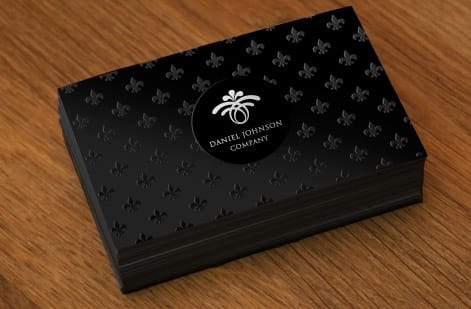
Almost nobody reads a business card at the moment they receive it. They feel it. The hand registers weight, stiffness and surface texture in under a second, and that judgment lands before a single word of the layout gets processed. A card that bends between two fingers is filed as disposable. A card that stays flat and cool to the touch gets kept.
That is the entire argument for presentation cards. You are not buying better information delivery, you are buying a longer shelf life on somebody's desk. The same instinct is why buyers researching a 30mil white plastic card often arrive after comparing a Moo Luxe style layered card and realizing the decision is really about material, not about brand.
What counts as a presentation card
There is no industry certification for the term. In practice a presentation card is any business card that has been deliberately upgraded past the default: thicker stock, a specialty material, a lamination that changes the surface, or a decorative pass such as foil or painted edges. The upgrade is what makes it presentational. Everything else about the card stays familiar.
Most presentation cards keep the standard 3.5 by 2 inch footprint. That is not laziness, it is compatibility. Wallets, card cases, badge holders and scanner trays are all built around that rectangle, and a card that does not fit gets thrown away faster than a plain one. The interesting variation happens in the third dimension, in thickness and surface, rather than in the outline.
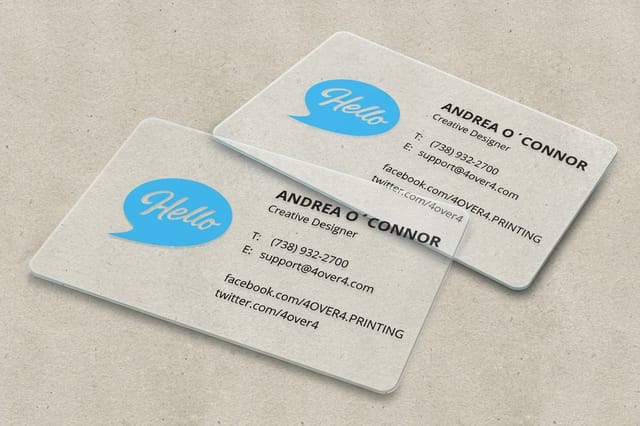
The clearest example of the category sits at the far end of the range. A 30mil clear plastic card is roughly the gauge of a credit card, it does not crease, and it forces every design decision to be intentional because the background is whatever the card is resting on. Once you have handled one, the difference between a standard card and a presentation card stops being an abstraction.
Thickness and weight, the first thing a hand notices
Paper thickness is quoted in points, where one point equals one thousandth of an inch. A 14pt card is the everyday baseline. At 16pt the card stops flexing casually. At 32pt, usually achieved by bonding two sheets together, the edge itself becomes a visible design element, which is why painted edges almost always appear on stocks in that range.
Plastic is measured in mils instead, on the same thousandths scale. A 30mil card is thicker than most premium paper cards and behaves completely differently: it flexes and springs back rather than creasing, and the edge stays sharp for years. That resilience is the reason plastic dominates membership cards, gym cards and any card that will live in a back pocket.
Weight and thickness are related but not identical. A dense coated sheet can feel heavier than a bulkier uncoated one at the same caliper. If a specific feel matters to you, judge it by handling samples rather than by the number on the spec sheet, because two cards quoted at the same thickness can read very differently in the hand.
Stock choices, from suede paper to solid plastic
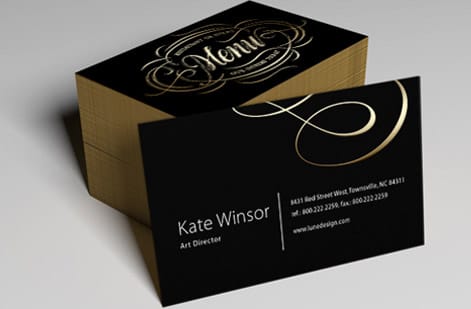
Uncoated and silk stocks are the workhorses of the premium tier. Uncoated absorbs a little ink, which softens color and gives the card a natural, writable surface. Silk sits between uncoated and gloss, holding color well while staying quiet under the fingers. Suede takes this further with a nap that feels closer to fabric than to paper.
Specialty papers add character rather than durability. Pearl stocks carry a faint shimmer that shifts with the light. Cotton stocks are soft, thick and take deep impressions from letterpress or foil dies. Layered stocks bond two or three sheets, often with a contrasting core, so a colored line runs visibly around the edge of every card.
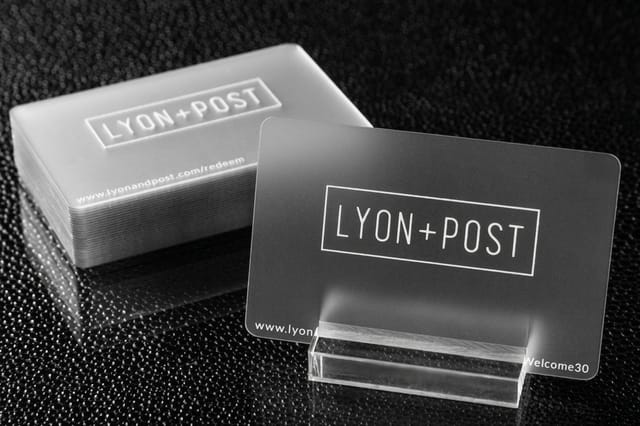
Plastic is its own category. White plastic behaves like an opaque card that happens to be waterproof, frosted plastic diffuses light through a translucent body, and clear plastic is fully transparent unless white ink is printed underneath the artwork. Teams weighing these against a paper upgrade often start by reading a specialty stock comparison before requesting samples of both.
Finishes that change the surface, not the design
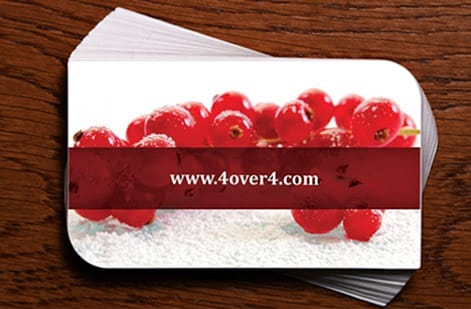
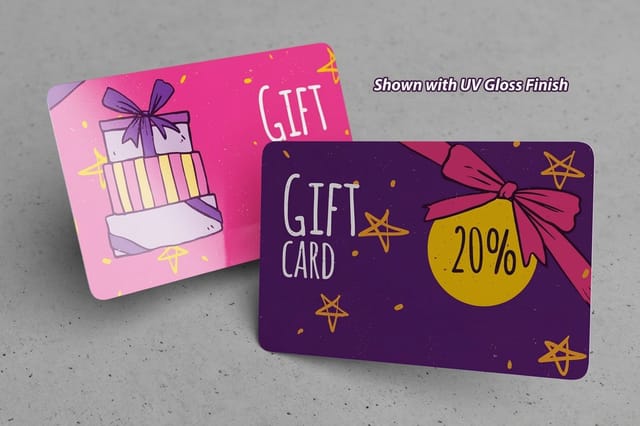
Lamination is a thin film bonded to the printed sheet, and it does two jobs at once: it protects the ink and it sets the tactile character of the card. Gloss lamination deepens color and adds reflection, which suits photography and saturated brand palettes. Matte lamination kills glare and makes small type easier to read under office lighting.
Soft touch lamination is the finish most people mean when they say a card feels expensive. It is a matte film with a velvet surface that grips the fingertips slightly. The tradeoff is that it mutes color a little, so if your brand depends on a vivid accent, plan to reinforce it with spot gloss or foil rather than relying on ink alone.
Plastic cards carry their own finish inherently. A 30mil frosted plastic card gives you a soft, diffused surface without any added film, and the translucency becomes part of the design. This is why frosted stock works so well for minimal layouts where a single logo floats in a field of nothing.
Foil, spot gloss and painted edges, where the budget goes furthest
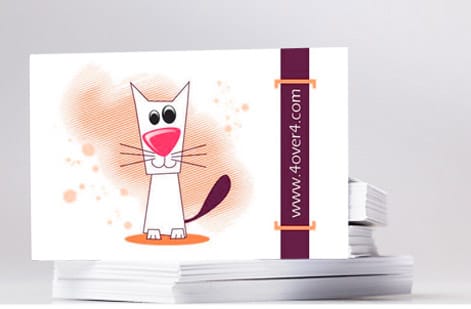
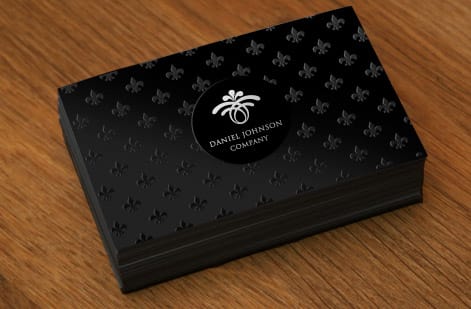
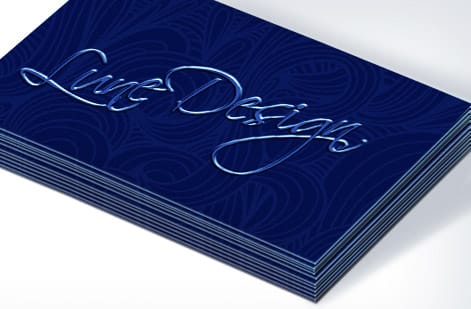
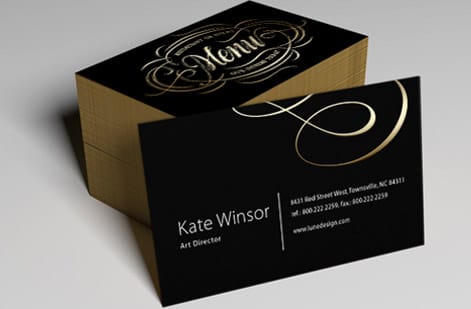
Decorative accents are applied after the main print pass, and each one is a targeted upgrade rather than a whole material change. Foil stamping presses a metallic or pigment film into the stock with a heated die, leaving a reflective mark with a slight physical impression. On dark soft touch stock, a small foil logo is one of the highest impact treatments available.
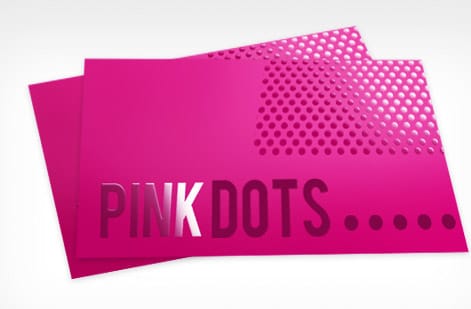
Spot gloss, sometimes called spot UV, applies a clear varnish to selected areas only. On a matte card it produces a shape that you see mostly at an angle, which is ideal for a watermark, a pattern or a logo you want present but not loud. It costs less than foil because there is no die and no metal film involved.
Painted edges are only possible on thick stocks, where the exposed edge is wide enough to hold color. The effect is a bright line framing the card on all four sides. Because these accents are additive, they are often the smartest way to lift a card without moving the whole run into a more expensive material, a point worth weighing against a smart card upgrade before you decide.
Sizes and shapes that still fit a wallet
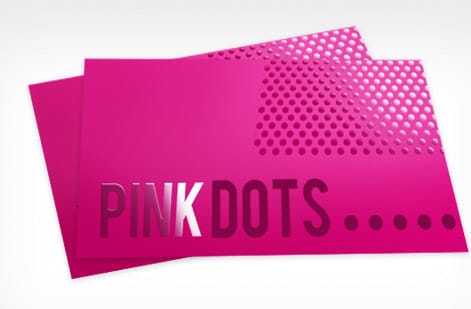
The 3.5 by 2 inch card is the North American standard, and it remains the safest choice for a card people are meant to keep. Everything in the physical world is sized around it, from card holders to the pocket in the back of a passport case, and a card that fits gets carried instead of discarded.
Square cards at 2.5 by 2.5 inches and slim cards at 3.5 by 1.5 inches are the two most common departures. Square reads as design forward and gives you a symmetrical canvas. Slim reads as modern and minimal, and it works well when your card carries a name, a role and one contact method rather than a full block of details.
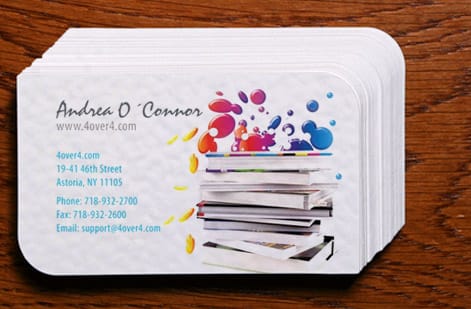
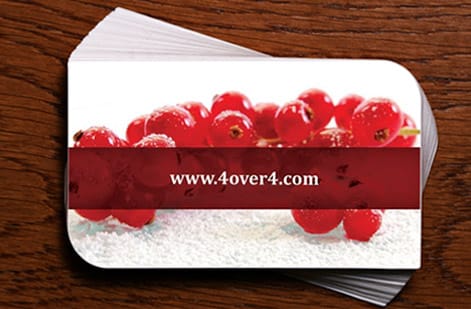
Rounded corners are a small change with a real effect on perception, because a rounded card resists the dog eared look that squared corners develop in a pocket. On thick stock the radius is more visible, which turns a functional detail into a styling choice. If you are also weighing a larger handout format, a rack card comparison shows where the bigger footprint earns its place.
Setting up artwork so the finish actually lands
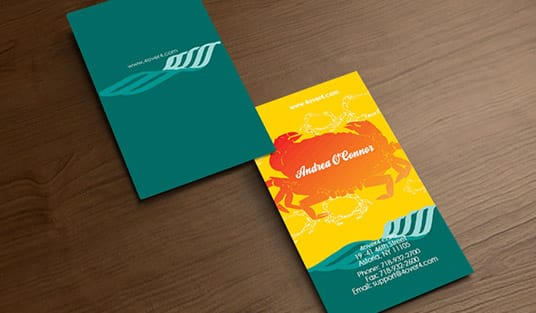
Every card needs bleed, meaning background art extended past the trim line so no white sliver appears if the cut drifts. It also needs a safety margin, an inner boundary that keeps text and logos away from the edge. Thick stocks and plastic have slightly wider cutting tolerances than thin paper, so respecting the safety margin matters more, not less, on a premium card.
Supply artwork at 300 DPI in CMYK. Screen files in RGB will shift when converted for press, and low resolution logos that look acceptable on a monitor turn soft once printed at actual size. Vector logos are always the better source, because they stay crisp no matter how small the mark sits on the card.
Transparent stocks add one more layer to plan. On a clear card, anything without white ink beneath it will let the background show through, so decide deliberately which elements should be solid and which should float. Proof the layout against both a white desk and a dark surface, since those are the two conditions your card will actually be seen in.
What presentation cards cost and how the price is built
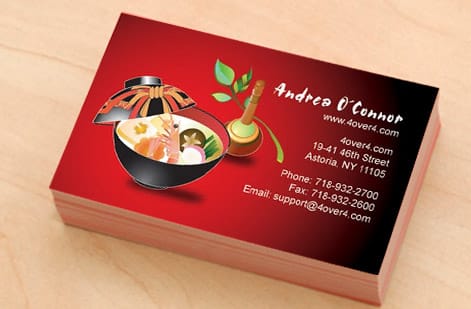
Four variables set the number: material, thickness, finishing passes and quantity. Material and thickness set the floor, because a plastic sheet or a bonded 32pt stock simply costs more to buy than a 14pt sheet. Each finishing pass, whether that is lamination, foil, spot gloss or edge paint, adds a separate step with its own setup.
Quantity moves the total more than anything else per card. Setup costs are fixed and get spread across the run, so the price per card falls steeply as volume rises. Ordering a year of cards at once is almost always cheaper per unit than ordering the same total in four separate batches.
Concrete numbers help. At 4OVER4.COM, 30mil White Plastic Cards start at $226.11, while 30mil Clear Plastic Cards and 30mil Frosted Plastic Cards start at $529.26 because transparent and translucent stock requires white ink underneath the artwork. Teams comparing against volume printers often look at a value focused printer comparison to see where the premium tier is worth the difference.
How long printing and shipping actually take
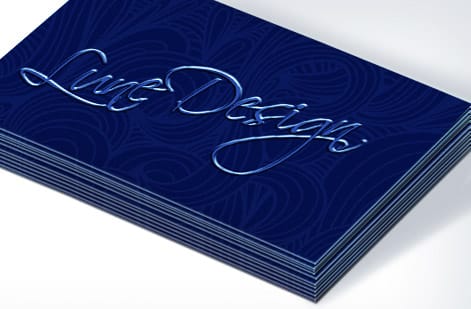
Turnaround is driven by the finishing schedule, not by how complicated your design is. A laminated paper card goes through press and cutting and is ready quickly. Plastic, foil and painted edges each add a step that happens after the ink is down, and those steps run on their own equipment with their own queue.
Treat production time and transit time as two separate numbers. A fast production window still needs shipping days on top of it, and choosing a slower ground service can quietly erase the benefit of paying for quicker production. Check both at checkout when the cards are tied to a specific date.
The practical advice is to order samples before the deadline exists. Handling the real stock removes the guesswork, and it means the only thing standing between approval and delivery is the press schedule. Browsing a wider specialty print catalog comparison at the same time helps you decide whether the rest of your collateral should match the card.
Wally explains the presentation card
The card is judged by hand before it is read by eye
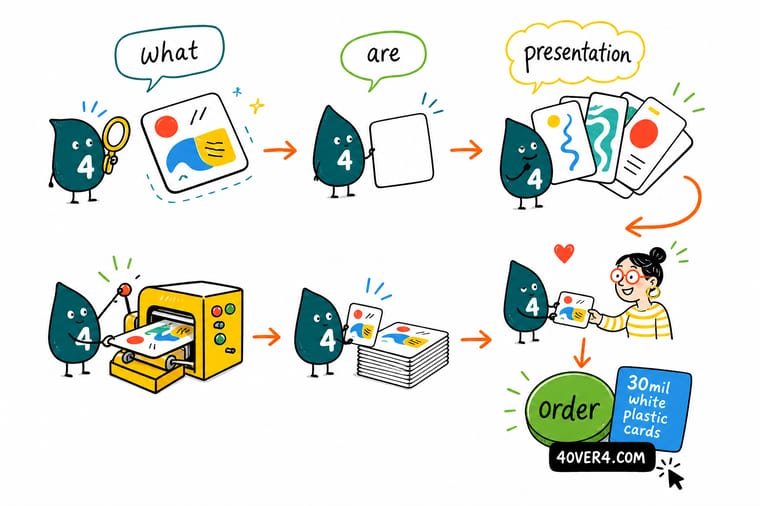
Wally's rule is simple: decide how the card should feel, then design for it. Pick the material first, because thickness and surface set the impression. Add one accent, not four, so the eye has somewhere to land. Keep type inside the safety margin, supply 300 DPI artwork, and order samples before the full run so nothing surprises you when the box arrives.
Order plastic presentation cards →Infographic
Every presentation card decision in one frame
Seven choices separate a standard card from a presentation card. Save this frame, or keep it open while you configure your order, and work through the list from material outward.
No single choice makes a card feel premium on its own. Thickness sets the expectation, stock and finish confirm it, and one well placed accent gives the eye a reward. Work down the list in that order and the budget lands where it shows.
Specs and pricing
30mil plastic card specs and live pricing
When you have settled on the material, the specs and the price move together. Check the stock, size and finishing options below, then read the quantity breaks to see where the cost per card drops.

| Quantity | Price Per Unit | Total |
|---|---|---|
| 250 | 90.4¢ | $226.11 |
| 500 | 55.3¢ | $276.63 |
| 1,000 | 37.8¢ | $377.68 |
| 2,000 | 34.7¢ | $693.46 |
| 2,500 | 35.3¢ | $882.94 |
| 3,000 | 33.6¢ | $1,009.25 |
| 3,500 | 32.4¢ | $1,135.55 |
| 4,000 | 31.5¢ | $1,261.87 |
Print it
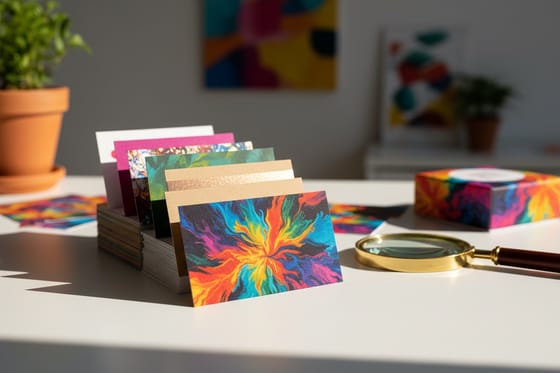
The presentation card lineup at 4OVER4
See it in use
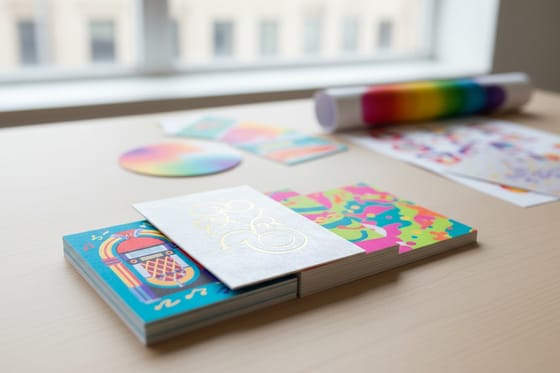
Real premium card work, printed in house
Explore more
Where to go next

By the numbers
Printing you can count on at 4OVER4.COM
Common Questions
Common questions about presentation cards
What is a presentation card?
A presentation card is a business card built to be handed over as an object rather than a scrap of information. It uses heavier stock, specialty material or a premium finish so the recipient notices the card before they read it. Thickness usually starts at 16pt and climbs through 32pt suede, layered stocks and 30mil plastic. The dimensions normally stay at the standard 3.5 by 2 inches so the card still fits a wallet, a card case and a rolodex slot.
How do I choose the right presentation card?
Start with the moment the card gets handed over. If you meet people in dusty or wet conditions, plastic wins because it survives pockets and rain. If you want the card to feel expensive in a quiet room, soft touch on a thick stock does more work than any graphic. If your logo is a single strong mark, foil or spot gloss on that mark gives the biggest return. Order free samples and shuffle them in your hand before you commit to a full run.
What do presentation cards cost and how are prices set?
Price is driven by material, thickness, finish, ink coverage and quantity. Plastic and specialty stocks cost more per sheet than paper, and every extra pass on press adds to the total. Quantity moves the number the most, since setup is spread across the run. At 4OVER4.COM, 30mil White Plastic Cards start at $226.11, while 30mil Clear Plastic Cards and 30mil Frosted Plastic Cards start at $529.26.
What sizes, stocks and finishes are available for presentation cards?
The standard footprint is 3.5 by 2 inches, with square, slim and rounded corner variants available on many stocks. Materials range from thick uncoated and silk paper through suede, pearl and layered stocks, up to 30mil plastic in white, frosted and clear. Finishes include soft touch and gloss lamination, matte, spot gloss, foil stamping and painted edges. Clear and frosted plastic can also carry white ink so artwork stays legible against any background.
How long do presentation cards take to print and ship?
Turnaround depends on the finish rather than the design. Straightforward laminated paper cards move fastest. Plastic, foil and painted edges add finishing steps after press, so allow extra production days before the box leaves the plant. Shipping time is separate from print time, so build both into your deadline when the cards are meant for a specific event.
Are plastic cards better than thick paper cards?
They solve different problems. Plastic is waterproof, tear resistant and holds a crisp edge for years, which suits membership cards, loyalty cards and anyone whose card lives in a work pocket. Thick paper stocks such as suede and cotton feel warmer and take letterpress or foil beautifully. If longevity matters, choose plastic. If tactile warmth matters, choose a heavy uncoated stock.
How do I set up artwork for a clear or frosted card?
Design for transparency on purpose. Anything you want to stay readable needs a white ink layer beneath it, and anything you leave without white ink will show whatever sits behind the card. Keep text and logos inside the safety margin, extend background art to the bleed line, and supply files at 300 DPI in CMYK. Preview your layout over both a light and a dark background before you approve the proof.
Get Started
Ready to print a card people keep?
Pick your material, add the one finish that matters most, and let 4OVER4.COM handle the press work. Free paper samples ship first if you want to feel the stock.
Legal Disclaimer
Gold Standard guarantees apply to all standard orders placed through 4over4.com. Price match requires verifiable proof of a competitor's published price for an equivalent product with matching specifications and turnaround time. Satisfaction guarantee covers manufacturing defects and print quality issues. Contact support with order number and documentation. On-time delivery rate based on tracked orders 1999 to 2026. Individual results may vary based on shipping carrier performance.
