
Plastic Membership Cards vs Magnet Business Cards for Customer Loyalty


One card gets handed over and scanned. The other one sits on a fridge and waits. Each material behaves differently, starts at a different price, and suits a different kind of program.
Choose plastic membership cards when a visit has to be recorded, because a 30mil card can carry a member number, a barcode or a magnetic stripe that ties a purchase to a person. Choose magnet business cards when the job is being remembered, because a magnet lives on a fridge door where nothing ever scans it. Plastic Membership Cards start at $226.11 at 4OVER4.COM and Business Card Magnets start at $19.68, so the tracking is what you are paying for, not the printing.

Quick answer
One card counts visits, the other one earns calls
The decision is not aesthetic, it is mechanical. A 30mil plastic membership card is handed across a counter and read, so spend attaches to a member and tiers, balances and renewals become possible. A magnet business card is looked at, never read, so it wins recall in a kitchen and leaves no record of anything. Ask whether your program has to count something. If it does, print plastic. If it only has to be remembered, print magnets, and put the difference in price into handing out more of them.
What Each Card Is Made Of, and Where It Ends Up
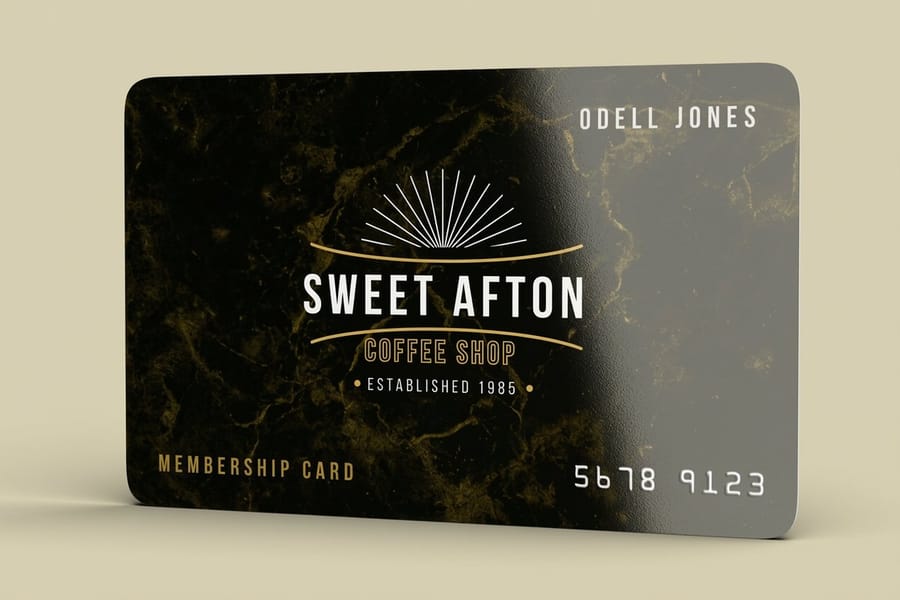
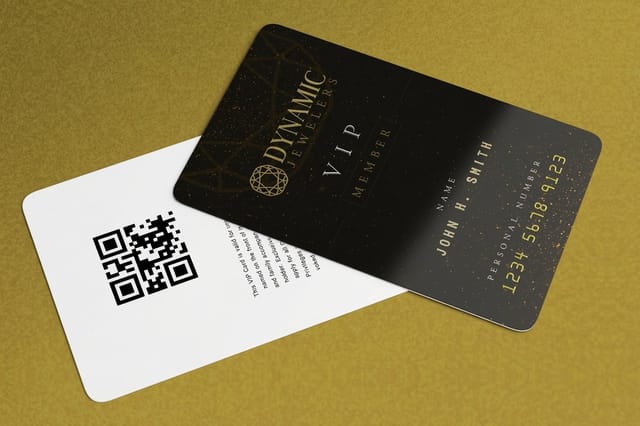
A plastic membership card is 30mil PVC, cut to CR80 at 3.375 by 2.125 inches. That is the gauge and footprint of a bank card, which matters more than it sounds: it fits the slot the customer already reaches for, and it does not soften after six months of being pulled out at a counter. The face is printed and laminated, so the artwork sits under the surface rather than on it.
A magnet business card is a different animal entirely. It is a flexible magnetic sheet with a white printable face and a plain magnetic back, trimmed to the familiar 2 by 3.5 inches. Nothing about it is designed for a wallet. It is designed for a vertical steel surface in a room where somebody makes a decision, which is usually a kitchen.
That single difference drives every other one. The plastic card goes where the customer goes and comes back to you. The magnet stays put and waits. When you are choosing between plastic membership cards and business card magnets, you are really choosing which of those two behaviors your program depends on.
Two material limits are worth knowing before the artwork starts. Magnet stock does not fold and does not hold fine die cut detail cheaply, so the rectangle is the sensible shape. PVC does not tolerate a hand written note, so anything a customer needs to write on belongs on a paper card or a signature panel. The stock options for the plastic side are covered in 30mil plastic card materials.
Plastic, Magnet and Paper Side by Side
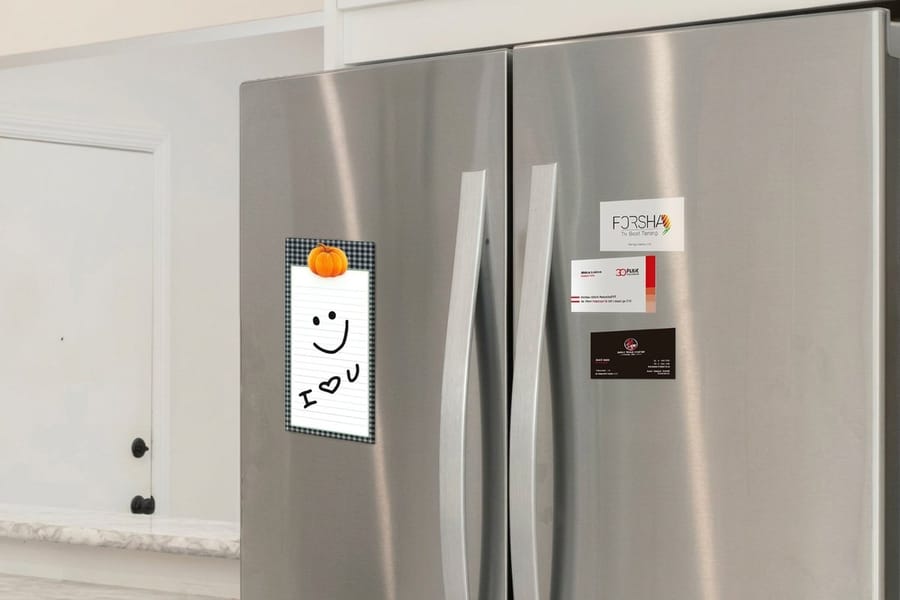
The printed paper loyalty card belongs in this table, because it is the option most businesses are actually comparing against when they ask about plastic. Read the row about recording a visit first. It decides more programs than price does.
| Attribute | Plastic membership card | Magnet business card | Printed paper card |
|---|---|---|---|
| Material | 30mil PVC, laminated, card gauge. | Flexible magnet sheet, printed white face. | Card stock, usually 14pt or 16pt. |
| Standard size | CR80, 3.375 by 2.125 in. | 2 by 3.5 in, business card footprint. | 2 by 3.5 in. |
| Where it lives | Wallet, travels to your counter. | Fridge or filing cabinet, stays home. | Wallet, pocket, sometimes the bin. |
| Can a visit be recorded | Yes, with numbering, a barcode or a stripe. | No, nothing reads a magnet. | Only by hand, with a punch or a stamp. |
| Starting price | $226.11 | $19.68 | $17.57 for standard business cards. |
| How it fails | Left at home on the day it was needed. | Will not grip a non magnetic stainless door. | Frays and rubs within a few months. |
| Best at | Membership, tiers, redemption at a till. | Recall, being the number that gets called. | Short punch card campaigns. |
Notice that the magnet and the paper card sit close on price and far apart on behavior. A paper card asks the customer to carry it. A magnet asks nothing at all, which is why it survives longer in the wild even though it cannot do anything clever. The plastic card is the only row that turns a visit into data, and that is what you are paying the difference for.
The Tracking Question Decides Most Loyalty Programs
Ask one question of your program: does anything have to be counted? Points, visits, tiers, a reward balance, a renewal date. If the answer is yes, a magnet cannot carry the program, no matter how good the design is. Counting needs a card that a person hands over and a system reads.
That reading happens in one of three ways, and they cost different amounts. Sequential numbering printed on the card lets staff key a member in, which is slow but needs no hardware. A barcode or QR code lets a scanner or a phone do it in a second. A magnetic stripe suits a card that is swiped at a till many times a day. Reserve the space for whichever one you choose at the layout stage, because a stripe running across a design that was never planned around it looks like an accident. The setup detail sits in our guide to gift card printing with magnetic stripes and barcodes.
The magnet has the opposite strength, and it is a real one. It works when the customer is at home and not thinking about you yet. A plumber, a dentist, a takeaway or a mobile groomer wins by being the number already stuck to the fridge at the moment the need appears. No card in a wallet competes with that, because nobody opens a wallet to look for a phone number. The campaign thinking behind it is in business magnets for marketing.
Magnets also mail well. They lie flat in an envelope, they arrive undamaged, and the recipient has somewhere obvious to put them. A rigid PVC card mailed on its own needs a carrier or a stiffer mailer, which adds cost to a piece that was already the expensive one. If your acquisition channel is the mailbox, that alone often settles the first print run.
The Verdict, and When to Print Both
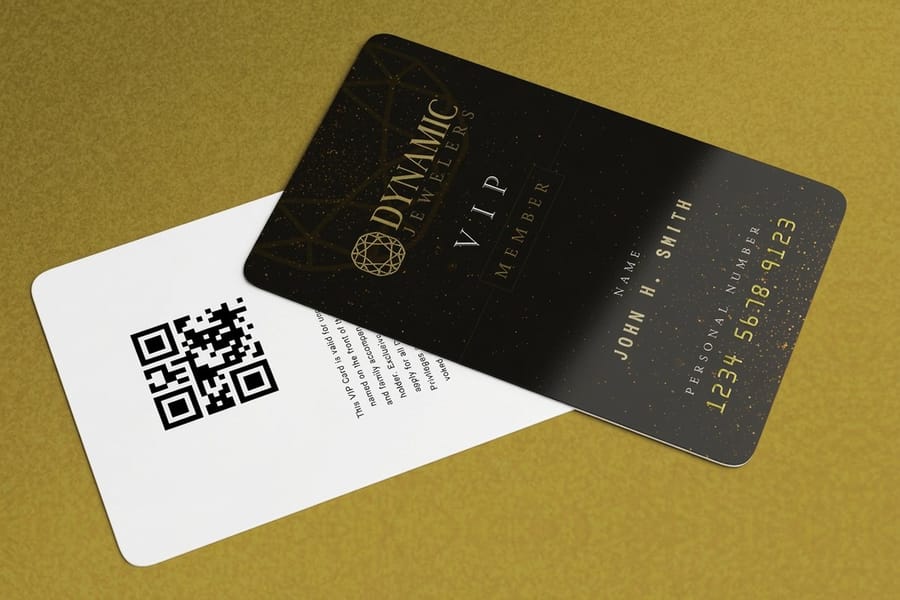
Print plastic membership cards when membership is a status the customer holds and you have to recognize it at the counter. Gyms, clubs, salons with tiers, wholesale accounts, anything with a renewal date or a balance. The card is the proof, and $226.11 to start is the price of a program that can count.
Print business card magnets when the whole job is being the first number remembered. Trades, delivery kitchens, veterinary practices, anyone whose customers call rather than walk in. At $19.68 to start you can put one in every bag, every mailer and every finished job, and the ones that stick keep working for years without any system behind them.
Once a program is running, the two stop competing. The magnet is what you hand a new customer and what goes in the mail. The plastic card is what an enrolled member carries. A plastic VIP card for a top tier and a plastic discount card for everyone else is a common split, and plastic gift cards at $226.11 share the same stock and numbering setup, so one artwork discipline covers all of them.
Where neither belongs: a one off promotion with an end date. That is a paper job, and standard business cards at $17.57 or a punch card will do it for the price of a lunch. Save the plastic for the members you intend to keep. Browse the full range in the plastic cards collection and the magnet printing collection, or start from a correctly sized layout in the blank template library. If you are still shaping the offer itself, how to create loyalty cards covers that step.
Wally explains the two loyalty cards
One goes in a wallet, one goes on a fridge

Wally hands his plastic membership card over the counter, the scanner reads the barcode, and the visit lands against his member number. Then he goes home, where his magnet business card is stuck to the fridge with the phone number facing out. The magnet made him call. The plastic card made the visit count. Wally keeps both, and so do most programs once they get past the first year.
Order plastic membership cards →Specs and pricing
Sizes, stocks and starting prices for both
Plastic membership cards start at 250 for $226.11 on 30mil white plastic, and business card magnets run on 17pt or 35pt indoor magnet stock.



Print it
Order the card your program actually needs


Explore more
Where to go next

By the numbers
Plastic cards and magnets for loyalty programs
Common Questions
Your membership and magnet card questions, answered
Which one lasts longer, a plastic membership card or a magnet business card?
The plastic card, by a wide margin. A 30mil PVC card is the same gauge as a bank card, so it survives years of being pushed in and out of a wallet without softening, tearing or fading at the corners. A magnet business card is a flexible sheet with a printed face, and it stays fine on a fridge door because nothing abrades it there. Take the magnet off the fridge and carry it in a bag and the face scuffs quickly. Life expectancy is really a question of where the card sits, and each product is built for one place.
Will a magnet business card stick to a stainless steel refrigerator?
Sometimes, and that is the honest answer. Many stainless appliance fronts use an austenitic grade that a magnet will not grip at all, while others hold normally. Before you commit to a large run aimed at homeowners, stick an ordinary magnet on a few doors you have access to and see what happens. If the answer is mixed, the fix is not a stronger magnet. Give the piece a second home by designing it to work on a filing cabinet, a locker or a metal door frame, or hand out a wallet card as well.
Can a plastic membership card carry a barcode or a magnetic stripe?
Yes, and that capability is the main reason the plastic version costs more. Sequential numbering, a barcode or QR code, and a magnetic stripe are what turn a printed card into something your point of sale can read, which is how you attribute a purchase to a member and run tiers or reward balances. Our guide to gift card printing with magnetic stripes and barcodes covers how the encoding and numbering are set up. Decide on the scanning method before the artwork is drawn, because the stripe and the code both need clear space reserved for them.
Do I need plastic at all, or will a printed paper loyalty card do?
A printed card works when the program is a punch card that ends after a set number of visits. It fails when the card has to last a year in a wallet, or when a member number has to stay legible. Paper stock frays at the corner that goes in and out of a wallet, and ink rubs where a thumb sits. The comparison in paper versus 30mil plastic cards lays out where the crossover sits. Short campaign, print it. Ongoing membership, use plastic.
What sizes are these two cards?
A plastic membership card is normally CR80, which is 3.375 by 2.125 inches, the same footprint as a credit card, so it drops straight into a wallet slot. A magnet business card is normally 2 by 3.5 inches, the standard business card footprint, because it started life as a business card that sticks. Other magnet sizes exist and larger ones hold better on a textured door. The standard magnet sizes guide runs through what each size is actually used for.
What do the two cost to start at 4OVER4.COM?
Plastic Membership Cards start at $226.11 and Business Card Magnets start at $19.68, so the plastic program begins at more than ten times the magnet order. The gap comes from the material and the finishing rather than the printing: PVC card stock is laminated and cut on card equipment, and any numbering, barcode or stripe is a separate pass. Per piece the distance narrows as the run grows, and the live configurator on each product page prices your exact quantity.
Get Started
Order 250 plastic membership cards from $226.11
Pick 30mil PVC with a member number, a barcode or a magnetic stripe, or run a magnet that sticks on every fridge in the neighborhood. We print both from the same file setup.
Legal Disclaimer
Gold Standard guarantees apply to all standard orders placed through 4over4.com. Price match requires verifiable proof of a competitor's published price for an equivalent product with matching specifications and turnaround time. Satisfaction guarantee covers manufacturing defects and print quality issues. Contact support with order number and documentation. On-time delivery rate based on tracked orders 1999 to 2026. Individual results may vary based on shipping carrier performance.
