
Sticker Materials and Which One to Use for Every Surface


Paper, vinyl, clear film, kraft and holographic foil, taken one at a time. What each stock survives, what it costs, and the job it is wrong for.
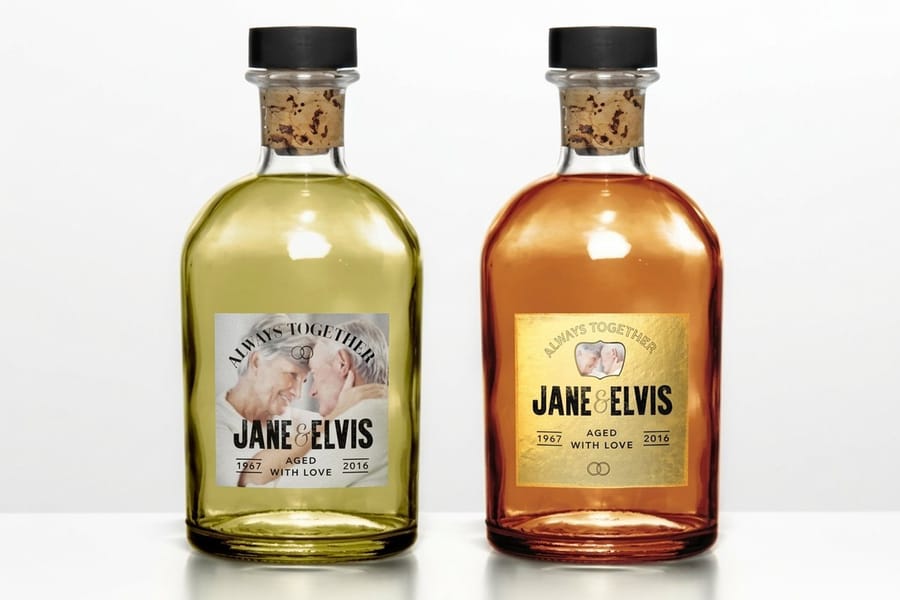
Sticker materials fall into four working families: paper for indoor and short-life labeling, vinyl for anything that gets wet or handled, clear film when you want the ink to look applied straight to the surface, and specialty stocks like brown kraft and holographic foil when the sticker has to be noticed. Choose by surface and lifespan rather than by finish. A paper sticker on a water bottle fails in a week, and a vinyl sticker on a mailer costs more than the mailer.
Quick answer
Match the stock to the surface, then to the lifespan
Paper is for indoors, vinyl is for wet and handled, clear is for glass, and specialty stocks are for standing out. Uncoated paper is the only face you can write on. Hi-gloss UV paper survives a wipe and nothing more. White vinyl and BOPP film take a wash cycle, a windshield and a laminate on top. Clear film shows the surface through the ink, which is why it sings on glass and disappears on black packaging. Adhesive, permanent or repositionable, is decided separately from all of it.
Why the Face Stock Decides Everything Else
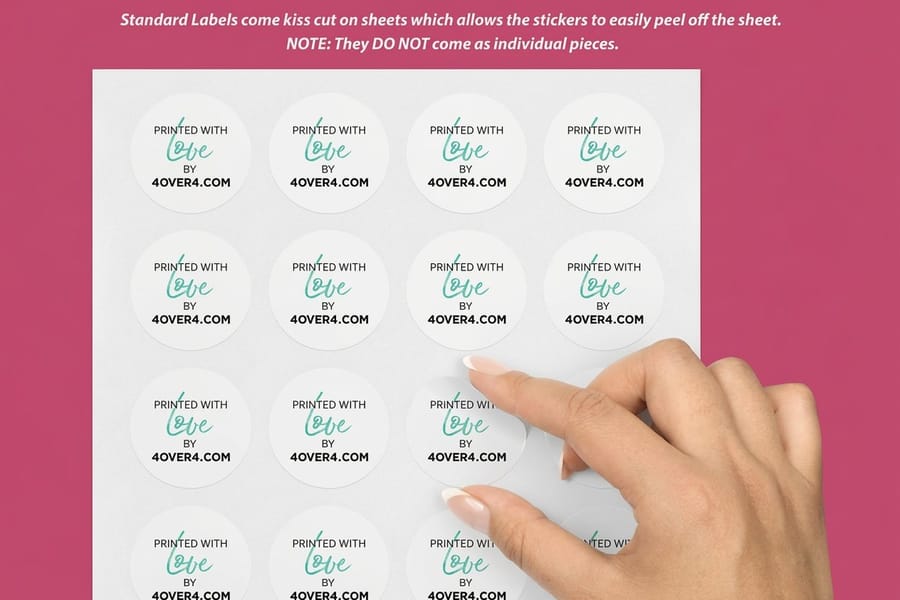
A sticker is three layers: the face stock you print on, the adhesive underneath, and the silicone liner it peels off. Buyers pick the finish, matte or gloss, and assume the material follows. It does not. The face stock is what decides whether the sticker survives a rinse, a summer on a windshield, or a pen.
The four families summarize quickly, before we take each one apart.
| Material family | What it is | Holds up to | Where it fails |
|---|---|---|---|
| Paper | Uncoated, semi-gloss, or hi-gloss UV coated label stock. | Indoor handling, shipping cartons, short-life labeling. | Water. Uncoated wicks in seconds, and even hi-gloss buckles in a sink. |
| Vinyl | A flexible plastic face, white or clear, permanent or repositionable. | Washing, scuffing, curved surfaces, outdoor weather. | Cost on throwaway jobs, and permanent vinyl can lift paint or paper when removed. |
| Clear film | Transparent face, so only the ink is visible on the surface. | Glass, light packaging, the no-label look. | Dark surfaces. Process ink is translucent and washes out over black. |
| Specialty | Brown kraft, fluorescent and pastel papers, static cling, metallic and BOPP film. | Shelf presence, seasonal windows, high-volume roll labeling. | Higher minimums and, on kraft, no white ink at all. |
Two things sit outside that table and get decided separately. Adhesive is the first: permanent or repositionable runs across our stock menu, and picking wrong is how a sticker either falls off a cooler or tears the cover off a book. Shape is the second, since any of these faces can be cut square, round, or to the outline of your art. Browse the full range on stickers printing, or read the head-to-head in vinyl stickers vs paper stickers.
Vinyl Stickers and Where They Win
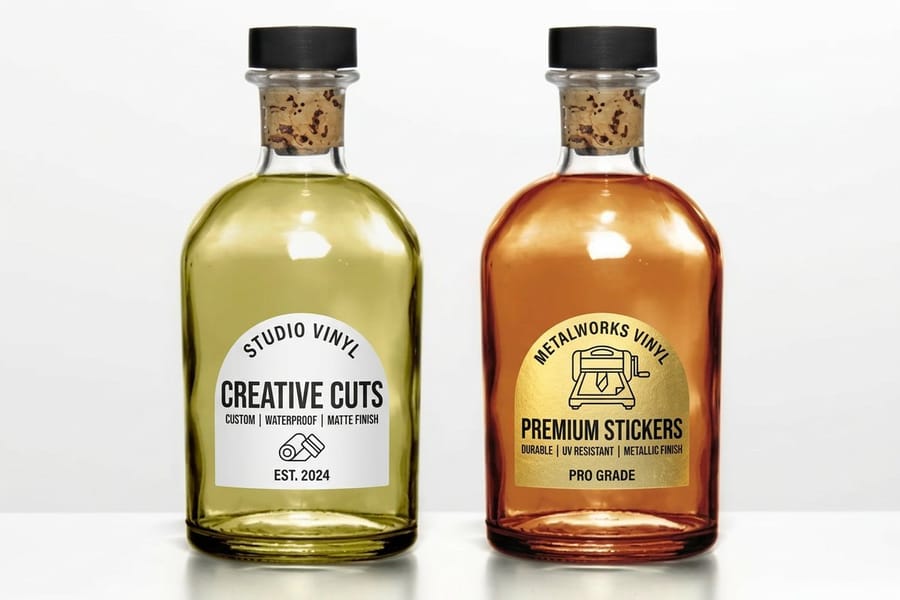
Vinyl is the answer whenever the sticker gets touched, washed, or left outside. The face is a thin flexible plastic rather than pressed fiber, so it bends around a curved bottle without creasing, it takes a fingernail without scuffing, and water beads off it instead of soaking in.
Vinyl Stickers start at $25 for a run of 25 and carry 23 materials on the same order form, including white and clear vinyl in permanent or repositionable adhesive, white and clear cling, brown kraft, and fluorescent and pastel stocks. Sizes run from a 2 by 3.5 inch label up to a 7 by 6 inch custom cut, which covers laptop lids, water bottles, jar wraps and shipping seals with one product.
The trade-off is real, though. Vinyl costs more per piece than paper, and on a single-use job the extra buys you nothing: a shipping label read once and binned does not need to be waterproof. Permanent vinyl is also aggressive on the wrong surface, and it will lift latex paint off drywall or the printed layer off a paperback cover. When the sticker has to come off cleanly later, name repositionable at order time rather than hoping.
One more distinction worth knowing: vinyl and BOPP are not the same plastic. BOPP is stiffer and thinner, which is why it dominates roll labeling on machines, while cast and calendered vinyl stretches better around a compound curve. We break that apart in BOPP vs vinyl stickers explained.
Paper and Kraft Stickers, and the One Thing They Do Better
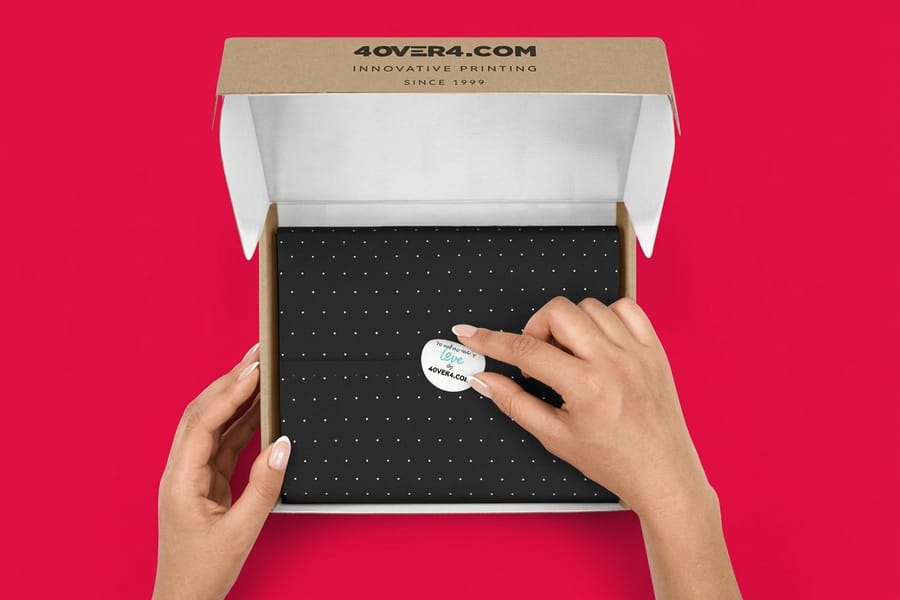
Paper labels get dismissed as the cheap option, which misses the reason to choose them. Uncoated stock is the only sticker material you can write on. Ballpoint, marker and rubber stamp all take on an uncoated face because nothing seals the surface, so any workflow that prints a batch and then adds a date, a weight or a name by hand needs uncoated specifically.
Standard Stickers start at $23.88 per set of 25 and offer 53 sizes, from a 0.375 by 1 inch rectangle up to a 4.625 inch CD label, across 5 materials: Standard Uncoated, Semi-Gloss, Hi-Gloss, White Vinyl and Clear. Semi-gloss sits in the middle, holding color better than uncoated while still taking a stamp reasonably. Hi-gloss UV is where paper stops being writable and starts resisting a damp cloth, which is enough for a jar in a kitchen cabinet and nowhere near enough for a fridge shelf.
Brown kraft belongs in the same conversation because it behaves like uncoated paper with a different look. It reads as handmade and small-batch, and it appears on the material lists for Premium Stickers and Vinyl Stickers alike. The catch is ink. The press lays cyan, magenta, yellow and black, and there is no white, so anything you designed as white comes out as bare brown board. Pale tints go muddy too. Design for kraft with bold dark art and let the stock be the light value, and it looks deliberate rather than washed out.
If you are choosing between the coated paper finishes on look rather than function, matte sticker paper explained and glossy sticker paper explained cover how each one photographs and handles.
Clear Film and Holographic Foil
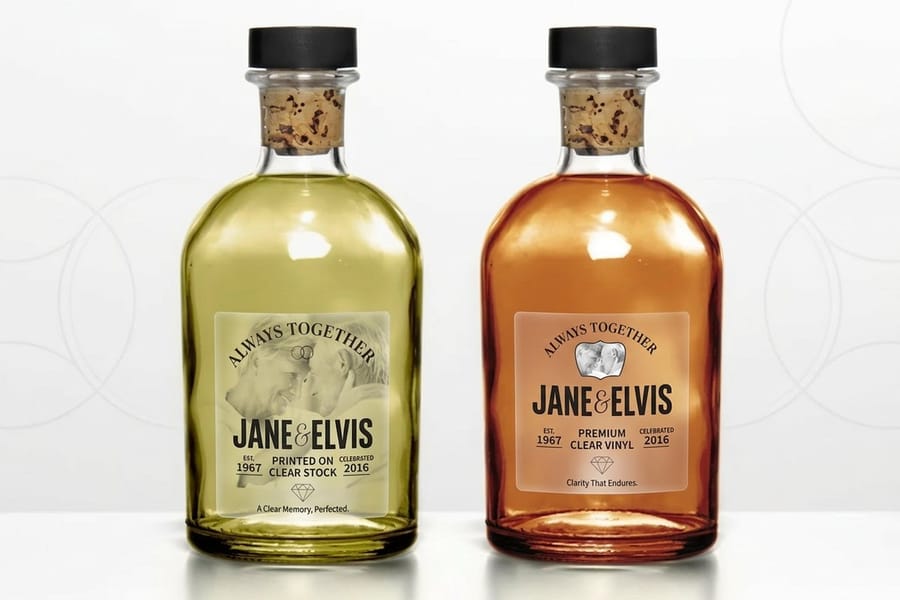
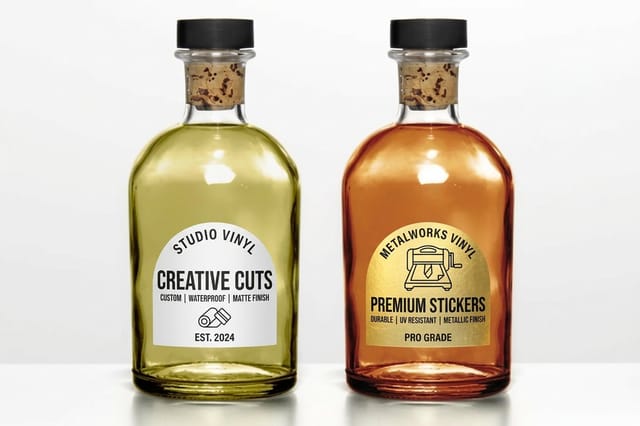
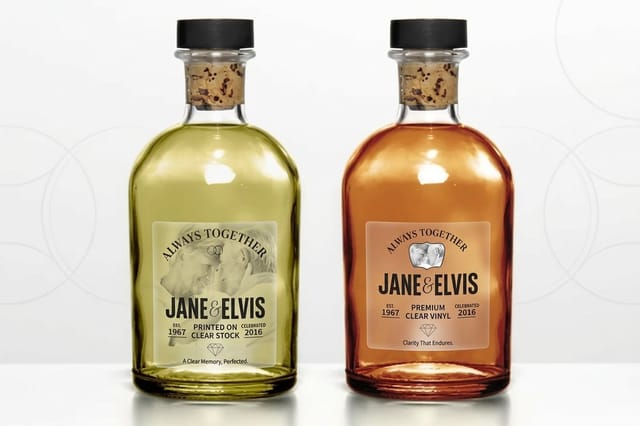
Clear stickers exist to remove the white rectangle. The art prints on transparent film, so a logo on a jar or a QR code on a shop window reads as if it were applied straight to the glass. Clear Stickers start at $25, run across 31 quantity tiers from a 25 piece minimum up to 25,000, and offer 23 materials including clear vinyl, clear label and clear cling, plus opaque options when you change your mind.
The limit is opacity. Process ink is translucent by design, which is exactly why it looks so good on glass and exactly why it fails on a black tin or a navy mailer box. Hold your art against the real surface before ordering. If the background is dark, white vinyl is the honest answer and it will look stronger than a clear label fighting for contrast.
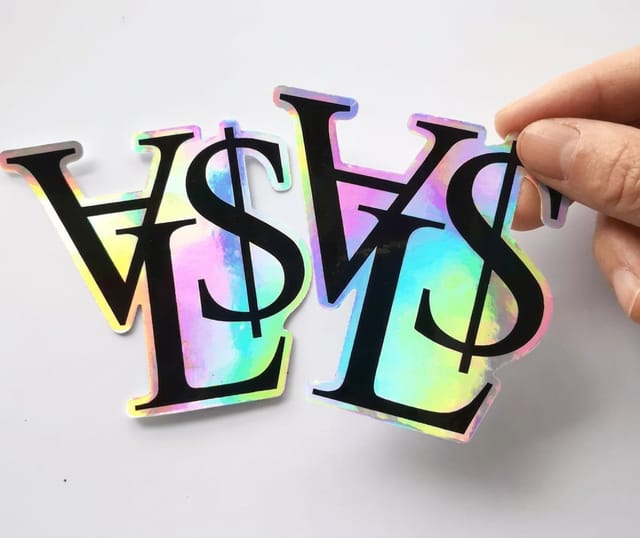
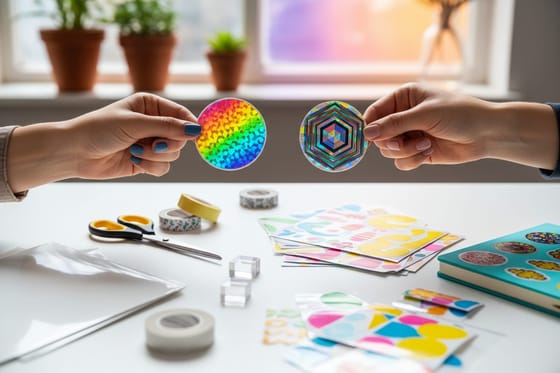
Holographic sits at the other end of the range: a bright metallic foil face that throws light back at anyone walking past a shelf. Custom Holographic Stickers start at $322.98 per 100 and offer 93 sizes, from a 1 inch square up to a 3 by 4 inch oval, on 4 materials: White Gloss for indoor use, White BOPP and Clear BOPP rated indoor and outdoor, and a Bright Shiny Silver Metallic Foil for the reflective effect. Gloss or matte silk lamination and an optional foil stamp sit on top.
Two things to plan around. The turnaround is 6 business days rather than the 3 that the paper and vinyl stickers run, and the order ships on a 3 inch core roll built for a labeling line or a steady hand-peel workflow. That makes holographic a production decision, not a way to sample an idea. If what you actually want is the depth-shifting image rather than the shine, read holographic vs lenticular stickers first, because they are different processes with different costs.
Indoor, Outdoor, and What Waterproof Actually Means
Waterproof describes the face stock, not the finished sticker. Vinyl and BOPP faces keep water out of the print. Water still finds the edge, and once it works under the adhesive it lifts a corner and the rest follows. That is why application matters as much as material: a clean dry surface, firm pressure from the center outward, and no stretching the film while you place it.
Sunlight is the second clock, and it runs separately from water. UV fades ink whatever the face is made of, and the brightest colors go first, so fluorescent stocks and heavy magentas lose their punch on a sunny window long before a black-and-white mark does. A gloss or matte laminate slows that down and adds scuff resistance at the same time, which is why outdoor work is usually specified as film plus laminate rather than film alone.
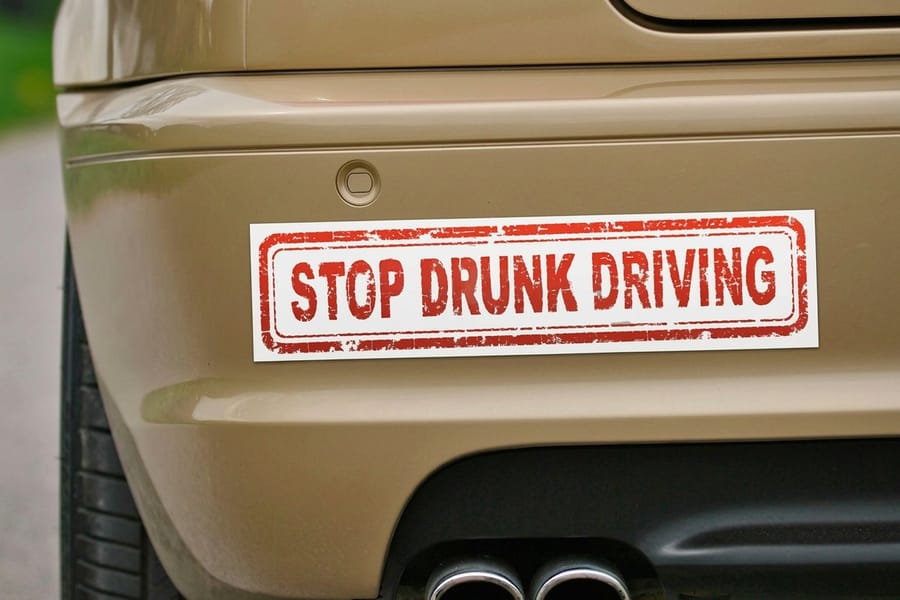
For the hardest outdoor case, the vehicle, use a product built for it. Bumper Stickers start at $38.44 on weatherproof stock designed for road spray, car washes and years of sun rather than an afternoon on a window. For the second hardest case, the reusable water bottle, expect the dishwasher to be the thing that kills it: repeated heat plus jets works the edges loose even on vinyl, so hand wash the bottle and keep the sticker out of the top rack.
Two more guides go deeper here: how to choose outdoor sticker materials that survive sun and rain for the specification, and how to seal and protect stickers on your water bottle for the application side.
Choosing and Printing Your Stickers
Work backwards from the surface and the lifespan, then pick the product. This is the matrix we use across the counter.
| The job | Material to ask for | Product | Starts at |
|---|---|---|---|
| Water bottle, laptop, cooler | White vinyl, permanent adhesive | Vinyl Stickers | $25 per 25 |
| Glass jar or window, no white box | Clear vinyl or clear label | Clear Stickers | $25 per 25 |
| Indoor label you write on | Standard Uncoated | Standard Stickers | $23.88 per 25 |
| Shelf seal that has to catch light | Metallic foil or BOPP, laminated | Custom Holographic Stickers | $322.98 per 100 |
| Logo cut to its own outline | Paper or vinyl, any shape | Die-Cut Stickers | $93.37 per 25 |
| Car, years of weather | Weatherproof vinyl | Bumper Stickers | $38.44 |
Once the material is settled, the file is straightforward. Build the art at the finished size, keep type and logos away from the trim edge, and remember that a die-cut outline needs a shape with enough weight to cut cleanly, so a hairline tendril on a leaf will not survive the blade. Start from a correctly sized layout in the blank template library rather than guessing at dimensions.
Order a proof if the color has to match a brand. Clear Stickers include a free online proof, and Premium Stickers offer either a free online proof or a next-day hardcopy, which is the one to choose when a printed sample in your hand is the only thing that settles an argument. Turnaround follows the material: 3 business days on standard, premium, vinyl and clear, 5 on die-cut, 6 on holographic.
If budget is the constraint rather than the surface, price drops fast with quantity across every one of these stocks, and how much custom stickers cost walks through the tiers. For bottles, food and shipping work where a roll beats a sheet, cross over to labels printing instead.
Wally explains sticker materials
Same artwork, four different faces, four different lifespans

Wally prints one logo on four stocks and puts them to work. The uncoated paper one takes his pen and dies in the sink. The hi-gloss paper one survives a wipe. The white vinyl one goes on the water bottle and stays there. The clear one goes on the jar and looks painted on, until he tries it on a black tin and it vanishes. Pick the face for the surface, then pick permanent or repositionable adhesive to decide how it comes off.
Order vinyl stickers →Specs and pricing
Sticker materials, sizes, and starting prices
Compare the stock menus side by side, with live configuration choices and starting prices straight from the 4OVER4.COM configurator.
Print it
Order the stock the job actually needs
Explore more
Where to go next

By the numbers
Paper, vinyl, clear and holographic sticker stocks
Common Questions
Your sticker material questions, answered
What are the main types of sticker material?
Four families do the real work. Paper stocks come uncoated, semi-gloss and hi-gloss UV, and they are the cheapest way to label something indoors. Vinyl comes white or clear, permanent or repositionable, and it handles water, scuffing and outdoor life. Clear film prints the ink and nothing else, so the art looks applied straight to the glass or jar. Specialty stocks cover brown kraft, fluorescent and pastel papers, static cling for windows, and metallic or BOPP films for holographic work. Standard Stickers alone carry 5 materials, while Premium Stickers and Vinyl Stickers each offer 23.
Which sticker material is actually waterproof?
White vinyl, clear vinyl and BOPP film. Those are plastic faces, so water sits on the surface instead of soaking in, and the ink stays put through a rinse or a rain shower. Paper is not waterproof at any coating level. A hi-gloss UV paper label survives a wipe with a damp cloth and then buckles in a sink. Note that a waterproof face does not make a waterproof sticker: water still creeps under the edge of a poorly applied label, which is why a laminate and a firm, dry application matter as much as the stock.
Vinyl or paper stickers, which should I order?
Ask how long it has to last and what touches it. If the sticker goes on a mailer, a jar in a kitchen cabinet, or a folder that gets filed once, paper is the right call and costs less, with Standard Stickers from $23.88 per set of 25. If it goes on a water bottle, a laptop lid, a cooler, a car, or anything that gets wiped down, vinyl earns its price, with Vinyl Stickers from $25. Paying vinyl money for a single-use mailer label is the most common overspend we see.
Do clear stickers work on dark surfaces?
Not well without help. Four-color process ink is translucent, so on a black bottle or a navy box a clear sticker fades into the background and the art loses its punch. Clear works on glass, on light packaging, on a windshield, and anywhere you want the no-label look. On a dark surface, order white vinyl instead, or ask about a white underprint layer that gives the color something opaque to sit on.
Can I write on a printed sticker?
Only on the uncoated stock. Standard Uncoated takes a ballpoint, a marker or a rubber stamp because there is no coating sealing the surface. Semi-gloss holds pencil badly and pen unevenly. Hi-gloss UV, vinyl and BOPP all reject ink, so anything you write beads up or smears. If the workflow is print a batch, then hand-write a date, a batch number or a name, specify uncoated at order time.
How long does a sticker order take to print?
Standard, Premium, Vinyl and Clear Stickers all run a 3 business day standard turnaround, with 2-day, next-day and same-day rush available. Die-Cut Stickers take 5 business days standard because the cutting die is part of the job. Custom Holographic Stickers run 6 business days and ship on a roll. Plan the rush options around the material rather than assuming every sticker moves at the same speed.
Get Started
Standard stickers run 25 for $23.88, holographic 100 for $322.98
Pick the face stock, choose permanent or repositionable adhesive, and we print full color on paper, vinyl, clear film or metallic foil with a 3 business day standard turnaround.
Legal Disclaimer
Gold Standard guarantees apply to all standard orders placed through 4over4.com. Price match requires verifiable proof of a competitor's published price for an equivalent product with matching specifications and turnaround time. Satisfaction guarantee covers manufacturing defects and print quality issues. Contact support with order number and documentation. On-time delivery rate based on tracked orders 1999 to 2026. Individual results may vary based on shipping carrier performance.
