
The Eisenhower Matrix Blueprint That Sorts Urgent Work From Important Work


Four boxes, two questions, one verb each. The grid is built a specific way, it runs differently in a real week, and it stops working in three places.
The Eisenhower matrix sorts every task on two separate questions: is it urgent, meaning a deadline is pressing on it now, and is it important, meaning it moves a goal you chose. Urgent and important gets done today. Important but not urgent gets a booked calendar block. Urgent but not important gets handed to a named person. Neither gets deleted. The value is not in the sorting, it is in what the size of each box tells you about the week you just had.

Quick answer
Urgency comes from outside you, importance comes from your goals
Sort on two questions and act on the box you land in. Urgent means a clock you did not set is already running. Important means the task moves something you decided mattered. Urgent and important gets done now, important and not urgent gets a booked block, urgent and not important gets a named owner, and the rest gets deleted. The grid is a diagnostic as much as a to do list: a week that is mostly quadrant one is a week paying for planning that never happened.
The Two Questions That Build the Grid

Everything in the matrix depends on keeping urgency and importance apart, and they collapse into each other the moment you stop asking them separately.
Urgent means a clock is running that you did not set. A print deadline, a customer holding on the line, a mailing that drops Friday or not at all. Urgency arrives from outside and it makes noise.
Important means the task moves something you decided mattered. Fixing your pricing. Writing the process down so the next person can run it. Calling the ten customers who bought once and never came back. None of that has a deadline, which is precisely why it keeps sliding.
Run both questions on a task and you land in one of four boxes, each with its own verb.
| Quadrant | What it looks like | The verb | How it goes wrong |
|---|---|---|---|
| Q1 urgent and important | A deadline today, a customer escalation, a job that has to reprint before the event. | Do it now. | You live here permanently and call it being busy. |
| Q2 important, not urgent | Pricing, planning, hiring, systems, the follow up nobody chased. | Book a block for it. | The block is the first thing canceled when Q1 shouts. |
| Q3 urgent, not important | Most of the inbox, status meetings, requests that are someone else's deadline. | Hand it to a named person. | There is no named person, so it silently becomes Q1. |
| Q4 neither | A fifth logo round, reformatting a deck, checking what a competitor posted. | Delete it. | It feels productive, so it never gets deleted. |
Read the last column before the others. Each quadrant has one characteristic failure, and naming it is more useful than memorising the definitions. If you want a second framework that pairs with this one, the simplified SWOT analysis guide covers the grid people reach for when the question is strategic rather than daily.
Running the Blueprint in a Real Week

The matrix fails more often from bad mechanics than from bad thinking. One version survives a normal week.
- Dump first, sort second. Write down everything, including the small annoyances, before you judge any of it. Sorting while you remember produces a list biased toward whatever you thought of last.
- Ask urgent before important. Urgency is a fact you can check against a date. Importance is a judgement. Settle the fact first so the judgement is not doing all the work.
- Cap quadrant one. Decide how many crises you will personally absorb this week. Anything above the cap is a scheduling problem, not a heroism problem.
- Book quadrant two in the calendar, with a start time. Not "sometime Thursday". Thursday at nine, for ninety minutes, with the door shut.
- Name a person for every quadrant three item. If you cannot name one, the task is not delegated. Batch it or drop it.
- Say quadrant four out loud. Deleting a task silently feels like failure. Saying "we are not doing this" makes it a decision.
- Review the same grid next week. Anything that has moved quadrant twice is either badly defined or not yours.
Where it happens matters more than people expect. A grid inside an app is private, and a private grid never gets argued with. A grid on the wall gets seen by everyone who walks past it, which is the point when more than one person is involved. Dry erase posters start at $29 and take a marker, so the quadrants can be rewritten every Monday instead of being reprinted. For the capture step, standard notepads start at $93.37 and beat a phone for a brain dump, because writing by hand is slower and slower is what stops you editing while you list. If a fixed printed grid suits you better than a rewritable one, standard posters start at $108.75 and hold a permanent version of the four boxes with your own labels in them.
Both formats live in our notepad printing range and poster printing range, and either one is cheaper than the week you lose to a grid nobody can see.
Quadrant Two Is the Only One That Changes the Others
Most explanations of the matrix skip that part. Three of the quadrants only move work around. One of them changes how much work arrives.
Quadrant one shrinks when quadrant two grows, and by nothing else. The reprint that had to happen overnight was a file check that never got booked. The customer escalation was a follow up call three weeks earlier. The scramble to get an event banner produced on Thursday was a production schedule nobody wrote in January. Every one of those was a quadrant two task before it was a quadrant one fire, and it cost less in that form.
That is also why quadrant two is the hardest to protect. It has no deadline, so it loses every direct argument. The only defense that works in practice is treating the block as though it came from a customer: it has a start time, it is in the calendar, and moving it takes the same effort as moving a client meeting. If the block gets canceled twice in a row, that is worth noticing on its own. Two cancellations in a row means the cap on quadrant one is set too high.
Financial planning is the clearest example of the pattern, because the delay is measurable. Our cash flow system guide walks through the version of this that turns into an emergency about eleven months after you postpone it, and the small business marketing plan guide covers the other one, where a quiet quarter is the bill for the plan you did not write.
Where the Matrix Breaks, and What to Use Instead

The matrix is a sorting tool, and it is honest to say where sorting stops being enough.
It ranks nothing inside a quadrant. Six quadrant one tasks are still six tasks in a day that holds four. Once you have the pile, you still sequence it, and the two useful tiebreakers are the hard deadline and who is blocked waiting on you.
It ignores effort entirely. A quadrant two task that takes twenty minutes and a quadrant two task that takes three days sit in the same box and get treated the same. In a week with one free hour, that box is unusable without a size estimate written next to each item.
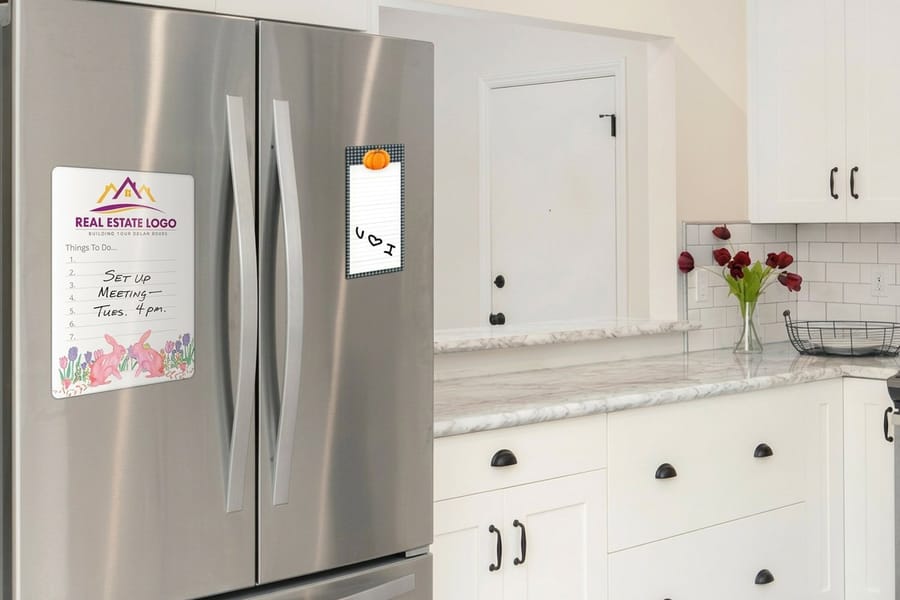
Everything you own feels important. This is the failure that ruins team use. If each person sorts alone, every list comes back mostly quadrant one, because importance is being judged by the person who is paid to care about it. Sorting has to happen together, on a shared surface, and the argument about placement is the actual work. A wall grid or a dry erase magnet at $33.99 on a filing cabinet does what a private app cannot, which is force one version of the truth.
Delete is political. Quadrant four is easy alone and hard with other people, because someone asked for that task. The workable phrasing is "not this quarter", with a date, rather than a flat no.
It says nothing about energy. A quadrant two block at four in the afternoon on a Friday is a block in name only. Match the hard thinking to the hours you actually think in, and give the shallow quadrant three batch the hour you were going to waste anyway. If you want the day level version of this, the planner guide covers laying the week out, and perpetual planners handle the recurring work that never lines up with a calendar year. More frameworks like this one sit in our business applications guides.
Wally explains the four boxes
Two questions, four verbs, one box that matters most
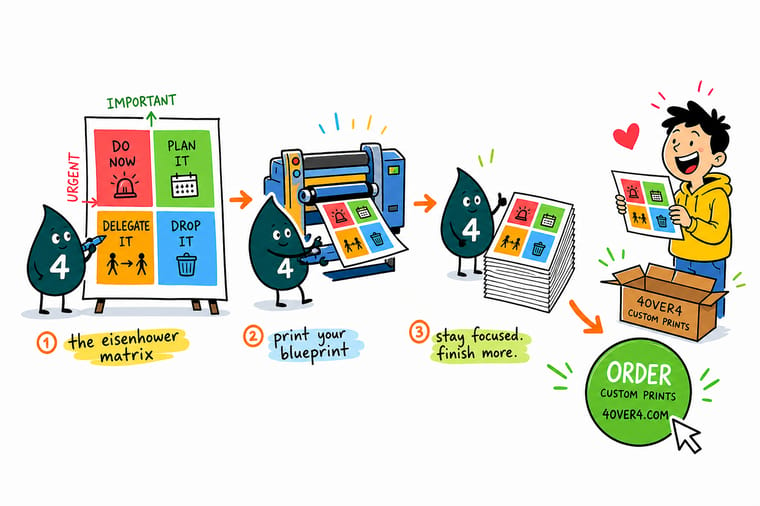
Wally asks two things about every task. Is a clock running that somebody else started, and does this move a goal he actually chose. Both yes, he does it today. Important but no clock, he books it, with a start time, like a customer meeting. Clock but not his goal, he hands it to a name, not to a pile. Neither, he says it out loud and deletes it. Then he checks the size of the first box, because a wall of emergencies is the receipt for the planning block he canceled last Thursday.
Print a dry erase priority grid →Specs and pricing
Surfaces that hold a grid, sizes and starting prices
A matrix everyone can see beats a matrix in one person’s app. Compare the wall and desk formats side by side, with live configuration choices and starting prices from the 4OVER4.COM configurator.



Print it
Put the four boxes somewhere people walk past



Explore more
Where to go next





By the numbers
Printing you can plan around at 4OVER4
Common Questions
Your Eisenhower matrix questions, answered
What is the Eisenhower matrix?
It is a two by two grid that sorts tasks by two independent questions: is this urgent, and is this important. Urgent work has a deadline pressing on it now. Important work moves a goal you actually chose. The four boxes get four different verbs. Urgent and important gets done now. Important but not urgent gets a scheduled block. Urgent but not important gets handed to someone else. Neither gets deleted. The name comes from a distinction Dwight Eisenhower drew between the urgent and the important, which Stephen Covey later turned into the grid people draw today.
What is the real difference between urgent and important?
Urgency is about time and it comes from outside you. A supplier deadline, a mailing date, a customer waiting on the phone. Importance is about consequence and it comes from the goals you set. Rewriting your pricing is important on Monday and still important in March, and it never becomes urgent until you have lost money on three jobs. That asymmetry is the whole problem the matrix exists to solve: urgency announces itself, importance stays quiet, so a day run on feel is a day run entirely on urgency.
Which quadrant should most of my week sit in?
Quadrant two, and it will not feel that way at first. A healthy week has real quadrant one work in it, because deadlines are part of running anything, but if quadrant one is most of the week you are firefighting rather than operating. There is no correct percentage to quote. The useful test is comparing two weeks: if the same category of emergency keeps reappearing in Q1, the Q2 work that would have prevented it is the thing that never got booked.
What do I do with quadrant three if I have nobody to delegate to?
Treat it as batching rather than delegating. Solo operators cannot hand work off, so the practical version is to give Q3 a fixed container: one window a day for the inbox, one afternoon a week for admin, and nothing outside it. The second option is to automate or template the repeat offenders, because most Q3 work is the same three requests arriving in different words. The third option, which people skip, is to say no. A task that is urgent for someone else and unimportant to you is a negotiation, not an obligation.
How often should I redo the matrix?
Sort weekly, act daily. A weekly pass over everything on your list is long enough to see patterns and short enough that nothing rots, and it is when you notice that a Q2 block got canceled twice. Daily, you are not re-sorting, you are pulling from the piles the weekly sort already made. Re-sorting every morning turns the matrix into the procrastination it was meant to cure.
Does the Eisenhower matrix work for a team?
Yes, with one change: importance has to be agreed out loud before anyone sorts. Everything a person owns feels important to that person, so a team matrix built privately produces four quadrant one lists and no agreement. Do the sort together on a wall where everyone can see the whole grid, and argue about placement rather than about workload. Dry erase posters start at $29 for exactly this, because the grid has to be rewritable to survive contact with a real week.
Get Started
A 25 pad run costs $93.37, or $3.73 a pad
Pick a size, choose a rewritable dry erase surface or a fixed printed grid, and we ship a matrix the whole team can argue with on Monday morning.
Legal Disclaimer
Gold Standard guarantees apply to all standard orders placed through 4over4.com. Price match requires verifiable proof of a competitor's published price for an equivalent product with matching specifications and turnaround time. Satisfaction guarantee covers manufacturing defects and print quality issues. Contact support with order number and documentation. On-time delivery rate based on tracked orders 1999 to 2026. Individual results may vary based on shipping carrier performance.
