
Pop Up Signage Explained for Trade Shows, Storefronts and Events


Four families of portable sign, three mechanisms underneath them, and real starting prices for each. Your booth, your aisle and your car each rule out some of them.
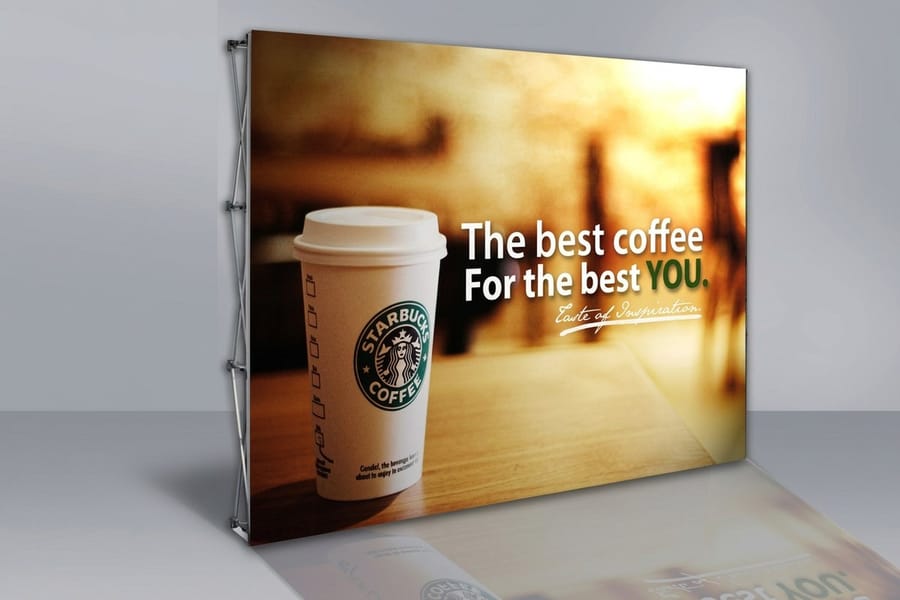
Pop up signage is any sign that deploys from a case without tools, and it uses one of three mechanisms: a spring roller inside a retractable base, a folding scissor lattice behind a pop up wall, and a tension or SEG frame with a printed skin stretched over it. Retractable banner stands start at $139 and carry one message. Pop up displays start at $752.39 and cover a whole 10 foot booth wall. Everything portable is indoor hardware unless it is a flag on a spike.
Quick answer
Pick the mechanism first, then the graphic
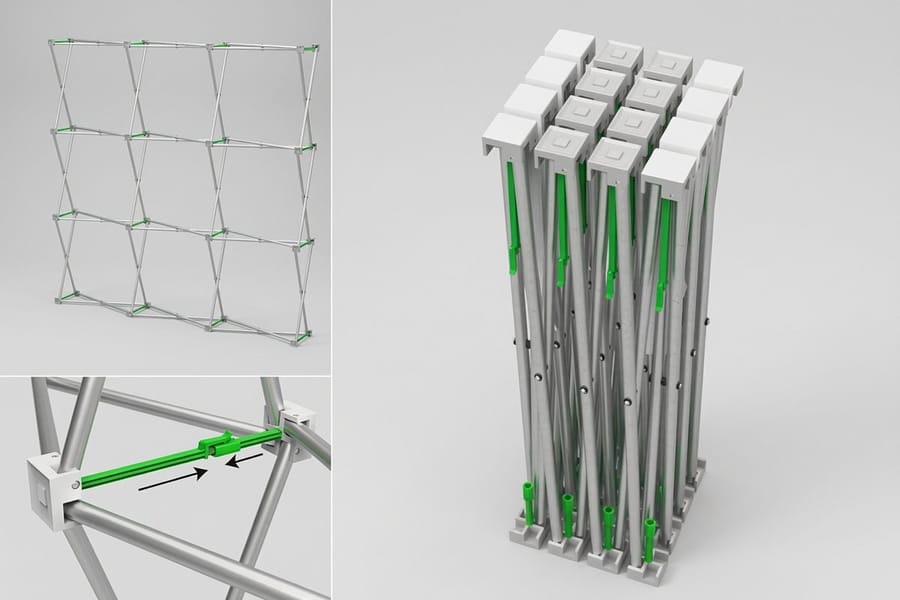
Every portable sign is one of three machines wearing a different print. A spring roller winds the graphic into its own base, so a retractable packs itself in seconds and holds one message. A scissor lattice folds with the fabric still attached, which is how a pop up wall fills a 10 foot booth back and still fits a wheeled case. A tension or SEG frame stretches a printed skin over poles or pushes a silicone bead into an aluminum channel, giving the flattest face of the three and the slowest teardown. Decide which of those you need, and the size, the substrate and the price follow.
What Actually Counts as Pop Up Signage
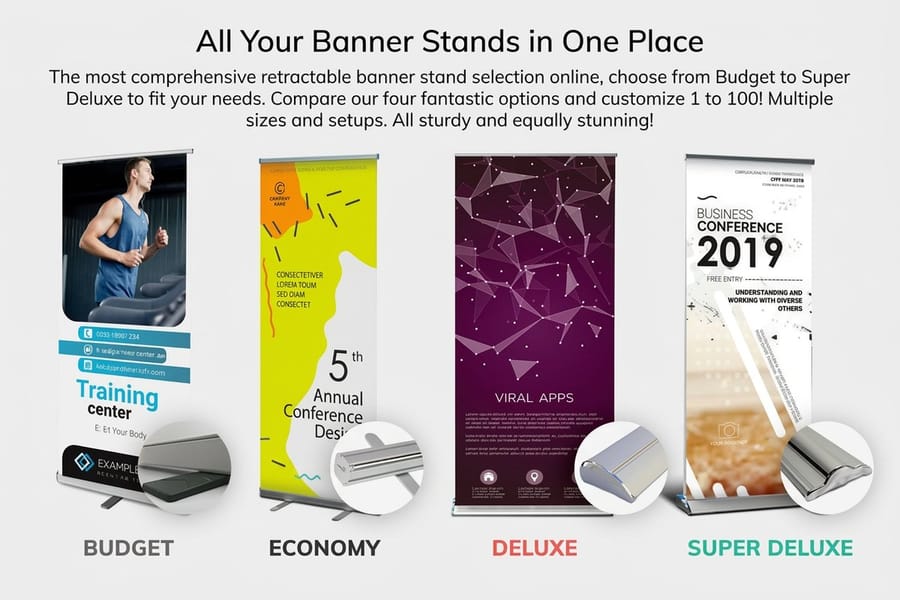
The phrase covers portable signs that deploy from a case without tools, and in practice that means four families. Knowing which one you are shopping for saves a lot of scrolling.
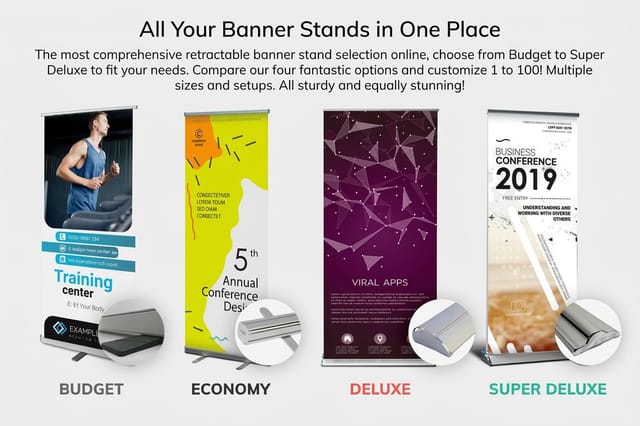
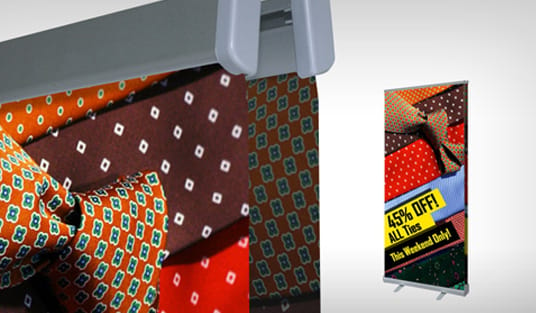
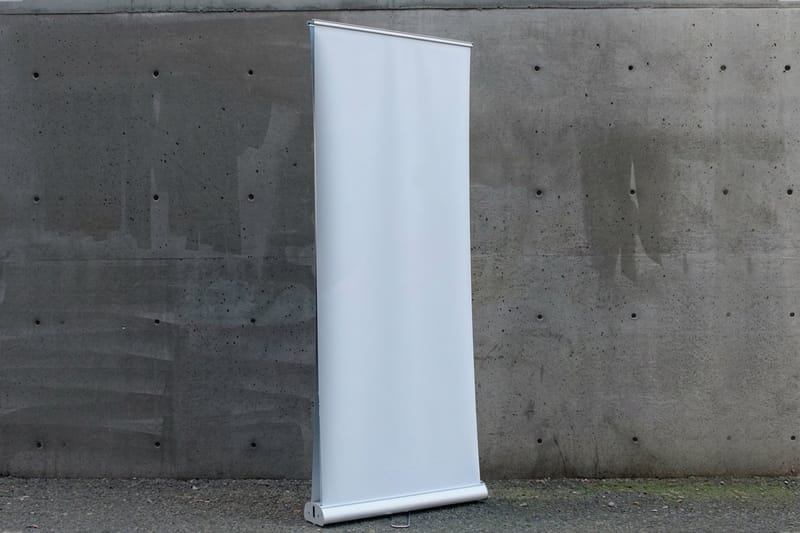
Retractable stands. One pole, one graphic, one message. The graphic winds onto a spring loaded roller inside the base, so it packs itself. Retractable banner stands start at $139 and mini retractable stands for a counter or a table start at $49.41.
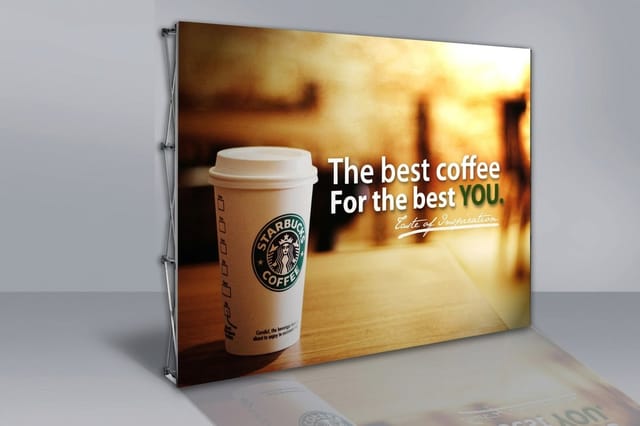
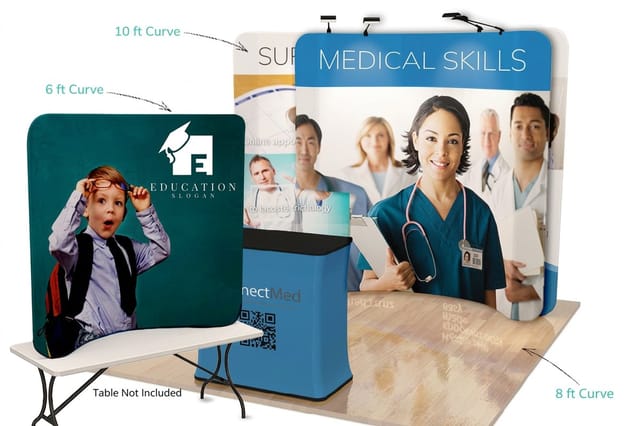
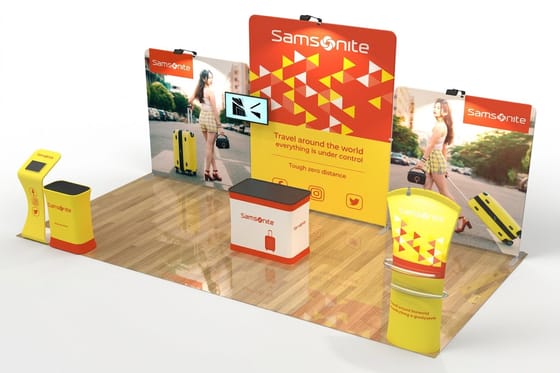
Pop up walls. A folding scissor frame that opens to a full booth back wall. Pop up displays start at $752.39, and curve tube displays at $548.09 do the same job with a shallow curve that reads better from an angle.
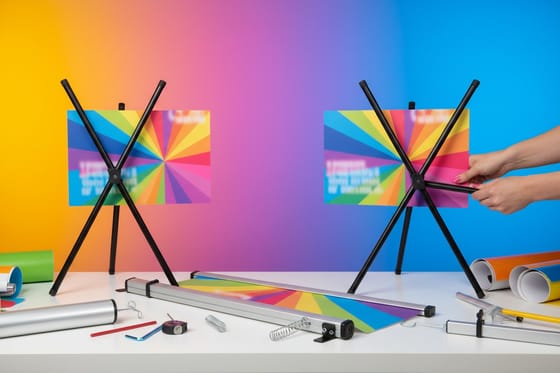
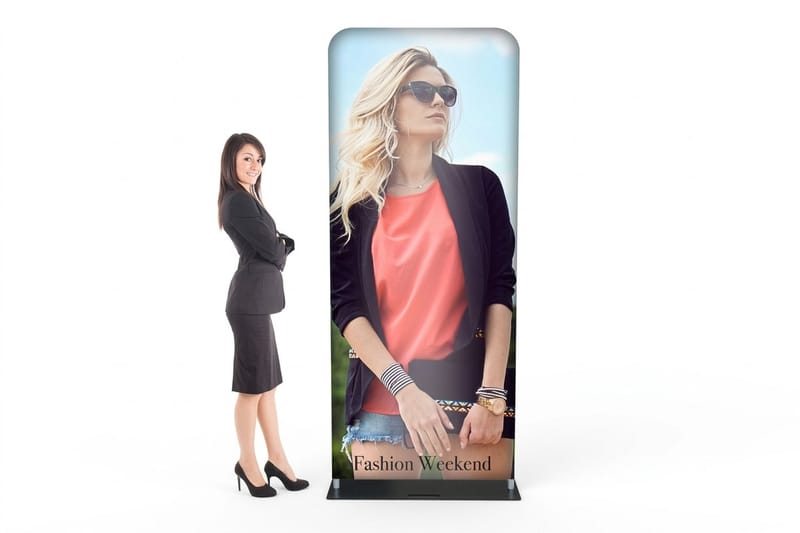
Tension fabric and SEG. A pole frame with a printed skin stretched over it, or an aluminum extrusion with a silicone edged graphic pushed into a groove. SEG displays start at $229.00 and give the flattest face of anything portable, with no visible joint.
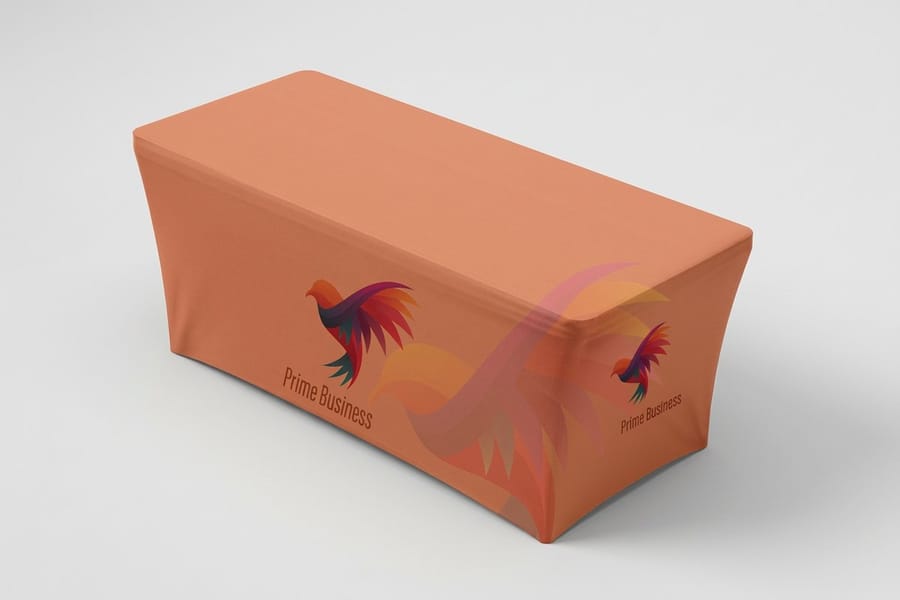
Everything that dresses the booth. Stretch table covers from $250.00, feather flags from $108.75, and step and repeat banner stands from $192.22 for the photo wall. These are not the main sign, but a booth with a bare folding table undoes whatever the main sign achieved.
The Three Mechanisms, and Why the Teardown Differs
Setup gets all the attention in product copy. Teardown is what you remember at 6pm on the last day of the show, and the mechanism decides it.
| Mechanism | How it deploys | Teardown | Buy it when |
|---|---|---|---|
| Spring roller | Pull the graphic up out of the cassette and hook it on a three piece pole. | Unhook and let it wind itself back in. Ten seconds, one person. | You need one message beside a desk, a stage or an aisle, and you move it often. |
| Scissor lattice | Pull the frame open, clip on the magnetic bars, hang the fabric panels. | Folds with the graphic still attached, which is the whole point. Two people. | You want a continuous back wall and you rebuild the same booth all season. |
| Tension tube | Snap numbered poles together and pull a printed sleeve over the frame like a sock. | Peel the sleeve off, break the poles down, everything goes in one bag. | You fly to shows. This is the lightest way to fill a wall. |
| SEG channel | Build the extruded frame, then push a silicone bead into the groove around all four edges. | The slowest. The bead comes out by hand, edge by edge, before the frame folds. | The face has to be dead flat with no visible seam, often backlit. |
The pattern is consistent: the faster something goes up, the smaller it is. Nothing gives you a 10 foot wall in ten seconds. If you are choosing between a stand and a wall on speed alone, read the advantages of pop up displays next, and the retractable setup walkthrough for the pole order that stops people tearing a graphic on the first build.
Sizing It to the Booth, the Aisle and the Car
Three measurements decide the format, and only one of them is the sign.
The booth opening. A 10 by 10 booth gives you about 10 feet of back wall behind an 8 foot drape. A pop up wall or a tube display is built to fill that, which is why buying two retractables to cover the same width always looks like a compromise: you get a gap, two poles and two bases in the middle of your brand.
Eye height. On a 79 inch retractable, everything below roughly 40 inches is blocked by whoever is standing at your table. Put the logo and the one line that matters in the top third and treat the bottom as decoration. The same rule kills most designs that were laid out as a poster and scaled up.
The trunk. A retractable travels as a single 35 inch bag that fits across a back seat. A pop up wall travels in a wheeled hard case that a single person can move but not carry upstairs. If your events are a sedan and a parking garage away, the hardware you can actually handle beats the hardware that looks best in the render. The five common retractable sizes covers where each width earns its place.
Build artwork at full size from a correctly set up file. Start from the blank template library rather than guessing a bleed, and keep live text inside the safe area, because the bottom few inches of a retractable graphic disappear into the cassette.
Vinyl, Fabric and What Each One Does After Six Months

The substrate matters more than the hardware for how the sign looks on its tenth outing.
Vinyl is stiff, opaque and cheap, and it hangs perfectly straight the day it arrives. It also remembers. Roll it tight for a year and it keeps a curl at the leading edge, and a hard fold leaves a white crease line in the ink that never comes out. Vinyl is right for a stand that lives in one lobby.
Dye sublimated fabric takes the ink into the fiber, so the color cannot scratch off and the graphic can be folded, stuffed in a case and shaken out at the other end. It has a slight matte texture, which kills glare under the hard spotlights every exhibition hall uses, and it is the reason retractable fabric banner stands at $159.85 cost more than the vinyl version at $139.
Knitted polyester is the outdoor answer. It is open enough that wind passes through, which is why feather flags survive a car park and a retractable does not.
Table dressing follows the same logic. A stretch cover grips the table and stays taut all day, a loose polyester throw wrinkles by lunchtime, and the difference is set out in the table cover comparison. Browse the full range in table covers printing.
Putting a Booth Together Without Buying Everything
A first booth does not need a full wall. It needs the back covered, the table dressed and something readable from down the aisle.
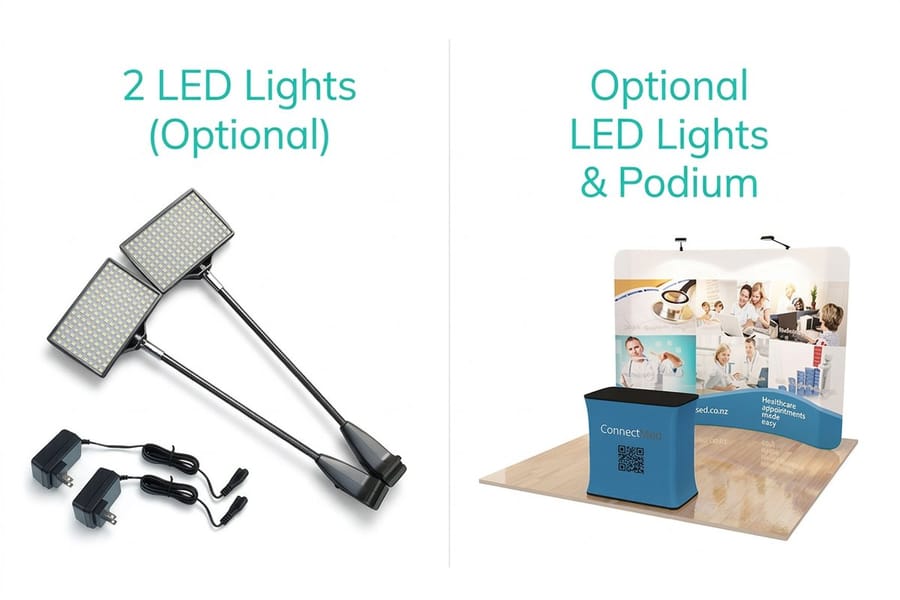
The cheapest arrangement that still looks deliberate is a pair of matched retractables flanking a dressed table, with the aisle handled by a flag or a hanging sign. That runs a few hundred dollars in hardware and can be reprinted for the next campaign. The upgrade path is to replace the two stands with one pop up display or a curve tube display once you know you will exhibit more than twice a year, and to keep the stands for the registration desk and the stage.
Add a photo wall only if someone will actually photograph in front of it. A step and repeat backdrop earns its space at launches and award nights and sits idle at a trade fair. For the running order of what to pack, the booth design guide and a first show case study are worth ten minutes before you spend the budget.
Order the hardware and the print together where you can. Frames and graphics that ship as one order arrive matched, and you avoid the classic problem of a 33 inch graphic turning up for a 24 inch base. Everything in this guide sits in displays printing, banner stands and the banners collection.
Wally explains pop up signage
One roller, one lattice, one stretched skin
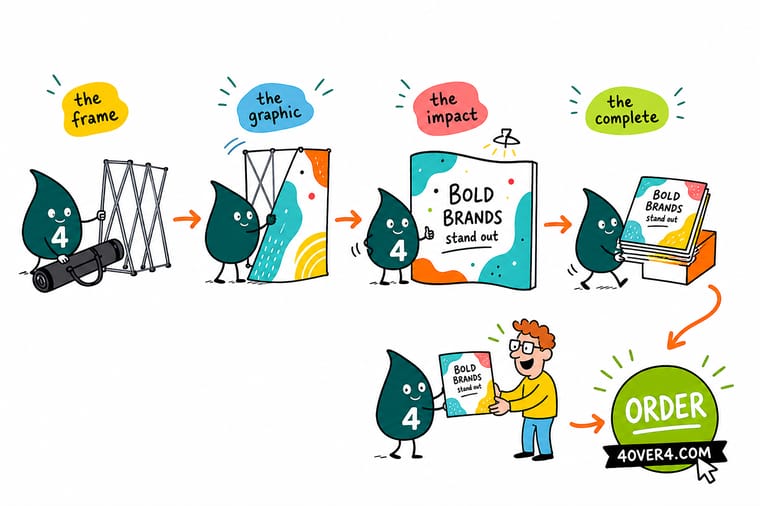
Wally lifts the graphic out of the cassette, hooks the pole, and the retractable is standing before the coffee gets cold. Then he opens the scissor frame behind it, and the whole back wall arrives with the fabric already on. The SEG panel is the fussy one: the silicone bead has to be pushed into the channel all the way round, and pulled back out again at the end of the show. Wally keeps all three indoors. The moment there is wind, he swaps to a flag on a spike.
Order a pop up display →Specs and pricing
Stand, wall and SEG side by side
Sizes, hardware options and starting prices pulled live from the 4OVER4.COM configurator, so you can compare a single stand against a full back wall before you commit the budget.


Print it
Order signage that packs itself away
Explore more
Where to go next
By the numbers
Portable display orders, and the delivery record they ship against
Common Questions
Your pop up signage questions, answered
What is pop up signage?
Pop up signage is any portable sign that deploys from a packed case without tools. Three mechanisms cover almost all of it. A retractable banner stand pulls a graphic off a spring loaded roller hidden in the base. A pop up display opens a scissor lattice frame and holds fabric panels on with magnetic bars. A tension tube or SEG display snaps a pole frame together and stretches a printed skin over it. All three ship in a padded bag or a hard case, go up without a technician, and come down for the next event.
How much does pop up signage cost?
At 4OVER4.COM a retractable banner stand starts at $139 and a mini retractable for a counter or table starts at $49.41. Fabric retractables start at $159.85. SEG displays start at $229.00. The full booth pieces are a different tier: curve tube displays start at $548.09, straight tube displays at $635.96, and pop up displays at $752.39. The price is driven by frame hardware and print area, not by the artwork, so a simple design on a big wall costs the same as a busy one.
What size is a standard pop up banner?
The standard retractable is 33 inches wide by about 79 inches of visible graphic, which is the size most events assume when they sell you a corner of the booth. Narrower 24 inch and wider 47 inch stands exist for tight aisles and hero graphics. A pop up back wall is sized to the booth instead: a 10 by 10 booth gives you roughly 10 feet of back wall with an 8 foot drape behind it, and the display is built to fill that opening.
Can you use pop up signage outdoors?
Retractable stands and pop up walls are indoor hardware. The base of a retractable is narrow by design so it does not trip people, and that same narrow base is what makes it fall over the moment wind catches 18 square feet of graphic. If the sign lives outside, use a feather flag with a ground spike or a weighted cross base, and print the flag on knitted polyester so the wind passes through instead of pushing on it.
How long does a pop up display take to set up?
A retractable stand is one person and well under a minute: lift the graphic, hook the pole, done. A pop up wall with the fabric already attached is a two person job, and the first time you build one expect ten to fifteen minutes of working out which bar goes where. After that it settles into about five. An SEG frame is the slowest to strike, because the silicone bead has to be pulled out of the channel one edge at a time before the frame folds.
Can you reprint the graphic and keep the hardware?
Yes, and it is the main reason to buy good hardware once. Retractable stands, tube frames and SEG frames all take replacement graphics, so a rebrand or a new campaign costs you print rather than print plus aluminum. Keep the cassette width written down somewhere, because a 33 inch graphic will not load into a 24 inch base and a fabric graphic will not clip into a vinyl stand rail.
Get Started
Feather flags cost $108.75, curve tube displays $548.09
Pick a retractable for one message or a pop up wall for the whole back of the booth, upload the artwork, and we print the graphic and ship the hardware together.
Legal Disclaimer
Gold Standard guarantees apply to all standard orders placed through 4over4.com. Price match requires verifiable proof of a competitor's published price for an equivalent product with matching specifications and turnaround time. Satisfaction guarantee covers manufacturing defects and print quality issues. Contact support with order number and documentation. On-time delivery rate based on tracked orders 1999 to 2026. Individual results may vary based on shipping carrier performance.
