
How Silk, Velvet and Suede Postcard Laminates Differ in Feel, Color and Cost


Three laminates, one card stock. Each film changes the sheen, the dark colors, how a fingerprint sits, and the invoice.
Silk is a satin laminate that keeps a low highlight and holds color closest to the proof. Velvet and suede are soft touch laminates that scatter the light, feel like peach skin, and read a shade darker and flatter. Silk starts at $74.53 at 4OVER4.COM, velvet and suede both start at $87.15, so price only separates silk from the pair. Between velvet and suede, velvet is smoother and stays cleaner in heavy handling, suede is drier and stays matte under bright light.

Quick answer
One card stock, three films, three different amounts of light
The finish you are choosing is a plastic film bonded to the printed sheet, and the only thing that really changes between the three is how that film handles light. Silk returns a tight satin highlight, so saturated color stays lively. Velvet and suede scatter it, so the same file looks flatter and darker while the surface gains the drag that makes people hold the card. Silk is $12.62 cheaper to start, hides handling better, and survives a mail run more cleanly. Soft touch buys you a moment of attention, and it is worth paying for only when someone actually holds the piece.
What Silk, Velvet and Suede Actually Are
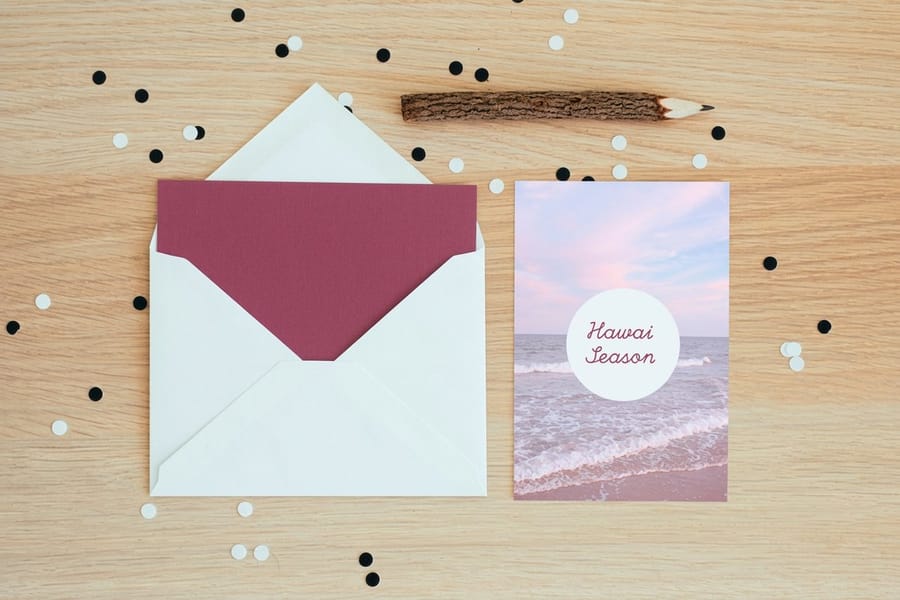
Start with the thing the names hide: none of these is a paper. They are all films, laminated onto the same printed card stock after the ink is dry, and the name describes the film rather than the sheet under it.
Silk is a satin polypropylene film. It smooths the surface, seals it, and returns a low sheen that sits between gloss and matte. Velvet and suede are both soft touch films, textured on a microscopic scale so the surface drags slightly under a fingertip. That drag is the whole point. It is the reason a soft touch card gets turned over in someone's hand for a second longer than a plain one.
| Finish | Feel | Sheen | Best for | From |
|---|---|---|---|---|
| Silk | Smooth and slick, no drag. | Low satin, keeps a highlight. | Direct mail, photo-led designs, anything handled in bulk. | $74.53 |
| Velvet | Soft, warm, peach-skin drag. | Very low, close to matte. | Invitations, premium leave-behinds, hand-delivered pieces. | $87.15 |
| Suede | Drier and grippier than velvet. | Lowest of the three. | Menus, spa and salon cards, anything under bright lighting. | $87.15 |
Read the sheen column against your artwork, not against your taste. A card built on a full-bleed photograph loses the most when the highlight goes, and a card built on flat brand color loses almost nothing. If you also want gloss and matte lamination in the comparison, our gloss, silk and soft touch postcard guide runs the wider set including postage effects.
Velvet or Suede When Both Cost $87.15
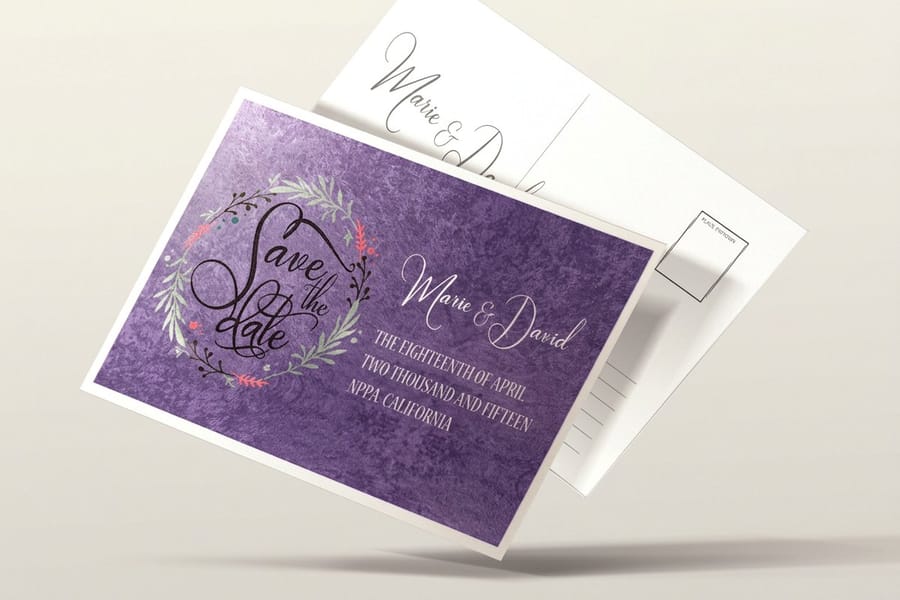
This is the decision people stall on, because the price is a tie and the product photos look identical. Three things break it.
- Lighting where the card will live. Suede scatters slightly more, so it stays matte under the hard downlights of a shop, a lobby or a trade show booth. Velvet under the same lights picks up a faint sheen at a glancing angle.
- How much the piece gets handled. Velvet's smoother surface releases skin oil a little more easily. Suede's drier texture grips it. On a card that will be passed hand to hand for a week, velvet stays cleaner.
- What sits on top. If you plan to add raised gloss on the logo, the contrast is stronger against suede, because the gap between the flat matte field and the glossy element is wider. Spot UV postcards start at $190.02 and are the usual home for that combination.
Everything else is a wash. Both take the same stocks, both add the same stiffness, both resist water in the same way, and both scuff on dark solids at about the same rate. If none of the three points above decides it, order velvet: it is the finish most people mean when they say soft touch, and it is the one recipients recognize.
What Lamination Does to Your Artwork and Your Pen
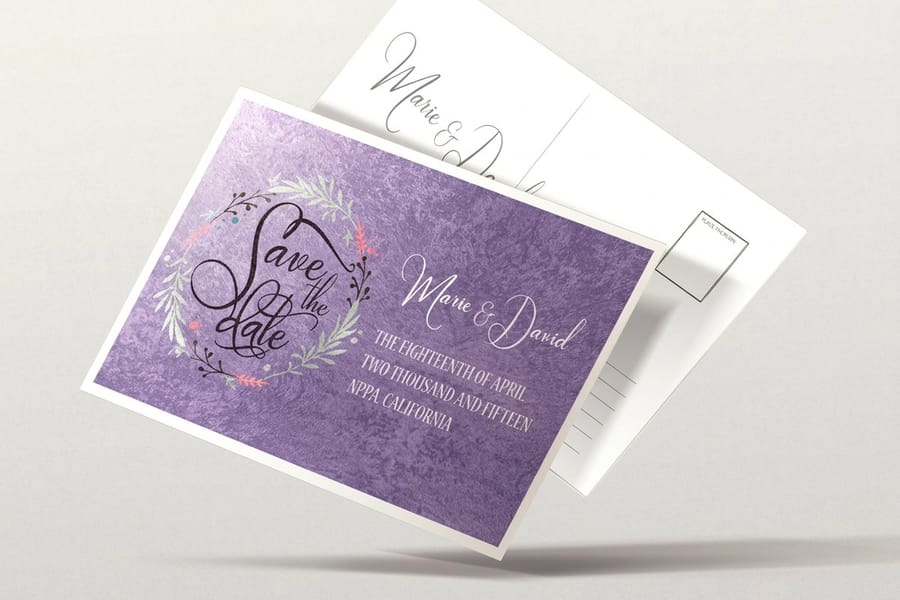
A laminate changes two things about a printed sheet: what the color looks like, and what will stick to the surface afterwards. Both catch people out after the job has shipped.
On color, soft touch costs contrast. The film scatters the light that would otherwise bounce off a dark area, so blacks read as very dark gray and a deep navy can drift toward the black beside it. Build blacks rich rather than as 100 percent K, keep at least a clear tonal gap between any two dark colors you need to stay separate, and do not put fine reversed type under 7 point on a soft touch field where the film softens the edge. Silk holds all of this better, which is the honest argument for the cheaper finish.
On the surface, the seal is total. No ballpoint, no gel pen, no pencil, no rubber stamp, and no toner from an office laser printer will hold on any of the three. That kills a few common plans at once: writing a name on the card at the event, adding an appointment time by hand, or running the cards back through a desktop printer for variable data. If any of that is in the campaign, print those pieces on unlaminated standard postcards, which start at $16.48, and reserve the laminate for the fully printed run.
Set the file up the same way you would for any postcard, with full bleed, live text pulled in from the trim, and the mailing side left clear where the carrier needs it. Grab a correctly sized layout from the blank template library, and if the address side is the part you are unsure of, our postcard design guide walks through the whole layout.
Which One to Order for the Job in Front of You
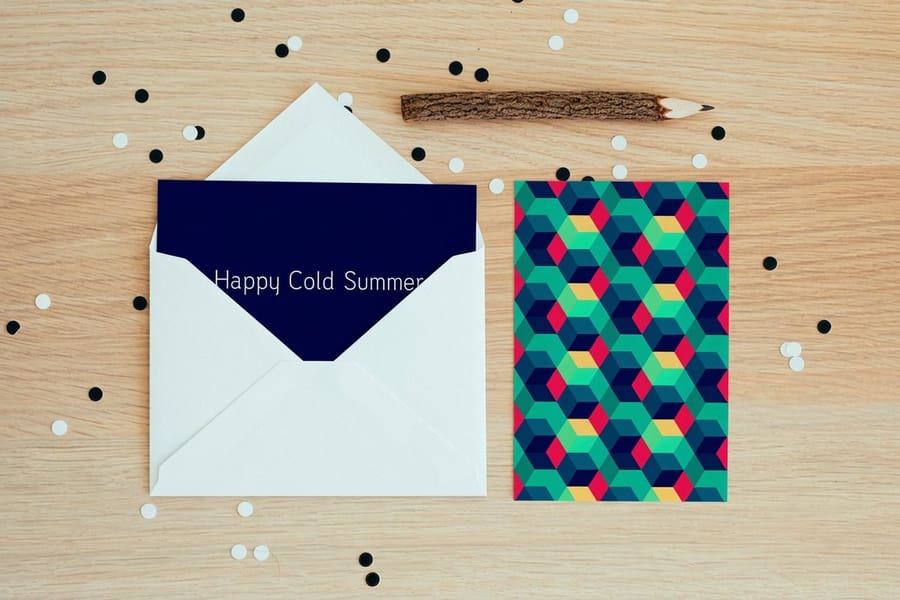
Match the finish to how the card gets used, not to how premium you want to sound.
Mailing thousands. Choose silk postcards. They are the cheapest of the three, they hold color through a sorting machine, and the scuffs that soft touch collects in transit do not show. Pair them with our direct mail services if you want the drop handled end to end.
Handing the card over in person. Choose velvet postcards. The tactile difference only pays when someone holds the piece, and at a hand-to-hand handover it pays immediately. Invitations, product inserts, and hotel or salon cards all sit here.
Sitting on a counter under bright light. Choose suede postcards. It is the flattest of the three, so a menu card or a treatment list stays readable at any angle without a hotspot across the middle.
One caution on postage before you order. USPS prices a piece at the card rate only when it measures between 0.007 and 0.016 inch thick, and 16pt stock is already at the top of that window before any film is added. Laminating both sides can push a card over the line and into letter pricing, so confirm the finished caliper with us if the mailing budget is tight. Everything we print on postcards, from stocks to sizes to finishes, is listed on the postcard printing page.
Wally explains the three finishes
Hold each one up to a lamp and the answer appears
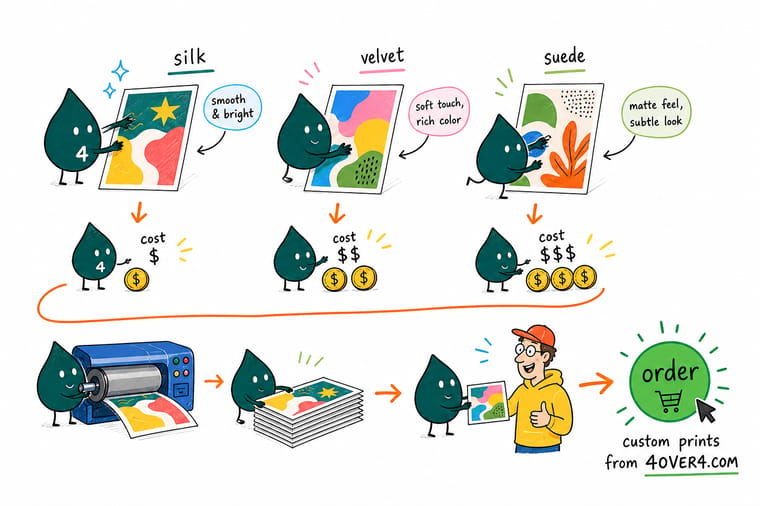
Wally tilts all three cards toward the light. Silk throws back a soft band of shine, so the reds and blues stay awake. Velvet and suede swallow the shine and hand back a surface his thumb wants to stay on. He picks silk for the mail drop, velvet for the invitations he delivers himself, and suede for the menu that sits under the counter spotlights. And he writes on none of them, because a pen slides straight off a laminate.
Order silk postcards →Specs and pricing
Sizes, stocks and starting prices for all three finishes
Compare the three postcard finishes side by side, with the live configuration choices and starting prices from the 4OVER4.COM configurator.

Print it
Order the finish that fits how the card gets used


Explore more
Where to go next


By the numbers
Silk, velvet, suede and spot UV postcards
Common Questions
Your postcard finish questions, answered
What is the difference between velvet and suede postcards?
Both use a soft touch laminate, so the family resemblance is strong and the starting price is identical at $87.15. The split is in surface character. Velvet reads smoother and slightly warmer under the thumb, closer to the peach-skin feel people expect from soft touch. Suede reads drier and grippier, with a fractionally lower sheen, which is why it holds a matte look under showroom lighting a little better. Order both in a sample pack before you commit a big run, because the difference is easy to feel and almost impossible to photograph.
Do silk postcards feel glossy?
No, and that trips people up. Silk laminate sits between gloss and matte: a smooth, low satin sheen rather than the mirror shine of gloss lamination. Held at an angle it returns a soft highlight, which is what keeps deep blues and reds looking close to the proof. Held flat under office lighting it looks almost matte. If you want a card that photographs cleanly and still shows some life in the color, silk is the safe middle.
Can you write on laminated postcards?
Not with a normal pen. All three finishes seal the sheet under film, so ballpoint and gel ink bead up or wipe away and a pencil leaves nothing. A permanent marker will hold on silk and, less reliably, on soft touch. If the campaign needs a handwritten name, a signature, or a filled-in appointment time, order the message side on an unlaminated stock such as our standard postcards and save the laminate for pieces that are printed complete.
Does soft touch lamination change my colors?
It flattens them. Velvet and suede scatter light instead of reflecting it, so the printed image loses apparent contrast and dark areas read lighter and slightly duller than the same file on silk. Two habits fix most of it: build blacks as a rich black rather than 100 percent K, and avoid relying on a subtle tonal step between two dark colors, because that step is the first thing the film swallows. Ask for a hard copy proof if the piece has to match an existing brand color.
Do velvet and suede postcards show fingerprints?
On heavy dark coverage, yes. The soft touch film has enough surface texture to hold skin oil, and against a solid black or navy panel that print shows as a faint gloss patch. It wipes off with a dry cloth, but a stack handled at a trade show will pick marks up all day. Silk hides handling better. If the design is already dark and it will be passed around by hand, either move to silk or design in a lighter background field where marks disappear.
Which finish is best for direct mail?
Silk, in most campaigns. It is the cheapest of the three at $74.53, it survives the sorting equipment with fewer scuffs than soft touch, and the extra sheen helps a photo carry across a mailbox. Velvet and suede earn their premium when the recipient will actually hold the card for a while: a hand delivered invitation, a hotel or salon leave-behind, a premium product insert. For high volume mail that gets skimmed and binned, the tactile upgrade is money spent on an experience nobody has.
Get Started
Suede and velvet postcards run 250 for $87.15
Pick your size, choose silk, velvet or suede, and we print postcards that hold their color and their texture from the box to the mailbox.
Legal Disclaimer
Gold Standard guarantees apply to all standard orders placed through 4over4.com. Price match requires verifiable proof of a competitor's published price for an equivalent product with matching specifications and turnaround time. Satisfaction guarantee covers manufacturing defects and print quality issues. Contact support with order number and documentation. On-time delivery rate based on tracked orders 1999 to 2026. Individual results may vary based on shipping carrier performance.
