
Silk Laminated vs Spot UV Business Cards, and When You Need Both


Emma is our prepress and print production voice, built from the knowledge of our production team, with over 20 years in printing.
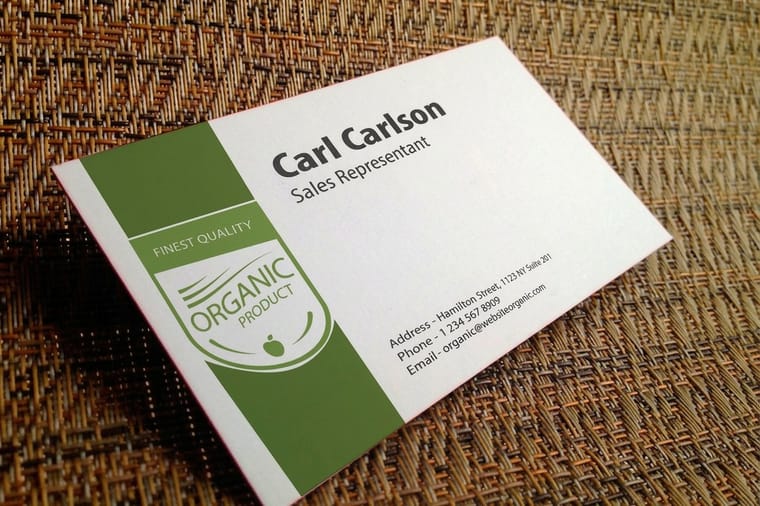
Silk laminated vs spot UV business cards comes down to film against varnish. One is a film over the whole card. The other is a varnish cured onto the shapes you choose. Each behaves differently in a pocket, costs differently, and the card you are picturing probably uses both.
Silk lamination bonds a thin matte film across the entire card, both faces. Spot UV cures a glossy varnish onto selected shapes only, and it needs a second file telling the press which shapes. They are layers rather than rivals: the premium card most people picture is silk laminated first, then spot UV printed on top, because gloss only reads as gloss against the matte film underneath it. Silk laminated business cards start at $74.53 and spot UV cards at $76.88 at 4OVER4.COM.
Quick answer
A film over everything, a varnish over something
Lamination is a material. Spot UV is a coating. The silk film is bonded to both faces under heat and covers every square inch, adding thickness, tear resistance and a low-glare surface that hides fingerprints. Spot UV is liquid varnish cured hard under ultraviolet lamps, landing only on the shapes you supply in a separate black-and-white mask file. Neither one takes a pen. The reason they end up on the same card is contrast: a glossy logo needs a matte surround to be seen at all.
What Silk Lamination Actually Puts on the Card
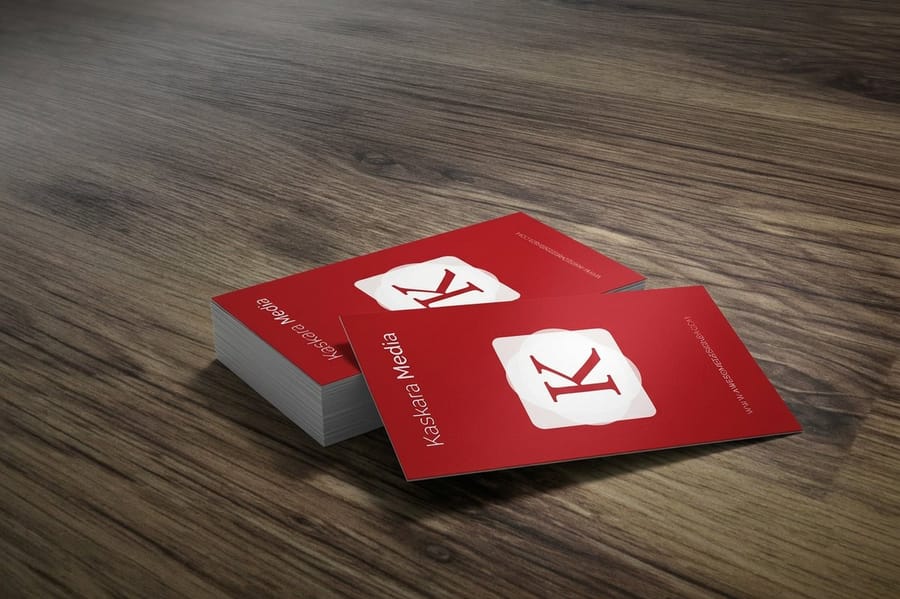
Silk lamination is a thin plastic film bonded to the printed sheet under heat and pressure, covering every square inch of both faces. It is a separate material that becomes part of the card, not a liquid brushed on and dried. That is why a silk laminated card measures thicker than the stock it started on, and why the edge looks sealed when you hold one up to a window.
The surface is what you notice first. Silk lands between matte and gloss: a faint sheen, a smooth low-friction feel, and enough forgiveness that fingerprints do not build up the way they do on a gloss laminate after a week in a pocket. Strength is what you notice second. The film absorbs the handling the paper cannot, so corners survive a wallet, a spilled drink wipes off, and the stock underneath never gets that soft fuzzing along an edge.
The trade is that the surface is closed for good. Nothing writes on it. A ballpoint skates, a gel pen beads up, and a marker stays wet long enough to transfer onto the next card in the stack. If someone on your team writes a date or a referral name on the back, this is the wrong finish and plain standard business cards at $17.57 are the right one. Lamination also runs before die cutting, so rounded corners and custom shapes are cut through the laminated sheet. That sequence is deliberate: it is what makes the film wrap cleanly to the edge instead of lifting.
The stock under the film still decides how the card feels in a hand. Our guide to business card stock covers the weights, and the wider business card printing range shows which stocks each finish is available on.
What Spot UV Is, and What Your File Has to Say
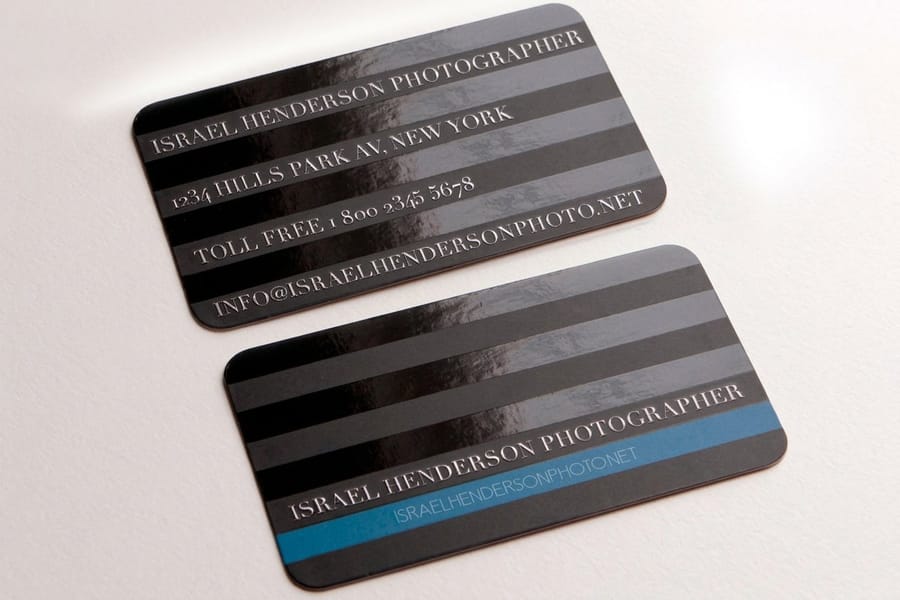
Spot UV is a liquid varnish applied only to the areas you nominate, then hardened in about a second under ultraviolet lamps. Nothing evaporates and nothing soaks in. The varnish cures where the lamp hits it and stays as a hard, wet-looking gloss in exactly the shape of your artwork.
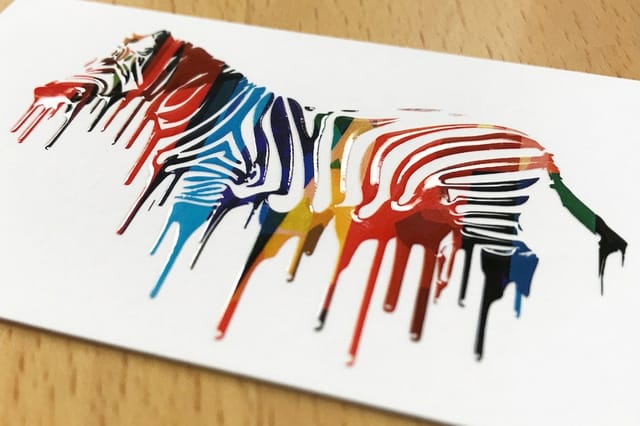
Shape is the operative word, because the press cannot guess which parts of a design should shine. Spot UV needs a second file at the same size as the card, with every shape that gets gloss filled in 100% black and everything else left white. A logo, a headline, a pattern behind the type, the veins of an illustration. Whatever is black in that file is glossy on the card.
Keep it bold. Hairlines under about half a point and type below 8 point can shift by a fraction of a millimeter during registration, and a gloss outline sitting slightly off its printed shape draws more attention than no gloss would have. Solid marks, thick rules and display type are what the process was built for. If file setup is the part you are least sure about, the business card file setup guide walks through it, and the blank template library gives you a layout already at the right trim.
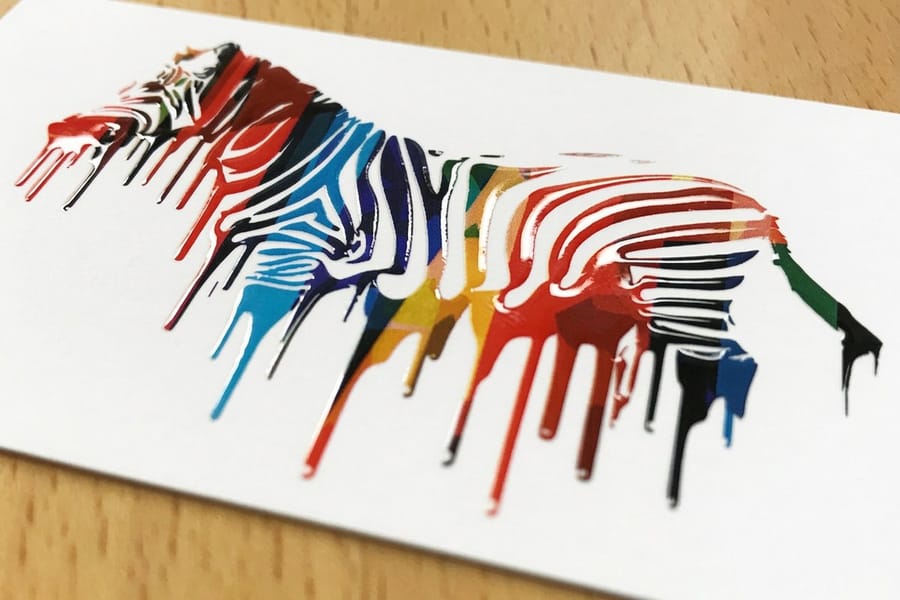
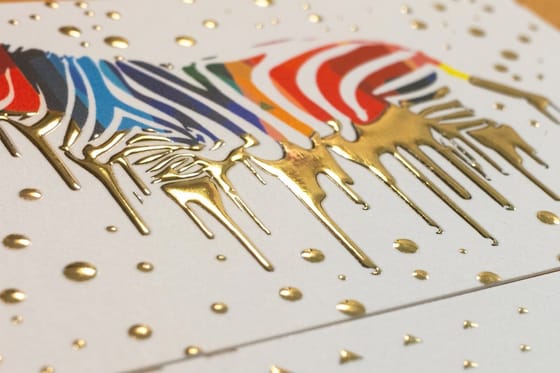
Flat spot UV adds shine without height. Run a finger over it and you feel a change in slickness, not a ridge. If you want the ridge, raised spot UV business cards lay a far thicker deposit that a fingernail catches, and they start at $108.75 against $76.88 for flat spot UV business cards. The principle matches thermography: both build a layer upward instead of pressing the sheet down.
Silk, Spot UV and the Finishes Next to Them, Side by Side
Five finishes get quoted against each other on almost every business card job. The useful column is not the price, it is where the finish lands on the card, because that decides what it can and cannot do for you.
| Finish | What it is | Where it lands | How it feels | Starts at |
|---|---|---|---|---|
| No coating | Bare printed stock, nothing over it. | Nowhere, the paper is the surface. | Dry, slightly toothy, takes a pen. | $17.57 |
| Silk lamination | A bonded film with a low sheen. | Both faces, edge to edge. | Smooth and slippery, resists fingerprints. | $74.53 |
| Soft touch | A suede-like matte film. | Both faces, edge to edge. | Velvety and high friction, marks more easily. | $40.28 |
| Spot UV | Cured gloss varnish over a laminated base. | Only the shapes in your mask file. | Slick patches against a matte surround. | $76.88 |
| Raised spot UV | A thick deposit of the same cured varnish. | Only the shapes in your mask file. | A ridge a fingernail finds straight away. | $108.75 |
Notice that the two spot UV rows sit on top of a laminated card rather than replacing one. That is the whole reason the price gap between silk laminated business cards at $74.53 and spot UV cards at $76.88 is so small: you are already paying for the film, and the varnish pass adds a couple of dollars on the starting quantity. Soft touch looks cheap in this table because its starting configuration is a lighter build, so compare like for like in the configurator before reading anything into it.
Soft touch business cards deserve one warning. That velvety surface is the most pleasant to hold and the least forgiving in a pocket, because the same tooth that gives it grip also collects marks. Silk is the finish to pick when cards live in a card holder for months.
Why the Premium Card You Are Picturing Uses Both
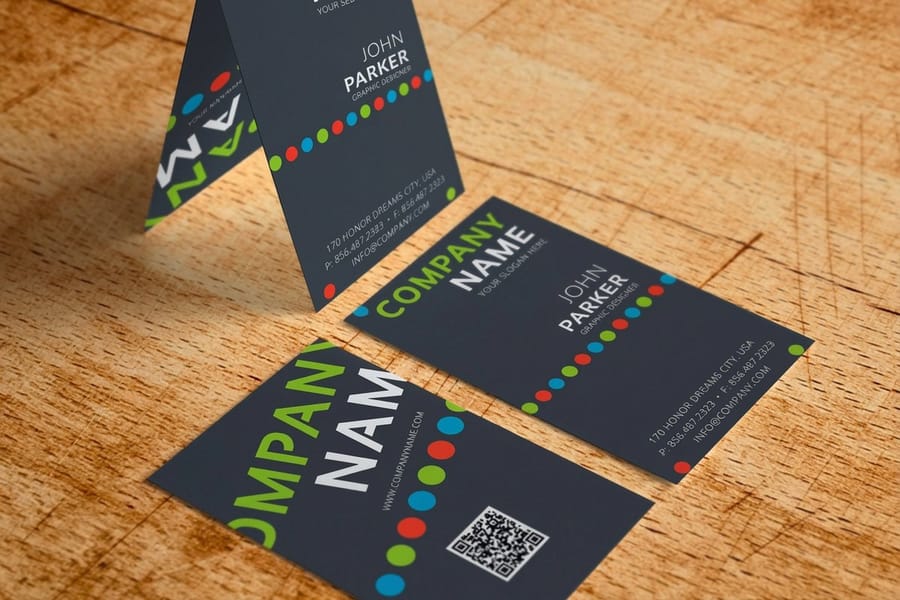
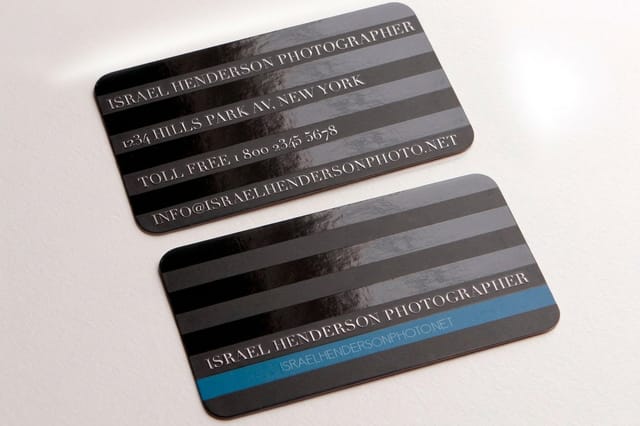
Ask someone to describe an expensive business card and you usually get the same picture: a deep matte surface with one shiny logo sitting on it. That card is not one finish. It is silk lamination across the whole face and spot UV on the logo, printed in that order.
The order matters more than the materials. Lamination has to go down first, because the film is what the varnish sits on and what it contrasts with. Put spot UV on a gloss laminate instead and both surfaces reflect, so the effect only shows at a raking angle under a strong light. The matte film is doing half the work.
Two decisions come out of that. First, which side. Spot UV on the front only is the usual choice, because the back is where contact details go and a glossy patch behind small type hurts legibility. Second, how much. A single mark or a headline gets noticed. A card with gloss on the logo, the name, a border and a background pattern has nothing left to contrast against, and the effect collapses back into a shiny card.
If you want the tactile version of the same idea, compare the flat and raised builds directly in the spot UV collection and the silk laminated collection. Ordering paper samples first is worth the wait on any finish you have not held before, because photographs of gloss on matte never carry across the difference.
The Verdict, and Who Should Order Which
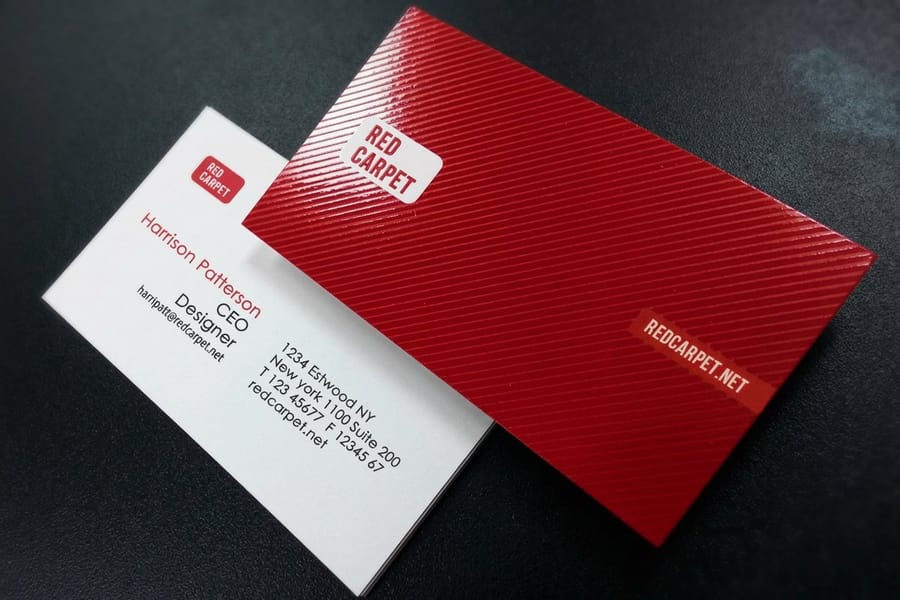
Order silk laminated business cards if the card has to survive. Consultants, trades, anyone whose cards live loose in a bag for six months, and any design where a photograph or a heavy solid needs to look rich without glare. At $74.53 it is the finish that fails least often, and there is no extra file to prepare.
Order spot UV business cards if one element in your identity deserves to be seen twice. A monogram, a wordmark, a single line of a headline. At $76.88 you are paying about two dollars over the silk card for a second pass, which is the cheapest visible upgrade on the list, provided you can supply the mask file and keep the shapes bold.
Order raised spot UV at $108.75 when the card is handed over in person and the moment matters, or when the base has to stay glossy and flat varnish would disappear against it. Skip both and take standard business cards if the cards get written on, dropped in a fishbowl, or reprinted every quarter because details keep changing.
One rule covers the mistake we see most: never choose a finish before you have chosen the stock. A silk film on a 14pt card still bends like a 14pt card. Sort the weight first using the thickness chart, then pick the surface, and the finish will do what you expected it to.
Wally explains the two layers
Film across everything, gloss on one shape

Wally rolls the silk film over the whole card first, both sides, edge to edge. That is the part that survives your pocket. Then he goes back with the varnish and paints only the logo, because the press only glosses what his black mask file tells it to. Hold the finished card to the light and the matte around the logo is what makes the logo shine. Ask him to gloss everything and the trick stops working.
Order silk laminated business cards →
Specs and pricing
Silk, spot UV and raised spot UV, configured live
Silk laminated cards print on 16pt silk laminated stock in four sizes, from 250 for $74.53 in 4 business days, with spot UV on the front, back or both as an option. Spot UV cards are 2 x 3.5 inches on 14pt or 16pt gloss or 16pt silk laminated cover, from 500 for $76.88 in 5 business days. Raised spot UV cards run on 16pt velvet laminated cover, from 100 for $108.75 in 7 business days. Compare the three builds side by side, with the real size, stock and quantity options and starting prices straight from the 4OVER4.COM configurator.


Silk, spot UV or raised
Order the finish that fits the card

Finish and coating guides
Where to go next



Finished in our NYC plant
The shop applying the finish, in numbers
Common Questions
Silk lamination and spot UV questions, answered
Is silk lamination the same as matte lamination?
They are close relatives, not twins. Both are films rather than coatings, and both kill the glare of a gloss laminate. Silk sits a step above flat matte: it carries a faint sheen, feels smoother and more slippery under a thumb, and holds ink density better, so blacks look deeper than they do under a dead matte film. Flat matte and soft touch films scuff and mark more readily because their surfaces have more tooth. If you want the low-glare look with the fewest handling complaints, silk is the safer of the two.
Can you put spot UV on a card that is not laminated?
Technically yes, practically it is a waste of money. Varnish applied straight to an uncoated or lightly coated sheet partly soaks in, so the gloss comes up dull and uneven, and there is no matte film around it to contrast against. The effect depends entirely on the difference between the shiny shape and the surface next to it. That is why spot UV business cards are built on a silk laminated base by default rather than sold as a coating you add to bare stock.
How do I set up the spot UV file?
Supply a second page or layer at exactly the card size, in the same orientation, with everything that should be glossy filled in 100% black and everything else left white. No greys, no tints, no strokes left unexpanded. Keep spot shapes at least a sixteenth of an inch inside the trim, avoid hairlines under about half a point, and skip type below 8 point, because registration can shift the varnish by a fraction of a millimeter and a gloss outline sitting slightly off its printed shape looks worse than no gloss at all. Start from a correctly sized layout in the blank template library and you avoid most of the size errors.
Will spot UV show up on a gloss card?
Barely, and it is the most common disappointment we see. Spot UV is visible because it reflects light differently from the surface around it. Put it on a gloss laminate and both surfaces reflect, so the shape shows only at a raking angle under a strong light. If the base has to be gloss, use raised spot UV instead, because a deposit you can feel with a fingernail still reads even when the shine contrast is gone.
Can you write on silk laminated business cards?
No, and that surprises people at the counter more than anything else about the finish. The film is sealed plastic, so a ballpoint skates, a gel pen beads, and a permanent marker stays wet long enough to smudge onto the next card in the stack. If handwriting on the back matters, order standard business cards at $17.57 for the writable ones and keep the silk laminated cards for handing over.
Is raised spot UV worth the extra over flat spot UV?
It depends on whether the card gets touched or only looked at. Flat spot UV is a visual effect: you see the gloss, you feel almost nothing. Raised spot UV lays a much thicker deposit that a fingertip finds immediately, which is why it works on cards handed over in person and on anything that has to survive a first impression in a dim restaurant. Flat spot UV cards start at $76.88 and raised spot UV cards start at $108.75, so the tactile version costs roughly forty percent more per box.
Get Started
Order 250 silk laminated business cards from $74.53
Choose your stock, add the silk film across the whole card, and put the spot UV exactly where you want people to look twice.
Legal Disclaimer
Gold Standard guarantees apply to all standard orders placed through 4over4.com. Price match requires verifiable proof of a competitor's published price for an equivalent product with matching specifications and turnaround time. Satisfaction guarantee covers manufacturing defects and print quality issues. Contact support with order number and documentation.
