
How Printing and Shipping Work Together From Upload to Doorstep


Turnaround, transit, business days and the file review that starts the clock. Here is how to work backwards from the date you need the job and actually hit it.
A print and ship order runs on two separate clocks: production turnaround, which ends the moment the box leaves the plant, and carrier transit, which starts there. Both count business days only, so a 2 day turnaround plus 3 day ground is a full week once a weekend lands in the middle. The turnaround clock starts at file approval rather than at checkout, which is why a file with missing bleed costs a day nobody planned for.

Quick answer
Production time and transit time are added, never blended
Turnaround is the production window before your order ships. Transit is the carrier window after. Add them, count business days only, and drop a day of slack for a file correction. That is your real delivery date. Most standard orders at 4OVER4.COM ship in 2 to 4 business days, 82 percent of them leave ahead of the promised date, and on-time delivery runs at 99.8 percent, so a plan built this way holds. The diagram below shows where the handoff sits on a normal week.
The Two Clocks: Turnaround Then Transit

Every print order runs on two clocks that never overlap. The first is production turnaround, which covers press time, finishing, the quality check and packing. The second is transit, the days the carrier holds the box. Turnaround ends and transit begins at a single moment: the ship date.
Neither clock counts a Saturday, a Sunday or a federal holiday. Approve files Monday morning on a 2 business day turnaround and the box leaves Wednesday. Add 3 transit days and it arrives the following Monday, because Saturday and Sunday advanced nothing. Five business days, seven calendar days, one very unhappy client if you promised Friday.
Back-plan instead. Start from the date the job has to be in your hands, subtract transit, subtract turnaround, subtract one day of slack for a file correction, and that is your upload deadline. Most standard orders at 4OVER4.COM ship within 2 to 4 business days, and 82 percent of them leave ahead of the promised date, so the plan usually has room. It is the calendar arithmetic, not the printing, that catches people out. For the wider picture of what happens on press, read how online printing works.
What Happens Between Your Upload and the Loading Dock
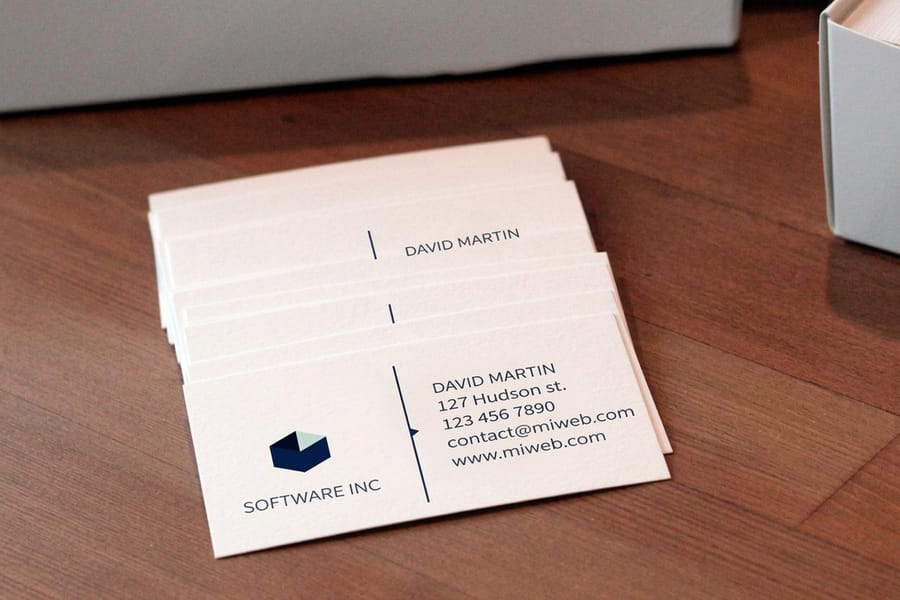
The production clock does not start when you pay. It starts when your artwork clears review, which is the step most people forget to budget for.
- Upload and file review. Every order gets a free file check. Missing bleed, live text sitting on the trim line, RGB images and low resolution artwork all get flagged here rather than after the ink is down. A file that needs a fix waits for you.
- Imposition and plating. Your job is ganged with others on a large press sheet so the sheet runs full. This is why online pricing beats a local counter, and why a small quantity costs so little per piece.
- Press. The sheet prints, then it has to dry or cure before anything touches it again.
- Finishing. Cutting, scoring, folding, drilling, binding, laminating. This is where turnarounds separate. A flat card is trimmed and done; a folded brochure or a bound booklet adds real hours.
- Quality check and pack. The order is checked against the specs you approved, boxed with enough fill that nothing shifts, labelled and manifested to the carrier.
Two of those steps are yours to control. Send a correct file, and approve any proof the same day it lands. Everything else is ours. If you want the file half to be routine rather than a coin toss, start from a correctly sized layout in the blank template library and check the setup rules in our guide to crop marks and bleed. A clean standard business cards file, at $17.57 a run, moves through this whole sequence without a single email.
Four Ways to Buy Speed, and When Each One Is Wrong

When a date is tight there are only four levers, and the expensive one is not always the fast one. Weight is the deciding factor: expedited freight is priced on weight and dimensions, so it punishes bulky jobs and barely notices a small box.
| Lever | What it changes | What it costs | When it is the wrong call |
|---|---|---|---|
| Faster turnaround | Shortens production before the box ships. | A flat upgrade that ignores weight. | Pointless if the job is already sitting in file review waiting on you. |
| Faster shipping | Shortens carrier transit after the ship date. | Scales hard with weight and box size. | Brutal on pallets of brochures or booklets. Fine on one light box. |
| Order earlier | Buys slack for a file correction or a reprint. | Free. | Only wrong when the artwork genuinely is not finished yet. |
| Split the order | Rushes the piece you need first, leaves the rest standard. | Two shipments instead of one. | Wasteful when every item is needed on the same morning. |
The practical rule: heavy job, buy production time. Light job, buy transit. A run of standard postcards at $16.48 ships in a box you can lift with one hand, so an air upgrade is affordable. A quantity of standard brochures at $57.11, folded and boxed, gets heavy fast, and there the faster turnaround is the cheaper route to the same date. If the deadline is inside 24 hours, read how rush printing actually works before you pay for anything, and price the whole job with our cost estimating guide so shipping is not a surprise at the last screen.
Shipping to a Client, to Several Addresses, or Into the Mail

Not every order goes to the person who paid for it, and the destination changes what you should order.
Straight to your client, blind. Designers, agencies and resellers ship the finished job directly to their customer with their own details on the paperwork instead of the printer's. That is blind drop shipping, and it removes a leg of transit as well as a rebox, which is a day saved rather than a day spent. Set it up before the first live client job, not during it. The mechanics are in our drop shipping guide.
Several addresses. Franchise, sales team and multi-branch orders are usually cheapest printed as one large run, then split into separate cartons. You get the volume price on the print and pay only for the extra parcels. Ordering three small runs to three cities almost always costs more than one run split three ways.
Into the mail rather than into a box. Direct mail is not shipping at all. A mailed piece leaves the plant as postage on individual pieces, so size, weight and thickness are governed by postal rules rather than carrier rules, and the timing is a mailing schedule instead of a tracking number. Design a postcard that mails as a postcard and you keep the cheap rate; go a fraction over the size limit and it reprices as a letter.
Whichever route it takes, the delivery half is covered by the on-time promise in the 4OVER4.COM guarantees, and you can browse the full range in marketing materials or compare stocks on postcard printing before you commit.
Wally explains the two clocks
Turnaround stops where the truck starts
Wally runs one stopwatch inside the plant and a second one on the road. The first stops the moment the box is taped and handed to the carrier. The second starts right there. Neither of them ticks on a Saturday. So when he tells you 2 business days to print and 3 to travel, he means the job you approve on Monday morning lands the following Monday. Count backwards from your date, add a day for a file fix, and Wally has never made anyone late yet.
Print and ship business cards →Specs and pricing
Turnaround options and starting prices, live
Pick a quantity and a turnaround and the configurator prices it in front of you, so you can see what a day of production actually costs before you decide whether to buy it.



Print it
Order it, and let us handle the box


Explore more
Where to go next




By the numbers
Printing and shipping you can plan around
Common Questions
Your printing and shipping questions, answered
Does the printing turnaround include shipping time?
No, and treating it as though it does is how deadlines get missed. Turnaround measures production only: the job goes on press, through finishing, through the pre-ship quality check, and into a box. The clock stops the moment that box is handed to the carrier. Transit is a second, separate window that begins there. Add the two together, then skip weekends and holidays, and you have the real delivery date.
When does the turnaround clock actually start?
At file approval, not at payment. Every 4OVER4.COM order gets a free file review, and production begins once the artwork passes it. An order placed at 11pm with a clean, print-ready PDF starts the next business morning. An order placed at 9am with a file missing bleed does not start until the corrected file comes back, which can cost a full day on a two day job. Getting bleed, trim and color mode right before upload is the cheapest speed you can buy, and our guide to crop marks and bleed covers exactly what the preflight looks for.
What counts as a business day?
Monday through Friday, excluding federal holidays. Neither production nor carrier transit advances on a Saturday or a Sunday. This is why a job that leaves on a Wednesday with three transit days arrives the following Monday rather than that Saturday. When a holiday sits inside the window, push everything one more day and stop treating the tracking estimate as a promise.
Is it cheaper to pay for faster printing or faster shipping?
It depends almost entirely on what the job weighs. Expedited freight is priced by weight and dimensions, so shaving days off transit on a pallet of brochures or a skid of booklets gets expensive quickly. Shortening production is a flat upgrade that does not care how heavy the box is. For anything bulky, buy the faster turnaround. For a single light box, such as one run of business cards, upgrading the shipping speed is usually the cheaper of the two.
Why did part of my order arrive before the rest?
Different products take different routes through the plant. Business cards, postcards and flyers run on sheet presses with short finishing steps. Booklets, folders and anything scored, folded or bound take longer. Rather than holding a finished item hostage to the slowest one, each product ships when it is ready, so a mixed order can produce two or three tracking numbers on different days. If everything has to land together for an event, order the slow item first and time the rest to match it.
Can you ship an order straight to my client without our name on it?
Yes, that is blind drop shipping, and it is standard practice for designers, agencies and print resellers. The parcel goes to your customer with your details rather than the printer visible on the label, so the job looks like it came from you. It is worth setting up before your first client order rather than in the middle of one. Our guide on blind drop shipping for print resellers walks through how the address and paperwork are handled.
Get Started
Give us the date and we will work backwards from it
Upload a print-ready file, pick the turnaround that fits your deadline, and choose the shipping speed at checkout. We print it, check it, box it and hand it to the carrier.
Legal Disclaimer
Gold Standard guarantees apply to all standard orders placed through 4over4.com. Price match requires verifiable proof of a competitor's published price for an equivalent product with matching specifications and turnaround time. Satisfaction guarantee covers manufacturing defects and print quality issues. Contact support with order number and documentation. On-time delivery rate based on tracked orders 1999 to 2026. Individual results may vary based on shipping carrier performance.
