
Money Psychology in Business and the Biases Behind Every Price You Set


A working guide to the money beliefs that set your prices and the mental shortcuts your buyers use to judge them, with the arithmetic that shows what a discount really costs.
Money psychology is the set of beliefs and mental shortcuts that decide financial choices before any analysis happens, and in business it runs on both sides of the table at once. Your own money history sets the price you are willing to say out loud, while the buyer judges that price against numbers already in their head through anchoring, loss aversion, mental accounting and payment friction. Change the number you say, move it earlier in the conversation, and stop paying for volume with margin.

Quick answer
Three lines decide the deal, and most owners only move one
Every transaction sits between a cost floor and a value ceiling. The floor is what delivery genuinely costs you. The ceiling is what the buyer believes the work is worth, built from reference points you did not choose. Your price sits somewhere between the two, and the gap above it is the buyer's reason to say yes while the gap below it is your margin. Money psychology works on the ceiling. Discounting only drops the price, and the margin band pays for it.
The Two Money Stories Running in Every Transaction
Every price you quote passes through two sets of assumptions before it becomes a yes or a no. Understanding both is the whole of the subject.
Your story. Most owners set prices from a feeling rather than from a floor. The feeling was formed long before the business existed, usually by what money meant in the household you grew up in, and it shows up in small operational tells: an invoice sent three days late, a discount volunteered before anyone asked, a scope extension absorbed without a word. None of those look like pricing decisions on a P and L. All of them are.
Their story. The buyer is not evaluating your costs, because they cannot see them. They are comparing your number against numbers already in their head: what the last supplier charged, what a competitor advertised, what their own time is worth. This is why a quote with no context loses to an identical quote that arrives beside a reference point. The number is the same. The frame is not.
The practical consequence is that pricing work has two halves and most people only do one. Rebuilding your cost model is useful, and there is a full breakdown in our guide to what printing actually costs. But if the number still gets softened at the moment you say it, the model changed nothing. Fix the saying before you refine the modeling.
Anchoring, Loss Aversion and the Two Patterns That Follow

Four behavioral patterns account for most of what looks irrational in business spending. They are not tricks to run on people. They are the machinery already running, and the useful move is to stop working against it.
| Pattern | What it does | Where it shows up in your business | Where it backfires |
|---|---|---|---|
| Anchoring | The first number heard becomes the yardstick for every number after it. | Whoever names a figure first sets the range. A published price list anchors before the conversation starts. | Anchor too high with nothing behind it and the buyer disqualifies you instead of negotiating. |
| Loss aversion | Losing something is felt more strongly than gaining the equivalent. Prospect theory put the ratio near two to one. | "Your slot is held until Friday" outperforms "book by Friday and save". Deposits change behavior more than discounts. | Manufactured scarcity that turns out to be false costs more trust than the sale was worth. |
| Mental accounting | Money is sorted into separate mental pots and is not treated as interchangeable. | A marketing budget approves a $400 print run that the same person refuses as a $400 consulting hour. | Assuming the pots are fungible. Pitching from the wrong budget line gets a no that had nothing to do with value. |
| Payment friction | The pain of paying is felt at the moment of handing money over, separately from the purchase itself. | Bundling, prepayment and annual terms move the pain away from the moment of use, which raises satisfaction. | Hiding the total until checkout. Friction discovered late reads as a trick and the cart gets abandoned. |
Read the last column carefully. Each of these patterns has a version that helps a customer decide and a version that manipulates one, and the line between them is whether the thing you are saying is true. A deadline you will actually honor is useful information. A countdown that resets is not. Our guide on marketing to budget-conscious customers works through the honest version at some length.
Where a Printed Object Changes the Number
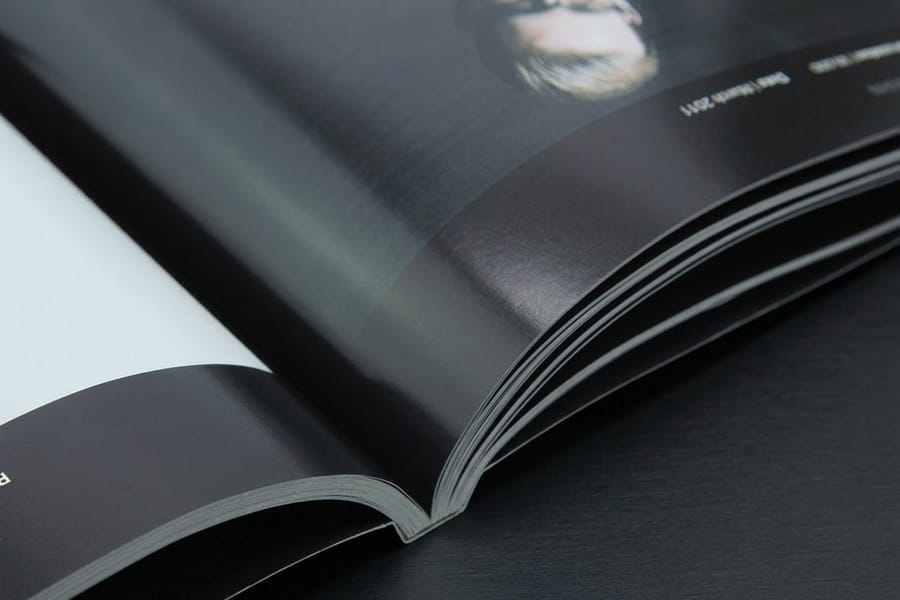
This is the part of money psychology a business can act on this month, because it is a production decision rather than a mindset one. A physical object declares its own cost. Someone holding a bound book estimates roughly what it took to produce; someone opening a PDF estimates nothing, so they compare it against every free file in their inbox instead.
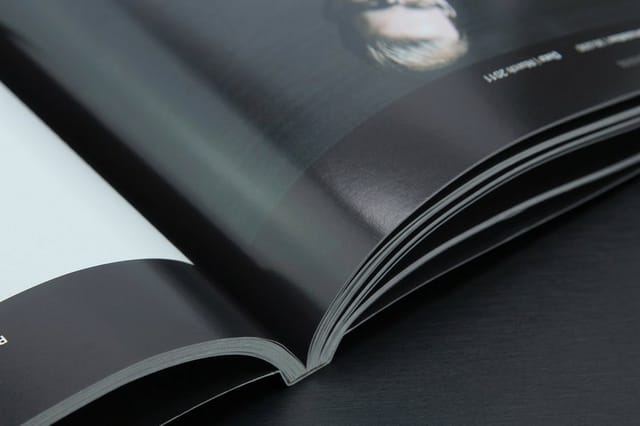
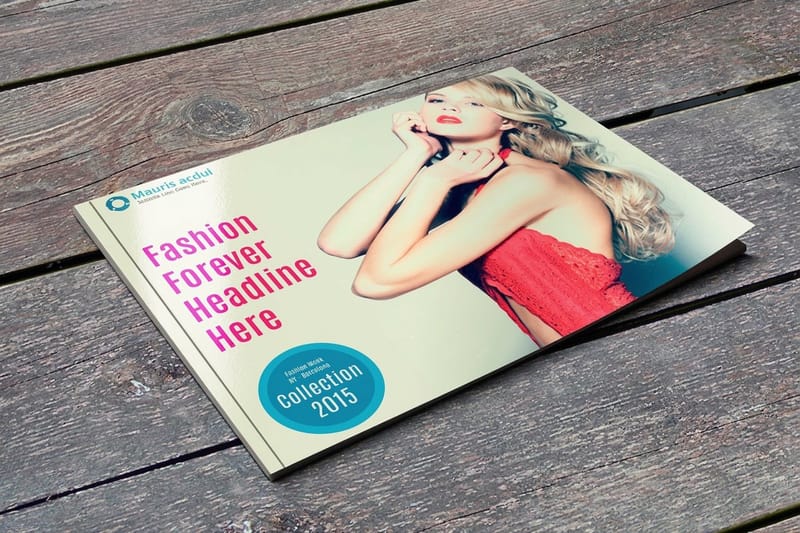
That estimate matters most when what you sell is otherwise invisible. If your ebook on money psychology exists only as a download, it competes with downloads. Printed as a perfect bound book at $375.05 for a run, it competes with books, and the reference price in the buyer's head moves accordingly. A shorter piece works the same way as saddle stitched booklets from $240.55, which is the usual choice for a workbook of 16 to 48 pages. The format decision between the two is covered properly in our comparison of catalogs, booklets and perfect bound books.
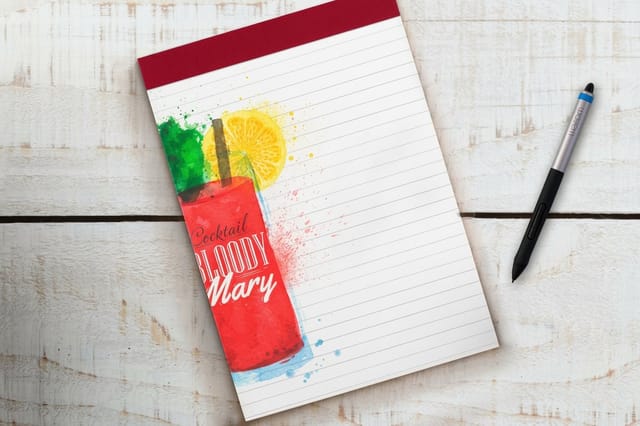
Two more uses are worth naming because they are cheap. A worksheet pad, printed as notepads from $93.37, gets filled in where a downloadable template gets filed and forgotten, and a client who finished the exercise is the client who renews. And the offer itself can be tested on paper: postcards from $16.48 let you run one price framing against another to a split list and read the response, which is a real experiment rather than an opinion.
Where this does not work: printing will not rescue thin material, and a beautiful book of weak advice fails more expensively than a weak PDF. Print raises the starting point of a judgment. The rest of the judgment is still the content. If you are weighing the spend, the way print price breaks work matters more than the unit price, because the per-copy cost drops in steps at defined quantities rather than smoothly.
Why Discounting Feels Safe and Usually Is Not
Cutting a price is the most available lever and the most expensive one, because the discount comes entirely out of margin while the cost floor does not move at all. The arithmetic is not a matter of opinion. Take a product with a 30 percent gross margin and work out how much extra volume each discount has to generate simply to stand still.
| Discount | Gross margin left | Extra units needed to hold the same gross profit |
|---|---|---|
| 5 percent off | 25 percent | 20 percent more units |
| 10 percent off | 20 percent | 50 percent more units |
| 15 percent off | 15 percent | 100 percent more units |
| 20 percent off | 10 percent | 200 percent more units |
A 20 percent discount asking for triple the volume is a bet almost no small business wins, and the extra units bring extra delivery cost, extra support and extra risk of refunds with them. Run the same table with your own margin before the next promotion. If your margin is thinner than 30 percent, the required volume climbs faster still.
There is a second cost that does not appear in the table. A discount teaches the buyer what the real price is, and the old number rarely comes back. Habitual discounters end up with a list price nobody pays, which removes the anchor they need for everything else. When the goal is genuinely to move volume, prefer levers that leave the price standing: a larger quantity at a published break, a bundle, a deadline, or a bonus that costs you less than it is worth to them. There is more on structuring that in our guide to building an offer that rewards loyal customers, and the retail version in eleven tactics for increasing retail sales.
A Money Psychology Checklist You Can Run This Quarter
Nine steps, in the order that makes each one easier than the last. Give it an afternoon at the start of a quarter and repeat it at the start of the next.
- Write your real cost floor. Materials, labor, print, delivery, payment fees, refunds and rework, plus the hours you spend and never bill. Most floors are 15 to 25 percent higher than the owner assumed.
- Say your price out loud into a recording. If you hear yourself soften it, add a justification, or run past it quickly, that is the number that needs work, not the spreadsheet.
- Move your first number earlier. Put a figure in front of the buyer before they ask for a budget. Whoever anchors first sets the range for the rest of the conversation.
- Publish a reference point. A rate card, a starting-from price, a tier list. A buyer with no reference invents one, and the invented one is always lower.
- Audit every standing discount. List them, price each against the volume table above, and end the ones that never earned their extra units.
- Reframe one message from gain to loss. Change one line of copy from what the customer gains to what they lose by waiting, then measure the response against the previous version.
- Name the budget you are pitching from. Marketing, training, operations and capital are separate pots to the person approving. Ask which one before you quote.
- Give the work a physical form. One printed artifact for the thing you most want taken seriously, whether that is a bound book, a workbook or a proposal in a folder.
- Set the review date now. Put the next price review in the calendar before you close this one, so the decision has a date instead of waiting for a crisis.
Two of those steps involve print, and both are cheap next to what they protect. If you are building a brand that has to hold a higher number without arguing for it every time, our guide on building a brand that sells picks up where this checklist stops, and the bookbinding collection lists the formats that suit a printed edition.
Wally explains money psychology
The first number wins, and the object in your hand sets it
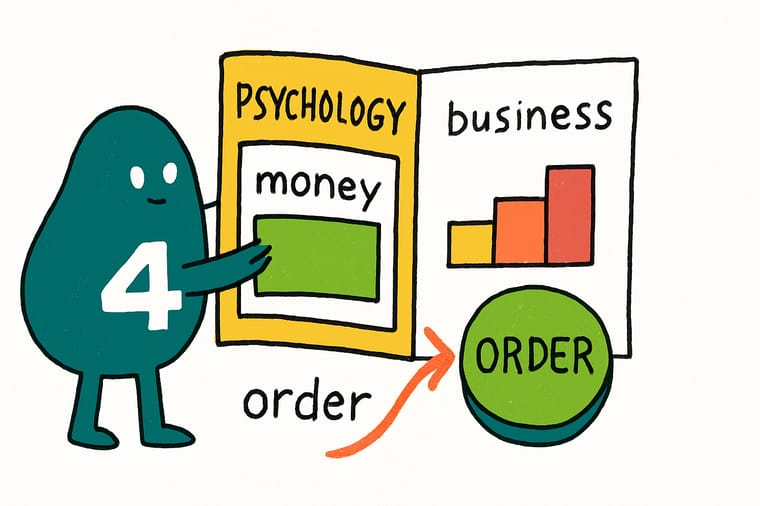
Wally learned this the slow way. When he quoted before anyone mentioned a budget, the conversation happened inside his range. When he waited to be asked, it happened inside theirs. He also noticed that people who held a printed booklet argued about the price far less than people who received the same thing as a file, because a booklet shows what it cost to make and a file shows nothing. So Wally stopped discounting to close, moved his number earlier, and printed the thing he most wanted taken seriously.
Print a booklet edition →Specs and pricing
Formats for a printed edition, with starting prices
Booklet, bound book or worksheet pad. Compare the page counts, stocks and binding choices side by side, with starting prices straight from the 4OVER4.COM configurator.



Print it
Give the work a form people take seriously

Explore more
Where to go next



By the numbers
The print partner behind the printed edition
Common Questions
Your money psychology questions, answered
What is money psychology in business?
Money psychology is the set of beliefs, habits and mental shortcuts that decide financial choices before any analysis happens. In a business it runs on both sides of the table. On your side it shows up as the price you are willing to say out loud, the invoice you delay sending, and the discount you offer before anyone asks. On the buyer's side it shows up as anchoring, loss aversion and mental accounting, all of which judge your number against numbers they already carry rather than against your costs. Neither side is being irrational. Both are using shortcuts that usually work and occasionally cost a lot of money.
Is money psychology the same thing as pricing strategy?
No. Pricing strategy is the method you use to arrive at a number: cost plus, competitor matching, value based, tiered. Money psychology is what happens to that number once a human being hears it, including the human who set it. You can run a textbook value based model and still quote low because saying the real figure feels greedy. Strategy tells you what to charge. Psychology decides whether you actually charge it and whether the buyer accepts it. Our companion guide on pricing strategies for online businesses covers the method side.
How do I know if I am underpricing?
Three signals, and you want two of them before you act. First, almost nobody pushes back on price. A healthy close rate leaves some people saying no on cost. Second, you are busy and the bank balance is not moving, which means volume is covering for margin. Third, you feel a small flinch when you say the number, which usually means you have already discounted it in your head. Check the arithmetic before you move: work out your true cost floor including refunds, rework and the hours you do not bill, then see how much of the gap between that floor and your price is actually yours.
Will raising prices lose customers?
Some, and that is the point of doing it deliberately rather than by accident. The customers most likely to leave over a 10 percent increase are usually the ones already consuming the most support time at the lowest margin. The practical approach is to raise on new business first, hold existing customers at the old rate for a defined period, and tell them the date in writing. Announcing a future increase also creates a real deadline, which converts the people who were going to buy anyway. What loses customers is a silent increase discovered on an invoice.
Why does a printed piece change how people judge a price?
Because a physical object shows its own cost. A buyer holding a bound book, a booklet or a heavy card makes a rough estimate of what it took to produce, and that estimate sets a floor under the value of whatever it contains. A file attached to an email carries no such signal, so the buyer falls back on comparison with everything else free in their inbox. The effect is not magic and it will not rescue weak work, but it changes the starting point of the judgment. It is the same reason a printed proposal in a folder gets read more slowly than the same document as an attachment.
Where should a small business start with this?
Start with the number you say out loud, because it is the cheapest thing to change. For two weeks, quote your real rate with no softening language and no discount offered before it is requested, then count the outcomes. Next, put your first number in front of the buyer before they name a budget. Only after those two habits are running should you look at packaging, printed proof and offer structure, all of which work better once the underlying number is honest. The checklist above orders the work that way on purpose.
Get Started
A 10 copy perfect bound run costs $375.05
Choose a saddle stitched booklet for a workbook, a perfect bound book for the full edition, or a notepad for the worksheets clients actually finish.
Legal Disclaimer
Gold Standard guarantees apply to all standard orders placed through 4over4.com. Price match requires verifiable proof of a competitor's published price for an equivalent product with matching specifications and turnaround time. Satisfaction guarantee covers manufacturing defects and print quality issues. Contact support with order number and documentation. On-time delivery rate based on tracked orders 1999 to 2026. Individual results may vary based on shipping carrier performance.
