
How to Print on Vinyl and Choose the Right Stock


Vinyl is four or five different materials wearing the same name. Here is what happens on the press, which stock belongs on a fence, a window or a floor, and how long each one holds up.
Printing on vinyl means running a roll of PVC film through a wide format inkjet that lays solvent, eco solvent, latex or UV ink onto the surface and fixes it so the color sits in the film rather than on top of it. The stock decides everything after that: scrim banner vinyl to hang, adhesive vinyl to stick, perforated vinyl for windows you still need to see out of, and a slip rated laminate for anything on a floor. Match the material to the surface first, then design for how the finishing eats the edges.
Quick answer
Same word, three different materials
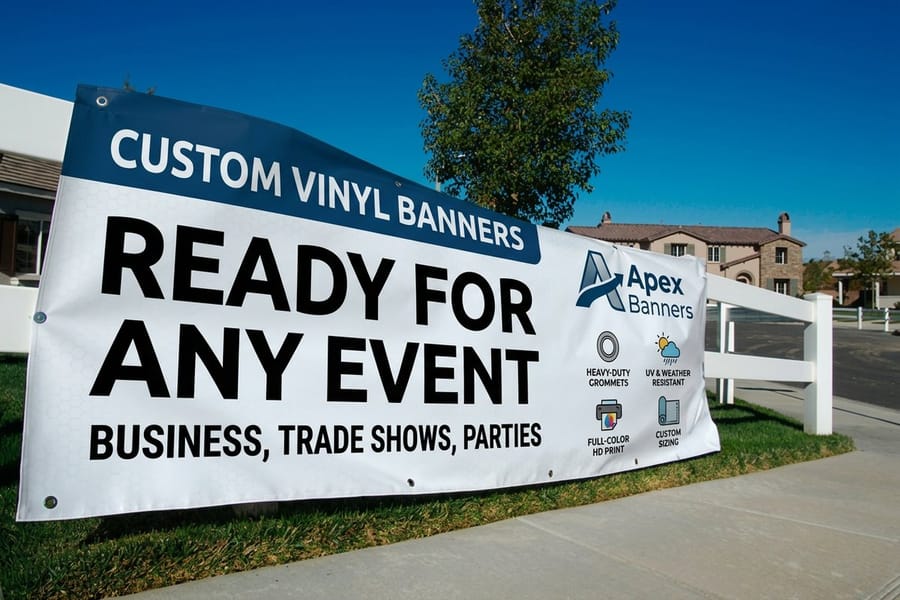
Vinyl printing is a wide format inkjet process on PVC film, and the film comes in builds that are not interchangeable. Scrim banner vinyl carries a polyester mesh between two PVC faces and hangs from hems and grommets. Adhesive vinyl carries a pressure sensitive glue on a release liner and sticks to flat, clean surfaces. Perforated window film is adhesive vinyl with holes punched through it, printed white on the street side and black on the inside. Choose the build for the surface, laminate anything that lives outdoors or underfoot, and design for the fact that hems, grommets and perforations all take a bite out of the artwork.
What Actually Happens When Vinyl Goes Through the Printer
A vinyl print runs through four stages, and every artwork rule further down this page comes out of one of them.
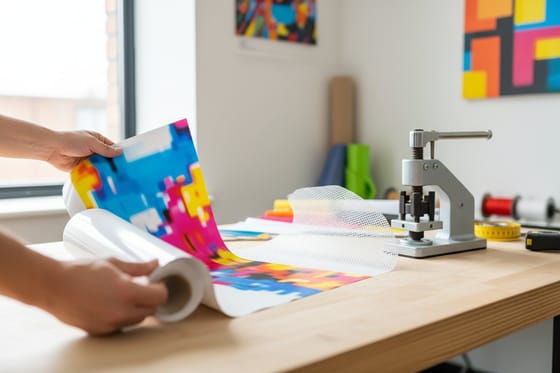
One, the roll is loaded and profiled. A wide format machine pulls the vinyl off a roll under tension. The press has an ICC profile for that exact film, because the same ink file prints heavier on a matte adhesive vinyl than on a glossy banner face. This is why a proof from one stock does not predict the other.
Two, the RIP builds the print. Software converts the PDF into ink drop instructions and decides how many passes to lay down. More passes means denser color and slower output, which is the real reason a large solid black banner takes longer than a mostly white one.
Three, ink meets film and gets fixed. Solvent and eco solvent inks carry pigment in a carrier that briefly softens the PVC so the color settles inside the surface. Latex ink is water based and fuses into a film under heat. UV ink cures under lamps the instant it lands. Solvent and latex flex with the material, which matters on anything that wraps or rolls. UV cures hardest and is the most likely to crack if the sheet is folded tight.
Four, finishing decides how it hangs or sticks. Banner stock is hemmed and grommeted, adhesive stock is contour cut and weeded, window film is trimmed to the glass. Finishing is also where the overlaminate goes on. Our large format printing explainer walks the same path across every wide format material, not just vinyl.
The Vinyl Types, and Which Job Each One Is Built For
Almost every vinyl problem starts as the wrong stock, not the wrong file. Three families cover nearly everything printers sell, and they are not interchangeable.
| Vinyl | How it is built | Where it belongs | Starts at |
|---|---|---|---|
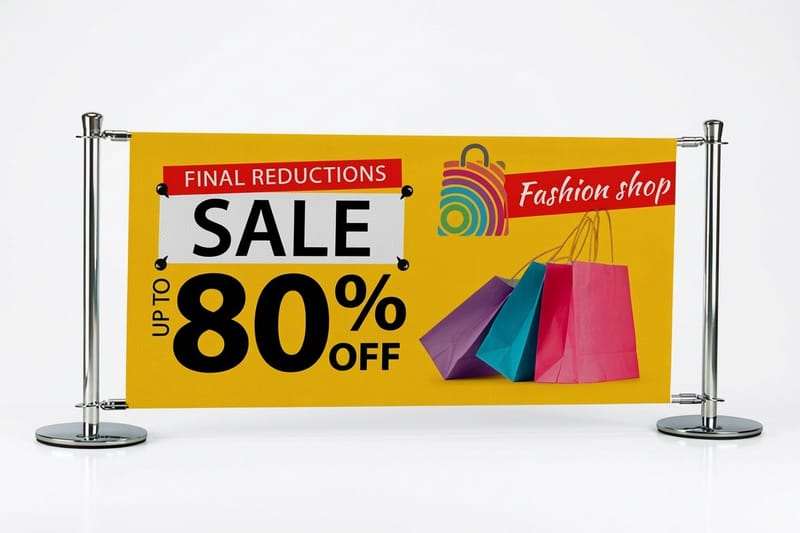
| Banner vinyl | PVC coated both sides over a polyester scrim mesh, sold by ounces per square yard. | Hung outdoors or indoors from hems and grommets. No adhesive at all. | $79 |
| Mesh banner vinyl | The same scrim build with open holes through it so wind passes through. | Fences, scaffolding, building faces, anywhere the wind gets a grip. | $75 |
| Adhesive vinyl | Face film over pressure sensitive adhesive on a release liner. | Windows, walls, doors, vehicles, equipment. Anything flat and clean. | $93.37 |
| Perforated window film | Adhesive vinyl punched through, white on the face and black on the back. | Storefront and vehicle glass you still need to see out of. | $30 |
| Window cling | No adhesive. Holds by static or suction against smooth glass. | Seasonal displays, hours, promotions you will change again in a month. | $30 |
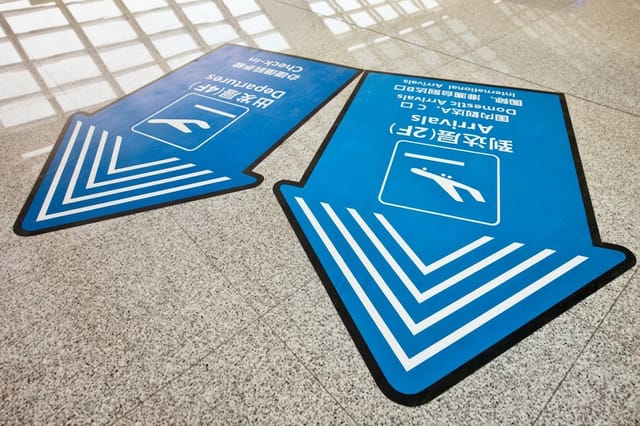
| Floor vinyl | Adhesive vinyl with a textured, slip rated overlaminate bonded on top. | Sealed indoor floors. Not rough concrete, not raw wood, not outdoors. | $34 |
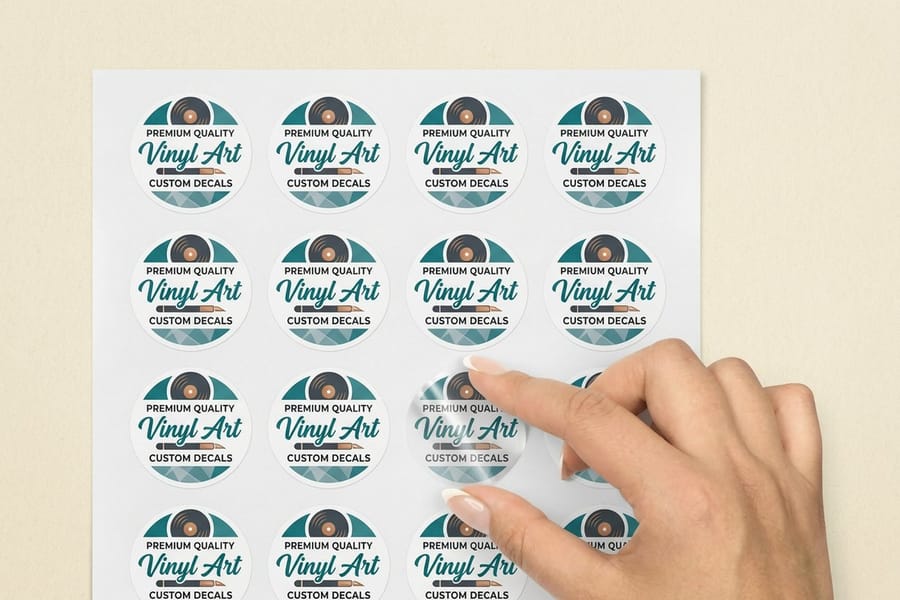
Read the third column before the fourth. The most common mistake is buying banner vinyl for something that needed to stick, then trying to tape it to a wall, where it curls off in a week. The second most common is buying a permanent decal for a promotion that changes monthly, when a clear window cling peels off in seconds and can go back up next season. If the choice is between hanging and sticking on the same wall, the vinyl and mesh comparison is the closest thing we have to a decision tree.
Indoor, Outdoor, and How Long the Print Really Holds
Vinyl does not fail all at once. It fails in a specific order, and knowing that order tells you where to spend money.
Color goes first. UV breaks down pigment, and it does not do it evenly: reds, oranges and purples fade well before blues, greens and blacks. A logo built on a bright red will look wrong long before the same design in navy does. South and west facing installations take the worst of it. An overlaminate absorbs most of that punishment and is the single cheapest thing you can add to a print that has to hold color.
The adhesive goes second, and it goes at the edges. Calendered vinyl was rolled from a warm sheet and still wants to return to that shape, so after a few temperature cycles it pulls back a hair from every edge and lifts at corners. On flat glass you may never notice. On a curved surface, a rivet line or a corrugated wall, you will, which is exactly the case where cast film earns its higher price. Applying below about 50F guarantees the problem, because the adhesive never tacks properly in the first place. Our decal application guide covers the wet and dry methods and the squeegee angle that keeps bubbles out.
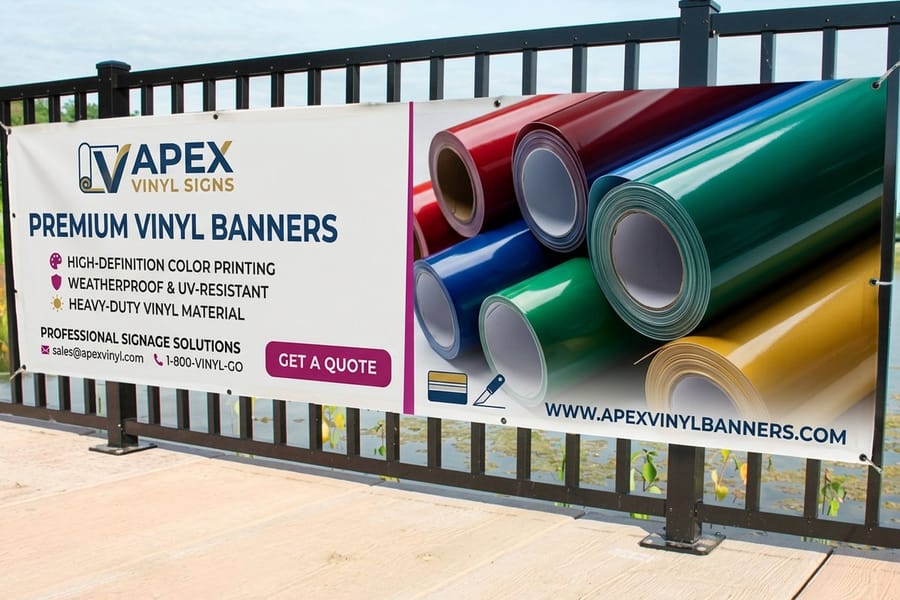
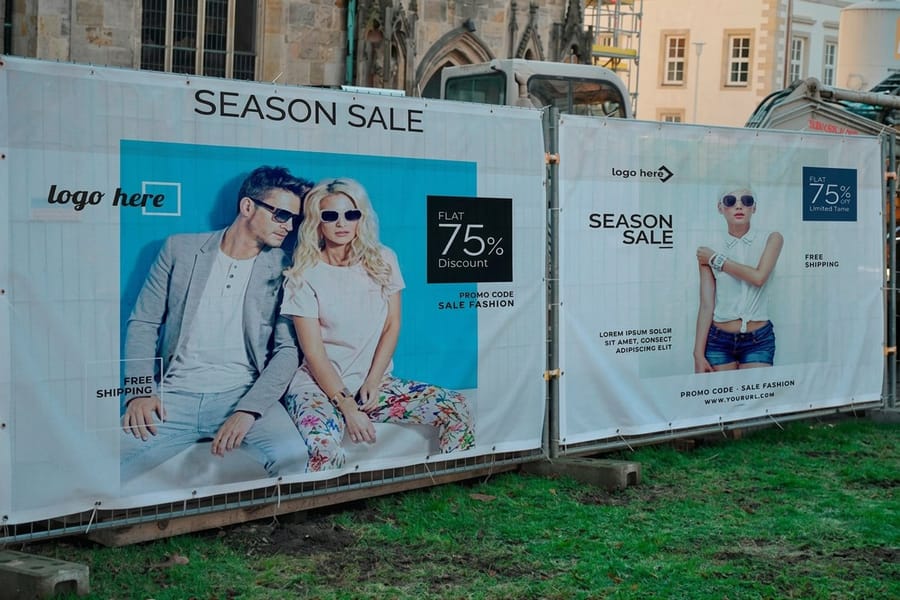
The substrate goes last. Banner vinyl tears at the grommet before the print gives up, which is why grommet spacing matters more than ounce weight on a windy site, and why where you place grommets is a structural decision. Mesh solves the wind problem by letting it through, at the cost of a slightly greyer image, since roughly a third of the surface is air. If a fence or a scaffold is involved, take the greyer image.
Where vinyl is the wrong answer entirely: rough unsealed concrete, freshly painted drywall that has not cured, textured stucco, and anything that must survive a pressure washer at close range. For textured walls, adhesive wall fabric conforms where vinyl bridges and pops. Browse the full range in decal printing or the large format collection if the surface is unusual.
Putting Vinyl on Windows Without Losing the Window
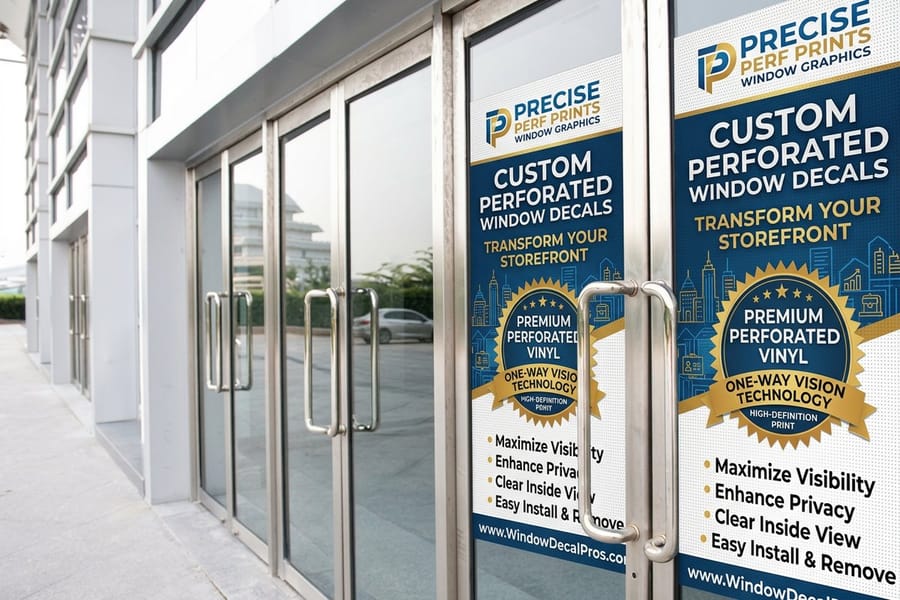
Glass is the best surface vinyl ever meets and the one people get wrong most often, because a window has two sides and a job to do.
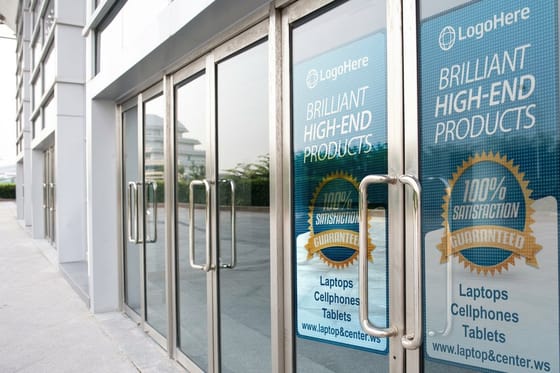
Decide first which side the vinyl goes on. First surface means the outside of the glass: the image reads correctly from the street, and it takes the weather. Second surface means the inside, printed in reverse so it reads outward through the glass, protected from rain and vandalism but at the mercy of the store lighting behind it. Hours, phone numbers and logos usually go second surface. Perforated window film goes first surface, printed side out, because the black back has to face the interior to kill the glare that would otherwise wash out the view.
Then decide how permanent it is. A permanent window decal stays until you remove it deliberately. A window cling comes off with a fingernail and goes back up next season, which is the right call for anything seasonal. Frosted vinyl gives privacy on conference rooms and bathroom glass without blocking light, and clear adhesive vinyl puts type on the glass with no visible background at all.
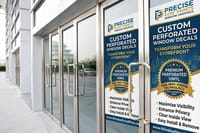
The perforated trade-off is the one to think hardest about. A 60/40 sheet is 40 percent open, so almost half your artwork is missing by design. From inside it disappears; from outside it reads as a solid image at a distance and as a screen door up close. That means bold shapes, heavy type and short words. A phone number in a light script will not survive it. If the storefront needs fine detail, use solid decals on part of the glass and perf only where staff need to see out. The full breakdown sits in our perforated window vinyl guide, and window cling printing lists the reusable options side by side.
Setting Up Files So the Vinyl Prints the First Time
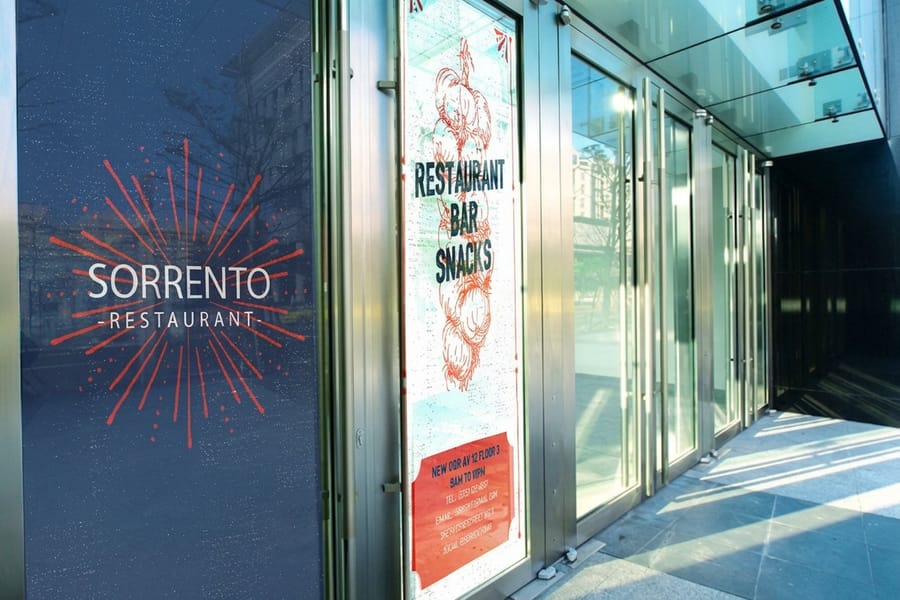
Vinyl files fail in a handful of predictable ways, and all of them are cheaper to fix before the roll moves.
Build at final size. A 3 by 8 foot banner is designed at 3 by 8 feet, not at a tenth scale that someone enlarges later. Resolution follows viewing distance: about 150 ppi at size for a decal read from arm's length, 100 ppi for a banner seen across a parking lot, less for anything read from a road. Keep type and logos as vector so they stay crisp at any enlargement, and outline the fonts before you export.
Respect the finishing. On a hemmed and grommeted banner, the hem folds roughly an inch of your artwork over the back, and grommets punch through the corners and along the edges, so nothing important goes within about two inches of the trim. On a contour cut decal, the cut path is a separate spot colored line on its own layer, and it needs a little slack from the artwork edge so a half millimeter of cut drift does not slice through your logo.
Watch the solids. Large flat areas of dark ink on vinyl show every crease and every squeegee mark, and a banner shipped folded in a dark color will show the fold lines under raking light. Ask for it rolled if the design is dark and the piece is large. Gradients across several feet band more visibly on vinyl than on paper, so a slight texture or noise in the gradient hides what a clean ramp reveals.
Start from a real template rather than a blank canvas. The blank template library carries correctly sized layouts with the bleed and safe area already marked, and the online printing walkthrough covers the handoff from your file to our press.
Wally explains printing on vinyl
Pick the build, then draw the picture
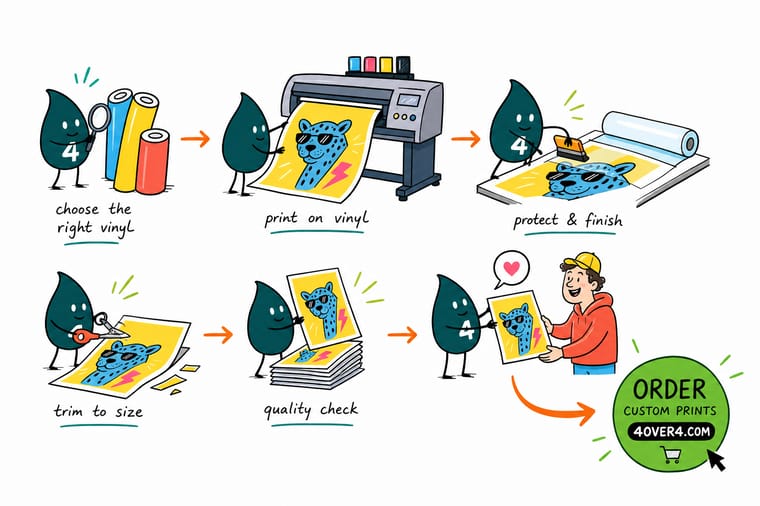
Wally keeps three rolls behind the counter. The banner roll has a mesh inside it and no glue, so it hangs from grommets. The adhesive roll has glue on a liner, so it sticks to glass, walls and truck doors. The perforated roll is the adhesive one with holes punched through, white out front and black behind, so the street sees your artwork and your staff still see the street. He laminates anything that goes outside or underfoot, and he keeps the small print away from the hems, the grommets and the holes.
Print your vinyl banner →Specs and pricing
Vinyl sizes, finishing options and starting prices
Compare the three vinyl builds side by side, with live configuration choices and starting prices straight from the 4OVER4.COM configurator.
Print it
Order vinyl that suits the surface
Explore more
Where to go next



By the numbers
Wide format vinyl printing you can count on at 4OVER4
Common Questions
Your vinyl printing questions, answered
Can you print on vinyl with a regular home printer?
Not the vinyl that goes outdoors. Printable vinyl sheets sold for desktop inkjets exist, and they work for a laptop sticker or a jar label, but the ink sits on a coating that runs the first time it gets wet unless you laminate it yourself. Wide format vinyl is printed on solvent, eco solvent, latex or UV machines that either drive pigment into the PVC or cure it hard on contact. That is the difference between a decal that survives a winter on a truck door and one that ghosts in a month.
How long does printed vinyl last outdoors?
It depends on the film and the laminate far more than on the ink. Calendered adhesive vinyl, the everyday grade behind most window and wall decals, is built for a few seasons of flat surface use. Cast film runs longer because it is thinner and stress free. Banner vinyl usually outlives its message, since the print fades slower than the campaign changes. South facing artwork fades first, and reds and purples go before blues and blacks, so if a piece has to hold color for years, laminate it and avoid a fluorescent brand color.
Does printed vinyl need lamination?
Not always, but the exceptions are worth knowing. Skip it on a short run banner for a weekend event. Add it on anything handled, washed, walked on or parked outside for more than a season. Floor graphics are the strict case: they need a textured slip rated overlaminate, because bare printed vinyl on a floor is slick when wet and scuffs to a haze within days. Vehicle and window decals get it for the scratch resistance during application as much as for the UV.
What is the difference between a decal, a cling and perforated film?
A decal has a permanent pressure sensitive adhesive and is meant to stay. A cling has no adhesive at all, it holds by static or suction against smooth glass, which makes it removable and reusable but useless on a wall or a textured surface. Perforated film is an adhesive decal with holes punched through it, printed white on the street side and black on the inside, so it reads as a solid image from outside while people inside still see out. Clings for seasonal displays, decals for hours and logos, perf for whole storefront windows.
Will vinyl damage the glass or the paint when it comes off?
Glass is forgiving. Warm the film with a heat gun or a hair dryer, peel it back at a low angle, and take the adhesive haze off with isopropyl alcohol or a citrus remover. Painted drywall is the risk, especially fresh paint or a flat finish, because the adhesive can grip the paint film harder than the paint grips the wall. Give new paint a full cure before applying, test a corner, and pull slowly. Vinyl that has baked in the sun for years is the hardest to remove, which is another argument for laminating it.
What resolution should artwork be for large format vinyl?
Build the file at final size and match the resolution to the viewing distance. A decal read from arm's length wants 150 ppi at size. A banner across a parking lot is fine at 100 ppi, and a highway sized piece less than that, because nobody is standing close enough for the pixels to matter. Keep logos and type as vector, outline your fonts, and supply a PDF. Starting from a correctly sized layout in our blank template library removes most of the guesswork.
What does a printed vinyl banner cost?
Vinyl banners start at $79 at 4OVER4.COM, and the price moves with square footage, hem and grommet finishing, and whether you need blockout for a double sided print. Adhesive vinyl decals start at $93.37, perforated window decals at $30, and floor graphics at $34. The cheapest real saving is ordering one larger piece instead of several small ones, since setup and handling are charged per piece rather than per square foot.
Get Started
Ready to put your artwork on vinyl?
Pick the stock, set the size, choose hems and grommets or a contour cut, and we print it on US presses with the laminate your surface actually needs.
Legal Disclaimer
Gold Standard guarantees apply to all standard orders placed through 4over4.com. Price match requires verifiable proof of a competitor's published price for an equivalent product with matching specifications and turnaround time. Satisfaction guarantee covers manufacturing defects and print quality issues. Contact support with order number and documentation. On-time delivery rate based on tracked orders 1999 to 2026. Individual results may vary based on shipping carrier performance.
