
What Is Scrim Vinyl? The Complete Guide to the Toughest Banner Material


The woven grid hidden inside a banner is the reason it survives a windy February. This guide opens up scrim vinyl layer by layer, translates the weights and finishing specs into plain decisions, and shows where mesh, smooth and fabric vinyl belong instead.
Scrim vinyl is a banner material made of a woven polyester mesh, the scrim, laminated between two layers of PVC. The weave is what stops a printed banner from stretching, sagging or tearing away from its grommets, which is why nearly every durable outdoor banner is built on it. It is sold by weight in ounces per square yard, with the middle of the range covering general outdoor use and heavier stock reserved for long spans, multi season installs and blockout cores.

Start here
Scrim vinyl in one paragraph
Scrim vinyl is PVC banner material with a woven polyester grid built into its core. The PVC gives you a waterproof, printable surface. The grid gives the sheet tensile strength, so tension spreads across the weave instead of concentrating at a single point. That is why a scrim banner holds its shape on a frame, keeps its dimensions through heat and cold, and does not run a tear from the first nicked grommet. Pick the weight for the exposure, the perforation for the wind, and the finishing for the anchor, and the rest of the order is straightforward.
Why the material under the ink decides how long your sign lasts
Two banners can carry the same artwork, the same ink and the same grommets, and one of them is a rag by the end of the season while the other still looks new. The difference is almost never the print. It is the sheet the print sits on, and specifically whether that sheet has a woven grid inside it.
That grid is the scrim, and scrim vinyl is the reason outdoor banners became a practical advertising format instead of a disposable one. Once you understand what the weave does, every spec on a banner order form stops being jargon: weight, blockout, mesh, hem and grommet spacing all become decisions you can make on purpose. If you want the wider view of how substrate choice shapes a printed piece, the library on print materials and paper covers the same logic across every stock we run.
What is scrim vinyl?

Scrim vinyl is a laminated banner material made of three layers. In the middle sits a woven polyester mesh called the scrim. Above and below it are coatings of PVC, the plastic that gives the sheet its waterproof surface and its printable face. The layers are bonded under heat and pressure so they behave as one flexible sheet rather than a sandwich that can peel apart.
The name confuses people because scrim sounds like a finish. It is not. It is structure. Hold a piece up to a window and you can usually see the faint grid pattern of the weave running through the material, a bit like graph paper suspended in plastic.
Everything else about a banner follows from that grid. It is why you can pull a scrim banner tight across a frame without it going wavy, why a punctured grommet hole does not immediately zip into a tear, and why the sheet keeps its dimensions when the sun heats it and the night cools it again. Printing itself is straightforward, since the PVC face accepts the same wide format ink systems used across the rest of the printing methods we run.
How the weave is built, and why thread count matters

The scrim is described by how many threads run in each direction per inch, which is where specs like 9 by 9 or 10 by 10 come from. More threads in the weave means more load paths, a finer grid and a sheet that resists tearing more stubbornly. Fewer threads means a lighter, cheaper, more flexible sheet that is perfectly fine for a short indoor run.
There are two common ways the layers get joined. In a laminated build, the scrim is pressed between two ready made films of PVC. In a coated build, liquid PVC is applied to the scrim and cured around it. Laminated stock is the workhorse for banners because it is consistent and economical. Coated stock tends to be more flexible and folds more forgivingly, which matters when a sign travels.
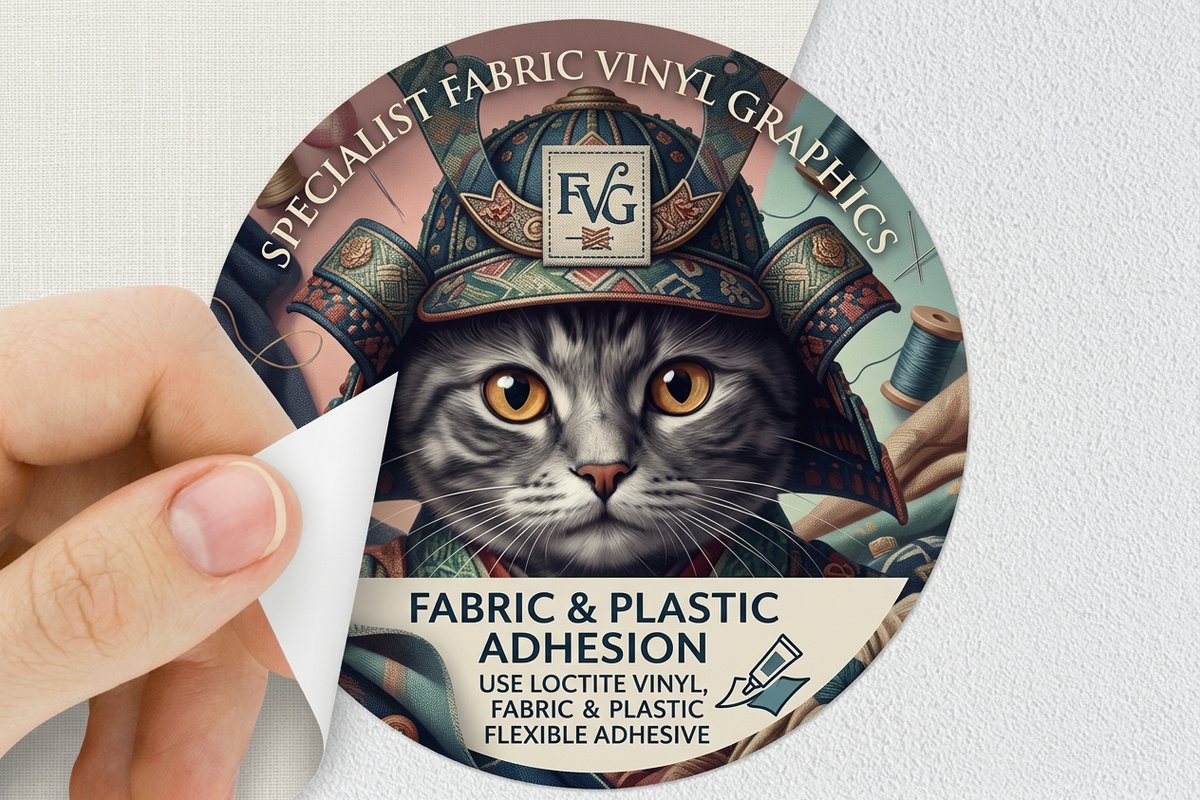
You do not need to specify a build when ordering, but knowing it explains behavior. If a banner feels stiff and drum like when tensioned, you are feeling a laminated sheet doing its job. If it drapes softly, you are holding something closer to a coated or fabric backed construction like our fabric vinyl graphics.
Scrim vinyl weights and what 13 oz really tells you

Scrim vinyl is sold by weight in ounces per square yard, and that single number is the closest thing the industry has to a duty rating. Lighter stock in the 10 oz range is thin, cheap and easy to ship, which suits short indoor promotions and trade show backdrops that live in a case between uses.
The middle of the range, around 13 oz, is the default for a reason. It is heavy enough to hang flat outdoors, tension across a frame and survive weather, while staying light enough that shipping and installation are not a project. If nobody has told you otherwise, this is the stock a standard outdoor banner is printed on.
Above that, 15 oz and 18 oz stock buys you three things: a longer service life outdoors, more confidence on wide spans where the sheet has to carry itself between anchor points, and room for a blockout core. Blockout scrim adds an opaque, usually black, inner layer so that a double sided print does not let the reverse image ghost through. If a banner is going to be read from both sides, that core is not optional.
Scrim vinyl vs mesh vinyl: solid color or airflow

Mesh vinyl is scrim vinyl with holes. The same woven core is there, but the sheet is perforated so a meaningful share of its surface is open air. Wind passes through instead of pushing, which changes the entire load story on an exposed install.
The tradeoff is optical. Every perforation is a spot where there is no ink, so a mesh print reads slightly lighter and softer than the same file on solid scrim, especially up close and especially in dark, saturated areas. From twenty feet away almost nobody notices. From two feet away, everybody does.
Use solid scrim when the sign hangs on a wall, a frame, a stage or an indoor rail and you want maximum color punch. Use mesh when the sign goes on a chain link fence, a scaffold, a rooftop rail or any tall face where wind gets a run at it. And resist the folk remedy of cutting wind slits into solid scrim. Every slit is a deliberate weak point that starts a tear; if the site needs airflow, it needs mesh.
Scrim vinyl vs smooth vinyl and the rest of the family
Smooth vinyl has no scrim inside. It is a plain calendered or cast PVC film, and without a woven core it stretches, conforms and cuts cleanly. That flexibility is a feature, not a shortcoming, because smooth film is not trying to hang in the wind. It is trying to stick to something.
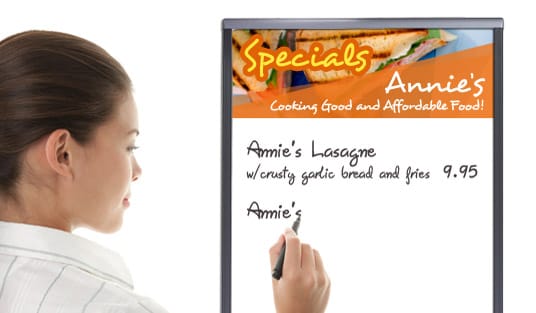
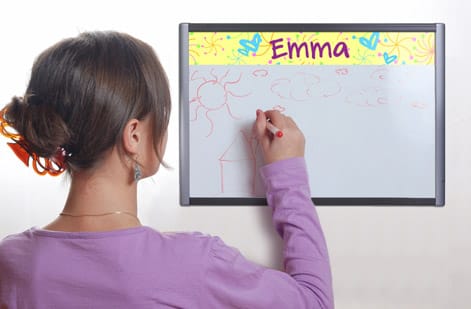
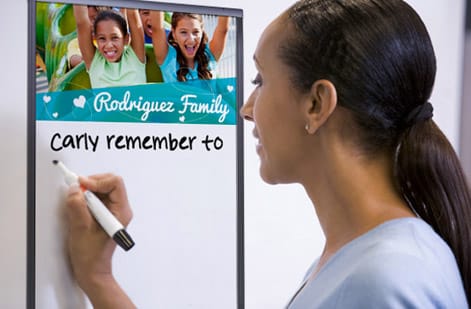
That is the family our vinyl products live in. Clear adhesive vinyl from $25 is a transparent film for window graphics where you want the glass to keep showing through. Dry erase vinyl from $29 turns a flat wall into a writable surface, and there is a walkthrough on installing custom dry erase vinyl if you want to see the process before you buy. Fabric vinyl graphics from $25 swap the rigid feel for a soft textile hand that hangs without glare.
Cut lettering sits in the same neighborhood, since it is smooth film weeded down to shapes rather than a printed panel. The differences between printed sheets and cut shapes are covered in the piece on custom vinyl lettering and cut vinyl graphics. The short version: scrim is for hanging, smooth is for sticking, fabric is for softness, and choosing wrong is the most common reason a vinyl job disappoints.
Hems, grommets and pole pockets: where banners actually fail
A scrim banner rarely tears in the middle. It fails at the edge, at the hole, at the point where the whole sheet hands its load to a rope or a zip tie. Finishing is what turns a printed sheet into a sign that survives that handoff.
A hem is a folded and welded border that doubles the material along every edge, giving the grommet something substantial to bite into. Grommets are the metal rings punched through the hem, and spacing is the number that matters: closer spacing means each ring carries less of the total load, which is why big outdoor banners get more grommets rather than stronger ones. Pole pockets replace the ring entirely with a sewn or welded sleeve, so a rod or a cable carries the sheet evenly across its whole width. That is the cleanest look and the kindest on the material.
If you are pricing banner work against other suppliers, the finishing spec is where quotes quietly diverge, so compare hems and grommet counts and not just the print. Our vinyl banner alternative comparison lays out what to look for line by line.
How to choose the right scrim vinyl, step by step
Specs get easier when you take them in order instead of all at once. Answer these five questions and the material almost picks itself.
- Step 1. Decide indoor or outdoor. Indoors, weather is off the table and lighter stock is enough. Outdoors, assume sun, rain and temperature swings from day one and step up in weight.
- Step 2. Measure the wind exposure, not the size. A small sign on an open fence takes more abuse than a large one in a courtyard. Open, elevated or funneled locations point to mesh.
- Step 3. Set the service life. A weekend event and a two year storefront are different purchases. Longer life justifies heavier stock and better finishing, and it costs less than reprinting.
- Step 4. Check whether light gets behind it. Backlit or double sided installs need a blockout core, otherwise the reverse artwork ghosts through and both sides look muddy.
- Step 5. Choose the attachment before you choose the hem. Rope, zip ties, a frame or a pole all pull differently. Pick the anchor first and the hem, grommet spacing or pole pocket follows.
Run that list once and you will land on the right combination without guessing. If your project turns out to need a stick on graphic or a soft panel instead of a hanging banner, the whole vinyl printing collection is where those options live.
What it costs, how it ships and how to keep it looking new
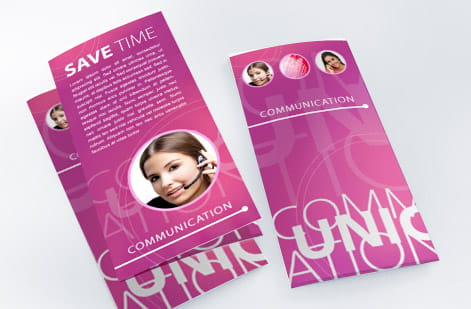
Vinyl is priced by area rather than by the sheet, so the numbers move with square footage, material weight, quantity and finishing. Doubling the size of a banner roughly doubles the stock and ink it consumes, while doubling the quantity usually costs less per piece because the setup is already done. Options such as lamination, contour cutting or a blockout core add a step, and each step shows up in the price.
Handling is the part people underestimate. Vinyl should travel rolled, printed side out, never folded. Fold lines press a permanent crease into the PVC face that a squeegee will not remove, and while there are proven techniques to get wrinkles out of vinyl, prevention beats all of them. Let a rolled banner relax flat in a warm room for an hour before installing.
Cleaning is mild soap, water and a soft cloth. Skip solvents and abrasive pads, which dull the surface and attack the ink. Retension a hanging banner after the first week, since any sheet settles slightly, and re-check the grommet line after a storm. For teams running signage across active sites, the construction company marketing guide covers how to plan that rotation instead of reacting to it.
Wally explains the weave
The part of a banner you never see is the part doing the work
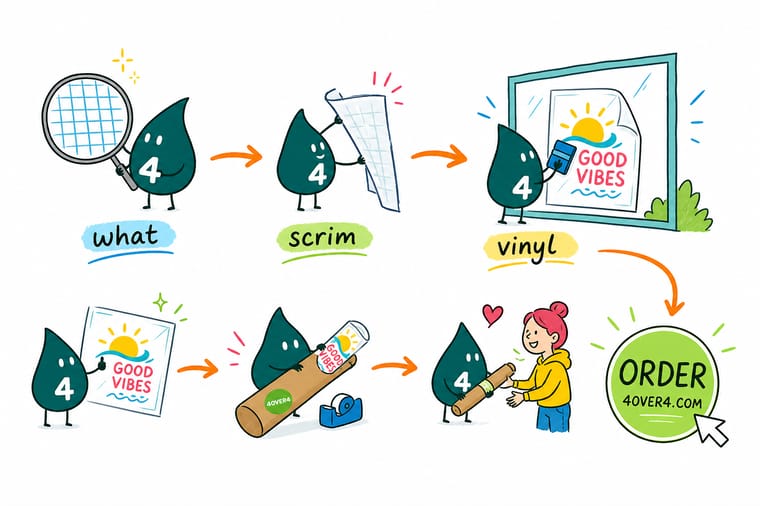
Wally likes to hold banner stock up to the light, because that is when the grid appears. He will tell you the print is the easy part: ink goes on beautifully either way. What separates a sign that lasts from one that shreds is whether the sheet can share a load across its whole surface. Choose the weight for the weather, the perforation for the wind, and the hem for whatever is holding it up.
Explore vinyl printing →Infographic
Scrim vinyl at a glance
One frame, seven decisions. Keep it beside you while you fill in a banner order form and every field turns into a question you can already answer.
No single spec makes a sign durable on its own. Weight, perforation and finishing have to agree with each other and with the place the sign is going to live.
Specs and pricing
Clear adhesive vinyl specs and live pricing
Once you know how vinyl is built, the ordering side is quick. Here are the full specs and the live price ladder for our clear adhesive vinyl, the film to reach for when the surface stays visible behind your graphic.

| Quantity | Price Per Unit | Total |
|---|---|---|
| 1 | $25.00 | $25.00 |
Print it
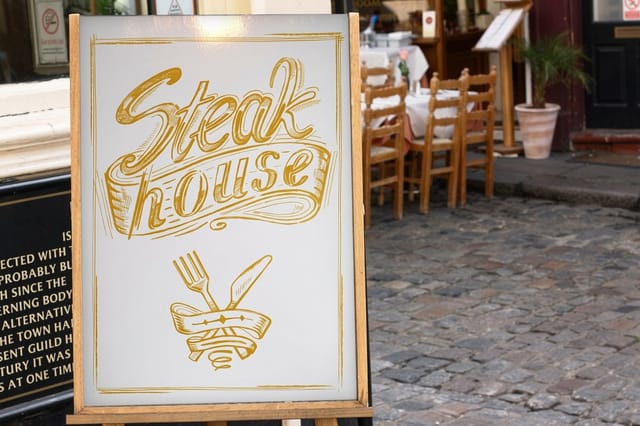
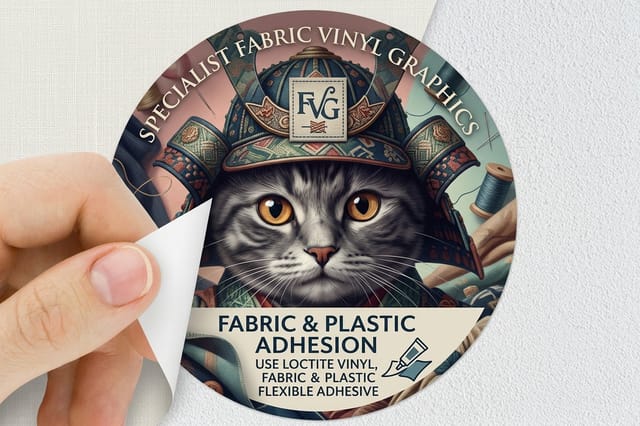
The vinyl we print in house

See it in use
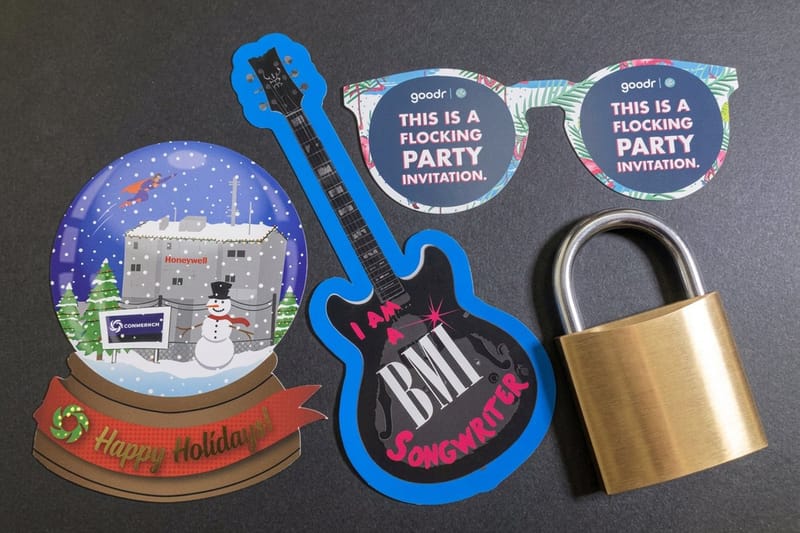
Real vinyl work, printed in house

Explore more
Where to go next



By the numbers
Printing you can count on at 4OVER4.COM
Common Questions
Common questions about scrim vinyl
What is scrim vinyl?
Scrim vinyl is a banner material built in three layers. A woven polyester grid, the scrim, is laminated between two coatings of PVC. The vinyl gives you a smooth printable face and a waterproof shell, and the woven grid underneath gives the sheet its tensile strength. That combination is why a scrim banner can hang in wind and rain for seasons without stretching out of shape or splitting at the grommets.
What does the scrim inside the material actually do?
It distributes force. Plain PVC film pulls out of shape as soon as you tension it, and any small nick becomes a running tear. The woven grid interrupts that. Load applied at one corner spreads sideways along the threads instead of concentrating in a single line, so the sheet resists sagging, stretching and tear propagation. Think of it as rebar for a banner.
How do I choose the right scrim vinyl for my sign?
Work backwards from three things: how long it hangs, how much wind hits it, and whether light will shine through it. Short indoor runs are happy on lighter stock. Outdoor signs on a building or a frame want the standard mid weight. Long spans, multi season installs and double sided prints want heavier stock with a blockout core so the back image does not ghost through the front.
Is scrim vinyl better than mesh vinyl?
Neither is better, they solve different problems. Solid scrim gives you full color saturation and blocks light, so it wins on brightness and image quality. Mesh is perforated, so air passes through instead of pushing against the sign. On an exposed fence, a rooftop or a tall building wall, mesh is the safer material even though the print looks slightly softer up close.
What does vinyl printing cost and how are prices set?
Price follows square footage, material, quantity and finishing rather than a flat sheet rate. A larger print costs more because it uses more stock and more ink, and options such as lamination or cut shapes add steps to the job. At 4OVER4 our clear adhesive vinyl starts at $25, dry erase vinyl at $29 and fabric vinyl graphics at $25, with live pricing once you pick size and quantity.
What sizes, stocks and finishes are available for vinyl printing?
Vinyl is a made to size product, so you choose dimensions rather than picking from a fixed sheet list. On the stock side you can go clear or white adhesive, dry erase, fabric backed, matte or gloss. Finishing options cover contour cutting, lamination for scuff protection, and for hanging banner stock the usual welded hems, grommets and pole pockets.
How long does vinyl printing take to print and ship?
Turnaround is quoted on each product page next to the size and quantity you select, because a small single panel and a large multi panel order do not take the same amount of press and finishing time. Pick your options first and the production window updates before checkout, then shipping time is added on top based on your delivery address.
Get Started
Ready to put your artwork on vinyl?
Bring your file to 4OVER4.COM and we will print it on the vinyl that fits the job, cut to your size and finished the way your install needs it.
Legal Disclaimer
Gold Standard guarantees apply to all standard orders placed through 4over4.com. Price match requires verifiable proof of a competitor's published price for an equivalent product with matching specifications and turnaround time. Satisfaction guarantee covers manufacturing defects and print quality issues. Contact support with order number and documentation. On-time delivery rate based on tracked orders 1999 to 2026. Individual results may vary based on shipping carrier performance.
