
How to Print Custom Tickets With Sequential Numbering and Tear-Off Stubs


The five choices that decide how a ticket is made, what numbering and perforation really do at the door, and the prices and turnarounds to plan a run around.
Printing custom tickets comes down to five decisions: the size, the quantity, the ink coverage, whether each ticket carries a sequential number, and whether it tears at a perforation. Everything after that is artwork. At 4OVER4.COM the standard ticket is 2 by 5.5 inches on any of 15 stocks, numbering prints in black ink, perforation is optional, runs go from 50 at $25.27 to 5,000 at $262.52, and production takes 5 business days or as little as next day.
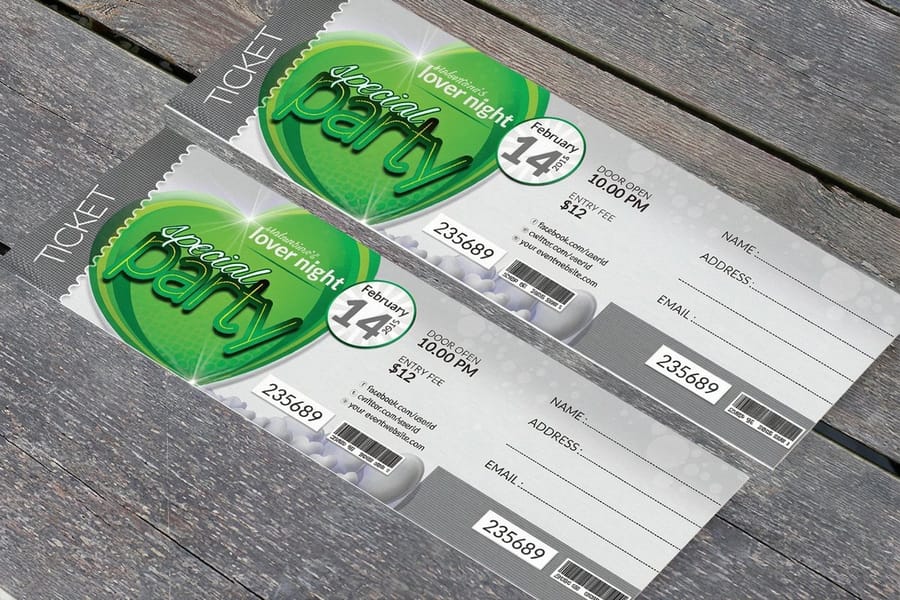
Quick answer
A ticket is a small card with two jobs: proof and a count
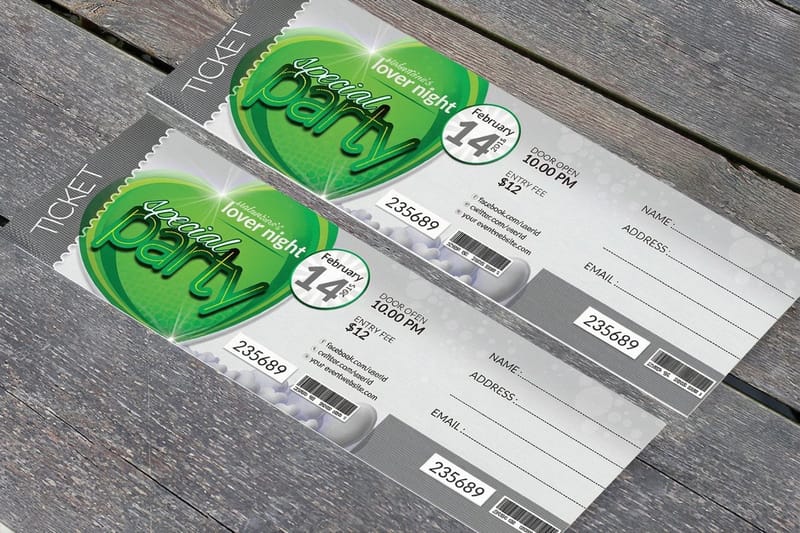
Decide the size and the run first, then the ink, then numbering and perforation, and pick the stock last. The number is what turns printed paper into a countable ticket, and the perforation is what lets the gate keep half of it. Everything else, including the stock, follows from whether the ticket has to survive one evening indoors or a wet weekend in a field. The diagram below shows exactly where the bleed, the trim, the safe margin, the perf line and the number block sit on a finished ticket.
The Five Decisions, In the Order You Make Them
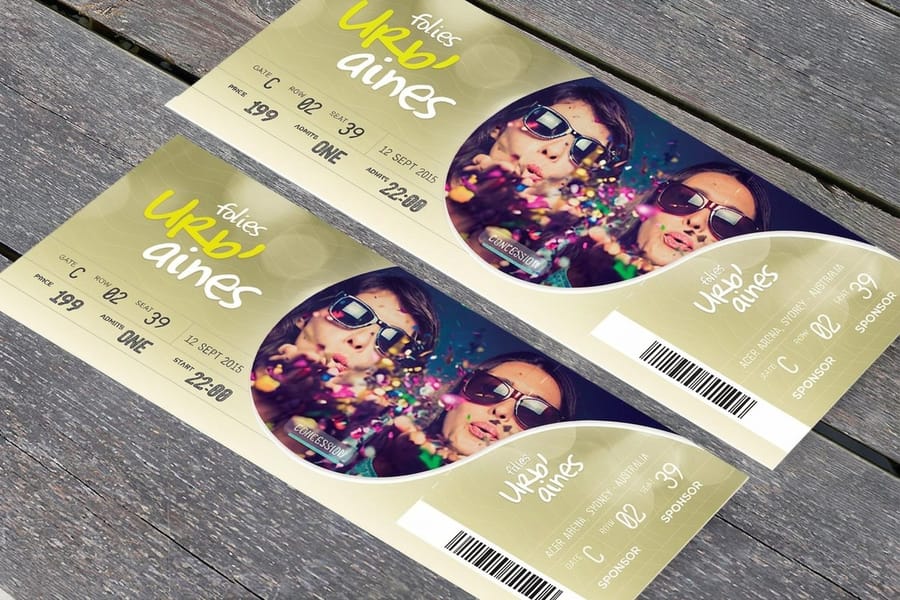
Order them in this sequence and nothing doubles back on you. Change the order and you will redraw the layout twice.
One, the size. The standard event ticket is a fixed 2 by 5.5 inches. That long rectangle exists because a stub has to come off one end and still leave a readable ticket behind. If the piece is a keepsake more than a gate pass, square event tickets are the alternative shape on the same press.
Two, the run. Quantities go from 50 to 5,000, and this is the decision with the most money in it. Count the seats, add the comps, add the staff, then add ten percent. A short reprint costs more than the extra tickets would have.
Three, the ink. Full color on the front with a blank back, full color front with black on the back, or full color on both sides. The back is not decoration: sponsors, parking, the door time and the no-refund line all live there, and a black-only back is cheap.
Four, numbering and perforation. Both are switches. Both change what the ticket can do at the door, which is the next section.
Five, the stock. Fifteen materials, from 14pt gloss to synthetic plastic. Pick it last, once you know whether the ticket has to survive one evening or a three-day festival.
Only then does the file matter. If you want the layout worked out before you configure anything, the guide to designing custom event tickets covers the artwork side, and how online printing works explains what happens between upload and delivery.
Numbering and Perforation, and Where They Go Wrong
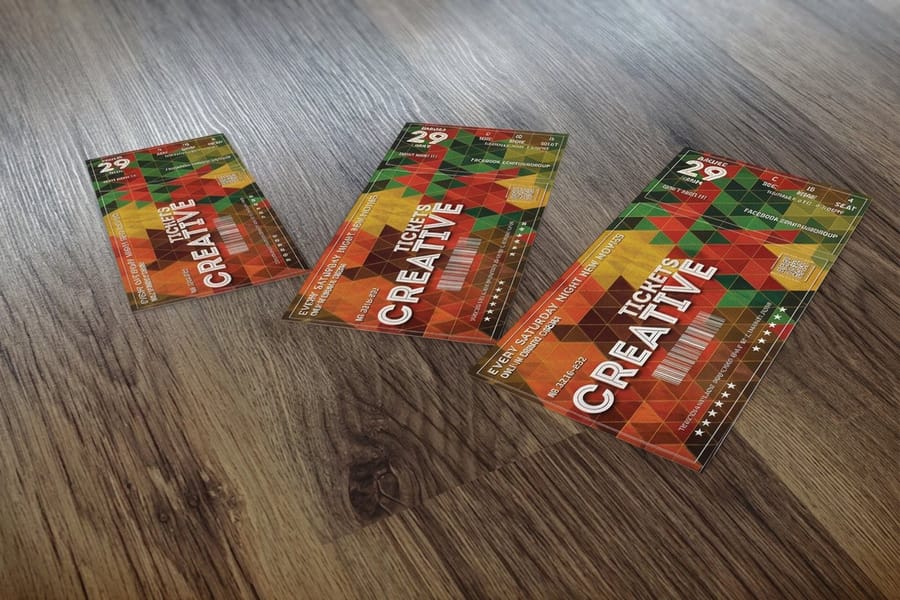
These two options are the difference between a ticket and a printed rectangle, and they are where most first orders lose something.
Sequential numbering prints a unique running number on every ticket in black ink. That number is how you reconcile a door count against the money, how you seat an assigned room, and how a raffle is drawn at all. Here is the catch nobody mentions until the box arrives: the numbering is black ink only. Design a ticket with a dark photograph or a heavy flood of color across the panel where the number lands and the number is genuinely printed and genuinely unreadable under house lights. Leave a light rectangle for it, on both halves.
Perforation gives you the tear. The gate keeps the stub, the guest keeps the rest, and the same number appears on both so the halves stay matched. It costs you layout space, because nothing important can sit across the perf line, and it costs you a little rigidity, since a perforated ticket in a back pocket will eventually tear itself. For a souvenir ticket, or one that gets checked visually at a table, skip the perforation and print a solid card.
One more habit worth having: decide what the stub is for before you draw it. A stub that goes in a drum needs the number and a name line. A stub the guest keeps needs the date and the venue. A stub that only proves the door was crossed needs almost nothing. Those are three different layouts, and the raffle ticket guide works through the drum version in detail.
Choosing the Stock: Feel, Weather, and What It Costs You
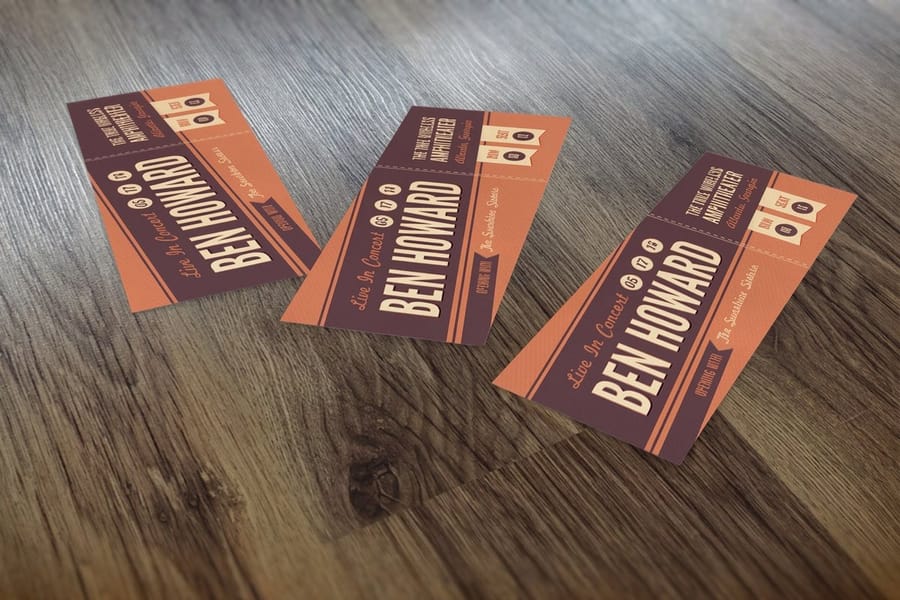
Fifteen materials sounds like a lot of deciding. In practice tickets fall into five camps, and the event tells you which one you are in.
| Stock | How it feels | Where it wins | What to watch |
|---|---|---|---|
| 14pt gloss cover | Bright, slick, light in the hand. The default. | One-night indoor events, school shows, club nights. | Gloss fights a pen. Nothing handwritten survives on it. |
| 16pt to 18pt uncoated | Stiffer, matte, a little toothy. | Anywhere staff write a name or a table on the stub. | Colors sit down slightly compared to gloss. |
| 14pt or 18pt white linen | Woven texture you notice immediately. | Galas, benefits, anything with a dress code. | Fine detail and small type soften on the texture. |
| Metallic pearl | Shimmer through the ink, in ice, champagne, silver or gold. | A premium look without paying for foil. | The sheen changes every color printed on it. Ask for a proof. |
| 15pt synthetic plastic | Waterproof, tear resistant, plasticky. | Festivals, outdoor and multi-day passes. | Costs more, and it will not tear at a perforation the way paper does. |
Recycled and 30% PCW uncoated stocks sit in the second row too, and they are the honest pick when the event has a sustainability line in its programme. Cream uncoated is the quiet one worth trying for weddings and anniversaries. Every material, with weights, is laid out in the ticket paper and stock options guide.
The stock decision matters more than people expect because a ticket is held, not read. A guest spends four seconds with it at the door and possibly four months with it on a fridge. Weight and texture are what they remember.
What a Run Actually Costs, and How Fast It Can Ship
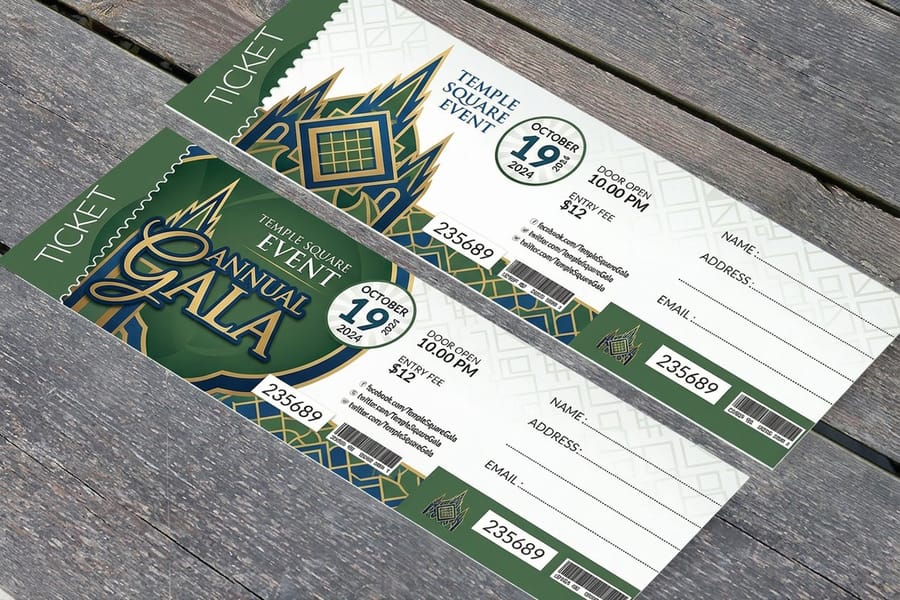
Ticket pricing rewards volume harder than almost anything else we print, because the setup is the same whether the press runs 50 or 5,000.
| Quantity | Run total | Roughly per ticket | Who orders this |
|---|---|---|---|
| 50 | $25.27 | 51 cents | A small door prize batch or a sample run. |
| 300 | $60.42 | 20 cents | A school production, a single club night. |
| 600 | $92.26 | 15 cents | A mid-size venue with a comp allowance. |
| 3,000 | $222.97 | 7 cents | A festival day or a season of shows. |
| 5,000 | $262.52 | 5 cents | Multi-day events and full-season ticketing. |
Read the last two rows together. Going from 3,000 to 5,000 adds 2,000 tickets for about $40, which is why running out is the expensive outcome and over-ordering rarely is. Numbering, perforation, a premium stock and rush speed all add to these base figures, and the configurator shows each change as you make it.
Standard production is 5 business days. Rush runs at 4 days, 3 days, 2 days, or next day, each for a set rate. Shipping sits on top of production, so work backwards from the door date and not from the print date. A free online proof is available and worth taking on a first run, though the clock does not start until you approve it.
Tickets rarely travel alone. Event flyers fill the room in the first place, and event badges sort staff from guests once the doors open. Ordering the three together on one job keeps the color consistent across all of them, which is the sort of thing people notice without being able to say why. Browse the wider range in the custom printing collection if the event needs more than paper.
Setting Up a Ticket File That Survives the Cut
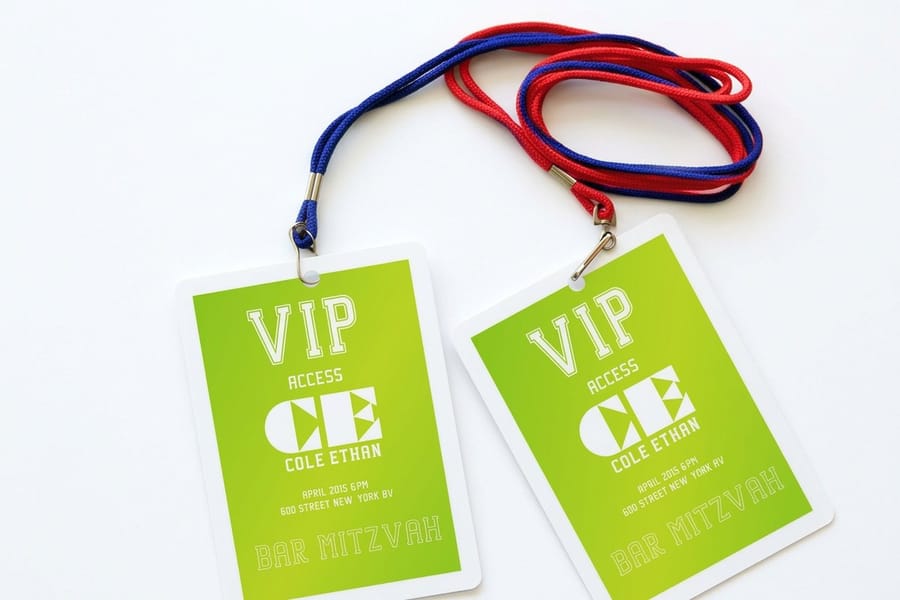
A ticket is a small piece cut from a big sheet in a tall stack, so the tolerances that go unnoticed on a poster show up here immediately.
Extend the background an eighth of an inch past the trim on every side. That overhang is bleed, and it exists so a stack that shifts a hair during cutting still produces tickets with no white slivers. Then pull all type an eighth of an inch inside the trim. On a 2 inch tall ticket that safe margin is a real constraint, which is why crowded ticket designs so often come back with a clipped word.
Three ticket-specific rules on top of the usual ones. Keep the perforation clear: no logo, no type, no important part of a photograph crossing it, because the tear is never surgical. Keep the number block light, for the black-ink reason above. And build the front and the back as separate pages at the same size rather than side by side on one canvas, which is how they get placed on the press.
Send press-ready PDF with fonts outlined and images at full size. Starting from a correctly built layout removes most of this: our blank template library has the trim, bleed and safety already drawn, and the step by step creation guides cover file prep for every product we print. If a term in the quote is unfamiliar, the printing terms page defines it.
Wally explains custom tickets
Number it, perforate it, and the door counts itself
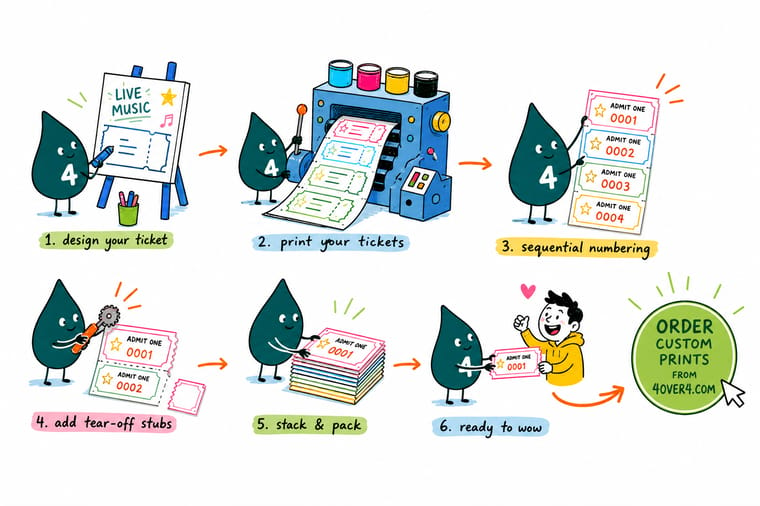
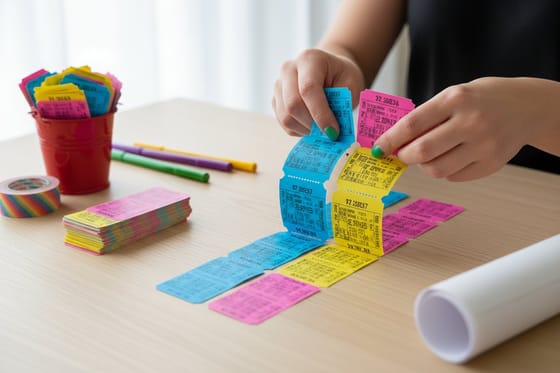
Wally prints the ticket 2 by 5.5 inches, switches on sequential numbering so every one carries its own black-ink number, and adds a perforation so the gate can tear a stub and hand the rest back. Same number on both halves, so the drum and the pocket always match. He leaves a light box for the number, because black ink on a dark photo is a number nobody can read. Then he picks the stock last: gloss for one night indoors, synthetic plastic for three days in the rain.
Configure your event tickets →Specs and pricing
Ticket sizes, stocks and starting prices
Configuration options and starting prices pulled live from the 4OVER4.COM configurator, so you can compare the ticket, the square ticket and the badge before you commit to a run.


Print it
Order tickets your gate can actually count
Explore more
Where to go next
By the numbers
Event printing you can count on at 4OVER4
Common Questions
Your custom ticket questions, answered
Can every ticket have a different number?
Yes. Sequential numbering is an option in the configurator, and it prints a unique running number in black ink on each ticket in the run. If the ticket is also perforated, the same number prints on the stub and on the keeper so the two halves stay matched after the tear. That pairing is the whole point at a raffle: one half goes in the drum, one half goes in a pocket, and the draw is decided by a number that exists exactly twice.
Do custom tickets come perforated?
Perforation is optional, not automatic. Turn it on and the finished ticket tears into a stub and a keeper along a clean line, which is what lets a gate collect proof of entry without taking the whole ticket away. Turn it off and you get a solid card, which is the better choice for a ticket meant to be kept as a souvenir or scanned at a table rather than torn. You can also have the finished run bundled, which saves counting stacks of loose tickets on the night.
What size are custom tickets?
The classic event ticket at 4OVER4.COM is a fixed 2 by 5.5 inches, the long narrow shape people recognize as a ticket and the shape that leaves room for a stub at one end. If you want something that reads as a keepsake rather than admission, square event tickets run on the same press with the same stock and numbering options. Size is the one decision you make before anything else, because it sets how much of the layout the stub eats.
How much do a few hundred custom tickets cost?
Event tickets start at $25.27 for 50, about 51 cents each. Three hundred come to $60.42 and six hundred to $92.26, so doubling the run adds roughly half again to the bill rather than doubling it. At 3,000 the total is $222.97, near 7 cents a ticket, and 5,000 come to $262.52. Numbering, perforation, a heavier stock or a rush speed sit on top of those base figures and show up in the total as you switch them on.
Can I get tickets printed in one day?
Production can be as fast as next day. Standard production is 5 business days, with 4-day, 3-day, 2-day and next-day rush available, and each step up costs a set rate on top of the base price. Shipping time is separate from production time, so a next-day job still has to travel. If the date is tight, order the rush and choose a free online proof only if you can approve it the same hour, because production does not start until you do.
Can I put a QR code or barcode on a ticket?
A single QR code that is the same on every ticket prints fine, because it is just artwork. A different code on every ticket is not a stock option here, sequential numbering is the per-ticket variable. In practice that is enough for most events: the number is the unique identifier, and a shared QR code pointing at a schedule, a map or a check-in page does the digital half of the job. Keep any code at least half an inch square and on white, and keep it away from the perforation.
What should I leave off the ticket?
Anything you might change. Print the date, the venue and the artwork, and leave the seat, the table number or the price off unless they are locked, because a single change to those turns the whole run into recycling. Second thing to leave off: type that crowds the trim. Keep text an eighth of an inch inside the finished edge, or a normal cutting tolerance will clip it on a stack of a thousand.
Get Started
Ready to print tickets before the doors open?
Pick the size, set the run, switch on sequential numbering and perforation, and we print tickets that tear clean and count straight. Next-day production when the date is close.
Legal Disclaimer
Gold Standard guarantees apply to all standard orders placed through 4over4.com. Price match requires verifiable proof of a competitor's published price for an equivalent product with matching specifications and turnaround time. Satisfaction guarantee covers manufacturing defects and print quality issues. Contact support with order number and documentation. On-time delivery rate based on tracked orders 1999 to 2026. Individual results may vary based on shipping carrier performance.
